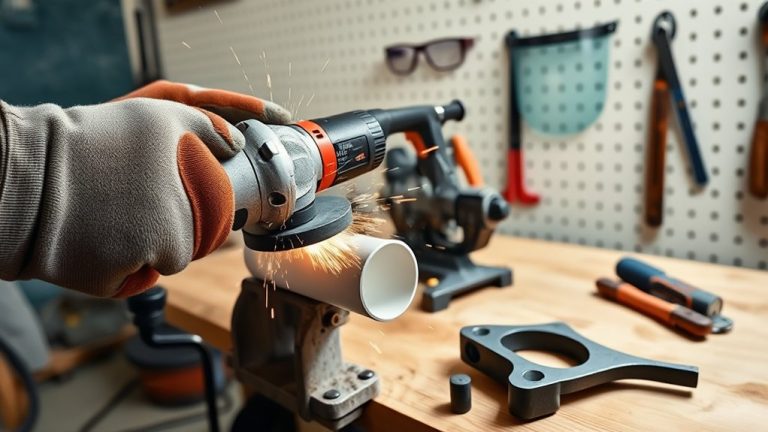
Before using your angle grinder, make certain to perform a thorough pre-use inspection. Check the side handle, wheel guard, and grinding wheel for any damage. Inspect the power cord for fraying or cuts, and guarantee the motor operates quietly without unusual noises. Always wear appropriate PPE, like safety goggles and gloves, to protect yourself. Address any issues immediately to maintain safety and efficiency. There are more detailed steps to secure your grinder’s safe operation ahead.
Why Your Angle Grinder Pre-Use Inspection Matters
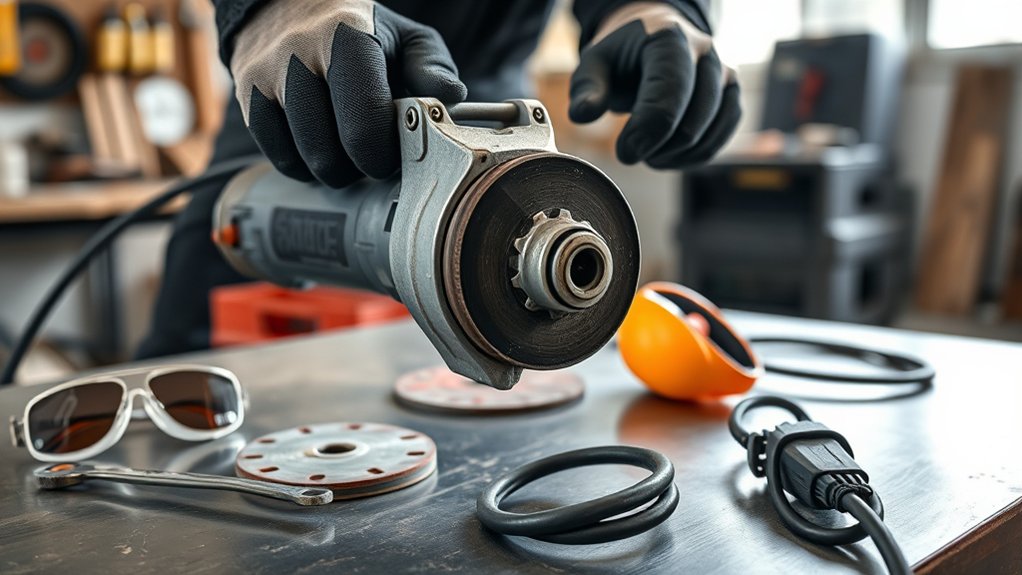
A pre-use inspection of your angle grinder is essential for maintaining safety and efficiency on the job. By following an inspection checklist, you can identify potential hazards like damaged cords or defective grinding wheels that could lead to accidents. Ensuring all safety guards are intact is vital, as they protect you from debris and sparks during operation.
You also need to verify the functionality of the power switch and other controls, ensuring the grinder operates safely and can be shut off instantly in an emergency. Checking the proper mounting of grinding wheels prevents tool malfunction and minimizes the risk of wheel breakage, which could result in severe injuries.
Regular pre-use inspections not only help you comply with safety regulations but also promote a culture of safety, enhancing overall operational efficiency. Prioritizing these checks empowers you to work confidently and safely.
Essential Components to Check for Safe Grinder Use
Regular pre-use inspections set the stage for understanding the specific components that guarantee your angle grinder operates safely. Start with the side handle; make sure it’s securely attached for ideal control. Next, check the wheel guard—it’s vital for protecting against debris and sparks during grinding. Don’t forget the wheel lock; it should function properly to keep the grinding wheel firmly in place, preventing any unexpected movement.
Run the motor briefly and listen for unusual noises—this helps you gauge its performance and spot potential issues like overheating. Finally, inspect the electrical cord for fraying, cuts, or exposed wires, as these can pose serious electrical hazards.
Use this checklist to streamline your process, ensuring every component is in top shape before you begin. Your safety depends on these essential checks, so take the time to perform them diligently.
How to Conduct a Visual Inspection of Your Angle Grinder
Before you start grinding, conducting a visual inspection of your angle grinder is essential for guaranteeing safety and efficiency. A thorough grinder inspection can prevent accidents and enhance performance. Here’s a quick checklist to follow:
| Component | What to Look For | Importance |
|---|---|---|
| Grinder Housing | Cracks, deformations, signs of wear | Guarantees structural integrity |
| Grinding Wheel | Cracks, chips, defects | Prevents catastrophic failure |
| Power Cord | Fraying, cuts, exposed wires | Reduces electrical hazards |
| Safety Guards | Secure attachment, no damage | Protects from debris and accidents |
| Side Handle | Stability and secure attachment | Minimizes risk of kickback |
How to Check Power Supply and Cords for Safety
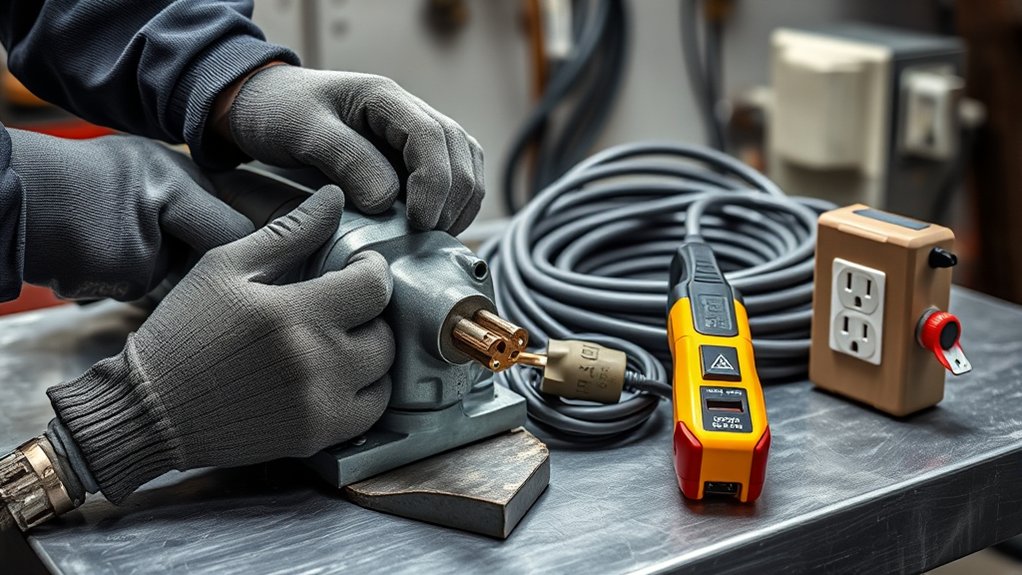
Making certain the power supply and cords are safe is essential for preventing electrical hazards when using your angle grinder. Follow this checklist to keep your workspace secure:
- Inspect the power cord for fraying, cuts, or exposed wires.
- Confirm the plug is undamaged and securely connected to the power source.
- Check the strain relief at the cord entry point for signs of wear or damage.
- Verify that the power outlet is rated for your grinder’s voltage and amperage.
- Perform a visual inspection of the entire power supply system.
This checklist helps you identify potential risks before you start working. Neglecting these checks can lead to serious accidents or equipment failure. Take a moment to make sure everything’s in top shape, so you can focus on your project with peace of mind. Safety first means freedom to create without worry!
How to Test Motor Performance
To test motor performance, start by listening for any unusual grinding noise levels; these can signal potential issues. Next, keep an eye on the motor’s temperature during use, as overheating can indicate underlying problems. Finally, guarantee the power supply remains stable, as fluctuations can affect overall performance.
Testing Grinding Noise Levels
Testing grinding noise levels is vital for evaluating your angle grinder’s motor performance. Follow these steps for effective testing:
- Verify the grinder’s securely connected to a power source.
- Listen for abnormal sounds like grinding, rattling, or excessive vibration.
- Use a sound level meter to measure noise; typical levels are 85 to 100 decibels.
- Compare the noise level to manufacturer specifications.
- Monitor noise regularly to catch potential motor wear or failure.
If you notice noise exceeding guidelines or increasing considerably, it may indicate a malfunction that needs immediate attention. Regular testing not only keeps your equipment running smoothly but also enhances safety and efficiency during your grinding tasks. Stay proactive to verify your grinder’s longevity and reliability.
Observing Motor Heating Effects
After checking the grinding noise levels, it’s important to observe the motor’s heating effects, as this can reveal a lot about its performance. Start by running the angle grinder and monitor the motor during operation. If it gets excessively hot, that’s a red flag for potential electrical or mechanical issues. Confirm the ventilation slots are clear of debris; blocked airflow can lead to overheating, reducing effectiveness. After use, touch the motor to check its temperature. It shouldn’t feel too hot, indicating wear or malfunction. Don’t forget to inspect the carbon brushes regularly; if they’re under 5mm, replace them to maintain peak performance and prevent unwanted motor heating effects. Stay vigilant for safety and efficiency!
Checking Power Supply Stability
Before you start using your angle grinder, checking the stability of the power supply is essential for ideal motor performance. Here’s how to guarantee everything’s in top shape:
- Inspect the power cord for fraying, cuts, or exposed wires.
- Make sure the plug is undamaged and securely connected to a reliable source.
- Conduct a test run, listening for any unusual noises that could signal motor issues.
- Monitor motor temperature after use; excessive heat may indicate problems.
- Regularly check ventilation slots for debris that can cause overheating.
PPE Essentials for Angle Grinder Safety
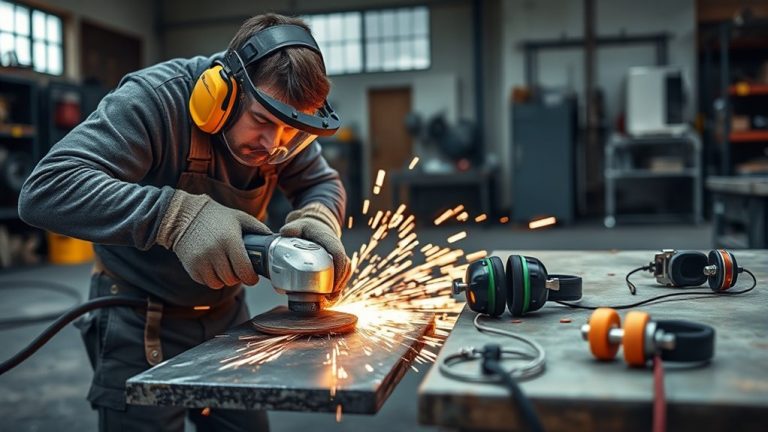
When using an angle grinder, wearing the right personal protective equipment (PPE) is essential for your safety. Start with safety goggles or a face shield to guard your eyes and face against flying debris and sparks. Don’t forget ear protection—earmuffs or earplugs are crucial since the noise can exceed 100 decibels.
Gloves made of cut-resistant material are a must to protect your hands from sharp edges and hot surfaces while allowing for dexterity. If you’re working with materials like metal or concrete, wear a dust mask or respirator to keep harmful particles at bay.
Finally, choose fitted clothing to avoid loose items that could get caught in the grinder, and always wear steel-toed boots for foot protection. These PPE essentials will help you stay safe and focused while grinding.
What to Do After Your Grinder Inspection
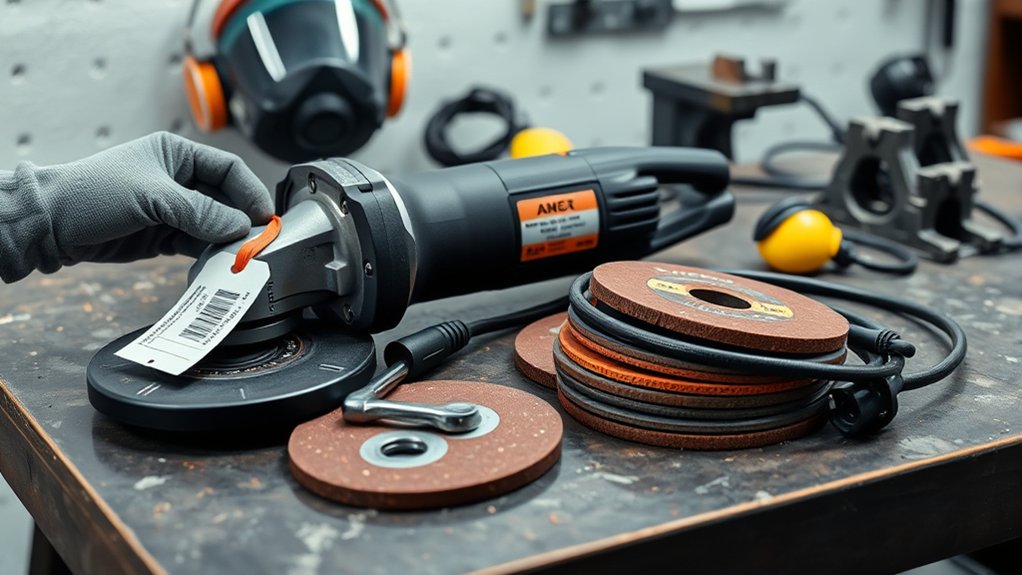
Once you’ve inspected your angle grinder and verified your PPE is in place, it’s time to address any findings. Here’s what you should do next:
- Document your inspection results in a log for tracking maintenance and compliance.
- If you find defects, label the grinder as out of service and report it to maintenance.
- Clean the grinder and workspace thoroughly to eliminate debris.
- Review the inspection checklist to confirm all safety features are functional.
- Schedule regular follow-up inspections based on your findings to guarantee ongoing safety.
Taking these steps not only keeps your workspace safe but also maintains the operational efficiency of your tools. By addressing inspection results promptly, you empower yourself and your team to work with confidence, knowing you’ve prioritized safety and compliance. Remember, consistent maintenance is key to liberating your workflow from hazards.
Frequently Asked Questions
What Are 10 Safety Precautions Before Using a Grinding Machine?
Before using a grinding machine, guarantee you wear PPE, inspect for damage, check guards, verify cord safety, and read the manual. Mastering grinding techniques starts with prioritizing safety to liberate your skills and confidence.
What Safety Checks Are There on a Grinder?
Before using a grinder, check the wheel for damage, verify the guard’s secure, inspect the power cord, test the switch, and wear appropriate PPE. These grinder maintenance steps keep you safe and ready for action.
What Are the OSHA Requirements for Angle Grinders?
Who needs safety when grinding, right? Well, OSHA requires you to wear PPE, keep your grinder maintained, and guarantee compliance with RPM limits. Ignoring these rules? That’s a fast track to disaster.
How to Inspect an Angle Grinder?
To inspect an angle grinder, check for physical damage, verify the power cord’s intact, test the switch, examine the grinding wheel for defects, and listen for unusual motor noises during operation. Safety’s key!
Conclusion
In summary, conducting a pre-use inspection of your angle grinder is essential for your safety. Did you know that nearly 50% of angle grinder accidents stem from improper use or equipment failure? By following the checklist and ensuring everything’s in top condition, you can markedly reduce the risk of injury. Remember, a few minutes spent on inspections can save you a lot of trouble down the line. Stay safe and keep grinding smart!