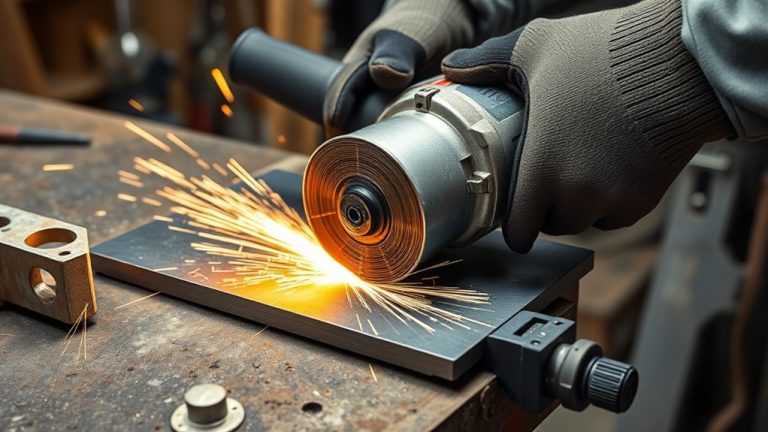
To safely startup and shutdown your angle grinder, always wear essential safety gear like glasses, gloves, and hearing protection. Before starting, inspect the grinder for damage and verify the disc is securely attached. Plug it in, grip it firmly, and start the tool. After use, allow it to stop completely, unplug it, and store it in a dry place. Proper procedures and maintenance are key to safety and efficiency. You’ll find even more tips and techniques in the guide.
Essential Safety Gear for Angle Grinder Users
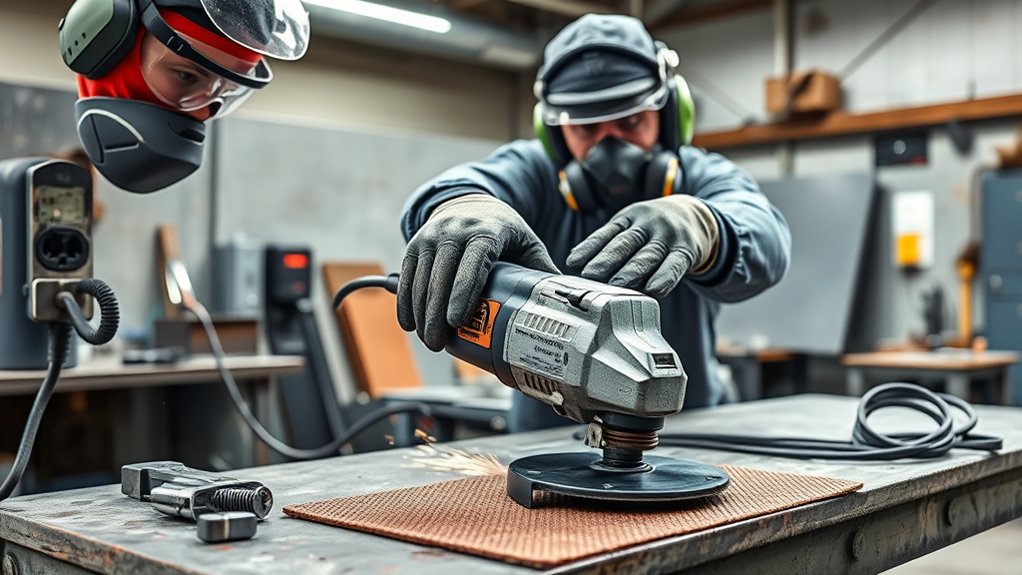
When using an angle grinder, wearing the right safety gear is vital for protecting yourself from potential hazards. Start with safety glasses or a face shield to shield your eyes from flying sparks and metal fragments. Don’t forget hearing protection; angle grinders can generate noise levels exceeding 100 decibels, risking hearing damage.
For your hands, use leather or cut-resistant gloves to guarantee a firm grip while protecting against sharp edges and heat. When grinding materials that produce dust, a dust mask or respirator is essential to prevent inhaling harmful particles.
Lastly, wearing long sleeves can shield your arms from abrasions and sparks. By equipping yourself with this protective equipment, you empower your workspace, allowing you to focus on your task without the fear of injury. Prioritize safety gear to liberate yourself from the constraints of potential hazards.
Preparing Your Workspace for Safe Operation
To guarantee a safe operation with your angle grinder, it’s essential to prepare your workspace effectively. A well-organized area not only enhances productivity but also minimizes risks. Here are key steps to take:
- Clear flammable materials within a 30-foot radius to reduce fire hazards.
- Organize tools and materials to prevent tripping and guarantee a safe work area.
- Verify adequate ventilation to dissipate dust and fumes while operating at maximum RPM.
- Verify that the power source matches your grinder’s specifications to avoid electrical issues.
Don’t forget your personal protective equipment! Make sure you have safety glasses, gloves, and dust masks readily available and worn before you start. By taking these precautions, you set the stage for a safer, more efficient grinding experience.
Starting Your Angle Grinder: A Step-by-Step Guide
Before starting your angle grinder, make certain you’ve got your personal protective equipment on. Next, follow the powering up procedure carefully to guarantee a safe start. Let’s go through these essential steps to get your grinder ready for action.
Pre-Startup Safety Checks
Making sure your safety starts with thorough pre-startup checks for your angle grinder. Before you begin, take these essential steps:
- Wear safety glasses, gloves, and hearing protection.
- Inspect the angle grinder for visible damage, focusing on the power cord and guard.
- Confirm you’ve installed the correct disc for your task, making certain its RPM rating meets or exceeds the grinder’s speed.
- Check that your workspace is clean and free of flammable materials within a 30-foot radius.
These checks help you minimize risks and enhance your safety while using the tool. Taking a few moments to prepare not only protects you but also guarantees a more efficient and effective grinding experience.
Powering Up Procedure
Starting your angle grinder requires careful attention to detail to guarantee safety and efficiency. Before powering up, don your personal protective equipment—safety glasses, gloves, and hearing protection are essential. Next, inspect the angle grinder; check that the guard is secure, the disc is properly attached, and there are no visible damages or wear.
Once you’re ready, plug the grinder into the power hub, ensuring the cord’s free from hazards and tangles. Adjust the wheel speed using the knob to match the material and task. Finally, press the power button on the hub to start the grinder. Keep a firm grip with both hands on the tool throughout the process, ensuring control and safety as you work.
Choosing the Right Disc for Your Project
Choosing the right disc for your project can make all the difference in achieving the best results. Understanding your materials and the task at hand is essential. Here’s a quick guide:
- Cutting discs: Ideal for slicing through metal and steel with precision.
- Grinding wheels: Perfect for quickly removing metal, shaping surfaces, or tackling welds, rust, and paint.
- Diamond cutting discs: Specifically designed for masonry work, handling stone and concrete materials effectively.
- Flap discs or sanding pads: Best for achieving a finer finish, providing smoother surfaces compared to traditional grinding wheels.
Always check the expiration date on your discs, and make sure the RPM rating meets or exceeds your grinder’s maximum speed. By choosing the right disc, you’ll enhance your efficiency and safety while working.
Effective Techniques for Using Your Angle Grinder
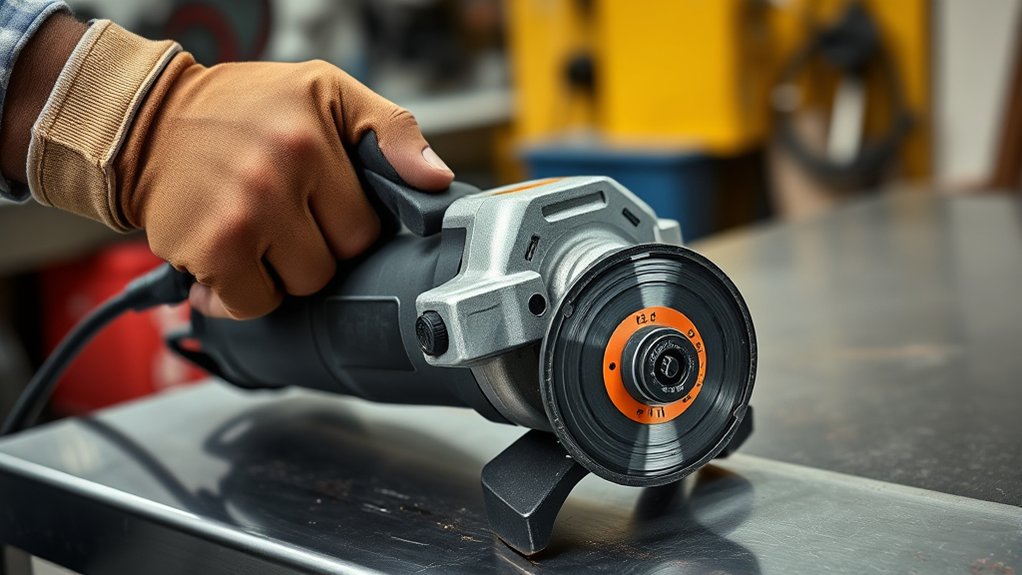
To use your angle grinder effectively, maintain a firm but relaxed grip with both hands for better control. Position the wheel at the right angle to the workpiece, allowing sparks to fly safely away from your body. This approach guarantees precision and helps you achieve cleaner cuts without unnecessary strain.
Proper Grip Techniques
Gripping your angle grinder correctly is essential for both safety and efficiency. Use these techniques to guarantee a proper grip:
- Always use both hands: grip the rear handle with one hand and the side handle with the other for maximum control.
- Maintain a firm but relaxed grip to reduce fatigue and enhance precision.
- Position the grinder so sparks and debris fly away from your body, guaranteeing a safe workspace.
- Keep your wrists straight and guide the tool with your arms to avoid twisting and maintain control.
Optimal Wheel Angle
Achieving the ideal wheel angle is essential for maximizing both efficiency and safety when using your angle grinder. Maintain a suitable wheel angle of 15 to 30 degrees relative to the workpiece for efficient material removal while reducing strain. Position the grinder so sparks fly away from your body, enhancing visibility and safety. For cutting tasks, hold the grinder perpendicular to the material for straight cuts. When grinding, use a slight angle to maximize contact. Adjust the wheel angle as you progress for a smoother finish and to prevent overheating. Always use both hands to maintain control and keep the wheel at a consistent angle, ensuring uniform cuts or grinds.
How to Properly Shut Down Your Angle Grinder
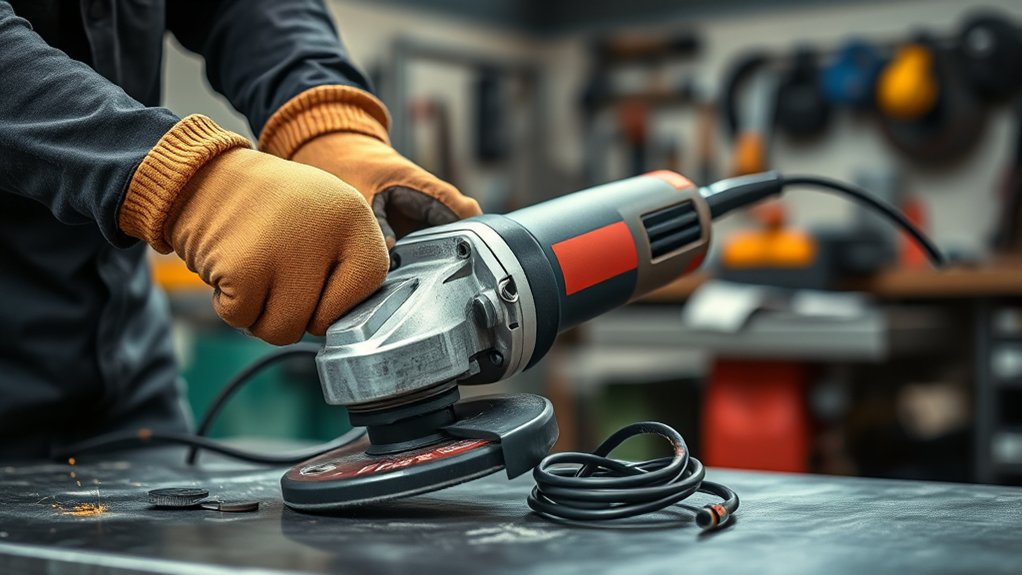
Shutting down your angle grinder properly guarantees safety and prolongs the tool’s life. Follow these steps for an effective shutdown:
- Release the power button and let the tool come to a complete stop.
- Disconnect it from the power source to prevent accidental startup during maintenance.
- If it’s battery-operated, press the release button to detach the battery safely.
- Clean the grinder of dust and debris, confirming it’s unplugged or the battery is removed to avoid injury.
After cleaning, store the angle grinder in a dry, dust-free area with the disc removed. This prevents warping and helps maintain its longevity. By following these steps, you not only guarantee your safety but also keep your angle grinder in top shape for future projects. Remember, a proper shutdown is key to a smooth start next time!
Addressing Common Issues While Operating Your Angle Grinder
While operating your angle grinder, it’s essential to stay alert for common issues that can arise. If the grinder overheats, stop immediately and let it cool down to avoid damaging both the tool and the material you’re working on. Excessive vibration can indicate a loose or unbalanced disc; always check that it’s securely attached and the right size. If sparks fly toward you, adjust your angle or reposition the workpiece to redirect debris away for safety. Should the grinder stall or stick while cutting, reduce pressure—forcing it can lead to injuries and decreased efficiency. Finally, if you notice any wear or damage on the power cord, unplug the grinder right away to prevent electrical hazards. Keeping these points in mind will help you use your angle grinder safely and effectively.
Simple Maintenance Tips to Keep Your Grinder Running
Maintaining your angle grinder is essential for peak performance and longevity. By following these simple maintenance tips, you’ll keep your grinder in top shape for all your grinding tasks:
- Always unplug the grinder before performing maintenance or changing discs.
- Regularly inspect the power cord, switches, and attachments for any wear or damage.
- Clean the grinder after each use with a brush or compressed air to remove dust and debris.
- Apply light machine oil to moving parts to reduce friction and enhance performance.
These steps not only guarantee safety but also prevent electrical hazards during operation. Remember, proper maintenance can greatly extend the life of your grinder and improve its efficiency. So, wear the right gear and take the time to clean the grinder regularly. You’ll be rewarded with a reliable tool ready to tackle any project.
How to Store Your Angle Grinder to Prevent Damage
Proper maintenance keeps your angle grinder performing well, but how you store it also plays a key role in its longevity. To guarantee ideal condition, always remove the disc before you store your angle grinder. This prevents warping and enhances safety. Choose a dry, dust-free environment to keep it safe from corrosion and damage to electrical components. A protective case or pouch is essential for safeguarding the grinder against physical impacts and dust accumulation. Additionally, keep your grinder away from moisture and extreme temperatures, both of which can compromise performance. Finally, regularly inspect your storage area to verify it’s free from flammable materials and hazards. Taking these steps will greatly extend the life of your angle grinder, allowing you to enjoy its benefits for years to come.
Frequently Asked Questions
How to Use Angle Grinder Step by Step?
To use an angle grinder, select the right accessory type, practice proper grinding techniques, avoid common mistakes, and guarantee tool maintenance. Always focus on material selection for best results and safety during your work.
What Are 10 Safety Precautions Before Using a Grinding Machine?
Before using a grinding machine, guarantee proper operator training, wear personal protective equipment, maintain workspace organization, inspect for wear, and be aware of sparks and debris to enhance safety and efficiency during operation.
How to Use Angle Grinder Safety?
To use your angle grinder safely, wear protective gear, keep your workspace organized, avoid common mistakes, and follow proper grinder maintenance tips. Store your tools correctly to guarantee longevity and prevent accidents during use.
How to Operate a Grinding Machine Step by Step?
To operate a grinding machine, select suitable tools, guarantee material compatibility, apply grinding techniques, maintain a steady stance, avoid common mistakes, and follow maintenance tips for efficient, effective, and liberated grinding experiences.
Conclusion
In conclusion, safety’s the secret to successful angle grinding. By donning your protective gear, preparing your workspace, and following our safe startup and shutdown steps, you’ll guarantee a seamless, satisfying experience. Stay sharp, stay safe, and savor the satisfaction of a job well done. Remember, a little diligence today can prevent dangerous dilemmas tomorrow. So, gear up, grind confidently, and keep your projects progressing smoothly!