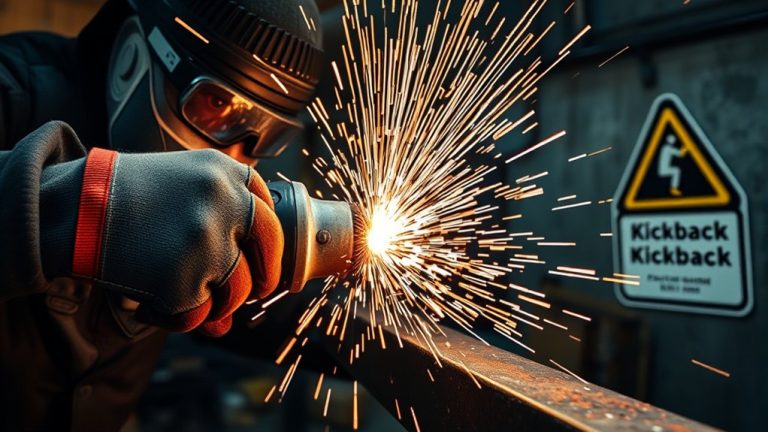
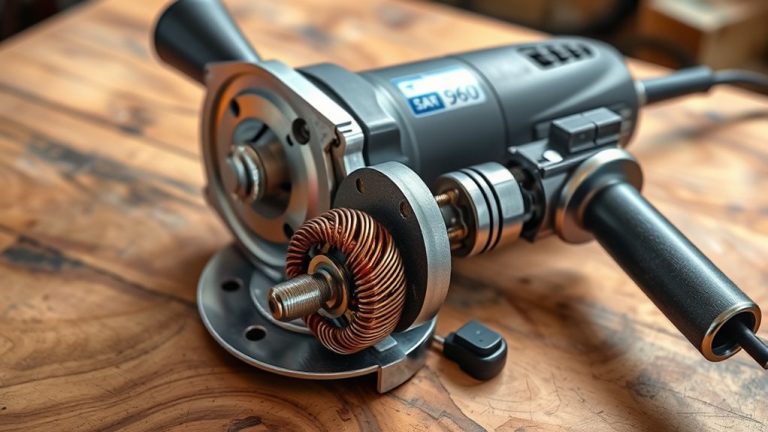
Angle grinder safety guards are essential for protecting you during operation. They shield you from flying debris and sparks, which can cause injuries. Properly positioned guards not only enhance your visibility of the workpiece but also direct sparks away from you. It’s important to set them up according to manufacturer specifications and make sure they’re securely locked in place. Understanding the differences between cutting and grinding guards is important for peak safety. Discover more about effective usage and maintenance practices.
Understanding the Importance of Angle Grinder Safety Guards

While you may be focused on the task at hand, understanding the importance of angle grinder safety guards is critical for your protection. These guards are designed to contain shattered wheels or discs, greatly reducing the risk of injury from flying debris during operation. Proper setup is essential; make certain the guards cover at least half of the grinding wheel and are correctly positioned for both grinding and cutting tasks. This maximizes safety and shields you from sparks and debris.
Guards must also meet specific design standards, including locking mechanisms that prevent accidental openings during a disc failure, enhancing your protection. Regular inspection of these guards is necessary—improper or damaged guards can increase hazards. Compliance with safety regulations, such as ANSI B7.1, mandates the use of guards, guaranteeing safe operation and protecting you from the dangers associated with angle grinders. Prioritize safety; it’s your right to work liberally and securely.
Essential Features of Effective Angle Grinder Safety Guards
When selecting an effective angle grinder safety guard, you should consider its design and coverage, as these features play a vital role in your protection. It’s important to guarantee the guard directs sparks away from you and is compatible with the disc types you use for various tasks. By focusing on these essential elements, you can enhance your safety while operating the grinder.
Guard Design and Coverage
Effective angle grinder safety guards are essential for protecting operators from potential hazards, as they are specifically engineered to contain debris and fragments generated during operation. Understanding guard design and coverage is vital for safety. Here are key features to evaluate:
- Type of Guard: Cutting guards are narrower for focused protection, while grinding guards are wider for broader coverage.
- Strength and Locking Mechanism: Guards must meet specific standards to stay securely in place.
- Adjustability: You can adjust guards for ideal visibility without sacrificing safety.
- Coverage Requirements: Effective guards should cover at least half of the grinding wheel to comply with safety regulations like OSHA and ANSI.
Choosing the right guard design and coverage enhances your safety while working with angle grinders.
Spark Direction and Control
To guarantee safety during angle grinding, it’s essential that the safety guard effectively directs sparks and debris away from you. Properly positioned guards enhance your visibility of the workpiece while safeguarding against flying particles. This guarantees that spark direction minimizes risks to your body and clothing. A cutting guard‘s design is typically narrower and closed, preventing concentrated sparks from scattering widely. In contrast, a grinding guard is wider and open, accommodating the unique nature of grinding tasks. Adjustable guards allow you to maintain ideal safety and visibility at various angles without sacrificing protection. Regularly inspecting and maintaining your safety guard is important, confirming it meets safety standards and effectively controls sparks during operation.
Compatibility With Disc Types
Choosing the right safety guard for your angle grinder is imperative for guaranteeing optimal protection during various tasks. The compatibility with disc types is essential, as each guard serves a specific purpose. Here are key points to regard:
- Cutting guards: Narrower design focuses protection around the cutting area, ideal for managing concentrated sparks.
- Grinding guards: Wider to accommodate grinding activities, these guards help control broader debris distribution.
- Safety standards: Confirm your guard aligns with ANSI and OSHA guidelines for optimal safety compliance.
- Proper installation: Adjusting guards correctly is crucial; using the wrong guard can compromise your safety and increase the risk of accidents.
How to Use Safety Guards to Protect Operators
While operating an angle grinder, using safety guards is essential for protecting yourself from flying debris and sparks that can lead to serious injuries. Position your guard to cover at least half of the grinding wheel; this maximizes safety while still allowing you to see your workpiece clearly. When you’re using cutting discs, switch to a narrower cutting guard to focus protection around the cutting area, effectively preventing debris scattering. Regularly inspect your safety guards to verify they meet design standards and function properly; a malfunctioning guard can result in severe accidents. Always adhere to the manufacturer’s specifications for guard use to maintain compliance with safety regulations and minimize injury risks. By following these guidelines, you not only enhance your safety but also create a more controlled, efficient working environment. Prioritize your well-being and embrace the liberation that comes from working safely.
The Role of Safety Guards in Spark Control
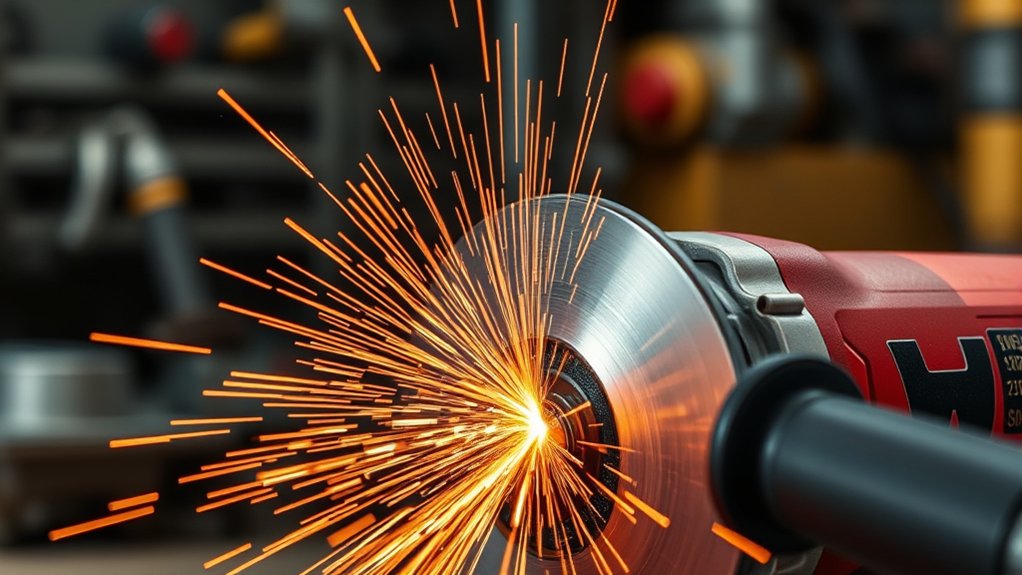
Safety guards play an essential role in controlling sparks generated during grinding and cutting operations. These guards are vital for minimizing fire risks and protecting you and those around you. Here’s how safety guards help manage sparks:
- Containment: They effectively contain and redirect sparks, reducing the chance of ignition.
- Debris Protection: Safety guards prevent flying debris from scattering, guaranteeing targeted protection.
- Design Variety: Cutting guards focus on concentrated sparks, while grinding guards provide broader coverage against debris.
- Visibility Enhancement: Properly positioned guards maintain work area visibility without compromising your safety.
Following safety guard regulations, like those from ANSI B7.1, guarantees these guards meet strength and locking standards. By prioritizing safety guards, you create a safer environment while enjoying the freedom to focus on your work.
Proper Setup of Angle Grinder Safety Guards
When setting up your angle grinder safety guard, it’s essential to position it according to the manufacturer’s specifications to guarantee maximum protection. Make certain the guard covers at least half of the grinding wheel and is adjustable for visibility while remaining securely locked. Following safety compliance standards, like ANSI B7.1, will help maintain a safe working environment and reduce the risk of accidents.
Guard Positioning Techniques
To guarantee maximum protection during operation, proper positioning of the angle grinder safety guard is essential. Implementing effective guard positioning techniques guarantees grinder safety and minimizes risks. Here are key considerations for ideal guard setup:
- Confirm the guard covers at least half of the grinding wheel to contain debris.
- Adjust the guard for visibility while maintaining adequate coverage for various tasks.
- Use a narrower guard for cutting and a wider one for grinding to manage different angles and spark dispersion.
- Regularly inspect guards for secure attachment, as misplacement can greatly increase the risk of accidents.
Safety Compliance Standards
Properly positioning the angle grinder safety guard not only enhances visibility and operational efficiency but also guarantees adherence to safety compliance standards. Your guard must cover at least half of the grinding wheel to effectively protect against flying debris and sparks. Compliance with ANSI B7.1 regulations is essential, as it defines the design and performance standards for both grinding wheels and safety guards. Verify your guard features a locking mechanism to prevent accidental openings during disc failure, which is vital for operator safety. Additionally, set up the guard for both cutting and grinding tasks, allowing peak visibility without compromising safety. Regularly inspect the guard to confirm it’s functioning correctly and securely attached, maintaining compliance with OSHA regulations to prevent accidents.
How to Avoid Common Mistakes With Safety Guards
Guaranteeing your safety guard is correctly installed and adjusted is essential to avoiding common mistakes that could lead to injuries. Here are four key practices to keep in mind:
- Always check that the guard covers at least half of the grinding wheel to protect against sparks and flying debris.
- Regularly inspect the guard for any damage or wear; a compromised guard increases your injury risk.
- Use the appropriate guard when switching between cutting and grinding tasks to maintain ideal safety.
- Never remove or disable the guard during operation, as this is a significant safety violation.
Also, remember to wear safety glasses to shield your eyes from any potential hazards. Familiarizing yourself with the specific adjustments for visibility guarantees you maintain protection without sacrificing safety. By following these guidelines, you can help create a safer working environment while effectively using your angle grinder.
How to Inspect and Maintain Safety Guards
Before you use an angle grinder, inspect the safety guard to confirm it’s securely attached and free from any damage. Adjust the guard properly to cover at least half of the grinding wheel, providing essential protection against sparks and debris. Regularly check the locking mechanisms to prevent accidental openings during operation, maintaining a high level of safety.
Regular Guard Inspections
While working with angle grinders, regular guard inspections are essential for maintaining a safe working environment. You should regularly inspect guards to verify they’re in prime condition. Here’s what to look for:
- Check for signs of wear, damage, or defects, confirming they’re free from cracks or breaks.
- Verify guards are positioned correctly and securely for maximum protection.
- Verify that guards comply with ANSI B7.1 regulations, covering at least half of the grinding wheel.
- Periodically test locking mechanisms to confirm they function properly.
Document all inspections and maintenance activities to comply with safety regulations. This practice not only promotes safety awareness but also empowers you and your team to work confidently and efficiently.
Proper Guard Adjustments
Regular guard inspections lay the groundwork for safe operation, but knowing how to adjust and maintain them is equally important. Confirm your safety guard covers at least half of the grinding wheel to protect against flying debris and sparks. Regularly check for any signs of damage or wear; a compromised guard increases injury risks. Verify that the locking mechanisms function properly to prevent accidental openings. Adjust guards according to guidelines, keeping tongue-guards within a 1/4-inch gap from the wheel. This prevents jamming and enhances safety. Always adhere to ANSI B7.1 regulations, which require guards to contain shattered wheels. Finally, wear safety glasses to protect your eyes from any unexpected hazards during operation.
Cutting vs. Grinding Guards: What You Need to Know
Understanding the differences between cutting and grinding guards is vital for guaranteeing your safety and efficiency when using an angle grinder. Each guard type is tailored for specific tasks, so knowing which one to use is critical.
- Cutting guards: Designed for cutting discs, they have a narrower design that focuses protection around the cutting area.
- Grinding guards: These are wider and accommodate grinding discs, allowing for broader debris distribution.
- Safety: Cutting guards shield against high-speed debris, while grinding guards protect during surface finishing and material removal.
- Compliance: Both guards must cover at least half of the grinding wheel to prevent exposure to flying debris.
Using the correct guard not only enhances your safety but also boosts efficiency. Always verify you’re using the right tool for the right job to maintain a liberated and productive workspace.
Angle Grinder Safety Guards and OSHA Compliance
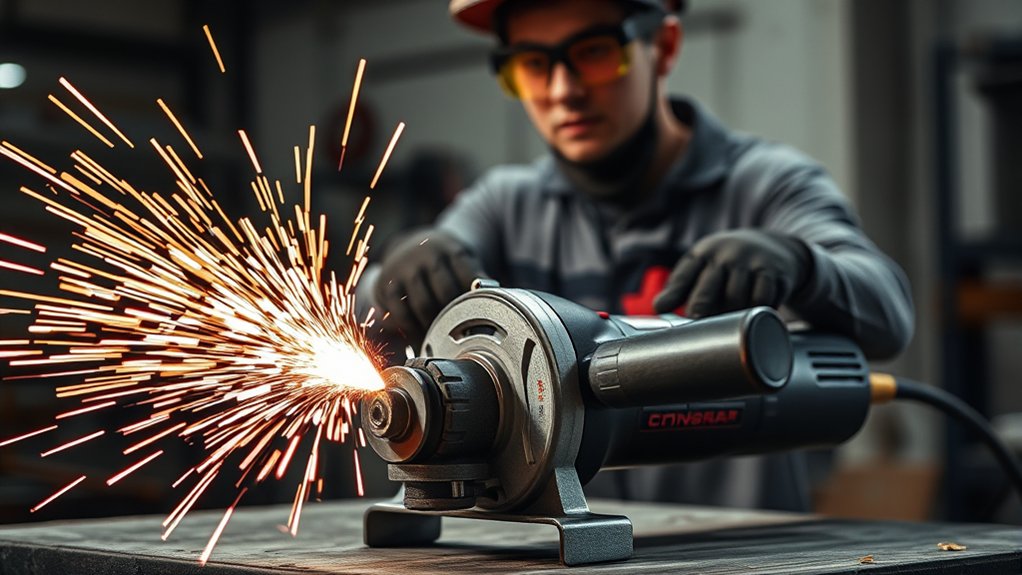
Guaranteeing compliance with OSHA regulations is vital when using angle grinder safety guards, as these protective devices play an important role in safeguarding operators from potential hazards. According to OSHA 29 CFR SubPart O 1910.215, guards must cover at least half of the grinding wheel to protect you from debris and sparks. Additionally, these guards must prevent accidental openings during disc failure, meeting the strength and locking standards set by ANSI B7.1.
Proper installation is essential; for instance, tongue-guards should maintain a gap of no more than 1/4 inch from the wheel, while work-rests must be adjusted within 1/8 inch to avoid wheel jamming. Regular inspections of both guards and wheels are necessary to guarantee compliance and safety. Finally, employers should keep documentation of all safety procedures and compliance measures to enhance workplace safety for angle grinder operations, ensuring a secure environment for all users.
Best Practices for Safe Angle Grinder Operations
Proper use of angle grinder safety guards is just the beginning of maintaining a safe operational environment. To enhance your safety while using an angle grinder, follow these best practices:
- Always use the appropriate guard for the task: cutting guards for cutting discs and grinding guards for grinding discs.
- Position guards correctly, minimizing gaps and making sure tongue-guards are no more than a 1/4-inch from the wheel.
- Inspect grinding wheels for defects like chips or cracks, and perform a ring test before use.
- Maintain a two-handed grip, utilizing the side handle for better control and stability.
Don’t forget your safety glasses! Running the grinder at no load for one minute post-mounting is vital to check for abnormalities and verify proper functioning. By adhering to these practices, you empower yourself to operate your angle grinder safely and effectively.
Frequently Asked Questions
Why Is a Safety Guard Important on a Grinding Machine?
A safety guard’s important on a grinding machine because it protects you from flying debris and sparks, ensuring a safer work environment. It also complies with regulations, reducing the risk of serious accidents and injuries.
What Is the Purpose of a Guard on a Grinder?
A guard on a grinder serves an essential function by shielding you from flying debris and sparks, containing shattered components, and ensuring a safer work environment. Always keep it properly positioned for ideal protection during use.
What Safety Precautions Should Be Taken When Using a Grinder to Prevent Injury From Sparks and Kickback?
To prevent injury from sparks and kickback, you should wear PPE, use a side handle for kickback prevention, inspect the grinding wheel, and maintain a safe distance from others while operating the grinder.
What Are the OSHA Requirements for Angle Grinder Guards?
OSHA requires angle grinder guards to cover at least half of the wheel, with tongue-guards not exceeding a 1/4-inch gap and work-rests adjusted within 1/8-inch. Compliance with guard regulations is essential for your safety.
Conclusion
To summarize, using safety guards on angle grinders isn’t just a precaution—it’s a necessity. Did you know that improper use of these tools leads to over 8,000 emergency room visits each year? By prioritizing safety guards, you’re not only protecting yourself but also fostering a safer work environment. Remember, taking the time to set up and maintain these guards can prevent life-altering injuries and guarantee that every job is completed efficiently and safely. Stay safe out there!