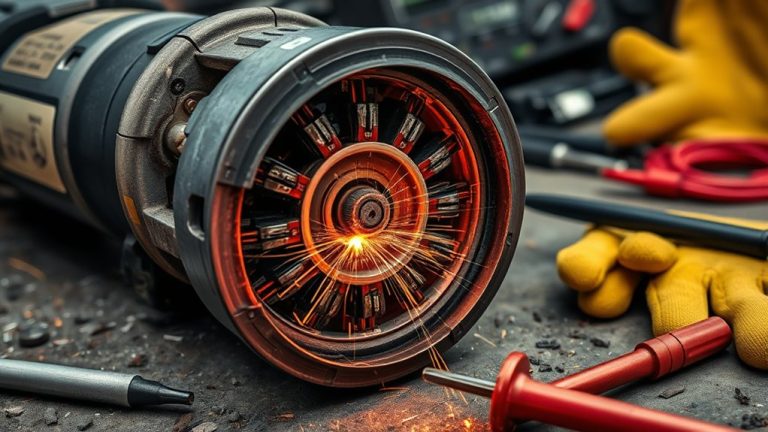
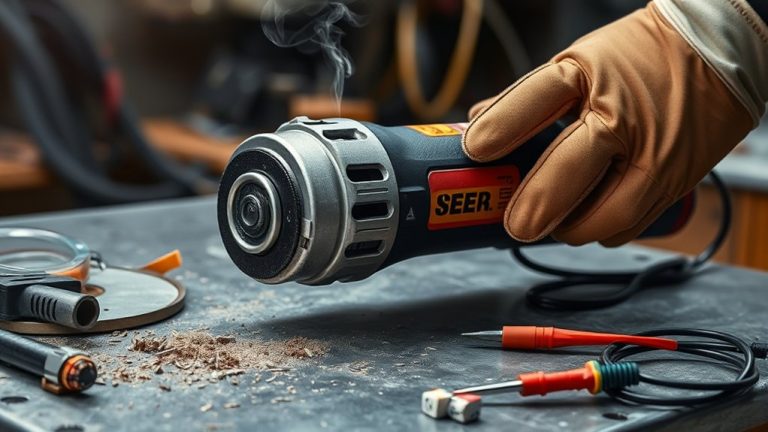
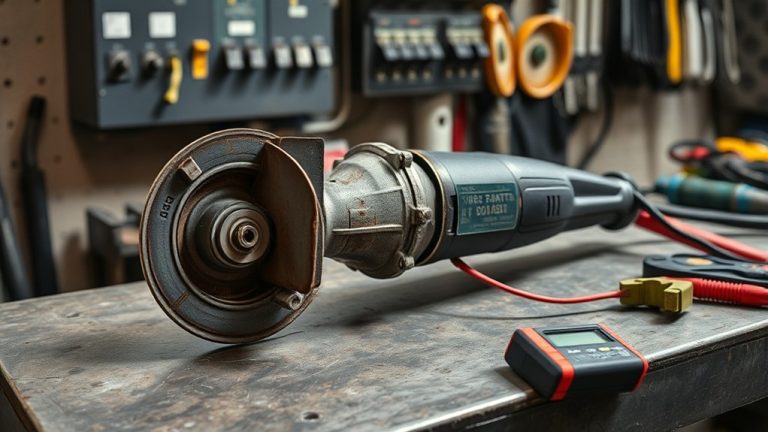
If your angle grinder smells like burning, you might be facing overheating or electrical issues. Common causes include burnt insulation, blocked airflow, or excessive pressure during use. Disconnect the power immediately, inspect the power cord, and check for visible damage or debris. Look out for any unusual noises or performance drops. If problems persist, you may need to address internal components or replace worn parts. There are important details about prevention and maintenance you shouldn’t miss.
Understanding Common Causes of Burning Smells in Angle Grinders
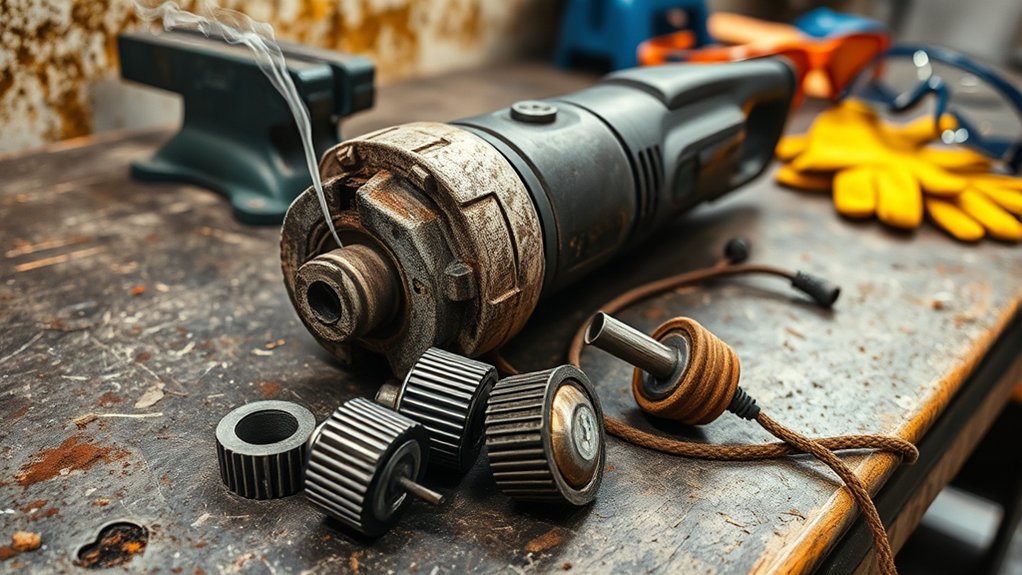
When you notice a burning smell from your angle grinder, it’s essential to identify the underlying causes. One common issue is burnt insulation on motor windings, which can signal impending motor failure. This can happen due to excessive pressure during use or poor contact within the electrical components. Additionally, blocked airflow from debris can lead to overheating, exacerbating the smell.
You should also consider the quality of your extension cords; using low-quality or undersized cords can cause voltage drops, further contributing to overheating and burning odors. Regularly cleaning dust and debris from your grinder, especially after concrete work, helps maintain airflow and prevents overheating. Finally, be mindful of frequent on-off cycling, as this can generate heat buildup and increase the risk of damage, leading to those burning smells. Identifying these causes will help you maintain your grinder’s performance and extend its lifespan.
How to Recognize When Your Grinder Is Overheating?
To recognize when your grinder is overheating, pay attention to signs like a burning smell, excessive vibration, or unusual noise. If the tool becomes too hot to touch, it’s essential to stop and let it cool down. Additionally, inspect the air vents for blockages, as restricted airflow can exacerbate overheating issues.
Signs of Overheating
Overheating can be a silent yet critical issue with angle grinders that you need to recognize promptly. One of the first signs is a burning smell, indicating potential insulation failure in the motor. If your grinder becomes excessively hot to the touch, it’s a clear warning sign of overheating. You might also notice smoke or a burning odor accompanying this heat. Performance issues, such as reduced speed or power, further confirm overheating. Additionally, listen for audible changes; a growling noise or irregular operation can signal complications. Frequent interruptions, like automatic shut-off or tripping breakers, indicate your grinder is struggling with overheating and requires immediate attention. Address these signs to prevent severe damage to your tool.
Preventive Measures to Avoid
Recognizing potential overheating in your angle grinder is essential for maintaining its performance and longevity. First, monitor temperature by regularly checking the motor housing and gearbox; if they feel excessively hot, your grinder may be overheating. Listen for changes, too—abnormal sounds like grinding or whining indicate that the motor is under strain. Inspect for dust buildup in air vents and cooling ports, as blocked airflow can exacerbate overheating. To avoid prolonged use, take breaks, especially during heavy-duty tasks, allowing the grinder to cool. Finally, always use appropriate discs; mismatched discs can generate excessive heat, leading to potential failure. By following these preventive measures, you can guarantee your angle grinder remains efficient and reliable.
Immediate Steps to Take When You Smell Burning
When you smell burning from your angle grinder, your first step is to disconnect it from the power source to eliminate any risk of fire. Next, allow the tool to cool down before inspecting internal components for signs of damage. Make sure to check airflow and any visible issues with the power cord and switch, as these can contribute to overheating.
Check Power Source First
If you detect a burning smell while using your angle grinder, swift action is vital to prevent damage and secure safety. Start by immediately disconnecting the grinder from the power source. This step is essential to minimize hazards. Next, inspect the power cord for visible damage, fraying, or exposed wires that might cause electrical shorts. If the cord appears intact, check the outlet by testing it with another device to verify it’s functioning properly. A faulty outlet can contribute to power issues. Also, examine the on-off switch using a multimeter to confirm continuity; a defective switch may be the culprit behind the burning smell. If the issue persists after these checks, further internal inspection will be necessary.
Inspect Internal Components
After disconnecting the grinder from the power source, it’s time to inspect the internal components for any signs of damage. Start by examining the power cord and plug; look for burnt areas, fraying, or melting, which indicate electrical failure. Next, open the grinder casing. Focus on the motor windings and insulation; any signs of burning or wear are critical to note. Check the brushes and armature as well—burnt or damaged brushes can hinder functionality and require replacement. Finally, inspect for debris or concrete dust buildup inside the grinder. This obstruction can restrict airflow, leading to overheating. Cleaning these components thoroughly is vital to restore peak performance and guarantee safety.
Allow Tool To Cool
Detecting a burning smell from your angle grinder requires immediate action to prevent further damage. First, disconnect the grinder from the power source to eliminate any risk of fire. Allow the tool to cool down for at least 15-30 minutes; overheating can cause serious internal damage, especially if components are already burnt. Once cool, check the air vents for blockages, as restricted airflow may lead to overheating and that burning smell. Inspect the disc and internal components for signs of damage, such as burnt wires or worn brushes, which could be the source of the issue. Avoid using the grinder until you’ve resolved any problems, as continued operation can exacerbate damage and compromise your safety.
How to Inspect Your Angle Grinder for Signs of Damage
Inspecting your angle grinder for signs of damage is crucial to guarantee safe and efficient operation. Start by examining the power cord for any visible fraying or damage; this can lead to electrical shorts and overheating. Next, use a multimeter to check the switch for continuity, ensuring it functions correctly. Open the grinder to inspect internal components, particularly the rotor and stator, for burnt insulation or damaged copper windings, indicating potential motor failure. Also, look for debris in the air vents that might restrict airflow, as this can cause overheating during operation. Finally, assess the condition of the brushes; if they’re too short, replace them to maintain proper electrical contact with the armature. Regular inspections not only extend the life of your angle grinder but also enhance safety during use, making these checks essential.
How to Fix Electrical Problems in Your Grinder
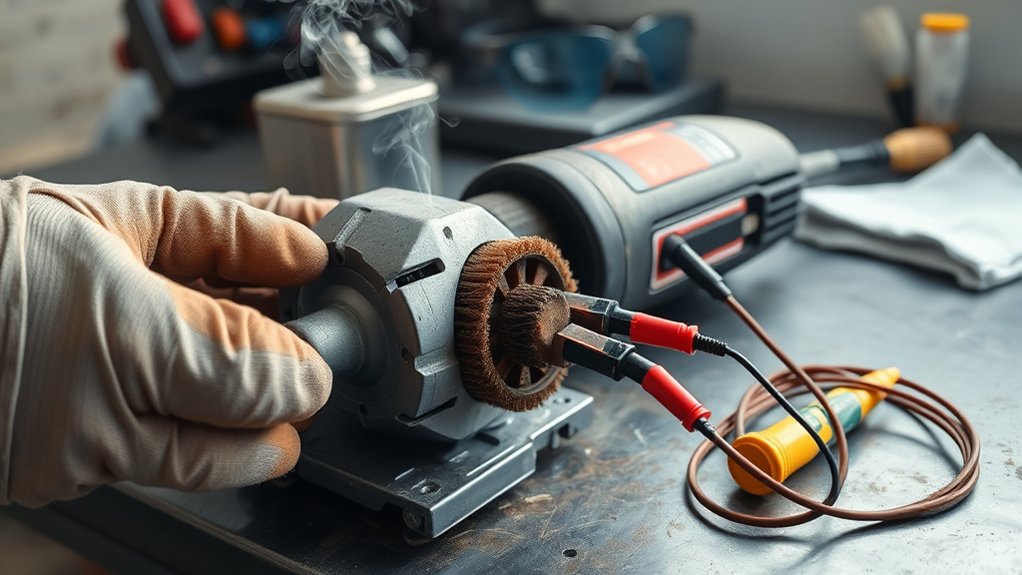
Electrical problems in your angle grinder can often stem from a variety of sources, and addressing them promptly is crucial for safe operation. Start by checking the power cord for fraying or damage; a compromised cord can lead to short circuits and that burning smell you’ve noticed. Next, test the on-off switch with a multimeter for continuity to verify it functions correctly, preventing potential electrical failures.
Inspect the internal components for burnt wires or damaged insulation, as these issues often indicate overheating within the motor. Additionally, evaluate the filter capacitors for any external damage; failing capacitors can produce smoke and odors. If you identify faulty components, consider bypassing them to restore functionality, but document your changes for future reference. By taking these steps, you’ll enhance your grinder’s safety and performance, guaranteeing it operates effectively.
Cleaning and Maintenance Tips to Prevent Overheating
To guarantee your angle grinder operates efficiently and prevents overheating, regular cleaning and maintenance are essential. Start by blowing out dust and debris after each use, particularly following concrete work, to maintain ideal airflow. Inspect air vents frequently to verify they’re free from blockages, as restricted airflow can lead to motor overheating.
Repack the gearbox with fresh grease annually; this promotes proper lubrication, extending your tool’s lifespan and efficiency. When using an extension cord, opt for heavy-duty, appropriately sized options to minimize voltage drop and further reduce overheating risks.
Lastly, keep an eye on the carbon brushes. Replace them when they become too short to confirm consistent electrical contact. By following these cleaning and maintenance tips, you can greatly mitigate overheating issues and enhance your angle grinder’s performance and longevity.
Replacing Worn or Damaged Parts Safely
Before you tackle replacing worn or damaged parts, it’s crucial to disconnect the power to your angle grinder. This step guarantees your safety during repairs. Next, use a multimeter to test the continuity of the switch and power cord. This can help pinpoint the exact issue before you replace the power.
When replacing brushes, make sure they match the size and type specified for your angle grinder model. Incorrect parts can hinder performance. Don’t overlook the bearings; inspect them thoroughly and replace any damaged ones to prevent overheating and excessive wear.
Always follow the manufacturer’s guidelines for part replacement to ensure compatibility and maintain your tool’s warranty. By adhering to these safety checks and procedures, you’ll effectively restore your grinder’s functionality while minimizing risks associated with improper repairs.
When to Seek Professional Repair for Your Grinder?
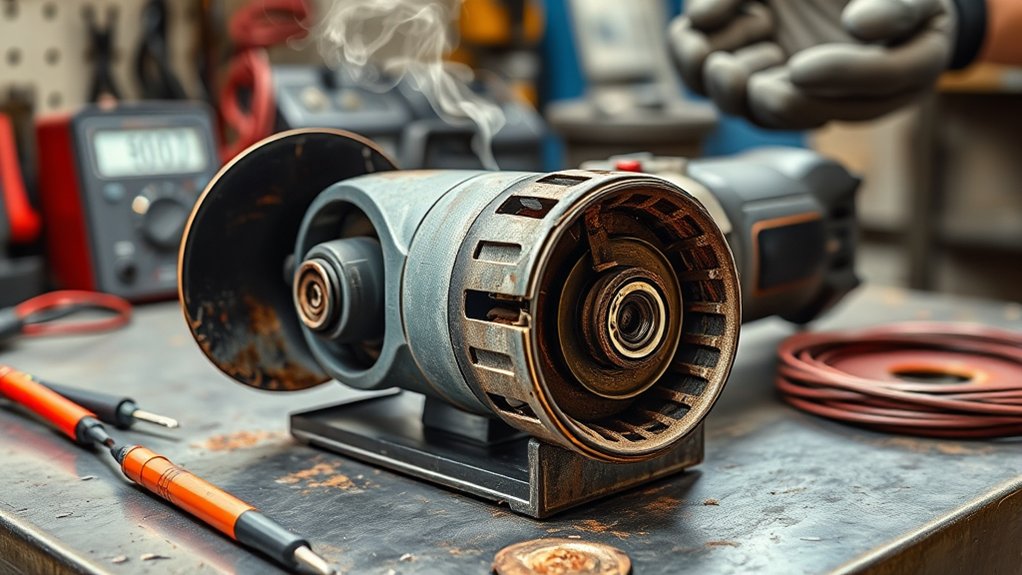
Recognizing when to seek professional repair for your angle grinder is essential for both safety and tool longevity. Ignoring issues can lead to dangerous situations or further damage. Here are key indicators that it’s time to consult an expert:
- Burning Smell: If you notice a burning smell or smoke during operation, disconnect the grinder immediately. This often signals serious motor issues that need professional repair.
- Inconsistent Power: If your grinder repeatedly fails to start or shows irregular power despite checking the power source, internal repairs may be necessary.
- Visible Damage: Any visible damage to wiring or electrical components warrants professional help to prevent hazards like electrical fires.
- Unusual Noises: Persistent unusual noises or vibrations after maintenance checks indicate deeper mechanical problems that require expert evaluation.
Addressing these signs promptly guarantees both your safety and the grinder’s longevity.
How to Keep Your Grinder Healthy Long-Term
To keep your angle grinder in top condition, establish a routine that includes regular cleaning and proper storage techniques. Scheduled maintenance checks, such as inspecting carbon brushes and lubricating the gearbox, are essential for extending its lifespan. By prioritizing these practices, you’ll enhance performance and reduce the risk of unexpected failures.
Regular Cleaning Practices
Maintaining your angle grinder’s longevity hinges on implementing regular cleaning practices that prevent overheating and prolong its performance. Follow these steps for ideal care after grinding or cutting:
- Blow out dust from vents and internal components after each use to prevent motor damage.
- Clean and inspect brushes; replace them if worn to guarantee optimal contact and performance.
- Use compressed air to clear debris from the gear head and bearings, promoting lubrication and reducing wear.
- Regularly check the power cord and plug for fraying or damage to avoid electrical hazards.
Proper Storage Techniques
While you may be tempted to leave your angle grinder out after use, proper storage is essential for its long-term health and performance. Store your HF grinders in a dry, cool place to prevent moisture, which can cause rust and electrical issues. Use a protective case or bag to shield it from dust and debris, extending its lifespan. Before storage, clean the grinder of all concrete dust to avoid internal damage and overheating during future use. Keep it away from direct sunlight or extreme temperatures, as these can degrade materials. Regularly inspect your grinder for signs of wear, like frayed cords, to address issues before they escalate. Proper storage techniques greatly enhance your tool’s longevity and functionality.
Scheduled Maintenance Checks
Scheduled maintenance checks are essential for guaranteeing your angle grinder remains reliable and efficient over time. By incorporating regular inspections and maintenance, you can prevent costly repairs and enhance performance. Here’s how to keep your grinder in top shape:
- Clean After Each Use: Remove concrete dust and debris to prevent overheating and internal damage.
- Inspect the Power Cord: Check the power cord, switch, and internal components monthly for wear and damage.
- Repack Gearbox: Annually, add fresh grease to the gearbox to maintain lubrication.
- Monitor Brush Length: Replace brushes when too short to guarantee consistent performance and prevent motor damage.
Real User Experiences With Angle Grinder Overheating
Many users have encountered issues with angle grinder overheating, often attributing it to excessive pressure during operation. This pressure not only reduces efficiency but can also lead to premature tool failure. Regular maintenance, such as cleaning out dust and debris, is essential for preventing overheating and ensuring peak performance. Users recommend monitoring the motor temperature, especially during prolonged use, as overheating typically results in burning smells and potential damage.
Additionally, experiences highlight the importance of using appropriate extension cords—short and heavy-duty options greatly mitigate overheating risks. Notably, some users find that older grinder models, when properly maintained, manage heat better than newer, lower-quality versions. By adopting these practices, you can enhance your angle grinder’s longevity and performance, liberating yourself from the frustrations of overheating and ensuring a smoother, safer grinding experience.
Frequently Asked Questions
What Are Signs My Grinder Needs Repair?
If your grinder shows signs like unusual noises, overheating, or significant slowdowns, it likely needs repair. Regular grinder maintenance and safety precautions can help identify these issues early, ensuring peak performance and longevity.
What Causes a Grinder to Overheat?
A grinder overheats due to excessive friction, motor issues, worn bearings, and improper usage. Poor ventilation further exacerbates the problem, restricting airflow and leading to thermal failure if not addressed promptly. Regular maintenance is essential.
Can Sparks From an Angle Grinder Start a Fire?
Yes, sparks from an angle grinder can ignite nearby materials, turning a simple task into a fire hazard. Prioritize fire safety and spark management by keeping flammable items away and using barriers to shield your workspace.
How to Tell if an Angle Grinder Disc Is Bad?
To tell if your angle grinder disc is bad, check for disc wear, excessive vibration issues, abnormal noise levels, and guarantee disc compatibility. Visible damage or performance inconsistencies also indicate it’s time for a replacement.
Conclusion
In summary, if your angle grinder starts to emit a burning smell, it’s like a red flag waving furiously. Ignoring it can lead to catastrophic failure, akin to a ticking time bomb. By promptly addressing overheating and inspecting for damage, you not only guarantee safety but also preserve your tool’s longevity. Remember, a well-maintained grinder is your steadfast ally in any project, while a neglected one can swiftly become a costly liability. Stay vigilant and keep grinding efficiently.