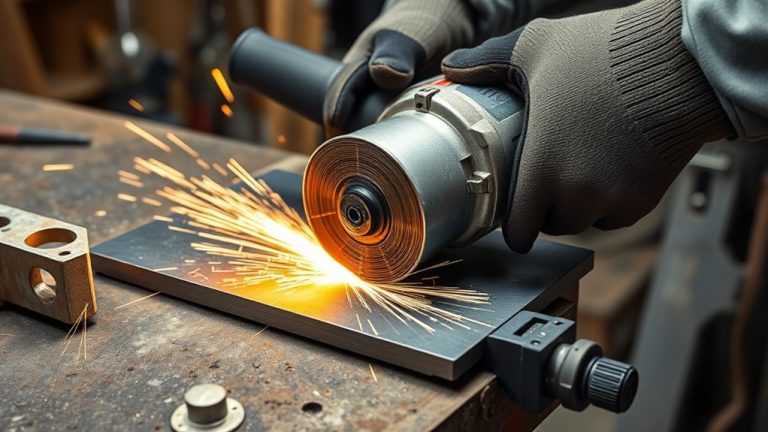
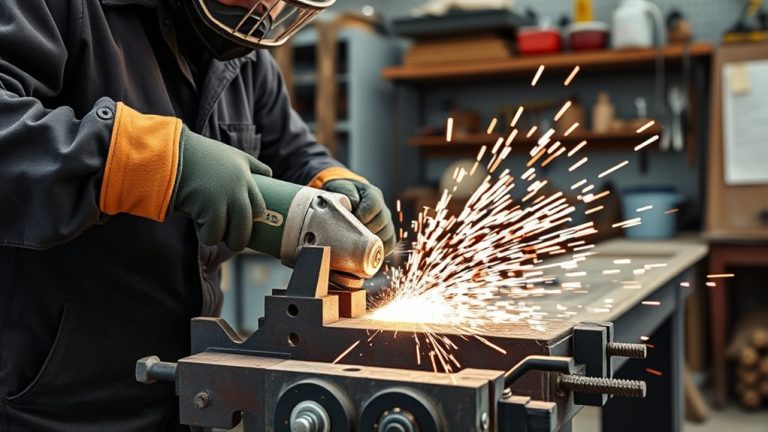
Using an angle grinder can ignite sparks that pose fire risks. Always wear safety glasses, hearing protection, and flame-retardant clothing to safeguard yourself. Set up a clean work area, keeping flammable materials at least 10 feet away. Inspect your grinder and discs for damage, and maintain a secure two-handed grip while working. Properly positioned guards minimize flying debris. By following these precautions, you can work safely and effectively. There’s much more you should know to stay safe.
Identifying Common Risks When Using Angle Grinders
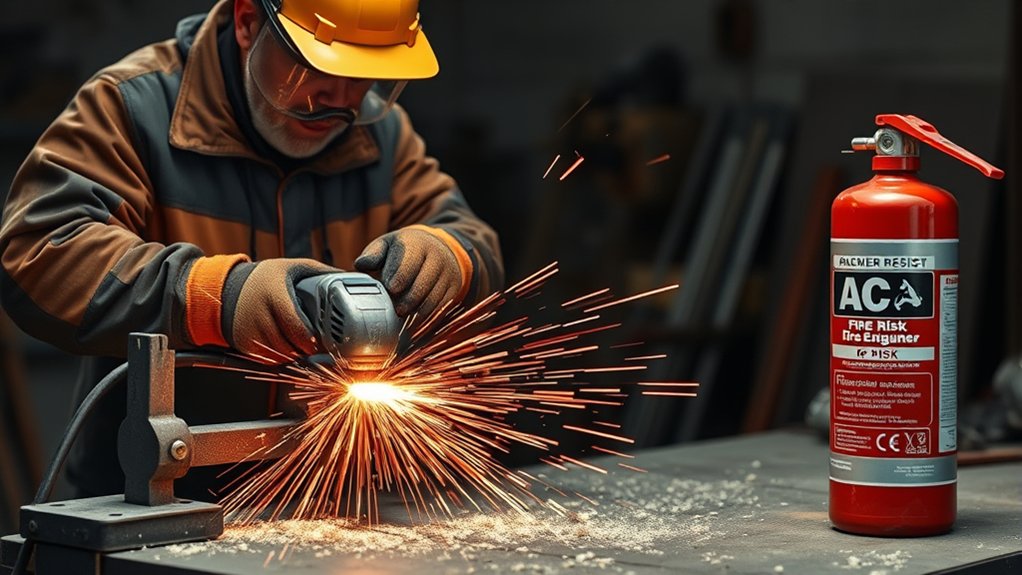
When using angle grinders, you need to be aware of several common risks that can lead to serious injuries. One major hazard is the generation of sparks, which can ignite flammable materials. Always verify your work area is free from oily rags and combustibles. The high-speed rotation of discs, typically between 9,000 to 11,000 RPM, increases the risk of kickback, resulting in a potential loss of control. To mitigate these risks, wearing appropriate personal protective equipment (PPE) like safety goggles and flame-retardant clothing is vital to protect against flying debris and sparks. Regularly inspect grinding discs for cracks or chips; damaged discs can shatter during use, posing severe injury risks. Additionally, using guards is critical as they contain shattered discs and minimize exposure to sparks, greatly reducing fire hazards. Prioritize these safety measures to verify a safer working environment.
What Safety Gear You Really Need?
To guarantee your safety while using an angle grinder, investing in the right personal protective equipment (PPE) is essential. Start with safety glasses or face shields to shield your eyes from flying debris and sparks, greatly reducing the risk of injuries. Hearing protection, like ear muffs or plugs, is vital since noise levels can exceed 85 dB, posing long-term hearing damage risks. Well-fitting gloves made of leather provide heat and spark resistance, ensuring hand protection without sacrificing dexterity.
Don’t overlook flame-retardant clothing and steel-toed safety boots; these minimize the risk of burns and foot injuries from falling objects or sparks. Adhering to PPE guidelines not only protects you but also fosters a safer workplace environment. By prioritizing angle grinder safety and implementing these measures, you’re actively preventing injuries and creating a more liberated, secure working space.
Setting Up Your Work Area Safely
To set up your work area safely, start by clearing any clutter and obstacles that could interfere with your movements. Make certain the workspace is well-lit to enhance visibility and accuracy during grinding tasks. A clean and illuminated environment minimizes the risk of accidents and improves your overall efficiency.
Clear Clutter And Obstacles
Creating a safe workspace involves clearing clutter and obstacles, guaranteeing you have at least a three-foot radius around your angle grinder. This space minimizes risk during operation, allowing you to focus on your task. Remove any obstacles that could impede movement or distract you, promoting safe operation. Keep flammable materials, such as oily rags or paper, at least 10 feet away to greatly reduce fire hazards from sparks generated during grinding. Additionally, verify proper ventilation to disperse dust and fumes, enhancing your safety. Following these safety tips not only protects you but also contributes to a more efficient work area, allowing for precise cutting and grinding without the worry of accidents.
Ensure Adequate Lighting
A clutter-free workspace lays the groundwork for safe operation, but sufficient lighting is equally important. Adequate lighting enhances visibility, allowing you to clearly see materials and avoid potential hazards. Bright, natural light or high-intensity LED work lights can reduce shadows and glare, minimizing risks while you operate the angle grinder.
Position lights strategically to illuminate your workspace, especially around the angle grinder and the workpiece, ensuring safe operation. Regularly check and clean light fixtures to maintain peak brightness.
| Lighting Type | Benefits |
|---|---|
| Natural Light | Enhances visibility and focus |
| LED Work Lights | Reduces shadows and glare |
| Task Lighting | Illuminates specific work areas |
| Ambient Lighting | Provides consistent illumination |
Safe Operating Techniques for Angle Grinder Use
Guaranteeing safe operation of an angle grinder requires strict adherence to established techniques. Always start by wearing appropriate personal protective equipment, including goggles and gloves. Before use, inspect the grinder and disc for any damage, such as cracks or chips, to prevent failures. Maintain a two-handed grip to enhance control, minimizing kickback and reducing the risk of accidents. Position the grinder at a 15 to 30-degree angle to the workpiece, which helps prevent disc binding. Always use a properly fitted guard to contain sparks and debris; verify it’s securely locked before starting. Additionally, be vigilant about your surroundings—keep flammable materials at least 10 feet away from your work area to greatly reduce fire risks. By following these safe operating techniques, you’ll not only guarantee safety but also enhance your overall grinding efficiency.
Essential Features for Safe Angle Grinders
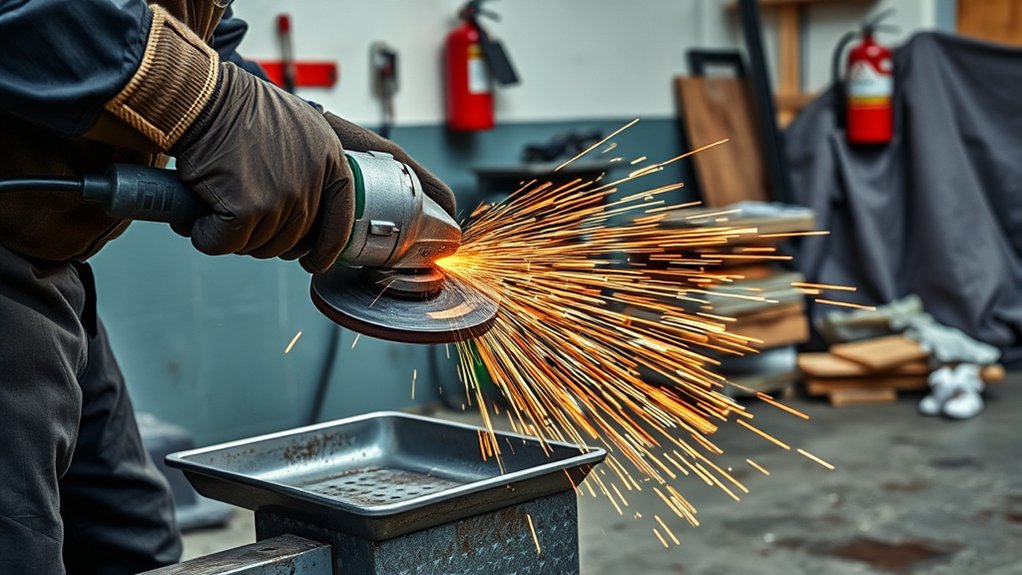
Choosing the right angle grinder involves understanding key features that enhance safety during operation. Prioritize models equipped with essential safety features like anti-kickback systems, which automatically cut the motor if the disc binds, minimizing loss of control. Look for robust guard designs that can be adjusted for both cutting and grinding tasks, protecting you from flying debris.
Ergonomics is vital; select grinders with side handles for improved grip and stability, reducing fatigue during extended use. Confirm that the grinder’s RPM compatibility matches your intended disc sizes to prevent dangerous mismatches. Finally, adhere to durability standards by choosing grinders made from high-quality materials that comply with safety regulations. This way, you can enjoy enhanced grinder safety while using power tools effectively, guaranteeing that the disc operates smoothly and securely during all your projects. Don’t forget to wear personal protective equipment for added safety.
How to Respond in an Emergency?
When an emergency arises while using an angle grinder, your immediate response is essential for minimizing injury and damage. First, turn off and unplug the tool to prevent further hazards. Next, assess the situation for potential dangers before approaching the injured person—confirm the area is safe.
If you encounter bleeding, apply direct pressure to the wound and seek professional medical assistance if the injury is severe. For burns, rinse the affected area with cool running water for 10-20 minutes, then cover it with a sterile dressing—avoid using ice.
Always keep a first aid kit readily accessible in your workspace, and make certain that all operators are familiar with emergency procedures and first aid practices. By being prepared and knowing how to respond in an emergency, you can greatly reduce risks and foster a culture of safe work.
Frequently Asked Questions
What Types of Materials Should I Avoid Grinding?
Avoid grinding flammable surfaces, hazardous materials, and coated surfaces. Steer clear of non-ferrous metals, heat-sensitive plastics, composite materials, thin sheets, and wood products to minimize fire risks and guarantee a safer workspace.
How Often Should Angle Grinder Maintenance Be Performed?
You should perform angle grinder maintenance every month. Conduct regular inspections, check dust collection, follow a lubrication schedule, replace wheels as needed, and log usage. Always wear safety gear and use proper maintenance tools for electrical safety.
Can I Use an Angle Grinder Indoors Safely?
You can use an angle grinder indoors, but guarantee proper indoor ventilation and spark containment. Prioritize fire safety, manage dust, protect surfaces, wear personal protective gear, and control noise levels to create a safe work area.
What Are the Signs of a Malfunctioning Angle Grinder?
You’ll notice malfunctioning signs like unusual grinder noise issues, overheating problems, excessive sparks, vibration concerns, disc wear signs, handle damage indicators, and improper blade alignment. Always check power supply and safety switch functionality. Wear protective gear.
Are There Specific Regulations for Angle Grinder Use in My Area?
Yes, angle grinder regulations vary by area. Check local safety standards, equipment usage guidelines, and workplace safety policies. Confirm compliance with industrial laws, training requirements, and fire prevention measures to protect yourself and others.
Conclusion
To sum up, while angle grinders can be powerful tools for cutting and grinding, they also pose significant fire risks if not handled properly. You can enjoy their benefits by prioritizing safety gear, maintaining a clean work area, and using safe operating techniques. Remember, a moment of carelessness can lead to disastrous consequences, but with the right precautions, you can mitigate those dangers. Stay vigilant, and you’ll harness the power of your angle grinder without compromising safety.