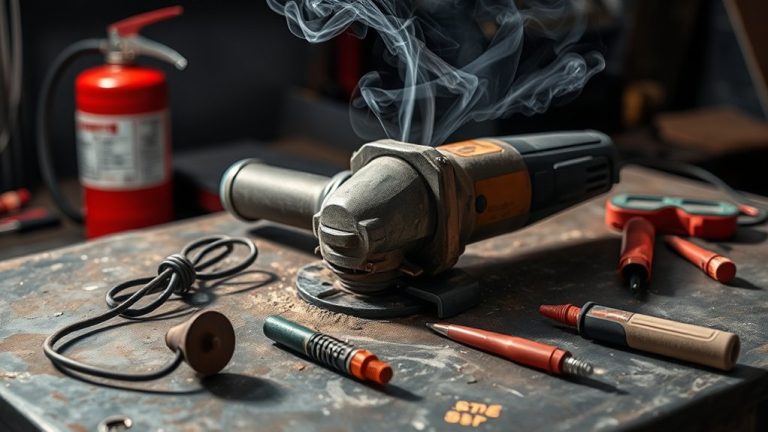
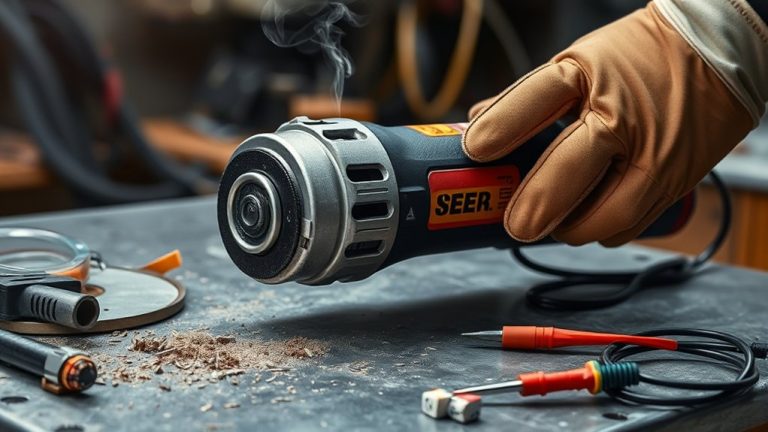
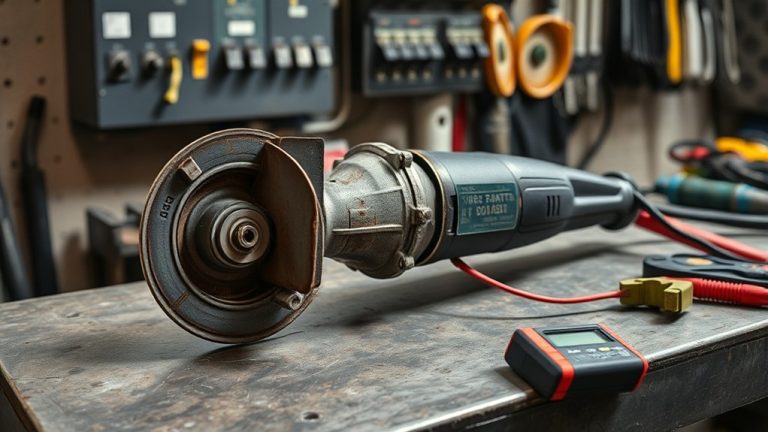
If your angle grinder is sparking inside the motor, common causes include worn carbon brushes, a dirty or damaged commutator, and shorted motor windings. You should inspect the brushes and commutator regularly, ensuring all components are clean and in good condition. Replace damaged brushes immediately to prevent further issues. Always use proper safety gear and check for any visible damage before operation. Discover effective maintenance tips and additional troubleshooting methods to keep your grinder running smoothly.
Why Is Your Angle Grinder Sparking? Common Causes and Solutions
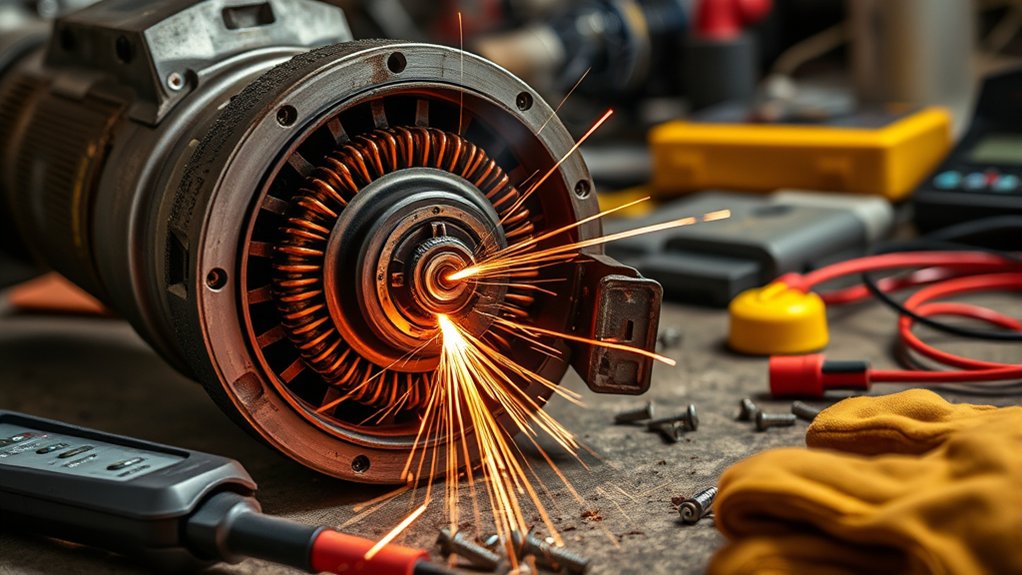
When your angle grinder sparks excessively, it often signals underlying issues that need attention. One common culprit is worn brushes. Insufficient pressure from these worn brushes can lead to poor contact with the commutator, causing increased sparking and risking motor failure. Additionally, a dirty or damaged commutator can exacerbate this problem, so regular cleaning with fine sandpaper is vital.
Inspect the commutator for wear or burn marks to guarantee peak performance. Debris or carbon buildup between segments may also contribute to sparking issues, highlighting the importance of routine maintenance. If you notice bright blue sparks, it’s important to act fast; this could indicate serious electrical problems that may require further inspection or even armature replacement. By addressing these factors, you can liberate your angle grinder from potential damage and maintain its efficiency.
Signs Your Brushes Need Replacement
When using your angle grinder, keep an eye out for common signs that indicate your brushes need replacement. Excessive sparking, especially if it’s bright blue, can signal wear, while visual damage like grooves or discoloration on the brushes suggests overheating. If you notice a drop in motor performance or excessive heat, it’s vital to check the brushes to prevent further issues.
Common Brush Wear Indicators
Brush wear indicators are essential to maintaining peak performance in your angle grinder. Look for excessive sparking, especially bright blue sparks, as this often signals that the brushes are worn and need replacement. Check for physical wear, such as reduced brush length or irregular shapes, which indicate the brushes have reached their operational limits. Discoloration or burning marks on the commutator surface suggest improper contact, necessitating immediate replacement of the brushes. If you notice brushes sticking due to dirt or debris, inspect them promptly, as this can impair performance. Regular visual inspections for cracks or breaks in the carbon material can help you identify when brushes need replacement before they cause further issues. Stay proactive for maximum performance!
Excessive Sparking Observations
Excessive sparking during operation often signals that your angle grinder’s carbon brushes are worn or damaged, requiring immediate attention. Look for these signs to determine if a replacement is necessary:
| Observation | Possible Cause | Action Required |
|---|---|---|
| Bright blue sparks | Worn carbon brushes | Replace brushes immediately |
| Loose brush cap | Poor contact | Tighten and align |
| Discoloration or burning | Failing brushes | Replace to prevent motor damage |
| Uneven sparking | Misalignment | Check seating and alignment |
| Frequent sparking | General wear | Regular inspection recommended |
Visual Damage Assessment
Visible damage on your angle grinder’s carbon brushes can greatly impact performance, so it’s crucial to assess their condition regularly. Start by examining the brush cap and look for burn marks or discoloration on the commutator, signaling overheating and the need for replacements. Check the brushes for excessive wear; reduced length or uneven surfaces can compromise contact with the commutator. Watch for signs of sparking or arcing around the brushes, indicating inadequate pressure or damage. Don’t forget to inspect the brush springs; any collapse or loss of tension can lead to poor contact and increased sparking. Regularly monitoring these components will help maintain peak performance and prevent potential motor damage.
What Causes Sparking in Your Grinder?
When you’re using an angle grinder, excessive sparking can signal underlying issues that need attention. Common causes include worn carbon brushes that fail to maintain contact with the commutator, resulting in poor electrical flow. A damaged or dirty commutator can also contribute, as debris disrupts connections. Additionally, shorted motor windings or insulation breakdown in the armature can cause severe sparking and overheating. Insufficient pressure from worn brushes or loose brush caps can exacerbate these issues, leading to excessive sparking at the brushes.
| Cause | Description |
|---|---|
| Worn Carbon Brushes | Poor contact with the commutator |
| Damaged/Dirty Commutator | Disrupted electrical flow |
| Shorted Motor Windings | Severe sparking and potential overheating |
| Insulation Breakdown | Increased winding resistance |
| Loose Brush Caps | Insufficient pressure causing sparking |
Regular inspection and maintenance are essential to prevent these issues and guarantee peak performance.
How to Inspect and Maintain Your Angle Grinder
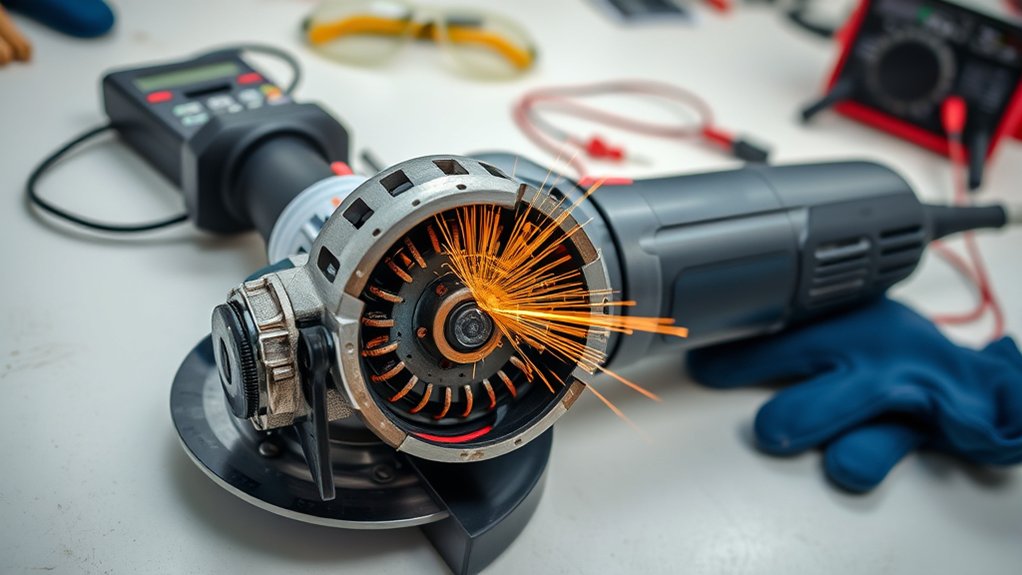
To keep your angle grinder running efficiently, regular inspection and maintenance are essential. Start by checking the armature for any burn marks and ensuring the brush channels are clean to prevent overheating. Incorporate proper cleaning procedures, like using sandpaper on the commutator, to maintain peak performance and safety.
Regular Inspection Checklist
Regular inspections are crucial for maintaining the performance and safety of your angle grinder. Follow this checklist to guarantee peak functionality:
- Inspect the armature for burn marks or visible damage, indicating potential electrical failures or overheating.
- Use a multimeter to check resistance between commutator bars, confirming no short circuits or continuity issues.
- Clean the commutator and carbon brushes regularly to remove debris and carbon deposits, enhancing performance and reducing sparking.
- Examine brush channels for dirt and verify that carbon brushes maintain proper contact; insufficient pressure can lead to excessive sparking.
Before starting, always remember to remove the wheel. Regular checks can greatly improve safety and efficiency in your work.
Cleaning Procedures Explained
Cleaning your angle grinder is essential for maintaining its efficiency and longevity. Begin by regularly inspecting the commutator and carbon brushes for dirt and damage. Use a toothbrush and 1000 grit sandpaper to clean the commutator bars effectively. Next, employ an air hose to blow out dust and debris around the brushes and commutator, guaranteeing smooth operation and preventing overheating. Check the grooves between commutator bars for blockages; clean them to allow for proper brush movement. Ascertain brush channels are free from dirt, as this can jam brush movement, leading to sparking and inefficiency. Finally, conduct thorough inspections of the armature for burn marks or wear—these can indicate deeper electrical issues needing immediate attention.
How to Clean the Commutator
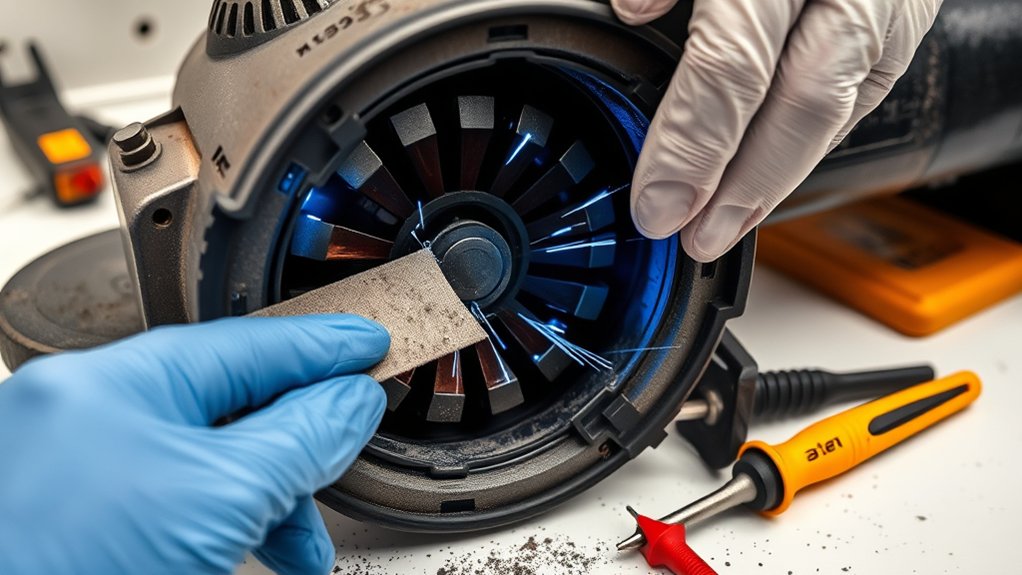
Maintaining a clean commutator is essential for the ideal performance of your angle grinder. Follow these steps to effectively clean the commutator and enhance its efficiency:
- Use 1000 grit sandpaper to gently clean the commutator bars, guaranteeing a smooth surface to minimize sparking.
- Remove carbon deposits with a toothbrush or soft brush to maintain peak contact and performance.
- Clean the grooves between commutator bars to prevent debris buildup that can hinder brush movement.
- After sanding, use a white PVC eraser to guarantee no conductive residue remains on the commutator, enhancing electrical contact.
Regularly inspect the commutator for wear and damage, addressing any roughness or discoloration. By taking these steps to clean the commutator, you’ll prolong your angle grinder’s lifespan and uphold its operational integrity, ensuring it performs at its finest when you need it most.
When to Replace the Armature?
After ensuring the commutator is clean and in good condition, it’s important to monitor the armature for signs of wear or damage. If you spot burn marks or significant damage during your inspection, replace the armature immediately, as these indicate potential electrical failures. Excessive sparking, especially bright blue sparks, suggests shorted windings, which also necessitate replacement.
Using a multimeter, measure the resistance between commutator bars. A lack of continuity or abnormal resistance readings points to a failing armature. Additionally, inspect the field coils for burnt spots; any damage here could compromise your power tool’s efficiency and safety, warranting armature replacement.
If the armature shows excessive wear or your brushes are frequently failing, consider replacing it to avoid costly repairs and maintain peak tool performance. Ensuring the integrity of the armature is essential for the reliable operation of your power tool.
Safety Tips for Using Your Angle Grinder
Using an angle grinder can be hazardous if proper safety precautions aren’t taken. To guarantee a safe experience, make sure to follow these essential tips:
Using an angle grinder safely requires vigilance and proper precautions to prevent accidents and ensure effective operation.
- Wear Personal Protective Equipment (PPE): Always don safety goggles, gloves, and ear protection to shield against flying debris and noise.
- Prepare Your Work Area: Confirm it’s well-ventilated and free of flammable materials to minimize fire risks, especially when sparks fly.
- Inspect Your Grinder: Before use, check for visible damage like frayed cords or loose components. This helps prevent accidents.
- Use the Correct Disc: Make sure the disc fits the task and is properly secured to avoid dislodgment during operation.
Troubleshooting Other Common Angle Grinder Problems
What do you do when your angle grinder isn’t performing as expected? Start by checking the power source. Verify all connections are secure and the battery is charged. If the grinder operates slowly, inspect the center spindle for loose attachments or debris; both can hinder performance. If you notice smoke, disconnect it immediately and check for wheel obstructions or signs of overheating, as these issues may point to deeper mechanical problems. Pay attention to unusual noises during operation; they often indicate loose components or motor strain, requiring prompt attention to prevent damage. Finally, monitor the tool’s temperature. Excessive heat can be uncomfortable and may signify ventilation issues. If you see sparking at the brushes, it could indicate wear or poor contact, necessitating further inspection. Addressing these problems will enhance performance and extend your grinder’s lifespan.
Best Practices for Preventing Future Sparking
To prevent future sparking in your angle grinder, it’s crucial to maintain a routine inspection of the commutator and carbon brushes. Here are best practices to enhance the longevity of this important piece of equipment:
- Inspect and Clean: Regularly check and clean the commutator and carbon brushes to eliminate debris buildup that can cause excessive sparking and overheating.
- Use Correct Brushes: Always choose the right size and specification for carbon brushes, as mismatched brushes lead to poor contact and increased sparking.
- Routine Maintenance: Implement a maintenance schedule that includes checking brush channels for dirt and ensuring brush caps are tight for optimal pressure.
- Monitor Performance: Keep an eye on the motor’s performance for any wear or sparking, addressing issues immediately to prevent further damage to the armature.
Frequently Asked Questions
Why Is My Angle Grinder Sparking?
Your angle grinder’s sparking may stem from worn brushes, a dirty commutator, or loose caps. For effective sparking prevention, regularly inspect and maintain these components to guarantee peak performance and safety during use.
How to Stop Motor Brushes From Sparking?
Stopping motor brushes from sparking is like tuning a fine instrument. Prioritize brush maintenance: guarantee proper seating, clean surfaces regularly, inspect for debris, and replace worn brushes to enhance motor performance and safety.
What Is the Reason Behind Sparking at the Motor Brushes?
Sparking at the motor brushes often results from brush wear, leading to inadequate contact. This increases electrical arcing. Regular maintenance, including replacing worn brushes, can greatly reduce sparking and enhance motor performance.
How to Control Grinding Sparks?
To control grinding sparks, guarantee proper brush alignment and pressure, use quality carbon brushes, and monitor your material choice. Implement sparking prevention strategies like protective equipment and spark guards for safer operations.
Conclusion
To sum up, addressing angle grinder sparks requires vigilance, maintenance, and timely intervention. By regularly inspecting brushes, keeping the commutator clean, and knowing when to replace the armature, you can enhance performance and safety. Remember, consistent care prevents issues, informed troubleshooting resolves concerns, and adhering to safety protocols protects you. Stay proactive, stay safe, and guarantee your angle grinder operates efficiently for years to come.