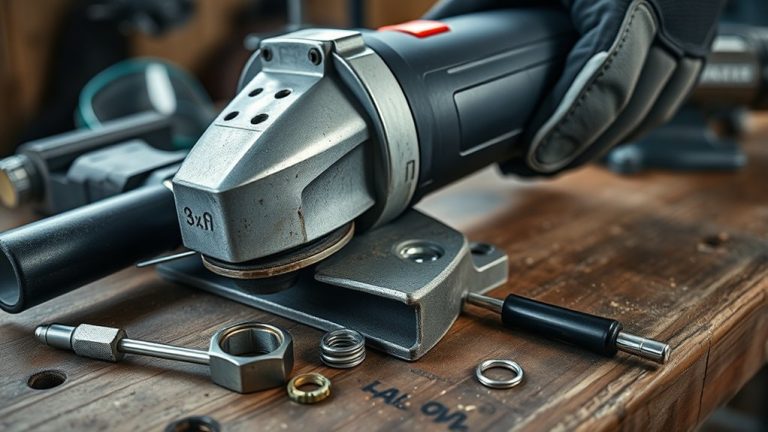
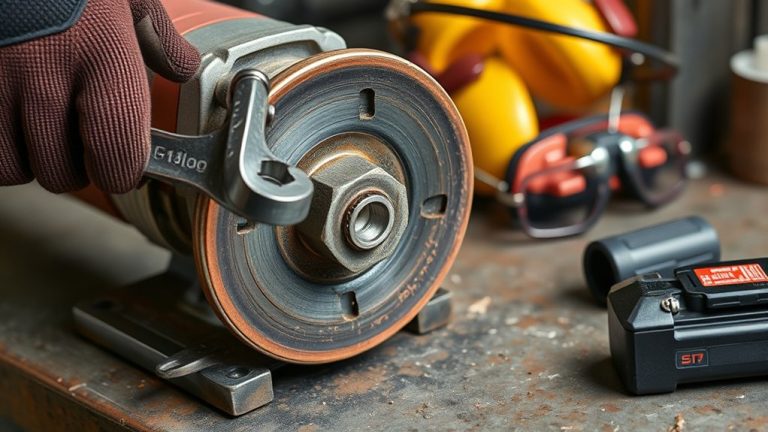
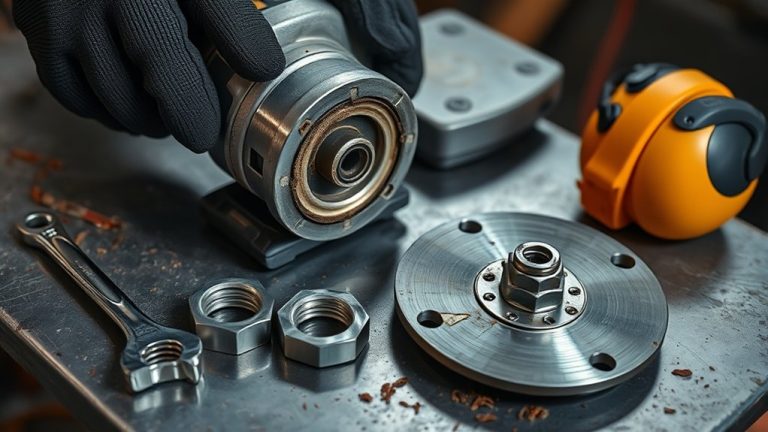
If your angle grinder’s spindle lock isn’t working, check for wear, misalignment, or debris in the mechanism. Signs of a faulty lock include a loose grinding wheel, unusual noises, or inconsistent rotation. Troubleshoot by cleaning the locking area and inspecting components for damage. Common fixes involve repositioning the lock pin or replacing worn parts. Always perform safety checks, like disconnecting the power and wearing protective gear, before repairs. There’s more to explore about effective maintenance and troubleshooting strategies.
Understanding the Angle Grinder Spindle Lock Mechanism
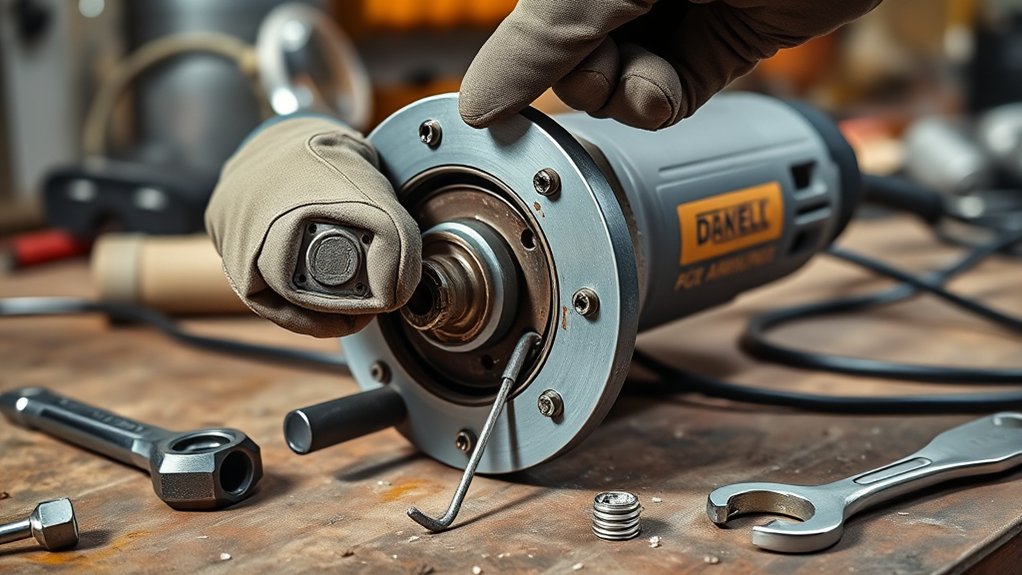
The spindle lock mechanism in an angle grinder is a critical safety feature that you rely on during wheel changes. It temporarily immobilizes the spindle, allowing you to safely replace or adjust the wheel without it spinning. When you press the lock button, a lock pin engages with the spindle, preventing rotation. This design is essential for avoiding accidents and ensuring efficient operation.
However, common issues can arise, such as wear or damage to the lock pin or sleeve. When these components fail, you may experience slippage or a complete inability to engage the spindle lock. Regular maintenance, including cleaning and inspecting the lock mechanism, is crucial to prevent these operational failures. Understanding the spindle lock’s function not only enhances your safety but also empowers you to perform wheel changes confidently, ensuring your angle grinder remains a reliable tool in your arsenal.
Signs of a Faulty Spindle Lock
When the spindle lock doesn’t engage properly, you may struggle to secure the grinding wheel, increasing the risk of it spinning off during use. Pay attention to any unusual grinding noises or vibrations, as these can indicate the wheel isn’t held firmly. Inconsistent disc rotation is another clear sign that the spindle lock may be malfunctioning, requiring immediate inspection.
Spindle Lock Engaging Issues
If you’ve noticed that your angle grinder’s spindle lock isn’t engaging properly, it could signal a serious issue that compromises safety. Here are signs of potential spindle lock engaging issues:
- The spindle lock fails to engage, leaving the grinding wheel loose.
- You experience noticeable slipping during operation, risking control.
- The grinding wheel rotates freely even when the lock is activated.
These symptoms often stem from internal wear, debris buildup, or misalignment of the locking mechanism. Regular maintenance, like cleaning and lubricating components, is essential for preventing these issues and ensuring the longevity of your tool. If problems persist after troubleshooting, you may need replacement parts or professional service to restore your angle grinder’s functionality. Stay safe and proactive!
Unusual Grinding Noises
Unusual grinding noises from your angle grinder can signal a faulty spindle lock. If you hear clunking or grinding sounds as you pull the trigger, it may indicate the spindle lock isn’t engaging properly. This can lead to inconsistent wheel rotation and increased wear on your equipment, potentially causing more severe mechanical issues over time.
Here’s a quick reference table to help you diagnose the situation:
| Noise Type | Potential Cause |
|---|---|
| Clunking | Misalignment of internal components |
| Grinding | Failing spindle lock mechanism |
| High-pitched whine | Excessive wear on gears |
| Silence under load | Spindle lock failure |
Regular maintenance can mitigate these unusual grinding noises and guarantee your grinder operates safely and efficiently. If issues persist, consider disassembling the grinder for a thorough inspection.
Inconsistent Disc Rotation
Inconsistent disc rotation often signals a malfunctioning spindle lock, which fails to engage properly and allows the disc to spin freely. You may notice:
- A clunking sound during operation, indicating ineffective locking.
- Visible wear or damage on the spindle lock mechanism from debris or corrosion.
- Loose components that prevent proper engagement of the spindle lock.
To address these issues, inspect the spindle lock closely. Regular cleaning and lubrication can greatly enhance its functionality and lifespan. If it’s not engaging, you might need to adjust or tighten the mechanism. Neglecting these signs can lead to unsafe operation, so stay vigilant to guarantee your angle grinder remains reliable and efficient.
Troubleshooting Spindle Lock Issues
When troubleshooting spindle lock issues, it’s crucial to identify the root cause of any malfunction, as failure to secure the grinding disc poses safety risks. Start by examining the locking mechanism for wear or damage, as this can lead to improper engagement. Misalignment or debris may also obstruct the lock’s function.
| Potential Cause | Action Required |
|---|---|
| Worn or damaged mechanism | Inspect and replace as necessary |
| Misalignment | Realign components |
| Debris obstructing lock | Clean the locking area thoroughly |
If the locking pin appears sheared or bent, it may need repair or replacement. Additionally, if the sleeve housing the lock pin has backed out, tap it back into place to guarantee proper engagement. Regular maintenance can notably reduce these spindle lock issues, enhancing safety and performance.
Common Fixes for a Slipping Spindle Lock
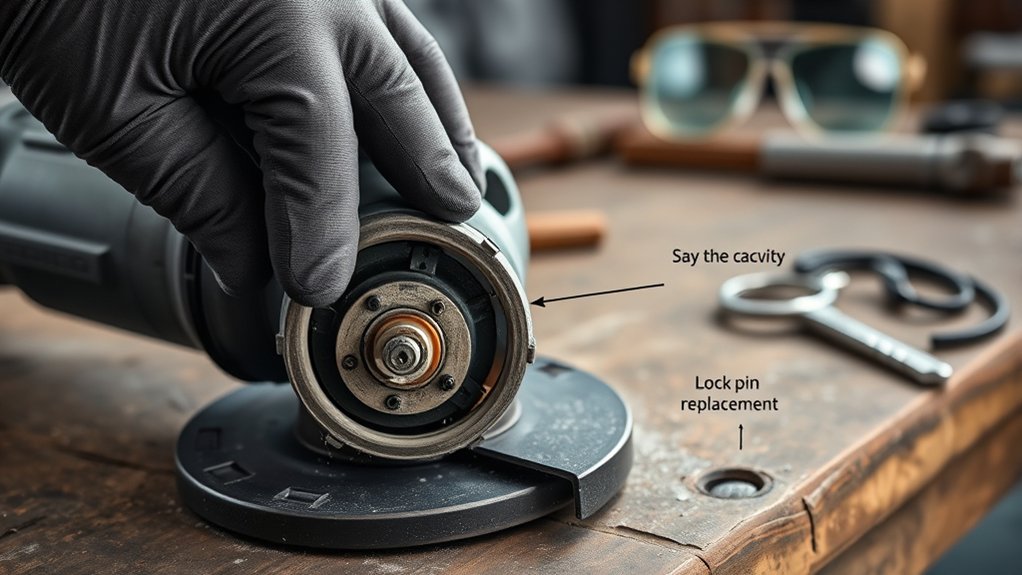
If you notice your spindle lock slipping, addressing the issue promptly can prevent further damage and guarantee safe operation. Here are some effective fixes to keep in mind:
- Tap the sleeve: Use a rubber mallet to gently tap the sleeve housing the lock pin back into place for a secure fit.
- Inspect the lock pin: Check for shearing; if it’s intact, employ a center punch to displace the aluminum around the sleeve, enhancing grip.
- Regular maintenance: Periodically check the spindle lock mechanism to catch any issues early and promote peak performance during grinding tasks.
Utilizing resources like user forums on WeldingWeb can provide valuable insights and shared experiences, while eReplacementParts.com can assist in sourcing replacement parts. By taking these steps, you can restore functionality to your spindle lock and maintain a safe working environment.
Perform Safety Checks Before Repairing
Before you begin any repairs on your angle grinder, it’s important to perform thorough safety checks to guarantee a secure working environment. Make sure to disconnect the grinder from the power source to prevent accidental activation. Wearing appropriate personal protective equipment (PPE), such as safety goggles and gloves, is vital to protect yourself during inspection.
Additionally, confirm the grinder is on a stable surface to avoid unexpected movement. Before addressing the spindle lock mechanism, inspect it for any visible damage or wear, as a faulty lock can lead to serious accidents. Finally, verify that all tools and replacement parts are suitable for your specific angle grinder model.
| Safety Check | Action Required | Importance |
|---|---|---|
| Power Source | Disconnect | Prevents accidental activation |
| Personal Protective Gear | Wear goggles and gloves | Safeguards against injuries |
| Stability | Place on a stable surface | Avoids unexpected movement |
How to Maintain Your Grinder and Avoid Spindle Lock Issues
Maintaining your angle grinder is essential for peak performance and longevity, particularly regarding the spindle lock mechanism. A well-maintained spindle lock guarantees safe operation and effective wheel changes. Here are key maintenance steps to follow:
Maintaining your angle grinder’s spindle lock is crucial for safety and performance during wheel changes.
- Regularly inspect and clean the spindle lock mechanism to prevent debris buildup.
- Confirm the spindle lock is fully engaged during wheel changes to avoid accidental slippage.
- Lubricate the spindle and locking components periodically for smooth operation.
Always use the right tools, like a wrench with pins, to tighten the locking flange without over-tightening, which can cause damage. Store your angle grinder upright in a dry area to prevent oil leaks and moisture-related issues that can affect the spindle lock. By implementing these practices, you’ll enhance the functionality of the spindle lock and prolong the life of your angle grinder, ensuring it remains a reliable tool in your arsenal.
When to Seek Professional Help for Your Grinder?
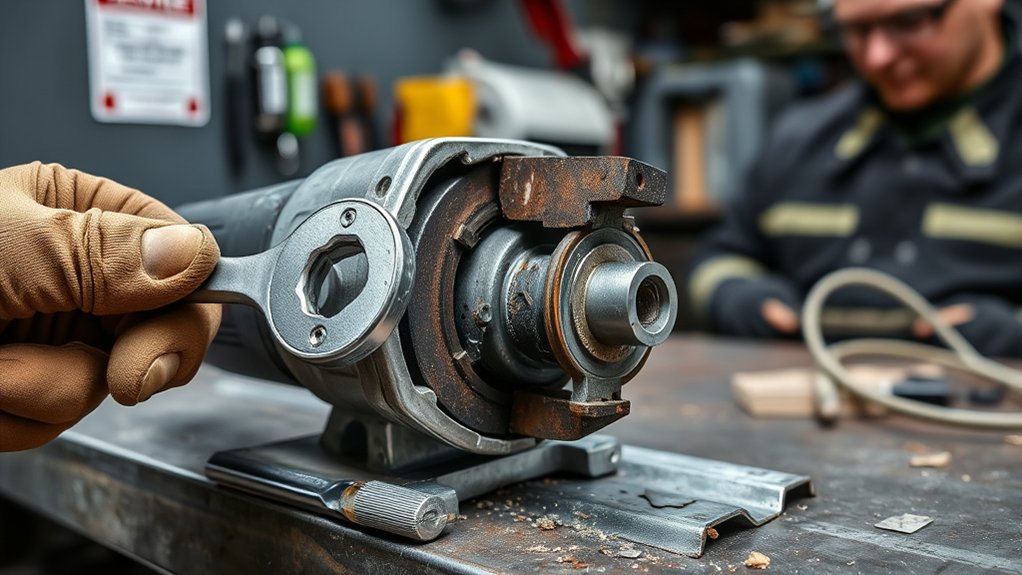
Recognizing when to seek professional help for your angle grinder is essential to prevent further damage and guarantee safe operation. If your spindle lock fails to engage after multiple attempts, it likely indicates a mechanical fault that requires professional assessment. Persistent issues with the spindle not rotating freely, even after checking for obstructions, suggest potential internal damage best evaluated by an expert.
Unusual noises or excessive heat during operation are red flags; consult a professional to avoid worsening the problem. If you notice malfunctions in electrical components, such as the power switch or motor, it’s imperative to seek professional advice, as these repairs can be hazardous without expertise. Finally, if your tool is still under warranty and needs disassembly for a thorough check, contacting the manufacturer or a professional is critical to avoid voiding that warranty. Prioritizing safety and reliability guarantees your grinder serves you well.
Frequently Asked Questions
What Is the Function of Spindle Lock on Grinder?
The spindle lock on your grinder immobilizes the spindle mechanism, allowing you to safely change blades or discs. It prevents accidental rotation, ensuring secure installation and reducing the risk of wheel slippage during operation.
What Causes an Angle Grinder to Stop Working?
An angle grinder can stop working due to power issues like a faulty switch, blown fuse, or damaged cord. Mechanical failures, overheating, or internal faults can also contribute to its operational failure, limiting your productivity.
What Are the Two Common Faults That Occur With Grinding Wheels?
Two common grinding wheel issues are improper installation, leading to detachment, and damage from excessive pressure or impacts, which can cause cracks. Regular inspection and proper use are essential to guarantee safe operation and performance.
Can an Angle Grinder Cut off a Lock?
Cutting a lock with an angle grinder’s like slicing through butter—if you’ve the right disc. With enough power and steady pressure, you can effectively achieve lock cutting, but always prioritize safety first.
Conclusion
In summary, addressing spindle lock issues promptly can save you from potential accidents and costly repairs. Remember the moment you first used your angle grinder, feeling its power in your hands. Don’t let a faulty spindle lock rob you of that confidence. By following the troubleshooting steps and maintenance tips discussed, you can guarantee your tool remains reliable. And if the problem persists, seeking professional help is always a smart choice to keep you safe and efficient.