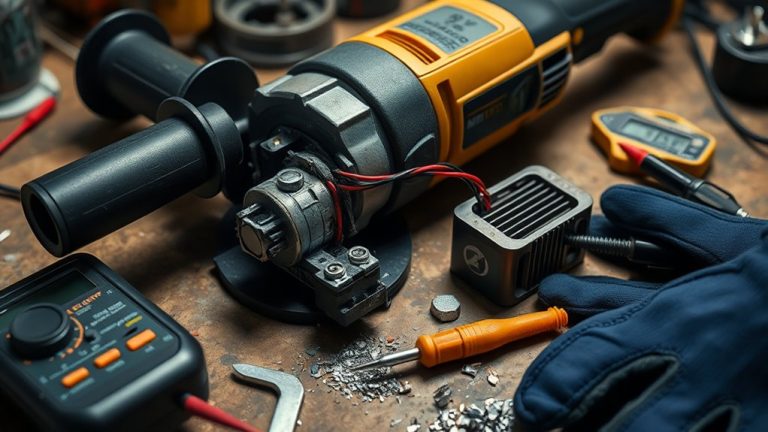
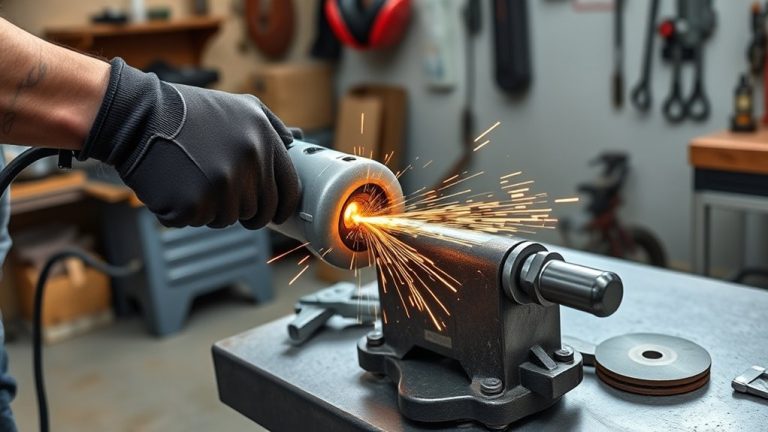
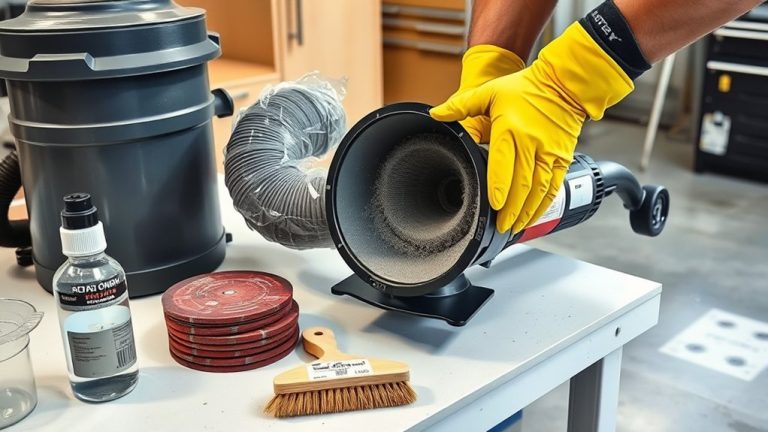
If your angle grinder stops suddenly, start by checking the power supply and cord for damage. Inspect the trigger switch with an Ohmmeter for continuity, and listen for unusual motor sounds. Overheating can occur from dust buildup or prolonged use, so keep vents clean and limit usage time. Make certain you’re using the correct disc type and size. Failing to address these issues may lead to further complications, and there’s more you should know to troubleshoot effectively.
Troubleshooting Steps for Angle Grinder Failures
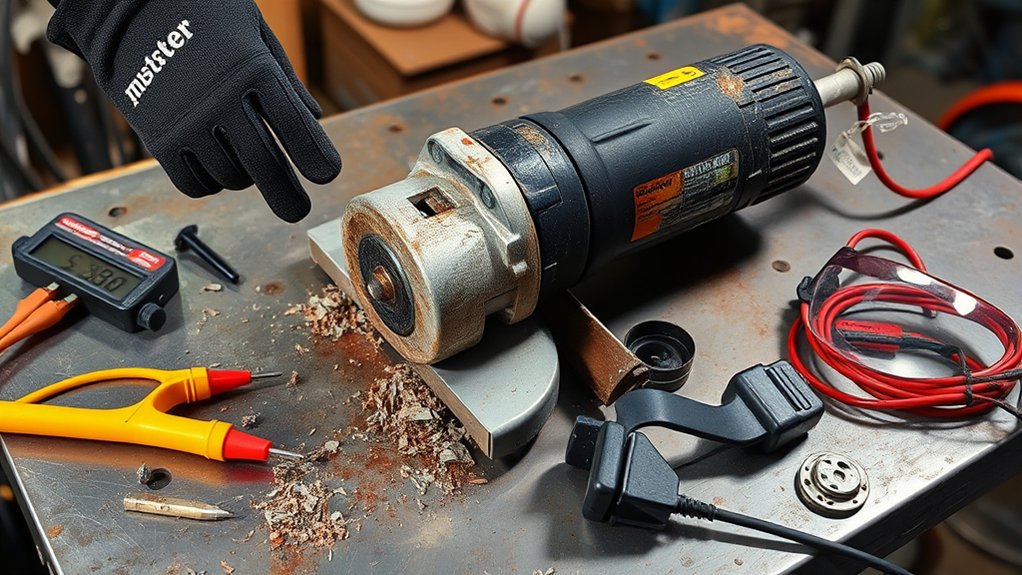
When your angle grinder fails to operate, it’s essential to systematically identify the problem. Start by checking the power supply and cord for any visible damage or continuity issues; these are common culprits behind sudden stops. Next, inspect the trigger switch for malfunctions. A stuck switch can halt operations and may require disassembly for a thorough examination.
Then, examine the carbon brushes for excessive wear or damage; replacing them can restore functionality. Pay attention to any unusual motor sounds during operation—persistent noises might indicate more serious issues, like a seized bearing or burnt windings, which may need professional repair. Finally, regularly clean your grinder to prevent debris buildup that can impede performance and lead to overheating or sudden stops. By following these steps, you can effectively troubleshoot and liberate your angle grinder from potential failures.
Common Causes for Angle Grinder Malfunctions
Angle grinder malfunctions often stem from a variety of common issues that can disrupt their performance. One primary concern is the power cord; if it’s damaged, it can interrupt the electrical supply, causing sudden stops. Overheating is another frequent issue, often due to dust accumulation or prolonged use, necessitating a cooldown period before the grinder can operate again. Mechanical failures, like seized bearings or spindle lock problems, may manifest as unusual noises or resistance during operation. Additionally, worn carbon brushes can lead to insufficient electrical contact, resulting in abrupt halts; regular inspection and replacement are crucial to prevent this. Finally, improper wheel installation or incorrect disc selection can compromise performance, highlighting the importance of proper setup and maintenance. By addressing these common issues, you can guarantee your angle grinder runs smoothly and effectively.
Inspect and Repair the Trigger Switch
To guarantee your angle grinder operates safely and efficiently, inspecting and repairing the trigger switch is essential. First, unplug the grinder and carefully disassemble the trigger switch to inspect its internal components for movement and potential damage. Use an Ohmmeter to test the switch contacts for continuity; if there’s no continuity, the switch may be malfunctioning.
Next, check for signs of overheating, such as melted plastic, which can restrict switch movement. If you find a stuck connector, you can temporarily fix it with aluminum tape, but be cautious, as this may lead to future resistance issues.
For a long-term solution, consider replacing the trigger switch to guarantee reliable operation and safety. By addressing these issues, you help maintain the functionality and longevity of your angle grinder, empowering you to work confidently without interruptions.
Prevent Overheating and Electrical Issues
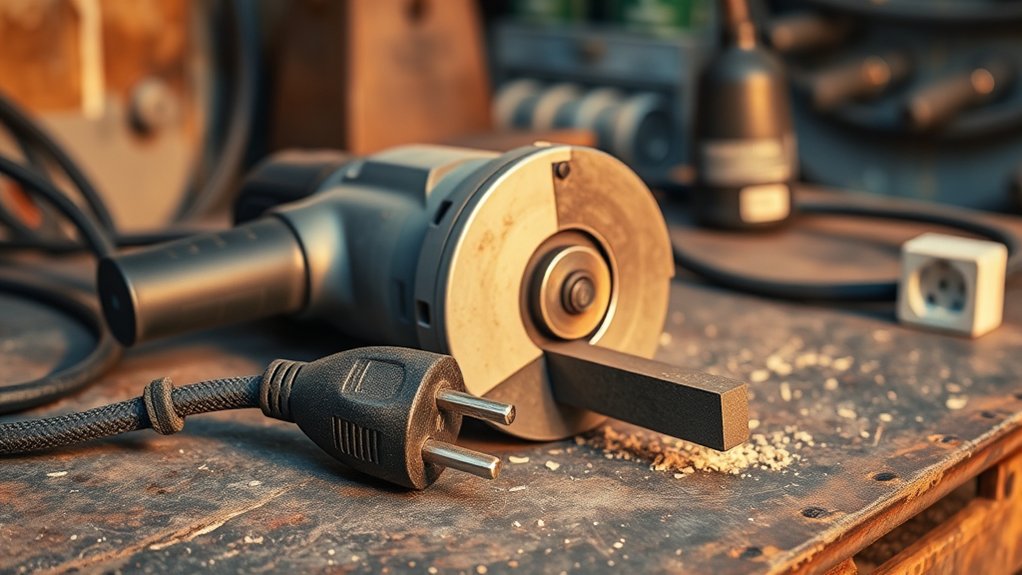
Making certain your angle grinder functions reliably involves more than just inspecting the trigger switch; managing overheating and electrical issues is equally important. Start by regularly cleaning the grinder’s vents and cooling system to prevent dust accumulation, which can lead to overheating during operation. Limit continuous usage, especially for demanding tasks, to allow the tool to cool down and avoid potential damage.
Using the correct disc size and type reduces strain on the motor, further minimizing overheating risks. Additionally, inspect the power cord for any visible damage and verify secure connections; this helps prevent electrical issues that could cause your grinder to stop suddenly. Monitor your grinder for unusual noises or excessive heat, as these can signal electrical malfunctions or motor strain. By taking these steps, you’ll maintain peak performance and extend the life of your angle grinder.
Essential Safety Measures When Repairing Your Grinder
Before you begin any repairs on your grinder, it’s crucial to disconnect the power supply. This prevents accidental start-up and prioritizes safety. Next, equip yourself with appropriate personal protective equipment (PPE) like safety goggles, gloves, and ear protection.
Conduct a thorough inspection of your grinder, focusing on the power cord and switch for any signs of wear or damage. Keep your workspace clutter-free to maintain focus, reducing the risk of accidents. Familiarize yourself with your specific model’s user manual to guarantee compliance with manufacturer guidelines.
| Safety Measure | Description |
|---|---|
| Disconnect Power Supply | Always unplug before repairs. |
| Wear PPE | Use goggles, gloves, and ear protection. |
| Conduct Inspection | Check for wear, focusing on cords and switches. |
Frequently Asked Questions
Why Does My Angle Grinder Keep Stopping?
Your angle grinder keeps stopping due to inadequate maintenance, overheating, or electrical issues. Implement troubleshooting techniques like checking for motor overheating solutions, inspecting components, and ensuring regular upkeep to restore its reliable performance.
Why Is My Grinder Suddenly Not Working?
About 30% of grinder failures stem from power supply issues. To address your grinder not working, apply troubleshooting techniques like checking the power cord and implementing regular maintenance tips to guarantee peak performance and longevity.
Why Would an Angle Grinder Motor Burn Out?
Your angle grinder motor can burn out from overheating due to electrical issues or inadequate maintenance. Regularly clean it, replace worn carbon brushes, and avoid excessive resistance to guarantee peak performance and longevity.
What Are Common Grinder Machine Problems?
Common grinder machine problems include overheating, electrical faults, and blade misalignment. Prioritize grinder maintenance tips, wear safety gear, and regularly inspect components to enhance tool longevity and guarantee safe, efficient operation during use.
Conclusion
In summary, when your angle grinder stops suddenly, it’s vital to methodically diagnose the issue. By inspecting the trigger switch, preventing overheating, and adhering to safety measures, you can restore your tool to working condition. Remember, a well-functioning grinder is like a trusty sword from days of yore—essential for any craftsman. Stay vigilant, maintain your equipment, and keep those sparks flying safely!