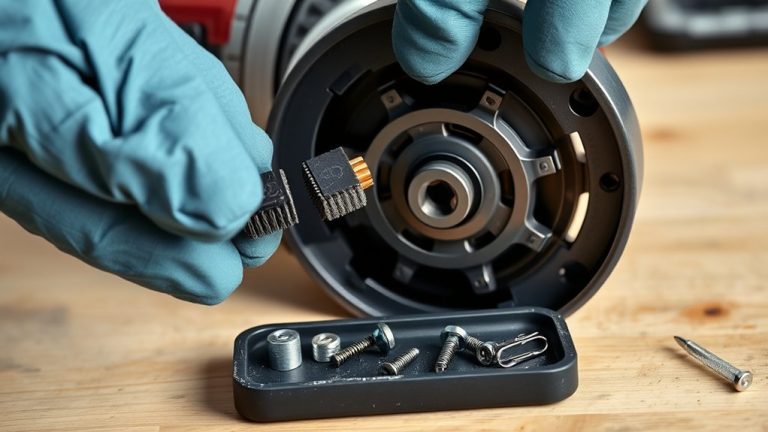
Replacing your angle grinder switch is vital for safety and performance. Start by unplugging the tool and identifying the switch type, like paddle or trigger. Carefully remove the old switch, noting wire positions, and install the new one, ensuring proper alignment. Always test the switch before reassembly to confirm functionality. It’s also important to troubleshoot any power issues, such as damaged cords or worn brushes. For a more detailed guide on each step, keep exploring!
How to Replace Your Angle Grinder Switch: A Step-by-Step Guide
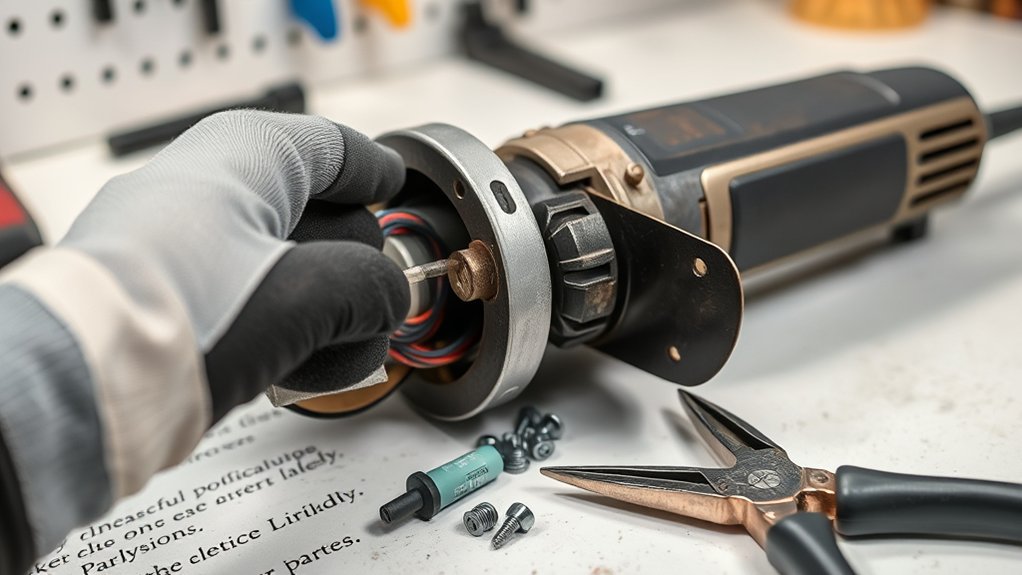
Replacing your angle grinder switch can seem challenging, but it’s a straightforward process if you follow the right steps. First, unplug the grinder and remove all attached components to prioritize your safety. Next, identify the specific type of switch your angle grinder requires—whether it’s a paddle, slide, or trigger—by consulting the manufacturer’s specifications.
Once you’ve got the right switch, carefully disconnect the wires from the old switch, noting their positions for accurate reconnection. Now, install the new switch, making sure it aligns properly. After that, verify functionality by testing the on/off operation multiple times, making sure it moves smoothly without resistance.
Finally, reassemble the grinder securely, tightening all screws. Confirm no wires are pinched or obstructed before conducting a final test. By following these steps, you’ll have your angle grinder back in action, ready for your next project!
Understanding the Importance of Your Angle Grinder Switch
Your angle grinder’s switch plays an essential role in managing its power output, directly impacting both safety and performance. A reliable switch guarantees smooth operation, while a malfunctioning one can lead to hazardous situations. Here’s why understanding your switch is pivotal:
- Safety: Prevents unexpected tool activation, reducing risks.
- Functionality: Guarantees precise control during use.
- Types: Different switches (paddle, slide, trigger) must match your model for effective replacement.
- Maintenance: Regular checks can identify signs of wear, like sticking buttons.
Identifying Common Types of Angle Grinder Switches
While using an angle grinder, recognizing the type of switch it has is vital for effective operation and safety. Common switch types include paddle, slide, trigger, and thumb switches, each offering unique activation methods and ergonomic designs. Paddle switches, typically located on top, require pressing down to activate, allowing for quick shut-off. Slide switches engage power by sliding forward or backward, making them ideal for continuous operation. Trigger switches activate the tool with a button press, providing controlled operation, while thumb switches need less pressure for activation, enhancing user comfort.
When replacing a switch, it’s important to match the specific type to your angle grinder model to guarantee compatibility and safe operation. Understanding these switch types can empower you to make informed decisions for your angle grinder, enhancing both safety and efficiency during your projects.
Guide to Safely Remove Your Old Switch
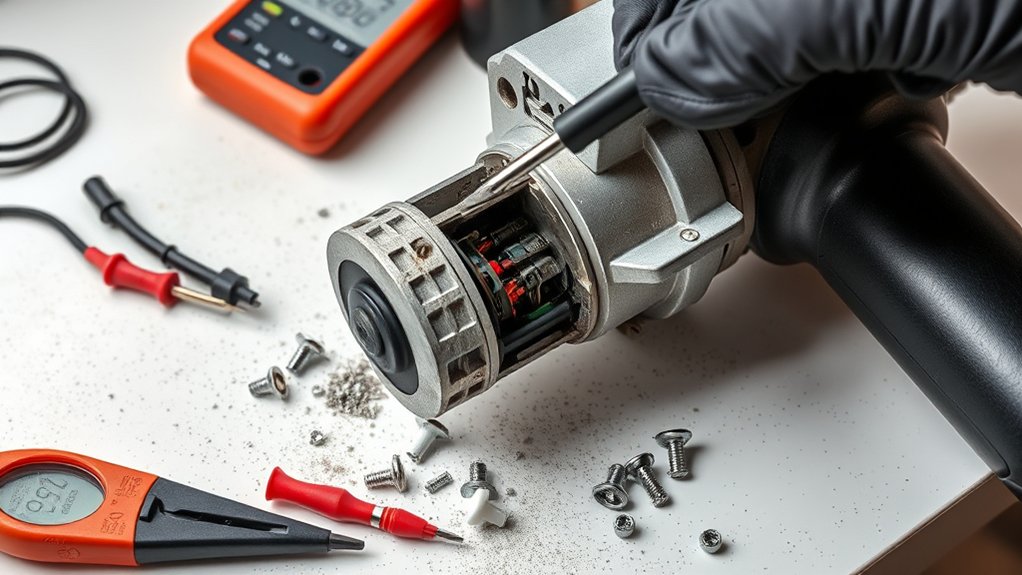
Before you start removing your old switch, make certain the angle grinder is unplugged to avoid any risk of electrical shock. You’ll need a few basic tools, including a screwdriver, to safely access the switch housing. Taking the right safety precautions guarantees a smooth and secure replacement process.
Safety Precautions First
To guarantee a safe switch replacement, always unplug the angle grinder from the power source, preventing any risk of electrical shock. Before you engage in the replacement process, keep these safety precautions in mind:
- Wear appropriate personal protective equipment (PPE), including gloves, safety goggles, and a dust mask.
- Make sure your work area is clean and free of clutter to minimize accidents.
- Familiarize yourself with the specific switch type in your angle grinder model to avoid damage during disassembly.
- Keep track of all screws and small parts to maintain tool integrity during reassembly.
Following these steps will help you safely navigate the switch replacement, ensuring a smooth and effective process. Stay safe and focused!
Tools Required For Removal
When you’re ready to remove your old angle grinder switch, having the right tools on hand is essential for a smooth process. Start with a screwdriver to unscrew the casing and access the switch housing. A multimeter or voltage tester is vital for ensuring the power supply is completely disconnected before you begin. Keep a small container handy to store screws and components during disassembly to prevent loss. A pair of pliers can help gently disconnect wires from the old switch without damaging the wiring harness. Finally, have a replacement switch on hand that matches your angle grinder model for a seamless installation. With these tools ready, you’ll be set for a successful switch replacement.
Installing Your New Angle Grinder Switch
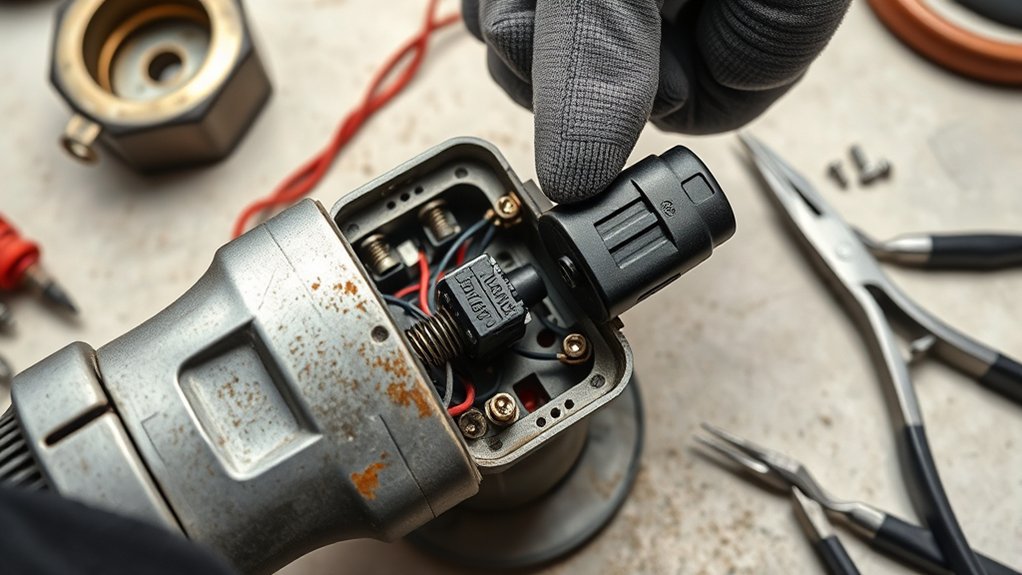
Once you’ve unplugged your angle grinder for safety, you can begin installing the new switch. Follow these steps to guarantee a successful switch replacement:
- Document the wiring configuration of the old switch for easy reference.
- Align the new switch properly within the housing, matching the documented configuration.
- Reconnect the wires securely, assuring no loose connections.
- Reassemble the grinder casing, tightening all screws and checking that wires aren’t pinched.
After completing the installation, conduct functionality tests. Toggle the switch on and off to verify smooth operation. Check that your grinder operates correctly at various speeds. This process confirms your new switch is functioning as intended. By following these steps, you maintain the efficiency and safety of your angle grinder, empowering you to tackle your projects with confidence. Happy grinding!
What to Do If Your Grinder Won’t Turn On?
If your angle grinder won’t turn on, start by checking the power source; make sure it’s plugged in and the outlet works. Next, inspect the power cord for any damage that could interrupt the electrical flow. If everything seems fine, look at the internal wiring for issues that might be preventing the grinder from functioning.
Possible Power Issues
Before diving into repairs, check a few key areas if your angle grinder won’t turn on. Identifying power issues early can save you time and effort. Here are some troubleshooting tips:
- Confirm the grinder’s plugged in and test the outlet with another device.
- Inspect the power cord for any visible damage or fraying.
- Look at the switch for signs of malfunction, like a stuck button.
- Verify the condition of the brushes; worn brushes can prevent operation.
If you’ve gone through these steps and your grinder still won’t work, consult the manufacturer’s manual for specific troubleshooting tips. Don’t hesitate to seek professional repair assistance if needed; it might be the best route for a lasting fix.
Check Internal Wiring
Power issues can often be the culprit when your angle grinder won’t turn on, but internal wiring might also be at fault. Start by unplugging the grinder to prevent electrical shock. Inspect the internal wiring for any loose or damaged wires that could hinder power from reaching the switch. Look for signs of wear or fraying, as these may require switch replacement. Perform a continuity test on the switch using a multimeter; if there’s no continuity, it’s time to replace it. Don’t forget to check the power cord for breaks or damage, as a faulty cord can disrupt power delivery. Reconnect all internal wiring securely to guarantee safe operation before reassembling your grinder. Troubleshooting now sets you up for success!
Frequently Asked Questions
How Many Different Types of Switches Are Used With Angle Grinders?
Angle grinders typically use four switch types: paddle, slide, trigger, and thumb. For ideal switch compatibility, consider durability, ergonomics, and features during installation and maintenance to guarantee effective troubleshooting and proper wiring across different brands.
How to Fix Angle Grinder Not Turning On?
When your angle grinder refuses to awaken, check the power supply, inspect electrical connections, and examine the motor. Don’t forget safety gear; it’s your shield as you navigate gear assembly and brush replacement challenges.
What Safety Check Do You Perform on an Angle Grinder Before Switching It On?
Before switching on your angle grinder, wear safety gear, inspect the power cord, check the grinding disc, guarantee proper motor function, and review the user manual. Always maintain a clear work area and know emergency procedures.
What Is a Slide Switch on an Angle Grinder?
A slide switch on an angle grinder offers intuitive control, letting you engage effortlessly. Its durable design varies by brand, ensuring compatibility. Regular maintenance and troubleshooting keep it functional, while alternatives can enhance your tool’s performance.
Conclusion
Replacing your angle grinder switch is like breathing new life into a trusty tool. By following these steps, you’ve not only restored functionality but also guaranteed safety in your workspace. Remember, a well-maintained grinder is your ally, ready to tackle any project with precision. If your grinder still won’t turn on, don’t lose hope; dive deeper into troubleshooting. With patience and care, you’ll be back to grinding in no time, turning obstacles into opportunities.