An angle grinder performs well only when its motor, gearing, disc diameter, accessory, and operating speed work together. Torque is the turning force available at the spindle, while revolutions per minute (RPM) describe how fast the spindle turns. Understanding the difference helps you choose a grinder that cuts without bogging, grinds smoothly, and stays within every accessory’s safe speed limit.
Quick Answer
Torque helps an angle grinder resist slowing when the disc meets the work. RPM determines rotational speed, while disc diameter determines surface speed at the rim. Do not choose speed by task alone: use only approved accessories whose maximum RPM equals or exceeds the grinder’s no-load speed, and follow the tool and accessory instructions.
Key Takeaways
- RPM is usually a no-load specification; actual speed can fall when the wheel is pressed into the work.
- Amps, watts, battery voltage, and RPM do not directly state spindle torque.
- Disc diameter changes rim speed, so two grinders with different RPM can have similar or very different cutting-edge speeds.
- The grinder’s no-load speed must not exceed the accessory’s marked maximum speed.
- Choose the wheel type, guard, flange, spindle fit, and speed range before comparing raw motor numbers.
- More torque can improve speed under load, but it can also increase the reaction if a wheel binds.
What’s in This Article
- Understanding Torque, Speed, and Power
- How Disc Diameter Changes Surface Speed
- Why Torque Matters for Cutting Tasks
- Why Speed Matters for Grinding Applications
- How to Balance Torque and Speed
- Application, Speed, and Power Guide
- How to Choose the Right Grinder
- Common Misconceptions
- Real-World Examples
- Troubleshooting Speed and Torque Problems
- Safety Considerations
- Maintenance Tips
- Frequently Asked Questions
- Conclusion
- Sources
Understanding Torque, Speed, and Power in Angle Grinders
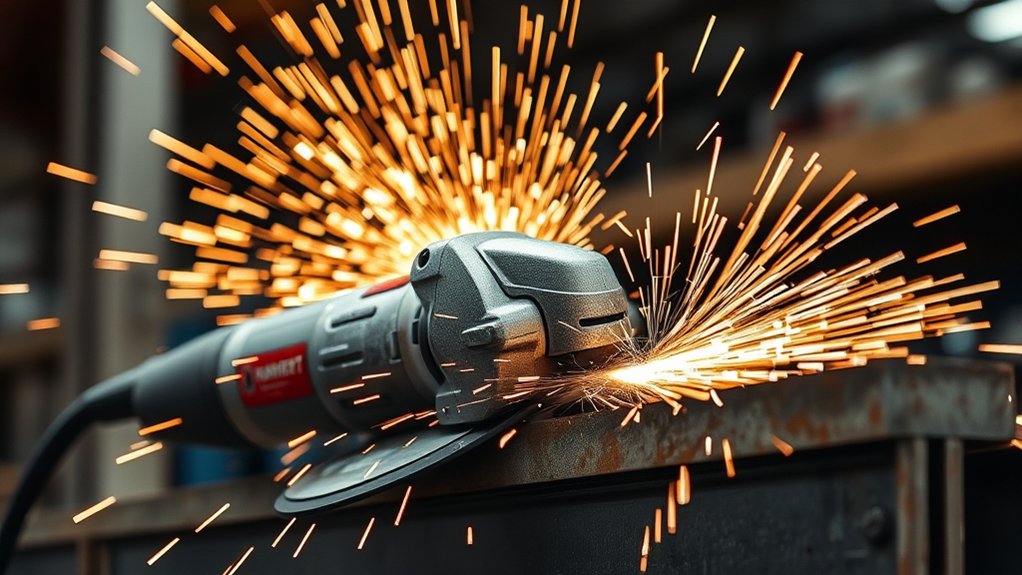
Torque is the twisting force at the grinder spindle. Speed is how fast the spindle rotates, usually shown as no-load RPM on the tool label or product page. Mechanical power links the two: power equals torque multiplied by angular speed. In simple terms, a motor must supply enough power and torque to keep the wheel moving when the work pushes back.
That relationship does not mean a high-amp grinder automatically has a known torque value. Amps and watts describe electrical input, not the exact torque reaching the wheel. Motor efficiency, gearing, electronic controls, battery condition, wheel diameter, and the load all affect real performance.
No-load RPM also differs from speed under load. A grinder rated at 11,000 RPM may slow when you press the wheel into steel or concrete. Models with constant-speed electronics can add motor output to reduce that speed drop. For example, Bosch describes a 5-inch variable-speed grinder with a 2,800-to-11,500 no-load RPM range and constant electronics intended to support speed under load.
RPM tells you how fast the spindle turns with little or no load. It does not, by itself, tell you how strongly the grinder will keep turning once the wheel enters the work.
What Grinder Specifications Really Tell You
- RPM: The spindle’s stated no-load speed or adjustable speed range.
- Amps or watts: Electrical input, useful for broad comparison within similar tool designs.
- Battery voltage: The battery platform, not a direct torque or power measurement.
- Wheel diameter: The largest wheel size the grinder, guard, and gearing are designed to accept.
- Constant-speed electronics: A system that attempts to reduce speed loss under load.
- Kickback control or electronic clutch: A system designed to stop or reduce power when a bind or sudden slowdown is detected.
How Disc Diameter Changes Surface Speed
The abrasive at the rim travels much faster than the spindle’s RPM number alone suggests. Rim speed, also called surface speed, depends on both disc diameter and RPM:
Surface speed = π × disc diameter × RPM ÷ 60
Use the same units throughout the calculation. A 4.5-inch wheel at 11,000 RPM has a rim speed of about 66 meters per second. A 7-inch wheel at 8,500 RPM reaches about 79 meters per second. This is why a larger grinder may run at a lower RPM yet still have a very fast wheel edge.
Note: Surface-speed math explains performance, but it does not replace the accessory label. The grinder’s no-load RPM must remain within the accessory maker’s marked limit and approved speed range.
Disc diameter also changes leverage. At the same spindle torque, a larger radius produces less tangential force at the rim. In practice, larger grinders usually compensate with more powerful motors and gearing designed for larger wheels and deeper cuts.
Why Does Torque Matter for Cutting Tasks?
During a cut, the wheel meets drag from the material. Available spindle torque helps the grinder resist slowing, while motor power determines how much work it can continue doing over time. A tool that cannot sustain the load may bog down, overheat, or tempt the operator to push harder.
More torque does not automatically mean more control. If a cut-off wheel pinches or binds, a powerful grinder can react sharply. Proper technique, a secure workpiece, two-handed control, the correct guard, and electronic kickback protection matter as much as motor output.
Torque Helps Maintain Speed Under Load
Cutting performance depends on the full system: wheel type, wheel diameter, allowed RPM, motor output, gearing, cut depth, and feed pressure. A higher-powered grinder usually holds speed better in thick steel, masonry, or concrete than a lighter tool, but the wheel must still be designed for the material and the operation.
Let the wheel establish the cut and guide it without twisting. Excess pressure can slow the grinder, heat the motor, wear the abrasive, and increase the chance of binding.
Steady Output Supports Material Removal
Steady output helps the wheel remove material without repeated surging and slowdown. This is especially useful during long cuts, deep cuts, and heavy grinding. Constant-speed electronics can help, but they do not make an undersized grinder suitable for any job.
Choose a larger or more powerful grinder when the required wheel size and cut depth demand it. Never install an oversized wheel on a smaller grinder or remove the guard to gain clearance.
Warning: Before mounting an abrasive wheel, verify that the grinder’s spindle speed does not exceed the maximum operating speed marked on the wheel. OSHA also requires appropriate guarding on portable abrasive-wheel tools.
Why Is Speed Important for Grinding Applications?
Speed affects cutting action, heat, finish, vibration, and accessory life. The correct setting is not simply “high for cutting” and “low for grinding.” Many bonded grinding and cut-off wheels are designed for a fixed-speed grinder running within their rating, while sanding, polishing, nonwoven finishing, and some wire-brush tasks may benefit from an approved lower setting.
Always follow both manuals. The grinder manual states which accessory types, diameters, guards, and flanges are allowed. The accessory label or instructions state the maximum RPM and may also state a recommended operating range.
Edge-Speed Considerations
A small wheel may need more RPM to reach a useful rim speed, while a larger wheel can reach equal or greater rim speed at fewer revolutions per minute. This is why compact grinders commonly operate around 10,000 to 12,000 no-load RPM, while many 7-inch grinders operate at lower RPM.
As current manufacturer examples, a DEWALT 4.5-inch DWE402 is rated at 11,000 RPM, while a Makita 7-inch GA7040S is rated at 8,500 RPM. These are examples, not universal targets; use the exact specifications for your model and wheel.
Material-Removal Efficiency
Material removal improves when grit, wheel type, contact angle, speed, and pressure match the job. A coarse grinding wheel or flap disc can remove metal quickly. A finer flap disc or nonwoven wheel can leave a smoother finish but removes less material per pass.
A thin cut-off wheel is designed to cut with its edge. Do not side-load it or use it for face grinding unless the manufacturer specifically labels it for combined cutting and grinding. Side pressure can damage a wheel that was not designed to carry that load.
Selecting a Safe RPM
- Use only accessories approved for the grinder’s wheel diameter, spindle or arbor, guard, and flange system.
- Make sure the accessory’s maximum RPM equals or exceeds the grinder’s no-load RPM.
- On a variable-speed grinder, keep the selected speed inside the accessory maker’s approved range.
- Do not assume the lowest setting is best; some accessories need adequate surface speed to work correctly.
- Reduce pressure before blaming the grinder for a speed drop.
- Stop immediately if the wheel vibrates, cracks, loosens, or produces an unusual sound.
How to Balance Torque and Speed for Better Grinder Performance
Start with the accessory and the job, not the biggest RPM or amp number. Identify the material, required cut depth or finish, approved wheel type, wheel diameter, guard, and safe speed range. Then select a grinder with enough sustained output to do the work without heavy pressure.
- Choose the operation: cutting, grinding, sanding, brushing, polishing, or concrete surfacing.
- Choose the approved accessory: match material, diameter, arbor, wheel type, and maximum RPM.
- Confirm guarding and flanges: cutting and grinding may require different guards or wheel-mounting parts.
- Set speed only when permitted: use the accessory and grinder instructions, not a generic RPM chart.
- Test at no load: hold the tool in a safe position, let it reach operating speed, and stop if vibration or wobble appears.
- Use light, controlled pressure: allow the abrasive to cut instead of forcing the motor down in speed.
Pro Tip: Compare grinders by the complete package: approved wheel size, sustained power, speed range, constant-speed control, brake, kickback protection, handle position, guard system, and service support. One headline number rarely predicts the best tool.
Application, Speed, and Power Guide
| Application | Typical Accessory | Speed Approach | Output Need | Main Risk |
|---|---|---|---|---|
| Thin metal cutting | Approved thin cut-off wheel | Use the grinder’s permitted speed within the wheel rating | Moderate sustained power | Pinching, twisting, and side loading |
| Thick steel or deep cuts | Approved cut-off wheel sized for the cut | Within wheel and tool limits | High sustained power; larger tool may be needed | Bind-up and kickback |
| Weld grinding | Type 27 grinding wheel or approved flap disc | Manufacturer-approved operating speed | Steady power under load | Overheating and excessive pressure |
| Paint, rust, or surface prep | Wire brush, flap disc, sanding disc, or nonwoven wheel | Variable speed can help when the accessory permits it | Moderate | Wire ejection, heat, and surface damage |
| Concrete or masonry surfacing | Approved diamond cup wheel with shroud | Tool and wheel manufacturer’s specified range | High sustained power | Respirable silica dust and kickback |
| Polishing | Approved backing pad and polishing accessory | Usually lower, accessory-specific speed | Controlled output | Overheating the pad or work surface |
Products Worth Considering

3 Pieces 4 Inch Diamond Cup Grinding Wheel.

2 Pieces 4 Inch Diamond Cup Grinding Wheel.

Double Row + Turbo Row: Our Concrete Diamond Grinding Cup Wheel set comes with 2Pcs 115mm (4-1/2 Inch) grinding wheels, with 22mm (7/8 Inch) arbor hole and 5mm diamond segment thickness, fit for 4-1/2" Angle Grinder. Package Included: 1 x turbo row segment diamond grinding wheel, 1 x double row segment diamond grinding wheel.
How to Choose the Right Grinder for Your Needs
Choose an angle grinder by matching the entire system to the work you do most. A 4-to-5-inch grinder suits common cutting, weld cleanup, and surface work. A 7-inch or 9-inch grinder can make deeper cuts and cover more area, but it is heavier and can produce a stronger reaction during a bind.
Choose the wheel and operation first. Then select a grinder whose size, guard, spindle, speed range, and sustained output are approved for that setup.
- Wheel size: Never exceed the diameter listed for the grinder and guard.
- Power source: Corded tools provide continuous input; cordless performance depends on the motor, battery pack, charge level, and thermal limits.
- Speed control: Fixed speed is suitable for many cutting and grinding tasks. Variable speed adds flexibility for approved sanding, finishing, polishing, and specialty accessories.
- Under-load control: Constant-speed electronics can reduce bogging during demanding work.
- Safety features: Look for a brake, anti-restart protection, soft start, a paddle or constant-pressure control, and kickback detection where available.
- Ergonomics: A well-positioned side handle, adjustable guard, manageable weight, and balanced body improve control.
- Dust control: Concrete and masonry work may require a compatible shroud and dust extractor.
Products Worth Considering

HIGH POWER: 7 inch angle grinder with 13 Amp motor delivers 8,000 RPM and high power-to-weight ratio for demanding metal grinder applications

13.0 Amp AC/DC, 8,000 rpm motor of the angle grinder provides high power and speed for 7-inch grinding applications

Powerful Performance: Equipped with a 1600W 13A high-power motor, this 7-inch angle grinder operates at a high speed of 8500 RPM, delivering stable and strong power for fast cutting, grinding, rust removal, and more
Corded Versus Cordless Performance
Do not compare corded amps directly with cordless voltage. They measure different things. A cordless grinder may deliver excellent peak performance, but battery size, state of charge, temperature, and electronic limits affect how long it can hold that output. For long heavy grinding sessions, compare manufacturer performance claims, wheel size, battery requirements, and duty cycle rather than voltage alone.
Common Misconceptions About Torque and Speed
| Misconception | What Is More Accurate |
|---|---|
| Higher RPM always cuts faster. | Wheel type, diameter, rim speed, grit, motor output, cut depth, and pressure all affect cutting rate. |
| Lower speed is always safer for grinding. | The safe setting is the range approved by both the grinder and accessory manufacturers. |
| A higher amp rating tells you the exact torque. | Amps show electrical current draw. Spindle torque also depends on voltage, efficiency, gearing, controls, and speed. |
| A larger wheel is fine if it fits the spindle. | Wheel diameter, guard, flange, clearance, spindle fit, and RPM must all match the tool’s approval. |
| More torque prevents kickback. | Torque may help under load, but a bind can create a stronger reaction. Technique and protective systems remain essential. |
Real-World Examples of Torque and Speed in Angle Grinders
Real performance changes with the material, wheel, cut depth, battery or power supply, and pressure. These examples show how to apply the principles without treating any RPM as a universal prescription.
- Thin sheet steel: A compact grinder with an approved thin cut-off wheel can cut quickly because the cut is shallow and the wheel has adequate rim speed.
- Thick steel bar: The same grinder may slow or overheat during a deep cut. A larger, higher-output grinder with the correct wheel may be more suitable.
- Weld leveling: A grinding wheel or flap disc needs steady output and the correct contact angle. Pushing harder often creates more heat rather than faster progress.
- Paint removal: A variable-speed grinder can help control an approved wire brush or sanding accessory, but the selected RPM must remain below the accessory limit.
- Concrete surfacing: Sustained power, the correct diamond cup wheel, a compatible guard or shroud, and dust extraction matter more than RPM alone.
- Polishing: A lower-speed, manufacturer-approved setup prevents many pads and compounds from overheating or being thrown from the backing pad.
Troubleshooting Speed and Torque Problems
| Symptom | Likely Causes | Safe Response |
|---|---|---|
| Grinder bogs down | Excess pressure, dull or loaded wheel, undersized tool, low battery, long/light extension cord, blocked vents | Reduce pressure, inspect the accessory, restore proper power, clean vents, or use a suitable grinder |
| Wheel chatters or skips | Wrong contact angle, loose wheel, damaged flange, excessive pressure, unsuitable accessory | Stop, disconnect power, inspect mounting parts and wheel, then correct the technique |
| Work turns blue or burns | Too much pressure, wrong grit, prolonged contact, unsuitable speed or accessory | Use lighter passes, a suitable abrasive, and an approved speed setting |
| Strong vibration | Cracked wheel, poor mounting, damaged flange, bearing problem, incompatible accessory | Stop immediately and do not reuse the setup until the cause is corrected |
| Motor becomes unusually hot | Overloading, blocked airflow, worn brushes, low supply voltage, internal fault | Stop, let the tool cool, inspect vents and power supply, and follow the manual’s service guidance |
Safety Considerations When Using High-Torque or High-Speed Grinders
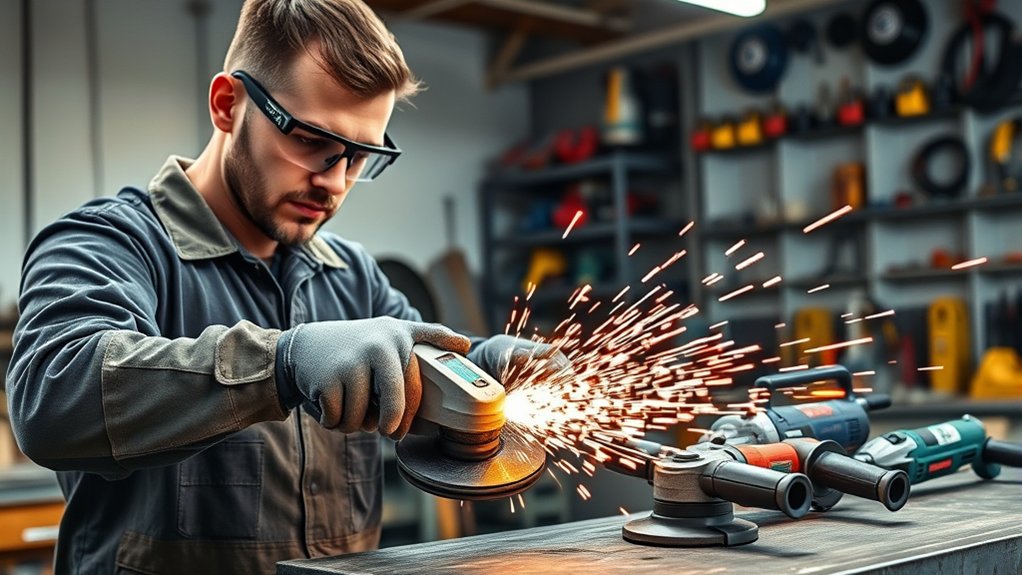
High wheel speed stores significant energy, and high available torque can produce a strong reaction during a bind. OSHA requires guards on covered portable abrasive-wheel tools and states that the guard on a right-angle portable grinder should be positioned between the operator and the wheel. The same standard requires checking that spindle speed does not exceed the wheel’s marked maximum operating speed.
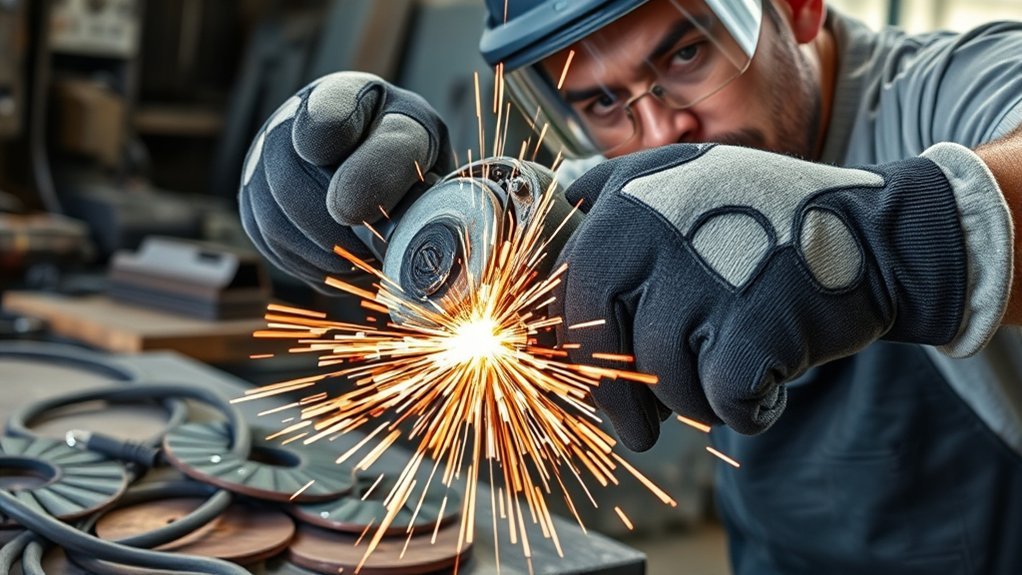
- Wear safety glasses or goggles. Add a face shield when fragments, sparks, or debris can strike the face; a face shield does not replace primary eye protection.
- Use hearing protection and task-appropriate respiratory protection when dust or fumes require it.
- Install and position the correct guard, and use the side handle with both hands on the tool.
- Clamp or secure the work so it cannot move and pinch the wheel.
- Keep your body out of the wheel’s plane and likely kickback path.
- Let the wheel reach operating speed before contacting the work.
- Keep sparks away from flammable materials, people, cords, hoses, and combustible dust.
- Disconnect the plug or remove the battery before changing wheels, guards, or flanges.
When grinding concrete, mortar, stone, or other silica-containing materials, use an approved dust-control method. NIOSH reports that local exhaust ventilation with a grinder shroud can reduce hazardous concrete-grinding dust. Follow the applicable exposure-control rules for the jobsite and material.
Warning: Never use a cracked, dropped, damaged, oversized, incorrectly mounted, or wrong-rated wheel. Never remove the guard to fit a larger accessory. Stop immediately if the grinder vibrates, smells hot, sparks from the motor, or makes an unusual sound.
Safety Features That Improve Control
- Soft start: Reduces the initial startup reaction.
- Anti-restart protection: Helps prevent unintended startup after power is restored.
- Kickback detection or electronic clutch: Cuts or reduces motor power when a sudden slowdown or bind is detected.
- Electric brake: Stops the wheel faster after the switch is released.
- Constant-pressure or paddle control: Makes shutdown easier when the operator releases the control.
- Constant-speed electronics: Helps maintain operation under load but does not prevent all stalls or kickback.
Maintenance Tips for Long-Lasting Grinder Performance
Regular inspection helps the grinder hold speed, manage heat, and operate safely. Dust, worn brushes, damaged cords, weak batteries, loose flanges, and blocked vents can all reduce performance.
Clean and inspect the grinder before problems become heat, vibration, electrical faults, or wheel-mounting failures.
- Disconnect power before cleaning, inspection, or accessory changes.
- Brush or vacuum dust from the housing and vents without driving debris deeper into the tool.
- Inspect the guard, side handle, spindle, flanges, lock nut, and switch before use.
- Check cords, plugs, extension cords, batteries, and chargers for damage or overheating.
- Store abrasive wheels dry, flat or as their manufacturer directs, and protect them from impact.
- Replace damaged or heavily worn accessories before the next job.
- Follow the tool manual for carbon-brush inspection, lubrication, service intervals, and approved replacement parts.
Pro Tip: Record the accessory type, wheel diameter, and speed range that work well for repeat jobs. This creates a safer setup guide without relying on memory or generic RPM advice.
Frequently Asked Questions
Is variable speed important for angle grinders?
Variable speed is useful when one grinder must run approved sanding, finishing, polishing, wire-brush, or specialty accessories with different speed ranges. It is not required for every cutting or grinding job. Always keep the selected setting within both the grinder and accessory manufacturers’ instructions.
Is more RPM better for an angle grinder?
No. Higher RPM can increase rim speed, but material-removal rate also depends on wheel diameter, abrasive type, grit, motor output, pressure, and the material. More RPM can also exceed an accessory’s limit. Use the approved speed, not the highest available number.
What speed angle grinder works best for cutting metal?
There is no single best RPM for every metal cut. Use a grinder and cut-off wheel approved for each other, and make sure the wheel’s maximum RPM equals or exceeds the grinder’s no-load speed. Then use light feed pressure and avoid twisting or side-loading the wheel.
What is the difference between grinding and cutting on an angle grinder?
Cutting uses the approved edge of a cut-off wheel to separate material. Grinding uses the approved face or working surface of a grinding wheel or flap disc to remove material. The wheel, guard, flange arrangement, and technique may differ, so follow the manuals for the specific setup.
Can too much torque cause kickback?
Kickback begins when the wheel catches, binds, or is forced to stop. A grinder with strong available torque can produce a harder reaction before the operator or an electronic protection system stops it. Secure the work, use two hands, stay out of the kickback path, and do not force or twist the wheel.
Does a higher amp rating mean more torque?
Not directly. Amperage is part of electrical input. The torque reaching the spindle also depends on voltage, motor efficiency, gearing, electronics, and operating speed. Amp ratings are most useful for broad comparison between similar corded tools, not as a torque measurement.
Why does my angle grinder slow down during a cut?
Common causes include excessive pressure, a dull or loaded wheel, a deep cut, an undersized grinder, a weak battery, restricted airflow, or an inadequate extension cord. Reduce pressure and inspect the full setup. Stop using the tool if it overheats, vibrates, or continues to lose speed abnormally.
Safety Disclaimer: This article is for general information and does not replace the grinder manual, accessory instructions, workplace rules, applicable regulations, or hands-on safety training. Follow the tool and accessory manufacturers’ requirements for every setup.
Conclusion
The best angle grinder setup does not chase torque or RPM as a single winning number. It matches the operation, wheel type, diameter, guard, flange, speed range, material, and required output. Use enough sustained power to avoid bogging, but never compensate for a poor setup with extra pressure. Before every job, confirm the accessory rating, inspect the wheel and mounting parts, position the guard, attach the side handle, and plan for sparks and dust.
Sources
- OSHA 29 CFR 1910.243 — Guarding of Portable Powered Tools — guard placement, wheel inspection, controls, and maximum wheel-speed requirements.
- DEWALT DWE402 4-1/2-Inch Small Angle Grinder — official 11-amp and 11,000-RPM example.
- Makita GA7040S 7-Inch Angle Grinder — official 15-amp and 8,500-RPM example.
- Bosch GWS13-50VSP Variable-Speed Angle Grinder — variable-speed range, constant electronics, guard, and recoil-control features.
- NIOSH: Control of Hazardous Dust When Grinding Concrete — grinder shrouds and local exhaust ventilation for concrete dust control.