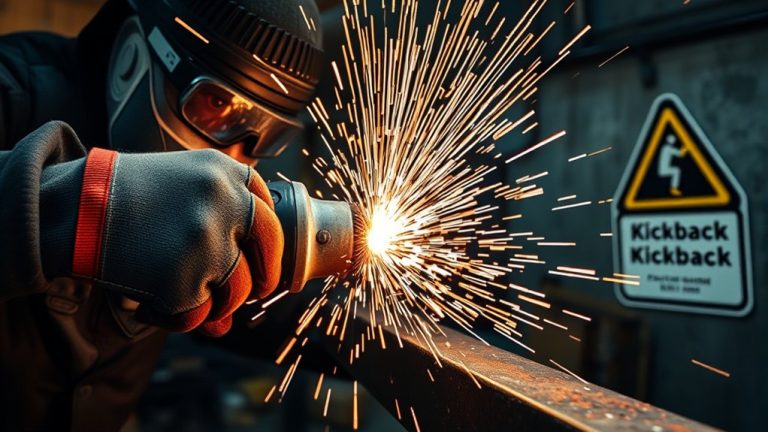
An angle grinder is a highly adaptable tool perfect for cutting, grinding, and sanding various materials. With specialized discs, it effortlessly slices through metal, masonry, and plastics while effectively removing rust or paint from surfaces. You can also achieve a smooth finish on wood. Proper grip and pressure enhance control, while maintaining the right angle guarantees peak performance. There’s much more to learn about maximizing your angle grinder’s capabilities, so keep exploring further.
What Can You Use an Angle Grinder For?
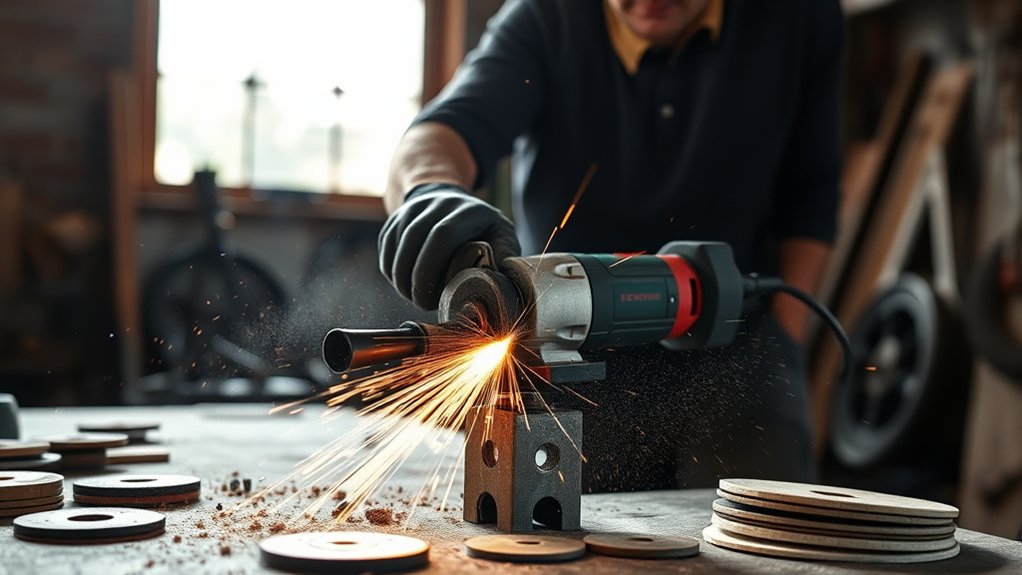
When you need a versatile tool for cutting, grinding, or polishing, an angle grinder is an excellent choice. This powerful device can effortlessly tackle a variety of tasks. For cutting, it employs specialized abrasive discs that slice through metal, masonry, and plastics with precision. When it comes to grinding, angle grinders excel at removing rust, paint, or welds from metal surfaces, thanks to their dedicated grinding discs designed for efficient material removal.
In addition to cutting and grinding, you can use an angle grinder for sanding wood, achieving a smooth finish with the right attachments. If you’re feeling artistic, consider using diamond engraving discs to etch designs into stone or concrete. Furthermore, they can even trench through tree roots up to 3-4 inches thick, making them invaluable for landscaping. With these capabilities, an angle grinder truly stands out as a multi-functional tool for your projects.
The Mechanics Behind Effective Cutting and Grinding
To achieve effective cutting and grinding with an angle grinder, understanding its mechanics is essential. The grinder uses a rotating disc that reaches high speeds, enabling efficient operation on materials like metal and masonry. Selecting the right abrasive disc—such as aluminum oxide for metal fabrication or diamond blades for cutting masonry—greatly influences your results. Maintaining the correct angle during use guarantees peak cutting performance while minimizing the risk of damage to both the tool and the workpiece. Additionally, securely clamping your workpiece and utilizing an auxiliary handle enhances stability and control, leading to more precise outcomes. Don’t overlook tool maintenance; regularly inspect for disc wear and guarantee airflow through air vents to prevent overheating and extend the lifespan of your grinder. By mastering these mechanics, you’ll reveal the full potential of your angle grinder for all your cutting and grinding tasks.
Essential Techniques for Effective Grinding and Cutting
Mastering effective grinding and cutting techniques greatly enhances the capabilities of your angle grinder. To achieve ideal results, remember these key practices:
- Maintain a firm grip and use both hands for better control.
- Apply light pressure to allow the grinder to do the work.
- Regularly inspect and replace worn discs for safety.
When you’re using an angle grinder, it’s essential to keep your workpiece secure to minimize movement and avoid kickback. Choose the proper discs for your specific material; for instance, diamond blades work best for masonry, while aluminum oxide discs excel in metalwork. By applying light, consistent pressure, you prevent overheating, which in turn extends the lifespan of both your grinder and the abrasive. With these techniques, you’ll not only enhance efficiency but also foster a safer working environment.
Choosing the Right Discs for Your Angle Grinder
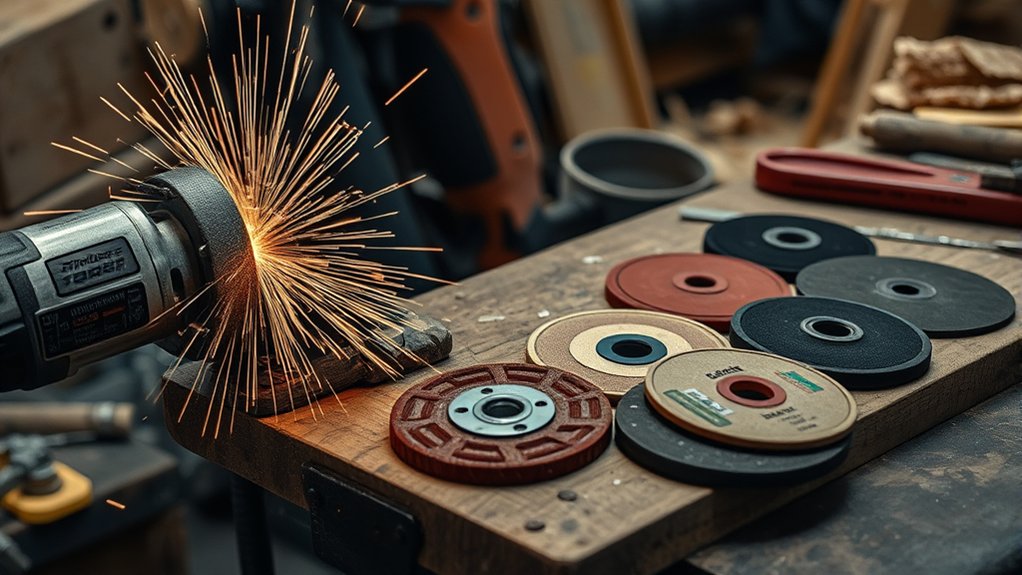
Selecting the right disc for your angle grinder is essential for achieving ideal results in any project. Different materials require specific discs; for instance, use aluminum oxide discs for metal and diamond blades for masonry. Thinner cutting wheels offer precision, while thicker grinding wheels excel at aggressive material removal. Verify you match the disc’s specifications with your grinder’s power rating and intended application for effective and safe operation.
Regularly inspect and replace worn or damaged discs to maintain efficiency and reduce accident risks. Quality abrasive discs from trusted brands can greatly enhance grinding speed and durability, leading to better results and lower consumable costs over time. Always work in an area with proper ventilation to avoid inhaling dust and debris. By choosing the right disc, you empower yourself to tackle any project with confidence and precision.
How to Stay Safe While Using Your Angle Grinder
To guarantee your safety while using an angle grinder, always wear appropriate personal protective equipment (PPE), such as safety glasses and gloves. Keep your workspace clean, well-lit, and free of flammable materials, while securely clamping your workpieces. Additionally, maintain a firm grip on the tool and apply light pressure to minimize the risk of kickback and loss of control.
Personal Protective Equipment (PPE)
When using an angle grinder, wearing the right personal protective equipment (PPE) is essential for your safety. Protect yourself from potential hazards by incorporating the following items:
- Safety glasses or face shield to guard against flying debris and sparks.
- Hearing protection like earmuffs or earplugs to shield your ears from harmful noise levels over 100 decibels.
- Dust mask or respirator to prevent inhaling harmful particles.
Additionally, wear heavy-duty gloves to protect your hands from sharp edges, hot surfaces, and vibrations. Guarantee you’re equipped with slip-resistant, closed-toe footwear for stability and to safeguard your feet from falling objects. Prioritizing these safety measures will keep you safe and enhance your overall grinding experience.
Workspace Safety Measures
Having the right personal protective equipment (PPE) is just the first step in guaranteeing safety while using an angle grinder. Keep your workspace clean, well-lit, and free of flammable materials to minimize hazards. This not only enhances safety but also promotes better maneuverability. Always secure workpieces with clamps or vises; this prevents movement during cutting or grinding, reducing the risk of accidents and guaranteeing precision. Maintain a firm grip on the angle grinder with both hands, avoiding excessive pressure—let the tool do the work to prevent kickback. Regularly inspect the grinder and its components, including the disc and air vents, for any signs of damage or wear. This guarantees proper functioning and lowers the risk of overheating.
Proper Tool Handling Techniques
Proper handling techniques are essential for safe operation of an angle grinder, as they directly impact both your safety and the quality of your work. To maximize the effectiveness of your grinders, follow these guidelines:
- Always wear safety glasses, gloves, and hearing protection.
- Maintain a firm two-handed grip and apply light pressure during cutting or grinding.
- Regularly inspect your angle grinder and use the right discs for your specific tasks.
Tips for Maintaining Your Angle Grinder for Longevity
To keep your angle grinder in peak condition, you’ll need to implement regular inspection practices, proper cleaning techniques, and safe storage methods. Check the carbon brushes frequently, clean the unit after each use, and store it in a dry place to prevent damage. These steps will enhance performance and extend the lifespan of your tool.
Regular Inspection Practices
Regular inspections of your angle grinder are essential for ensuring its longevity and ideal performance. Neglecting these checks can lead to safety risks and decreased efficiency. Here are key inspection practices to follow:
- Examine grinding discs and cutting wheels for cracks or wear before each use.
- Check air vents for dust accumulation to maintain proper airflow.
- Inspect the power cord for any frays or cuts to prevent electrical hazards.
Proper Cleaning Techniques
Maintaining your angle grinder’s performance hinges on effective cleaning techniques. Regular cleaning is essential to prevent overheating and guarantee maximum airflow. Here’s a quick guide:
| Task | Tools Needed | Frequency |
|---|---|---|
| Clean air vents | Soft brush/compressed air | After each use |
| Inspect & clean discs | Wire brush | After each use |
| Inspect and replace brushes | None needed | Monthly |
| Clean motor and body | Soft cloth | After each use |
After each use, remove dust and debris from the body and motor area. Check and clean the grinding discs, as dirt can hinder cutting efficiency. Remember to inspect and replace worn carbon brushes to maintain performance.
Safe Storage Methods
Proper storage of your angle grinder is essential for guaranteeing its longevity and best performance. To maintain your power tool in prime condition, follow these guidelines:
- Store in a dry, clean environment to prevent rust and corrosion.
- Use a dedicated storage case to keep the grinder and accessories organized.
- Inspect for wear or damage prior to storage, addressing any issues immediately.
Regularly clean your angle grinder before putting it away, removing dust and debris from air vents and moving parts. This practice improves airflow and helps avoid overheating. Avoid stacking heavy objects on the storage case, as this can lead to bending or damaging the motor and housing. By taking these steps, you’ll guarantee your angle grinder remains a reliable tool for future projects.
Frequently Asked Questions
What Are the Three Main Uses of an Angle Grinder?
You’ll primarily use an angle grinder for cutting metal, grinding surfaces, and sanding materials. Always prioritize safety tips, use the right angle grinder accessories, and avoid common mistakes by carefully choosing discs for your projects.
Can I Use My Angle Grinder as a Sander?
Yes, you can use your angle grinder as a sander! Attach sanding discs for effective wood sanding and metal finishing. Remember to follow safety precautions and use proper sanding techniques for ideal surface preparation.
How Is Cutting or Grinding Done With an Angle Grinder?
You cut or grind with an angle grinder by selecting the right disc, applying proper techniques, and maintaining safety precautions. Regular tool maintenance and understanding performance comparisons enhance efficiency and guarantee peak results for your projects.
What Is the Difference Between Grinding and Cutting?
Grinding techniques focus on smoothing surfaces using thicker discs, while cutting tools slice through materials with precision. Consider safety precautions and maintenance tips for each disc type, ensuring your project applications succeed despite material hardness challenges.
Conclusion
In summary, an angle grinder is your ultimate tool for transforming materials with precision and power. Whether you’re cutting, grinding, or sanding, mastering its techniques can elevate your projects to legendary status. Always choose the right discs and prioritize safety to guarantee a smooth operation. By maintaining your angle grinder properly, you’ll release its full potential, making it a reliable companion in your workshop for years to come. Start harnessing its capabilities today and watch your craftsmanship soar!