Understanding bore size is essential for using angle grinder wheels safely and effectively. The bore size is the diameter of the center hole, and it needs to match your grinder’s spindle size to prevent wobbling and accidents. Common sizes include 15mm, 22.23mm, and 25.4mm, with 22.23mm being the standard for many applications. Using the wrong bore size can lead to wheel breakage. There’s more to know about measuring and selecting the right discs for your grinder.
What You Need to Know About Bore Size in Angle Grinders
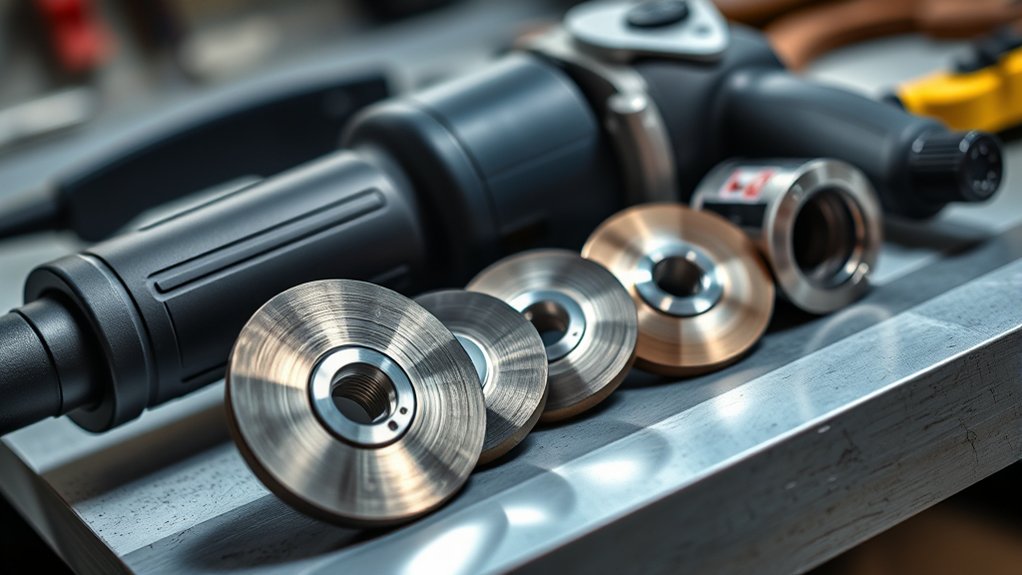
Have you ever wondered why bore size matters when using an angle grinder? The bore size, or the inner diameter of the wheel’s mounting hole, must match your grinder’s spindle size for a secure fit. Common bore sizes include 15mm, 22.23mm (7/8 inch), and 25.4mm (1 inch), with 22.23mm being the industry favorite. Selecting the wrong bore size can lead to improper mounting, risking wheel breakage or accidents during use.
When you’re choosing a disc, always check the grinder’s specifications and the wheel’s markings to verify compatibility regarding bore size and RPM ratings. Many angle grinder wheels come with reducing rings or spacers, allowing for versatile wheel selection. This means you can confidently tailor your tools to your tasks, enhancing your freedom to create and innovate without the hassle of equipment failures.
Why Matching Bore Size Matters for Safety
Verifying the bore size of your angle grinder wheel matches the spindle size is essential for your safety. A secure fit minimizes risks and enhances performance, while mismatched sizes can lead to accidents. Here’s why it matters:
- Prevents the wheel from loosening during operation
- Reduces vibrations and instability
- Avoids wheel breakage, protecting you and bystanders
- Maintains the manufacturer’s warranty and tool effectiveness
- Requires regular inspection to ascertain compatibility with worn or damaged spindles
What Are the Common Bore Sizes for Grinding Discs?
When selecting grinding discs for your angle grinder, understanding common bore sizes is vital for ideal performance and safety. The typical bore sizes include 1-inch (25.4mm), 5/8-inch (15.875mm), and 7/8-inch (22.225mm). These sizes correspond to the spindle sizes of most angle grinders. It’s important that the bore size matches your grinder’s spindle to guarantee a secure fit and prevent slippage during use. Many grinding discs feature a standard 7/8-inch bore, which can be adapted for smaller spindles with a reducing ring or bushing. However, keep in mind that some discs designed for specific applications may have unique bore sizes, so always check the manufacturer’s specifications for compatibility. Using a disc with the incorrect bore size can lead to dangerous situations, including disc breakage or grinder malfunction. Prioritize safety by choosing the right bore size for your grinding discs.
How to Measure Your Grinder’s Bore Size
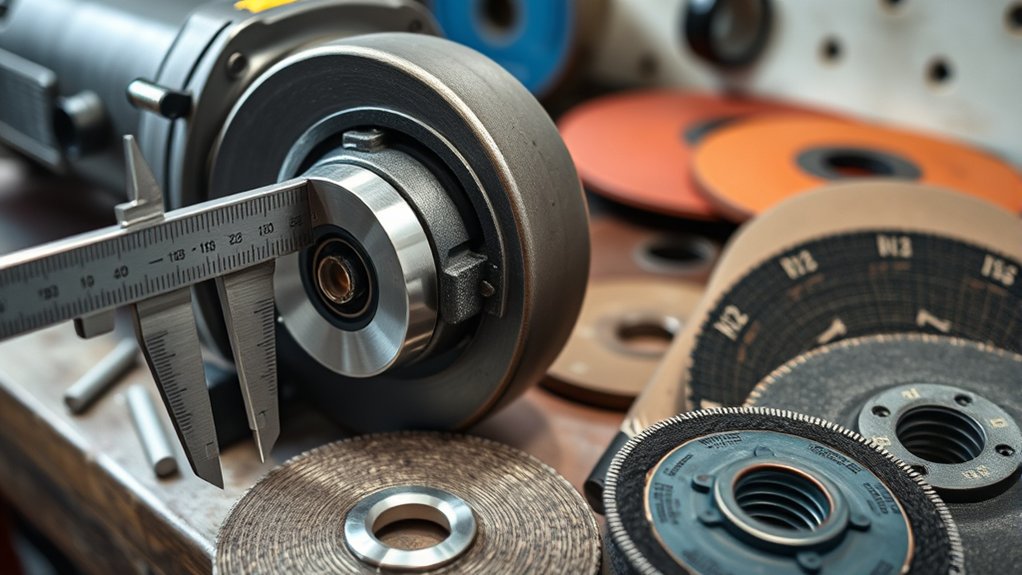
To measure your grinder’s bore size, you’ll need a caliper or a ruler for accurate results. Start by measuring the inner diameter of the wheel’s hole, ensuring you get the right fit for your angle grinder. This step is essential for safe and effective operation.
Measuring Tools Required
Accurate measurement of your grinder’s bore size is essential for selecting the right grinding wheels. To achieve this, you’ll need the right measuring tools to guarantee compatibility. Here’s what you’ll require:
- Caliper: For precise measurements of the spindle hole diameter.
- Ruler: A simple alternative, though less accurate than a caliper.
- Marker: To mark the widest point of the bore before measuring.
- Digital Scale: Helpful for checking any irregularities in the bore.
- Manufacturer’s Guide: Always refer to the specifications for both your grinder and grinding wheels.
Steps for Accurate Measurement
Measuring your grinder’s bore size involves a few straightforward steps that can guarantee you select the right grinding wheel. First, grab a caliper or ruler and measure the diameter of the central hole in the grinding disc where it mounts onto the spindle. Verify you take the measurement directly across the center for accuracy, as bore sizes can vary greatly between disc types. Common bore sizes range from 5/8 inch to 1 inch, but check for specialty discs that may differ. When choosing a disc, confirm that the bore size matches your grinder’s spindle size to guarantee a secure fit and safe operation. Always consult the manufacturer’s specifications for both your grinder and the grinding disc.
How to Select the Right Disc Based on Bore Size
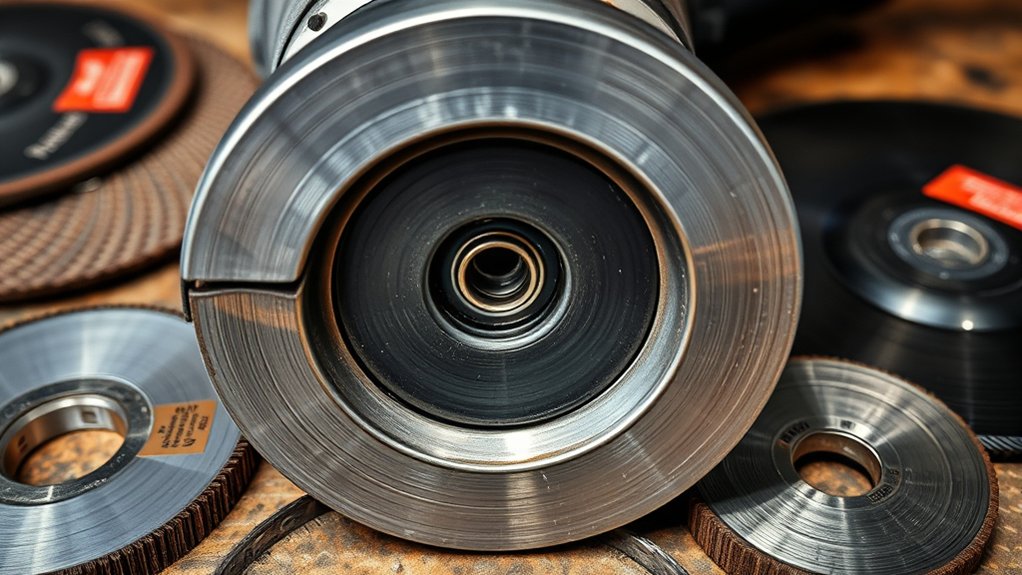
When selecting the right disc for your angle grinder, understanding bore size compatibility is essential. Always measure the disc bore diameter to guarantee it fits your grinder’s spindle, and consider using adapter rings if necessary. This will help you avoid accidents and guarantee peak performance during your projects.
Understanding Bore Size Compatibility
To guarantee your angle grinder operates safely and effectively, it’s essential to select a disc with a bore size that matches your grinder’s spindle. This confirms wheel compatibility and enhances performance during grinding tasks. Here’s what to keep in mind:
- Check the wheel packaging for bore size specifications before purchasing.
- Using the wrong bore size can lead to unsafe operation.
- Some wheels feature adaptable bushings for versatility with different grinders.
- Always adhere to the manufacturer’s recommendations for bore size.
- Verify a secure attachment to maintain safety while working.
Measuring Disc Bore Diameter
Selecting the right disc for your angle grinder starts with understanding the bore diameter, which is vital for a secure fit. The bore diameter refers to the central hole size that fits onto your grinder spindle. Standard sizes include 22.23mm (7/8 inch) for larger discs and 16mm for smaller ones. Always check both the grinder and disc packaging for compatibility regarding bore size to avoid unsafe operation and damage. Using a disc with an incorrect bore size can lead to increased vibrations and potential hazards. Remember, while the bore diameter is essential, consider the type of work you’re doing, as different applications may require specific disc styles and materials to achieve ideal results.
Choosing Appropriate Adapter Rings
Choosing the right adapter ring is essential for fitting a disc with a smaller bore size onto a grinder with a larger spindle. This guarantees a secure fit and safe operation. Here are some key points to take into account when selecting adapter rings:
- Match the bore size of the grinding wheel to the adapter ring.
- Confirm compatibility with your grinder’s spindle size.
- Check manufacturer specifications for both the disc and grinder.
- Look for rings made from durable materials to enhance safety.
- Using the correct adapter minimizes wobbling and extends the lifespan of both the grinding wheel and grinder.
What Happens If You Use the Wrong Bore Size?
When you use a disc with the wrong bore size, it can create serious issues that compromise both performance and safety. An improperly fitting disc can lead to wobbling, making your angle grinder unstable during operation. This instability increases vibration, causing premature wear on both the disc and the grinder, and potentially damaging your tool. If the bore size is too large, the disc might not stay securely in place, heightening the risk of it detaching while you work. This detachment poses a significant safety hazard. On the other hand, if the bore size is too small, you won’t be able to mount the disc at all, leaving it useless for your grinding or cutting tasks. To guarantee peak performance and safety, always match the bore size to the spindle diameter of your angle grinder, which typically ranges from 5/8 inch to 1 inch.
Tips for Finding Compatible Discs for Your Bore Size
To guarantee you find the right angle grinder discs for your bore size, start by checking the specifications on the packaging or the manufacturer’s website. Here are some tips to verify compatibility:
- Verify your grinder’s spindle diameter; it usually ranges from 5/8 inch to 1 inch.
- Match the wheel diameters of the discs with your grinder’s specifications for peak performance.
- Look for discs that include a reducer ring for versatility across different bore sizes.
- Regularly inspect the bore size of your abrasive wheels for wear or damage to maintain safety.
- Confirm the cutting surface is appropriate for the material you’re working with to achieve the best results.
Frequently Asked Questions About Bore Sizes
Understanding bore sizes is key to ensuring a safe and efficient grinding experience. The bore size of an angle grinder wheel is the diameter of the center hole, and it must match your grinder’s spindle size. A common bore size is 22.23 mm (7/8 inch) for standard models, but specialized cutting wheels may vary. Always check the specifications of both the grinder and the cutting wheel to confirm compatibility.
Using a disc with the wrong bore size isn’t just inconvenient; it can lead to dangerous situations like wobbling or even breakage during use. To avoid accidents, make sure the locking mechanism of your grinder securely holds the disc in place. Refer to the manufacturer’s guidelines for the recommended bore sizes, ensuring you can work confidently and safely. By paying attention to these details, you’ll enhance your grinding experience and maintain control over your projects.
How to Keep Your Grinder Running Smoothly
Keeping your angle grinder running smoothly is essential for both safety and efficiency. To achieve this, follow these key practices:
- Verify the wheel’s bore size matches the grinder’s spindle size to prevent wobbling.
- Regularly conduct inspections of the spindle and wheel mounting area for any wear or damage.
- Use a proper locking mechanism when installing grinding wheels to keep them secure during operation.
- Maintain cleanliness by keeping the grinder free from debris that can impact alignment and performance.
- Periodically check and replace worn or damaged grinding wheels to minimize the risk of breakage and injury.
Frequently Asked Questions
What Is the Bore Size on an Angle Grinder?
The bore size on an angle grinder typically ranges from 16mm to 22.23mm. When selecting appropriate discs, consider bore size measurement and grinder specifications to guarantee disc compatibility factors align for safe operation.
Can I Use a 4.5 Inch Blade on a 5 Inch Grinder?
Yes, you can use a 4.5-inch blade on a 5-inch grinder if the arbor sizes match. Just guarantee you follow safety precautions, as performance differences may affect your cutting efficiency and depth.
What Size Disc for My Angle Grinder?
For your angle grinder, choose a disc size compatible with its type and spindle. Consider safety, ensuring the disc matches the grinder’s RPM. Select the right size for your cutting applications to maximize efficiency.
What Does Disc Bore Size Mean?
Disc bore size refers to the hole diameter in grinding wheels, essential for angle grinder compatibility. With 22.23 mm as a common size, choosing the right bore guarantees safety and peak performance across various disc types.
Conclusion
In the world of angle grinders, your bore size is like the key to a treasure chest—without it, you won’t release the potential of your tool. By matching the right disc to your grinder, you guarantee safety and efficiency, transforming rough materials into polished masterpieces. So, take a moment to measure and select wisely; this small step can make the difference between a job well done and a mishap waiting to happen. Your grinder deserves the best!