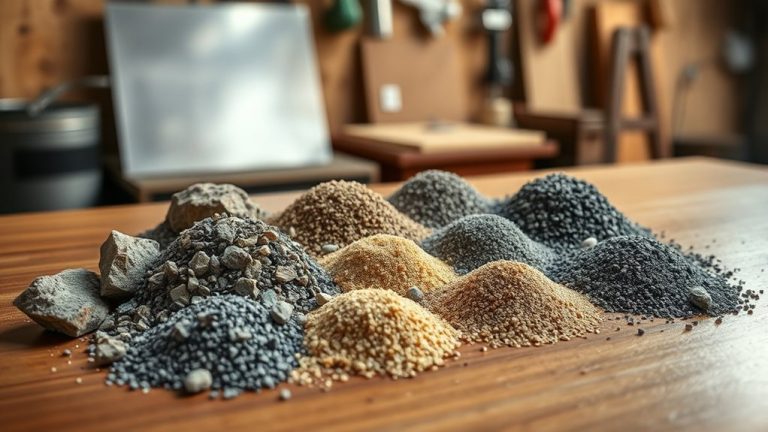
Understanding angle grinder wheel markings is vital for safe operation. Each wheel has RPM ratings that must meet or exceed your grinder’s speed to prevent failures. Grit sizes dictate material removal efficiency; coarser grits (10-60) provide fast removal, while finer ones (100-1200) are best for finishing. Selecting the right abrasive material and adhering to safety codes guarantees safe handling and storage. By grasping these essentials, you’ll optimize your grinding tasks effectively. There’s much more to explore on this topic.
The Importance of Understanding Angle Grinder Wheel Markings
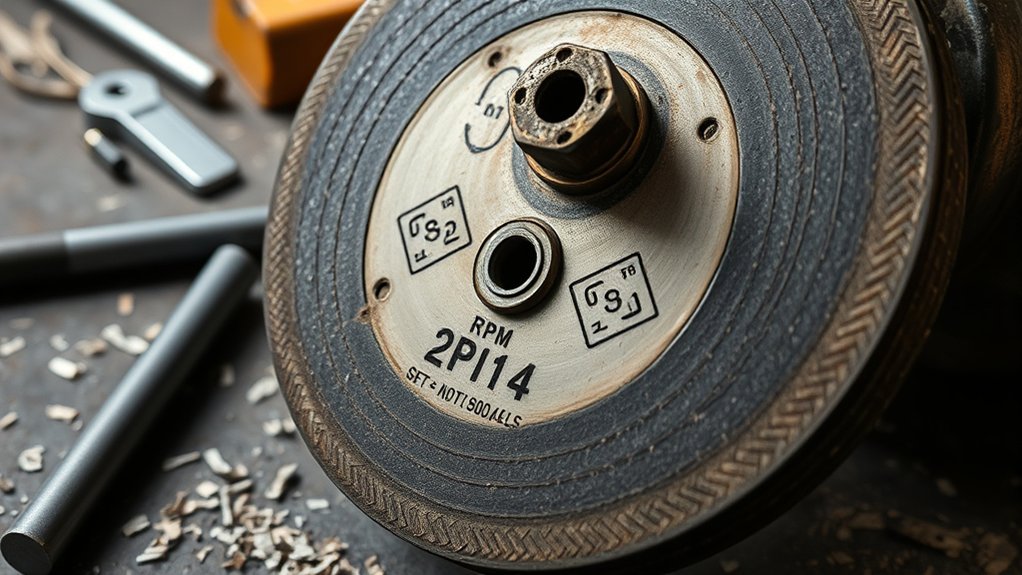
When you operate an angle grinder, understanding the wheel markings is fundamental for both safety and efficiency. The RPM rating on grinding wheels indicates the maximum operating speed; it’s essential that this matches your grinder’s speed to prevent dangerous failures. You’ll want to pay attention to grit size as well, which ranges from coarse to fine. Lower numbers are suited for heavy material removal, while higher numbers excel in finishing tasks. Furthermore, the wheel type, identified by ISO numbers, defines its shape and specific application, ensuring you select the right wheel for ideal performance. Finally, always consult the safety codes and specifications on your wheels. They provide critical information on handling, storage, and limitations, safeguarding you from potential hazards when using abrasive materials. By mastering these markings, you empower yourself to work efficiently and safely, liberating your skills in various grinding applications.
Understanding RPM: Why It Matters for Safe Grinding?
Understanding the RPM rating of your angle grinder wheel is critical for maintaining safety and performance during grinding tasks. The RPM marking indicates the maximum safe operational speed of the wheel, guaranteeing it can withstand the angle grinder’s wheel speed without risk of wheel breakage. Always verify that the wheel’s RPM rating meets or exceeds that of your grinder to prevent hazardous incidents. Regularly check these markings, as using a wheel rated for lower RPM than your grinder can lead to catastrophic failures, such as shattering during operation.
Grit Size and Its Impact on Grinding
Choosing the right grit size for your angle grinder wheel is essential, as it directly impacts both the efficiency of material removal and the quality of the surface finish. Grit sizes are indicated numerically, with lower numbers (10-60) representing coarser grits suitable for aggressive grinding of hard materials. These coarser options excel at quick material removal, but they can leave a rough texture. Conversely, higher numbers (100-1200) signify finer grits ideal for finishing tasks, yielding smoother surfaces but requiring more time for cutting.
When selecting grit, consider the materials involved. Softer materials may need finer grits to prevent clogging, while harder materials benefit from coarser grits for effective grinding. By understanding grit size and its implications, you can make informed choices that enhance both productivity and the quality of your work, liberating your projects from the constraints of poor surface finishes.
Selecting the Right Abrasive Material for Your Grinding Project
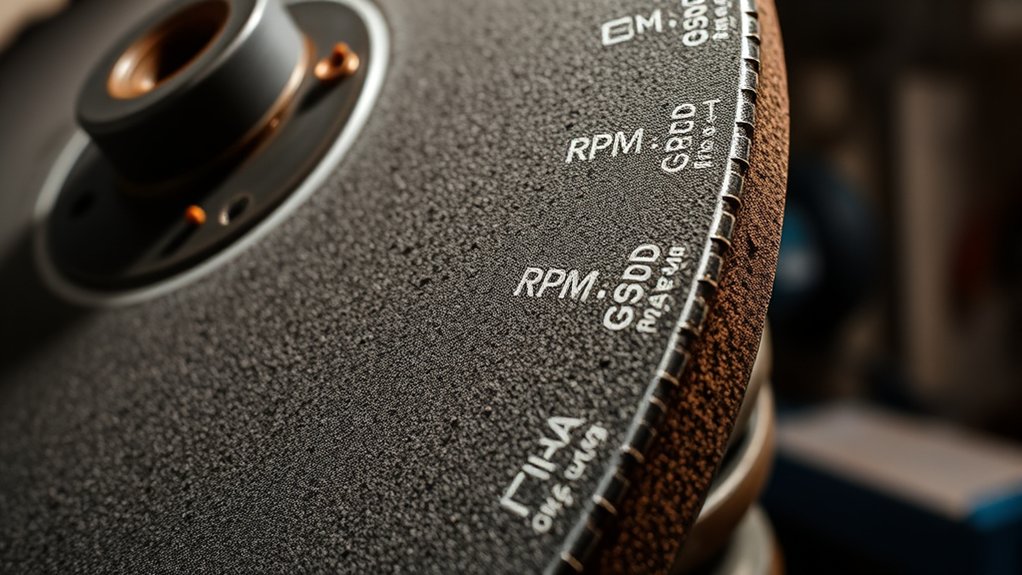
The right abrasive material is key to achieving ideal results in your grinding projects. To maximize performance and safety, here’s what you need to take into account:
- Material Compatibility: Use aluminum oxide for hard materials like steel, while silicon carbide works best for soft metals such as copper and stone.
- Grit Sizes: Select larger grit sizes (10-60) for heavy material removal and finer grits (120-1200) for finishing and polishing tasks.
- Bond Type: Choose a softer bond (A to K) for hard materials and a harder bond (L to Z) for soft metals.
Always check the wheel’s maximum RPM rating to confirm it matches or exceeds your grinder’s speed. This guarantees safe operation and effective grinding performance, allowing you to liberate your creativity while achieving precision in your projects.
Safety Codes for Angle Grinder Wheel Markings and Best Practices
When using angle grinder wheels, it’s essential to understand the safety codes marked on them, such as maximum operating speeds and bond types. Regularly inspect these markings to guarantee compliance with safety standards and select wheels that match your grinder’s specifications. By following best practices for handling and adhering to manufacturer guidelines, you can enhance both safety and efficiency during your grinding tasks.
Understanding Safety Codes
Understanding safety codes on angle grinder wheel markings is essential for guaranteeing safe operation and ideal performance. These codes help you select the right wheels for your tasks while minimizing risks. Here are three key components to reflect upon:
- Maximum RPM: Always check the wheel’s maximum operating speed in RPM to prevent dangerous accidents during use.
- Grit Size & Type: The grit size code indicates the wheel’s cutting efficiency, affecting its suitability for different materials.
- Bond Hardness: The grade marking reveals the hardness of the wheel’s bond; softer grades are for aggressive cuts, while harder grades excel in durability.
Regular inspections for damage and adherence to safety codes can prolong the lifespan of your grinding wheels and guarantee safe operation.
Best Practices for Handling
Five essential best practices can greatly enhance the safe handling of angle grinder wheels. First, always check the maximum operating speed marked on the wheel to verify it meets or exceeds your grinder’s RPM for safe operation. Next, familiarize yourself with the grit size; lower numbers indicate coarser wheels for heavy material removal, while higher numbers provide finer finishes. Pay close attention to the bond type—softer bonds allow aggressive cuts but wear out faster, whereas harder bonds last longer but may need more pressure. Inspect abrasive wheels for any signs of damage or wear before use, as this affects performance. Finally, adhere to the manufacturer’s guidelines for storage and handling to maintain effectiveness and prevent damage over time.
How to Choose the Right Angle Grinder Wheel for Common Grinding Issues
Choosing the right angle grinder wheel is essential for tackling common grinding issues effectively and safely. Here’s how to choose the best grinding wheel for your needs:
- Match the RPM: Verify the wheel’s maximum RPM rating meets or exceeds your grinder’s RPM to avoid safety hazards.
- Select Grit Size: For heavy material removal, opt for coarser grits (24-60). For finishing tasks, finer grits (80-120) are ideal.
- Consider Bond Type: Vitrified bonds provide heat stability and durability, while resin bonds offer flexibility and shock resistance for tougher applications.
Also, pay attention to the thickness of the wheel; thinner wheels excel in precision cuts with less heat, while thicker wheels are more durable for rough jobs. Finally, always check for safety markings and expiry dates on the wheel to verify compliance with safety standards.
Frequently Asked Questions
How to Tell What Grit a Grinding Wheel Is?
To tell what grit a grinding wheel is, check the markings for grit number significance. Refer to a grit comparison chart, assess wheel hardness ratings, and visually identify common grit sizes for application suitability and surface finish types.
Which Grinding Wheel Grit Is Coarser, 46 or 60?
Grit 46’s coarser than 60, impacting abrasive material differences and wheel performance factors. For heavy grinding applications, selecting the right wheel grit guarantees ideal surface finish effects and minimizes wheel wear characteristics during use.
How to Read Grinding Wheel Specification?
To read grinding wheel specifications, check the wheel types, material selection, diameter, and performance factors. Confirm compatibility, adhere to safety standards, and follow maintenance tips for peak grinding wheel usage and efficiency.
How to Choose a Grinding Wheel RPM?
To choose a grinding wheel RPM, match it with your grinder’s speed rating, considering wheel diameter, material compatibility, and application purposes. Always adhere to manufacturer guidelines and safety standards, and perform regular maintenance for peak performance.
Conclusion
In the world of angle grinding, knowing your wheel markings is essential for both efficiency and safety. Just like a well-tuned machine, each component plays an important role in achieving the best results. By understanding RPM, grit size, and material types, you guarantee a smoother grind and reduce risks. Remember, “an ounce of prevention is worth a pound of cure.” Stay informed and choose the right wheel for your task to keep your projects running smoothly and safely.