Arc Union Welding Electrode Oven Review
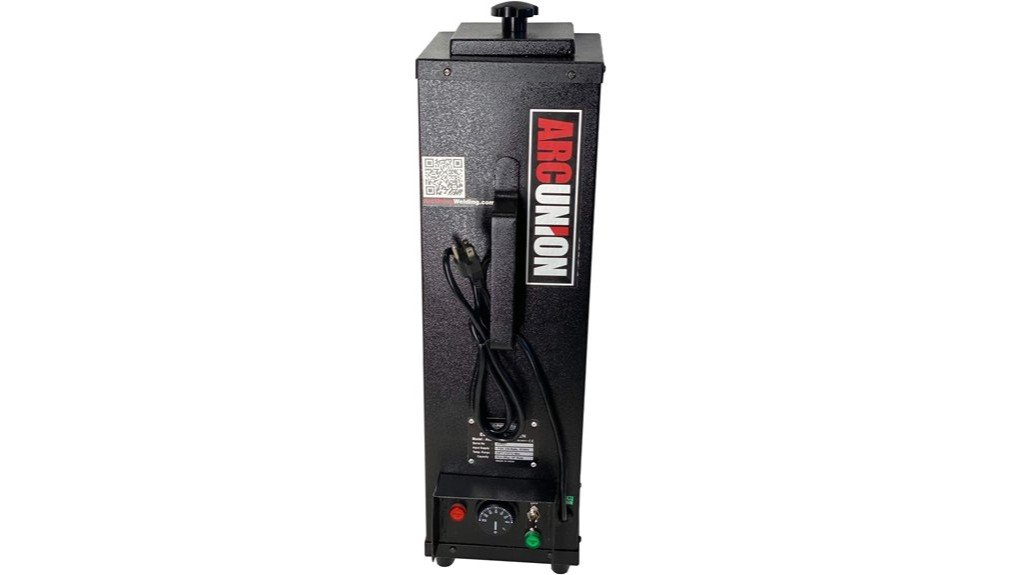
Moisture can turn properly selected stick electrodes into an avoidable source of arc problems, porosity, and inconsistent weld quality. The Arc Union Welding Electrode Oven gives you a portable, heated place to hold opened electrodes instead of leaving them exposed on a bench, in a truck, or inside a damp storage cabinet. Its main strengths are a 20 lb rod capacity, 115V power, steel construction, and an adjustable 80°F to 300°F thermostat. Its main limitation is documentation: the listing does not clearly publish the interior dimensions, wattage, cord details, or a specific written warranty.
Quick Verdict
Rating: 8/10, recommended with caveats
Best For: Small fabrication shops, farm repair work, mobile welders, and home garages that need portable heated electrode storage
Bottom Line: This Arc Union oven offers useful 20 lb capacity and an 80°F to 300°F holding range from a standard 115V supply. Buy it for portable rod storage, but confirm the current draw, inside dimensions, and warranty before relying on it for code-controlled work.
Key Specifications
| Specification | Detail |
|---|---|
| Brand | Arc Union |
| Product type | Portable welding electrode holding oven |
| ASIN | B086WLFLNB |
| Rod capacity | Up to 20 lb, according to the current listing title |
| Temperature range | Adjustable from 80°F to 300°F |
| Power supply | 115V AC |
| Control | Analog adjustable temperature dial |
| Material | Steel |
| Item weight | 19.56 lb |
| Package dimensions | 26.5 x 10.5 x 9.5 inches, package size rather than confirmed oven dimensions |
| Color | Black |
| Package quantity | 1 oven |
| Best use | Holding compatible stick electrodes at the temperature specified by the electrode manufacturer |
Key Takeaways
- The 80°F to 300°F range covers common holding temperatures for several electrode classifications, but you must follow the electrode data sheet.
- The listed 20 lb capacity is useful for a small shop or mobile setup without the bulk of a large cabinet oven.
- The 19.56 lb steel unit is portable, although it still needs a stable, dry, heat-safe location near a suitable 115V outlet.
- This is best treated as a holding oven. Its 300°F maximum is below the rebaking temperature required for some moisture-exposed low-hydrogen electrodes.
- Unconfirmed wattage, internal dimensions, electrical rating details, and warranty terms should be checked before purchase.
What Is the Arc Union Welding Electrode Oven?
The Arc Union is a portable heated container made to help you protect stick electrodes after their original package has been opened. The current listing identifies a 20 lb capacity, 115V connection, steel body, black finish, and an analog thermostat that adjusts from 80°F to 300°F.
That combination places it between small personal rod quivers and large stationary shop ovens. You get enough listed capacity for multiple pounds of electrodes, but the oven remains light enough at 19.56 lb to move between a welding bench, service truck, farm shop, or sheltered job-site work area.
The oven is designed for storage and holding, not cooking and not general heat treatment. It also should not be assumed to be a full rebake oven. Some electrode reconditioning procedures require temperatures far above 300°F, so the electrode manufacturer’s data sheet and the governing welding procedure remain the final authority.
Who Should Buy It?
Best For
- Small shops that open low-hydrogen electrode packages and need heated storage between welds
- Mobile welders who want a 115V oven that is easier to move than a large cabinet model
- Farm, maintenance, and home-garage users who need to protect compatible rods from humid storage conditions
Skip If
- You need a documented rebake oven for procedures above 300°F
- You need confirmed interior dimensions for long rods or a precise amperage and wattage specification
- You need weatherproof equipment that can remain exposed outdoors
Before You Buy: Do not place every stick electrode type in the same hot oven. Cellulosic electrodes such as E6010 and E6011 are generally stored dry at room temperature, while many low-hydrogen electrodes require elevated holding temperatures. Follow the exact storage instructions for the electrode classification and brand you use.
Feature-by-Feature Review
20 lb Capacity and Portability
The listing describes a 20 lb rod capacity, which is a practical middle ground for a small operation. It can hold more than a compact 5 lb or 10 lb field oven, yet the oven itself weighs 19.56 lb before electrodes are added. You should still account for the loaded weight when carrying it into a truck or across a job site.
Amazon publishes package dimensions of 26.5 x 10.5 x 9.5 inches. Those numbers help you estimate shipping-box size, but they do not confirm the usable interior length or diameter. Check the latest listing or seller documentation when you need to store a specific rod length.
80°F to 300°F Temperature Control
The analog dial lets you adjust the oven from 80°F to 300°F. That upper limit aligns with common holding ranges published for several low-hydrogen electrode classifications. It also gives you lower settings for other compatible rods when the electrode manufacturer calls for them.
The dial is simple, but the listing does not identify a digital readout, calibration tolerance, or separate thermometer. For procedure-controlled work, verify the actual internal temperature with an appropriate independent thermometer and follow your quality program.
Steel Construction
The steel body is better suited to routine shop handling than a lightweight plastic storage tube. It can help protect the heating chamber when you move the oven between benches and vehicles. Steel also means the exterior may become warm during operation, so keep it away from combustible materials and allow safe clearance.
115V Power
A 115V connection makes this model easier to use in many North American garages and shops. You do not need a dedicated 240V circuit based on the listing. However, the published product details do not clearly state wattage, amperage, plug configuration, cord length, or extension-cord limits.
Confirm the electrical label on the oven before use. Plug it into a dry, suitable outlet, keep the cord away from hot work and sharp metal, and do not operate the unit in rain or standing water.
Holding Oven Versus Rebake Oven
This distinction matters. A holding oven helps keep properly conditioned electrodes dry after you open the package. A rebake oven uses a manufacturer-specified cycle to restore certain moisture-exposed electrodes, often at a much higher temperature.
The Arc Union tops out at 300°F. Hobart’s published storage and reconditioning guidance, for example, lists some low-hydrogen electrode reconditioning cycles at 500°F to 800°F. That means this unit may be suitable for holding those rods at the correct temperature, but not for performing the full rebake cycle.
How It Performs in Real Use
In a Small Fabrication Shop
Place the oven near your stick-welding area on a stable, heat-resistant surface. The 20 lb capacity should cover routine repair and fabrication work without requiring a large floor oven. The analog control is fast to understand, although you may want an independent temperature check when your procedure has a narrow holding range.
For Mobile Repair Work
At 19.56 lb empty, the oven is movable enough for a service truck or farm-repair setup. The 115V input is useful when standard power is available. Protect the unit from weather during transport and operation, and secure it so the lid, cord, and control are not damaged by shifting tools.
In a Humid Garage
A heated oven gives opened compatible electrodes more protection than an unheated shelf or cardboard box. Keep the oven powered and set according to the electrode instructions when continuous heated storage is required. Avoid repeatedly moving cold rods into a warm, humid area because temperature changes can contribute to condensation.
For Code or Procedure-Controlled Welding
The Arc Union can be part of a storage system, but it does not replace written consumable-control procedures. Confirm oven temperature, exposure limits, package-opening time, rod issue and return practices, and any calibration requirements specified by your code, customer, or welding procedure.
Setup and Usage Tips
- Read the electrode data sheet first. Identify the required holding temperature and maximum atmospheric exposure time before setting the dial.
- Separate incompatible electrode types. Do not store cellulosic and low-hydrogen electrodes together at one temperature.
- Remove heat-sensitive packaging. Do not place cardboard, plastic bags, or other packaging in the hot chamber unless the product instructions expressly permit it.
- Preheat the empty oven when needed. Let the chamber stabilize before loading rods when your procedure requires a controlled holding temperature.
- Keep rods organized. Mark electrode classifications and opening times so you do not mix rods or lose track of exposure limits.
- Check actual temperature. For critical work, use a suitable thermometer and maintain any calibration records required by your quality system.
- Keep the oven dry and ventilated. Use it on a stable, noncombustible surface with safe clearance from welding sparks, fuel, solvents, and wet areas.
Pro Tip: Label separate rod batches with the electrode classification, package-open time, and required holding temperature. This simple step reduces mix-ups when several rods or welding procedures share the same work area.
Compatibility and Safety
ESAB publishes typical holding ranges of ambient air for E6010 and E6011, 100°F to 150°F for several rutile and iron-powder types, and 225°F to 300°F for common low-hydrogen classifications such as E7018. Use these ranges only as general context. Your electrode manufacturer’s instructions take priority.
Keep the oven away from rain, standing water, combustible materials, and areas where grinding debris can damage the cord or controls. Treat the chamber, lid, and rods as hot during operation. Disconnect power before inspection or cleaning, and have damaged electrical parts serviced by a qualified person.
For strict structural, pressure, pipeline, or code work, use the consumable-control requirements in the applicable welding procedure and code. A portable oven does not by itself prove that electrodes were stored, issued, and returned within the required limits.
Pros and Cons
Pros
- Listed 20 lb capacity suits small shops and mobile repair work
- Adjustable 80°F to 300°F range covers many common holding needs
- 115V operation is convenient in many garages and work areas
- Steel body is suitable for routine shop handling
- 19.56 lb empty weight is more portable than a large cabinet oven
Cons
- The listing gives package dimensions, not confirmed usable interior dimensions
- Wattage, current draw, cord length, and temperature accuracy are not clearly published
- The 300°F maximum is not high enough for some electrode rebake procedures
Is It Worth the Price?
The Arc Union is worth considering when you need more capacity than a small personal rod oven but do not want a large stationary cabinet. Its value comes from the 20 lb rating, broad holding range, steel body, and common 115V input.
You get the most value when your work uses compatible stick electrodes regularly and your storage area is humid or temperature-variable. It is less compelling when you only weld occasionally from freshly opened small packages, or when your procedure requires documented temperature accuracy and high-temperature rebaking.
Because Amazon pricing can change, compare the current cost with the published electrical details, usable interior size, temperature verification method, and warranty support. Those points matter more than a small difference in purchase price.
How It Compares to Alternatives
A Keen K-15 is a smaller 15 lb portable holding oven from an established oven manufacturer, making it worth comparing when documentation and brand support matter more than the extra listed capacity. A VEVOR 50 lb portable rod oven offers more capacity and published 420W power, but it is a larger choice for users who carry more electrodes.
The Arc Union makes the most sense when you want a portable 20 lb middle option with a simple analog dial and 115V operation. A larger shop oven is better for centralized consumable control, while a 5 lb to 15 lb model may be easier for one welder to carry.
Frequently Asked Questions
What temperature range does the Arc Union electrode oven provide?
The current listing states an adjustable range of 80°F to 300°F. Set the oven according to the electrode manufacturer’s storage instructions rather than choosing one temperature for every rod type.
Can this oven hold 20 lb of welding rods?
The listing title identifies a 20 lb capacity. The published technical table does not provide usable interior dimensions, so confirm rod length and fit before buying for a specific electrode package.
Is it suitable for E7018 electrodes?
Its 300°F maximum overlaps common E7018 holding ranges published by major electrode manufacturers. Follow the exact instructions for your E7018 brand, classification, packaging, exposure time, and welding procedure.
Can it rebake moisture-exposed low-hydrogen rods?
Not for every classification. Some published low-hydrogen reconditioning cycles require 500°F or more, which exceeds this oven’s 300°F maximum. Treat it as a holding oven unless the rod manufacturer specifically approves a reconditioning cycle within its range.
Can E6010 or E6011 rods go in this oven?
Do not assume they should be heated like low-hydrogen rods. Cellulosic E6010 and E6011 electrodes are generally stored dry at room temperature, and excessive heating can harm their intended performance.
Does it use a standard outlet?
The listing specifies 115V power, which is compatible with many standard North American work areas. Confirm the product label, outlet capacity, plug type, and any extension-cord restrictions before operating it.
Is the Arc Union oven weatherproof?
The listing does not identify a weatherproof or outdoor electrical rating. Use it only in a dry, sheltered area and do not expose it to rain, standing water, or wet ground.
What should you confirm before ordering?
Confirm the usable interior dimensions, wattage, amperage, cord and plug details, temperature accuracy, included documentation, and warranty terms. Also make sure the 80°F to 300°F range matches the rods and procedures you use.
The Bottom Line
The Arc Union Welding Electrode Oven is a practical choice for small shops and mobile welders who need a portable 20 lb holding oven with 115V power and an adjustable 80°F to 300°F range. Skip it when you need a verified high-temperature rebake cycle, confirmed internal dimensions, or fully documented electrical and calibration data.
Its strongest point is useful capacity in a manageable steel package. Its main weakness is the limited technical documentation, so check the latest listing and product label before using it for critical or code-controlled welding.
Ready to Buy?
Check the latest price, dimensions, electrical details, and seller warranty information before you decide.