Disclosure: As an Amazon Associate, we earn from qualifying purchases. If you click a link on this page and make a purchase, we may receive a small commission at no extra cost to you.
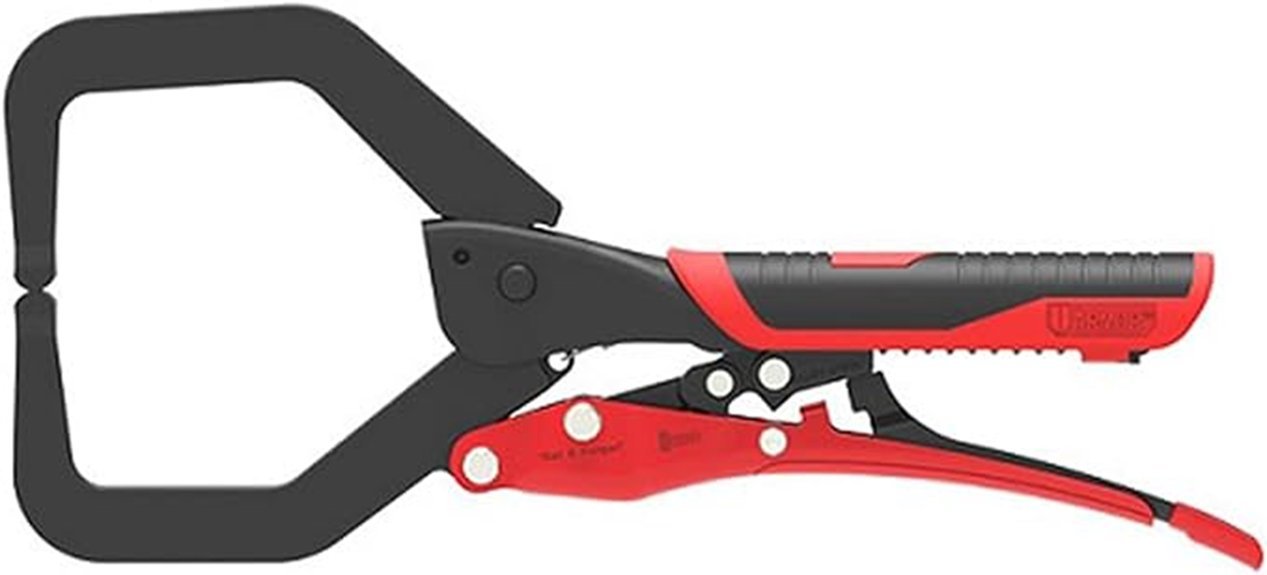
Changing clamp settings over and over can slow down a simple shop task. The Armor Tool Locking C Clamp is built for buyers who want faster workholding across different material thicknesses, especially during assembly, fitting, repair, and setup work. Its main appeal is the mix of auto-adjust technology, a 7-inch jaw capacity, and a soft-grip handle. This review explains where it helps, where you still need to check fit and pressure, and whether it makes sense for your wood, metal, garage, or DIY projects.
Quick Verdict
Rating: 8.2/10
Best For: DIY users, woodworkers, metalworkers, and garage owners who want faster clamping across changing material thicknesses.
Bottom Line: The Armor Tool Locking C Clamp is worth considering if repeated jaw adjustment slows down your work. Its biggest tradeoff is that you still need to confirm the 7-inch jaw capacity, pressure, and contact points before using it on delicate surfaces or high-stress setups.
Key Specifications
| Specification | Detail |
|---|---|
| Brand | Armor Tool |
| Product type | Locking C clamp |
| Linked Amazon ASIN | B07PGJCR3R, based on the existing product URL |
| Design | C-clamp style locking clamp for holding and positioning workpieces |
| Jaw capacity | 7-inch jaw capacity |
| Main feature | Auto-adjust clamping technology |
| Handle design | Soft-grip handle for repeated clamping and release |
| Supported workpieces | Wood and metal materials when size, surface, and pressure needs match the tool |
| Best use | Holding, positioning, small assemblies, gluing support, fitting, welding prep, and garage repairs |
| Care note | Wipe clean after dust, debris, or moisture exposure and store in a dry place |
| Safety note | Use it for clamping and positioning only. Do not use it as a lifting, pulling, vehicle-support, or load-bearing device unless the manufacturer specifically allows that use. |
What Is the Armor Tool Locking C Clamp?
The Armor Tool Locking C Clamp is a hand clamp made to hold workpieces in place while you measure, mark, drill, fasten, glue, fit, or prep parts. Its C-clamp shape helps it reach around edges, boards, brackets, small panels, tabs, and uneven pieces better than some straight clamping tools.
The main selling point is its auto-adjust technology. Instead of resetting the jaw every time you move from one material thickness to another, the clamp is designed to adapt with less manual setup. That can help when you move between boards, metal stock, small frames, brackets, or mixed-material assemblies during the same project.
This clamp makes the most sense for buyers who want speed and convenience in a workshop, garage, or jobsite kit. It is still a hand tool, so you need to check alignment, pressure, surface protection, and project fit before clamping finished wood, painted metal, thin sheet material, or delicate parts.
Key Takeaways
- The 7-inch jaw capacity gives the clamp useful reach for many small and medium shop tasks.
- Auto-adjust technology reduces repeated setup when you switch between different material thicknesses.
- The soft-grip handle helps with comfort when you clamp and release the tool many times.
- The C-clamp design works best for holding, positioning, fitting, and setup work on wood or metal pieces.
- It is not a universal replacement for bar clamps, pipe clamps, spring clamps, stands, or specialty workholding tools.
Who Should Buy It?
Best For
- DIY users who want faster clamping without resetting the jaw for every workpiece.
- Woodworkers and garage users who need a clamp for small assemblies, gluing support, holding, or positioning.
- Metalworking users who need a secure temporary hold for fitting, alignment, or welding prep before final work.
Skip If
- You need a confirmed throat depth, pressure rating, heat rating, material spec, or warranty detail before buying.
- You mainly clamp delicate finished surfaces and do not plan to use pads, scrap blocks, or protective material.
- You need clamps for wide panels, long glue-ups, heavy support, lifting, pulling, or vehicle-related holding.
Key Features of the Armor Tool Locking C Clamp
7-Inch Jaw Capacity
The 7-inch jaw capacity gives this clamp enough opening for many small and medium shop tasks. That can help when you need to clamp around thicker boards, layered pieces, brackets, tabs, or uneven material stacks.
Jaw capacity still matters in context. A clamp can fit over a workpiece and still be the wrong choice if the part needs wider pressure distribution, deeper throat reach, or a different clamp style. Measure the materials you clamp most often before you treat this as your main shop clamp.
Auto-Adjust Technology
The auto-adjust feature is the strongest reason to consider this clamp over a basic locking clamp. It is designed to adapt to changing material thicknesses, so you spend less time resetting the clamp when you move to a new part.
This helps most when your workflow includes repeat positioning, quick dry fits, assembly steps, fixture setup, or mixed materials. You should still test pressure before final clamping, but the design aims to reduce the slower trial-and-error feel of traditional locking clamps.
Soft-Grip Handle
The soft-grip handle improves comfort when you clamp and release the tool many times during one project. This matters during cabinet work, small glue-ups, repair jobs, and fabrication prep where you may reposition the clamp often.
A comfortable handle does not remove the need for safe technique. Keep your fingers clear of pinch points, lock the clamp only when the workpiece is stable, and release pressure slowly when the piece could shift.
Reliable Workholding for Setup Tasks
The clamp is best used for keeping pieces aligned, holding parts during setup, and improving control while you work. It can act like a temporary third hand when you need both hands for marking, drilling, fastening, sanding, fitting, or checking alignment.
Do not treat any locking clamp as a safety-rated lifting, pulling, or load-bearing device unless the manufacturer specifically states that use. For normal shop work, the goal is stable workholding, not structural support.
Benefits of Auto-Adjust Technology
Auto-adjust clamping can save time because you spend less effort setting the jaw for each material thickness. That is useful when you move between boards, metal pieces, brackets, jigs, or irregular project parts in one session.
| Auto-Adjust Benefit | What It Means in Use | Buyer Benefit |
|---|---|---|
| Less repeated readjustment | The clamp adapts to different material thicknesses. | You can move faster during setup and assembly. |
| More predictable clamping | Pressure can feel more consistent across common workpieces. | You spend less time correcting clamp pressure between parts. |
| Better mixed-task workflow | The clamp can move between shop tasks without as much setup time. | You get a more practical tool for repairs, fitting, and small assemblies. |
Before You Buy: The 7-inch jaw capacity is useful, but it does not mean the clamp fits every project. Check your workpiece thickness, surface finish, throat reach needs, and pressure requirements before you rely on it as your main clamp.
Materials, Build, and Compatibility
The review-supported use cases center on wood and metal workpieces. That makes the clamp a practical choice for common garage, shop, repair, and assembly tasks where you need a temporary hold.
For wood, the clamp can help with positioning, edge work, small glue-ups, jig setup, and holding parts before fastening. For metal, it can help hold pieces during layout, alignment, fitting, and welding prep when the project size and shape match the clamp.
Use extra care on finished surfaces. A locking clamp can leave marks if the pressure is too high or if the contact points are too small. Scrap wood, pads, or protective material can help spread pressure and reduce surface damage.
User Experience and Versatility
The user experience centers on speed. The Armor Tool Locking C Clamp is built for people who do not want to stop and reset a clamp every time the material thickness changes.
That makes it versatile for day-to-day work, but it also means you should treat it as one part of a larger clamp setup. A C clamp can be excellent for reach and holding force, while bar clamps, pipe clamps, spring clamps, or specialty clamps may still work better for larger panels, thin trim, or delicate finish work.
Pro Tip: Test the clamp on scrap material before using it on a finished piece. This helps you confirm pressure, contact marks, and alignment before the real workpiece is at risk.
How It Performs in Real Use
For Woodworking and Assembly
For woodworking, this clamp works best as a holding and positioning tool. It can help keep pieces aligned while you mark, drill, fasten, or wait for glue to set on smaller parts.
Use padding when the wood surface matters. Locking pressure can dent softer wood if the clamp contacts a small area with too much force.
For Metalworking and Welding Prep
For metalwork, the C-clamp shape can help hold brackets, tabs, plates, or small parts before final fastening or welding. The auto-adjust design can be useful when you move between metal pieces with different thicknesses.
Keep the clamp away from unsafe heat exposure unless the manufacturer’s instructions allow it. Also confirm that the clamp is secure before grinding, welding, or applying force to the workpiece.
For Garage Repairs
In a garage, the Armor Tool Locking C Clamp can help with small repairs, temporary holds, fixture setup, and general positioning. It is useful when you need a third hand during a task but do not want to keep changing clamp settings.
It should not replace purpose-built supports, stands, jack stands, or safety equipment. Use it for clamping and positioning, not for lifting, vehicle support, or holding heavy suspended parts.
For Outdoor Projects
The clamp can be useful for outdoor repair or build tasks when the material and pressure needs fit. For longer tool life, wipe it down after exposure to moisture, dust, or debris, and store it in a dry location.
Do not assume weather resistance beyond what the product listing or manual confirms. If outdoor use is a major reason for buying, check the manufacturer details before purchase.
How to Use It Correctly
- Check the jaw opening first: Make sure the workpiece fits within the 7-inch jaw capacity before you start.
- Dry-fit before locking: Place the clamp on the workpiece without full pressure to confirm reach and angle.
- Test pressure on scrap: Use scrap wood or spare material to see whether the clamp leaves marks.
- Align before locking: Position both contact points squarely so the clamp does not twist the workpiece.
- Use padding on finished surfaces: Add scrap blocks or protective pads when clamping painted, stained, polished, or soft materials.
- Release slowly: Hold the workpiece steady when unlocking the clamp, especially if parts are under tension.
- Follow the product instructions: Use the clamp only for the tasks and conditions allowed by the manufacturer.
Clamp Safety and Surface Protection
Locking clamps can apply enough force to shift, dent, or mark materials when you use them carelessly. Before you lock the Armor Tool clamp, make sure the workpiece is stable and that both contact points sit flat enough to avoid slipping.
Use scrap blocks when clamping soft wood, stained boards, painted metal, thin panels, or visible surfaces. The extra material spreads pressure and helps reduce dents, scratches, and pressure marks.
For welding, grinding, or other shop tasks, treat the clamp as a positioning aid only. Confirm the clamp is secure, keep it away from unsafe heat exposure, and use proper protective gear for the task.
Common Mistakes to Avoid
- Assuming 7 inches fits every job: Jaw capacity is only one part of fit. Throat reach, part shape, and contact area also matter.
- Skipping surface protection: Finished wood, painted metal, and soft materials can show marks if you clamp directly on the surface.
- Using it as a support tool: A locking C clamp is not a stand, hoist, jack, or load-rated support unless the manufacturer states otherwise.
- Clamping off-center: Poor alignment can twist the workpiece or make the clamp feel less secure.
- Ignoring the manual: Always follow the product instructions for safe use, care, and limits.
Pros and Cons
Pros
- Auto-adjust technology reduces repeated jaw setup across different material thicknesses.
- 7-inch jaw capacity gives useful reach for many shop, garage, and DIY tasks.
- Soft-grip handle improves comfort during repeated clamping and releasing.
- C-clamp shape works well for holding, fitting, positioning, and small assembly tasks.
- Useful for wood and metal projects when the size, surface, and pressure needs match the tool.
Cons
- Not ideal for delicate finished surfaces unless you use padding or scrap protection.
- May not replace bar clamps, pipe clamps, or specialty clamps for wide panels or large glue-ups.
- Exact material, weight, pressure rating, heat rating, and warranty details should be confirmed on the live listing before purchase.
Is It Worth the Price?
The Armor Tool Locking C Clamp offers strong value if you want faster setup and less repeated adjustment during common clamping tasks. Its best value comes from the auto-adjust design, because that feature can save time when you move between different material thicknesses.
It is worth considering if you regularly work on wood, metal, repairs, fixtures, or small assembly projects. It is not the best fit if you need a full clamp set, verified specialty ratings, deep throat reach, or a clamp made for heavy-duty support.
Because pricing and availability can change, check the current listing before you decide. Focus on jaw capacity, product details, seller notes, return policy, and whether this clamp matches the tasks you repeat most often.
How It Compares to Alternatives
Compared with a basic locking C clamp, the Armor Tool option is more appealing if you want auto-adjust convenience. A traditional locking clamp may still make sense if you prefer a simpler tool and do not switch material thicknesses often.
Compared with bar clamps or pipe clamps, this tool is better for compact holding, positioning, fitting, and setup work. Bar clamps are often better for wide panels and long glue-ups, while spring clamps are faster for light holding. The Armor Tool Locking C Clamp makes the most sense when you want a stronger hand clamp with quicker adjustment.
Frequently Asked Questions
What materials are compatible with the Armor Tool Locking C Clamp?
This clamp is positioned for wood and metal workpieces when the size, surface, and pressure needs fit the tool. Always check the workpiece shape and finish before locking the clamp down.
How does the auto-adjust technology help in practice?
The auto-adjust design helps the clamp adapt to different material thicknesses with less manual setup. This is useful when you move between parts during assembly, repairs, fitting, or jig work.
What is the jaw capacity of this clamp?
The article-supported jaw capacity is 7 inches. Measure your common workpieces before buying, because jaw opening is only one part of proper clamp fit.
Can it be used for woodworking?
Yes, it can be useful for woodworking tasks such as positioning, small assemblies, holding parts, and setup work. Use pads or scrap blocks on finished or soft wood to reduce the risk of clamp marks.
Can it be used for metal projects?
Yes, it can help with metal positioning, fitting, and setup when the workpiece fits the jaw capacity. For welding or grinding prep, confirm the clamp is stable and follow safe shop practices.
Will this clamp replace all other clamp types?
No. It is useful for many holding and positioning tasks, but bar clamps, pipe clamps, spring clamps, and specialty clamps may be better for large panels, light pressure, deep reach, or delicate surfaces.
Can the clamp be used outdoors?
It can be useful for outdoor project work when the material and pressure needs fit. Wipe it clean after exposure to moisture or debris, and check the live listing or manual for any specific outdoor care guidance.
Who should skip the Armor Tool Locking C Clamp?
Skip it if you need verified specialty specs that are not shown on the listing, such as exact weight, material, pressure rating, heat rating, or warranty terms. You may also want another clamp type for wide glue-ups, heavy support, or delicate finished work.
The Bottom Line
The Armor Tool Locking C Clamp is a smart buy for everyday shop users who want quicker clamping across different material thicknesses. Its main strength is the auto-adjust design paired with a useful 7-inch jaw capacity, while its main limitation is that you still need to confirm fit, surface protection, and pressure for each project.
Buy it if you want a practical locking C clamp for wood, metal, garage, and DIY work. Skip it if your project needs a specialty clamp, a larger clamping setup, or fully verified specs beyond the details available in the listing.