
Disclosure: As an Amazon Associate, we earn from qualifying purchases. If you click a link on this page and make a purchase, we may receive a small commission at no extra cost to you.
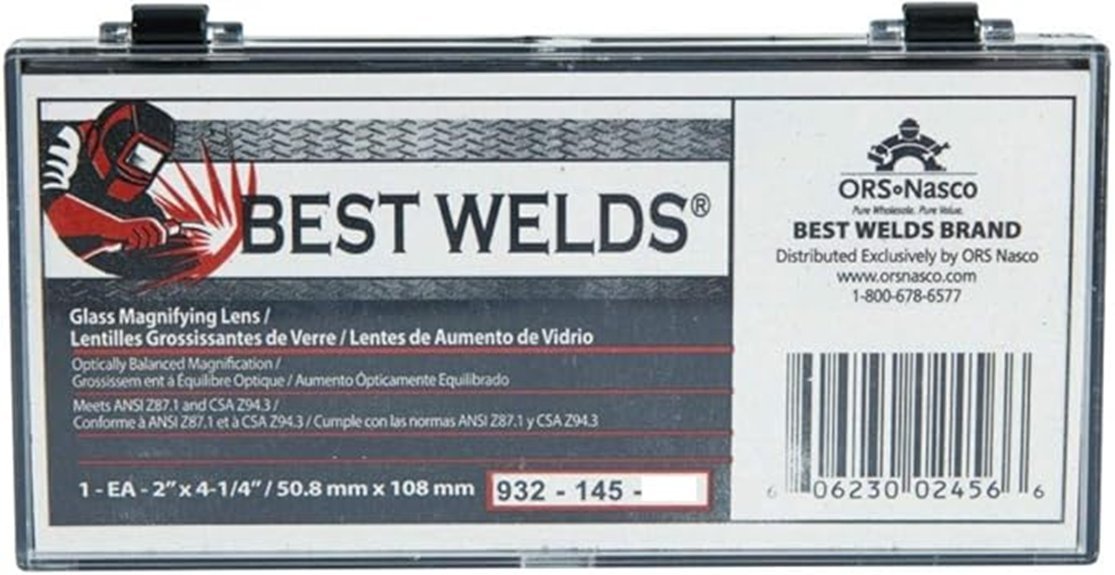
Seeing the weld puddle clearly can become difficult when your helmet lens is sharp but your close-up vision is not. The BEST WELDS Welding Helmet Magnifier adds a 3.50-diopter glass magnifier directly inside a compatible welding helmet, giving you a closer view without relying on ordinary reading glasses under the hood. Its standard 2″ x 4.25″ format is useful for many traditional lens setups, but the strong magnification and physical fit will not suit every welder or every helmet. This review explains the lens size, compatibility, setup, practical benefits, and limitations so you can decide whether this strength makes sense for you.
Quick Verdict
Rating: Recommended with caveats
Best For: Welders who need strong close-up magnification and have a helmet that accepts a standard 2″ x 4.25″ magnifier plate.
Bottom Line: The clear glass lens offers simple, fixed 3.50-diopter magnification without adding electronic parts or controls. Its main limitation is that 3.50 diopters can feel too strong for some users, and physical compatibility should be confirmed before ordering.
Key Features and Specifications
| Specification | Detail |
|---|---|
| Brand | BEST WELDS |
| Part Number | 901-932-145-350 |
| Product Type | Welding helmet magnifier / cheater lens plate |
| Lens Size | 2″ x 4.25″ |
| Diopter Strength | 3.50 diopter |
| Material | Glass |
| Color / Shade | Clear |
| Design | Rectangular magnifier plate |
| Compatibility | Designed around the common 2″ x 4.25″ welding-helmet lens format. Confirm your helmet’s magnifier slot before buying. |
| Primary Use | Close-up magnification of the work area while wearing a compatible welding helmet |
Before You Buy: A 3.50-diopter lens provides strong magnification. Check both the diopter strength you are comfortable using and the dimensions of your helmet’s magnifier holder. A 2″ x 4.25″ viewing opening alone does not guarantee that every retaining slot or frame will accept the lens.
What Is the BEST WELDS Welding Helmet Magnifier?
The BEST WELDS 901-932-145-350 is a clear glass magnifier plate made for welding helmets that accept a lens of roughly 2″ x 4.25″. It does not replace your helmet’s welding filter. Instead, it sits in the appropriate magnifier position so your view of the workpiece appears larger while you keep the helmet in its normal working position.
The defining feature is its 3.50-diopter strength. That is a relatively strong close-focus correction, so it can be helpful when a lower-powered cheater lens does not provide enough detail. Because the magnification is fixed, however, choosing the correct strength matters more than it does with an adjustable optical device.
Who Should Buy It?
Best For
- Welders who already know that a strong 3.50-diopter correction suits their close-up vision.
- Users with helmets designed to accept a standard 2″ x 4.25″ magnifier plate.
- Anyone who wants a simple glass cheater lens with no batteries, electronics, or adjustments.
Skip If
- You normally use a much weaker reading correction and have not tested 3.50-diopter magnification.
- Your helmet lacks a dedicated magnifier holder or uses a different lens size.
- You need adjustable magnification rather than one fixed optical strength.
Magnification and Viewing Clarity
The reason to add a cheater lens is simple: it lets you enlarge the area directly in front of you without wearing a separate pair of reading glasses inside the helmet. The 3.50-diopter BEST WELDS lens is intended for users who need substantial close-up assistance.
The glass construction is also worth noting. Glass provides a solid, clear optical surface and avoids the flexible feel of thin plastic inserts. For detailed TIG work, small joints, tack positioning, and other close-range tasks, that extra magnification can make it easier to distinguish the joint line and surrounding work area.
More magnification is not automatically better. A strength that is too high can make the comfortable focus distance feel too close or make movement around the workpiece less natural. Your preferred diopter should therefore be chosen for your eyesight and typical working distance, not simply by selecting the strongest available option.
Fit and Helmet Compatibility
The lens measures 2 inches by 4.25 inches, a common rectangular format used by many welding helmets and magnifier holders. That standard sizing makes the BEST WELDS lens easier to consider across different helmet setups than a proprietary insert with an unusual shape.
Physical fit still deserves attention. Helmets can use different retaining clips, internal frames, gasket thicknesses, or dedicated magnifier slots even when the viewing window appears similar. Check your helmet manual or inspect the existing holder before ordering.
Pro Tip: Before ordering, remove your helmet’s existing magnifier if it has one and measure the actual insert or holder. Confirm both the 2″ x 4.25″ size and the amount of clearance available around the lens.
Installing the Magnifier in Your Helmet
Installation should be straightforward when your helmet includes a compatible magnifier slot. With the helmet off and safely away from active welding, locate the internal magnifier holder and slide the glass plate into the designated position. Make sure it sits flat and cannot move into your field of view unexpectedly.
Do not force the glass into a slot that is too tight. Excess pressure can damage the lens, retaining hardware, or helmet components. If the plate does not seat naturally, verify the helmet’s required magnifier dimensions instead of modifying safety-related parts of the helmet.
After installation, put the helmet on before welding and check your normal working distance. Your eyes should be able to settle on the work area without excessive leaning or head movement. If focus feels uncomfortable, a different diopter may be more appropriate.
Compatibility and Safety
This product is a magnifier plate, not the protective welding filter that shields your eyes from welding radiation. Your helmet’s approved filter, cover lenses, and other protective components still need to remain correctly installed.
Inspect the glass before use. Do not rely on a lens that is cracked, chipped, loose, or positioned where it interferes with the helmet’s normal operation. Follow the helmet manufacturer’s instructions for compatible accessories and lens replacement.
A magnifier also cannot correct every eyesight issue. If you have difficulty focusing even with an appropriate cheater lens, professional vision guidance may be more useful than continually increasing magnification strength.
How It Performs in Real Use
For Detailed TIG Work
Close TIG work requires you to watch a relatively small working area. The 3.50-diopter lens can make that area appear larger, which may help you follow the joint and electrode position more comfortably when strong near-focus assistance is appropriate for your vision.
For Small Tacks and Fit-Up
When you are placing small tacks or aligning narrow edges, magnification can make fine features easier to distinguish. Because the lens stays inside the helmet, you do not need to repeatedly remove separate reading glasses when moving between preparation and welding.
For Longer Shop Sessions
The plate has no controls, batteries, or moving optical parts to manage. Once the correct lens is installed, using it is passive. Comfort still depends heavily on choosing the right diopter, because an overly strong correction can become distracting during extended work.
For Different Working Distances
The biggest limitation becomes noticeable when your work varies between very close detail and farther viewing. A fixed 3.50-diopter lens is optimized for a narrower close-focus need than a weaker lens. If you frequently change working distance, you may prefer a lower strength.
Cleaning and Maintenance
Keep the glass free of dust, fingerprints, and welding-shop debris because contamination can reduce clarity. Remove loose particles first so you do not drag grit across the surface. Then wipe the lens gently with a clean microfiber cloth suitable for optical surfaces.
Store the magnifier where it cannot be dropped or pressed against metal tools when it is outside the helmet. Check the holder periodically as well. A clean lens will not help much if the mounting slot lets it shift out of position.
Pros and Cons
Pros
- Strong 3.50-diopter magnification for close-range detail.
- Clear glass construction.
- Common 2″ x 4.25″ rectangular format.
- No batteries, wiring, controls, or charging required.
- Simple add-on for helmets with a compatible magnifier holder.
Cons
- 3.50 diopters may be too strong for welders who need only mild correction.
- The standard lens dimensions do not guarantee compatibility with every helmet holder.
- Magnification is fixed, so changing focus needs requires swapping to another diopter.
Is It Worth the Price?
A fixed glass magnifier is a relatively simple helmet accessory, so its value comes from solving one specific problem well. If 3.50 diopters matches your vision and your helmet already has a compatible holder, this BEST WELDS lens can be a practical alternative to trying to fit ordinary reading glasses comfortably under your hood.
You get the most value when you already know your required diopter. Buying the wrong strength can leave you with a clear lens that still feels uncomfortable to use. For that reason, compatibility and magnification strength matter more than choosing solely by price.
How It Compares to Alternatives
BEST WELDS magnifier plates are available in lower diopter strengths, so a 3.00 or 2.50-diopter version may be a better comparison if 3.50 feels aggressive for your normal working distance. Lower magnification generally gives you a different focal range rather than simply providing a weaker version of the same view.
The 3.50-diopter model makes the most sense when you specifically need strong near-work magnification. If you are unsure of your preferred correction, testing a similar reading strength before choosing a fixed welding-helmet lens can help reduce trial and error.
Frequently Asked Questions
What size is the BEST WELDS magnifier lens?
The lens measures 2 inches by 4.25 inches. This is a common welding-helmet magnifier format, but you should still verify the dimensions and retaining system used by your specific helmet.
Is 3.50 diopter too strong for welding?
It can be for some users. A 3.50-diopter lens provides strong close-focus magnification, so select it because it matches your eyesight and working distance rather than because it is the strongest option.
Does this magnifier replace the welding filter lens?
No. It is an additional magnifying plate, not a substitute for the helmet’s protective welding filter, cover lenses, or other required safety components.
Will the 2″ x 4.25″ lens fit every welding helmet?
No. The size is common, but helmet holders vary in design and clearance. Confirm that your helmet has a compatible magnifier slot before ordering.
How should you clean the glass magnifier?
Remove loose dust or grit first, then wipe the glass gently with a clean microfiber cloth suitable for optical surfaces. Avoid dragging abrasive shop debris across the lens.
What is the most common mistake when choosing a cheater lens?
Choosing by maximum magnification instead of comfortable focus is a common mistake. The correct diopter should let you view the work naturally at your typical welding distance.
Who should skip the 3.50-diopter version?
Skip this strength if you normally use much weaker near-vision correction, need adjustable magnification, or cannot confirm that your helmet accepts a 2″ x 4.25″ magnifier plate.
The Bottom Line
The BEST WELDS 3.50-diopter glass magnifier is worth considering when you need strong close-up assistance and your welding helmet accepts the standard 2″ x 4.25″ plate format. Its simple glass design is the main strength, while fixed high magnification and helmet-fit requirements are the main reasons to check carefully before buying.


