Disclosure: As an Amazon Associate, we earn from qualifying purchases. If you click a link on this page and make a purchase, we may receive a small commission at no extra cost to you.
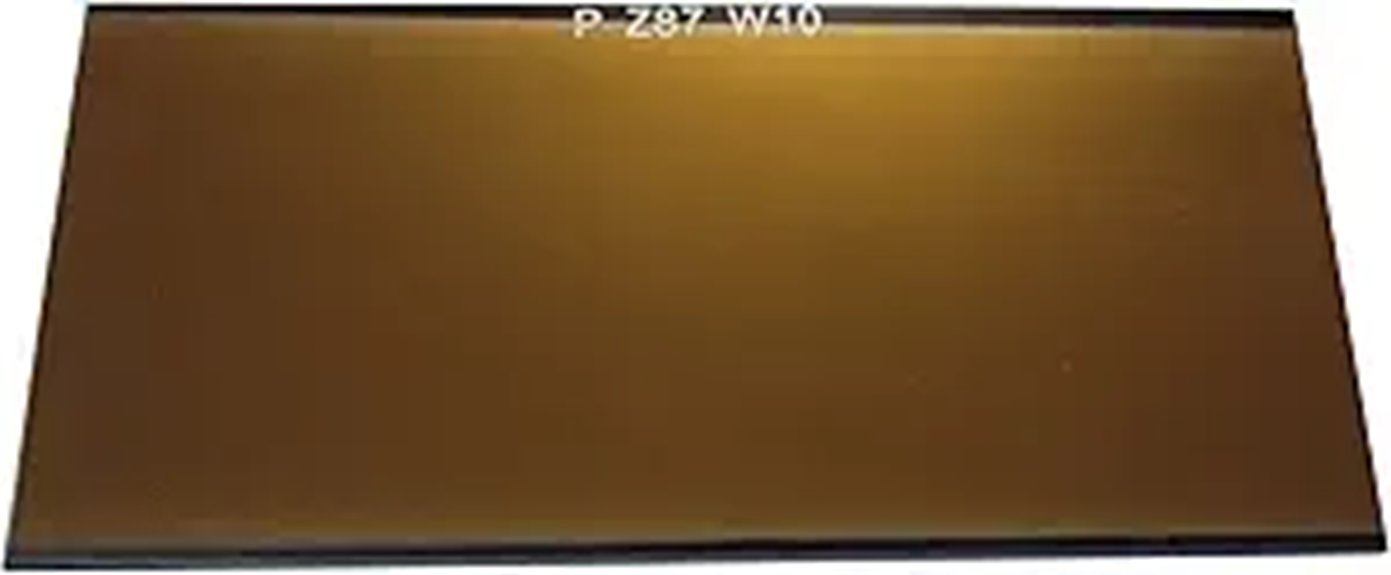
Choosing a welding lens is not just about seeing the puddle clearly. You also need a filter that fits your helmet, gives you the right fixed shade, and helps reduce exposure to welding arc light. The Best Welds Welding Lens is a passive hardened-glass filter for welders who prefer simple, non-electronic protection. This review helps you decide whether its 2" x 4-1/4" size, shade options, and fixed design match your helmet and welding routine.
The main strength is its straightforward passive filter design: no batteries, no sensors, and no delay. The tradeoff is just as clear: you must choose the correct shade before you start welding, because this lens does not auto-darken.
Quick Verdict
Rating: Recommended with caveats (8.8/10)
Best For: Welders using compatible 2" x 4-1/4" helmet slots who want a passive fixed-shade glass lens
Bottom Line: It is a practical choice if you want clear, steady viewing and article-supported UV/IR absorption up to 99.99%. It is not ideal if you need auto-darkening adjustment or switch between welding settings often.
| Specification | Detail |
|---|---|
| Brand | Best Welds |
| Product Type | Passive hardened-glass welding lens |
| Source Link ASIN | B09NTFKMBH |
| Dimensions | 2" x 4-1/4" |
| Material | Tempered hardened glass |
| Design | Passive fixed-shade filter plate |
| Shade Options | 9, 10, 11, and 12 |
| UV/IR Protection | Article-supported claim of up to 99.99% absorption |
| Weight | Approx. 1.44 oz |
| Compatibility | Welding helmets that accept 2" x 4-1/4" lens inserts |
| Best Use | MIG, TIG, and general fabrication work under steady conditions |
| Safety Note | Choose a shade that matches your welding process, arc current, and helmet guidance |
What Is the Best Welds Welding Lens?
The Best Welds Welding Lens is a passive protective filter plate made for welding helmets with standard 2" x 4-1/4" lens slots. It uses tempered hardened glass and a fixed-shade design to help reduce exposure to ultraviolet and infrared radiation during welding.
Because it is passive, it does not use sensors, batteries, knobs, or electronic shade switching. That makes it simple to use in helmets that already fit this lens size, especially when you work with repeatable welding settings.
This lens makes the most sense for welders who already know which shade they need for a given task. It is less convenient when you move often between tack welding, grinding, setup work, and different arc intensities.
Who Should Buy It?
Best For
- Workshop welders who prefer passive lenses over electronic filters
- Users with helmets that accept 2" x 4-1/4" fixed lens inserts
- Fabricators who work in consistent lighting and welding conditions
Skip If
- You need auto-darkening adjustment for frequent task changes
- Your helmet does not accept 2" x 4-1/4" lens plates
- You want one lens that adapts automatically across many amperage settings
Key Features Breakdown
Fixed-Shade Passive Design
The passive design gives you one selected shade level at a time. That consistency can help when you repeat the same welding process, but it also means you need to plan ahead before striking an arc.
Unlike auto-darkening filters, this lens does not change shade when it detects arc light. You should choose the correct shade option and confirm visibility before welding begins.
UV and IR Protection
The article-supported protection claim is up to 99.99% absorption of UV and IR radiation. That matters because welding arcs can expose your eyes to intense visible light and invisible radiation.
The lens should still be used only as part of a complete welding helmet setup. A filter plate alone does not replace a properly fitted helmet, cover lens, side protection, or workplace PPE requirements.
Shade Selection Options
The available shade options listed in the article are 9, 10, 11, and 12. Lower shade numbers allow a lighter view, while higher shade numbers reduce more arc brightness.
This range suits many common welding tasks, but it does not cover every process or current level. For safer results, match the shade to your welding process, amperage, and the guidance from your helmet or workplace safety program.
Hardened Glass Construction
The tempered hardened-glass construction helps the lens handle heat and normal welding exposure better than a basic thin plastic viewing filter. It also gives you a stable optical view when the lens stays clean and scratch-free.
Glass still needs careful handling. Dropping it on a hard floor, clamping it unevenly, or using a chipped plate can create cracks or edge gaps that reduce safe performance.
Lightweight Profile
At approximately 1.44 ounces, the lens adds little weight to a compatible helmet. That small profile helps if you wear a hood for long bead runs or repeated shop work.
The weight benefit depends on your full helmet setup. Your headgear, cover plates, and helmet shell will still have a larger effect on comfort than the lens alone.
Pro Tip: Start with the darker shade that still fits your welding process, then move lighter only if you can see the weld zone clearly without going below safe shade guidance.
How It Performs in Real Use
For Daily Shop Work
In regular fabrication work, the fixed shade gives you a steady view without sensor delay or battery concerns. This is helpful when you run the same process repeatedly and do not need constant shade changes.
For MIG and TIG Welding
The article lists MIG and TIG as suitable uses, and the available shade range can work for many common setups. You still need to choose the shade by process and current, especially when switching between lighter TIG work and brighter MIG welds.
For High-Heat or Brighter Arc Conditions
The darker shade options can reduce glare in brighter arc conditions. The limitation is that you must make that choice before welding, so this lens rewards careful setup rather than quick adjustment.
For Field Repair and Maintenance Jobs
The simple glass plate design is easy to understand and swap into a compatible helmet frame. That can help during repair work when you want a basic backup lens without electronics.
Fit, Setup, and Usage Tips
Check your helmet lens holder before buying. The article-supported size is 2" x 4-1/4", so even a small mismatch can cause poor seating, rattling, or light leakage around the edges.
Install the lens flat in the frame and confirm that the retaining clips hold it evenly. Do not use the lens if it is cracked, chipped, loose, or visibly warped.
Keep a clean cover plate in front of the welding lens when your helmet setup requires one. A cover plate helps protect the glass from spatter, grinding dust, and scratches that can make the weld puddle harder to see.
Before You Buy: This is a fixed-shade lens, not an auto-darkening filter. Confirm your helmet size and choose the right shade before use, because this lens will not adjust to changing arc brightness.
Material Safety and Comfort
The lens uses tempered hardened glass, which helps with heat resistance and viewing clarity. It also means you should handle it like safety glass, not like a flexible plastic insert.
Inspect the lens before each use for cracks, chips, heavy scratches, or edge damage. Replace it if damage affects visibility or prevents the plate from sitting securely in the helmet frame.
For eye and face protection, treat the lens as one part of a complete welding setup. Follow your helmet manufacturer’s instructions, your workplace PPE rules, and shade guidance for the welding process you are using.
Pros and Cons
Pros
- Article-supported UV and IR absorption claim up to 99.99%
- Standard 2" x 4-1/4" size fits many compatible welding helmets
- Shade options 9 through 12 give flexibility for different brightness levels
- Passive design avoids batteries, sensors, and electronic switching delay
- Approx. 1.44 oz weight adds minimal bulk to the helmet
Cons
- No auto-darkening feature for changing arc brightness
- Requires correct shade selection before welding starts
- Limited to helmets that accept the 2" x 4-1/4" lens size
- Glass can crack or chip if dropped, forced, or mishandled
Want a simple passive welding lens?
Is It Worth the Price?
This lens sits in the practical replacement-part category for welding safety gear. It is worth considering if you already own a compatible helmet and want a simple passive filter instead of an electronic auto-darkening setup.
The best value goes to welders who use stable settings and prefer fixed-shade reliability. You are not paying for sensors, batteries, or variable controls, so the value comes from basic protection, fit, and clear viewing.
It is not the best fit if your work changes often across different processes or amperage ranges. In that case, an auto-darkening helmet or filter may save time and reduce setup friction.
How It Compares to Alternatives
Compared with auto-darkening filters, the Best Welds Welding Lens is simpler and easier to understand, but it lacks adaptive shade control. Auto-darkening options may suit you better if you move often between fitting, tacking, welding, and inspection.
Compared with clear cover plates, this is the actual shaded filter layer, not just a sacrificial outer protector. Compared with basic replacement glass of unknown shade, this lens gives you listed shade choices and a stated UV/IR absorption claim, which makes shade selection clearer.
Frequently Asked Questions
What welding processes is this lens suitable for?
The article supports use for MIG, TIG, and general arc welding applications. It works best when your welding conditions stay consistent and you can choose the correct shade before starting.
How do I choose the right shade?
Match the shade to your welding process, arc current, and helmet guidance. When in doubt, start darker and move lighter only when the weld zone remains visible and the shade still meets safe guidance.
Is this an auto-darkening lens?
No. This is a passive fixed-shade lens, so it does not sense the arc or change shade automatically during use.
Will it fit every welding helmet?
No. It is listed as a 2" x 4-1/4" lens, so it should be used only with helmets that accept that insert size.
Do I still need a cover plate?
Use the lens only according to your helmet setup. Many helmets use cover plates to protect the filter from spatter, scratches, and debris, so check the helmet instructions before welding.
How should I clean the glass lens?
Wipe it gently with a clean microfiber cloth. Avoid abrasive pads or dirty rags because scratches can reduce clarity and make the weld area harder to see.
When should I replace it?
Replace the lens if you see cracks, chips, deep scratches, or damage that affects the fit. You should also replace it if it no longer sits securely in the helmet frame.
Who should skip this lens?
Skip it if you need automatic shade changes, grind-mode convenience, or compatibility with a different helmet lens size. It is also not the right choice if you are unsure which fixed shade your work requires.
The Bottom Line
The Best Welds Welding Lens is a strong option for welders who want a simple passive glass lens with listed shade choices and a standard 2" x 4-1/4" size. It works best for steady shop use, compatible helmets, and users who already understand their shade needs.
You should skip it if you need auto-darkening convenience, frequent shade changes, or a lens for a different helmet size. Its main strength is dependable fixed-shade simplicity, while its main limitation is the lack of automatic adjustment.