Disclosure: As an Amazon Associate, we earn from qualifying purchases. If you click a link on this page and make a purchase, we may receive a small commission at no extra cost to you.
Editorial note: This review is based on published product specifications and retailer listing information. It does not claim hands-on testing.
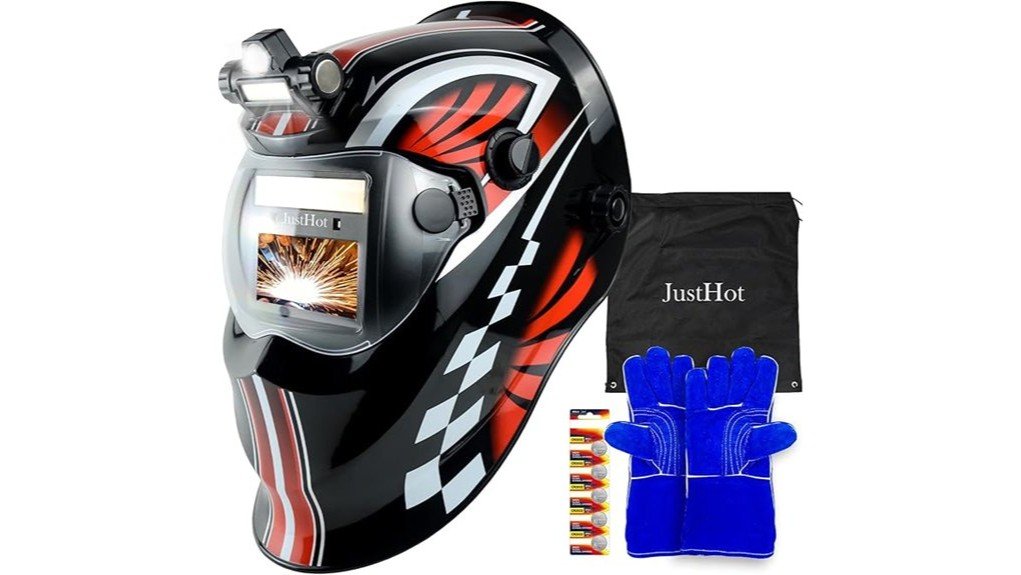
Choosing an auto-darkening welding helmet comes down to three things: how quickly the lens reacts, how clearly you can see the work area, and how comfortable the helmet feels during a longer job. The JustHot JH-GD16 Welding Helmet combines four arc sensors, a 1/25,000-second switching time, a 1/1/1/1 optical-clarity rating, and adjustable DIN shades in a lightweight design. It also includes grind mode plus sensitivity and delay controls, which makes it flexible for common shop tasks. The main caution is that retailer information is inconsistent about the shell material, so you should confirm that detail on the current listing if material type matters to you.
Quick Verdict
Rating: Recommended with caveats
Best For: Hobbyists, DIY welders, and general shop users who want true-color viewing, four sensors, and adjustable controls without moving to a premium helmet.
Bottom Line: The JH-GD16 offers a useful mix of fast darkening, a clear viewing lens, grind mode, and adjustable settings. Its viewing window is not as large as some competing helmets, and the retailer’s material specifications should be double-checked before purchase.
Key Specifications
| Specification | Detail |
|---|---|
| Brand | JustHot |
| Model | JH-GD16 |
| Product type | Auto-darkening welding helmet |
| Arc sensors | 4 |
| Switching time | 1/25,000 second |
| Optical clarity | 1/1/1/1 |
| Viewing area | 3.94 × 1.97 inches |
| Light state | DIN 4 |
| Dark state | DIN 5-9 / 9-13 |
| Controls | Shade, sensitivity, delay, test function, and grind mode |
| Power | Solar support plus replaceable lithium battery |
| Weight | 0.65 kg, about 1.43 lb |
| Size | One size with adjustable headgear |
| Color | Black |
| Listed standards | ANSI Z87.1, EN379 CE, and CSA Z94.3 |
| Material note | Retailer information is inconsistent: feature copy describes PC material, while the specification field lists ABS. |
Key Takeaways
- Four arc sensors and a 1/25,000-second switching time help the lens respond quickly when an arc is struck.
- The 1/1/1/1 optical-clarity rating and true-color lens are designed to give you a more natural view of the weld area.
- DIN 4 in the light state and DIN 5-9 / 9-13 in the dark state give you adjustment for different welding tasks.
- The helmet includes grind mode, sensitivity and delay controls, a test function, and a low-voltage warning.
- Solar support and a replaceable lithium battery reduce dependence on a sealed, nonreplaceable power source.
What Is the JustHot JH-GD16 Welding Helmet?
The JustHot JH-GD16 is an auto-darkening welding helmet built for users who want adjustable shade control without manually lifting the hood every time an arc starts or stops. Its four sensors detect the arc, while the auto-darkening filter changes from the DIN 4 light state to the selected dark shade.
The helmet is listed for TIG, MIG, MAG, argon arc welding, plasma cutting, and grinding. The external grind function is useful when your job moves between welding and surface preparation, but you still need to switch modes correctly before striking another arc.
Its 3.94 × 1.97-inch viewing area is wide enough for normal seam visibility, but it is smaller than the oversized windows found on some competing helmets. That tradeoff matters most if peripheral visibility is one of your top priorities.
Who Should Buy It?
Best For
- DIY and hobby welders who want four-sensor auto-darkening.
- Users who switch among TIG, MIG, plasma cutting, and grinding tasks.
- Buyers who value true-color viewing and adjustable sensitivity, delay, and shade controls.
Skip If
- You want an extra-large viewing window for maximum peripheral visibility.
- You need a helmet with clearly documented shell material and manufacturer warranty terms.
- You prefer a premium industrial helmet from a brand with a broad dealer and replacement-parts network.
Before You Buy: Check the current product listing and manual for the exact material, included parts, and safety markings. Retailer data for this model is inconsistent about whether the shell material is PC or ABS.
Auto-Darkening Performance and Controls
The JH-GD16 uses four arc sensors and lists a bright-to-dark switching time of 1/25,000 second. Four sensors can be useful when your working position partly blocks one side of the helmet because multiple sensors have a better chance of detecting the arc than a basic two-sensor layout.
You can adjust the dark shade across DIN 5-9 and DIN 9-13, while the light state is DIN 4. Sensitivity control lets you change how readily the filter reacts to the arc, and delay control affects how quickly the lens returns to the lighter state after welding stops.
A test function and low-voltage warning add useful checks before work. These controls do not replace the need to select the correct shade and settings for your process, current, and working conditions, so follow the helmet instructions and accepted welding-safety guidance.
Optical Clarity and Viewing Experience
The lens is listed at 1/1/1/1 optical clarity and uses true-color technology. For you, the practical benefit is a less strongly tinted view of the work area, which can make it easier to track the seam, electrode, torch position, and surrounding joint before and during the weld.
The viewing window measures 3.94 × 1.97 inches. It provides a useful horizontal view, but the vertical dimension is modest compared with large-view helmets. If you often weld in tight positions where you rely heavily on peripheral vision, compare the window size before buying.
Adjustable Settings for Different Welding Tasks
The broad shade range is one of the helmet’s strongest practical features because the same hood can cover several common shop tasks. The correct setting still depends on the actual process and amperage, so use the manufacturer’s shade guidance rather than selecting a shade only by process name.
| Task | Supported Feature | Buyer Benefit |
|---|---|---|
| TIG | Adjustable DIN 5-9 / 9-13 | Lets you tune the filter within the listed shade range. |
| MIG / MAG | 4 arc sensors and adjustable shade | Supports fast arc detection and process-specific shade selection. |
| Plasma cutting | Variable shade range | Keeps the same helmet useful for cutting work when configured correctly. |
| Grinding | External grind function | Lets you keep the helmet on while using a lighter viewing mode for grinding. |
Pro Tip: After grinding, confirm the helmet is back in weld mode before you strike an arc. Also use the test function and check the low-voltage indicator before starting a longer job.
Comfort and Ergonomic Design
The retailer lists the JH-GD16 at 0.65 kg, or about 1.43 pounds. Its headgear is adjustable, and the forehead area uses a thickened sponge pad intended to improve grip and comfort during longer sessions.
Low weight can reduce the feeling of neck load compared with heavier helmets, but comfort still depends on headgear adjustment. Set the circumference and tilt so the helmet stays stable without excessive pressure on your forehead. A poor fit can make even a lightweight helmet tiring over time.
Power, Build, and Safety Details
The helmet uses solar support together with a replaceable lithium battery. That is a practical advantage over a design with a sealed battery because the battery can be replaced when it reaches the end of its useful life. The available product information does not provide a dependable battery-runtime figure, so you should not expect a specific number of hours from a charge or battery.
The listing states compliance with ANSI Z87.1, EN379 CE, and CSA Z94.3. However, retailer material fields conflict, with feature text describing PC construction while a specification field lists ABS. Because protective equipment depends on the exact product and labeling you receive, inspect the helmet, lens, markings, and manual before use.
Replace a damaged cover lens or worn component according to the manufacturer’s instructions. Do not weld with a cracked shell, damaged auto-darkening filter, blocked sensors, or a helmet that fails its functional check.
How It Performs in Real Use
For MIG and General Shop Welding
The four-sensor layout, 1/25,000-second switching time, and DIN 9-13 range make the feature set suitable for common MIG and MAG work when the shade and sensitivity are set correctly. The true-color lens can also make joint alignment easier to see than a strongly tinted traditional view.
For TIG Work
For TIG, adjustable sensitivity is useful because arc conditions can vary with current and position. The JH-GD16 is listed for TIG use, but you should still verify the recommended minimum operating conditions in the current manual before relying on it for very low-amperage TIG work.
For Plasma Cutting and Grinding
The variable shade range supports plasma-cutting use, while the dedicated grind function keeps the lens from darkening during grinding. The main user error to avoid is leaving grind mode active when returning to welding.
For Longer Work Sessions
The 0.65 kg listed weight, adjustable headgear, and padded forehead contact point are helpful for extended wear. Still, comfort depends on how the suspension is adjusted, so take a few minutes to balance the helmet before starting a long fabrication or repair job.
Setup Tips Before First Use
- Adjust the headgear first: Set the band snugly enough to keep the helmet stable without creating pressure points.
- Check the lens and sensors: Make sure the viewing area is clean and the four sensors are not covered by stickers, dust, or debris.
- Use the test function: Confirm the auto-darkening filter responds before beginning work.
- Select the correct shade: Base your DIN setting on the welding process, amperage, and the guidance supplied with the helmet.
- Set sensitivity and delay: Adjust them for the arc and working environment rather than leaving them at one setting for every job.
- Check the mode: Confirm grind mode is off before welding.
Pros and Cons
Pros
- Four arc sensors with a listed 1/25,000-second switching time.
- 1/1/1/1 optical-clarity rating with true-color viewing.
- DIN 5-9 / 9-13 adjustable dark shades plus DIN 4 light state.
- Grind mode, sensitivity, delay, test function, and low-voltage warning.
- Solar support plus a replaceable lithium battery.
Cons
- The 3.94 × 1.97-inch window is smaller than some large-view alternatives.
- Retailer information conflicts on the exact shell material.
- Published information does not provide a dependable battery-runtime figure or clearly stated manufacturer warranty term.
Is It Worth the Price?
The JH-GD16 is positioned as a budget-focused alternative to more expensive welding helmets. Its value comes from packing four sensors, true-color 1/1/1/1 optics, variable shade control, grind mode, and a replaceable battery into one helmet.
It is worth considering if those controls are your main priorities and you do not need the largest possible viewing window. Buyers who want a documented long-term warranty, a wider dealer network, or a larger lens may get more value from an established mid-range or premium alternative.
How It Compares to Alternatives
The YESWELDER LYG-M800H is worth comparing if viewing area matters most. It uses four sensors and a 3.93 × 3.66-inch viewing area, which is substantially taller than the JH-GD16’s 3.94 × 1.97-inch window. It also offers adjustable DIN 5-9 / 9-13 shades and solar plus replaceable-battery power.
The Hobart Inventor Series is another step-up option. Hobart lists four sensors, 1/25,000-second switching, a 3.94 × 2.36-inch viewing field, grind mode, replaceable batteries, and a two-year limited warranty. The JH-GD16 makes more sense when you want a simpler budget-oriented feature set, while Hobart is easier to choose if documented warranty support is a priority.
Frequently Asked Questions
What is the switching speed of the JustHot JH-GD16?
The listed bright-to-dark switching time is 1/25,000 second. The helmet uses four arc sensors to detect the welding arc and trigger the auto-darkening filter.
What shade range does the JH-GD16 use?
The light state is DIN 4, while the dark state is adjustable across DIN 5-9 and DIN 9-13. Choose the actual setting according to your welding process, current, and the helmet instructions.
Can you use the helmet for grinding?
Yes. The product includes an external grind function for a lighter view while grinding. Always switch back to the correct welding mode before striking an arc.
Does the JH-GD16 have a replaceable battery?
Yes. The listing describes a dual-power design with solar support and a replaceable lithium battery. A specific battery-runtime figure is not provided in the verified product information.
How large is the viewing area?
The viewing screen measures 3.94 × 1.97 inches. It gives you a wide horizontal view, but some competing large-view helmets offer more vertical viewing area.
Is the JH-GD16 suitable for beginners?
Its auto-darkening lens, test function, adjustable headgear, and external controls can be convenient for a beginner. New welders still need to learn correct shade selection, process setup, and welding safety rather than relying on automatic settings alone.
Is the shell made from PC or ABS?
The retailer data is inconsistent. Its feature description says high-quality PC material, while a specification field lists ABS, so confirm the current product page or packaging if the exact shell material affects your decision.
The Bottom Line
The JustHot JH-GD16 is a practical choice for hobbyists and general shop users who want four-sensor auto-darkening, true-color 1/1/1/1 optics, variable shade settings, and grind mode in one helmet. Skip it if your priorities are an extra-large viewing field, clearly documented shell material, or a stronger published warranty and dealer-support network.
Ready to Buy?
Check the latest price, current model details, and safety information before you decide.