Disclosure: As an Amazon Associate, we earn from qualifying purchases. If you click a link on this page and make a purchase, we may receive a small commission at no extra cost to you.
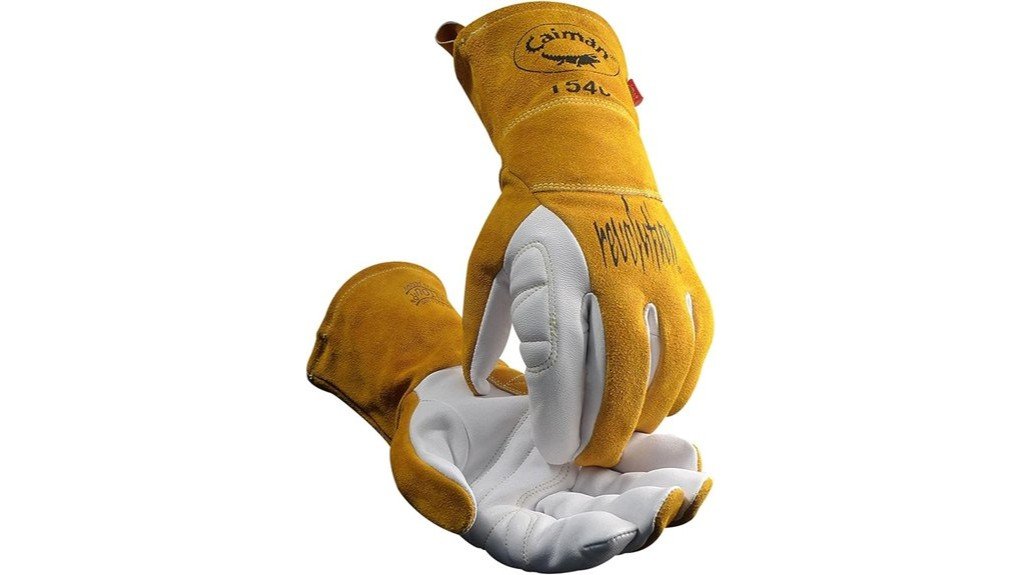
Good welding gloves need to protect your hands without making every small movement feel clumsy. The Caiman Premium Goat Grain TIG/Multi-Task Welding Gloves, model 1540-6, are built for welders who want a softer leather feel, better finger control, and extra wrist coverage. This review looks at the gloves’ materials, comfort features, protection, fit, care, and real-use limits so you can decide if they match your welding style. They are a strong fit for TIG and general shop tasks, but they may not be the best choice if you need heavy-duty stick welding gloves with thicker insulation.
Quick Verdict
Rating: Recommended with caveats
Best For: TIG welders and shop users who want dexterity, goat grain leather, Kevlar stitching, and a 4-inch cuff.
Bottom Line: These Caiman gloves make sense if you want better hand feel than bulky welding gloves usually provide. The tradeoff is that the thinner, more flexible build may not be ideal for every high-heat or heavy-slag welding job.
| Specification | Detail |
|---|---|
| Brand | Caiman |
| Model | 1540-6 |
| Product type | TIG and multi-task welding gloves |
| Design | Caiman Kontour Design with Kontour Wrist Technology and Kontour Thumb design |
| Dimensions | 6 x 1 x 12 inches |
| Weight | 8.3 ounces |
| Thickness | 0.2 inches |
| Material | Premium goat grain leather palm with split cowhide back |
| Stitching | Kevlar stitching |
| Cuff | 4-inch extended cuff |
| Interior comfort | Unlined padded palm and index finger with fleece-lined back |
| Best use | TIG welding, light fabrication, shop work, and multi-task welding jobs |
| Care note | Spot clean and air dry. Machine washing is not recommended. |
| Warranty | Article-supported claim: 30-day limited warranty. Confirm current warranty terms with the seller before buying. |
What Is the Caiman Premium Goat Grain TIG/Multi-Task Welding Glove?
The Caiman Premium Goat Grain TIG/Multi-Task Welding Glove is a leather welding glove made for jobs where control matters as much as protection. The article-supported model is 1540-6, with a listed size of 6 x 1 x 12 inches, a weight of 8.3 ounces, and a 0.2-inch thickness.
The glove uses premium goat grain leather in the palm and split cowhide on the back. Goat grain leather is known for a softer, more flexible feel than many heavier leathers, which helps when you need to hold a TIG torch, filler rod, clamps, or small parts.
Caiman also adds Kevlar stitching, an extended 4-inch cuff, an unlined padded palm and index finger, and a fleece-lined back. The result is a glove aimed at welders who want hand protection with better feel than a bulky heat glove.
Before You Buy: These gloves are designed for TIG and multi-task welding, not as a one-glove solution for every welding process. If your work involves heavy spatter, long high-heat exposure, or stick welding all day, compare them with thicker welding gloves before you order.
Who Should Buy It?
Best For
- TIG welders who need better finger control than bulky gloves provide.
- Shop users who want goat grain leather, Kevlar stitching, and a longer cuff.
- Welders who prefer an unlined padded palm for dexterity and tool feel.
Skip If
- You need maximum insulation for frequent heavy spatter or high-heat welding.
- You prefer fully lined, thicker gloves over a more flexible TIG-style feel.
- You cannot confirm the right size on the current product listing.
Materials and Build Quality
The biggest strength of these gloves is the material mix. The palm is made from premium goat grain leather, which supports grip, flexibility, and tactile control. The back uses split cowhide, giving the glove a tougher protective layer where sparks and surface wear are more likely.
The Kevlar stitching is another important detail. Welding gloves often fail at seams before the leather fully wears out, so reinforced stitching is useful if you use your gloves often around heat, clamps, edges, and rough metal.
The listed 0.2-inch thickness also explains the glove’s intended role. It is not trying to be the thickest glove in your shop. It is built for a balance of heat protection, abrasion resistance, and hand control.
Comfort and Dexterity
The Caiman Kontour Design is made to follow the natural shape of your hand. In practical terms, that means the glove should feel less flat and stiff than basic leather welding gloves when you bend your fingers around a torch or tool.
The unlined padded palm and padded index finger help protect the contact points you use most. Because the palm is unlined, you should still get more feel through the glove than you would with a heavily insulated glove.
The fleece-lined back adds comfort and some warmth without turning the glove into a fully bulky winter-style work glove. That can help during longer bench work, but it also means you should still judge heat exposure carefully during demanding welding tasks.
Cuff, Wrist Fit, and Hand Protection
The 4-inch extended cuff gives you extra coverage over the wrist area. This matters when sparks, light spatter, or hot debris can land near the sleeve opening. A short work glove can leave that area exposed, especially when your wrist bends.
Caiman’s patented Kontour Wrist Technology is designed to keep the glove more secure on your hand. A glove that shifts during a weld can hurt control, especially with TIG work where small movements matter.
The Kontour Thumb design also moves seams away from high-wear areas. That design choice may reduce rubbing and seam stress in the thumb area, which is one of the places welding gloves often take a beating.
How It Performs in Real Use
For TIG Welding
For TIG work, these gloves are at their best when you need control over a torch, filler rod, or small workpiece. The goat grain palm and unlined padded feel support better movement than a thick, fully insulated glove.
For Multi-Task Shop Work
The gloves also make sense for light fabrication, setup work, tack welding, and handling tools around the welding bench. Their 8.3-ounce listed weight keeps them practical for repeated on-and-off use during mixed shop tasks.
For Longer Welding Sessions
The padded palm, padded index finger, fleece-lined back, and wrist design all help with comfort during longer sessions. Still, you should take heat buildup seriously and switch gloves if the job starts to exceed the glove’s comfort range.
For Handling Rough Metal
The split cowhide back, goat grain palm, and Kevlar stitching give these gloves better durability than basic thin leather work gloves. They are useful around clamps, edges, and shop surfaces, but they are still welding gloves, so inspect them often for seam wear, holes, or stiffened leather.
Pro Tip: Try the gloves on and make a loose fist before welding. Your fingertips should reach close to the end without hard pressure, and the cuff should cover your wrist without blocking normal hand movement.
Fit Tips Before You Buy
Fit is one of the most important buying details with welding gloves. A glove that is too large can reduce torch control, while a glove that is too tight can create fatigue and make it harder to move your fingers.
Check the current Amazon size selector before ordering. The source article notes that more than one size may be available, but size options can vary by seller or listing. Use the product sizing chart when it is shown, and measure your hand instead of guessing.
When the gloves arrive, test the fit before exposing them to welding heat. Move your thumb, pinch an object, hold a torch, and flex your wrist. If the glove slips, pinches, or blocks your grip, it may not be the right size for your hand.
Care and Maintenance
Do not machine wash these gloves. Leather welding gloves can stiffen, shrink, or lose shape when soaked and machine washed. The safer routine is to spot clean dirty areas and let the gloves air dry naturally.
Store them away from standing moisture, direct heat, and sharp metal edges. Good storage helps the leather stay flexible and reduces premature cracking. You should also inspect the Kevlar-stitched seams and cuff before each use.
If the leather becomes brittle, the seams open, or heat starts passing through faster than normal, replace the gloves. Welding gloves are protective gear, and worn-out gloves can give you a false sense of safety.
Material Safety and Comfort
These gloves touch your skin, so comfort matters. The article-supported design includes an unlined padded palm, padded index finger, and fleece-lined back, which can reduce rubbing during normal use.
Leather gloves can still feel stiff at first and may need a short break-in period. If you have sensitive skin or known material sensitivities, wear them for a short test period before a long welding session.
Always match your gloves to the welding process, heat level, and job risk. Follow the product label and seller guidance, and use the rest of your welding PPE, including eye, face, arm, and body protection.
Pros and Cons
Pros
- Premium goat grain leather palm supports flexibility and tool control.
- Split cowhide back adds protection in a common spark and wear area.
- Kevlar stitching improves seam strength around heat and shop use.
- 4-inch extended cuff gives extra wrist coverage.
- Kontour Design and padded contact points improve comfort during detailed work.
Cons
- Not the best fit for every heavy-spatter or high-heat welding job.
- Size and color options may vary by current seller listing.
- Machine washing is not recommended, so cleaning takes more care.
Is It Worth the Price?
The Caiman Premium Goat Grain TIG/Multi-Task Welding Gloves are worth considering if you care about hand feel, wrist coverage, and reinforced stitching. They sit best in the practical mid-range category for buyers who want better materials and comfort features than basic shop gloves.
You get the most value if you use them for TIG welding, light fabrication, and mixed shop tasks where dexterity matters. The goat grain palm, Kevlar stitching, and Kontour design are the details that help justify the purchase.
They are not the best fit if you only need the thickest possible heat barrier. In that case, a heavier glove made for more aggressive welding conditions may be a better match.
How It Compares to Alternatives
Compared with basic leather welding gloves, the Caiman 1540-6 focuses more on finger control, comfort, and a shaped fit. Basic gloves may cost less, but they often feel bulkier and can make detailed TIG work harder.
Compared with thick stick welding gloves, these Caiman gloves trade some heavy-duty insulation for better dexterity. That makes them a smarter choice for controlled TIG work and multi-task bench use, while heavier gloves may be better for hotter, rougher jobs.
Frequently Asked Questions
Are the Caiman Premium Goat Grain Gloves good for TIG welding?
Yes, they are a good match for TIG work because the goat grain palm and unlined padded feel support finger control. They are better for detailed welding than bulky gloves that make it hard to hold a torch or filler rod.
Can beginners use these welding gloves?
Yes, beginners can use them if the size fits and the welding task matches the glove type. The flexible design can help new welders feel their tools better, but beginners should still use full welding PPE and follow safe welding practices.
Are these gloves suitable for heavy stick welding?
They are not the first choice if your main concern is maximum heat insulation for heavy stick welding or high-spatter work. For those jobs, compare them with thicker gloves designed for more intense heat exposure.
Can these gloves be machine washed?
Machine washing is not recommended. Spot clean the leather when needed, then let the gloves air dry away from direct heat so the leather does not stiffen or shrink.
How do you know if the fit is right?
The fit should feel snug but not tight. You should be able to bend your fingers, move your thumb, grip a torch, and flex your wrist without the glove sliding or pinching.
What type of leather is used?
The article-supported material details are premium goat grain leather in the palm and split cowhide on the back. This mix gives you a softer grip area with added durability on the back of the glove.
Do they come in other sizes or colors?
The source article notes that different size and color options may be available. Because seller listings can change, check the current size and color selector on Amazon before ordering.
Who should skip these gloves?
Skip them if you need a very thick glove for frequent heavy spatter, long high-heat exposure, or rough stick welding work. You may also want to skip them if you cannot confirm the right size before purchase.
The Bottom Line
The Caiman Premium Goat Grain TIG/Multi-Task Welding Gloves, model 1540-6, are a strong choice if you want flexible leather welding gloves with Kevlar stitching, a 4-inch cuff, and better hand control for TIG and shop tasks. They are less ideal if you need the thickest glove possible for heavy heat and spatter. For the right buyer, they offer a practical balance of comfort, dexterity, and protection.