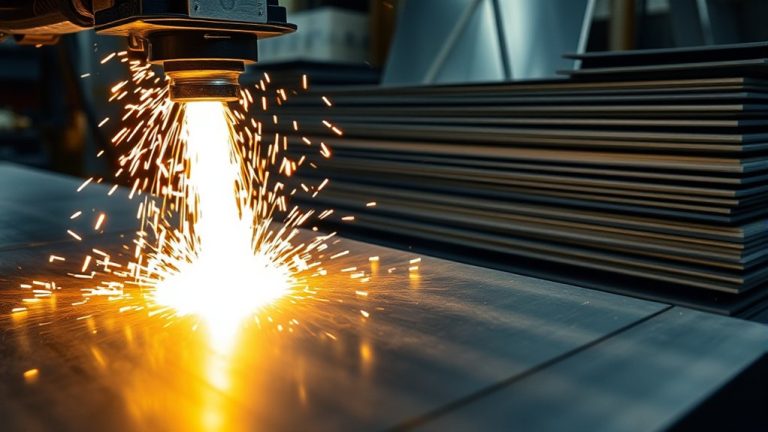
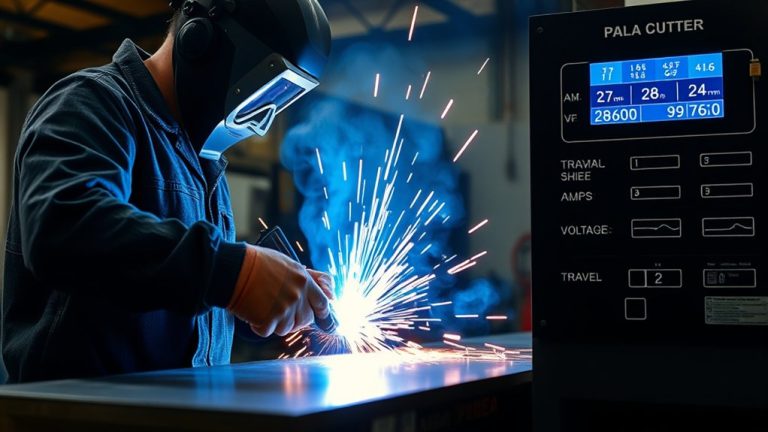
Plasma cutters are impressive on metal, but plasma cutters are a poor choice for glass. Glass doesn’t conduct electricity, and it doesn’t handle the intense, localized heat a plasma cutter creates. The result is usually cracking or shattering instead of a clean cut. For glass, use alternatives like diamond blades or water jet cutting. These options can be precise without the same thermal stress. If you’re wondering how those methods work and why they’re safer, this guide breaks down modern glass cutting approaches.
Quick Answer
- Plasma cutters are built for conductive metals, glass is an insulator, so the cutting arc can’t work the way it’s designed to.
- The heat from a plasma cutter is extremely concentrated, which can trigger thermal shock and make glass crack or shatter.
- For clean cuts, use glass scoring tools for straight lines, diamond blades for controlled saw cuts, or water jet cutting for high precision.
- Laser-based methods can also cut certain glass types when heat is controlled carefully to limit cracking.
Understanding Plasma Cutting Technology
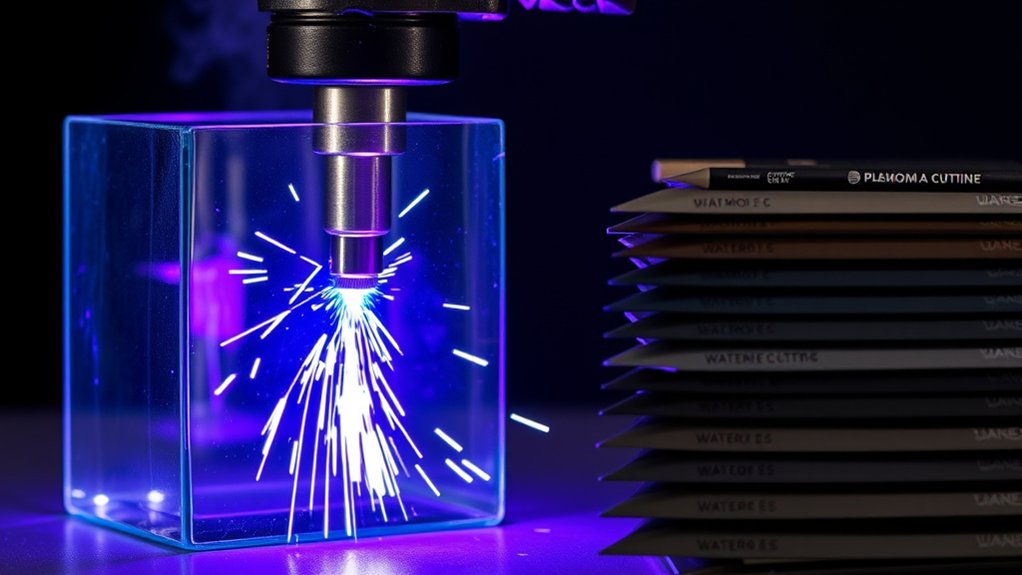
Plasma cutting technology uses an electrical arc to turn a gas (often compressed air) into a high-temperature plasma flame. That plasma melts the workpiece and blows the molten metal out of the cut. It works best on conductive materials like steel, aluminum, and brass, where the workpiece can complete the electrical circuit needed for a stable arc.
The plasma arc is the core of the process. It ionizes the gas and creates intense heat at the torch tip, which is why plasma cutting is known for speed and clean cuts on many metal thicknesses. With the right settings, it can produce accurate results with relatively small heat-affected areas compared with some other thermal methods.
Ionized gas creates intense heat, helping plasma arcs produce fast, accurate cuts on conductive metals.
Because the system relies on the material’s electrical conductivity, it is designed around metal’s properties. That’s a big reason it performs so well on metal and so poorly on materials that don’t conduct electricity.
In short, plasma cutting is a strong tool for metal fabrication, but its strengths depend on the workpiece behaving like a conductive part of the circuit.
Why Glass Is Not Suitable for Plasma Cutting
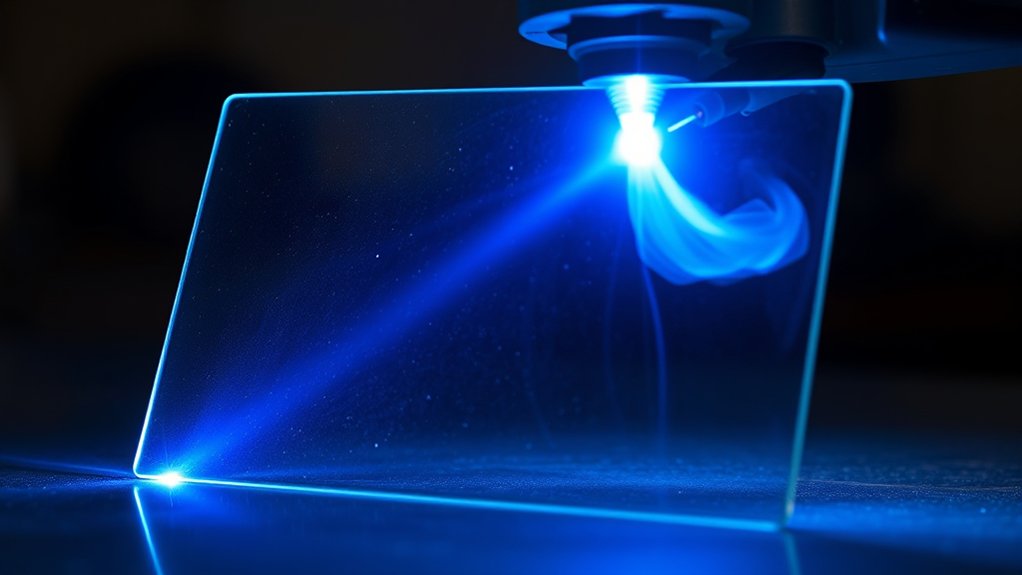
When considering plasma cutting for glass, you run into two major problems. First, glass is non-conductive, which prevents the circuit from working the way plasma cutting requires. Second, glass is highly sensitive to fast, uneven heating, which raises the risk of cracking or shattering.
For reliable results, it’s better to use tools made for glass, like scoring cutters, diamond blades, or water jet cutting. These options provide control and reduce the chance of damage.
Non-conductive Material Challenges
Though plasma cutters are highly effective for cutting conductive materials, they struggle with non-conductive substances like glass.
Plasma cutting depends on completing an electrical circuit, and non-conductive materials can’t support that. Without a stable circuit, the arc won’t behave as intended, so the cutting techniques that work on metal don’t translate well to glass.
Using a plasma cutter on glass can lead to:
- Cracking or shattering from localized heat
- Airborne particles and possible fumes (especially if coatings or contaminants are present)
- Potential equipment damage
- Poor or inconsistent cutting results
For cleaner outcomes, traditional glass cutting tools and other purpose-built methods are the safer, more dependable route.
Heat Sensitivity Concerns
Due to its heat sensitivity, glass isn’t a suitable candidate for plasma cutting. Glass is a poor conductor of heat, so hot spots form quickly. When one area heats and expands faster than another, the stress can cause cracking or sudden breakage.
Unlike metals, glass doesn’t handle rapid temperature changes well. The heat from a plasma cutter is intense and concentrated, which increases the chance of uneven expansion and thermal shock. That’s why plasma cutting usually produces damage instead of a clean cut.
Traditional options like a glass cutter are a better match for many projects because they score the surface and allow controlled breaking, often leaving smoother edges without heat-related cracking.
Effective Cutting Alternatives
Several cutting alternatives are more effective for glass than plasma cutters.
The confusion often comes from assuming any high-heat cutter will slice through anything. In reality, glass’s non-conductive nature and heat sensitivity make plasma cutting unreliable. Instead, consider these safer methods:
- Diamond Blades: Built for hard, brittle materials and commonly used with wet cutting to reduce heat and chipping.
- Glass Scoring Tools: Great for straight cuts on annealed glass by scoring and snapping along a line.
- Torch-based thermal stress methods: Used by experienced operators for certain glass shapes (often by heating and cooling along a controlled line).
- Water Jet Cutting: Uses high-pressure water (often with abrasive) to cut smoothly without heat-affected zones.
These alternatives reduce the risk of cracking while delivering far better control and finish quality.
The Risks of Attempting to Cut Glass With Plasma
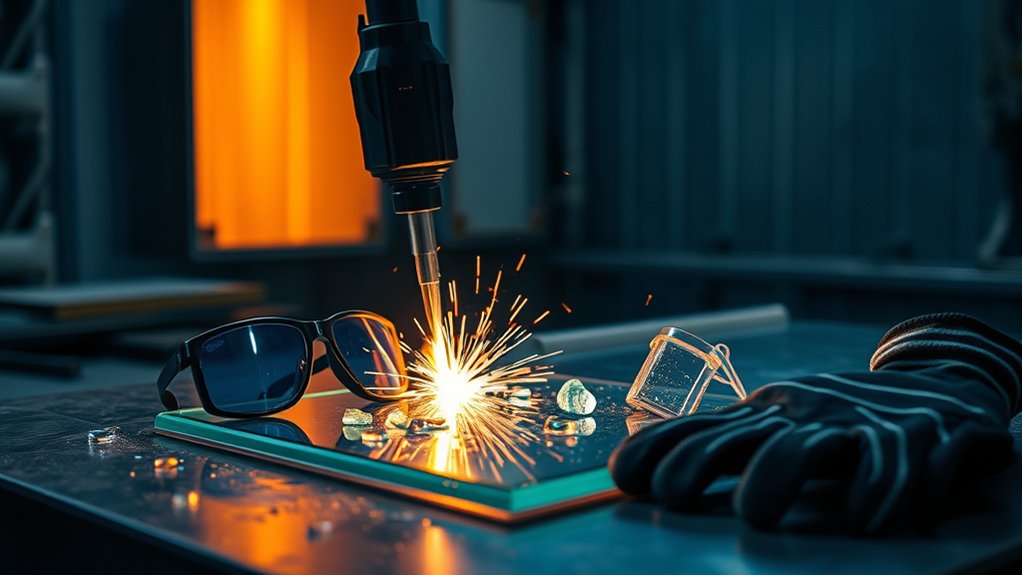
When you attempt to cut glass with a plasma cutter, the mismatch between the tool and the material becomes a safety issue fast. Glass lacks the conductive properties plasma cutting depends on, so the arc won’t operate in a controlled way. Even if you manage to heat the surface, you’re more likely to damage the glass than cut it cleanly.
The extreme temperatures also create localized heating, which can lead to uneven expansion and sudden cracking or shattering. That can send sharp fragments outward and ruin the piece you’re working on.
Depending on the glass type and any coatings, you may also create airborne debris and other contaminants. For safety and results, it’s best to use methods designed for cutting glass instead of forcing a plasma cutter to do a job it wasn’t built for.
Exploring Alternative Glass Cutting Methods
When considering alternative methods for cutting glass, traditional tools like glass cutters work well for many straight cuts by scoring and applying pressure along a defined line.
For more advanced needs, laser cutting can deliver high accuracy, but it must be controlled carefully to avoid heat-related cracking.
Waterjet cutting uses a high-pressure stream of water (often with abrasive) to slice through glass without the heat-driven risks that come with thermal cutting methods.
Traditional Glass Cutting Tools
Glass cutting requires precision and the right tools to keep results clean and predictable.
Traditional glass cutting tools, such as glass score cutters, are made for this job. They use glass scoring techniques, creating a controlled scratch on the surface so the glass can break along that line. Keeping the cutting wheel sharp and clean is a key part of cutting tool maintenance.
Consider these options for traditional glass cutting:
- Glass score cutters: Ideal for clean lines on annealed glass.
- Wet saws: Useful for thicker pieces or shapes where scoring isn’t enough.
- Diamond blades: Helpful for detailed cuts when used correctly (often with water to control heat and dust).
- Avoid plasma cutters: They generate excessive heat and don’t work well on non-conductive glass.
These methods offer a safer, controlled approach to glass cutting for many common projects.
Laser Cutting for Glass
Although traditional methods of glass cutting have their place, laser cutting can be a precise alternative when the process is designed to manage heat carefully. Many modern approaches rely on controlled heating (and sometimes controlled cooling) to guide a fracture line, rather than trying to “burn” through the glass.
Laser cutting advantages include fine detail and repeatable results for certain applications, especially in industrial settings. The main challenge is controlling temperature gradients so you don’t introduce micro-cracks or unwanted breakage.
To work safely, use appropriate protective equipment and maintain proper ventilation, especially when cutting coated or treated glass where extra contaminants may be present.
Waterjet Cutting Techniques
While exploring alternative methods for cutting glass, waterjet cutting stands out for its precision and flexibility.
This method uses a high-pressure water stream, often combined with abrasive, to achieve precision cutting with minimal heat input. Because it’s a “cold” cutting process, it helps avoid the thermal gradients that can crack glass. For more on how this works in practice, see waterjet cutting for glass.
Waterjet applications can handle intricate shapes and complex layouts, which is why they’re common in architectural and decorative work.
- Minimal heat generation: Reduces glass cracking from thermal shock.
- No heat-affected zone: Helps preserve the glass near the cut edge.
- Versatile technology: Cuts many materials, including a wide range of glass types and thicknesses.
- Clean operation: Avoids heat-related fumes, though abrasive slurry still needs proper cleanup and disposal.
For detailed projects where edge quality matters, waterjet cutting is often one of the most reliable options.
Benefits of Specialized Glass Cutting Tools
When working with glass, specialized cutting tools offer clear benefits in accuracy and control.
Tools like glass cutters and diamond blades are designed to score, grind, or slice glass with less risk of sudden breakage. Many glass cutting tools also focus on ergonomic design, which helps you keep steady pressure and consistent alignment. That matters even more on larger sheets, where small slips can ruin an otherwise good cut.
Safety Considerations When Working With Glass
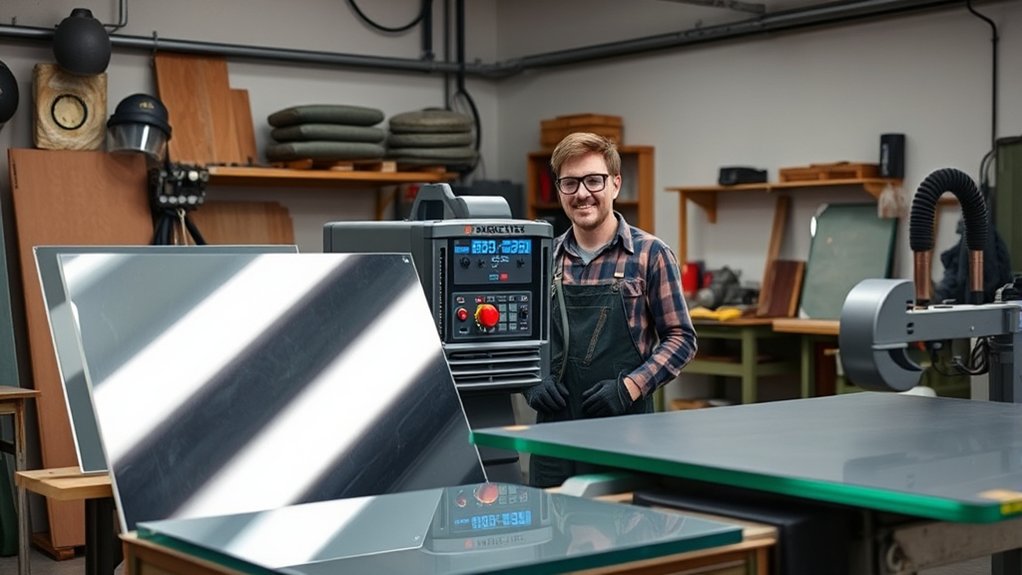
Working with glass requires careful safety habits because it can break without much warning. You should prioritize protective gear and proper ventilation to reduce risk.
Since plasma cutting produces intense, localized heat, it can cause glass to crack or shatter, sending sharp fragments outward and creating airborne debris. Safer methods include scoring tools, diamond tools used correctly, and industrial options like waterjets or controlled laser processes.
To help keep your workspace safer, follow these precautions:
- Wear protective gear: Safety glasses and gloves help protect against shards and sharp edges.
- Guarantee proper ventilation: Use ventilation or respiratory protection when dust or fumes may be present.
- Use appropriate tools: Tools designed for glass reduce breakage risk and improve precision.
- Maintain a clean workspace: Keep the area clear and dispose of fragments safely to avoid accidental cuts.
Comparing Plasma Cutting With Water Jet Cutting
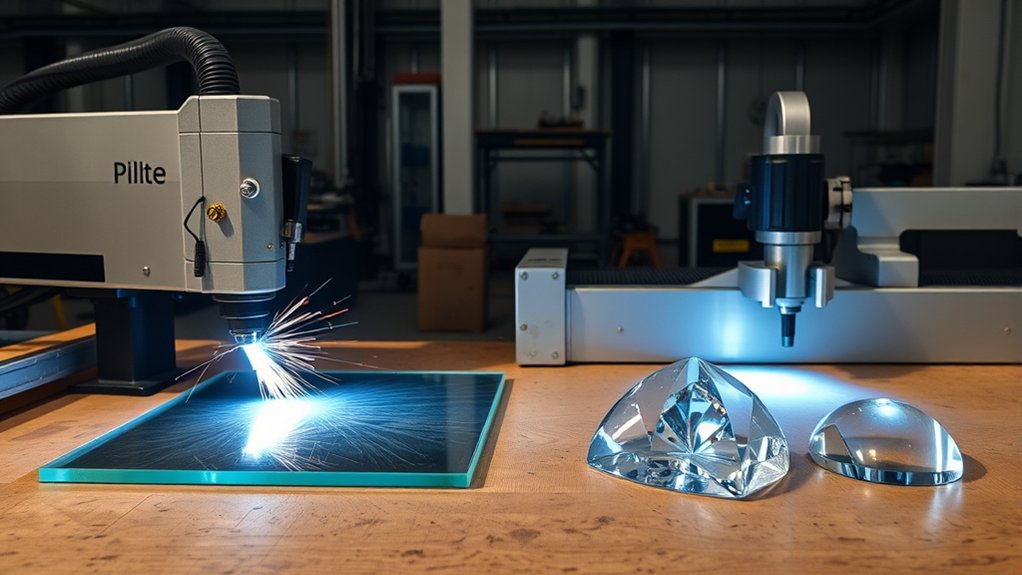
When comparing plasma cutting and water jet cutting, waterjets typically win on precision and accuracy for non-conductive materials like glass.
Plasma cutters are built for conductive metals and struggle with glass due to its insulative properties. Waterjets can cut a much wider range of materials, including metals, stone, composites, and many glass types, without heat damage.
Plasma can be a cost-effective, fast choice for metal work. But for glass and other heat-sensitive materials, waterjets offer a non-thermal process that helps preserve material integrity.
Cutting Precision and Accuracy
In cutting work, precision and accuracy are often what separate plasma cutting from waterjet cutting.
Plasma cutting can create heat-affected zones that change the edge area, which may require extra cleanup depending on the job. Waterjet cutting removes material by erosion, so it can leave smoother edges without heat distortion.
Consider these points:
- Plasma cutting: Wider kerf width and a heat-affected edge area.
- Water jet cutting: Narrow kerf and less need for heat-related finishing.
- Material properties: Waterjets work well on delicate materials like glass.
- Plasma’s limitation: Not effective on non-conductive materials.
For projects where edge quality matters, waterjet cutting usually delivers higher consistency.
Material Versatility and Limitations
Although both plasma and water jet cutting are widely used, they differ sharply in material versatility.
Plasma cutters are tailored for electrically conductive materials and excel at cutting metal quickly. That strength is also their limitation. Non-conductive materials like glass don’t behave correctly in the process, and heat can trigger cracking.
Waterjets use a high-pressure water stream, often with abrasives, which allows clean cuts across many materials, including glass and ceramics, with minimal heat-related damage. This versatility makes waterjet cutting a strong choice for intricate designs on heat-sensitive materials.
Cost and Equipment Requirements
Considering cost and equipment requirements, plasma and water jet cutters each have tradeoffs.
In most cases, plasma cutters have a lower initial purchase price and are economical for metal fabrication. Their limitation is material range, since they rely on conductivity and intense heat.
Waterjet cutters usually require a higher upfront investment, but they can cut a broader set of materials, including glass, without the same thermal risks. For shops that work across materials, the flexibility and finish quality can justify the higher cost.
- Plasma cutting: Lower initial cost, limited to conductive materials.
- Water jet cutting: Higher initial cost, handles more materials.
- Plasma: Fast for metals, not suitable for glass.
- Water jet: Strong choice for precision glass cutting and complex shapes.
Choosing the Right Tool for Glass Projects
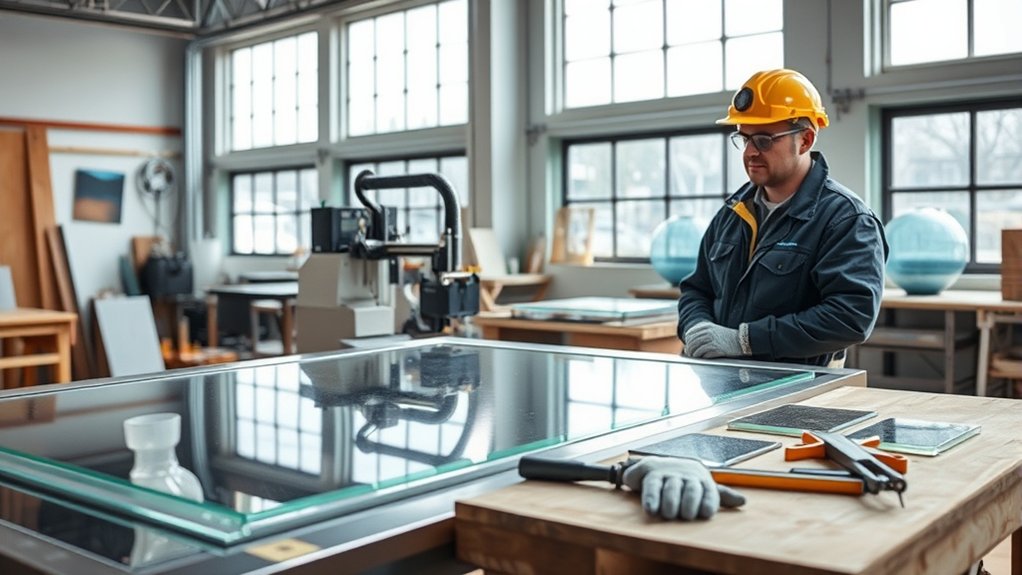
When you’re working on a glass project, the right tool makes the difference between a clean cut and a broken panel. The best choice depends on the cut you need, the glass thickness, and the finish you want.
Plasma cutters are not a good fit because glass is non-conductive and heat-sensitive. The heat is concentrated enough to cause cracks or shattering, and the process isn’t designed to create a controlled cut line in glass.
For many DIY jobs on annealed glass, a glass cutter and proper technique can produce clean breaks. For thicker glass or complex shapes, diamond tools, professional laser systems, or waterjets are usually better options.
Opt for glass cutters or controlled cutting methods designed for glass to get clean, precise breaks.
If your project depends on a clean cut, it helps to know whether you’re working with annealed or tempered glass. That single detail can determine what’s possible and what’s not.
Prioritizing safety and using the correct tools keeps your work clean and helps your project meet high standards of craftsmanship and aesthetic excellence.
Tempered vs. Annealed Glass: Know What You Have
Before you cut, confirm the glass type.
Annealed glass is the standard “non-tempered” type used for many panes. It can usually be cut by scoring and snapping, as long as it’s supported and handled correctly.
Tempered glass is made to fail safely. When it breaks, it typically fractures into many small pieces. That safety design also means the glass generally cannot be cut or modified after tempering. Attempting to cut it often causes the whole piece to break.
If you need a custom size in tempered glass, the typical workflow is to cut the glass first and temper it afterward.
Tips for Safe and Effective Glass Cutting
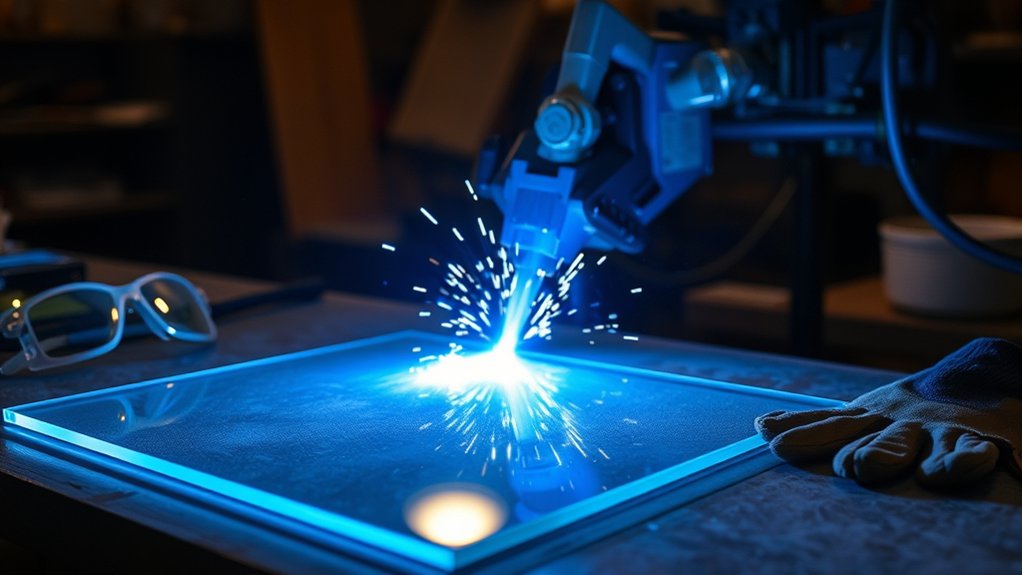
Choosing the right tools matters, but safe and consistent cutting techniques are what keep results predictable.
Start by matching the tool to the glass thickness. Use a quality glass cutter for straight cuts on annealed glass, and support the sheet so it can’t shift while you score. If you’re using power tools like diamond blades, use the correct blade and setup, and follow the tool’s recommended method to reduce heat and chipping.
Keep these tips in mind:
- Protect your eyes: Always wear safety glasses to shield against chips and shards.
- Wet cutting technique: When using saws or diamond blades, keep the cut wet when recommended to reduce heat and help control dust.
- Master cutting angles: Maintain steady tool control and consistent angles for smoother edges.
- Know your glass: Annealed and tempered glass behave very differently, plan your approach accordingly.
With the right setup and technique, you can cut glass safely and effectively and avoid preventable breakage.
Innovations in Glass Cutting Technologies
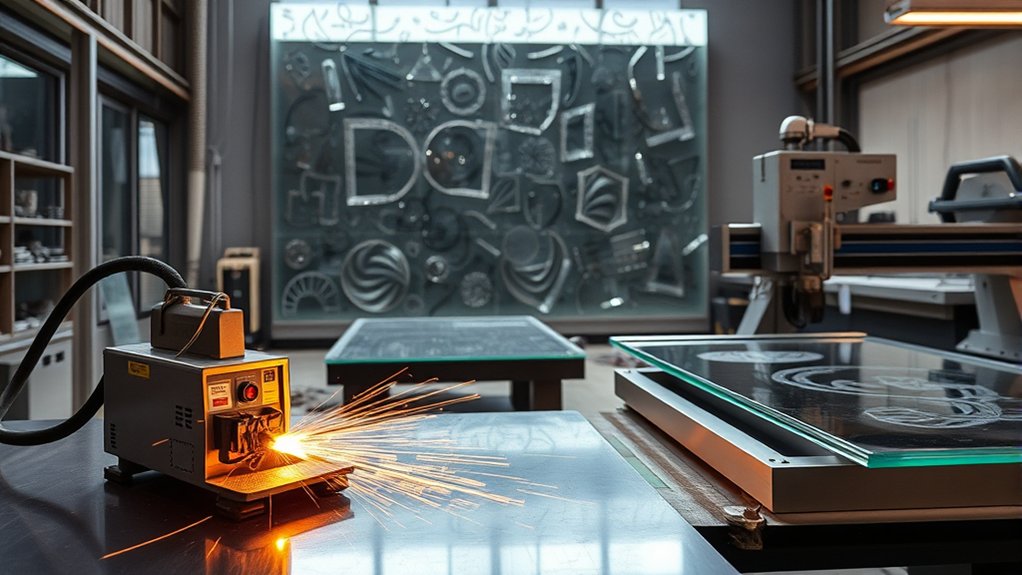
Traditional glass cutting still has its place, but newer technologies can offer higher precision and repeatability. Advanced laser systems can guide controlled fracture lines for clean edges, and waterjets can cut without the thermal stress that often causes cracking. CNC-controlled glass cutting systems also improve accuracy and consistency for complex shapes.
Consider these advanced cutting technologies:
| Technology | Method | Advantages |
|---|---|---|
| Laser Cutting | Localized heat application | Precision, minimal cracking when controlled |
| Water Jet Cutting | High-pressure water stream | Clean cuts, no thermal stress |
| CNC Cutting | Computer-controlled design | Intricate patterns, repeatability |
Automated diamond wire saws can improve consistency and reduce breakage on certain applications, especially in industrial settings. Plasma processes are also used in parts of the glass industry (such as surface treatment and coatings), but plasma cutting is still not a practical method for cutting standard glass sheets because of heat and conductivity limits.
Frequently Asked Questions
Can Glass Be Repaired After a Failed Plasma Cutting Attempt?
In most cases, no. A failed plasma cutting attempt typically creates cracks and internal damage that can’t be repaired in a way that restores the glass’s original strength or appearance. If you still need the piece, it’s usually better to recut with a proper method like scoring, diamond tools, or waterjet cutting.
What Are the Costs Associated With Glass Cutting Tools?
Costs vary by tool and project. Basic scoring tools are inexpensive. Diamond blades and wet saw setups cost more, and waterjet or laser cutting is usually priced as a professional service. Diamond tools are often more budget-friendly than outsourcing, while waterjets and lasers can be worth it for precision or complex shapes.
How Do Environmental Factors Affect Glass Cutting Methods?
Temperature swings and humidity can affect results. Cold glass is more prone to cracking under stress, and heat changes can make thermal shock more likely. Dust control can also be harder in dry environments. Keeping the workspace stable and using the correct technique helps reduce surprises.
Can Plasma Cutting Be Used for Artistic Glass Designs?
No. Plasma cutting is not a reliable or safe method for artistic glass work because it can crack or shatter the material. For artistic designs, consider waterjet cutting, laser-based methods designed for glass, or traditional cutting and shaping tools.
What Are the Training Requirements for Using a Plasma Cutter?
Training typically covers setup, safe operation, consumables, and emergency procedures. Many workplaces also require operator certification or documented safety training. You’ll also need to follow ventilation and PPE requirements, since plasma cutting can create fumes and particulates when used on metal.
Conclusion
Glass cutting is more like careful craftsmanship than brute force. Plasma cutters deliver extreme, concentrated heat and depend on electrical conductivity, so they’re a bad match for glass. If you want clean, controlled results, use tools built for glass, like scoring cutters, diamond blades, laser methods designed for glass, or water jet cutting. You’ll get better precision and far less risk of cracks, chips, and breakage.