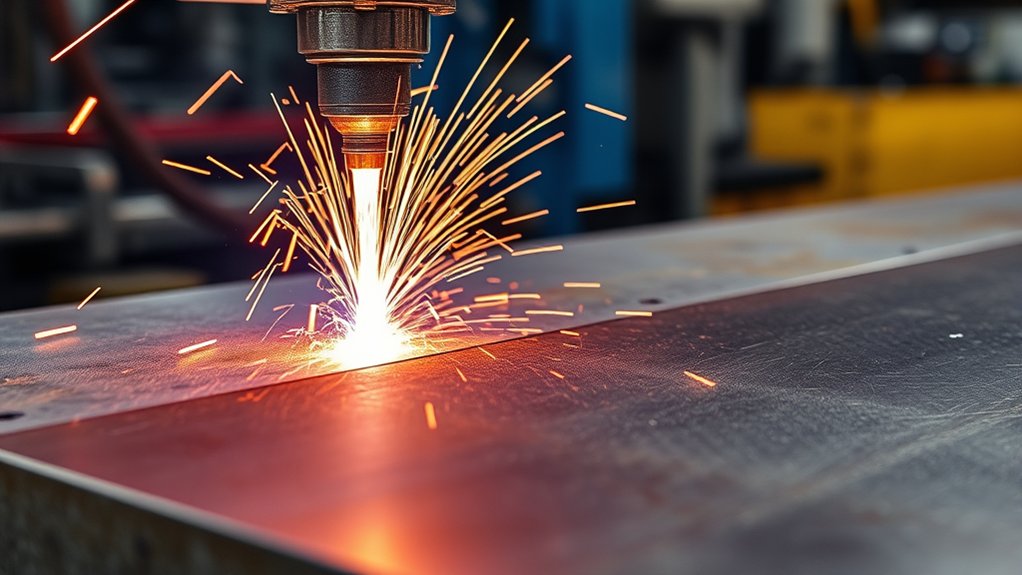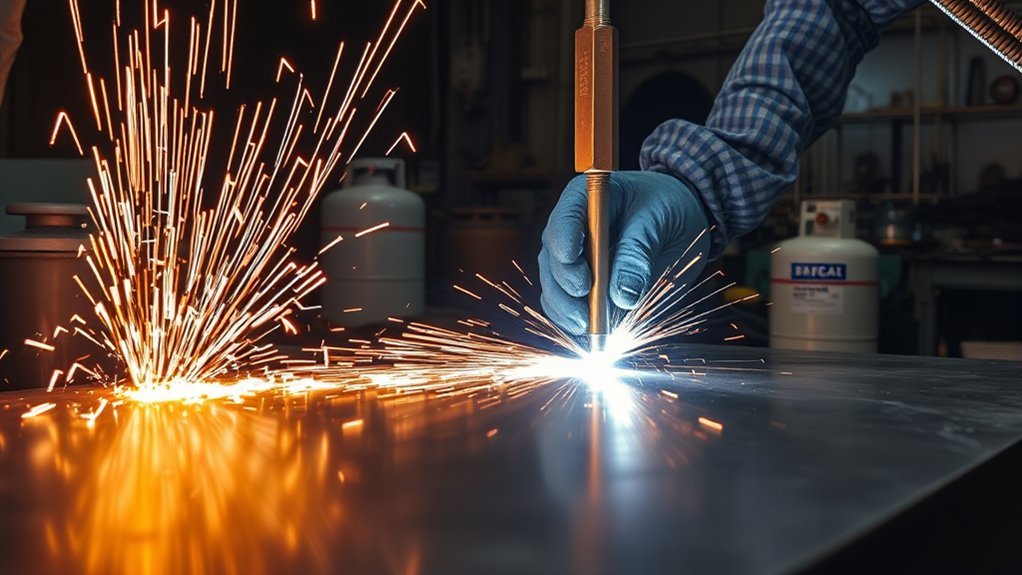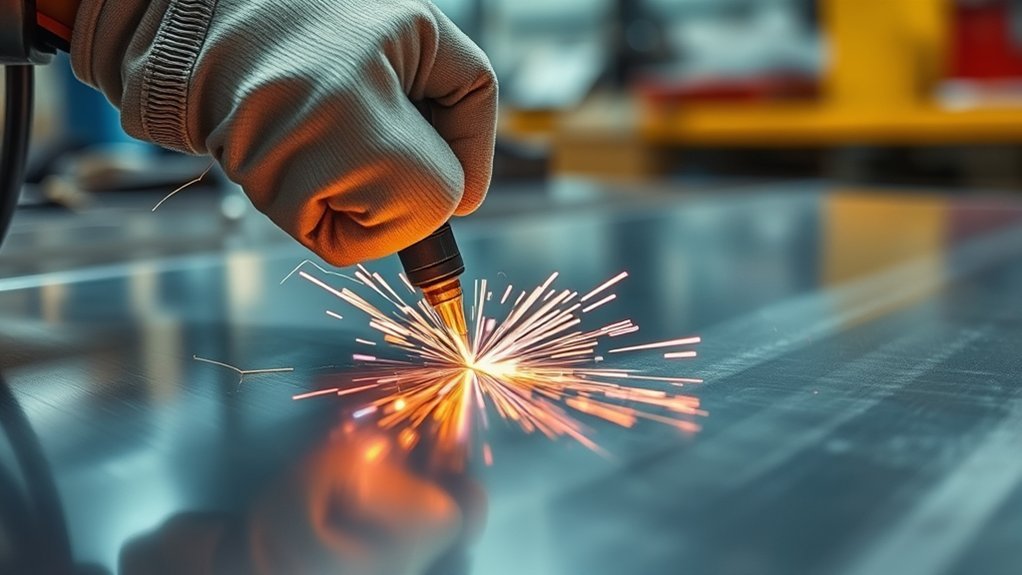
Yes, a plasma cutter can cut stainless steel because stainless is electrically conductive. The main challenge is not making the cut; it is controlling edge color, bevel, dross, heat, and fumes. Clean, dry shop air works for most garage plasma cutters. Nitrogen and specialty gases can improve the finish, but only when the cutter and torch are designed for them.
Quick Answer
Use a plasma cutter rated for the stainless thickness, install the correct consumables, supply clean and dry air or an approved gas, and attach the work clamp to bare metal. Follow the machine’s stainless cut chart, hold the torch square, and travel steadily. Control fumes with local exhaust and suitable protective equipment.
Key Takeaways
- Clean, dry, oil-free shop air is the lowest-cost choice for most garage plasma cutters, although it leaves a darker oxidized edge.
- Nitrogen, F5, H-35, and H2Mix must only be used when the cutter, torch, regulator, and consumables are approved for that gas.
- Amperage, pressure, speed, consumables, and torch height must come from the cut chart for your exact machine.
- Traveling too slowly causes thick low-speed dross, while traveling too fast can leave a hard bead or fail to cut through.
- Stainless plasma fumes may contain hexavalent chromium and other hazardous material, so source-capture ventilation is essential.
At a Glance
| Time Required | About 10–20 minutes for setup and test cuts, plus the time needed to complete the cut |
| Difficulty | Intermediate; beginners should practice on scrap before cutting a finished part |
| Tools Needed | Plasma cutter, approved gas supply, work clamp, correct consumables, guide or straightedge, local exhaust, welding helmet, safety glasses, gloves, hearing protection, and flame-resistant clothing |
| Cost | Varies by consumable wear and gas choice; shop air is normally the lowest-cost option |
How Plasma Cutting Works on Stainless Steel
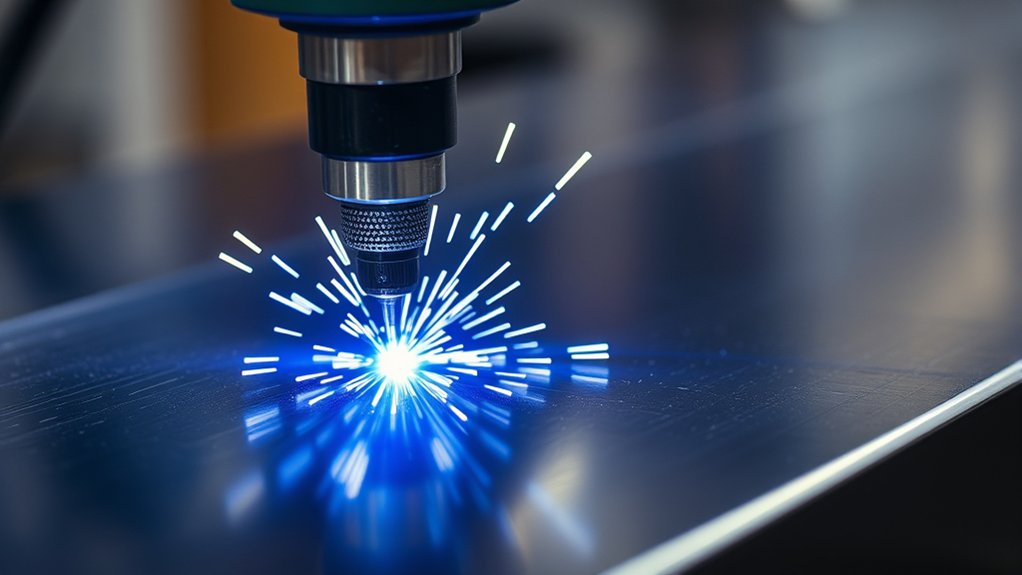
A plasma cutter sends an electrical arc through a fast-moving stream of ionized gas. The arc melts a narrow path through the stainless steel, and the gas stream blows the molten metal out of the kerf.
The process works on stainless because it is electrically conductive. Cut quality still depends on the machine, torch, consumables, gas, amperage, travel speed, torch height, and material thickness.
A plasma cutter can separate stainless quickly, but the cut chart and a steady hand determine whether the edge is clean enough to use without heavy grinding.
Air-plasma cutting often leaves a rough, dark gray oxide layer on the edge. Nitrogen or an approved specialty gas may leave a lighter or shinier edge, but those gases do not work with every machine. Hypertherm’s stainless plasma-cutting guidance explains that gas choice depends on the plasma system, gas console, thickness, desired finish, speed, and operating cost.
Use the Work Clamp Correctly
Many people call it a ground clamp, but its cutting function is to connect the workpiece to the plasma cutter’s work lead. It does not replace the machine’s protective electrical grounding.
Attach the work clamp directly to clean, bare metal or to a properly grounded cutting table that has a solid electrical path to the workpiece. Remove paint, mill scale, dirt, oil, and heavy oxidation from the clamp point. A weak connection can cause hard starting, an unstable arc, or an incomplete cut.
Before You Cut: Setup Checklist
- Read the cut chart: Find the stainless-steel chart for the exact cutter, torch, consumable, gas, and thickness.
- Check the machine rating: Use recommended cut capacity for normal work. Do not plan a production-quality cut around the maximum severance rating.
- Inspect the torch: Replace a nozzle with an enlarged or oval opening and replace damaged electrodes, shields, swirl rings, or cartridges.
- Check the air or gas supply: Shop air must be clean, dry, oil-free, and supplied at the pressure and flow required by the machine.
- Prepare the metal: Remove oil, solvent, plastic film, paint, plating, and unknown coatings from the cutting area.
- Secure the workpiece: Support it so the drop piece cannot pinch the kerf, fall onto cables, or strike anyone.
- Connect the work lead: Clamp it to clean metal as close to the cut as practical without placing it in the cutting path.
- Make a test cut: Use a scrap piece of the same grade and thickness before cutting an important part.
Pro Tip: Change only one setting at a time during a test cut. Record the gas, amperage, consumable, torch height, and travel-speed result so you can repeat the best setup later.
Which Gas Is Best for Plasma Cutting Stainless Steel?
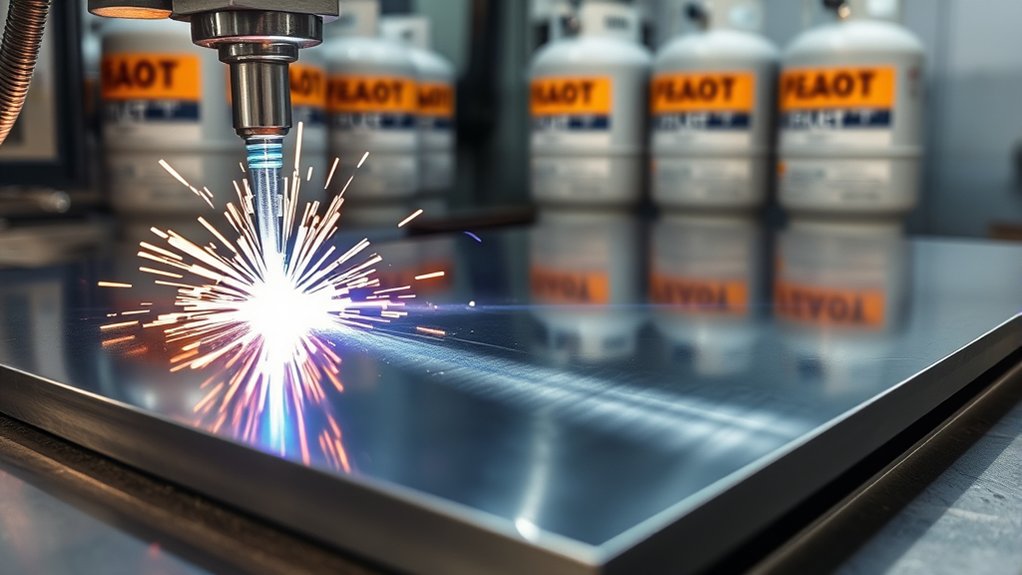
For most home and garage air-plasma cutters, clean, dry, oil-free compressed air is the practical choice. It offers good speed at a low operating cost, but it normally leaves a dark oxidized edge.
Nitrogen can reduce oxidation on some systems, although it may cost more and can produce more dross in certain applications. F5 can produce a smooth, silver-colored edge on compatible equipment. F5 is a mixture of 95% nitrogen and 5% hydrogen.
H-35, H2Mix, water-shield, and Vented Water Injection processes belong to specialized multi-gas or high-definition equipment. They are not gases or processes that should be added to a basic shop-air cutter without explicit manufacturer approval.
Note: The thickness bands below describe compatible multi-gas and high-definition processes. They are not universal settings for every plasma cutter. Always follow the cut chart supplied with your machine.
| System or Process | Typical Gas Choice | What to Expect |
|---|---|---|
| Conventional garage air-plasma cutter | Clean, dry, oil-free air | Lowest operating cost and good speed, with a dark oxidized edge that may need cleanup |
| Compatible Powermax or similar approved system | Nitrogen or F5 when specifically listed in the manual | Less oxidation or a shinier edge, with higher gas cost and machine-specific speed limits |
| Compatible multi-gas or X-Definition system below 5 mm | Nitrogen plasma with nitrogen or water shield | Sharp top edge and a lighter surface finish on equipment designed for the process |
| Compatible multi-gas system from about 5–12 mm | F5 plasma with nitrogen shield | A shiny metallic edge with low angularity when the system’s cut chart calls for it |
| Compatible industrial system above about 12 mm | H2Mix or H-35 plasma with an approved shield gas | High cutting energy and a smoother thick-plate edge; specialized equipment is required |
Warning: Never feed F5, H-35, H2Mix, or another hydrogen-bearing gas into equipment that is not approved for it. Use the correct cylinders, regulators, hoses, fittings, torch parts, ventilation, and manufacturer procedure.
Products Worth Considering

CGA-580 Inlet Fitting

Strong Weight Capacity: Our welding cart with drawers supports up to 350 lbs of static weight and 300 lbs of dynamic weight with ease. Effortless handling various heavy loads, it’s perfect for storing and transporting MIG, TIG welding machine, plasma cutter and more welding equipment, meeting the needs of demanding professional tasks.

Parameters for Smooth Edges
There is no reliable universal amperage, pressure, or speed setting for stainless steel. Use the values in your owner’s manual or stainless cut chart. The correct numbers change with the machine, input power, gas, torch, consumable, standoff, and thickness.
Once the recommended settings are installed, focus on four controls:
- Torch angle: Keep the torch close to 90 degrees to the workpiece unless the manual calls for a different piercing position.
- Torch height: Drag only when the shield and manufacturer permit drag cutting. Otherwise, hold the specified standoff.
- Travel speed: Move steadily. Do not pause in the kerf or slow sharply at the end.
- Work connection: Keep the work clamp on clean metal and protect its cable from sparks and the falling cut piece.
Best Cutting Techniques by Material Thickness
Step-by-Step Cutting Procedure
- Prepare the work area. Remove combustibles, position local exhaust, secure the plate, and make sure the drop piece has a safe path.
- Install the correct consumables. Match the nozzle or cartridge to the amperage and process listed in the cut chart.
- Set the gas and output. Use the approved gas, pressure, flow, and amperage for the exact thickness.
- Attach the work clamp. Connect it to clean, bare metal with a solid path back to the cutter.
- Position the torch. Hold it square to the plate and use the required drag shield or standoff.
- Start the cut correctly. Use an edge start when the plate is near the machine’s capacity. If piercing, follow the specified pierce height and do not pierce material thicker than the machine’s rating.
- Move after full penetration. Wait for the arc to break through the plate, then travel at a steady speed. Sparks blowing back onto the top surface can indicate excessive speed, insufficient power, excessive standoff, or worn consumables.
- Finish without dwelling. Maintain the correct speed through the end. On an open cut, carry the arc cleanly beyond the plate edge rather than stopping inside the kerf.
- Allow postflow to finish. Keep the torch clear while cooling gas runs, and do not disconnect power or air until the cycle ends.
- Inspect the edge. Check penetration, bevel, dross, top spatter, and heat distortion before changing a setting.
Thin Stainless Sheet
Thin stainless heats and distorts quickly. Use the lower-amperage process or fine-cut consumable listed for the sheet, then move at the recommended speed without pausing. Support the sheet well, plan short cuts, and alternate between distant areas when several long cuts are needed.
A straightedge or compatible drag guide can improve control. Confirm that the torch shield is designed to contact a guide before dragging it.
Medium-Thickness Stainless
Use the full cut-chart combination of amperage, nozzle, gas, and standoff. Keep the torch square and use an edge start when possible. If the arc trails far behind the torch or leaves a hard underside bead, reduce speed in small steps after checking the nozzle and standoff.
Thick Stainless Plate
Do not judge the job only by whether the machine can sever the plate. A severance cut is slow and rough. For useful edge quality, stay within the manufacturer’s recommended capacity and stainless process chart.
Use an edge start when the plate approaches the cutter’s upper range. Respect the duty cycle, allow the machine to cool when required, and avoid piercing beyond the rated pierce capacity because molten blowback can damage the torch.
How to Manage Dross and Slag
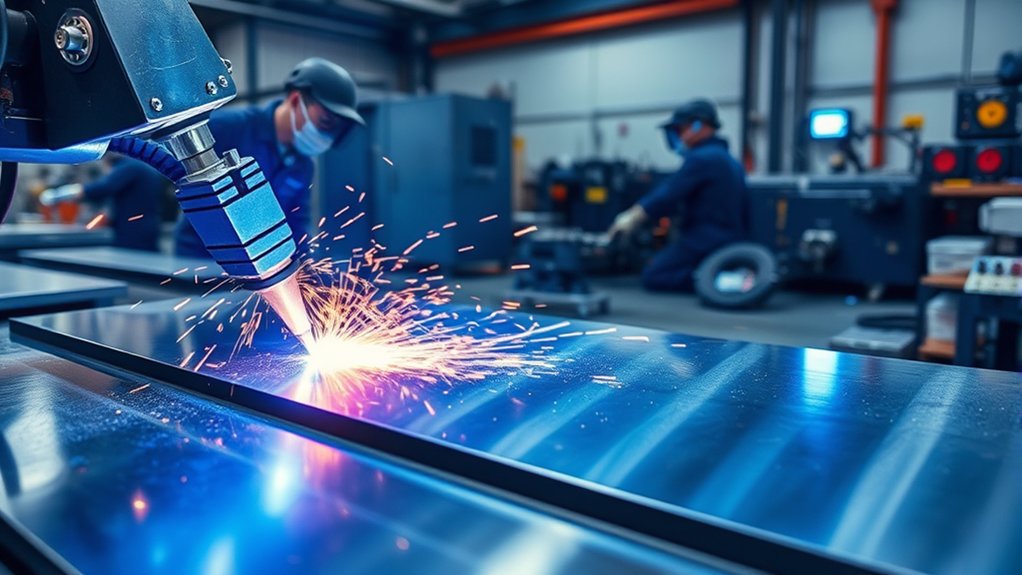
Dross is resolidified metal left along the lower edge of the cut. Stainless dross can be hard and strongly attached, but the shape of the deposit often points to the cause.
| Symptom | Likely Cause | What to Check |
|---|---|---|
| Thick, bubbly deposit along the bottom | Travel is too slow, amperage is too high for the setup, or standoff is too low | Increase speed in small steps, verify amperage, and restore the specified torch height |
| Small, hard bead or uncut rollover underneath | Travel is too fast, amperage is too low, standoff is too high, or the nozzle is worn | Inspect the nozzle, reduce speed slightly, verify output, and check torch height |
| Molten spray or spatter on the top surface | Worn nozzle, excessive speed, high standoff, or incomplete penetration | Stop and inspect consumables before changing several settings at once |
| Strong bevel or one side much cleaner than the other | Torch is not square, consumables are worn, height is wrong, or cut direction is incorrect for the torch swirl | Square the torch, install fresh parts, confirm height, and follow the manufacturer’s direction guidance |
| Arc wanders or cuts intermittently | Poor work connection, contaminated air, damaged consumables, or unstable input power | Clean the clamp point, drain filters, inspect parts, and confirm the input circuit |
Hypertherm’s dross troubleshooting guide explains that both excessive and insufficient speed can create different types of dross. This is why “go faster” and “go slower” are not complete answers by themselves.
Dross Removal Techniques
Let the part cool, then test the dross with a scraper or chisel. Loose low-speed dross may break away, while hard high-speed dross often needs a surface-conditioning disc or flap disc.
For parts where appearance or corrosion resistance matters, use abrasives and wire brushes reserved for stainless steel. Carbon-steel residue left by a shared brush or grinding disc can later create rust staining.
Remove only the attached dross and oxide. Excessive grinding can round the edge, change dimensions, and remove more base metal than necessary.
Heat Management Strategies
- Keep moving: Pausing in one location increases the heat-affected area and can warp thin sheet.
- Sequence long cuts: Alternate between distant areas instead of concentrating heat in one corner.
- Support thin sheet: A flat cutting table or closely spaced supports reduce sagging and vibration.
- Use the correct amperage: More amperage is not always better. Follow the cut chart for the consumable and thickness.
- Allow cooling time: When accuracy matters, let the sheet cool between long nearby cuts.
Recommended Plasma Cutters for Garage Welders
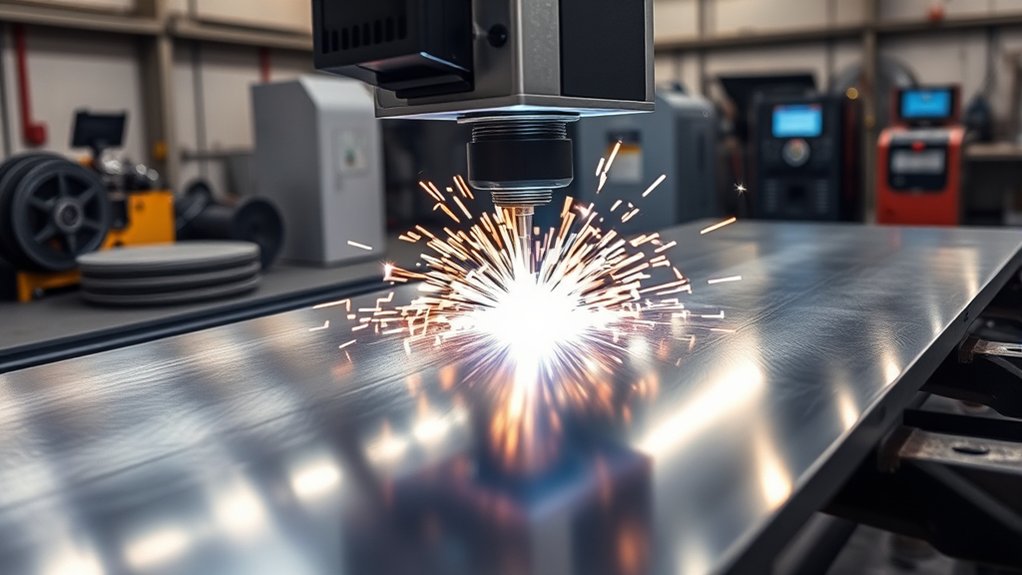
Choose a plasma cutter by its manufacturer-rated capacity, duty cycle, air requirement, input power, consumable supply, and support network. Do not choose it only by maximum amperage or severance thickness.
Products Worth Considering

[POWERFUL CUTTING PERFORMANCE] : Get clean, efficient cuts with up to 3/10" clean cut at 110V and 1/2" at 220V, with a maximum cutting thickness of 1/2" at 110V and 2/3" at 220V. Designed for smooth and effective cutting across a variety of metalworking, repair and DIY applications.
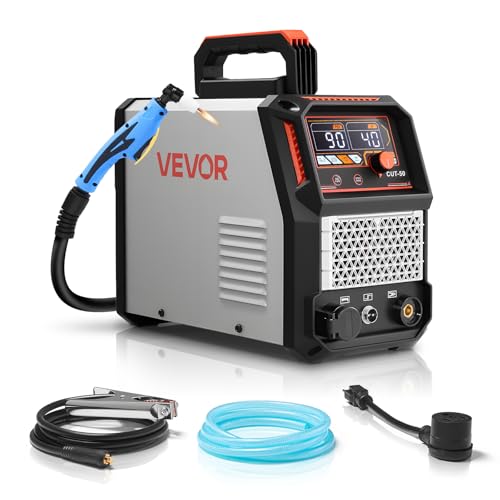
Powerful Cutting: This VEVOR plasma cutter delivers a maximum output current of 50A with powerful cutting ability. It supports clean cuts up to 3/10" (10mm) at 110V and 1/2" (12mm) at 220V, with a maximum cutting thickness of 1/2" (12mm) at 110V and 5/8" (16mm) at 220V
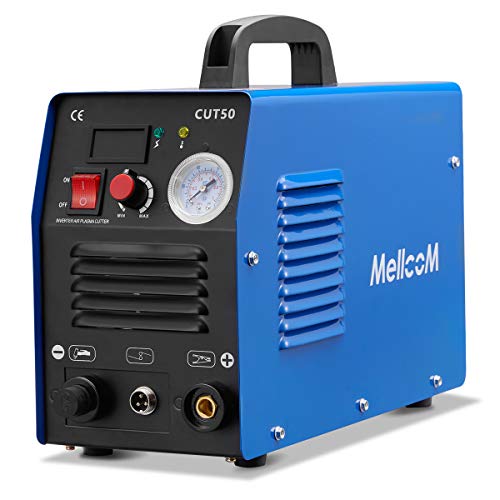
【Arc Pilot Function】The pilot arc plasma cutter efficiently cuts rough, painted, and rusted surfaces with minimal weld slag. Without touching the tip of the metal, pilot arc technology improves cutting quality and extends consumable lifespan.
Current Midrange Option
The Hypertherm Powermax45 SYNC is a current 45-amp system that supports clean, dry air, nitrogen, and F5 for approved cutting applications. Hypertherm lists a recommended cut capacity of 16 mm (5/8 inch) and a hand-severance capacity of 29 mm (1-1/8 inch). Use the stainless cut chart rather than assuming that maximum severance will produce a finished edge.
Legacy Powermax45 XP
The Powermax45 XP remains a capable machine for existing owners, but Hypertherm stopped manufacturing it in March 2024. Original torches, consumables, service parts, and technical support remain available. Buyers considering used equipment should inspect torch condition, verify input voltage, and confirm local consumable availability.
Portable Air-Plasma Options
The current Hobart AirForce 27i is a dual-voltage portable cutter advertised for clean cuts up to 3/8 inch steel. The AirForce 40i is advertised for clean cuts up to 5/8 inch steel. Check their manuals and make test cuts before assuming identical edge quality on every stainless grade.
Budget machines from brands such as Titanium or YesWelder may also cut stainless within their rated range. Compare the exact manual, duty cycle, input circuit, required airflow, torch design, replacement-part supply, and warranty instead of relying on a brand name or maximum-thickness claim.
Plasma Cutter Buying Checklist
- Recommended capacity: It should cover the stainless thickness you normally cut.
- Pierce capacity: Important if you cut closed shapes or use a CNC table.
- Input power: Confirm the required voltage, amperage, plug, circuit, and extension-cord limits.
- Air demand: Match compressor flow and pressure to the machine under continuous load.
- Duty cycle: Higher duty cycle matters during long cuts and repeated production work.
- Consumable availability: Confirm that electrodes, nozzles, shields, and cartridges are easy to obtain.
- Pilot arc: Helpful for expanded metal, painted surfaces, and interrupted cuts when the manufacturer supports the application.
- Gas compatibility: Buy a multi-gas system only when the better edge finish justifies its extra cost and complexity.
Safety Considerations in Stainless Steel Plasma Cutting
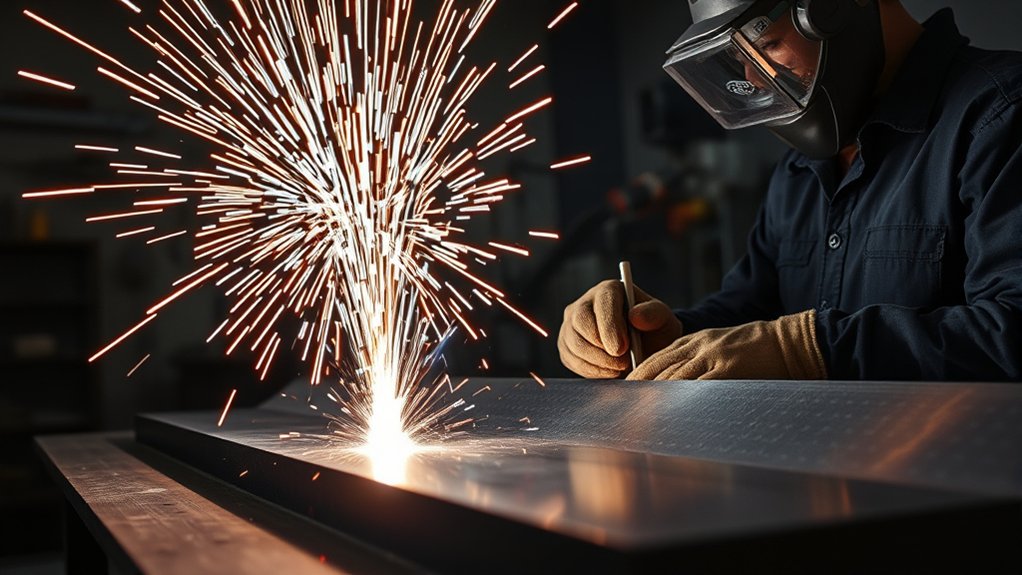
When cutting stainless steel with a plasma cutter, treat the task as hot work involving high voltage, intense light, fire, molten metal, compressed gas, noise, and hazardous fumes.
Warning: Stainless plasma fumes may contain hexavalent chromium, nickel compounds, ozone, nitrogen oxides, and material released from coatings. Do not place your head over the plume. Use local exhaust that captures fumes close to the arc, and never cut a coated or unknown material until its hazards are identified.
OSHA’s permissible exposure limit for airborne hexavalent chromium is 5 micrograms per cubic meter as an eight-hour time-weighted average for covered workplaces.
Fume and Respiratory Protection
Use source-capture local exhaust to pull fumes away from your breathing zone. Working outdoors may reduce accumulation, but wind can redirect the plume toward the operator and does not prove that exposure is below a safe limit.
OSHA’s chromium(VI) standard requires covered employers to assess and control exposure. When engineering and work-practice controls are not enough, respiratory protection must be selected through a compliant program.
A P100 filter may be part of an appropriate setup for particulate metal fume, but the label alone does not make any half-mask suitable for every job. Workplace respirator use may require hazard evaluation, medical clearance, fit testing, training, maintenance, and a cartridge-change procedure under the OSHA respiratory-protection standard.
Eye, Face, Hearing, and Skin Protection
- Wear safety glasses with side protection beneath a welding helmet or suitable cutting shield.
- Use a filter shade that meets the machine manufacturer’s instructions and applicable rules. OSHA lists shade 8 as the minimum for visible light-duty plasma arc cutting below 300 amps.
- Wear flame-resistant clothing that covers the arms and legs.
- Use dry welding gloves and closed leather footwear.
- Wear hearing protection when noise levels or the work environment require it.
- Protect nearby workers and observers from arc flash and flying sparks with suitable screens and PPE.
See OSHA’s eye and face protection requirements for the applicable minimum filter-shade table.
Fire and Hot-Work Controls
- Remove combustible material from the spark path and the area below the cut.
- Keep a suitable fire extinguisher within reach.
- Check the opposite side of walls, floors, tanks, and enclosed areas for hidden combustibles.
- Use a fire watch when conditions or workplace rules require one.
- Remain in the area long enough to detect smoldering material after the cut.
- Do not cut closed, sealed, pressurized, or previously flammable containers unless they have been properly cleaned, vented, tested, and approved for hot work.
Electrical and Compressed-Gas Safety
- Keep gloves, clothing, cables, and the work area dry.
- Do not use a torch with cracked insulation, exposed wire, loose parts, or a damaged trigger.
- Turn off and isolate power before changing consumables or opening the machine.
- Keep the torch pointed away from yourself and others; instant-on torches create an arc as soon as the trigger sequence is completed.
- Secure gas cylinders upright and protect them from heat, sparks, slag, impact, and electrical contact.
- Use only the regulator, hose, fittings, and gas specified for the process.
- Never use oil or grease on gas-cylinder valves or regulators.
Frequently Asked Questions
Can You Cut Stainless Steel With Compressed Air?
Yes. Clean, dry, oil-free compressed air is the most practical gas for many garage plasma cutters. It gives good speed and low operating cost, but the edge will normally be darker and more oxidized than an edge cut with an approved nitrogen or F5 process.
What Maintenance Is Required for a Plasma Cutter Used on Stainless Steel?
Inspect the electrode, nozzle, shield, cartridge, swirl ring, torch body, lead, and work clamp. Drain moisture separators, service filters, and keep the air supply clean and oil-free. Replace consumables when the nozzle opening becomes enlarged or oval, the electrode pit reaches its service limit, or cut quality declines.
How Does Weather Affect Plasma Cutting Stainless Steel Outdoors?
Rain and wet surfaces create serious electrical hazards. High humidity can add moisture to the compressed-air supply, shortening consumable life and causing an unstable arc. Strong wind can disturb the fume plume and any exposed shielding flow. Keep the equipment and work dry, use effective air treatment, and stop when weather makes electrical or fume control unsafe.
Can Plasma Cutting Warp Thin Stainless Steel Sheets?
Yes. Thin stainless can distort when heat is concentrated in one area. Use the cut-chart amperage, travel steadily, avoid pausing, support the sheet, sequence nearby cuts, and allow cooling time between long cuts when dimensional accuracy matters.
How Long Do Plasma Cutter Consumables Last on Stainless Steel?
There is no fixed lifespan. Air quality, gas choice, amperage, piercing technique, torch height, cut duration, cooling, and the number of starts all affect wear. Clean air, correct settings, edge starts on thick material, and timely replacement of damaged parts usually extend service life.
Are Any Plasma Cutters Designed Only for Stainless Steel?
Most plasma cutters are not stainless-only machines. They cut several electrically conductive metals. Choose a cutter with enough recommended capacity for your stainless thickness and confirm that its gas system, torch, consumables, and cut charts support the edge quality you need.
Why Does Air-Plasma Cutting Leave a Dark Edge on Stainless Steel?
The hot plasma process reacts with oxygen and nitrogen in the air, leaving an oxidized, dark gray cut surface. This is normal for air plasma. An approved nitrogen or F5 process can change the edge color, but only use gases listed for your machine.
Should You Clean a Plasma-Cut Stainless Edge Before Welding?
Clean the edge when the oxide, nitrided layer, dross, oil, or contamination could interfere with the weld procedure. Remove loose material with an abrasive reserved for stainless, then follow the welding procedure and filler-metal recommendations for the alloy and service conditions.
Conclusion
Cutting stainless steel with a plasma cutter is straightforward when the equipment, gas, and settings match the material. For most garage work, clean and dry shop air is the simplest choice. Better edge color from nitrogen, F5, H-35, or H2Mix requires a machine specifically designed for that process.
Use the exact cut chart, keep the work connection clean, hold the torch square, and maintain the correct speed through the end of the cut. Inspect the dross before changing settings, and judge a cutter by its recommended capacity rather than its maximum severance claim. Most importantly, capture stainless fumes at the source and use complete hot-work protection.
Sources
- Hypertherm: Plasma Cutting Stainless Steel — gas options, multi-gas thickness guidance, edge finish, and Vented Water Injection
- Hypertherm: Guide to Plasma Gas Selection — air quality, nitrogen, argon-hydrogen, and operating tradeoffs
- Hypertherm: Too Much Dross Troubleshooting — low-speed, high-speed, and top-spatter causes
- OSHA 29 CFR 1910.1026: Chromium (VI) — occupational exposure limit and control requirements
- OSHA 29 CFR 1910.133: Eye and Face Protection — protective filter-shade requirements
- Hypertherm Safety and Compliance Manual — plasma-fume, compressed-gas, electrical, burn, and cylinder precautions