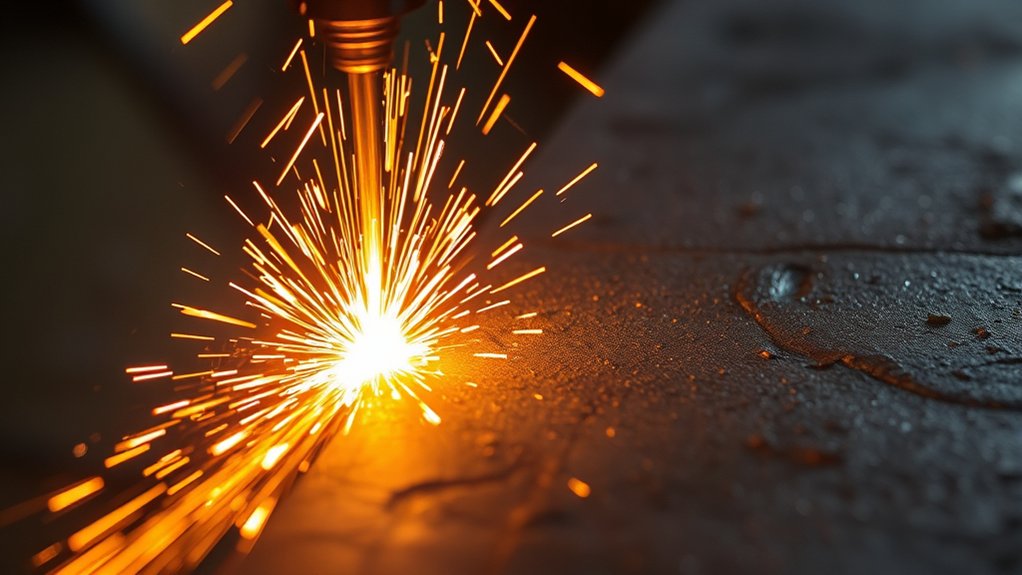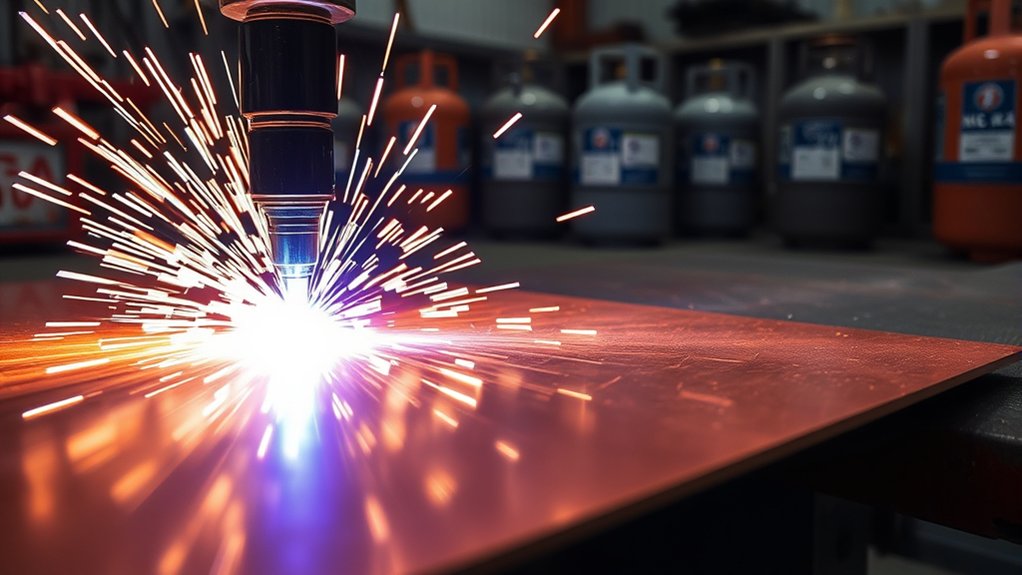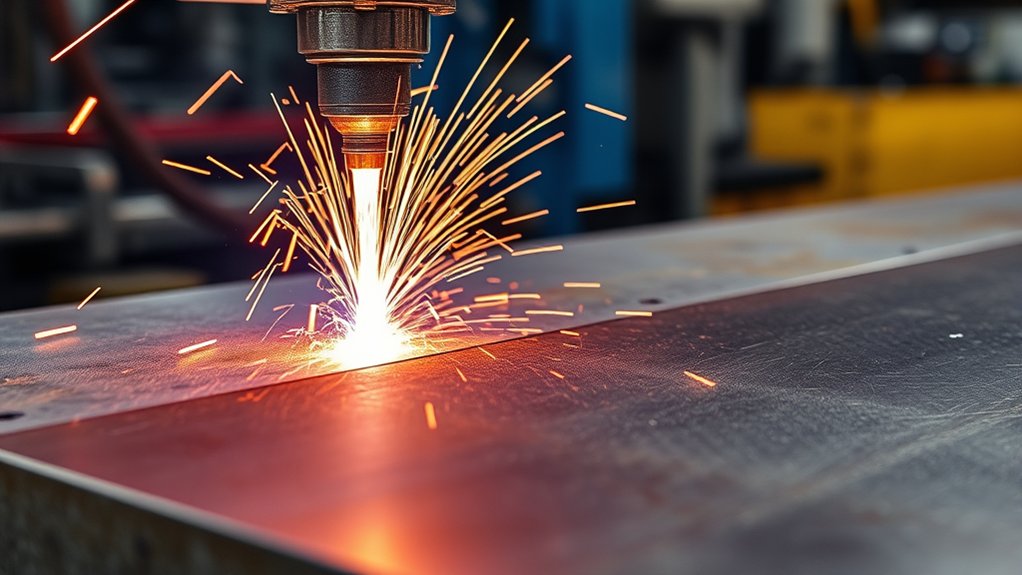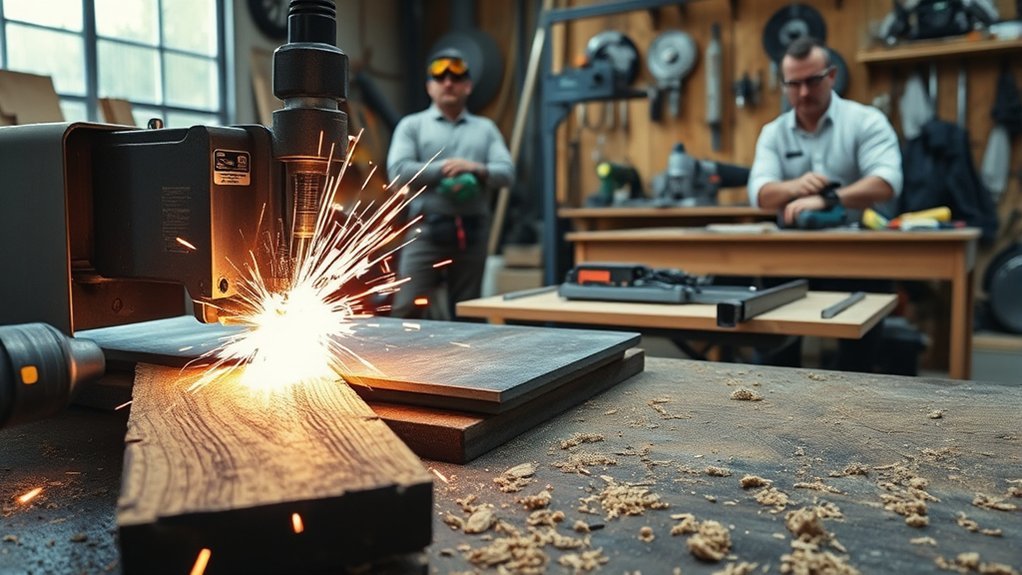
A standard handheld plasma cutter is the wrong tool for wood. The process is designed for electrically conductive workpieces, while dry wood is an insulator and a fuel. Instead of making a controlled kerf, the torch may fail to transfer the arc, jump to nearby metal, char the surface, ignite dust, and fill the area with smoke.
Quick Answer
No. Do not use a standard transferred-arc plasma cutter on wood. It needs an electrically conductive workpiece to sustain the cutting arc, and wood does not provide that path. The torch may only scorch or ignite the material. Use a saw, router, CNC router, or approved CO2 laser system instead.
Key Takeaways
- Common handheld and CNC plasma cutters are made to cut electrically conductive metals, not wood.
- A pilot arc does not make wood a suitable workpiece; it may only let the torch arc briefly before searching for conductive metal.
- Plasma heat, sparks, and hot metal can ignite wood, sawdust, coatings, adhesives, and nearby combustibles.
- Plywood, MDF, pressure-treated lumber, painted wood, and laminated products can produce especially unpleasant or hazardous smoke when overheated.
- Choose a circular saw, jigsaw, band saw, router, CNC router, or properly exhausted CO2 laser according to the cut you need.
What’s in This Article
- How Plasma Cutting Works and Why Wood Fails
- Risks of Using a Plasma Cutter on Wood
- Pilot Arcs, Metal Backing, and Other Misconceptions
- Fire, Fume, and Electrical Safety
- Possible Damage to the Cutter and Shop
- Safer Wood-Cutting Alternatives
- Best Tool for Each Woodworking Task
- Plasma vs. Other Cutting Methods
- How to Choose the Right Tool
- What to Use for Common Wood Cuts
- Final Thoughts
- Frequently Asked Questions
- Sources
How Plasma Cutting Works and Why Wood Fails
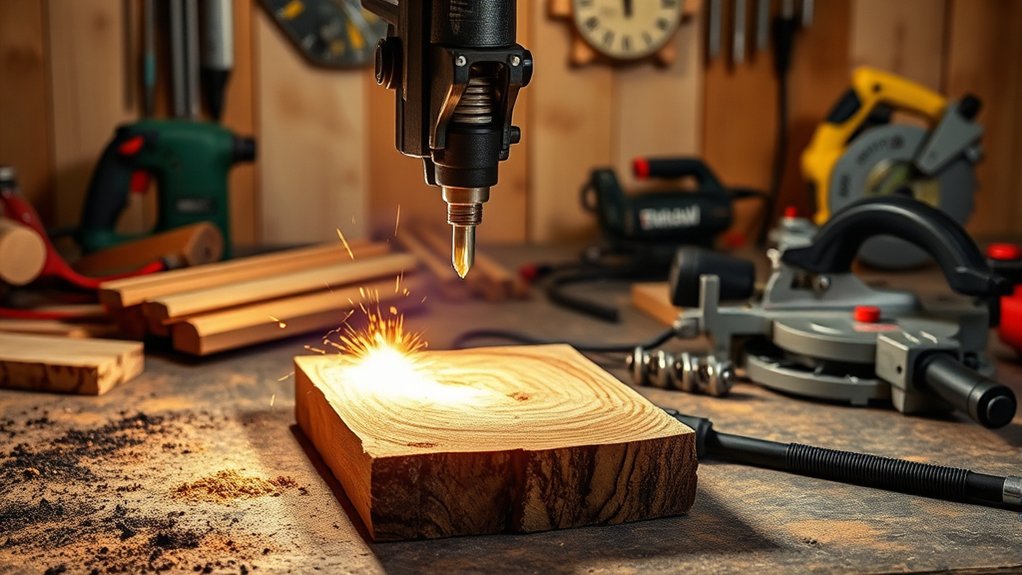
Plasma cutting uses an electrical arc to ionize gas and create a high-speed plasma jet. In a standard transferred-arc cutter, the main arc runs from the torch electrode to the workpiece. The jet melts a narrow path through the metal and blows the molten material out of the cut.
Hypertherm explains that conventional plasma cutting forms the arc between the electrode and a positively charged workpiece. It is therefore intended for electrically conductive materials such as mild steel, stainless steel, aluminum, copper, and brass.
USDA Forest Products Laboratory research shows that wood electrical resistance changes strongly with moisture content. Even so, ordinary lumber is not a valid conductive workpiece for a transferred plasma cutter. Moisture, nails, screws, foil, or a metal table may create accidental conductive paths, but they do not turn the wood into a suitable cutting material. The arc may jump to the metal instead of following the intended line through the wood.
Specialized non-transferred plasma torches can heat nonconductive surfaces in industrial processing, but they are not the same as a common plasma cutter and are not a practical woodworking method.
A plasma torch may be hot enough to burn wood, but burning a path is not the same as making a controlled plasma cut.
The Risks of Using Plasma Cutters on Wood
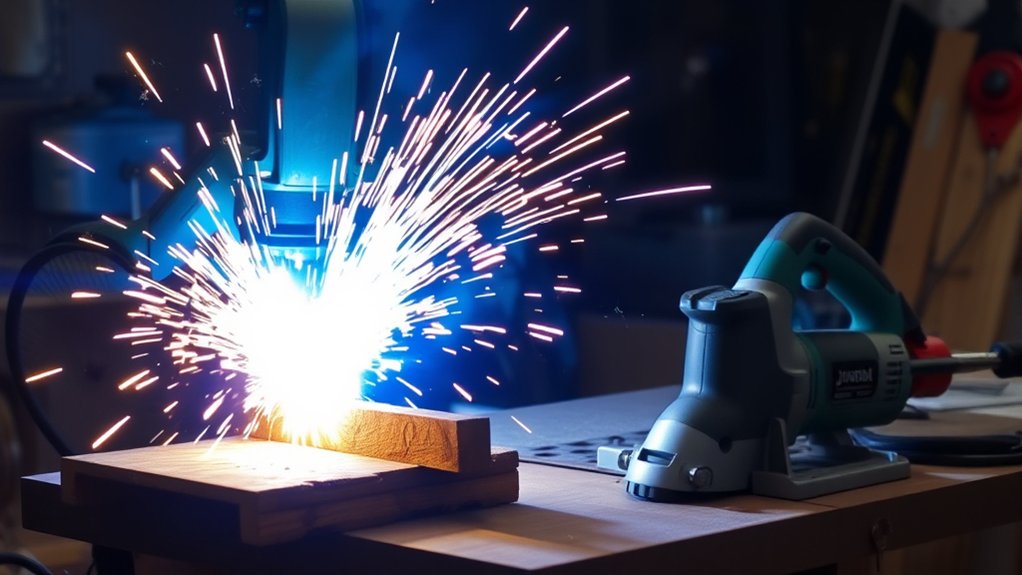
Using a plasma cutter on wood combines an unsuitable electrical process with a combustible material. The likely result is not a neat cut. You may see an arc that will not transfer, short bursts toward nearby metal, surface charring, glowing embers, smoke, or open flame.
The risk rises around sawdust, shavings, paper, oily rags, solvents, finishes, and stored lumber. Fine wood dust can spread far beyond the immediate cutting area and may ignite when exposed to sparks or hot particles. OSHA treats airborne wood dust as both a health concern and, under the right conditions, a combustible-dust hazard.
Engineered and finished wood adds another problem. Plywood and laminated panels contain adhesives. MDF contains resins. Painted, stained, or pressure-treated lumber may contain chemicals that should not be heated or burned. The exact decomposition products depend on the material, so the safe rule is to follow the product safety data and never use a plasma torch as a test method.
Warning: Do not test a plasma cutter on wood indoors or outdoors. Moving the test outside may reduce smoke buildup, but it does not fix the electrical mismatch, fire risk, flying-spark hazard, or chance of arcing to nearby metal.
Why Wood and Plasma Cutters Are a Bad Combination
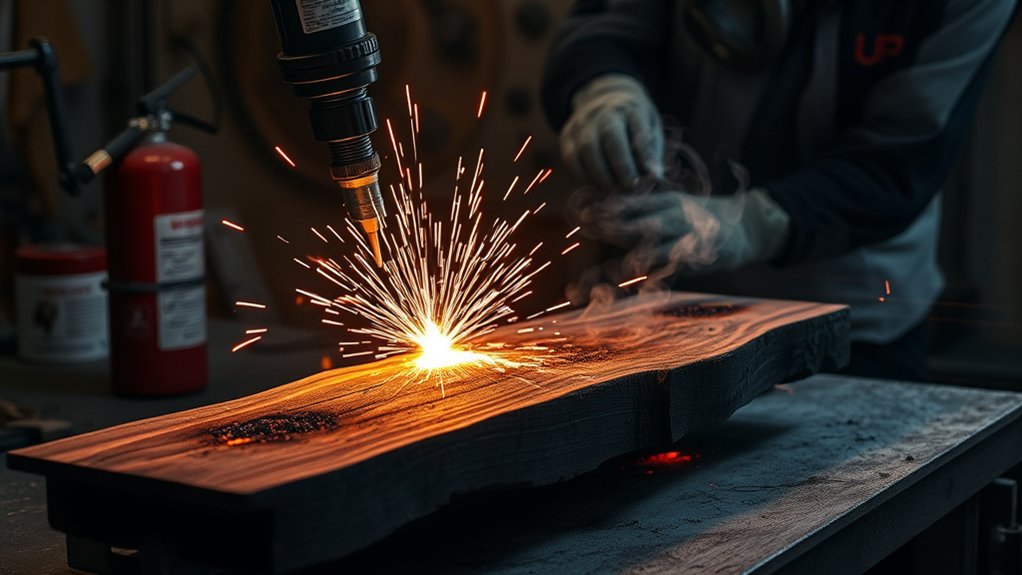
Three issues make the combination unreliable and unsafe:
- No proper cutting circuit: A common transferred-arc plasma cutter needs a conductive workpiece and a sound work-clamp connection.
- Too much concentrated heat: Wood chars and ignites instead of melting into a removable metal kerf.
- No predictable cut quality: Grain, moisture, resin, glue, finishes, and hidden hardware can change how the surface burns or where the arc travels.
Does a Pilot Arc Let a Plasma Cutter Cut Wood?
No. A pilot arc helps start the process and can improve performance on painted, rusty, expanded, or interrupted metal. It does not remove the need for a conductive workpiece during normal cutting. On wood, the torch may maintain a small internal or pilot arc briefly, but it cannot produce the controlled transferred arc needed for a clean cut.
What If the Wood Is Placed on a Metal Sheet?
The arc may reach the metal sheet through an edge, gap, screw, damp spot, or burned channel. That can scorch or puncture the wood, but the plasma is still cutting or seeking the metal beneath it. The result is uncontrolled burning, smoke, possible arc wandering, and poor accuracy. A metal backing plate is not a safe workaround.
Safety Concerns When Attempting to Cut Wood
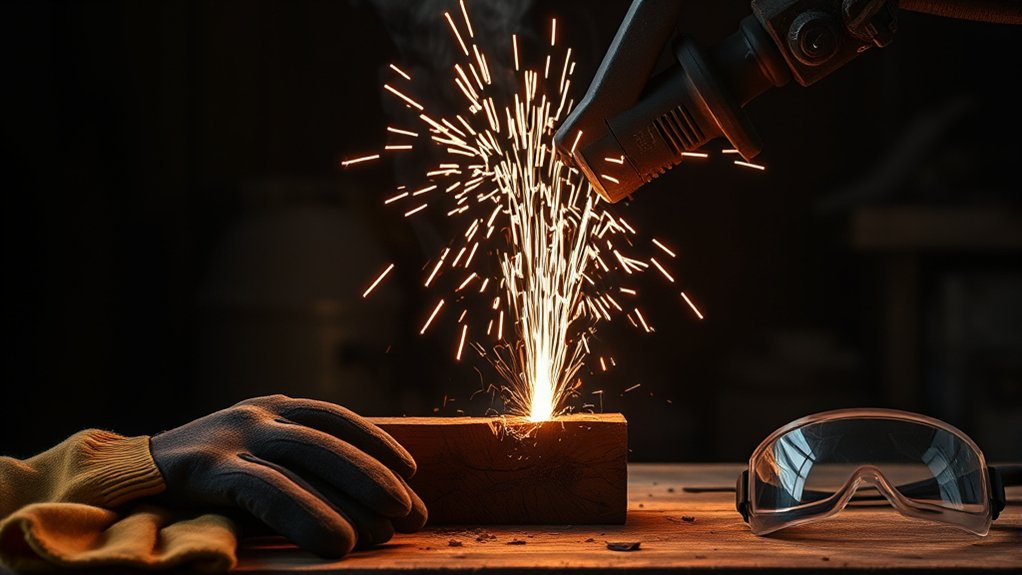
Plasma cutting already requires control of electrical shock, ultraviolet radiation, hot metal, noise, fumes, and fire. Adding wood and wood dust creates hazards the tool was not designed to manage.
Hypertherm’s plasma-cutting safety guidance calls for good metal-to-metal work-clamp contact, adequate ventilation, suitable protective clothing, a nearby fire extinguisher, and flammables kept at least 35 feet away. Those controls are for proper plasma cutting on metal; they are not permission to cut wood.
- Fire: Sparks, hot slag, and the arc can ignite the workpiece or hidden dust.
- Smoke and particles: Heated wood, glue, paint, resin, and preservatives can produce irritating or hazardous emissions.
- Electrical shock: The torch and work circuit remain dangerous even when the intended material will not cut.
- Eye and skin injury: Plasma arcs produce intense light and heat.
- Delayed ignition: Sawdust or a charred cavity can smolder after the torch stops.
If wood has already started to smolder, release the trigger, shut down and disconnect the equipment if you can do so safely, and use an extinguisher suitable for the fire and energized equipment. Leave the area and call emergency services if the fire spreads, enters a wall or dust-collection system, or cannot be controlled immediately.
Potential Damage to Equipment and Surroundings
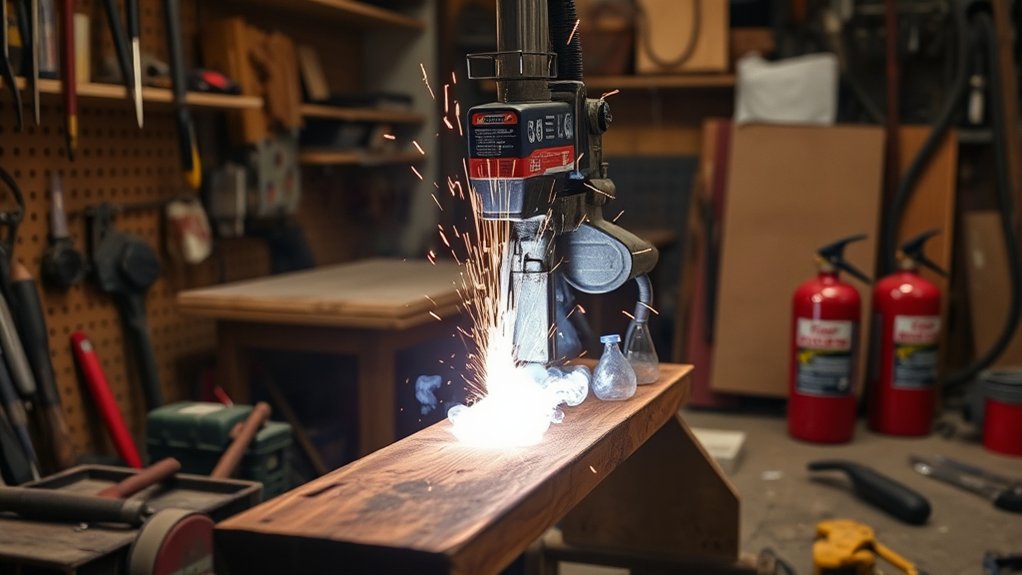
Trying to force a cut through wood exposes the torch and work area to smoke, resin, ash, and repeated failed arc starts. There is no universal damage pattern because plasma systems differ, but none of those conditions is part of normal wood cutting. Stop using the machine if it faults, the arc behaves unpredictably, or residue reaches the torch, and follow the model-specific inspection and cleaning instructions before using it again.
The surrounding shop may face greater damage than the cutter itself. Sparks can enter piles of sawdust, floor cracks, open containers, dust hoses, filters, or wall cavities. A small ember may remain unnoticed until after the work stops.
Do not rely on a general warranty assumption. Read the model’s manual and warranty terms. Using a plasma system outside the listed materials, setup, or operating instructions may be treated as misuse, but coverage varies by manufacturer and model.
Note: Hidden nails or screws do not make a wood board plasma-cuttable. They create small conductive targets that can attract the arc, damage the project, and throw hot metal.
Safer Alternatives for Cutting Wood
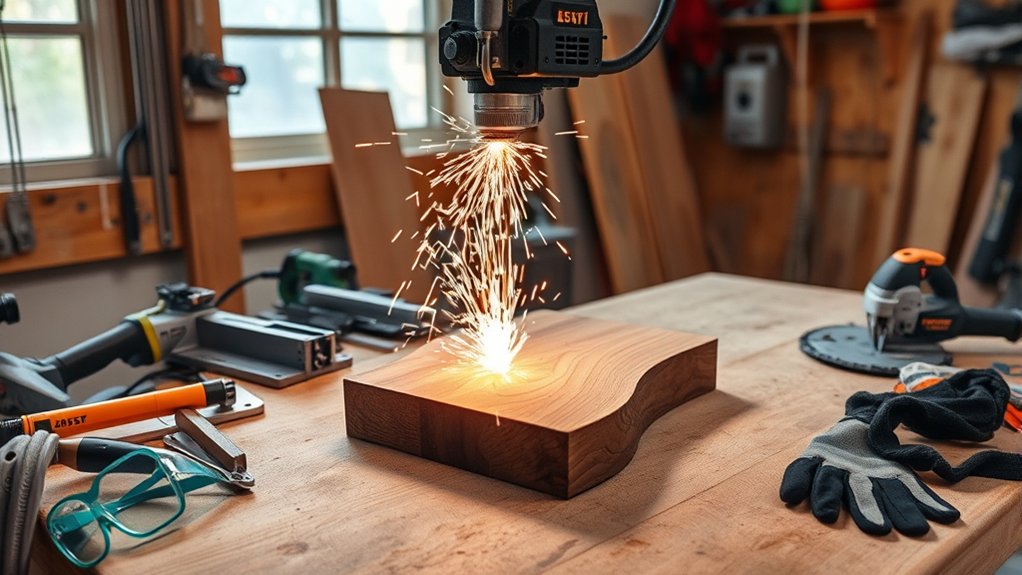
You have several safer and more accurate choices. Match the tool to the shape of the cut, the thickness of the stock, the finish you need, and the controls available in your workspace.
| Tool | Best Use | Main Safety Need |
|---|---|---|
| Circular or track saw | Long straight cuts in boards and sheet goods | Correct blade, stable support, guard, and kickback control |
| Jigsaw or scroll saw | Curves, inside cutouts, and detailed shapes | Secure the work and use a blade suited to thickness and cut direction |
| Band saw | Curves, resawing, and thicker stock | Set the guard close to the stock and keep hands out of the blade path |
| Router | Edges, grooves, dados, templates, and profiles | Correct feed direction, secure work, proper bit speed, and dust control |
| CNC router | Repeated parts, signs, pockets, and complex profiles | Hold-downs, correct toolpaths, guarding, and dust extraction |
| CO2 laser cutter | Thin approved wood and fine designs | Approved material list, active exhaust, air assist, and constant supervision |
Laser cutting is not automatically risk-free. It intentionally heats the material and can create flame and smoke. Epilog requires exhaust for laser cutting and recommends air assist to reduce flare-ups. Never process an unknown, treated, coated, or composite material unless the laser manufacturer approves it.
Pro Tip: Choose the blade or bit for both the material and the cut direction. A rip blade, crosscut blade, plywood blade, and fine jigsaw blade solve different problems; one blade is not ideal for every wood cut.
Products Worth Considering

13 Amp motor for more power and performance than the SKIL 5380

5150 RPM motor delivers power and speed to make the most demanding cuts with ease
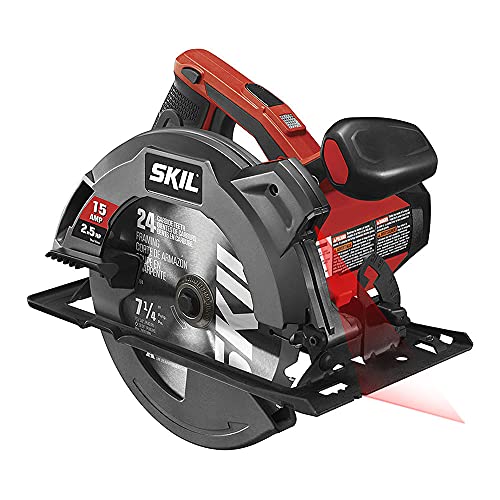
Powerful 15-amp motor delivers 5 300-RPM for greater speed and faster cuts
Tools Best Suited for Woodworking Tasks
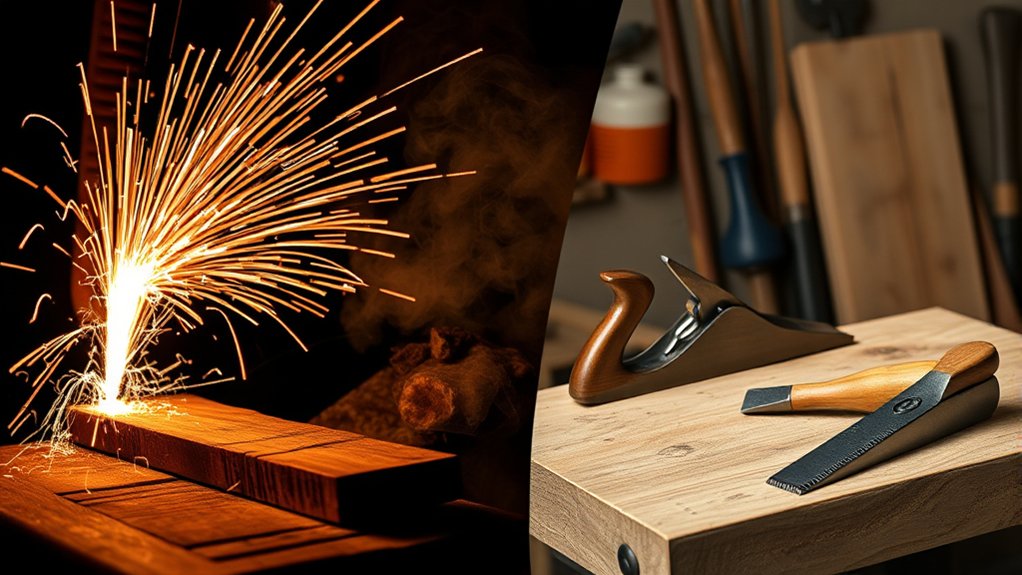
Good woodworking starts with the cut you need, not the most powerful tool in the shop.
- Circular saw: Best for portable straight cuts in boards, plywood, and panels. Use a guide or track when the edge must be precise.
- Jigsaw: Best for curves, sink cutouts, notches, and interior openings. Choose a blade that matches the material and desired finish.
- Router: Best for edge profiles, grooves, mortises, flush trimming, and template work.
- Band saw: Best for flowing curves, resawing boards, and cuts in thicker stock.
- Table saw: Best for repeatable rip cuts and dimensioning sheet goods when the machine is properly guarded and the stock is supported.
- Scroll saw: Best for small, intricate shapes and tight inside curves.
- CNC router: Best for repeated shapes, signs, joinery, and digital patterns.
Sharp, undamaged tooling cuts more cleanly and is easier to control. Keep guards in place, clamp or support the stock, and connect dust collection where the tool provides it. OSHA notes that correct equipment, working guards, sharp blades, and suitable anti-kickback controls reduce woodworking hazards.
Products Worth Considering

Featuring a 10-inch diameter (254 mm), a 5/8-inch arbor (15.88 mm) and a rating of up to 6000 RPM
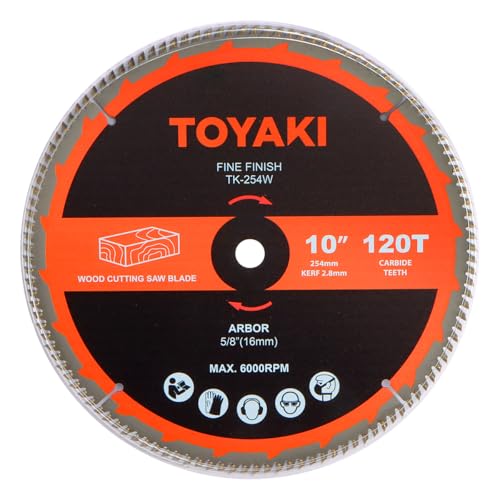
WOOD CUTTING: This miter saw blade designed for cutting wood and soft materials

An Idea Gift for Woodworker, Carpenter and Craft Man
Comparing Plasma Cutting to Other Cutting Methods
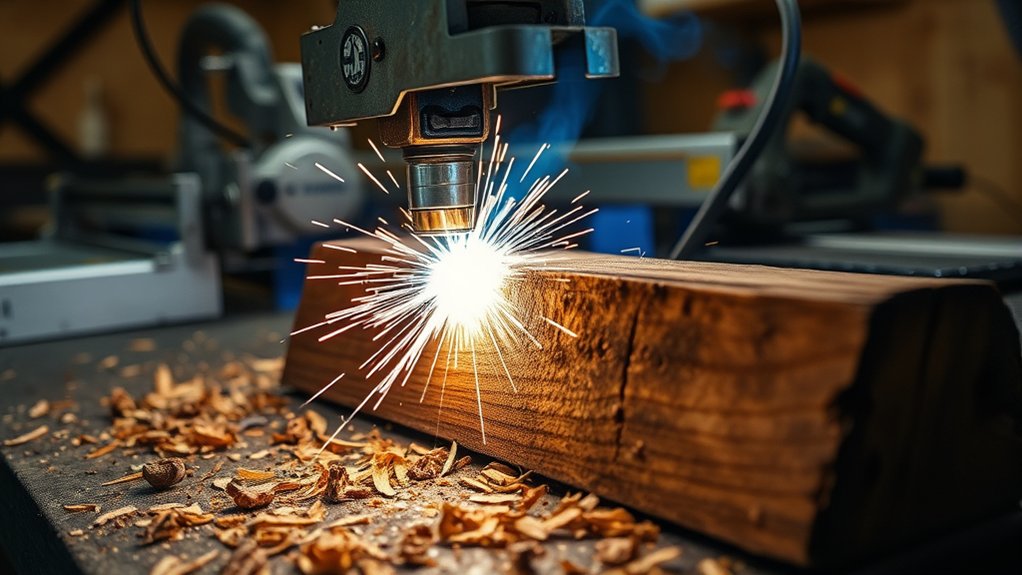
Plasma, saws, routers, and lasers remove material in different ways. The best method is the one designed for the workpiece and the required finish.
| Cutting Method | How It Works | Best Material | Wood Suitability |
|---|---|---|---|
| Plasma cutter | Electrical arc melts and ejects conductive material | Conductive metal | Not suitable |
| Circular or table saw | Teeth sever wood fibers | Boards and sheet goods | Excellent for straight cuts |
| Jigsaw or band saw | Narrow blade follows curved paths | Wood and suitable sheet material | Good for curves and cutouts |
| Router or CNC router | Rotating bit removes chips | Wood and approved composites | Excellent for profiles and repeatable shapes |
| CO2 laser | Focused light thermally removes material | Thin, manufacturer-approved wood | Good for detail with exhaust and fire controls |
Precision and Efficiency
Plasma can be fast and precise on the metal thicknesses a machine is rated to cut. That advantage does not transfer to wood. Saws remove wood quickly, routers control edge and pocket geometry, and CNC systems repeat digital shapes. A CO2 laser can produce fine detail in approved thin wood but may leave a darkened edge.
Material Compatibility Challenges
Wood varies by species, moisture, grain, resin content, density, glue, finish, and hidden hardware. Woodworking blades and bits are available for those variables. A plasma cutter has no setting that changes the basic need for an electrically conductive workpiece.
Safety and Environmental Concerns
Every cutting method has hazards. Saws and routers create chips, dust, noise, and kickback risks. Lasers create heat and smoke. Plasma creates intense light, electric shock risk, fumes, sparks, and molten metal. The difference is that wood tools can manage wood predictably when used as directed, while a plasma cutter adds hazards without providing a useful cut.
OSHA warns that airborne wood dust can cause allergic and other respiratory effects. Use source capture or dust extraction, avoid sweeping fine dust into the air, and wear suitable eye, hearing, and respiratory protection as required by the tool, material, and exposure.
The Importance of Choosing the Right Tool for the Job
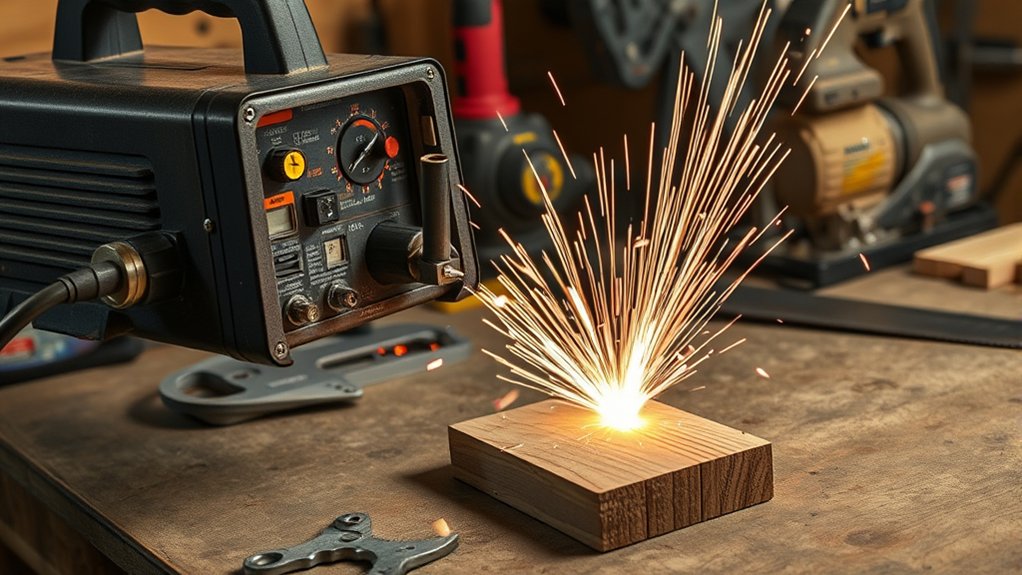
The right cutting tool depends on the material, cut geometry, thickness, required finish, and workspace controls. Plasma cutters fit conductive metals. Wood needs blades, bits, or a laser system approved for the exact material.
Before cutting, ask:
- Is the tool rated for this material and thickness?
- Is the blade, bit, consumable, or laser setting correct?
- Can the setup control kickback, sparks, heat, dust, smoke, and fumes?
- Is the stock supported and secured without placing hands in the cutting path?
- Does the method produce the edge quality and tolerance the project needs?
Tool-Material Compatibility
Compatibility is more than whether a tool can leave a mark. A useful cutting process must remove material in a controlled way, maintain a predictable path, and keep its hazards within the machine’s intended controls. A plasma torch fails those tests on wood.
- Safety: Using the rated tool avoids unnecessary fire and electrical hazards.
- Efficiency: Woodworking tools remove fibers or chips instead of trying to burn through the stock.
- Cut quality: The correct blade, bit, or laser setup gives a cleaner edge with less waste.
- Tool life: Proper use reduces damaged consumables, overloaded motors, and avoidable repairs.
Optimal Cutting Methods
A straight rip cut needs a different setup from a tight curve, an inside opening, a decorative profile, or a repeated CNC part. Choose the process by the cut:
| Tool | Best Use |
|---|---|
| Circular, track, or table saw | Straight cuts and sheet breakdown |
| Jigsaw, scroll saw, or band saw | Curves, notches, and intricate shapes |
| Router | Edges, grooves, joinery, and templates |
| CNC router | Repeatable digital shapes and pockets |
| CO2 laser cutter | Fine detail in approved thin wood |
| Plasma cutter | Conductive metal cutting and gouging |
What to Use Instead of a Plasma Cutter for Common Wood Cuts
Use this quick match when choosing a woodworking tool:
- Long straight cut in plywood: Track saw or circular saw with a guide.
- Repeatable rip cuts: Table saw with the correct guard, fence, and kickback controls.
- Curved line: Jigsaw for portable work or a band saw for smoother shop cuts.
- Inside cutout: Drill a starter hole and use a jigsaw, or use a CNC router.
- Decorative edge or groove: Router with the correct bit and feed direction.
- Very intricate small pattern: Scroll saw or an approved CO2 laser setup.
- Repeated shaped parts: CNC router with secure hold-downs and dust extraction.
- Thick stock resawing: Band saw sized for the workpiece.
You do not need one tool that cuts everything. You need a process that matches the material and the specific cut.
Final Thoughts on Plasma Cutting and Woodworking
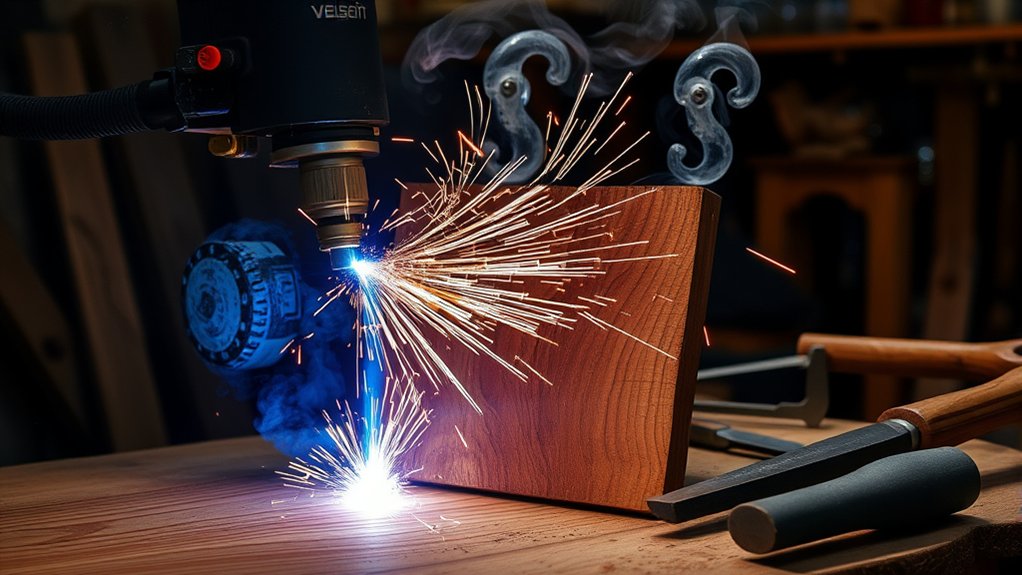
A standard plasma cutter belongs in metalworking, not woodworking. Its transferred arc needs a conductive workpiece, and its intense heat turns wood into a fire and smoke source rather than a predictable cutting medium.
Use a saw for straight or curved cuts, a router for edges and grooves, a CNC router for repeated digital shapes, or a properly exhausted CO2 laser for approved thin wood. The right tool gives you better control, a cleaner edge, less waste, and a safer shop.
Frequently Asked Questions
Can Plasma Cutters Be Modified to Safely Cut Wood?
No practical attachment or setting turns a standard transferred-arc plasma cutter into a safe woodworking tool. The limitation comes from the process: the main arc needs a conductive workpiece, while wood chars and burns. Specialized industrial non-transferred plasma equipment is a different technology and is not a substitute for a saw or router.
Are There Any Types of Wood That Can Withstand Plasma Cutting?
No common hardwood, softwood, plywood, MDF, or laminated panel is a suitable workpiece for a standard plasma cutter. Density and moisture may change how quickly the surface chars, but they do not provide the stable electrical path or controlled melting action the process needs.
How Does Plasma Cutting Wood Affect Indoor Air Quality?
It can release smoke, soot, fine particles, and irritating decomposition products. Adhesives, paint, stain, laminate, resin, or wood preservatives can add unknown or hazardous emissions. Do not attempt the process indoors, and do not treat outdoor use as safe.
Can a Pilot-Arc Plasma Cutter Burn Through Wood?
It may scorch or burn the surface, especially if the arc finds nearby metal, but that is not a controlled cut. A pilot arc helps start plasma cutting on conductive metal; it does not make wood compatible with the process.
Can You Cut Plywood or MDF With a Plasma Cutter?
No. Plywood and MDF are nonconductive and contain adhesives or resins that can create heavy, unpleasant, or hazardous smoke when overheated. Use a saw, router, CNC router, or a laser system that specifically approves the exact panel product.
Can a Plasma Cutter Cut Plastic, Glass, or Other Nonconductive Materials?
A standard transferred-arc plasma cutter is intended for conductive workpieces, so plastic, glass, masonry, and ordinary wood are not suitable. Use a process rated for the material, such as a saw, abrasive system, waterjet, router, or appropriate laser.
Sources
- Hypertherm — Plasma Cutting vs. Laser Cutting — explains transferred-arc plasma cutting and conductive workpieces.
- USDA Forest Products Laboratory — Electrical Conductivity of Southern Pine — explains how wood conductivity depends strongly on moisture content.
- Hypertherm — Plasma Cutting Safety — covers work-clamp contact, flammable clearance, ventilation, and protective equipment.
- OSHA — Wood Dust — covers respiratory and combustible-dust concerns.
- OSHA — Woodworking Kickback Hazards — supports correct-tool, guarding, maintenance, and anti-kickback guidance.
- Epilog Laser — Exhaust and Air-Assist Requirements — supports ventilation and flare-up controls for laser cutting.