Choosing the wrong metal thickness can turn a clean plasma cut into a rough edge, warped sheet, or stalled arc. Your plasma cutter’s amperage, duty cycle, consumables, and gas setup all affect what thickness it can cut well. This guide explains the best thickness ranges for thin sheet, medium plate, and heavy-duty cutting so you can match your machine to the job.
Quick Answer
The best thickness for plasma cutting depends on your machine. Thin sheet from 0.5 mm to 6 mm works well with fine-cut consumables and careful speed control. Medium plate from 1/4 inch to 1 inch often needs about 65A to 105A, while thick plate over 1 inch requires industrial power and slower travel speeds.
Key Takeaways
- Match the cutter’s rated capacity to the metal you cut most often.
- Use lower amperage, fine-cut consumables, and firm workholding for thin sheet.
- Use 65A to 105A for many medium-thickness mild steel cuts.
- Slow your travel speed as plate thickness increases to keep the arc stable.
- Choose the right process gas and personal protective equipment before you start.
Understanding Plasma Cutting and Metal Thickness
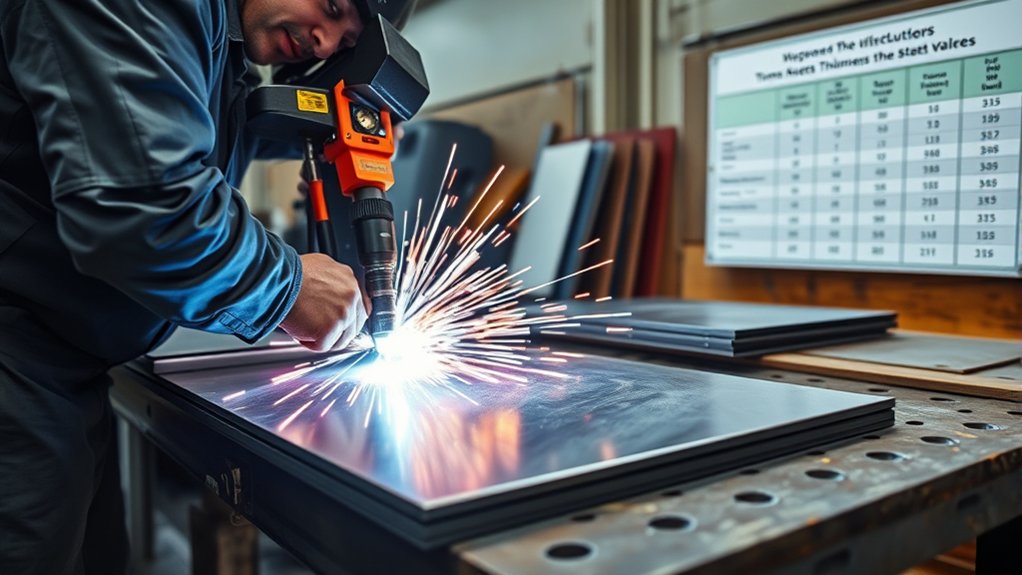
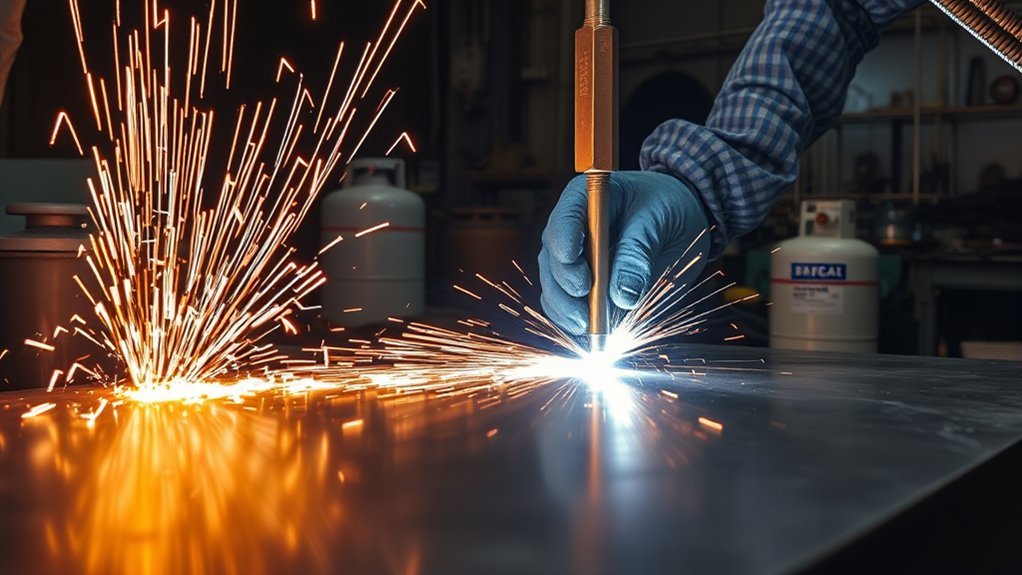
Plasma cutting uses an electrical arc and high-speed gas to melt and blow metal from the cut path. Because the process relies on heat and arc energy, metal thickness has a direct effect on speed, edge quality, and machine load.
Entry-level cutters often handle mild steel up to about 12 mm (1/2 inch) for light work. Mid-range machines can cut thicker plate, often up to about 32 mm (1 1/4 inches), depending on the model and cut-quality rating.
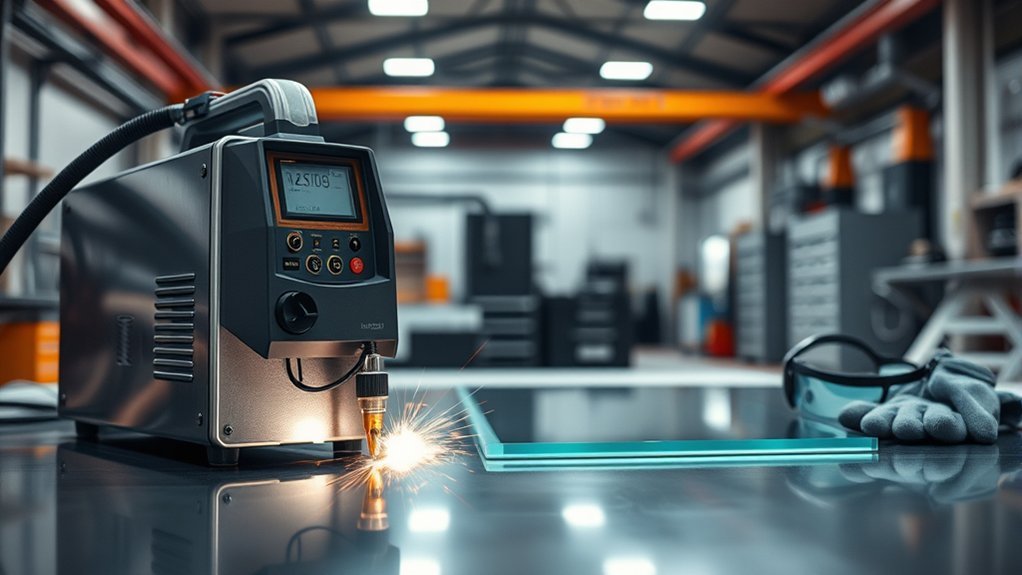
Entry-level plasma cutters can handle light-gauge steel, while larger shop machines cut thicker plate with better speed and consistency.
Industrial plasma systems can cut steel plate around 50 mm to 60 mm (2 to 2.4 inches) when they have enough amperage and the right gas setup. For best results, choose a cutter rated for the thickness you cut every week, not only the thickest plate it can sever.
Optimal Thickness for Thin Metal Sheets
Thin sheet metal needs careful control because heat can warp the sheet before the cut finishes. For many shop jobs, plasma cutting works best on thin sheet from about 0.5 mm to 6 mm.
Fine-cut consumables help create a narrow kerf and a tighter arc. That setup improves detail work and reduces extra heat near the cut line.
Secure the sheet before cutting, keep the torch height steady, and avoid moving too slowly. Cutting speeds between 50 and 100 inches per minute (IPM) often work well for thin material, but your machine chart should guide the final setting.
Products Worth Considering

APPLICATION: Consumables for IPT40 plasma cutting torch (CUT-55DS Pro/CUT-55NHF/CUT-55DS NHF PLUS/CUT-60DS PRO/CUT-65DS PRO/CUT-65DS PLUS plasma cutters).

[Achieve Precise Cuts] PT31 Plasma Cutting Consumables – Your Essential Tool for Efficient Cutting! Whether you're working with sheet metal, steel, or any other material, superior cutting performance ensure clean, accurate, and smooth cuts.

Wide Compatibility: Compatible with CUT60, CUT60SP, CUT50DP, CUT50PI, LGK-60, LTP 5000, CUT-55DS plasma cutting machines.
Precision Cutting Challenges
Thin metal moves, heats up, and distorts fast. You need to control heat input and torch movement to keep the edge clean.
- Choose the right thickness: Stay near 0.5 mm to 6 mm when you need fine detail and low distortion.
- Use fine-cut consumables: A smaller kerf helps you make cleaner cuts on light-gauge sheet.
- Set the right speed: Move fast enough to limit heat buildup, but not so fast that the arc trails behind.
- Adjust amperage: Use lower amperage on thin sheet to reduce burn-through and edge melt.
Pro tip: Make a short test cut on scrap from the same sheet before cutting the finished part.
Proper Equipment Selection
Select your plasma cutter by rated cut capacity, duty cycle, and consumable support. A small handheld unit works for short, light-gauge jobs, while a larger shop cutter suits longer cuts and heavier use.
For material between 1/16 inch (1.6 mm) and 1/4 inch (6.35 mm), fine-cut consumables can reduce the kerf and improve accuracy. Clamp or weight the sheet so it doesn’t lift, flutter, or bow during the cut.
Set amperage to match the material thickness, then tune travel speed for edge quality. If the cut shows heavy dross, rough bevel, or too much heat tint, adjust one setting at a time.
Recommended Thickness for Medium-Thickness Metals
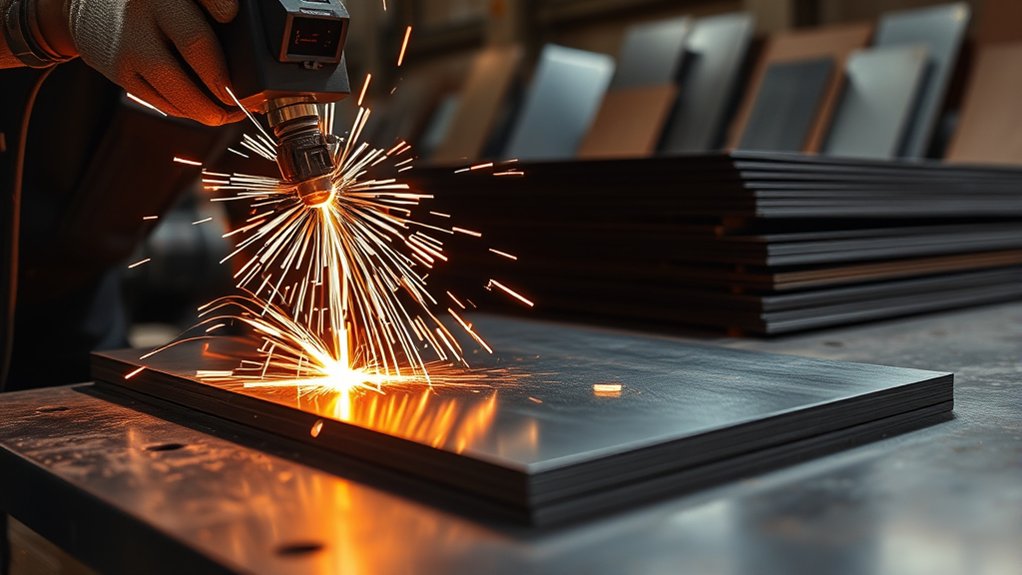
Medium-thickness metal often ranges from 1/8 inch to 1 inch. This range covers many brackets, frames, repair plates, and fabrication parts.
As thickness increases, you need more amperage and slower travel speed. Mild steel, stainless steel, and aluminum also behave differently, so the same setting won’t suit every metal.
Optimal Power Output
For many medium-thickness cuts, a power range of about 65A to 105A gives you a practical balance of speed and cut quality. Thinner material in this range may cut well around 65A to 85A, while 1-inch mild steel often needs a stronger machine.
Duty cycle matters when you cut long parts or repeat the same cut all day. A higher duty cycle lets the cutter run longer before it needs cooling time.
- Check the duty cycle: Choose enough duty cycle for the length and frequency of your cuts.
- Balance speed and quality: Higher amperage can cut faster, but poor setup still causes rough edges.
- Keep amperage steady: Consistent output helps the arc stay stable through the plate.
- Plan for uptime: Production work needs a machine built for long cutting sessions.
Cutting Speed Considerations
Cutting speed has a major effect on edge quality. Move too fast, and the arc may lag behind the torch. Move too slowly, and the cut can collect dross and heat.
On 1/4-inch mild steel, many higher-output cutters can move quickly, sometimes near 200 IPM under ideal conditions. At 1 inch, travel speed drops sharply, and some machines cut near 20 IPM.
Use your cutter’s chart as the starting point. Then inspect the edge, bevel angle, and underside dross to fine-tune the speed.
Material Type Impact
The metal type changes how much heat you need and which gas works best. Mild steel, stainless steel, and aluminum all react differently to plasma cutting.
- Mild steel: Use about 65A to 85A for many 1/2-inch to 3/4-inch cuts, and more power for 1-inch plate.
- Stainless steel: Use enough amperage to keep the cut moving and reduce heat damage near the edge.
- Aluminum: Expect a softer metal that still needs enough power to clear molten material from the kerf.
- Process gas: Oxygen often works well on mild steel, while nitrogen can improve results on stainless steel and aluminum.
Best Thickness for Cutting Thick Metal Plates
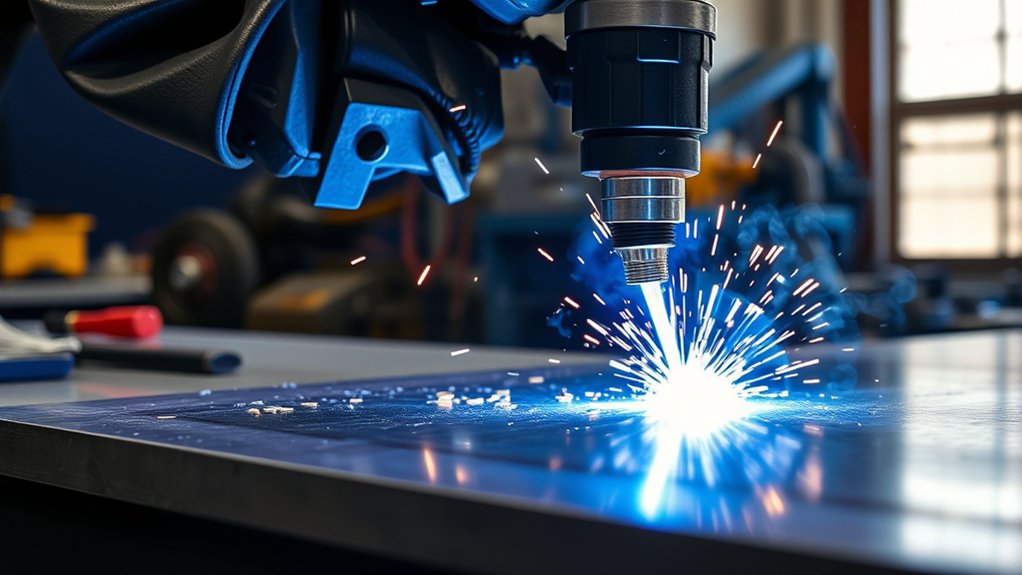
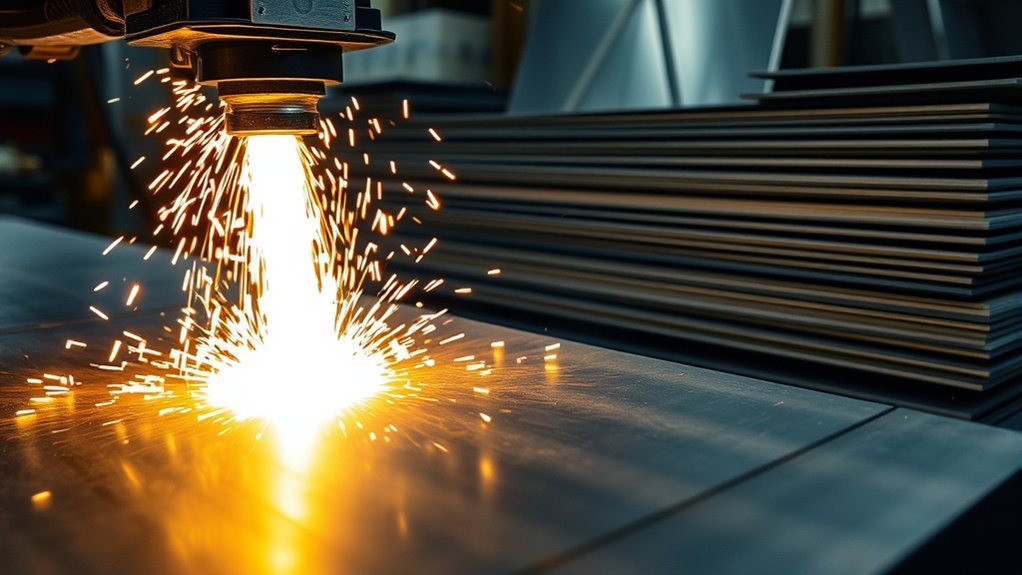
Thick plate usually starts around 1 inch and can extend beyond 2 inches on industrial systems. At this thickness, your machine’s rated pierce capacity matters as much as its maximum severance capacity.
A high-output industrial system can cut heavy plate with enough amperage, gas flow, and torch cooling. For example, a 200A class plasma cutter may cut around 2-inch steel at slow travel speeds when the setup matches the material.
Portable high-amperage machines can handle heavy plate too, but they may need three-phase power and slower travel. Always check input power, duty cycle, pierce rating, and recommended gas before you plan the cut.
For stainless steel and aluminum, an argon-hydrogen mixture can improve cut quality on thick sections when the machine supports it. Typical heavy-plate cutting ranges from about 1 inch to more than 2 inches.
Factors Affecting Cut Quality and Thickness
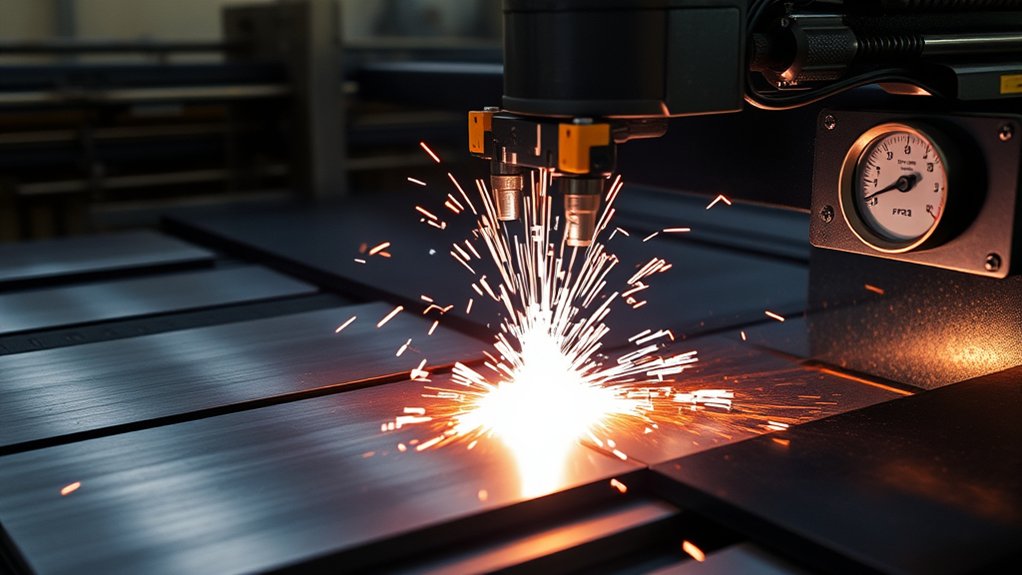
Cut thickness does not depend on amperage alone. Your consumables, torch height, gas type, travel speed, and material condition all affect the final edge.
The machine’s power class sets the upper thickness range, but setup quality controls the cut you actually get.
- Amperage: Higher amperage helps cut thicker material, but it must match the consumables and metal thickness.
- Process gas: Oxygen can produce clean cuts on mild steel, while nitrogen often suits stainless steel and aluminum.
- Torch height control (THC): Stable torch height keeps the kerf more even and helps reduce bevel.
- Cut speed: Correct speed reduces dross, arc lag, and heat damage.
How to Match Plasma Cutter Capacity to Your Work
Start with the metal thickness you cut most often. Then choose a cutter with a recommended cut rating above that thickness, not just a maximum severance rating.
Recommended cut ratings focus on cleaner, practical cutting. Severance ratings describe the thickest material the machine can cut through, often at slower speed and lower edge quality.
Check three specs before you buy or set up a job: recommended cut, pierce capacity, and duty cycle. These numbers tell you more than the maximum thickness claim alone.
Products Worth Considering
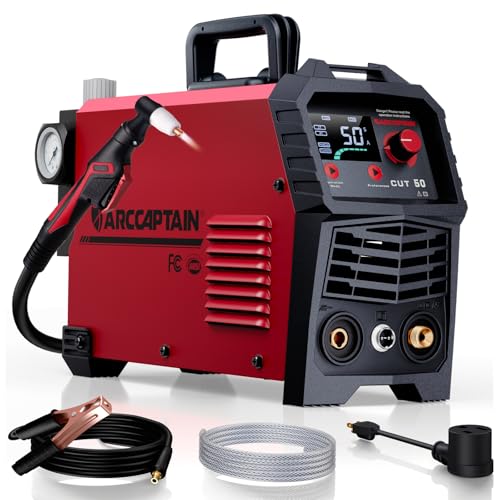
【Powerful Cutting Ability】Switch effortlessly between 110V and 220V for home or workshop use. Achieve professional 1/2" clean cuts on steel, aluminum, and copper with advanced LGBT technology. Perfect for DIY projects and heavy-duty tasks. Recommended maximum cutting thickness: 12mm @ 35A / 110V / 55 PSl; 18mm @ 50A / 220V / 75 PSI. Note: Requires compressed air (compressor sold separately).

fit SG-55 AG-60 WSD-60 Plasma Cutter Torch

Upgrade Double Wheel Spacer Roller Guide: Our double wheel roller guide is specifically designed to fit PT-31 torch / LG-40 torch, ensuring optimal balance during cutting. Experience improved cutting performance with WeldingStop PT31 torch.
Safety Precautions and Equipment Selection for Plasma Cutting
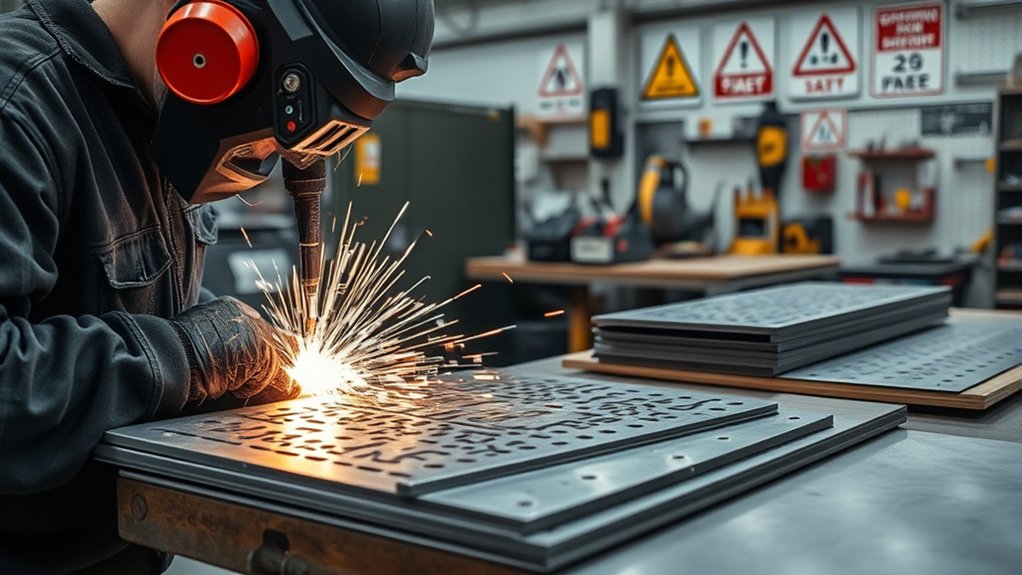
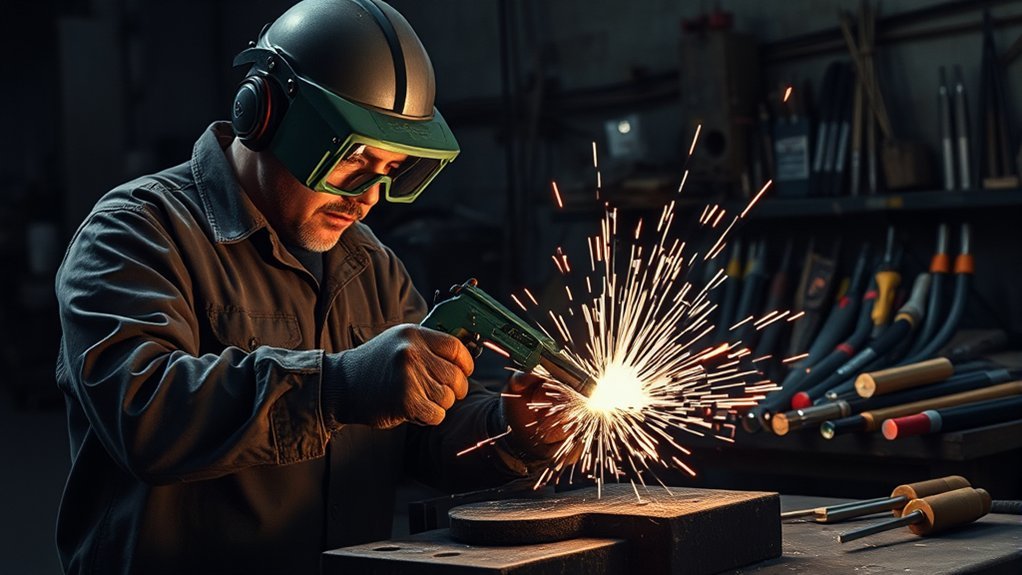
Plasma cutting creates intense light, hot metal, sparks, fumes, and sharp edges. Wear the right personal protective equipment (PPE), including safety glasses or a face shield, welding-rated eye protection, heavy gloves, and sturdy boots.
Choose a plasma cutter that fits the material and work pace. Industrial machines with high amperage and strong duty cycles suit thick plate and long production cuts.
Confirm that your cutter works with your computer numerical control (CNC) table if you use one. Some high-frequency start systems can interfere with sensitive control electronics.
Clamp thin metal before cutting to reduce movement and warping. Handle fresh cuts with care because the metal can stay hot long after the arc stops.
Warning: Never cut painted, coated, galvanized, or unknown metal without proper ventilation and fume control.
Frequently Asked Questions
How Can I Improve Cut Quality on Stainless Steel?
Clean the surface, use the right consumables, and set a speed that keeps the arc stable. Nitrogen can help reduce oxidation and improve edge quality on many stainless steel cuts.
What Role Does Gas Selection Play in Plasma Cutting?
Gas selection affects arc stability, cut speed, edge color, and dross. Oxygen often works well for mild steel, while nitrogen and argon-hydrogen mixes can suit stainless steel or aluminum in the right system.
Are Special Nozzles Required for Different Metal Thicknesses?
Yes, different thicknesses often need different nozzles, electrodes, and amperage settings. Correct consumables help control the plasma arc and protect the torch from excess heat.
Can Plasma Cutting Be Used on Non-Metal Materials?
Plasma cutting works best on electrically conductive materials. Some specialized setups may cut certain conductive composites, but standard plasma cutters don’t work well on wood, glass, plastic, or most non-metal materials.
How Does Plasma Cutting Compare to Other Cutting Methods?
Plasma cutting offers strong speed and value on many conductive metals. Laser cutting can produce finer detail on thinner material, while waterjet cutting can handle more material types without heat distortion.
What Thickness Should a Beginner Start With?
A beginner should start with mild steel around 1/8 inch to 1/4 inch thick. This range gives you enough material to control the arc without the extra heat problems of very thin sheet.
Why Does My Plasma Cut Have Dross on the Bottom?
Dross often comes from the wrong travel speed, worn consumables, poor air quality, or incorrect torch height. Start by checking consumables and air supply, then adjust speed in small steps.
Conclusion
The best plasma cutting thickness is the range your machine can cut cleanly, safely, and repeatedly. Thin sheet needs fine control, medium plate needs enough amperage, and thick plate needs industrial power with slower travel. Before each job, check the cut chart, match the consumables, and test on scrap from the same material. When you tune the setup to the metal, plasma cutting gives you faster cuts and cleaner results.