Yes, you can cut AR500 steel with a plasma cutter, but the safest and cleanest result comes from matching the amperage, consumables, speed, pierce height, and air supply to the plate thickness and your machine’s cut chart. AR500 is heat-treated wear plate, so your goal is a complete cut with the lowest practical heat input and no edge cracking.
Quick Answer
A plasma cutter can cut AR500 steel when its rated capacity covers the plate thickness. Start with the manufacturer’s mild-steel cut chart unless the plate supplier says otherwise, use clean dry air and fresh consumables, keep the torch moving at the charted speed, and use a proper edge start or programmed pierce cycle.
Last updated: July 20, 2026
Key Takeaways
- AR500 is a nominal 500 HBW abrasion-resistant plate, not one universal chemistry or ballistic specification.
- Do not simply turn the amperage to maximum. Select the process and current range that your cut chart assigns to the actual thickness.
- Fast, steady travel helps limit heat input, but excessive speed causes incomplete cuts, bevel, and high-speed dross.
- A manufacturer-approved water table can reduce distortion and overall softening, but it does not guarantee a crack-free or unchanged edge.
- For thick plate, critical parts, or any ballistic application, follow the steel producer’s processing guidance and inspect the cut edge before use.
At a Glance
| Time Required | About 15 to 45 minutes for setup, test cuts, and a small part; production time depends on thickness and cut length. |
| Difficulty | Intermediate for handheld cutting; advanced for thick plate, close-tolerance work, or CNC process development. |
| Tools Needed | Properly sized plasma cutter, matching consumables, clean dry compressed air or specified gas, secure work support, straightedge or CNC table, PPE, ventilation, and fire-control equipment. |
| Cost | Variable. Expect consumable, compressed-air, power, ventilation, and finishing costs; outsourcing may be cheaper for thick or precision-critical parts. |
Understanding AR500 Steel Before You Cut It
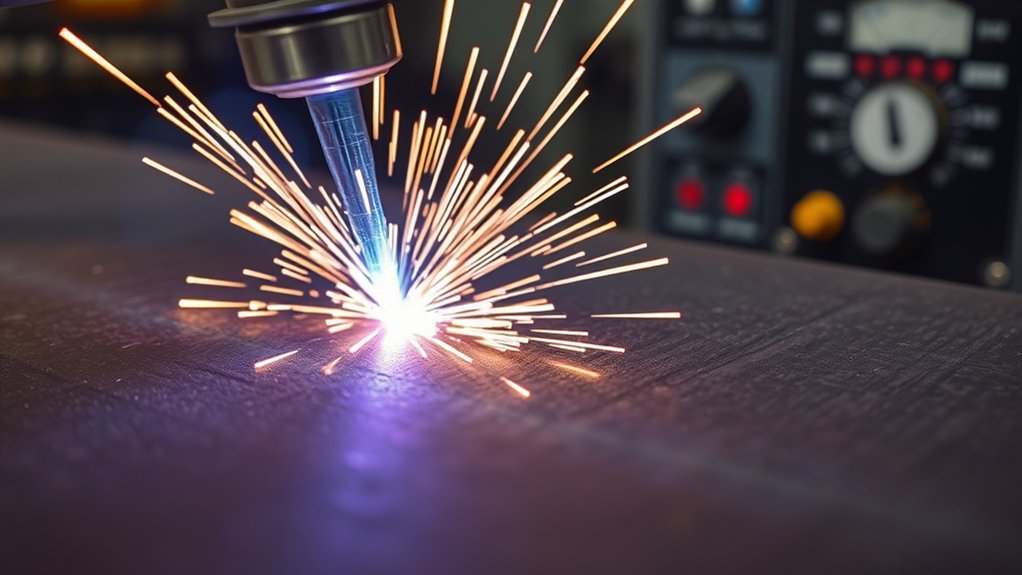
AR500 is quenched-and-tempered abrasion-resistant steel with a nominal hardness near 500 HBW. The exact hardness range and chemistry vary by producer and thickness. For example, Algoma lists 477 to 545 HBW for its AlgoTuf 500 plate, while other mills may publish a slightly different guaranteed range.
AR500 describes a hardness class of wear plate. It does not identify one fixed alloy recipe, and it does not automatically mean the plate is certified for ballistic protection.
Its wear resistance comes from heat treatment and alloying elements that may include carbon, manganese, chromium, molybdenum, nickel, and boron. This structure makes the plate useful for mining equipment, liners, chutes, buckets, heavy machinery, and other high-abrasion service.
The same hardness that improves wear life makes conventional drilling, sawing, and machining harder. Plasma cutting avoids direct tool contact, but it is still a thermal process. The cut creates a narrow heat-affected zone, or HAZ, where hardness and microstructure can differ from the untouched plate.
Note: Check the mill certificate or product data sheet before cutting. If the part will carry a structural load, resist impact, or serve in a ballistic system, use the processing limits for that exact plate grade rather than relying on the generic label “AR500.”
Choose the Right Plasma Cutter and Starting Settings
AR500 does not require a special plasma arc simply because it is hard. SSAB’s current cutting guidance for comparable quenched-and-tempered wear plate states that plasma parameters are generally the same as those used for ordinary mild steel, although thick plate may need extra controls to prevent cut-edge cracking. The practical starting point is therefore your machine’s mild-steel cut chart, followed by a test cut and small adjustments.
Products Worth Considering
![ANDELI 65 Amp Plasma Cutter [CNC Enabled][ Non-HF],1.06" Max Cut](https://m.media-amazon.com/images/I/51HzSS1IgqL._SL500_.jpg)
【Large Digital Display】The upgraded LED interface clearly displays key parameters such as air pressure, voltage, current, and working status in real time, allowing users to monitor machine performance and make timely adjustments for more efficient operation. If an issue occurs, the screen shows an error code to help quickly identify the problem and simplify troubleshooting.

65A HEAVY-DUTY CUTTING POWER: This plasma cutter delivers up to 65A of cutting power, going far beyond typical home-use machines. Effortlessly cuts through carbon steel, stainless steel, aluminum, as well as painted, coated, and rusty metals. Ideal for everything from DIY projects to light industrial work, small fabrication shops, and heavy equipment cutting—one machine that handles it all with power and precision.
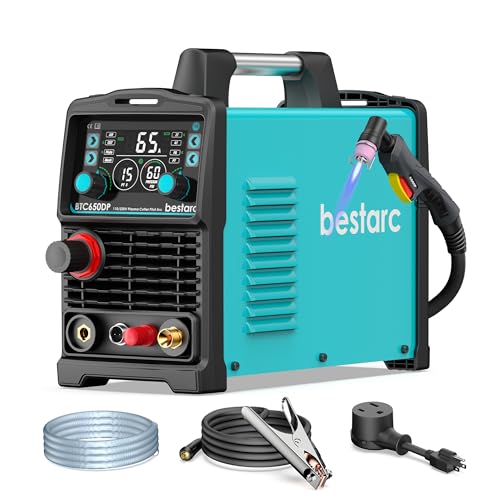
[Powerful Cutting Ability] Dual voltage 110/220V good for home, workshop and hardware shop use. Professional performance 5/8” clean cuts on Iron, Steel aluminum and copper with Inverter IGBT Technology. Very powerful for DIY and heavy duty project. The Maximum cutting thickness is recommended to 16mm@40A 110V 50PSI; 25mm@65A 220V 65PSI. Dry and compressed air is required. Power breaker up to 60A@110V 35A; Up to 40A@220V 50A.
Do Not Default to Maximum Amperage
Higher current supports thicker plate and faster production, but maximum amperage is not automatically the cleanest setting. Use the amperage range assigned to the thickness and consumable set. Too little current can leave an incomplete cut. Too much current for the nozzle or thickness can widen the kerf, increase bevel, shorten consumable life, and add unnecessary heat.
The table below is a class-selection guide based on common professional air-plasma systems. It is not a universal recipe, and it does not replace your manual.
| AR500 Thickness | Air-Plasma Class to Check First | Practical Guidance |
|---|---|---|
| 1/4 in. (6 mm) | 45 A class | Usually within the quality range of a properly maintained 45 A professional system. |
| 3/8 in. (10 mm) | 45 to 65 A class | A 65 A process usually provides more speed; some 45 A systems can make a slower quality cut. |
| 1/2 in. (12 mm) | 65 A class | Use the charted pierce height and delay. A 45 A process may be slow or near its practical limit. |
| 3/4 in. (20 mm) | 85 A class | Edge starting may be easier on smaller systems. Confirm the machine’s recommended and maximum capacities. |
| 1 in. (25 mm) | 105 A class or larger | Use a system rated for quality cutting at this thickness, not merely a severance rating. |
Hypertherm’s Powermax SYNC reference chart illustrates why thickness, current, and consumable choice must be matched. The manufacturer’s complete cut chart then supplies the exact speed, cut height, pierce height, delay, gas pressure or flow, and voltage for that process.
Recommended Cut Capacity vs. Severance Capacity
Choose a cutter by its recommended or quality-cut capacity. Severance capacity only means the machine can separate the plate under limited conditions. It usually produces a slower, rougher, more beveled edge and may require an edge start. For repeat work, use a machine with reserve capacity rather than operating at its severance limit.
Prepare the Plate and Work Area
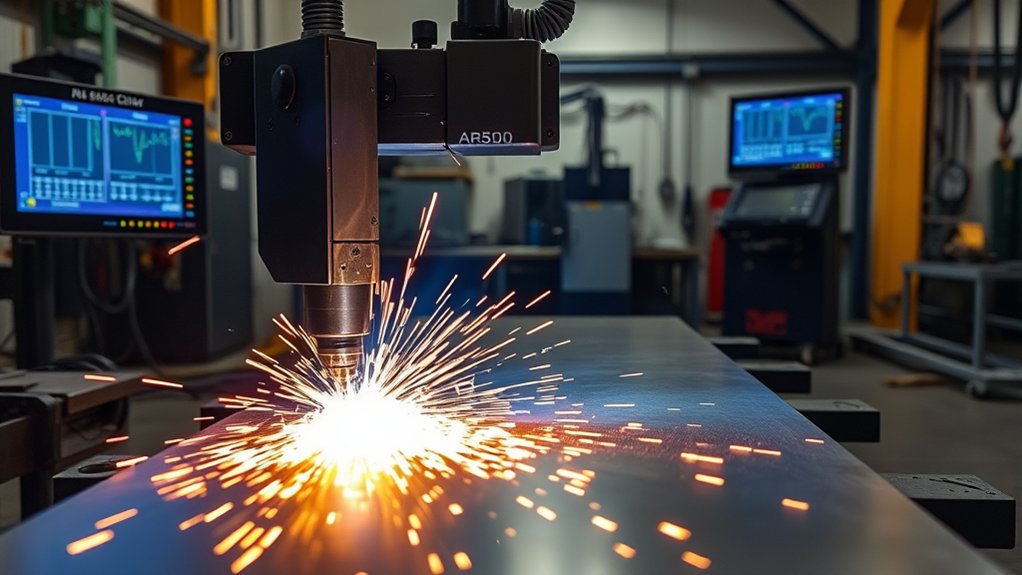
- Confirm the grade and thickness. Read the mill certificate or data sheet and measure the plate. Do not set the machine from a guess.
- Remove coatings and heavy contamination. Clean rust scale, oil, paint, galvanizing, and other coatings from the cut path and ground-clamp area. Coatings can create hazardous fumes and an unstable electrical connection.
- Support the plate securely. Leave a clear path below the cut so the arc and molten metal cannot strike a bench, cylinder, cord, or combustible material.
- Connect the work lead to clean metal. Place it on the plate or cutting table as the machine manufacturer directs. A poor connection can cause transfer problems and erratic cutting.
- Prepare clean, dry air. Drain the compressor and filters. Verify the required pressure and flow while air is moving, not only at static pressure.
- Install the correct consumables. Match the nozzle or cartridge to the selected current. Replace worn, damaged, or incorrectly assembled parts.
- Mark the kerf side. Leave allowance for the material removed by the arc, especially on holes and close-tolerance parts.
Pro Tip: Make a short test cut in a scrap corner from the same plate. Check penetration, spark direction, bevel, and dross before cutting the finished part.
How to Plasma Cut AR500 Steel
1. Load the Cut-Chart Process
Select mild steel, the measured thickness, the correct consumable, and the charted current. Set or verify the air pressure, cut height, pierce height, pierce delay, voltage, and travel speed that apply to your exact torch and consumable set. These values are a matched system, so changing one can affect the others.
2. Square the Torch and Set the Path
For CNC cutting, make the torch perpendicular to the plate in both directions and confirm that the height-control system works. For handheld cutting, use a straightedge, circle guide, or drag shield only when the torch manual allows it. A tilted torch produces a matching bevel.
3. Use an Edge Start When Practical
Starting at the plate edge reduces blowback into the nozzle and is easier on consumables, especially near the machine’s piercing limit. Position the torch as the manual shows, start the arc at the edge, wait for full penetration, and then move onto the programmed or marked path.
4. Pierce Correctly When an Internal Start Is Required
Do not use a universal “double the cut height” rule. Pierce height and delay are machine-specific. One professional 45 A chart, for example, uses an initial pierce height of 250% of cut height for several thicknesses, while thicker material requires an edge start. Use the value in your own chart.
On a CNC table, keep the torch square and use a lead-in that places the pierce crater in scrap. On a handheld unit, use the manufacturer’s approved roll-in or angled-pierce method only if the manual permits it. Never hold a mechanized torch at an improvised angle.
5. Maintain a Steady Travel Speed
Once the arc penetrates, move smoothly without stopping in corners. The sparks should pass through the plate and trail slightly behind the torch. If they spray back toward the operator or fail to exit the bottom, the travel speed may be too high, the current may be too low, the standoff may be wrong, or the air supply may be inadequate.
Do not slow down merely because the plate is hard. Excessive dwell increases heat input, widens the HAZ, rounds the top edge, and produces low-speed dross. However, speed must remain low enough for complete penetration.
6. Finish the Cut and Let the Arc Exit Cleanly
Continue past the end of an open cut or use a programmed lead-out when appropriate. On closed contours, avoid a long pause where the arc meets the starting point. Let the part cool in a controlled area, then remove loose dross without overheating the edge.
Manage the Heat-Affected Zone and Edge Quality
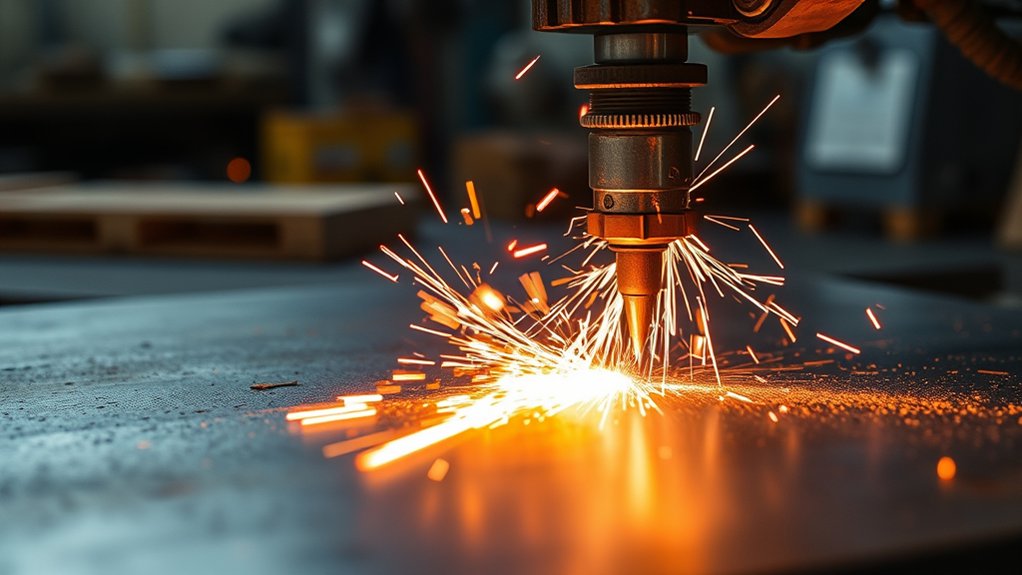
Thermal cutting can create both a softened region and a locally re-hardened region near the cut edge, depending on plate chemistry, thickness, heat input, and cooling rate. That is why “keep it fast” is only part of the answer. You also need full penetration, correct torch height, and the plate producer’s cracking controls.
SSAB’s 2025 cutting recommendations report a typical plasma HAZ of roughly 2 to 5 mm for comparable wear plate and explain that thick plate cut with oxygen plasma may require preheating or postheating to reduce cut-edge cracking. The exact requirement depends on grade, thickness, part size, ambient conditions, and cutting method.
Using a Water Table
A properly designed water table or approved submerged-cutting setup can reduce distortion, noise, fumes, and overall heat accumulation. It is especially useful when many small parts are nested closely. However, water does not erase the HAZ. SSAB notes that a softened zone can still remain close to the cut edge, even with submerged cutting.
Warning: Use water only with a table and plasma system approved for that setup. Keep power connections dry, follow the equipment manual, and do not improvise partial submersion around an unsuitable handheld system. Thick crack-sensitive plate may need a validated postheat procedure instead of rapid cooling alone.
Inspect the Cut Edge Before the Part Goes Into Service
- Look for incomplete penetration, excessive bevel, gouges, pierce craters, and heavy dross.
- Inspect thick or highly restrained parts for edge cracks, especially near sharp internal corners and pierce points.
- For fatigue-critical, structural, or ballistic parts, use the inspection and edge-removal requirements specified by the designer or steel producer.
- If a precision hole matters, plasma-cut it undersize only when the procedure allows, then machine or ream it to final size.
Troubleshooting AR500 Plasma Cuts
| Problem | Likely Causes | What to Check |
|---|---|---|
| Arc does not cut through | Travel too fast, low current, wrong consumables, low airflow, excessive standoff, machine at severance limit | Return to the cut chart, verify dynamic air pressure, inspect the nozzle, and use an edge start if required. |
| Heavy dross that chips off easily | Travel too slow or current too high for the selected process | Increase speed in small steps while maintaining full penetration. |
| Hard, narrow dross attached to the bottom | Travel too fast, worn nozzle, or incorrect torch height | Reduce speed slightly and confirm consumable condition and standoff. |
| Excessive bevel | Torch not square, wrong cut direction, incorrect height, worn nozzle, unstable motion | Square the torch, check the good side of the arc, service the motion system, and replace worn consumables. |
| Consumables fail quickly | Piercing too low, incorrect delay, moisture or oil in air, wrong current, double-arcing | Use the charted pierce cycle, improve air treatment, and confirm all parts match the amperage. |
| Cracks near the cut edge | Crack-sensitive grade or thickness, excessive restraint, unsuitable cooling, missing preheat or postheat | Stop using the part until the steel producer’s thermal-cutting procedure and inspection requirements are reviewed. |
Hypertherm’s cut-quality guide also recommends checking cut direction, process selection, gas flow, torch squareness, torch-to-work distance, table motion, and consumable wear rather than adjusting speed alone.
Safety and Equipment Considerations
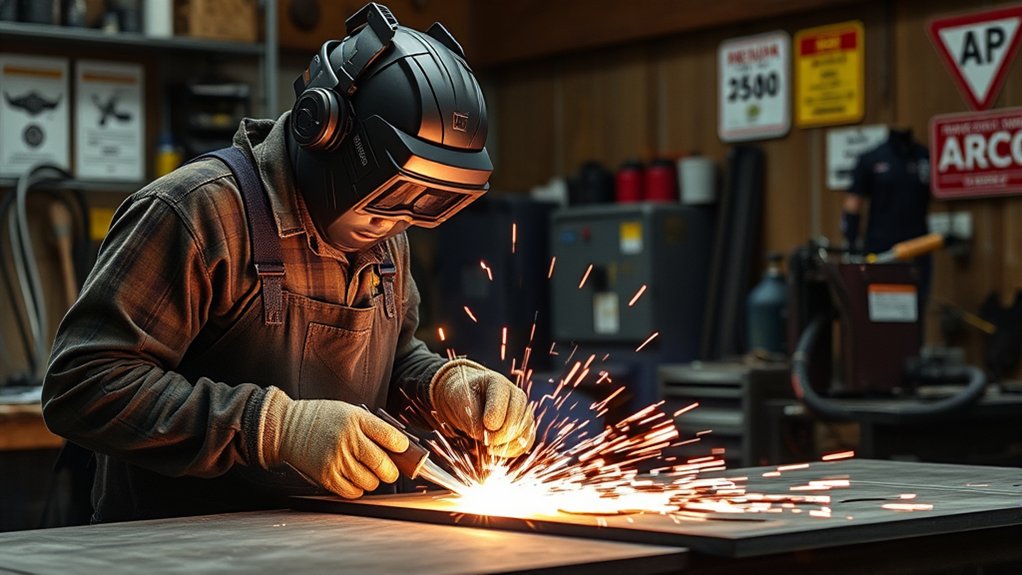
Plasma cutting exposes you to electric shock, intense visible and ultraviolet radiation, molten metal, sharp plate, noise, fire, compressed air, and airborne metal fume. A dark face shield alone is not a complete PPE system.
- Eye and face protection: Wear safety glasses with side protection under a plasma-cutting shield or helmet. Use the filter shade required by the machine manual and applicable rules. OSHA lists shade 8 as the minimum for light plasma arc cutting below 300 A, while equipment makers may recommend a darker shade for comfort.
- Skin and hearing protection: Wear flame-resistant clothing, leather welding gloves, closed footwear, and suitable hearing protection.
- Ventilation: Use local exhaust close to the cut whenever practical. General airflow alone may not keep fume out of your breathing zone. Follow a respiratory-protection program if engineering controls cannot control exposure.
- Fire prevention: Remove combustibles, protect openings below the plate, keep an appropriate extinguisher nearby, and use a fire watch when conditions require one.
- Electrical safety: Inspect the torch lead, work lead, plug, and power cord. Keep yourself and electrical connections dry, and never service the unit while it is energized.
- Coatings and confined spaces: Do not cut coated, plated, painted, or contaminated steel until the coating and fume hazards have been identified and controlled. Do not plasma-cut in a confined space without a formal confined-space and ventilation plan.
OSHA’s eye and face protection standard covers filter-lens selection, and its welding and cutting fume guidance explains why local exhaust and exposure control matter during plasma cutting.
Warning: Never cut a sealed container, tank, drum, pressurized vessel, or material that may contain an unknown residue. Heat and sparks can ignite vapors or cause an explosion.
Products Worth Considering

EYE & FACE PROTECTION - Jackson Safety’s GPL550 Safety Goggles with a detachable flip-up face shield ensure your safety in the most demanding environments with indirect vents and anti-fog coating

INFARED (IR) PROTECTION - Certified IR 5.0 protection for use in grinding, oxyfuel cutting, plasma cutting and more

Price For: Each Photochromatic Lens: No Includes: Rubber Earpad Series: ArcArmor UV Protection: 99.9% Frame Material: Polycarbonate Lens Material: Polycarbonate Metal Detectable: No Foam Lined: Yes Safety Glasses Frame Style: Full-Frame Item: Welding Safety Glasses Safety Glasses Size: Universal Gender: Unisex Primary Lens Color: Green Standards: ANSI Z87.1
Comparing Plasma Cutting With Other Methods
Plasma is often the practical choice for AR500 because it combines speed, portability, and moderate equipment cost. It is not automatically the best process for every part. Thickness, tolerance, edge-property requirements, quantity, and available equipment should drive the decision.
| Method | Strengths | Limits on AR500 | Best Fit |
|---|---|---|---|
| Plasma | Fast, portable, economical, effective on medium and thick conductive plate | Creates a HAZ and more bevel than precision laser or waterjet | General fabrication, repair, profiles, and production parts with normal edge finishing |
| Abrasive waterjet | Cold process with no thermal HAZ; good for heat-sensitive or property-critical edges | Higher operating cost and often slower cutting; taper and abrasive handling still matter | Precision parts where thermal alteration is unacceptable |
| Fiber laser | Narrow kerf, high accuracy, small HAZ, fast on suitable thicknesses | High capital cost; thickness capability and edge quality depend heavily on laser power and process gas | High-volume precision profiles and small features within machine capacity |
| Oxy-fuel | Can cut very thick carbon steel with relatively simple equipment | Largest heat input and HAZ of these options; greater distortion and more demanding crack control | Very thick plate when plasma or waterjet capacity is unavailable |
| Sawing or machining | No thermal HAZ and good dimensional control with suitable tooling | Slow tool wear can be high; complex profiles are difficult | Straight cuts, finished holes, and close-tolerance features |
Frequently Asked Questions
How does AR500 steel thickness affect plasma-cutting settings?
Thickness determines the required current range, consumable, travel speed, pierce height, and pierce delay. As thickness increases, the correct speed normally falls and the required current rises. Use the quality-cut range and exact values in your machine’s cut chart rather than a generic speed formula.
Can a water table improve plasma-cutting results on AR500 steel?
Yes. An approved water table can reduce distortion, noise, fumes, and heat accumulation in the part. It does not eliminate the heat-affected zone or guarantee that the edge will keep its original hardness. Thick or crack-sensitive plate may still require a producer-approved postheat or another cutting process.
What are the most common mistakes when plasma cutting AR500 steel?
Common mistakes include using maximum amperage without matching consumables, guessing the travel speed, piercing too low, cutting with wet or oily air, using worn nozzles, grounding through rust or scale, pausing in corners, and ignoring the plate producer’s crack-control guidance.
How does consumable quality affect AR500 plasma cuts?
The nozzle and electrode shape the arc. A worn or mismatched nozzle can widen and deflect it, which increases bevel, dross, and cut inconsistency. Use the specified consumable set, install it correctly, and replace damaged parts before developing settings around a bad torch.
Are specific plasma-cutter brands better for AR500 steel?
Brand matters less than verified quality-cut capacity, stable current, available cut charts, torch-height control, duty cycle, air requirements, consumable support, and service. A well-supported professional system used within its rated range will usually outperform a poorly documented machine operated near severance capacity.
Can a 45-amp plasma cutter cut AR500?
A professional 45 A system can commonly make quality cuts in 1/4-inch and 3/8-inch plate and may cut 1/2-inch plate at a slower charted speed. Capability varies by system. Check the recommended capacity, pierce limit, and cut chart, and do not rely only on the advertised severance thickness.
Does plasma cutting ruin AR500 hardness?
It changes hardness in a narrow zone next to the cut, but a correctly controlled plasma process does not ruin the whole plate. Small parts, tightly nested cuts, very thick plate, and slow travel can accumulate more heat. Use the mill’s cutting guidance when edge properties are critical.
Should you preheat AR500 before plasma cutting?
Not routinely. Plasma generally needs less preheat than oxy-fuel cutting. Some thick grades or oxygen-plasma processes may require preheating or postheating to control hydrogen cracking. Follow the exact steel producer’s thickness and temperature limits instead of applying a general preheat temperature.
Conclusion
AR500 steel can be plasma cut cleanly when you treat the machine’s cut chart as the starting point, not a suggestion. Match the current and consumables to the plate thickness, use clean dry air, set the correct cut and pierce heights, and keep a steady speed that maintains full penetration without excessive dwell.
Control heat, but do not assume that maximum amperage, maximum speed, or water cooling will solve every problem. Thick or critical plate may need producer-approved crack controls and inspection. When the edge must remain thermally unchanged, abrasive waterjet or another cold process is the safer choice.
Sources
- Algoma Steel Plate Product Brochure — AR500-class plate hardness, chemistry, thickness range, and applications.
- SSAB Cutting Recommendations for Hardox Wear Plate — plasma cutting, HAZ, softening, cracking controls, and submerged cutting.
- Hypertherm Powermax SYNC Machine-Side Reference — current selection, capacity ranges, cut height, pierce height, and clean-air guidance.
- Hypertherm Plasma Cut Quality Guide — process selection, consumables, torch alignment, speed, and troubleshooting.
- OSHA 29 CFR 1910.133 — eye and face protection and plasma-cutting filter shades.
- OSHA Welding and Cutting Fume Guidance — airborne fume hazards and ventilation controls.