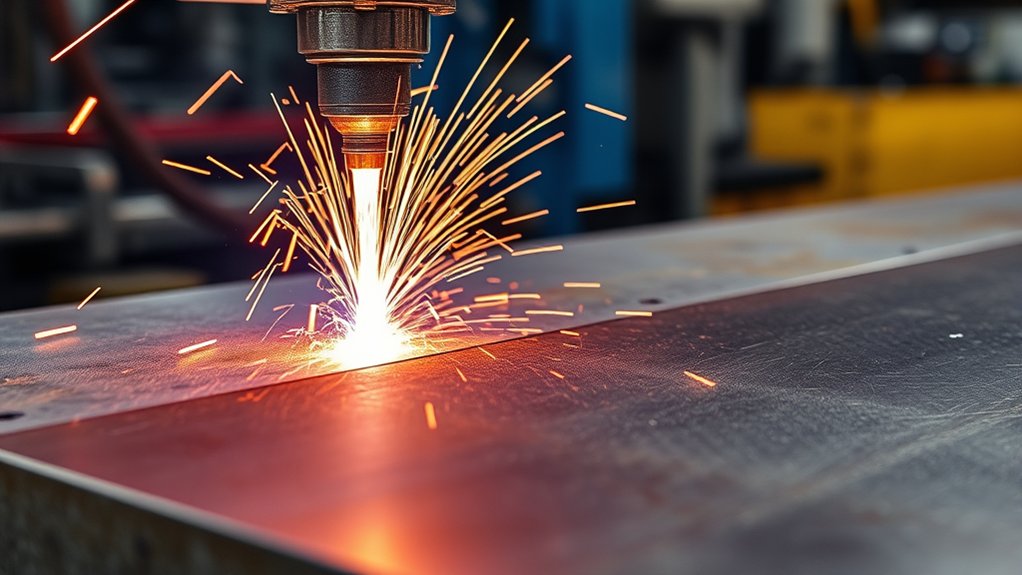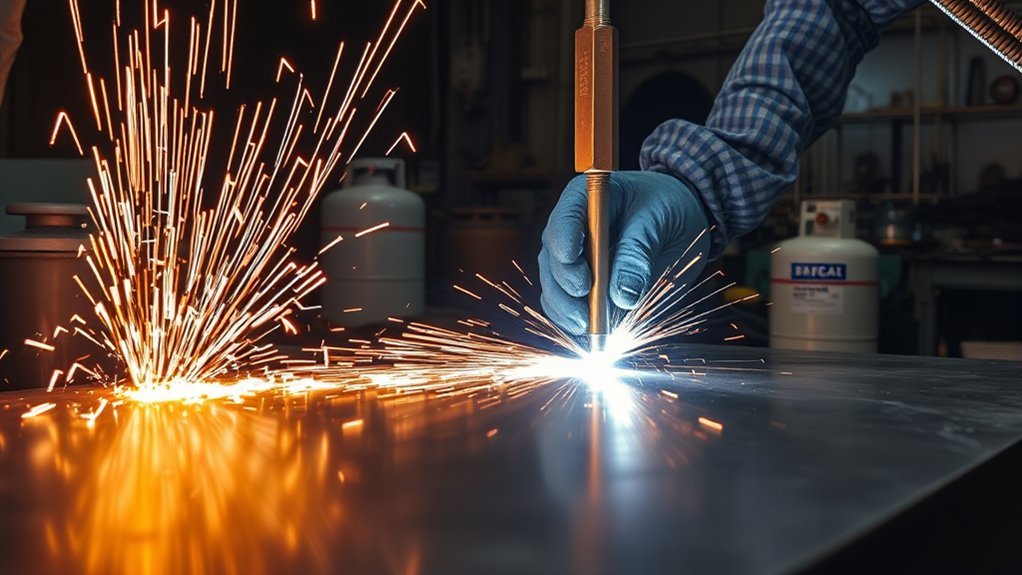
You can use a plasma cutter on painted metal, but whether you should cut it without preparation depends on the coating. Thin, known paint may not stop a pilot-arc machine from starting, yet the coating can still create smoke, interfere with work-clamp contact, hide the cut line, and expose you to hazardous fumes. Identify the coating and control the hot-work hazards before you pull the trigger.
Quick Answer
Yes, a handheld plasma cutter can cut painted conductive metal, especially if it has a pilot arc. However, the coating may hinder arc transfer or torch movement and can release hazardous fumes. Identify the coating first, expose bare metal for the work clamp and cut path when safe, use source-capture ventilation, and follow the machine manual.
Last updated: July 19, 2026
Safety note: This article provides general guidance, not a site-specific exposure assessment. Follow your plasma cutter manual, applicable OSHA rules, local fire codes, coating safety data, and your shop’s hot-work procedures. Stop if the coating is unknown or may contain lead, chromates, cadmium, mercury, or other hazardous materials.
Key Takeaways
- Identify the coating before you grind, sand, wire-brush, or plasma cut it.
- Attach the work clamp to clean, bare metal on the part that will remain after the cut.
- Paint is only one possible cause of poor cut quality; speed, amperage, standoff, air quality, and worn consumables often matter more.
- Use local exhaust at the source when possible. An open door or portable fan is not proof that exposure is controlled.
- Treat plasma cutting as hot work: control combustibles, inspect hidden areas, and never cut an unprepared tank, drum, pipe, or sealed cavity.
At a Glance
| Time Required | Usually 15–30 minutes for inspection, setup, and preparation of a known low-risk coating; much longer if testing or professional hazard control is needed |
| Difficulty | Intermediate; advanced or professional controls may be required for hazardous or unknown coatings |
| Tools Needed | Plasma cutter, work clamp, machine manual, suitable coating-removal tool, local exhaust, straightedge, clean dry air, test piece, fire extinguisher, and task-specific PPE |
| Cost | Low for routine preparation of a known coating; potentially high when testing, specialized ventilation, respiratory protection, or professional abatement is required |
How Plasma Cutting Works on Painted Metal
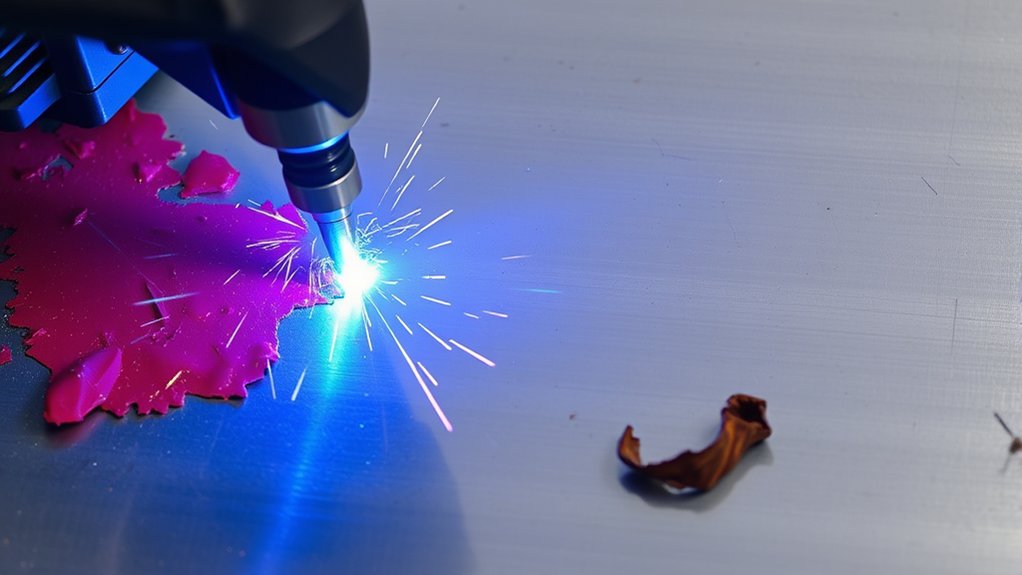
A normal handheld plasma cutter uses a high-velocity jet of ionized gas to melt and remove electrically conductive metal. During cutting, the main arc transfers from the torch to the workpiece and completes a circuit through the work lead.
Many modern cutters also use a pilot arc. The pilot arc can help the torch start on painted, rusty, perforated, or expanded metal. That does not eliminate the need for a reliable work connection. The work clamp still needs good metal-to-metal contact before the cutting arc can operate correctly.
Thin, firmly bonded paint may have little noticeable effect on a capable pilot-arc cutter. Thick paint, powder coat, body filler, rubberized undercoating, scale, or several layers of finish can make starting and torch movement less predictable. The coating can also hide the cut line and create smoke that blocks your view.
Note: The work clamp is sometimes called a “ground clamp,” but it is not the machine’s protective earth ground. It is part of the cutting circuit. Attach it to clean metal on the section of the workpiece that will remain after the cut.
Main Challenges of Cutting Coated or Painted Metal
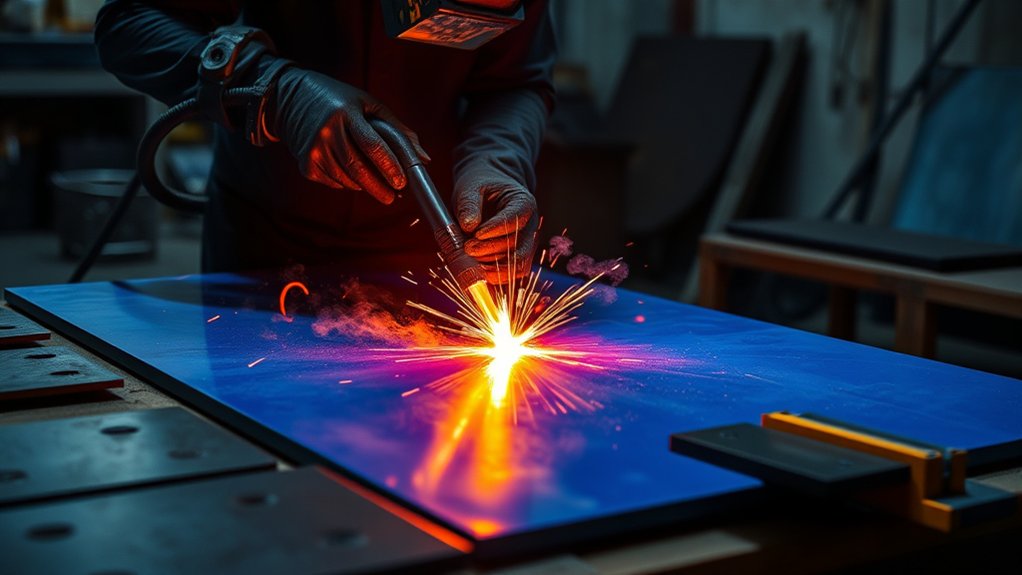
The largest concern is often not whether the arc can get through the paint. It is what happens when the coating is heated, vaporized, or mechanically disturbed.
- Fumes and particles: Paint, primer, plating, and corrosion-resistant coatings can produce a mixture of metal fumes, decomposition products, gases, soot, and fine particles.
- Poor electrical contact: Paint under the work clamp may prevent reliable metal-to-metal contact and cause difficult starting or an arc that drops out.
- Unsteady torch movement: Thick, soft, rough, or peeling coatings can change the torch’s effective standoff or make a drag shield catch on the surface.
- Reduced visibility: Smoke and burning residue can hide the cut line and make it harder to judge torch angle and travel speed.
- Fire risk: Paint chips, rubberized coatings, oil, adhesive, insulation, and hidden material behind the panel may ignite.
- Contaminated cleanup: Grinding dust, soot, slag, and filters may require controlled handling when the coating contains a hazardous substance.
A plasma cutter’s ability to pierce a coating does not prove that the coating is safe to heat or disturb.
How Paint Affects Plasma-Cut Quality
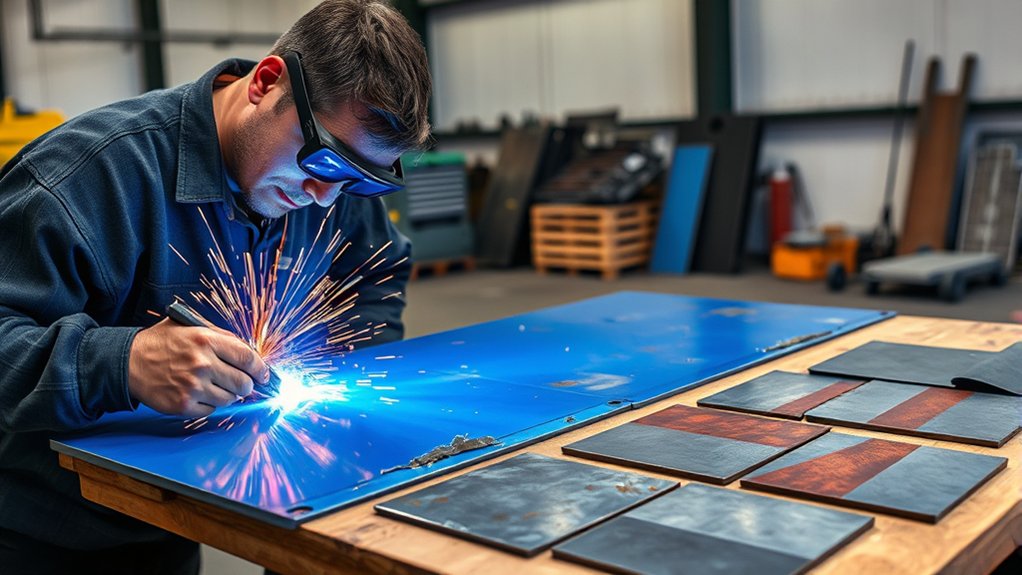
A coating can contribute to rough starting or inconsistent torch movement, but it should not automatically be blamed for every poor cut. According to Hypertherm’s dross troubleshooting guidance, dross formation depends on several variables. Travel speed, amperage, and torch standoff are among the most important.
| Factor | Possible Effect | What to Check |
|---|---|---|
| Thick or uneven coating | Hard starting, uneven drag height, smoke, or poor line visibility | Coating identity, approved removal method, bare work-clamp contact, and torch standoff |
| Travel speed too slow | Wide kerf and heavy, bubbly low-speed dross | Manufacturer cut chart and spark direction |
| Travel speed too fast | Arc lag, bevel, incomplete penetration, or hard high-speed dross | Reduce speed in small steps while staying within the machine’s recommended range |
| Wrong amperage or consumables | Rough edge, wide kerf, unstable cutting, or short consumable life | Nozzle or cartridge rating, material thickness, and cut-chart settings |
| Incorrect standoff or torch angle | Bevel, angularity, top spatter, or inconsistent kerf | Drag-shield instructions, torch height, and a 90-degree torch position |
| Wet, oily, or dirty compressed air | Poor cut quality, difficult starts, and shortened consumable life | Drain separators and inspect filtration, hoses, and air supply |
How Different Coatings Affect Plasma Cutting
| Coating Type | Main Concern | Best Approach |
|---|---|---|
| Thin, known shop paint | Smoke, slight starting difficulty, and residue | Review the coating information, clear the cut path when permitted, use local exhaust, and make a test cut |
| Thick enamel or powder coat | More smoke, uneven torch movement, and coating debris | Use an approved removal method to expose metal along the cut path and clamp point |
| Epoxy or industrial coating | Unknown decomposition products and difficult residue | Review the product label and safety data sheet; obtain a hazard assessment when composition or exposure is uncertain |
| Lead-bearing paint | Toxic lead fumes and dust | Do not cut or dry grind it without a compliant lead-control plan, ventilation, respiratory protection, and cleanup procedure |
| Chromate primer or coating | Potential hexavalent-chromium exposure | Stop and obtain a qualified exposure assessment and task-specific controls |
| Galvanized or zinc-rich coating | Zinc-containing fumes and residue | Use the ventilation and exposure controls required for the work location; avoid treating outdoor work as automatically safe |
| Rubberized undercoat, adhesive, or seam sealer | Dense smoke, fire, hidden burning, and sticky contamination | Remove it using an approved cold method and inspect both sides of the panel before hot work |
| Unknown or multiple old layers | Unidentified toxic, combustible, or metal-containing material | Do not grind or cut until the coating has been identified and controls are established |
Identify the Coating Before You Grind or Cut
Coating identification comes before surface preparation. Do not use color, smell, apparent age, or a small burn test to decide that a finish is safe.
- Check labels and job records: Look for the paint name, primer system, repair history, plating specification, and manufacturer.
- Review the safety data sheet: Check the composition, thermal-decomposition warnings, exposure controls, and prohibited removal methods.
- Consider the age and source: Old machinery, structural components, bridges, military or aerospace parts, industrial equipment, and building components may have specialized primers or metal-containing coatings.
- Arrange testing when needed: A qualified laboratory, industrial hygienist, lead inspector, or other competent professional may be needed when records are missing.
- Stop when uncertainty remains: Moving the job outdoors does not identify the coating and does not automatically make hot work safe.
EPA states that lead is harmful when inhaled or swallowed and that disturbing lead-based paint can create exposure hazards. OSHA also notes that hexavalent-chromium compounds may be present in paints, primers, and anticorrosive coatings. Review EPA lead resources and OSHA’s hexavalent-chromium guidance when these hazards may apply.
Warning: Do not dry grind, sand, wire-wheel, or plasma cut unknown paint, suspected lead paint, chromate primer, or other hazardous coatings merely to expose bare metal. Mechanical removal can replace a fume hazard with a fine-dust hazard.
How to Prep Painted Metal for Plasma Cutting
Once the coating is known and the planned removal method is permitted, expose enough bare metal to create a clear cut path and a reliable work-clamp contact point. You normally do not need to strip the whole workpiece, but a hairline scratch may not prevent the coating beside the kerf from heating and smoking.
- Disconnect and isolate the workpiece: Remove batteries, electronic modules, fuel sources, pressurized lines, and other equipment when the job involves a vehicle or machine. Follow its service information.
- Inspect both sides: Look for insulation, carpet, adhesive, seam sealer, wiring, hydraulic lines, fuel residue, and hidden combustible material behind or below the cut.
- Set up dust or fume controls: Position source-capture ventilation before disturbing the coating. Use a removal tool with appropriate guarding and dust collection when required.
- Clear the cut path: For a known low-risk coating, a flap disc, scraper, wire wheel, or other approved method may expose the metal. Keep the tool guard installed and control the debris.
- Prepare the work-clamp point: Remove paint, scale, and heavy rust where the clamp will attach. The jaws should bite clean metal.
- Remove residue: Use a cleaning product allowed by the coating and equipment instructions. Let the surface dry fully before hot work.
- Inspect the cut line: Make sure no coating ridge, loose scale, or filler will change the torch height or hide the mark.
- Collect the waste: Vacuum or wet-clean hazardous dust using the required procedure. Do not dry sweep or blow questionable dust around the shop.
Warning: Keep chlorinated solvent vapors and residues away from arc cutting. Never plasma cut metal that is wet with cleaner, degreaser, paint thinner, gasoline, oil, or another flammable or reactive product.
Before You Cut Painted Metal: Quick Checklist
- Confirm that the base metal is electrically conductive and within the cutter’s rated capacity.
- Identify the paint, primer, plating, filler, adhesive, and coating layers.
- Read the plasma cutter manual and the coating safety information.
- Inspect both sides of the workpiece for hidden fire and fume hazards.
- Confirm that the work is not a sealed, pressurized, or previously contaminated container.
- Remove or shield combustibles and have suitable fire-extinguishing equipment ready.
- Expose clean metal at the work-clamp point and along the cut path when the removal method is safe.
- Attach the work clamp to the retained part, as close to the cut as practical.
- Inspect the torch, nozzle or cartridge, leads, work clamp, and power cord.
- Use clean, dry, oil-free air at the pressure and flow required by the machine.
- Select the correct consumables, amperage, standoff, and travel speed from the cut chart.
- Position local exhaust without pulling the arc or fumes through your breathing zone.
- Protect nearby people with screens, exclusion zones, and suitable eye protection.
- Wear task-specific eye, face, hand, body, foot, hearing, and respiratory protection.
- Make a test cut on equivalent prepared scrap before cutting the final workpiece.
Effective Techniques for Cutting Painted Metal
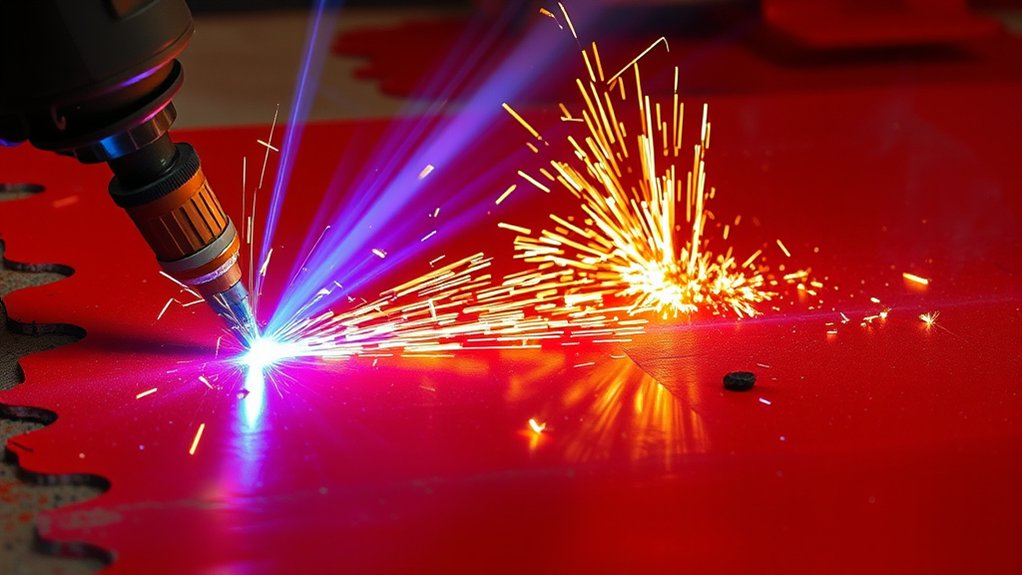
- Start with the manufacturer’s cut chart: Match the consumables and amperage to the metal type and thickness. Do not increase amperage simply because paint is present.
- Use an edge start when practical: Starting at an exposed edge reduces blowback and consumable wear compared with piercing in the middle of the plate.
- Hold the torch correctly: Keep it close to 90 degrees to the surface and maintain the drag or standoff method specified for the consumables.
- Move smoothly: Use a straightedge or guide when the torch design permits it. Avoid stopping in the kerf because excess heat can widen the cut and increase dross.
- Watch the sparks: On a through-cut, sparks should generally exit the bottom of the workpiece. Sparks spraying back toward the torch can indicate excessive speed, insufficient power, excess thickness, or poor penetration.
- Do not chase smoke with settings: More smoke usually means more coating is burning or the extraction is inadequate. Stop and correct the coating or ventilation problem.
- Inspect the test edge: Check penetration, bevel, underside dross, cut width, and arc stability before the final cut.
Pro Tip: Change one cutting variable at a time. Start with the cut chart, then correct obvious work-clamp, consumable, air, speed, and standoff problems before changing several settings together.
Ventilation, Respirators, and PPE
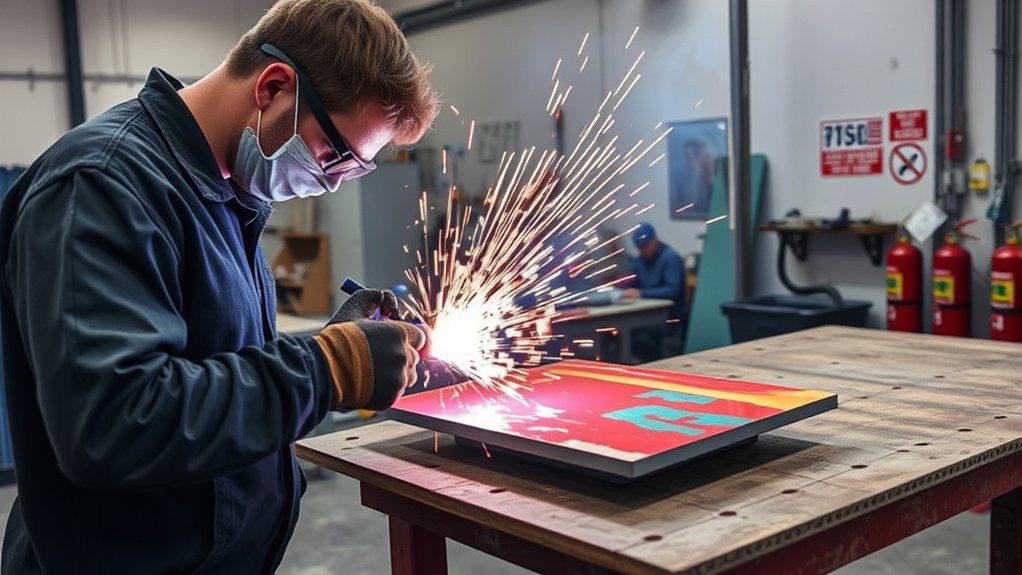
Painted-metal cutting can expose the operator and nearby workers to both coating decomposition products and metal fumes. OSHA’s welding and cutting requirements include ventilation provisions for general cutting and specific controls for zinc-, lead-, cadmium-, mercury-, and other hazardous materials.
Local exhaust ventilation captures contaminants close to the kerf before they spread through the room. Position the hood close enough to capture the plume without interfering with the torch, shielding gas, operator, or cutting path.
General room ventilation may supplement source capture, but an open door or portable fan does not prove the air is safe. Do not place a fan so it pushes smoke across your face, into another work area, or toward an unprotected person. Never use oxygen for ventilation.
Do not judge exposure by smell or visible smoke alone. Some hazardous contaminants have little warning odor, and a plume that appears to leave the room may still pass through the operator’s breathing zone.
Respiratory Protection Requirements
When respiratory protection is required in a workplace, the employer must follow OSHA’s respiratory-protection standard. This includes:
- A written respiratory-protection program
- Evaluation of the specific airborne hazard and exposure level
- Selection of a NIOSH-approved respirator suitable for that hazard
- A medical evaluation before required respirator use
- Fit testing for tight-fitting facepieces
- Training, seal checks, maintenance, storage, and inspection
- A filter, cartridge, or canister replacement schedule when applicable
A common particulate filter does not protect against every gas or vapor produced by a heated coating. Do not guess at the cartridge type. Respirators are also not a substitute for feasible engineering controls such as coating removal under controlled conditions and local exhaust.
Products Worth Considering

NIOSH-APPROVED: For use against certain organic vapors

NIOSH approved against certain organic vapors, chlorine, hydrogen chloride, sulfur dioxide, hydrogen sulfide, hydrogen fluoride, and non-oil and oil particulates

NIOSH approved against certain organic vapors, acid gases, ammonia, methylamine or formaldehyde
Protective Gear Essentials
| Gear | Purpose | Selection Notes |
|---|---|---|
| Filtered eye and face protection | Protects against arc radiation, sparks, and hot particles | Use the minimum shade required by the cutter manual and applicable safety rules; wear impact-rated safety glasses with side protection underneath when required |
| Respiratory protection | Reduces inhalation exposure when selected and used correctly | Must match the identified contaminant and workplace respiratory program |
| Heat-resistant gloves | Protects hands from hot metal, sparks, and sharp edges | Keep gloves dry and replace damaged pairs |
| Flame-resistant clothing | Reduces burns from sparks and slag | Cover exposed skin and avoid fabrics that can melt onto the body |
| Protective footwear | Protects against hot slag, sharp offcuts, and falling material | Use closed, durable footwear appropriate for the shop hazard assessment |
| Hearing protection | Reduces noise exposure from the arc, compressed air, grinding, and extraction equipment | Select it according to measured or assessed noise exposure |
Hot-Work Fire and Explosion Controls
Plasma cutting is hot work. Sparks and molten slag can travel through floor openings, collect inside cavities, or ignite material on the opposite side of a panel.
- Move combustible material away from the work area. OSHA’s general-industry rule identifies conditions involving appreciable combustibles within 35 feet of the operation.
- Use fire-resistant guards or covers when material cannot be moved.
- Keep suitable fire-extinguishing equipment ready for immediate use.
- Use a trained fire watch when required by the location, combustible loading, openings, or hidden spaces.
- Check the opposite side of walls, floors, panels, vehicle interiors, and enclosed sections.
- Continue the required fire watch after cutting. OSHA specifies at least 30 minutes in the situations covered by its rule.
- Mark or isolate freshly cut metal so another person does not touch it.
Warning: Never plasma cut a used drum, tank, barrel, pipe, reservoir, fuel component, or other container until a qualified procedure has confirmed that it is cleaned, isolated, vented, and safe for hot work. Do not cut a sealed hollow section that can build pressure.
Plasma Cutter Setup Tips for Painted Metal
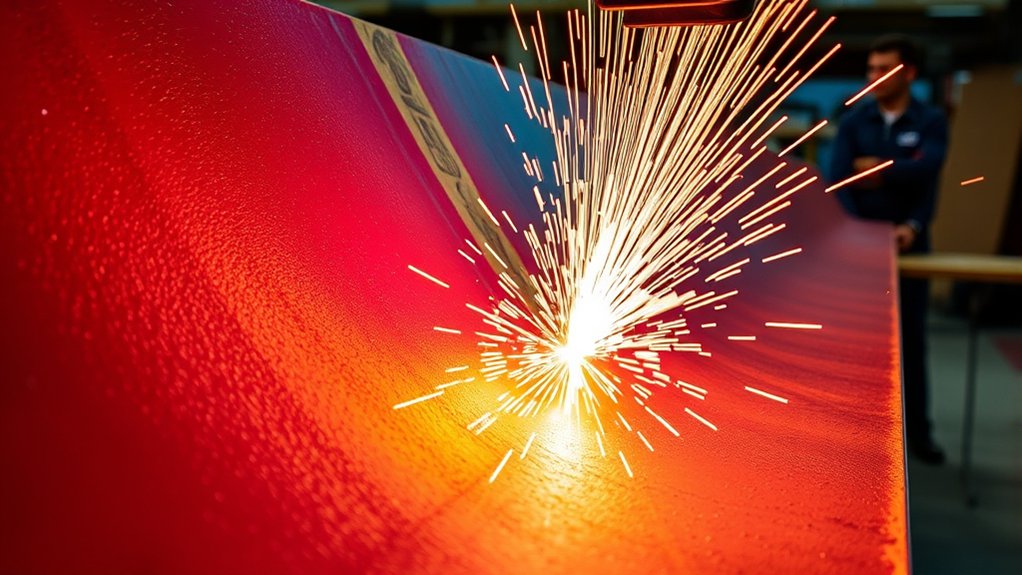
- Work-clamp contact: Attach the clamp to clean bare metal. Hypertherm’s operator guidance calls for good metal-to-metal contact and recommends placing the clamp close to the cut without attaching it to the section that will fall away.
- Air quality: Supply clean, dry, oil-free air at the flow and pressure specified by your machine. Drain moisture separators and service filters as required.
- Consumable selection: Install the nozzle, electrode, shield, or cartridge specified for the amperage and cutting method.
- Cut-chart settings: Use the manufacturer’s baseline for material type and thickness. Follow its pressure, amperage, speed, and torch-height instructions.
- Torch inspection: Replace damaged or worn consumables. Check that parts are seated correctly and that the torch is not contaminated by metal dust or excess lubricant.
- Guide placement: Confirm that a straightedge will not block the torch vents, force the torch off-angle, or change the specified standoff.
- Test cut: Use scrap with the same base metal, thickness, coating condition, and preparation whenever possible.
Products Worth Considering

[Achieve Precise Cuts] PT31 Plasma Cutting Consumables – Your Essential Tool for Efficient Cutting! Whether you're working with sheet metal, steel, or any other material, superior cutting performance ensure clean, accurate, and smooth cuts.

⚡【Precision Compatibility】 Exact fit for YESWELDER CUT 55DS Pro & 65DS (2019-2024 models). Replaces OEM# IPT40-55DS/65DS.

Fit for : AG-60 AG-60P SG-55 WSD-60 Plasma cutter torch head
Troubleshooting Painted-Metal Plasma Cutting Problems
| Problem | Likely Causes | What to Do |
|---|---|---|
| Arc will not transfer or cuts out | Paint under the work clamp, loose clamp, damaged lead, excessive torch distance, or worn consumables | Disconnect power as instructed, clean the clamp point, inspect the work lead and consumables, and restore the specified standoff |
| Heavy, soft underside dross | Travel speed too slow, excessive amperage, excessive standoff, or thick surface buildup | Return to the cut chart, verify height and amperage, then increase speed in controlled steps |
| Hard, narrow dross or incomplete cut | Travel speed too fast, inadequate amperage, material beyond capacity, low air flow, or worn nozzle | Confirm material thickness, consumables, air flow, and input power; reduce speed within the approved range |
| Jagged or strongly beveled edge | Unsteady movement, wrong torch angle, worn nozzle, incorrect height, or uneven coating ridge | Prepare a flat path, hold the torch square, use a guide, and inspect the nozzle or cartridge |
| Excessive smoke | Too much coating is burning, coating identity is uncertain, or local exhaust is ineffective | Stop cutting, reassess the coating and controls, and improve source capture before continuing |
| Torch catches or rocks on the surface | Peeling paint, powder-coat ridge, filler, rust scale, or incorrect drag technique | Use an approved preparation method to create a smooth path and follow the torch’s drag or standoff instructions |
| Short consumable life | Wet or oily air, incorrect piercing technique, wrong amperage, loose parts, or repeated arc stretching | Service the air system, use the correct consumables and settings, and follow the manufacturer’s starting technique |
When to Use Another Cutting Method
A non-thermal tool may be the better option when the coating cannot be safely heated, when the work is close to sensitive components, or when heat distortion is unacceptable.
- Metal-cutting saw: Useful for straight cuts in accessible stock.
- Shear or nibbler: Limits heat on suitable sheet metal.
- Angle grinder or cutoff wheel: Portable and versatile, but still creates sparks and potentially hazardous coating dust.
- Cold saw or band saw: Offers controlled cutting for stock that can be brought to the machine.
- Waterjet or professional removal service: May be appropriate when thermal decomposition or onsite exposure cannot be controlled.
“Cold cutting” does not mean hazard-free. Sawing, grinding, or sanding a lead- or chromate-containing coating can still create contaminated dust. Identify the coating before choosing the tool.
Frequently Asked Questions
Is it safe to plasma cut painted metal?
It can be done safely only after the coating, base metal, workspace, and exposure controls have been evaluated. Known low-risk paint may be removed from the cut path under controlled conditions. Do not cut an unknown, lead-bearing, chromate-containing, solvent-contaminated, or combustible coating without the required controls.
Should you remove paint before plasma cutting?
Remove it from the cut path and work-clamp point when the coating is known and the removal method is safe. Bare metal improves clamp contact, exposes the line, reduces the amount of coating heated, and provides a smoother torch path. Identify hazardous coatings before grinding or sanding them.
What happens if you plasma cut lead paint?
Heating lead-bearing paint can create dangerous airborne lead contamination. Abrasive removal can also create lead dust. Stop work until the coating has been identified and a compliant lead-control, ventilation, respiratory-protection, housekeeping, and waste procedure is in place.
Why does painted metal sometimes produce more dross?
A thick or uneven coating can affect starting, standoff, and torch movement, but paint is not the only cause. Incorrect speed, amperage, torch height, worn consumables, dirty air, and material condition are common causes. Start with the cut chart and inspect the whole process.
Can conventional plasma cutters cut nonmetal materials?
A normal handheld transferred-arc plasma cutter is designed for electrically conductive workpieces such as steel, stainless steel, aluminum, brass, and copper. Wood, glass, plastic, and similar nonconductive materials do not provide the required cutting circuit and should not be treated as suitable workpieces.
What alternative tools can cut painted metal?
Options include metal-cutting saws, shears, nibblers, cold saws, band saws, grinders, and waterjet cutting. Mechanical tools reduce thermal decomposition but may still release hazardous coating dust, so coating identification and dust control remain necessary.
Do different paint types change cutting speed?
A thick or rough coating may change how smoothly the torch travels, but the correct cutting speed should still come from the machine’s cut chart for the base metal and thickness. Do not slow the torch simply to burn through paint; prepare the surface and make a controlled test cut.
Does cutting painted metal require extra plasma-cutter maintenance?
It may require more frequent inspection if soot, coating debris, or spatter reaches the torch. Check the shield, nozzle or cartridge, electrode, retaining cap, air filter, and torch openings according to the manual. Replace worn parts rather than scraping or modifying them.
Can a plasma cutter remove paint without damaging the metal?
A cutting torch is not a controlled paint-stripping tool. It can melt, gouge, warp, or change the surface while producing fumes. Use a coating-removal method approved for the material and hazard instead.
How wide should the bare strip be?
It should be wide enough to expose the marked cut line, allow the torch or drag shield to move on a stable surface, and prevent the coating directly beside the kerf from being needlessly heated. The required width depends on the coating, metal thickness, heat spread, and hazard-control procedure. Do not use a fixed width as a substitute for coating identification.
Can a portable fan replace a fume extractor?
Not reliably. A fan may dilute or redirect fumes, but it can also move the plume through your breathing zone or toward another person. Source-capture local exhaust is generally more effective. Ventilation must be selected and evaluated for the specific coating, metal, space, and exposure.
Conclusion
You can cut painted conductive metal with a plasma cutter, but successful arc starting is only one part of the decision. Identify the coating before disturbing it, expose clean metal for the work clamp and cut path when safe, follow the manufacturer’s cut chart, and treat smoke as a sign that contaminants are being released.
Do not rely on an open door, a fan, or a generic dust mask as your safety plan. Use source-capture ventilation, task-specific PPE, proper hot-work controls, and a compliant respiratory-protection program when required. Stop and obtain qualified help for unknown coatings, lead paint, chromate primer, contaminated containers, or any job whose hazards cannot be controlled.
Sources
- OSHA 29 CFR 1910.252 — Welding, Cutting, and Brazing — ventilation, coated metals, cleaning compounds, fire prevention, containers, PPE, lead, and zinc requirements
- OSHA 29 CFR 1910.134 — Respiratory Protection — respirator selection, written programs, medical evaluations, fit testing, training, and maintenance
- OSHA Hexavalent Chromium — chromate pigments, anticorrosive coatings, health risks, and hot-work exposure
- U.S. EPA Lead Resources — lead health risks and lead-based paint programs
- Hypertherm Plasma Arc Cutting System Operator Manual — work-clamp contact and compressed-air quality
- Hypertherm Dross Troubleshooting — effects of cutting speed, amperage, standoff, consumables, and material variables