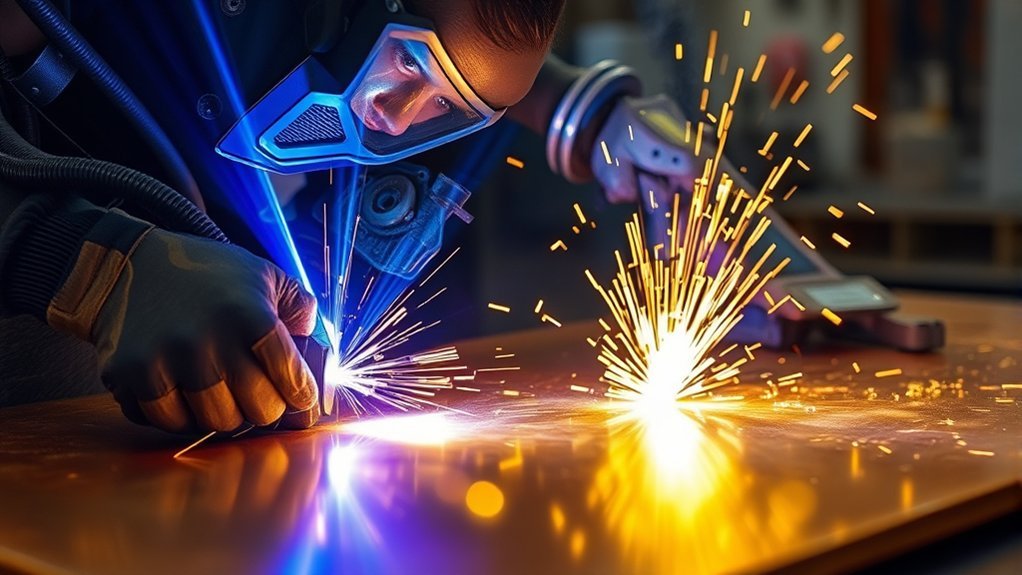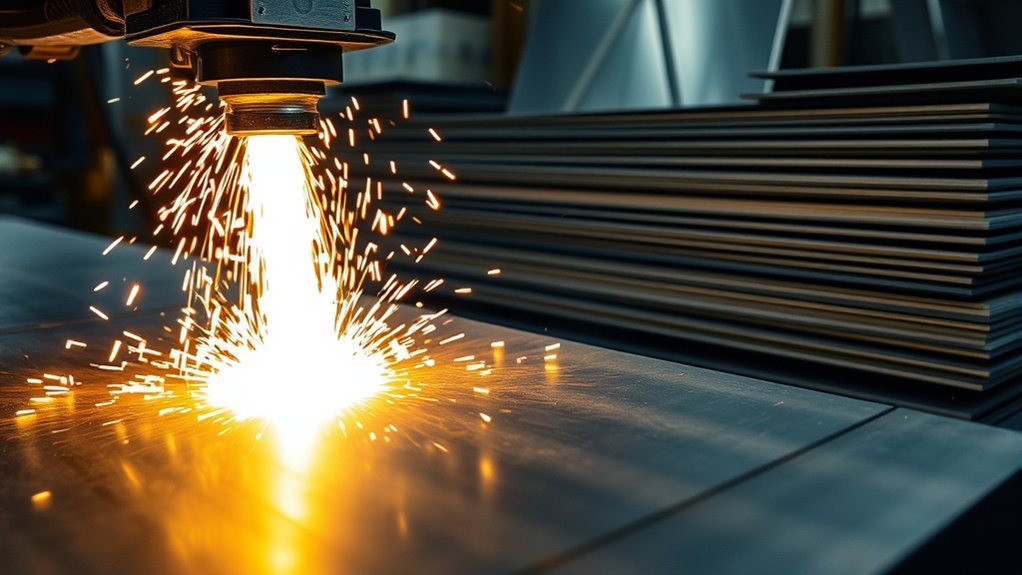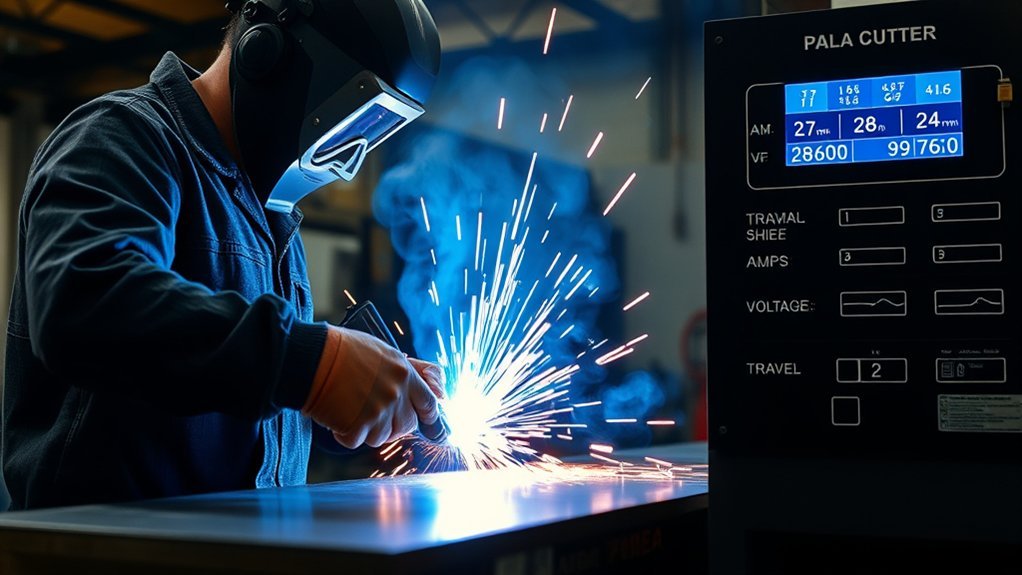
Plasma cutting works on electrically conductive metal, but successful cutting depends on more than the metal name. The plasma system must have enough output for the material thickness, and its approved gas, consumables, air supply, torch height, and travel speed must match the manufacturer’s cut chart.
Quick Answer
A plasma cutter can cut electrically conductive metals such as mild steel, stainless steel, aluminum, copper, brass, cast iron, galvanized steel, titanium, and nickel alloys. It cannot cut wood, plastic, glass, stone, or other nonconductive materials. Actual thickness and edge quality depend on the machine, consumables, gas, and cut chart.
Key Takeaways
- Electrical conductivity is the basic requirement for plasma cutting.
- Mild steel, stainless steel, and aluminum are the most common plasma-cut metals.
- Most handheld plasma cutters use clean, dry compressed air, while some mechanized systems support oxygen, nitrogen, F5, H35, water injection, or other approved processes.
- The manufacturer’s cut chart should control gas, amperage, pressure, torch height, and travel speed.
- Coatings and alloying elements can create hazardous fumes even when the metal itself cuts easily.
- Rated cut capacity and severance capacity are not the same as a clean, production-quality cut.
What’s in This Article
- How Plasma Cutting Works
- Metals Plasma Cutters Can Cut at a Glance
- Ferrous Metals Suitable for Plasma Cutting
- Non-Ferrous Metals Suitable for Plasma Cutting
- Cutting Mild Steel With Plasma
- Stainless Steel Plasma Cutting
- Plasma Cutting of Aluminum
- Copper and Brass Plasma Cutting
- What a Plasma Cutter Cannot Cut Well
- Safety Checks Before Plasma Cutting
- Selecting Plasma Cutting Equipment
- Common Plasma Cutting Problems
- Frequently Asked Questions
- Safety Disclaimer
- Conclusion
- Sources
How Plasma Cutting Works
Plasma cutting sends an electric arc through a gas that has been heated into an ionized, electrically conductive state. The focused arc melts a narrow path through the workpiece, and the high-speed gas stream blows the molten metal out of the kerf.
The workpiece must complete the electrical circuit. That is why plasma works on conductive metals but not on wood, ordinary plastic, glass, stone, concrete, or ceramic. Hypertherm’s overview of plasma cutting capabilities lists mild steel, stainless steel, aluminum, tool steel, titanium, galvanized material, and other conductive workpieces among its applications.
The exact process varies by equipment. Many portable, handheld systems use clean, dry compressed air. Larger mechanized systems may support oxygen, nitrogen, F5, argon-hydrogen mixtures, water injection, or other processes selected for a specific metal and thickness.
Cut quality is controlled by several connected variables:
- Amperage: The output must match the consumables and material thickness.
- Gas type and pressure: Only gases approved for the system should be used.
- Air quality: Moisture, oil, and dirt can damage consumables and destabilize the arc.
- Torch height: Excessive or insufficient distance can increase bevel, dross, and consumable wear.
- Travel speed: Moving too fast can leave an incomplete cut, while moving too slowly can widen the kerf and create low-speed dross.
- Consumable condition: Worn electrodes and nozzles can distort the arc and reduce repeatability.
Note: The work clamp completes the cutting circuit; it is not a substitute for the protective grounding required by the plasma cutter’s owner manual and electrical installation instructions.
The machine’s approved cut chart—not a generic amperage, gas, or speed rule—is the safest starting point for every metal and thickness.
Metals Plasma Cutters Can Cut at a Glance
| Material | Can Plasma Cut It? | Practical Notes | Main Caution |
|---|---|---|---|
| Mild steel | Yes | Usually the easiest and most economical metal to cut. | Match output and speed to thickness. |
| Stainless steel | Yes | Air, nitrogen, F5, or other approved processes may be available. | Cut-face oxidation and hazardous alloy fumes. |
| HSLA and tool steel | Yes | Suitable for many structural and fabrication cuts. | Critical parts may require qualified edge preparation procedures. |
| Cast iron | Generally, yes | Useful for rough removal and repair work when the machine has enough capacity. | Irregular composition, cracking, and rough cut faces may limit finish quality. |
| Galvanized steel | Yes | The steel remains electrically conductive. | Zinc-bearing fumes require effective exposure control. |
| Aluminum | Yes | Cuts quickly but needs stable speed and heat control. | Warping and hydrogen accumulation near water. |
| Copper and brass | Yes, with suitable equipment | High thermal conductivity can make settings less forgiving. | Copper- and zinc-bearing fumes and variable edge quality. |
| Titanium and nickel alloys | Yes, on supported systems | Often used in specialized fabrication rather than casual shop cutting. | Material-specific fire, fume, and quality controls. |
| Wood, plastic, glass, stone, or ceramic | No | These materials do not provide the required conductive cutting path. | Use a process designed for the specific nonmetal material. |
Products Worth Considering


Occupational Health & Safety

【Non-Touch Pilot Arc Function】The plasma cutter features a high frequency non-touch arc starting mode. It allows for cutting steel surfaces with dirt, rust or coatings. The torch head does not need to touch the metal plate, reducing energy consumption, minimizing electrode burning, and extending service life. NOTE: DO NOT power on until the screen turns off and the fan stops working!
Ferrous Metals Suitable for Plasma Cutting
Ferrous metals contain iron as a main component. Mild steel, stainless steel, tool steel, cast iron, and high-strength low-alloy steel can all be plasma-cut when the system has enough capacity.
Mild steel is usually the most forgiving choice because it cuts quickly and is supported by nearly every plasma system. Stainless steel also cuts well, but the selected gas process has a greater effect on cut-face color, oxidation, dross, and preparation for welding.
Galvanized steel and painted or rusted steel remain conductive. A pilot arc can help cross surface contamination or gaps, but the work clamp still needs a reliable electrical connection to clean base metal.
Mild Steel Versatility
Mild steel works well for sheet metal, brackets, frames, signs, repair patches, structural components, and plate fabrication. Both handheld and CNC plasma systems commonly support it.
Portable machines usually cut mild steel with clean, dry compressed air. Compatible industrial systems may use oxygen plasma with an air shield to increase productivity and improve cut quality. Oxygen must not be supplied to a cutter unless the manufacturer specifically approves that process.
With correct speed and consumables, mild steel can produce a narrow kerf and limited dross. Incorrect speed, damaged consumables, wet air, or an unsuitable torch height can quickly reduce edge quality.
Stainless Steel Advantages
Stainless steel is common in food-processing equipment, marine fabrication, exhaust systems, medical equipment, tanks, architectural work, and corrosion-resistant assemblies.
Air plasma is economical and widely available, but it can leave a darker, oxidized cut face. Depending on the system and thickness, approved nitrogen, F5, argon-hydrogen, water-injection, or other processes may improve specific aspects of stainless cut quality.
Plasma cutting does not guarantee that an edge is ready for welding, sanitary service, fatigue-critical use, or code work. Remove dross and oxide as required by the drawing, welding procedure, material specification, or fabrication standard.
High-Strength Alloys Efficiency
High-strength low-alloy steels such as ASTM A572 and quenched-and-tempered grades such as ASTM A514 can be plasma-cut, but critical work may place limits on heat input, edge hardness, notches, gouges, and post-cut preparation.
| Check | Why It Matters |
|---|---|
| Material grade | Different steels can have different fabrication and edge-preparation requirements. |
| Plate thickness | Determines the required output, consumables, speed, and piercing method. |
| Final service | Structural, fatigue-critical, or welded edges may require inspection and additional preparation. |
| Qualified procedure | Project documents may control allowable thermal cutting and repair methods. |
Make a test cut on matching scrap before processing final HSLA parts. For engineered or code-controlled work, follow the approved fabrication procedure rather than relying on a general-purpose setting.
Non-Ferrous Metals Suitable for Plasma Cutting
Non-ferrous metals do not contain iron as their main element, but many are electrically conductive. Aluminum, copper, brass, titanium, and nickel-based alloys can therefore be cut with suitable plasma equipment.
These materials do not all behave the same way. Thermal conductivity, oxide layers, alloy composition, thickness, gas chemistry, and machine design can change piercing performance, speed, dross, bevel, and cut-face appearance.
Do not assume that a setting used for mild steel will work on a non-ferrous metal of the same thickness. Start with the exact cut chart for the material, amperage, consumable set, and gas process.
Aluminum Cutting Techniques
Aluminum cuts well with plasma, including with many ordinary air-plasma systems. Because aluminum transfers heat quickly and thin sheet can distort, steady torch motion and correct output are important.
- Confirm the approved process: Use air, nitrogen, an argon-hydrogen process, water injection, or another option only when listed for the equipment and thickness.
- Use the charted amperage: Installing a lower-amperage consumable set may improve control on thin sheet when the manufacturer allows it.
- Maintain travel speed: Excessively slow movement increases heat input, kerf width, and distortion.
- Support thin material: Secure the sheet without placing clamps where sparks or molten metal can damage them.
- Plan for edge cleanup: Remove dross and oxide when the part will be welded, coated, sealed, or placed in critical service.
Copper and Brass Handling
Copper and brass conduct heat rapidly, which can make piercing and edge quality less forgiving than mild steel. Cutting ability and maximum thickness vary widely by plasma system.
Use the manufacturer’s charted speed rather than automatically slowing the torch. Moving too slowly can increase dross and widen the kerf, while moving too quickly can leave an incomplete cut.
| Metal | Setup Priority | Exposure Concern |
|---|---|---|
| Copper | Verify that the machine and consumables support the thickness; maintain stable arc transfer and charted speed. | Control metal fume and any coating or contamination. |
| Brass | Use settings approved for the alloy and plan for edge finishing when appearance matters. | Brass contains zinc, so effective fume control is especially important. |
The arc-start method is built into the plasma cutter. Do not select or modify a high-frequency start system based on metal reflectivity. For CNC work, remember that high-frequency starting can interfere with controls that are not designed for that electrical noise.
Titanium and Nickel Alloys
Titanium and nickel-based alloys can be plasma-cut on systems that support the material and thickness. These metals are common in aerospace, chemical-processing, high-temperature, marine, and corrosion-resistant applications where cut-face condition may be tightly controlled.
- Confirm the alloy: Obtain the material grade and safety information before cutting.
- Use an approved process: Match the gas, amperage, consumables, and speed to the system’s cut chart or a qualified procedure.
- Control contamination: Keep the surface and work area free of oil, incompatible debris, and combustible residue.
- Inspect the edge: Critical parts may require machining, grinding, nondestructive examination, or other preparation after thermal cutting.
Warning: Fine titanium particles, dust, chips, and hot fragments can present a serious fire hazard. Use material-specific housekeeping and fire-control procedures, and do not use water on a burning reactive metal unless the approved emergency procedure specifically calls for it.
Cutting Mild Steel With Plasma
Mild steel offers one of the most forgiving plasma-cutting applications. It suits home shops, maintenance work, construction, repair, sign making, CNC production, and general fabrication.
Begin with the consumable set recommended for the thickness. Connect the work clamp to clean base metal, confirm the required input power, and supply the air pressure and flow specified in the owner manual.
For a typical handheld air-plasma cutter:
- Drain the compressor and check the filter or dryer.
- Inspect the electrode, nozzle, retaining cap, and shield.
- Install consumables rated for the selected amperage.
- Set pressure using the manufacturer’s procedure, which may require flowing air through the torch.
- Place the work clamp on clean metal with a reliable electrical path.
- Use the charted torch height, pierce delay, and travel speed.
- Make a test cut before cutting the finished part.
Some mechanized systems use oxygen plasma on mild steel because it can provide high speed, low dross, and a weld-friendly cut face. That recommendation does not apply to machines designed only for compressed air or nitrogen.
Replace worn electrodes and nozzles before they cause hard starting, excess bevel, a wandering arc, or damage to other torch parts. Miller’s current handheld plasma cutter guide likewise recommends inspecting consumables and checking gas or air pressure before cutting.
Stainless Steel Plasma Cutting
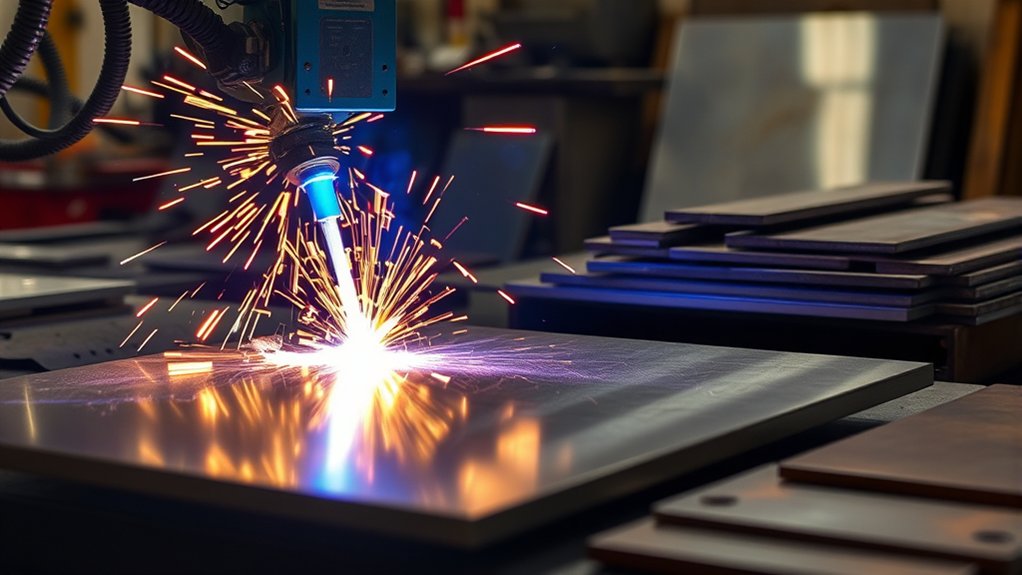
Stainless steel cuts readily with plasma, but the cut face can look different from a mild-steel edge. Gas chemistry, thickness, amperage, speed, and consumable design influence edge color, oxide, roughness, bevel, and dross.
Clean, dry air is the simplest process on many portable machines. It is economical and fast, but it can leave a rougher, dark-gray oxidized edge. Compatible systems may offer nitrogen, F5, argon-hydrogen, water injection, or other processes for specific thicknesses and finish goals. Hypertherm’s stainless steel plasma guidance shows why the available choices depend on the plasma system rather than one universal gas.
Use this decision order:
- Check the machine manual: Confirm which gases and consumables the system supports.
- Select the metal and thickness: Use the matching stainless cut chart, not the mild-steel chart.
- Decide what edge quality is required: A decorative, sanitary, welded, or fatigue-critical edge may need more cleanup than a rough-cut part.
- Make a test cut: Check bevel, dross, discoloration, and complete penetration.
- Prepare the edge: Remove oxides and contamination as required before welding or finishing.
Note: Stainless steel and nickel-bearing alloys can produce hazardous metal fumes. Use effective local exhaust ventilation or another exposure-control method based on the work conditions and applicable safety program.
Plasma Cutting of Aluminum
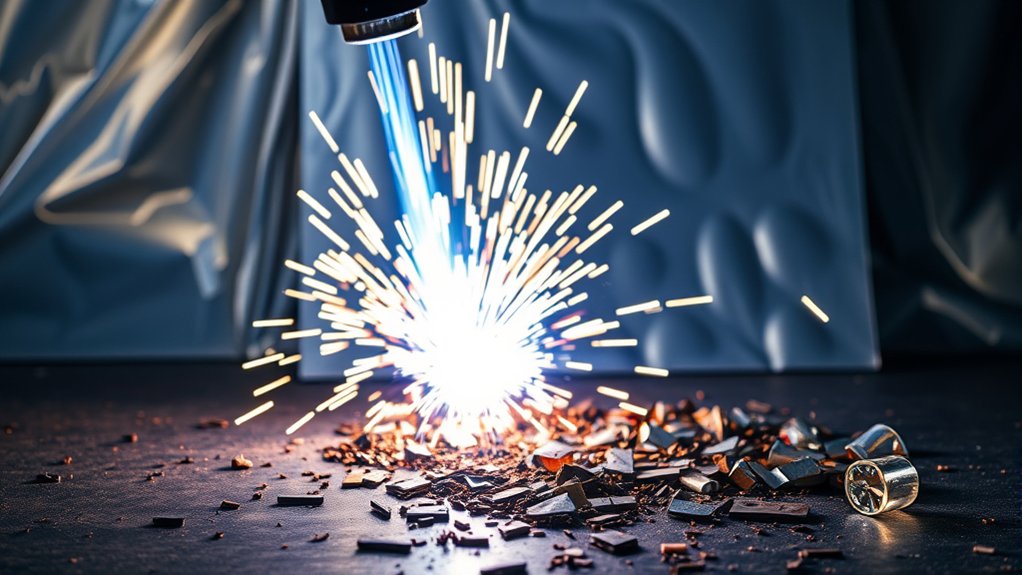
Plasma cutting can process aluminum quickly and accurately for automotive, marine, aerospace, sign-making, repair, and general fabrication work. Many handheld air-plasma systems can cut aluminum without a special bottled gas.
Thin aluminum can warp when too much heat is placed in one area. Avoid unnecessary dwell time, excessive amperage, repeated piercing near the same location, and travel speeds below the charted range.
Available gas processes depend on the equipment. Some systems use compressed air, while compatible mechanized systems may use nitrogen, H35, water injection, or other combinations for selected thicknesses. Follow a verified plasma gas selection guide and the machine-specific cut chart rather than substituting gases.
Test cuts are especially useful when appearance matters. Check the bottom edge for dross, confirm that the torch is square, and allow thin parts to cool between nearby cuts when distortion is a concern.
Warning: Do not plasma-cut aluminum alloys underwater or on a water table unless the system and table are specifically designed to prevent hydrogen accumulation. Trapped hydrogen can ignite or detonate. Never cut aluminum-lithium alloys in the presence of water. Review the table manufacturer’s instructions and the plasma manufacturer’s aluminum water-table warning before proceeding.
Copper and Brass Plasma Cutting
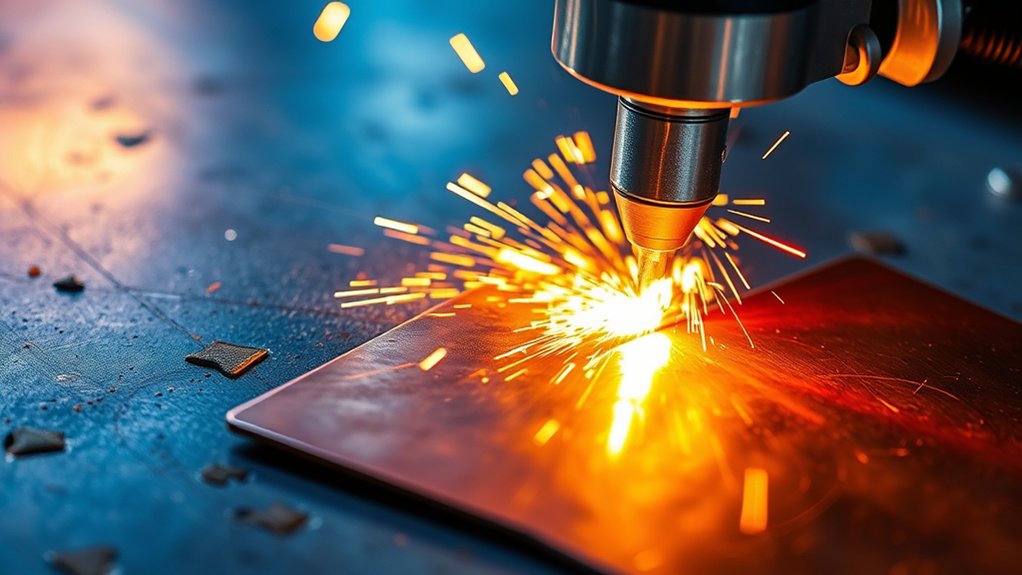
Copper and brass can be plasma-cut because they conduct electricity. Their high thermal conductivity and alloy composition can make the process less forgiving, and some small plasma cutters may have limited charted capacity for these metals.
Use a clean work-clamp connection and verify that the torch, consumables, and gas process support the material. Do not compensate for a poor arc by randomly raising pressure or amperage beyond the consumable rating.
Use these habits for better results:
- Identify the metal: Confirm whether the workpiece is pure copper, a copper alloy, brass, bronze, plated material, or a coated assembly.
- Use a supported process: Follow the manufacturer’s chart or a qualified shop procedure.
- Maintain charted speed: Adjust only after evaluating a test cut; slower is not automatically better.
- Control fumes: Use effective ventilation, especially for brass and other zinc-bearing alloys.
- Plan edge finishing: Grinding, machining, sanding, or oxide removal may be required for polished, welded, or precision parts.
Pro Tip: Save offcuts from the same alloy and thickness. A short test cut reveals more about arc transfer, dross, bevel, and finish than a setting copied from a different metal or plasma system.
What a Plasma Cutter Cannot Cut Well
A conventional plasma cutter requires an electrically conductive workpiece. It cannot directly cut wood, ordinary plastic, glass, fiberglass, stone, concrete, brick, rubber, or ceramic because those materials do not complete the cutting circuit.
Conductive metal with heavy paint, scale, rust, adhesive, oil, or insulation may still be cut, but contamination can interfere with work-clamp contact, arc transfer, visibility, cut quality, and fume control. Remove surface material where the work clamp attaches and clean the cut path when the coating can be removed safely.
Plasma may also be a poor choice when a project requires:
- An extremely narrow kerf or highly polished cut face without secondary finishing
- Very small precision features below the system’s demonstrated capability
- Cutting nonconductive composites or layered assemblies
- A heat-free process for highly distortion-sensitive parts
- Cutting material that cannot be positively identified
- Cutting sealed, pressurized, contaminated, or previously flammable containers
Warning: Painted, plated, galvanized, stainless, brass, lead-bearing, cadmium-bearing, or otherwise coated material can generate hazardous fumes. Do not rely on odor or visible smoke to judge exposure. Use an appropriate ventilation and exposure-control plan before cutting.
Safety Checks Before Plasma Cutting
Plasma cutting combines electrical current, intense arc radiation, hot metal, sparks, compressed gas or air, noise, and airborne contaminants. Review the owner manual and workplace hot-work requirements before operating the cutter.
- Eye and face protection: Use the filter shade and protective equipment specified for the plasma current and task. Protect nearby workers from arc radiation.
- Skin protection: Wear flame-resistant clothing, gloves, and footwear that protect against sparks, molten metal, and hot workpieces.
- Hearing protection: Evaluate noise from the arc, air system, cutting table, and surrounding equipment.
- Ventilation: Use local exhaust or another effective control to keep fumes away from the breathing zone. General room airflow may not be enough.
- Respiratory protection: Use respirators only as part of a properly selected and managed respiratory-protection program when other controls do not adequately control exposure.
- Fire prevention: Remove or protect combustible material, control the spark path, keep suitable fire-extinguishing equipment available, and follow required fire-watch procedures.
- Electrical safety: Inspect the torch, leads, work cable, power cord, and connectors. Keep gloves and work areas dry and follow lockout procedures for service.
- Compressed gases: Secure cylinders upright, protect valves, use approved regulators, and keep incompatible gases and ignition sources controlled.
- Containers and piping: Never cut a pressurized cylinder, sealed pipe, tank, drum, or vessel that has not been identified, emptied, cleaned, vented, and approved under a qualified procedure.
- Hot metal: Mark or isolate recently cut parts so another person does not handle them as if they were cool.
OSHA’s welding and cutting requirements address eye protection, ventilation, fire prevention, and other hot-work hazards. Miller also provides a practical plasma cutting safety overview covering arc, electrical, gas, and hot-metal risks.
Considerations for Selecting Plasma Cutting Equipment
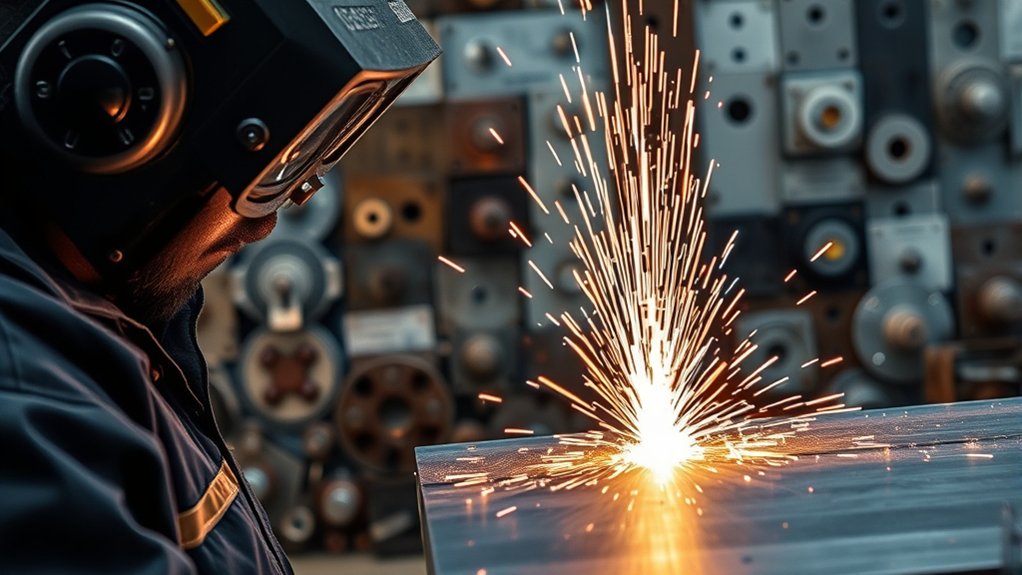
Choose a plasma cutter around the material and thickness you cut most often, not the thickest material the machine can barely sever. A small cutter may produce excellent results on sheet and light plate but leave a slow, rough edge near its maximum limit.
| Rating or Factor | What It Means | Why to Check It |
|---|---|---|
| Recommended or rated cut | A thickness the machine can cut at a stated speed and expected quality. | This should cover the material cut during normal work. |
| Pierce capacity | The thickness that can be pierced from the plate surface using the approved process. | Piercing is usually harder on consumables than an edge start. |
| Severance capacity | The maximum thickness the machine can separate under specified conditions. | The edge may be slow, rough, heavily beveled, and unsuitable for routine production. |
| Duty cycle | The operating time allowed within a stated period, output, and ambient condition. | Low duty cycle can interrupt long cuts or production work. |
| Input power | Required voltage, phase, current, plug, circuit, or generator output. | Insufficient power can reduce output or prevent operation. |
| Air requirement | Required pressure, flow, cleanliness, and dryness. | A compressor can meet the pressure rating yet still lack enough sustained flow. |
| Supported gases | Air, nitrogen, oxygen, F5, H35, or another approved process. | Unapproved gases can create poor cuts, equipment damage, fire, or explosion hazards. |
| Pilot-arc behavior | How the system starts and restarts across gaps or expanded metal. | Useful for mesh, grating, painted material, and interrupted cuts. |
| CNC compatibility | Machine-torch support, start interface, voltage divider, and electrical-noise characteristics. | High-frequency starting may disrupt controls not designed for it. |
Do not compare machines by amperage alone. Torch design, consumables, duty cycle, air regulation, input power, cut speed, warranty support, and available cut charts all affect real performance.
Hypertherm recommends choosing a machine that comfortably handles the thickness cut most of the time and treating severance capacity as an occasional maximum. Its plasma cutter selection guide explains this recommended-versus-severance distinction.
Pro Tip: Before buying a machine, download its owner manual and cut charts. Confirm the rated speed for your normal thickness, required compressor flow, input circuit, consumable prices, and whether the charts cover every metal you intend to cut.
Products Worth Considering
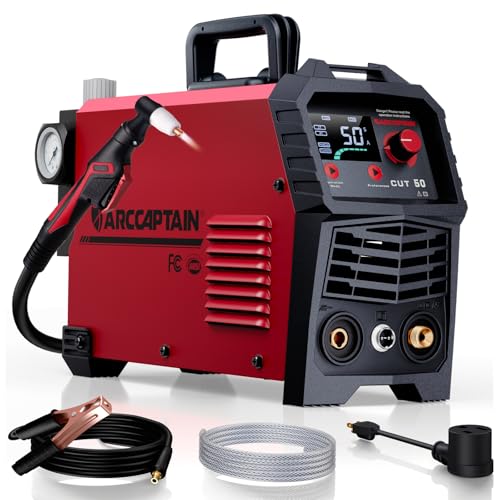
【Powerful Cutting Ability】Switch effortlessly between 110V and 220V for home or workshop use. Achieve professional 1/2" clean cuts on steel, aluminum, and copper with advanced LGBT technology. Perfect for DIY projects and heavy-duty tasks. Recommended maximum cutting thickness: 12mm @ 35A / 110V / 55 PSl; 18mm @ 50A / 220V / 75 PSI. Note: Requires compressed air (compressor sold separately).

[Powerful Cutting Ability] Dual voltage 110/220V good for home, workshop and hardware shop use. Professional performance 1/2" clean cuts on Iron, Steel aluminum and copper with Inverter IGBT Technology. Very powerful for DIY and heavy duty project. The Maximum cutting thickness is recommended to 1/2" @35A 110V 50PSI; 2/3" @50A 220V 65PSI. Dry and compressed air is required. Power breaker up to 60A@110V 35A; Up to 50A@220V 50A.

【Non-Touch Pilot Arc Function】The ARCCAPTAIN 55A plasma cutter features a pilot arc function. It utilizes a high-frequency non-touch arc starting mode. The torch head does not need to touch the metal plate, reducing energy consumption during non-cutting work, minimizing electrode burning, and extending service life. NOTE: Do not switch voltages until the screen turns off and the fan stops.
Common Plasma Cutting Problems
| Problem | Likely Causes | What to Check |
|---|---|---|
| Heavy bottom dross | Travel speed too slow or too fast, incorrect height, worn consumables, unsuitable settings. | Compare the cut with the chart, inspect the direction of the arc trails, and test speed changes in small steps. |
| Incomplete cut | Moving too fast, insufficient output, poor work connection, low air flow, excessive thickness. | Verify thickness capacity, input power, air supply, consumables, and work-clamp contact. |
| Excessive bevel | Torch not square, wrong height, worn nozzle, incorrect direction, speed outside the charted range. | Square the torch, replace worn parts, verify standoff, and account for the good and bad side of the cut. |
| Sheet warping | Too much heat input, slow speed, high amperage, poor support, cuts concentrated in one area. | Use appropriate lower-output consumables, increase speed within the chart, sequence cuts, and support the sheet. |
| Unstable or wandering arc | Wet or oily air, damaged consumables, loose parts, poor work connection, pressure outside specification. | Service the air system, inspect the torch, and set pressure using the owner-manual procedure. |
| Short consumable life | Piercing too close, excessive pierce height error, moisture, incorrect amperage, poor shutdown technique. | Use the correct consumable set, pierce method, air treatment, and automated timing where applicable. |
Change one variable at a time during troubleshooting. Randomly adjusting pressure, amperage, speed, and height together makes it difficult to identify the actual cause.
Frequently Asked Questions
Can Plasma Cutters Cut Through Rusty or Painted Metal Surfaces?
Yes. A pilot-arc plasma cutter can often cut rusted, painted, or scaled conductive metal. The work clamp still needs a dependable connection to clean base metal. Heavy contamination can reduce cut quality and create hazardous fumes, so clean the surface when it can be done safely.
How Does Metal Thickness Affect Plasma Cutting Speed?
Thicker metal normally requires more output and a slower charted travel speed than thin sheet. A machine may sever material near its maximum limit very slowly, but that does not mean it will produce a clean production-quality edge. Use the cut chart for the exact metal, thickness, amperage, and consumables.
Are There Specific Safety Precautions for Plasma Cutting Titanium?
Yes. Identify the titanium alloy, control sparks and fine particles, remove incompatible combustible debris, and use material-specific fire and housekeeping procedures. Critical titanium parts may also require qualified cutting, contamination-control, and edge-inspection procedures.
Can Plasma Cutters Be Used Underwater for Cutting?
Specialized mechanized plasma systems can operate with water-table or underwater processes when the equipment is designed for them. Do not place an ordinary handheld cutter in or near water. Aluminum requires additional controls because hydrogen can accumulate and detonate, and aluminum-lithium alloys must not be cut in the presence of water.
How Does Altitude Impact Plasma Cutting Performance?
Altitude can affect available compressor flow, cooling, and equipment ratings. Do not apply a generic pressure correction. Check the plasma cutter and compressor manuals for operating-altitude limits, derating instructions, and required air delivery at the jobsite elevation.
What Gas Should You Use for Plasma Cutting?
Use only a gas approved by the plasma cutter manufacturer. Many handheld systems use clean, dry compressed air and may also permit nitrogen. Compatible mechanized systems can use oxygen, nitrogen, F5, H35, water injection, or other processes. The correct choice depends on the machine, metal, thickness, consumables, and desired edge quality.
Can a Plasma Cutter Cut Cast Iron?
Generally, yes. Cast iron is electrically conductive, so a plasma cutter with enough output can separate it. The cut may be rough, and casting composition, trapped contamination, cracking risk, and part geometry can make plasma better for removal or repair than for a finished precision edge.
Can a Plasma Cutter Cut Galvanized Steel?
Yes. The steel beneath the zinc coating is conductive and can be plasma-cut. The zinc-bearing coating can generate hazardous fumes, so use effective ventilation and exposure controls. Clean the coating from the work-clamp area when needed for a reliable electrical connection.
Safety Disclaimer
Safety Disclaimer: This article is for informational purposes only and does not replace professional training, an exposure assessment, an approved hot-work program, or the plasma cutter manufacturer’s instructions. Follow the owner manual, material safety information, workplace procedures, and applicable regulations before cutting any metal.
Conclusion
A plasma cutter can cut a wide range of electrically conductive metals, including mild steel, stainless steel, aluminum, copper, brass, cast iron, galvanized steel, titanium, and nickel alloys. It cannot directly cut nonconductive materials such as wood, plastic, glass, stone, and ceramic.
The metal name alone does not determine the correct setup. Machine capacity, material thickness, approved gas, consumables, air quality, torch height, and charted speed all influence whether the result is a clean production cut or a rough severance.
Mild steel is usually the easiest place to build experience. Stainless steel, aluminum, copper, brass, titanium, and specialty alloys demand closer attention to cut charts, fumes, fire risk, edge requirements, and equipment compatibility. Inspect the cutter, use matching scrap for test cuts, and treat the manufacturer’s instructions as the controlling source.
Sources
- Hypertherm: Understanding Plasma Cutting Attributes — conductive materials, common plasma applications, and cut types.
- Hypertherm: Guide to Plasma Gas Selection — system-, material-, and thickness-dependent gas guidance.
- Hypertherm: Aluminum Cutting on a Water Table — hydrogen-accumulation and aluminum-lithium warnings.
- Miller: Selecting and Operating a Hand-Held Plasma Cutter — machine sizing, air supply, consumables, and operating checks.
- Miller: Plasma Cutting Safety — electrical, arc, gas-cylinder, hot-metal, and fire precautions.
- OSHA 29 CFR 1910.252 — workplace requirements for welding, cutting, ventilation, fire prevention, and eye protection.