Clean plasma cuts come from matching the machine, torch, consumable, material, and thickness—not from using one universal amperage or air-pressure rule. Start with the current cut chart for your exact plasma cutter. Then verify travel speed, cut height, pierce height, delay, air supply, and kerf on a scrap coupon before cutting the finished part.
Quick Answer
Use the cut chart supplied with your exact plasma cutter, torch, and consumable. Thicker steel usually needs more cutting power and slower travel, but air pressure, pierce height, delay, and speed are machine-specific. Load the published values, make a test cut, and correct speed or height one variable at a time.
Key Takeaways
- There is no safe universal amperage, IPM, or air-pressure chart for every plasma cutter.
- Match the material, thickness, torch, and consumable to the manufacturer’s current cut chart.
- High-speed dross calls for less travel speed; low-speed dross usually calls for more speed.
- Treat compressor flow and inlet pressure as machine requirements, not as thickness adjustments.
- Confirm settings on scrap and record the combination that produces the cleanest, squarest cut.
At a Glance
| Time Required | About 10–20 minutes for setup, a test coupon, inspection, and adjustment |
| Difficulty | Intermediate; beginners should practice on scrap before cutting a finished part |
| Tools Needed | Plasma cutter, correct consumables, dry compressed-air supply, work clamp, measuring tools, scrap coupon, and required PPE |
| Cost | One scrap coupon plus normal electricity, compressed air, and consumable wear; filtration or circuit upgrades cost extra when required |
Warning: Plasma cutting exposes you to electric shock, ultraviolet and infrared radiation, hot metal, sparks, noise, compressed air, and hazardous fumes. Wear process-appropriate eye and face protection, safety glasses with side protection, gloves, hearing protection, flame-resistant clothing, and safety footwear. Use effective ventilation, remove combustibles, and never cut a sealed container or unidentified coating.
Start With the Manufacturer Cut Chart
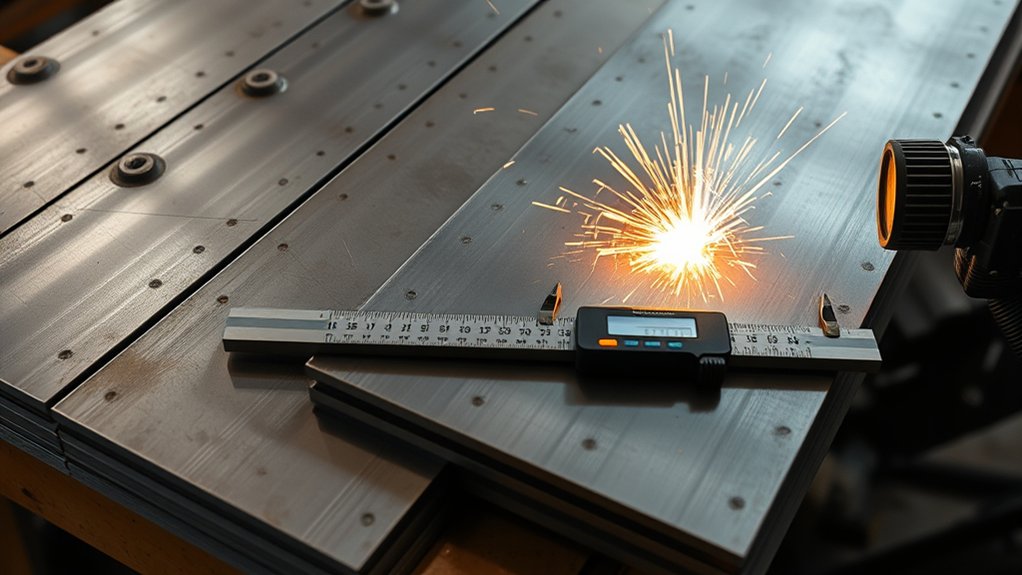
Steel thickness affects the power and travel speed needed to complete a cut, but thickness is only one part of the setup. The correct values also depend on:
- The plasma power supply and its available output range
- Handheld, machine, robotic, or long torch configuration
- Standard, FineCut, drag-cutting, unshielded, or other consumables
- Mild steel, stainless steel, aluminum, or another conductive metal
- Cut-quality goal, production rate, and whether the machine can pierce the plate
- Torch-lead length, table motion, torch-height control, and air-delivery system
For these reasons, use the cut chart in the current operator manual for your exact system. Hypertherm likewise directs operators to select the correct material, thickness, process, gas, consumables, height, and speed from the applicable chart rather than relying on a generic rule.
The manufacturer’s cut chart is the baseline. A general online chart can explain the process, but it cannot replace the settings for your exact torch and consumable.
Plasma Cutter Settings Chart by Steel Thickness
Note: The table below is a worked manufacturer example, not a universal chart. It uses official Hypertherm Duramax machine-torch data for 45-amp mild-steel cutting. The 24-gauge row uses FineCut consumables; the remaining rows use 45 A shielded consumables. Current SYNC cartridges, other brands, handheld torches, and different leads may require different values.
| Mild-Steel Thickness | Process and Current | Best-Quality Speed | Cut Height | Pierce Height | Pierce Delay |
|---|---|---|---|---|---|
| 24 GA | FineCut, 40 A | 325 IPM | 0.06 in | 0.15 in | 0.0 sec |
| 16 GA | Shielded, 45 A | 249 IPM | 0.06 in | 0.15 in | 0.1 sec |
| 14 GA | Shielded, 45 A | 225 IPM | 0.06 in | 0.15 in | 0.2 sec |
| 10 GA | Shielded, 45 A | 129 IPM | 0.06 in | 0.15 in | 0.4 sec |
| 3/16 in | Shielded, 45 A | 85 IPM | 0.06 in | 0.15 in | 0.5 sec |
| 1/4 in | Shielded, 45 A | 48 IPM | 0.06 in | 0.15 in | 0.6 sec |
| 3/8 in | Shielded, 45 A | 33 IPM | 0.06 in | 0.15 in | 0.8 sec |
| 1/2 in | Shielded, 45 A | 18 IPM | 0.06 in | 0.15 in | 1.0 sec |
This example shows why a single “amps per thickness” formula is unreliable. Thin sheet may still use a 40-amp consumable at high travel speed, while thicker material uses the same 45-amp process at a much slower speed. The consumable and process define the usable current range.
Do not apply machine-torch speeds directly to hand cutting. A CNC table can hold speed and height far more consistently than an operator. Manufacturers may also publish separate values for best quality, production output, recommended hand cutting, and maximum severance. Severance is the slowest and roughest condition, not the preferred everyday setting.
Products Worth Considering

Includes 10pcs 56576 Electrode + 10pcs 56811 Tip / Nozzle

Compatible with Titanium 45: specifically engineered compatible with Harbor Freight Titanium 45 Plasma Cutters and IPT-45 cutting torches; These consumables ensure a perfect fit and smooth installation

⚡【Precision Compatibility】 Exact fit for YESWELDER CUT 55DS Pro & 65DS (2019-2024 models). Replaces OEM# IPT40-55DS/65DS.
How to Set Amperage and Travel Speed
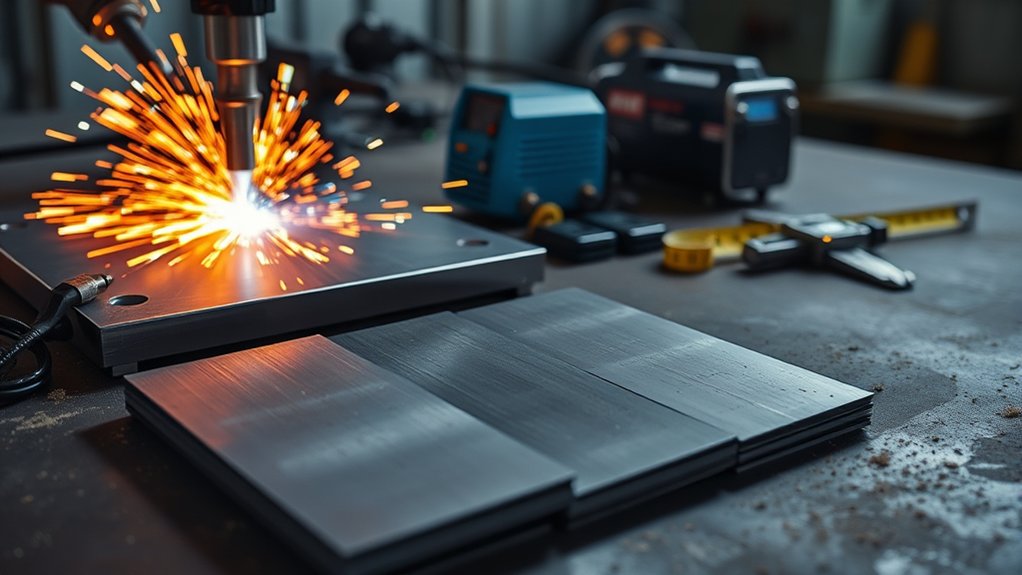
- Identify the material and actual thickness. Remove rust or scale only where needed for a reliable work-clamp connection. Do not assume nominal gauge when accuracy matters.
- Select the correct process and consumable. Use a cartridge, nozzle, electrode, shield, and operating mode approved for that material and current.
- Load the chart amperage. On an automatic cartridge system, allow the machine to select the supported current and mode unless the manual directs otherwise.
- Enter the published travel speed. Choose the manufacturer’s best-quality or production value according to your goal.
- Set cut height, pierce height, and delay. Copy all related values from the same row. Do not mix a speed from one process with a height from another.
- Make a straight test cut. Use scrap of the same material, grade, thickness, and surface condition.
- Inspect both sides of the kerf. Check penetration, dross, top spatter, bevel, lag lines, and kerf width.
- Change one variable at a time. Small speed or height changes are easier to diagnose than simultaneous changes to current, pressure, and motion.
Pro Tip: Save a proven tool record for each material, thickness, consumable, and machine. Record current, IPM, cut height, pierce height, delay, kerf, arc voltage if used, and the date the consumables were installed.
| Cut Symptom | Likely Cause | First Checks |
|---|---|---|
| Small, hard bead of dross with a trailing arc | Travel speed is too fast | Reduce speed in small steps; confirm current, height, and consumable selection |
| Large, bubbly dross that removes easily | Travel speed is too slow | Increase speed; check whether the plate is becoming excessively hot |
| Top spatter | Speed may be too fast, pierce settings may be wrong, or the torch may start too low | Check the chart speed, pierce height, delay, lead-in, and torch-height sequence |
| Positive bevel; more material removed at the top | Torch may be too high | Verify cut height, arc-voltage calibration, torch squareness, and consumable wear |
| Negative bevel; more material removed at the bottom | Torch may be too low | Raise the torch to the chart height and inspect the shield and nozzle |
| Arc does not fully penetrate | Excessive speed, insufficient available output, wrong consumable, low input voltage, or restricted air | Stop and verify the complete chart row, electrical supply, air flow, work clamp, and rated capacity |
| Kerf widens or cut quality degrades over time | Worn nozzle or electrode, poor air quality, or incorrect torch height | Inspect consumables according to the manual; check moisture, oil, and height control |
Products Worth Considering

Package Include: 10 Shield Cups, 50 Nozzles, 20 Swirl Baffle, and 30 Electrodes.

[Achieve Precise Cuts] PT31 Plasma Cutting Consumables – Your Essential Tool for Efficient Cutting! Whether you're working with sheet metal, steel, or any other material, superior cutting performance ensure clean, accurate, and smooth cuts.

High-Quality Material:Made of high quality material to ensure a longer lifespan and superior performance.
Air Supply and Pressure Requirements
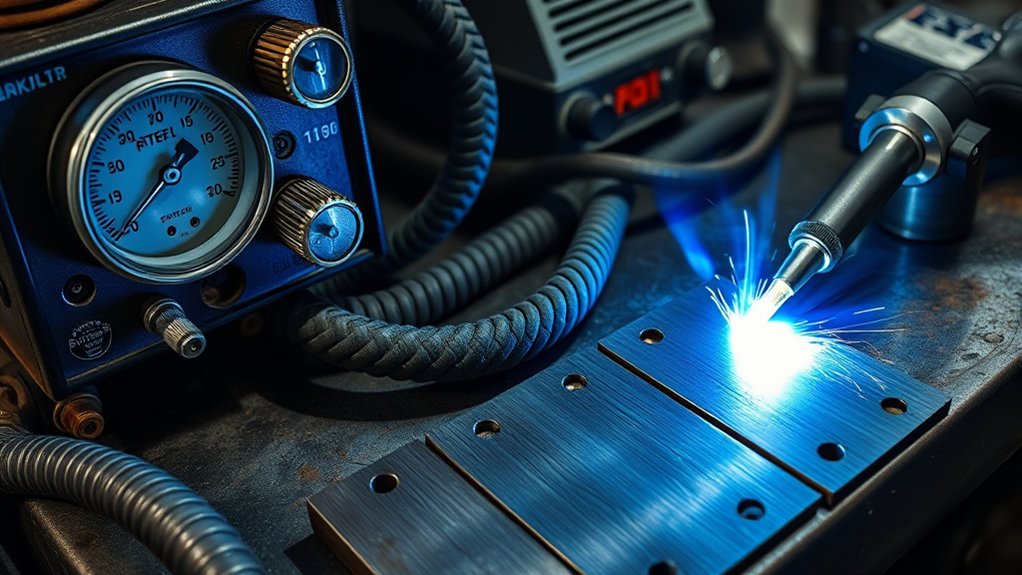
A plasma cutter needs enough air flow at the required inlet pressure while the torch is flowing. Static pressure on a compressor gauge does not prove that the system can maintain the required flow during a cut.
Do not use 55 PSI as a universal starting point or raise pressure simply because the plate is thicker. Check the machine specification. As one current example, the Powermax45 SYNC lists approximately 6.7 SCFM at 90 PSI at the inlet. Its internal controls can set operating pressure according to the installed equipment and process.
Use clean, dry, oil-free air unless the manufacturer authorizes another gas. Moisture and oil can destabilize the arc, shorten consumable life, damage internal components, and produce inconsistent kerf geometry.
- Size the compressor for both required SCFM and its own duty cycle.
- Measure pressure while air is flowing, not only when the system is idle.
- Use adequately sized hoses, fittings, filters, and regulators.
- Drain the receiver and moisture separators regularly.
- Correct leaks and restrictions instead of masking them with excess regulator pressure.
- Place added filtration where the manufacturer recommends it.
If pressure drops during a long cut, determine whether the compressor, hose, filter, or fitting is restricting flow. Do not continue cutting while the machine reports a gas-pressure or flow fault.
Set Standoff, Pierce Height, Delay, and Kerf
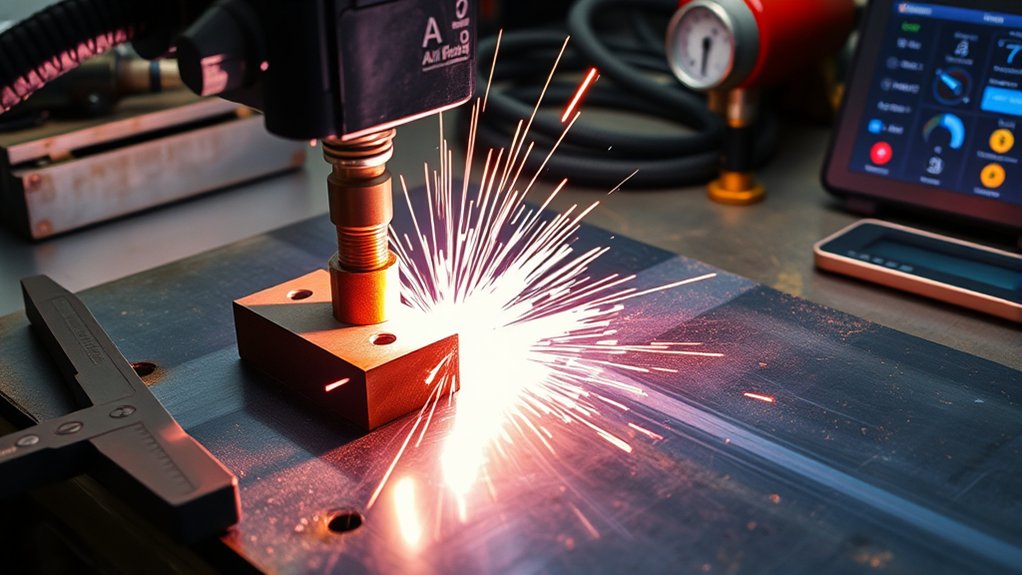
Cut height is the torch-to-work distance maintained after the arc has pierced the plate. Pierce height is the greater distance used while molten metal is being ejected upward. Pierce delay is the time allowed for the arc to pass through the plate before motion begins.
Use all three values from the same cut-chart row. There is no dependable universal 1.5-to-2-times pierce-height rule. In the 45 A example above, a 0.06-inch cut height is paired with a 0.15-inch pierce height, or 250%, while delay rises from 0 seconds on thin sheet to 1 second on 1/2-inch plate.
A delay that is too short can start motion before the arc passes through the material. A delay that is too long holds the arc in one area, enlarges the pierce, increases heat, and exposes the torch to more blowback. If the chart identifies a thickness as edge-start only, do not attempt a center pierce.
For CNC work, use initial height sensing and torch-height control when the system supports them. Confirm that the torch is square to the plate and that the table reaches the programmed speed. Worn consumables can change the arc voltage needed to maintain the intended physical height.
Measure the actual kerf in a test coupon before applying compensation in CAM. Offset an outside profile outward by half the measured kerf and an inside feature inward by half the kerf, unless the CAM system asks for full kerf width and calculates the offset automatically.
With standard clockwise-swirl consumables, the best edge is generally on the right side of the torch’s direction of travel. That normally means cutting outside contours clockwise and inside holes counterclockwise. Confirm the rule for your torch because specialized processes may differ.
Settings for Mild Steel, Stainless Steel, Aluminum, and Coated Metal
Do not copy one mild-steel row directly to another material. Manufacturers publish separate charts because each material responds differently to heat, gas chemistry, piercing, and oxidation.
- Mild steel: Air plasma is common. Use the mild-steel chart for the installed process and thickness.
- Stainless steel: Use the stainless chart. Air can leave a dark oxidized edge, while supported nitrogen, F5, or multi-gas processes may change finish and speed.
- Aluminum: Use the aluminum chart and follow the manufacturer’s water-table restrictions. Cutting some aluminum alloys near water can create a hydrogen accumulation hazard.
- Galvanized steel: Zinc-containing fume can cause harmful exposure. Use effective source capture and keep your breathing zone away from the plume.
- Painted or plated steel: Identify the coating before hot work. Paints or platings may contain lead, chromium, cadmium, solvents, or other hazardous materials.
Warning: Removing a coating by grinding can exchange a fume hazard for a dust hazard. Use a reviewed removal method, dust control, local exhaust, and appropriate PPE. When ventilation cannot keep exposure within safe limits, respiratory protection must be selected and managed under an applicable respiratory-protection program.
Electrical Supply and Duty Cycle
Do not size the circuit from plasma output amperage alone. A “45-amp plasma cutter” describes cutting output, not necessarily the current drawn from the building circuit. Input requirements change with model, voltage, phase, configuration, and available output.
Read the machine nameplate and installation manual for:
- Permitted input voltage and phase
- Maximum input current
- Recommended branch-circuit protection
- Conductor, plug, receptacle, and disconnect requirements
- Generator or engine-drive capacity
- Grounding and extension-cord limitations
Have a qualified electrician install or evaluate a new circuit. Do not substitute a larger breaker for undersized wiring or repeated nuisance trips.
Duty cycle is the permitted arc-on time within a stated test period, commonly 10 minutes, at a specified output and ambient temperature. A 50% rating means up to five minutes of arc time followed by the cooling time needed to complete that period under the stated conditions. The rating often increases when the cutter is run below maximum output.
Thermal shutdown protects the machine but should not be treated as the normal signal to stop every job. Plan long CNC toolpaths around the published duty cycle, compressor capacity, and ambient temperature.
Safety Checklist Before Cutting
- Read the plasma cutter’s operator and safety manuals.
- Inspect the torch, lead, work cable, clamp, air hose, and consumables.
- Make sure the work clamp contacts clean metal and is connected as directed by the manufacturer.
- Keep the cutting area dry and do not handle live electrical parts.
- Use the torch lock or power-isolation procedure required before changing consumables.
- Select eye and face protection for the process and current; wear safety glasses with side protection beneath the face shield or helmet.
- Wear flame-resistant clothing, gloves, hearing protection, and protective footwear.
- Remove combustibles and provide an appropriate fire watch when sparks can reach hidden spaces.
- Use local exhaust that captures fume near the source without pulling the plume through your breathing zone.
- Do not cut containers, tanks, drums, or piping that may contain pressure, flammable residue, or an unknown substance.
- Stop if the machine reports an air, consumable, electrical, or thermal fault.
Frequently Asked Questions
How do consumable wear and nozzle size affect cut quality over time?
A worn or damaged nozzle can deform the arc and widen the kerf. Electrode wear, moisture, incorrect current, excess pilot-arc time, and poor height control can also shorten consumable life. Inspect parts using the limits in your torch manual. Use only a nozzle or cartridge approved for the selected current and replace worn components as the manufacturer directs.
Can plasma cutters handle galvanized or painted steel safely?
They can cut conductive coated steel, but the coating may produce hazardous fume or decomposition products. Identify the coating, review its safety information, and use effective local fume extraction. Keep the plume out of your breathing zone. Do not rely on an ordinary dust mask, and do not grind off an unknown coating without controlling the resulting dust.
What shop power is required for a higher-amperage plasma cutter?
There is no universal voltage or breaker rule based only on plasma output amperage. Check the exact model’s nameplate and installation manual for input voltage, phase, maximum current, circuit protection, conductor size, and generator requirements. Have a qualified electrician evaluate or install the branch circuit.
How does duty cycle limit continuous cutting on thick plate?
Duty cycle limits arc-on time at a stated amperage and ambient temperature, usually over a 10-minute test period. Thick plate often requires high output and slow motion, so the arc remains on longer. Compare the planned toolpath with the machine’s rating and allow cooling before thermal protection activates.
What ventilation is recommended for indoor plasma cutting?
Use local exhaust, such as a properly designed downdraft, water-table, or source-capture system, that keeps contaminants out of the operator’s breathing zone. The required airflow cannot be reduced to one CFM number because it depends on the process, hood design, material, coating, enclosure, and exposure limits. Follow applicable OSHA welding and cutting guidance and obtain an industrial-hygiene assessment when exposure is uncertain.
Can one plasma cutter settings chart work for every machine?
No. Settings change with the power supply, torch, consumable, current range, material, gas, lead length, cutting mode, and motion system. Use a general chart only to understand the trend. Use the current manufacturer chart for the actual numbers entered into the cutter or CNC.
Why do plasma-cut holes need different attention than outside profiles?
Small holes give the torch less time to reach steady motion and are sensitive to lead-ins, acceleration, height, overburn, and cut direction. Use the hole-cutting process or CAM rules approved for your system. With standard clockwise-swirl consumables, internal features are commonly cut counterclockwise so the best edge remains on the finished part.
Conclusion
Start every plasma setup with the chart for the exact machine, torch, consumable, material, and thickness. Load the complete row—not just amperage—and verify speed, air supply, cut height, pierce height, delay, and kerf on scrap.
If the test cut shows trailing high-speed dross, reduce speed. If it shows heavy low-speed dross, increase speed. Check torch height, squareness, consumables, air quality, electrical supply, and work-clamp contact before making larger changes.
Accurate plasma cutting is a controlled process, not a single amps-per-thickness formula. A documented test cut gives you a safer and more repeatable setting than an unsupported universal number.
Sources
- Hypertherm Duramax Machine Torch Cut Charts for Powermax45 — source for the labeled 45 A mild-steel and FineCut example values
- Hypertherm Powermax45 SYNC product resources — current system specifications, manuals, cut charts, automatic setup, air requirements, and duty cycle
- Hypertherm plasma cut-quality troubleshooting guide — dross, speed, torch height, consumables, cut direction, and gas-delivery checks
- Miller guide to selecting and operating a handheld plasma cutter — rated versus severance capacity, cutting speed, and input-power considerations
- OSHA: Controlling Hazardous Fume and Gases During Welding — plasma-cutting fume, coating hazards, ventilation, and respiratory protection
- OSHA eye protection guidance for welding and cutting — filter-lens selection and eye and face protection