Plasma Cutting Steel Thickness Chart: Amps, IPM & Air Requirements

Learn the exact amps, IPM, and air pressure for each steel thickness with pro tips on standoff and duty cycle—discover the optimized chart inside.
Use these charts to match material thickness to output current for predictable results. Each table lists recommended cut, pierce, and severance capacity, plus typical travel speeds for steel, stainless, and aluminum. As a quick guide, 30–40A suits thin sheet to ~1/4 in (6 mm), 50–60A handles ~3/8–1/2 in (10–12 mm), and 80A+ targets thicker plate—always confirm your model’s specs. Choose the correct nozzle size for the set amperage, hold cut height with a drag shield or THC, and keep air clean at 60–90 PSI with adequate CFM. Watch the kerf and dross lines to fine-tune speed. For precise piercing, use the charted pierce height/delay and reduce duty-cycle stress with staged cuts.
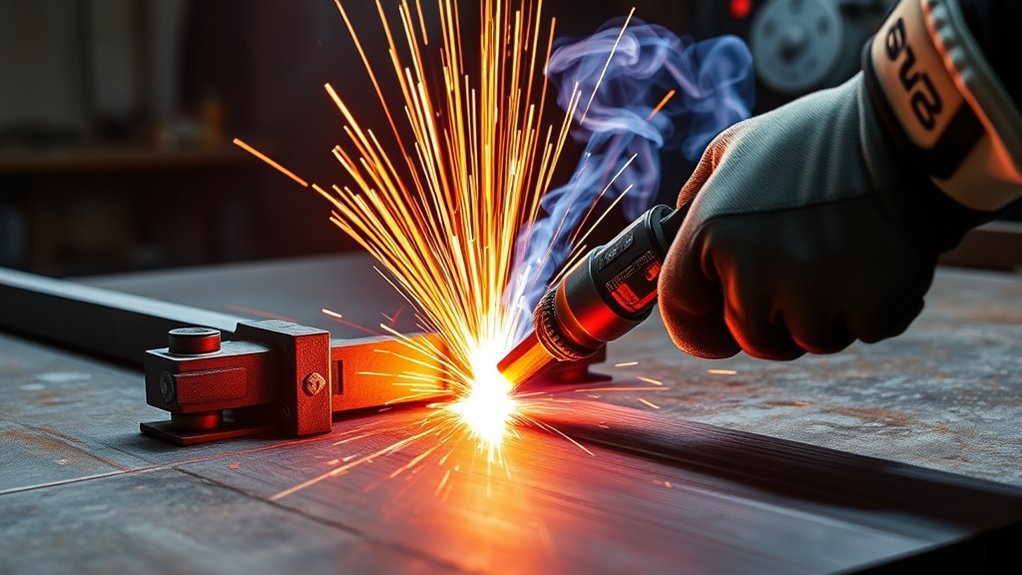
Learn the exact amps, IPM, and air pressure for each steel thickness with pro tips on standoff and duty cycle—discover the optimized chart inside.

Master plasma cutting aluminum by dialing voltage, amperage, standoff, and gas for smoother edges and speed—discover the exact settings that prevent dross and warping.

Learn how 40A vs 60A plasma settings affect thickness, speed, and cut quality—plus the critical tuning factor that can make or break your results.

A 40‑amp plasma cutter promises clean cuts around 1/4 inch but can sever near 1 inch—discover the trade-offs, techniques, and specs that decide your results.

Get the real 220V plasma cutting thickness by amps—see how 20–50 A maps to steel size, duty cycle, tip selection, and circuit needs before you cut.

Unlock the Plasma Cutter 62i’s real-world thickness limits and discover the overlooked factors that make or break your cuts—ready to push beyond the spec sheet?

Navigate 60A plasma cutter thickness and speed limits, from rated vs max capacity to air and duty cycle, and discover where performance truly peaks.

Curious how a 50A plasma cutter really handles steel and aluminum thickness at 110V vs 220V—plus duty cycle, air, and technique—discover the surprising limits.

I reveal the optimal 40A plasma settings for each steel thickness—amps, psi, tip size, and speed—to prevent dross and warping, but one detail changes everything.

Jump into our Plasma Cutter 30 Amp Thickness Guide to uncover exact settings for clean cuts—and the crucial tweaks you can’t afford to miss.