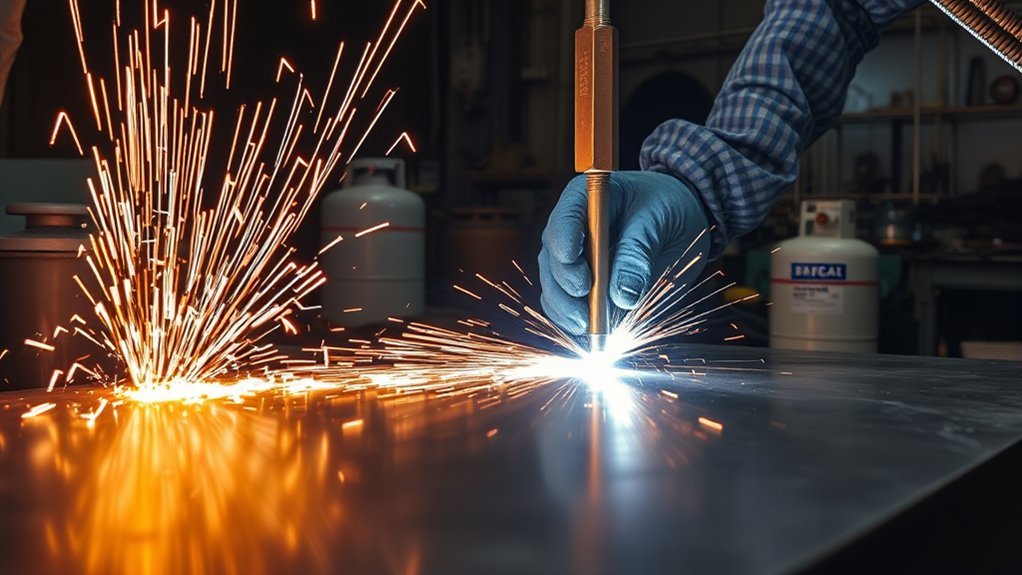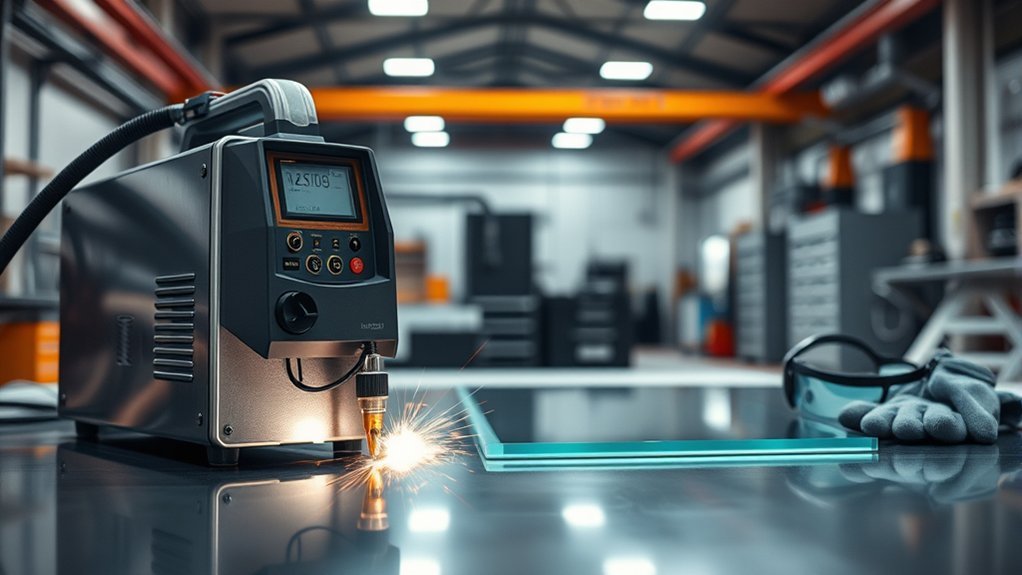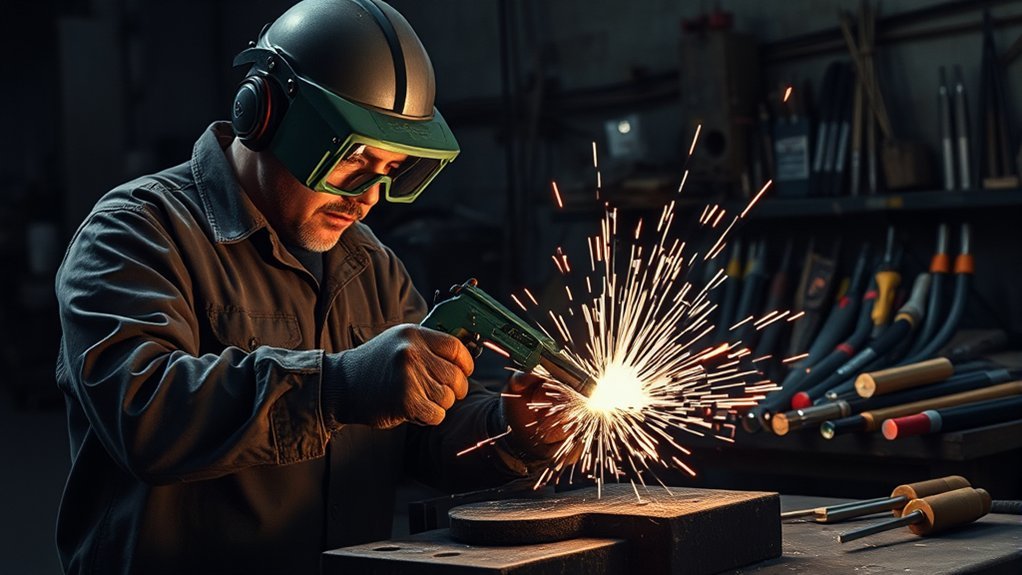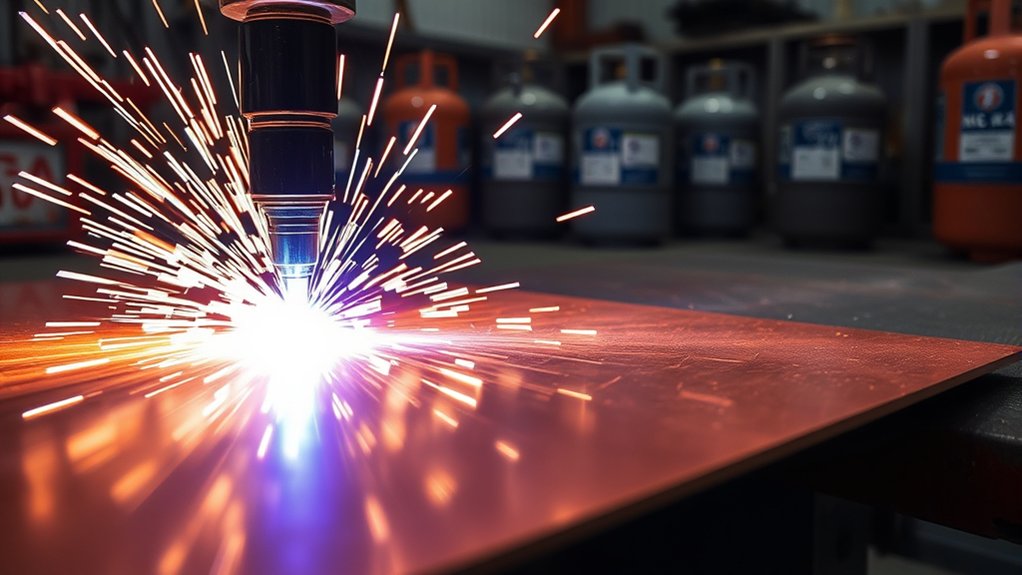
Yes, you can cut copper sheet with a plasma cutter, but clean results depend on using the exact process your machine supports. Copper carries heat away from the arc quickly, so universal amp, speed, gas, or standoff numbers are unreliable. Start with the manufacturer’s cut chart, then make a short test cut on scrap from the same sheet.
Quick Answer
Yes. Plasma cutting works on copper because copper is electrically conductive. Use the gas, consumables, amperage, travel speed, pierce height, and cut height specified by your machine maker. Most handheld air-plasma systems use clean, dry compressed air. Use nitrogen or argon-hydrogen only in equipment and processes that explicitly approve those gases.
Key Takeaways
- Plasma can cut copper because copper conducts electricity, but its high thermal conductivity makes heat and speed control important.
- There is no safe universal amperage, travel-speed, gas-pressure, or torch-height setting for every copper sheet and plasma cutter.
- Clean, dry compressed air is the normal process gas for many handheld air-plasma systems.
- Nitrogen and argon-hydrogen are specialty options that require a compatible machine, approved consumables, and a copper-specific process.
- Good ventilation, suitable arc-rated eye protection, fire control, and clean consumables are essential.
At a Glance
| Time Required | About 10–20 minutes for setup and test cuts; final cutting time depends on the pattern, thickness, and machine. |
| Difficulty | Intermediate; beginners should practice on scrap before cutting a finished part. |
| Tools Needed | Compatible plasma cutter, approved consumables, clean dry air or approved gas, work lead, scrap copper, clamps, straightedge or guide, PPE, ventilation, and fire extinguisher. |
| Cost | Variable; normal costs include electricity, compressed air or approved gas, consumable wear, and scrap used for testing. |
What’s in This Article
- Can You Plasma Cut Copper Sheets?
- Safety and Setup Checklist
- Essential Plasma Cutter Settings
- How to Plasma Cut Copper Sheet
- Gas Choices for Copper Cutting
- Techniques for Cleaner Edges
- Troubleshooting Copper Plasma Cuts
- Comparison With Other Cutting Methods
- Efficiency and Performance Tips
- Common Mistakes
- Frequently Asked Questions
- Conclusion
- Sources
Can You Plasma Cut Copper Sheets?
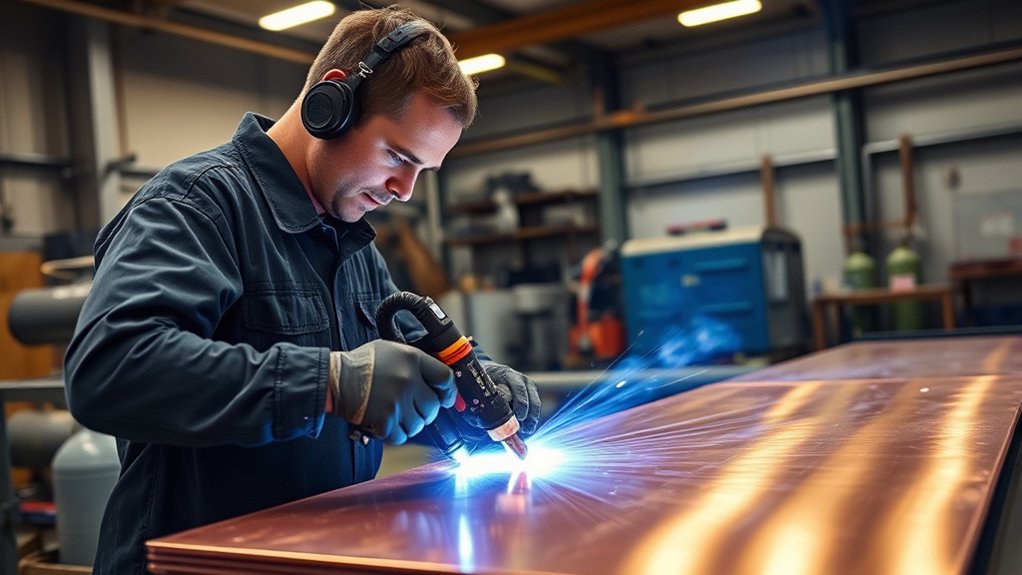
Plasma cutting uses an electrical arc and a high-speed stream of ionized gas to melt metal and blow the molten material out of the kerf. It works on electrically conductive materials, including copper and brass, as explained in Hypertherm’s plasma-cutting overview.
Copper behaves differently from mild steel because it transfers heat rapidly. Typical electrolytic tough-pitch copper has a thermal conductivity near 397 W/m·K at 20°C, according to the Copper Development Association. Copper alloys can have substantially different properties, so the exact alloy and temper matter.
This rapid heat movement can make a weak or poorly adjusted arc lose cutting ability. It can also create dross, top-edge rounding, discoloration, or an incomplete cut when speed, consumables, gas quality, or torch height are wrong.
The correct starting point is the cut chart for your exact machine and consumable process—not a universal amperage or travel-speed number copied from another plasma cutter.
If your operator manual does not include copper, contact the equipment manufacturer before using settings intended for steel, stainless steel, or aluminum. A chart for another metal may provide a rough test reference, but it is not a verified copper procedure.
Safety and Setup Checklist
Warning: Plasma cutting exposes you to arc radiation, hot sparks, molten metal, electrical energy, noise, compressed gas, and metal fumes. Do not cut until you have read the plasma cutter manual and established suitable eye, skin, hearing, fire, and ventilation controls.
Before cutting copper, confirm that you have the following:
- A compatible plasma cutter: The machine must be approved for conductive nonferrous metal and capable of cutting the sheet thickness.
- Correct consumables: Install the electrode, nozzle or cartridge, shield, swirl ring, and other parts specified for the selected amperage and process.
- Clean, dry gas: Air-plasma systems need adequate airflow without oil or excessive moisture. Specialty gases require approved regulators, hoses, connections, and consumables.
- A sound work connection: Attach the work lead to clean, bare metal on the workpiece or a conductive cutting table connected to it.
- Stable material support: Support the sheet so it cannot shift, vibrate, or drop into the torch path.
- Scrap from the same material: Use the same alloy and thickness for test cuts whenever possible.
- Suitable PPE: Wear safety glasses under suitable arc-rated eye and face protection, flame-resistant clothing, leather gloves, hearing protection, and protective footwear.
- Ventilation: Use local exhaust or another effective system that pulls fumes away from your breathing zone.
- Fire protection: Remove combustibles, inspect both sides of the work area, and keep an appropriate extinguisher nearby.
OSHA’s eye-protection table lists shade 8 as the minimum protective shade for light plasma arc cutting below 300 amps. Use a darker shade when required by your machine manual, employer, hazard assessment, or applicable safety standard.
OSHA’s general-industry hot-work requirements call for moving or protecting combustible materials and identify a 35-foot clearance in several fire-prevention situations. Review the full OSHA welding and cutting requirements rather than treating 35 feet as the only fire-control measure.
Never cut a sealed, pressurized, or previously used container unless it has been professionally assessed and prepared for hot work. Remove oils, paints, plating, insulation, adhesives, and unknown residues when they could release hazardous fumes. Do not use chlorinated cleaners near an arc.
Plasma cutting can generate airborne metal fume. Use source capture where practical, keep your head out of the plume, and follow the ventilation guidance in OSHA’s welding-fume fact sheet.
Essential Settings for Cutting Copper With a Plasma Cutter
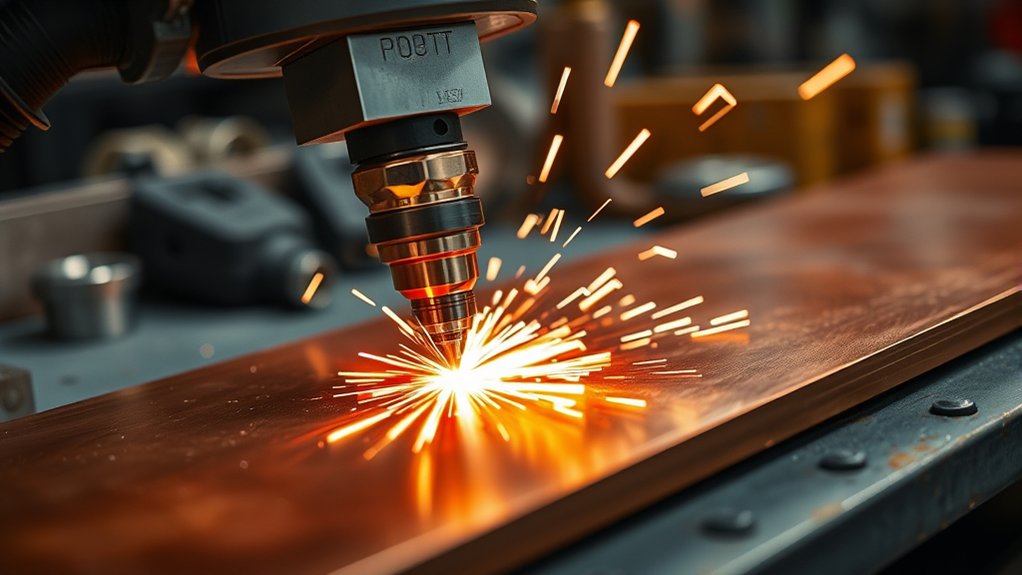
Copper thickness, alloy, machine power, torch design, consumable type, gas process, and hand or mechanized operation all affect the correct setup. That is why fixed ranges such as 40–100 amps, 30–50 inches per minute, or a universal standoff should not be used as general rules.
Products Worth Considering

【High Quality Materials】The copper used in making plasma cutter consumables offer several advantages. For example, high-quality materials like copper and ceramic are used for their ability to withstand high temperatures and prolonged use, resulting in longer-lasting consumables. It also resists oxidation and corrosion, ensuring that consumables remain functional and reliable over time.

Fit for: SG-55 AG-60 plasma cutter torch head.

Crafted from high-quality durable materials, copper components offer excellent electrical conductivity and heat resistance, stable for high-frequency, high-intensity cutting. .040"/1.0 aperture ideal for 40-50A current.
Start With the Manufacturer Cut Chart
Find the row that matches the material, thickness, process gas, consumable, and cutting mode. A mechanized chart may specify additional values such as pierce height, pierce delay, cut height, arc voltage, kerf compensation, and lead-in length.
If copper is absent from the chart, ask the manufacturer whether the machine has an approved copper process. Do not assume a nitrogen or argon-hydrogen process is permitted merely because the gas can be connected to another model.
Match Amperage and Consumables
Use the rated amperage for the installed nozzle, cartridge, or consumable set. Running a low-amperage nozzle above its rating can damage the orifice and produce an unstable arc. Running far below the intended current can also reduce cut quality on some consumable designs.
Inspect the nozzle before cutting. Its opening should be round and centered rather than oval, nicked, or enlarged. Check the electrode for wear according to the manufacturer’s limit. Hypertherm explains that damage to the nozzle orifice changes arc shape and therefore changes cut quality in its consumable-care guidance.
Use the Correct Pierce and Cut Height
Pierce height and cut height are not always the same. Piercing too close can force molten copper back into the shield or nozzle. Cutting too high can widen the arc, increase bevel, and reduce energy at the sheet. Cutting too low can cause torch contact, top spatter, or premature consumable damage.
For a hand torch, use the drag shield, standoff guide, or freehand distance required by the consumable design. For CNC cutting, use the chart’s pierce height, pierce delay, transfer height, and cut height.
Set Travel Speed by the Cut Result
During a good cut, the arc should pass through the sheet and exit from the bottom of the kerf. A strong spray of sparks or molten metal coming back toward the torch can indicate excessive speed, inadequate power, poor gas flow, worn consumables, excessive height, or a combination of problems.
Do not react by changing several settings at once. Begin at the chart value, make a short straight cut, inspect the kerf and underside, then adjust one variable in a small step.
Protect Gas Quality and Pressure
Air-plasma systems need enough clean, dry, oil-free air at the inlet while the torch is flowing. Static pressure with the torch off does not prove that the system has sufficient dynamic flow. A restricted hose, undersized compressor, saturated filter, water in the line, or pressure drop can destabilize the arc.
Use the inlet pressure and flow requirements in the machine manual. Do not increase pressure beyond the approved range in an attempt to remove dross.
Note: Copper settings cannot be transferred reliably between machines with the same advertised amperage. Torch design, output voltage, consumables, gas flow, and duty cycle can produce very different results.
How to Plasma Cut Copper Sheet
- Identify the material. Confirm the copper grade or alloy, sheet thickness, and whether the surface has paint, plating, oil, adhesive, or another coating. Remove hazardous contamination using an approved method.
- Choose the approved process. Select the manufacturer-listed gas, amperage, consumables, and cutting mode. Install every torch part in the correct order and tighten it as directed.
- Prepare the work area. Establish ventilation, remove or shield combustible materials, inspect the space below and behind the cut, and position a suitable fire extinguisher.
- Support and clean the sheet. Place the copper on stable slats or another suitable conductive support. Clean the cut path and expose bare metal for the work-lead connection.
- Connect and test the system. Attach the work lead securely. Confirm gas flow, operating pressure, compressor capacity, and the correct cutting mode before striking an arc.
- Make a scrap test. Cut a short straight line in matching scrap. Inspect penetration, bevel, top-edge condition, dross, kerf width, discoloration, and consumable condition.
- Make the final cut. Hold the torch square to the sheet, maintain the approved height, and move smoothly. Use the chart’s pierce procedure or begin at an edge when the manufacturer recommends an edge start.
- Cool and inspect the part. Allow the copper and offcuts to cool in a safe location. Remove light dross with an appropriate tool, inspect the edge, and check the consumables before the next cut.
Pro Tip: Mark the starting settings and the result of each scrap cut. Change only one item—such as speed or cut height—before the next test so you can identify what improved or damaged the edge.
Gas Choices for Better Copper Cutting
The correct gas is the one approved for your machine, torch, consumables, material, and thickness. A more expensive gas is not automatically a better copper process.
| Gas or Process | Where It Is Common | Copper Guidance |
|---|---|---|
| Clean, dry compressed air | Handheld and light-mechanized air-plasma systems | The normal choice for many conventional systems that cut copper. Lincoln Electric notes that conventional plasma uses air to cut materials including copper and brass in its plasma-cutting FAQ. |
| Nitrogen | Selected nitrogen-capable or multi-gas systems | Use only when the manual provides an approved copper process, required pressure, compatible consumables, and suitable regulator setup. Do not assume it will always reduce oxidation or dross. |
| Argon-hydrogen | Specialized industrial multi-gas systems | Not a default recommendation for copper sheet. Use only with a manufacturer-approved process, gas console, torch, consumables, regulators, hoses, ventilation, and hydrogen-safety controls. |
| Oxygen or another gas | Material-specific industrial processes | Never substitute it for air or nitrogen unless the manufacturer publishes a compatible copper process. |
Warning: Argon-hydrogen contains flammable hydrogen. Keep flames and ignition sources away from cylinders, hoses, regulators, and the torch. Never cut underwater with a hydrogen-containing fuel-gas process. Follow the equipment maker’s plasma safety manual and applicable compressed-gas rules.
Products Worth Considering

Pipe size is 1/4 NPT, Nominal airflow is 45 CFM, filtration rating is .01 micron and the maximum pressure is 125 psi
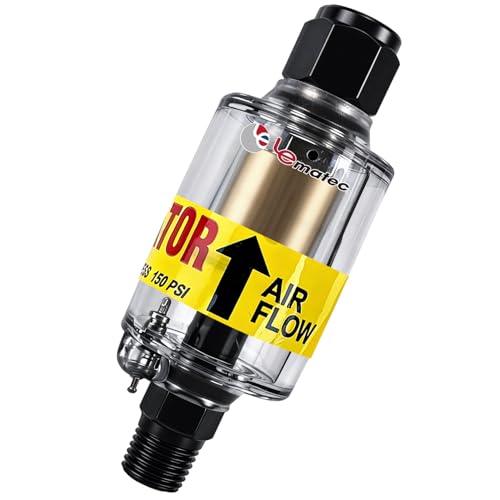
Moisture Protection: 1-micron reusable element removes air compressor oil and water from compressed air systems; essential for precise spray painting and plasma cutting

Standard Specification & Pressure Rating:Maximum working pressure: 150 PSI, Thread size: 1/4" NPT. Standard universal interface, easy to check compatibility. Fits most air compressors and pneumatic accessories.
Techniques for Achieving High-Quality Edges
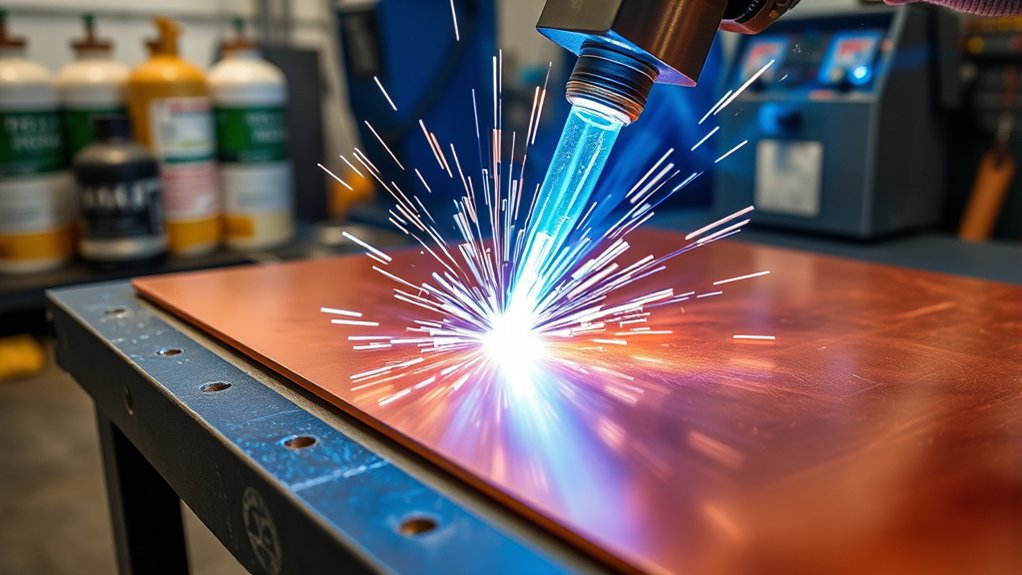
High-quality copper edges come from a stable arc and repeatable movement rather than from maximum amperage.
- Keep the torch square: Leaning the torch creates an avoidable bevel and changes the kerf position.
- Follow the required cut direction: Plasma-gas swirl can create a better side and a more beveled side of the kerf. Follow the torch manufacturer’s direction rule when finished-edge orientation matters.
- Use smooth lead-ins: On CNC work, place the lead-in and pierce point away from the finished profile when the software and process allow it.
- Avoid pauses: Stopping in one place enlarges the kerf and adds heat to the edge.
- Support thin sheet: Prevent vibration and sagging, but keep clamps and supports clear of the torch path.
- Sequence nearby cuts: Spread cuts around the sheet rather than concentrating heat in one small area.
- Keep the air system dry: Moisture and oil can shorten consumable life and make the arc less stable.
- Replace damaged consumables: A distorted nozzle opening can create bevel, wandering, and a wider kerf.
Hypertherm’s cut-quality guidance recommends checking the complete process because multiple variables—including torch height, speed, consumables, gas, and torch alignment—can affect the edge.
Troubleshooting Copper Plasma Cuts
| Problem | Likely Causes | What to Check |
|---|---|---|
| The arc does not cut through | Travel is too fast, output is too low for the thickness, the wrong consumables are installed, gas flow is weak, or the work connection is poor. | Return to the cut chart, verify consumable rating, test dynamic gas pressure, clean the work-lead contact, and reduce speed in a small step. |
| Heavy, rounded dross that removes easily | The torch may be moving too slowly, adding unnecessary heat. | Increase travel speed slightly while maintaining full penetration and the approved height. |
| Thin, hard dross that is difficult to remove | Travel may be too fast, the arc may be lagging excessively, or the process may lack enough energy at the workpiece. | Reduce speed slightly and verify amperage, cut height, gas flow, and consumable condition. |
| Excessive bevel or taper | Torch is not square, cut height is wrong, nozzle is worn, cut direction is unfavorable, or the machine is near its quality limit. | Square the torch in both axes, confirm height, inspect the nozzle, and orient the finished side according to the manufacturer’s cut-direction rule. |
| Arc wanders or the kerf is irregular | Damaged nozzle, moisture or oil in the gas, loose torch parts, unstable work connection, or uneven hand motion. | Replace damaged parts, service filtration, tighten the torch correctly, clean the work contact, and use a guide. |
| Top spatter or rapid shield damage | Piercing too close, moving before the arc penetrates, incorrect pierce delay, or starting beyond the system’s pierce rating. | Use the chart’s pierce height and delay. Start at an edge when directed by the manufacturer. |
| Warping or broad discoloration | Slow travel, repeated nearby cuts, unnecessary pauses, poor support, or excessive heat input. | Increase speed within the quality range, spread the cut sequence, support the sheet, and allow cooling between nearby cuts. |
Pro Tip: Photograph the top and bottom of each test cut and label it with the amperage, speed, height, gas process, and consumable condition. A simple test log prevents you from repeating failed settings.
Plasma Cutting Compared With Other Copper Cutting Methods
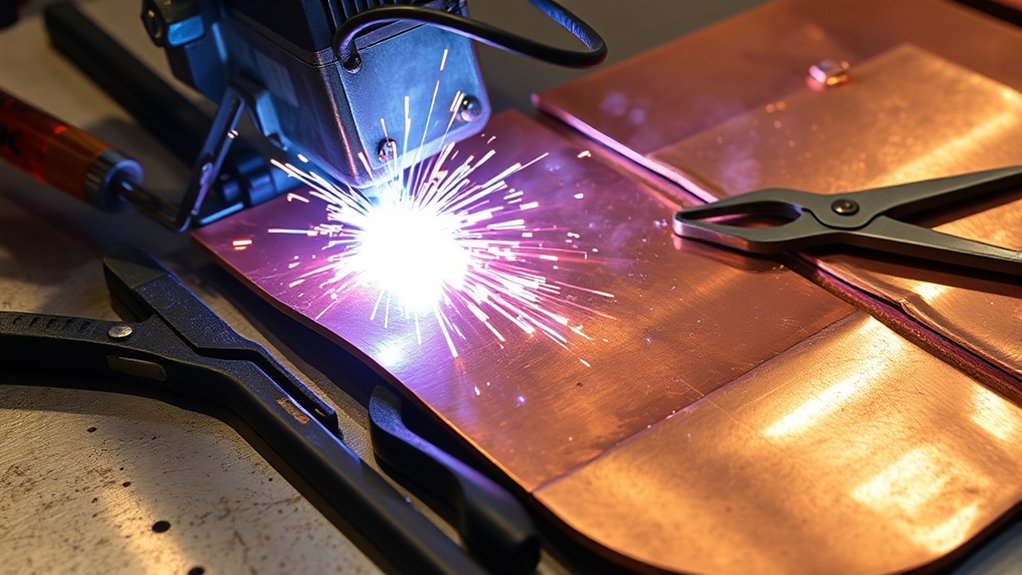
Plasma offers a practical mix of speed, portability, and thickness capacity, but it is not always the best method for fine detail or heat-sensitive parts.
| Method | Best For | Main Trade-Off |
|---|---|---|
| Plasma cutting | Fast shop cuts, freehand work, CNC profiles, and copper too thick or complex for basic hand tools | Creates a heat-affected edge, kerf bevel, fumes, and possible dross that may need cleanup |
| Laser cutting | Fine detail, narrow kerf, repeatable production, and small features | Copper is reflective and requires a laser system designed to process it. Suitable modern machines can cut copper reliably, as shown by TRUMPF’s nonferrous-metal guidance. |
| Waterjet cutting | Parts that need no thermal distortion or heat-affected zone | Equipment and operating costs can be higher, and cutting may be less convenient for a small portable shop. Flow Waterjet describes the process as producing no heat-affected zone. |
| Shears, nibbler, jigsaw, or saw | Thin sheet, simple profiles, straight cuts, and occasional low-volume work | Can deform thin sheet, leave tool marks or burrs, and may be slower on complex shapes |
Choose plasma when practical speed, portability, and versatility matter more than the smallest possible kerf or a completely cold-cut edge.
Tips for Better Efficiency and Performance
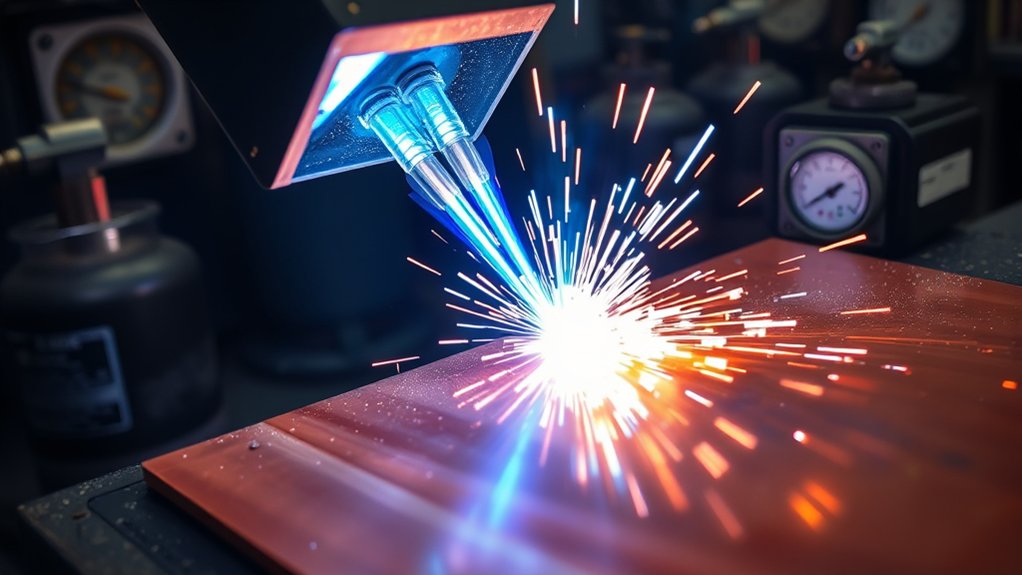
- Use an approved process: Avoid wasted gas, damaged consumables, and failed cuts caused by unsupported settings.
- Test before the finished part: A short scrap cut costs less than replacing a full copper sheet.
- Keep consumables organized: Do not mix nozzles, electrodes, shields, or cartridges intended for different amperages or processes.
- Maintain the air system: Drain the compressor, service filters, and check for restrictions or leaks.
- Use a guide: A straightedge, circle guide, template, or CNC path helps maintain steady speed and torch position.
- Plan the cut order: Cut small internal features before the outside profile and distribute heat across the sheet.
- Use sensible lead-ins: Keep pierce marks away from the finished edge where the process and software allow it.
- Track consumable life: Record pierces, cutting time, and visible wear so parts are replaced before quality collapses.
- Recycle clean scrap: Separate copper offcuts from contaminated waste when local recycling rules permit.
Do not preheat copper as a general workaround. Plasma cutting normally does not require preheating. Apply preheat only when the equipment or process manufacturer provides a specific approved procedure for the material and thickness.
Note: A cheaper gas is not economical if it creates failed parts, excessive grinding, or rapid consumable wear. Compare the complete cost per acceptable part rather than the gas price alone.
Common Mistakes to Avoid When Plasma Cutting Copper
- Using a universal online amperage or speed instead of the machine’s cut chart
- Assuming nitrogen or argon-hydrogen is automatically better than compressed air
- Connecting an unauthorized bottled gas to an air-only plasma cutter
- Using worn, mismatched, loose, or incorrectly assembled consumables
- Cutting with wet, oily, restricted, or undersupplied compressed air
- Attaching the work lead over paint, oxide, dirt, or another poor contact surface
- Moving too slowly and adding unnecessary heat to thin copper
- Holding the torch at an angle or changing height throughout the cut
- Piercing too close to the sheet or beyond the machine’s pierce capacity
- Changing amperage, speed, gas pressure, and height at the same time
- Skipping a test cut before cutting the final piece
- Cutting coated, plated, oily, or unknown scrap without identifying the fume hazard
- Ignoring sparks, hot offcuts, hidden combustibles, or the area below the work
Correct one problem at a time. When several variables change together, you cannot tell which adjustment improved the result or caused new damage.
Frequently Asked Questions
What safety precautions should you take when plasma cutting copper?
Wear suitable arc-rated eye and face protection, safety glasses, flame-resistant clothing, leather gloves, hearing protection, and protective footwear. Use effective ventilation, remove or shield combustibles, inspect the area below the cut, keep a suitable extinguisher nearby, and never cut sealed or contaminated containers.
What gas should you use to plasma cut copper?
Use the gas specified by the plasma cutter manufacturer. Clean, dry compressed air is standard for many handheld air-plasma systems. Use nitrogen or argon-hydrogen only when the machine, torch, consumables, regulators, and copper cut chart explicitly approve that process.
How does plasma cutting affect copper’s structural integrity?
Plasma creates a narrow heat-affected zone along the cut. Poor speed, height, or power settings can increase discoloration, edge oxidation, distortion, or local property changes. Use the approved process, avoid unnecessary pauses, and remove the affected edge when the part specification requires it.
Why does plasma-cut copper have heavy dross?
Heavy dross can result from incorrect travel speed, wrong cut height, insufficient output, poor gas flow, wet air, worn consumables, or an unsupported process. Begin with the cut chart, inspect the consumables and gas supply, then change one setting at a time.
Does plasma cutting copper affect the environment?
The process uses electricity and consumables and can create fumes, dust, noise, dross, and scrap. Reduce waste with accurate nesting and test cuts, maintain fume-control equipment, and send clean copper offcuts to an appropriate recycler when local rules allow it.
Can you use plasma cutting on copper alloys?
Yes, many conductive copper alloys can be plasma cut, but alloying elements change thermal behavior, fumes, and edge quality. Identify the alloy and coatings, review its safety data, and test the approved machine process on matching scrap.
What maintenance does a plasma cutter need after cutting copper?
Inspect the nozzle or cartridge, electrode, shield, swirl ring, retaining cap, and torch body. Remove debris using the manufacturer’s approved method, drain moisture from the air system, check filters, inspect the work lead, and replace parts that have reached their wear limit.
Is plasma cutting better than laser cutting for copper sheets?
Plasma is often better for portable work, practical shop cutting, and lower equipment cost. A copper-capable laser is usually better for fine detail, narrow kerf, and repeatable precision. Waterjet is often preferred when the part must avoid a heat-affected zone.
Safety Disclaimer: This article is for general information and does not replace professional training, the equipment manufacturer’s manual, a workplace hazard assessment, applicable regulations, or qualified technical advice. Stop and consult the manufacturer or a trained cutting professional whenever the approved copper process is unclear.
Conclusion
Plasma cutting copper sheets works best when you treat the manufacturer’s cut chart as the starting point and scrap testing as part of the setup. Avoid universal amperage, speed, height, and specialty-gas recommendations because different torches and consumables can behave very differently.
Most handheld air-plasma systems use clean, dry compressed air. Nitrogen or argon-hydrogen should be used only in a compatible system with an approved copper process and the required safety controls.
Keep the torch square, maintain the specified cut height, protect gas quality, use undamaged consumables, and adjust one variable at a time. These habits reduce dross, bevel, warping, failed cuts, and wasted copper.
Sources
- Hypertherm — Plasma Cutting Technology — supports plasma cutting of electrically conductive metals, including copper.
- Lincoln Electric — Plasma Cutting FAQs — supports cutting copper and brass with conventional air-plasma systems.
- Copper Development Association — Introduction to Copper Fact Sheet — supports copper thermal-property information.
- OSHA 29 CFR 1910.252 — supports welding and cutting fire-prevention, eye-protection, ventilation, and container precautions.
- OSHA — Controlling Hazardous Fume and Gases During Welding — supports local exhaust and breathing-zone fume controls.
- Hypertherm — Safety and Compliance Manual — supports plasma-fume, compressed-gas, fire, electrical, and argon-hydrogen warnings.