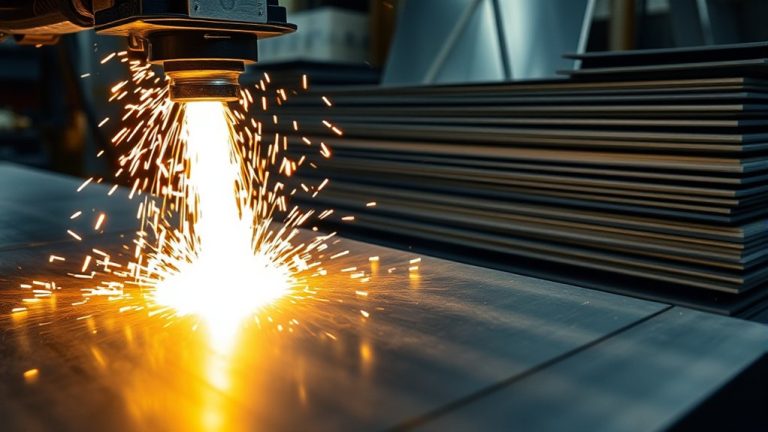
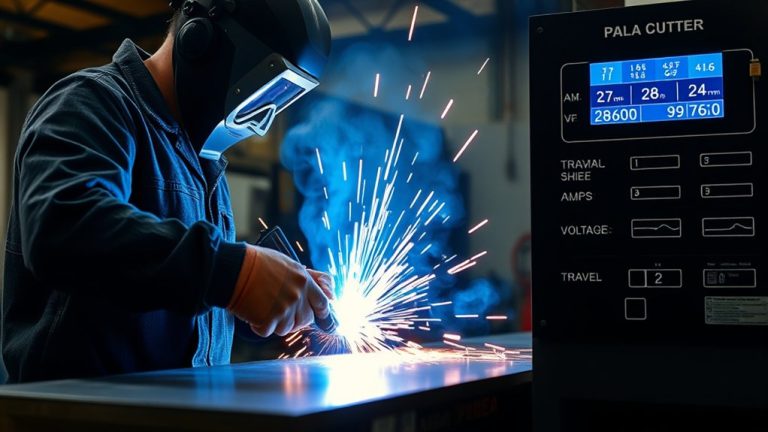
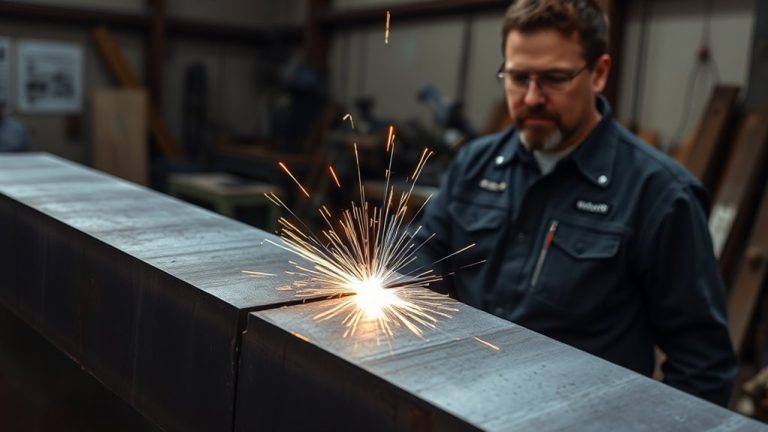
When considering whether a plasma cutter can effectively cut titanium, you must focus on key factors like gas choice and heat management. Opt for a 95/5% argon-hydrogen mix to enhance arc stability and minimize oxidation. Fast travel speeds are essential for reducing the heat-affected zone, preventing warping and strength loss. By closely monitoring cutting parameters and torch distance, you can achieve high-quality cuts while preserving titanium’s integrity.
Understanding Plasma Cutting and Titanium
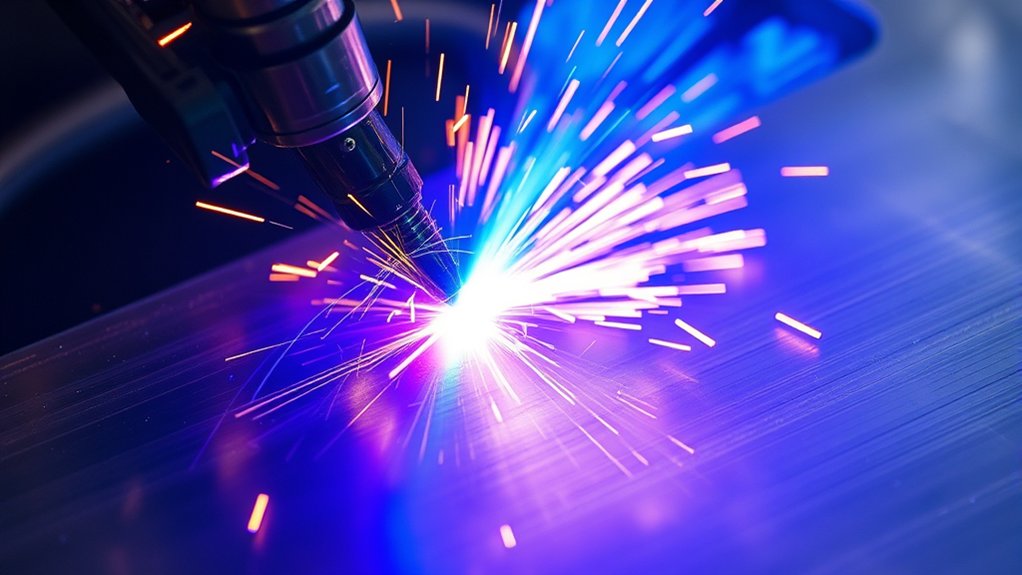
When you’re working with titanium, understanding the nuances of plasma cutting is fundamental. Titanium’s properties demand precision to preserve its integrity. Plasma technology offers a dynamic way to cut titanium, leveraging high-speed ionized gas, yet careful handling is essential.
Avoid oxygen-bearing gases; they risk oxidizing and degrading the material. Instead, opt for a 95/5% argon-hydrogen mix, enhancing the arc quality and ensuring precise cuts. With titanium’s sensitivity to heat, fast travel speeds akin to aluminum cutting are critical, minimizing heat input and maintaining the metal’s properties.
Although plasma cutting effectively slices titanium, it often leaves a rough edge, necessitating secondary processing for a smooth finish. Safety can’t be overlooked—titanium’s high fire risk and potential off-gassing require rigorous precautions, including a Class D fire extinguisher.
Mastering these elements liberates you, allowing your creativity to flow without compromising the material’s excellence.
Importance of Gas Selection in Plasma Cutting
You’ll find that selecting the appropriate gas when plasma cutting titanium greatly influences the cut quality and precision.
Utilizing an argon-hydrogen mix, typically 95/5%, optimizes arc stability and minimizes oxidation, whereas choosing nitrogen might reduce precision.
The gas choice directly affects the heat-affected zone, emphasizing the need for careful selection to maintain titanium’s structural integrity.
Gas Types for Cutting
Selecting the right gas is essential in plasma cutting, directly impacting the quality and efficiency of your work. Understanding gas properties and cutting techniques empowers you to master titanium cutting.
Argon-hydrogen mixtures, like a 95/5% ratio, optimize arc stability and heat control. This blend enhances thermal properties, ensuring high precision and clean cuts. Opt for this mix to avoid oxidation and maintain titanium’s integrity.
While nitrogen can substitute hydrogen, it may compromise cut quality, making careful selection imperative. Shop air, though tempting, should be avoided as it risks suboptimal results due to oxidation. Steer clear of oxygen-bearing gases to prevent material degradation.
Choose wisely—your liberation lies in the precision and efficiency of each plasma cut.
Impact on Cut Quality
Understanding the properties of different gases directly influences the precision of your plasma cuts, especially with challenging materials like titanium. The cut quality hinges on gas influence; utilizing an argon-hydrogen mix (95/5%) enhances arc stability, essential for clean cuts.
Avoid oxygen-bearing gases, as they oxidize the titanium, compromising cut integrity. While nitrogen can substitute hydrogen, it often reduces cut quality, emphasizing the need for a precise gas balance.
Efficient heat management is key—maintain faster IPM speeds akin to aluminum cutting to optimize results. Proper gas selection not only improves cut quality but also minimizes the heat-affected zone (HAZ), preserving titanium’s structural properties.
Your understanding of these variables grants liberation in achieving superior plasma cutting outcomes.
The Role of Heat-Affected Zones
When cutting titanium with a plasma cutter, it’s vital to understand the role of the heat-affected zone (HAZ) in the process. The HAZ refers to the region where microstructure changes occur due to heat, and managing this heat is critical.
Plasma cutting generates more extensive HAZs than other methods, potentially altering titanium’s mechanical properties. Excessive heat can lead to warping, reduced strength, or increased brittleness, all of which undermine the material’s integrity and performance.
You must be analytical about heat management to maintain titanium’s structural integrity. By optimizing gas mixtures and settings, you can minimize the HAZ, preserving the material’s desired characteristics.
Being precise with cutting parameters guarantees that the titanium retains its strength and functionality. Understanding these interactions allows you to cut titanium effectively without compromising its utility, consequently achieving the freedom to create robust, high-performing components.
Best Practices for Minimizing Heat Effects
When cutting titanium with a plasma cutter, you should prioritize selecting an ideal gas mixture, such as 95% argon and 5% hydrogen, to enhance arc stability and minimize oxidation.
Controlling the cutting speed is essential; a fast travel rate reduces the heat-affected zone by minimizing the exposure time of the material to heat.
Optimal Gas Selection
Although selecting the right gas mixture is essential for effective plasma cutting of titanium, it is important to prioritize minimizing heat effects to maintain material integrity. Using a 95% argon and 5% hydrogen mixture enhances plasma cutter efficiency while preserving titanium alloy characteristics. This combination guarantees superior arc quality and reduces oxidation risks. In scenarios where hydrogen isn’t available, nitrogen can serve as a substitute, though at a cost to cut quality. Significantly, avoid oxygen-bearing gases to prevent material degradation.
| Gas Type | Pros | Cons |
|---|---|---|
| Argon-Hydrogen | Enhances efficiency, minimizes oxidation | May require specific setup |
| Nitrogen | Readily available | Lower cut quality |
| Oxygen-bearing | None | Causes oxidation |
Selecting the ideal gas mitigates excessive heat, preserving titanium’s properties.
Controlled Cutting Speed
To minimize the heat-affected zone (HAZ) when plasma cutting titanium, it’s vital to maintain a controlled cutting speed. The right cutting techniques and speed adjustments guarantee precision and prevent undesirable changes in the titanium’s properties. Here’s how you can achieve this:
- Match Speed to Material: Use speeds similar to aluminum to prevent the arc from lingering, which reduces heat build-up and preserves the titanium’s integrity.
- Increase IPM Speed: Fast inch-per-minute (IPM) speeds produce cleaner cuts and limit heat transfer, essential for avoiding warping and weakening.
- Monitor and Adjust: Regularly check torch height and maintain movement consistency. This prevents overheating and unwanted oxidation, preserving mechanical properties.
Recommended Gas Mixtures for Cutting Titanium
For ideal results in plasma cutting titanium, a precise gas mixture can make all the difference. To maximize plasma efficiency with titanium alloys, the best blend consists of 95% argon and 5% hydrogen. This combination guarantees superior arc quality and cutting performance, essential for precision work. The inclusion of hydrogen enhances the plasma temperature, improving cutting efficiency. While nitrogen can occasionally substitute hydrogen, it often results in compromised cut quality, making it less suitable for high-precision demands.
Avoid oxygen-bearing gases, as they can negatively affect the integrity of titanium cuts. Maintaining a fast cutting speed, comparable to that used for aluminum, helps minimize heat buildup and prevents warping.
Here’s a quick breakdown of recommended gas mixtures:
| Gas Mixture | Composition | Effectiveness |
|---|---|---|
| Argon/Hydrogen | 95%/5% | Best for precision |
| Nitrogen Substitute | Nitrogen | Reduced quality |
| Oxygen-Bearing Gases | Avoid | Causes oxidation |
This information empowers you to make informed decisions while cutting titanium.
Avoiding Oxidation During the Cutting Process
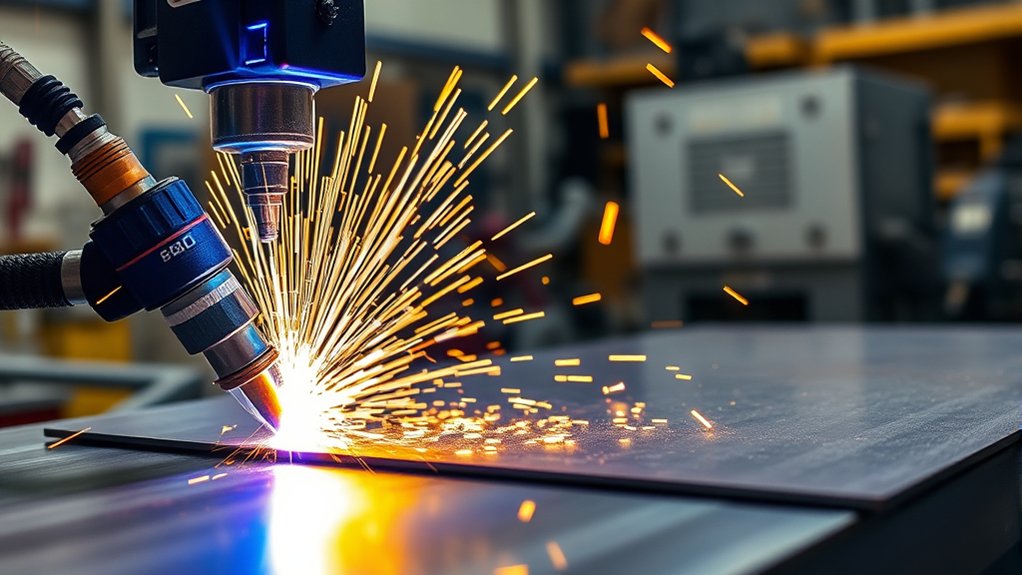
While cutting titanium with plasma, using the correct techniques is essential to avoid oxidation. You must consider several factors to guarantee oxidation prevention and titanium preservation during the process. Here’s how to do it:
- Gas Selection: Use an inert gas like argon, or an argon-hydrogen mix, to prevent oxidation. Oxygen-bearing gases can lead to surface oxidation, compromising the titanium’s integrity.
- Cutting Speed and Arc Temperature: Maintain a fast cutting speed and high plasma arc temperature. This minimizes the heat-affected zone, reducing exposure to oxidizing conditions, preserving the titanium’s quality.
- Shielding and Thermal Conductivity: Implement a nitrogen gas stream as a shield to protect the cut edges from oxidation.
Using a gas mix with high thermal conductivity, like 95/5% argon-hydrogen, enhances arc quality and lowers oxidation risks.
Achieving High-Quality Cuts With Proper Techniques
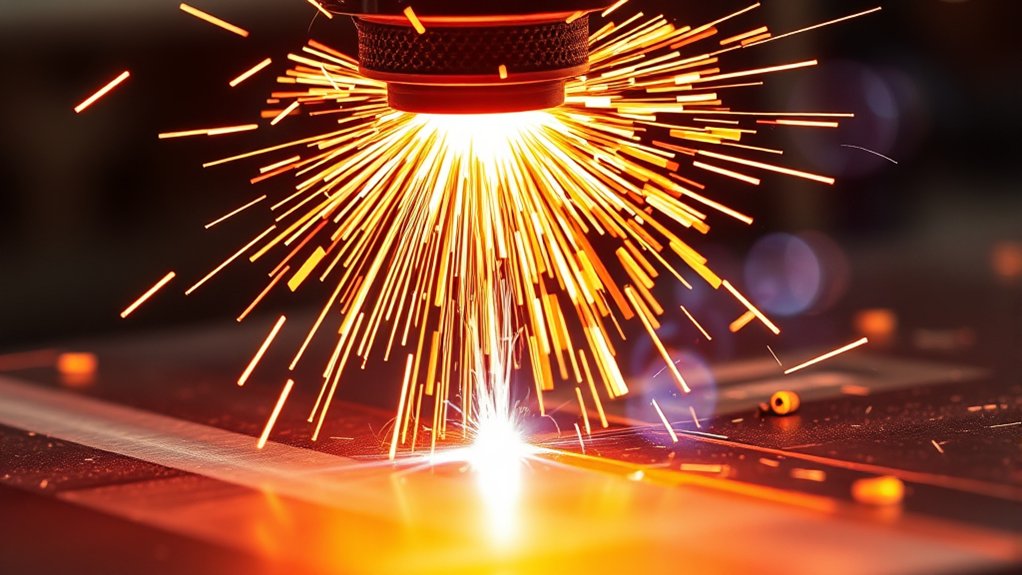
Achieving high-quality cuts when using a plasma cutter on titanium requires attention to specific techniques and parameters.
First, consider the gas mixture. Using argon and hydrogen guarantees optimal arc quality and minimizes oxidation, essential for overcoming titanium cutting challenges.
Next, adopt fast inches per minute (IPM) speeds akin to aluminum cutting, reducing heat input and preserving cut quality.
Maintaining a proper torch-to-workpiece distance is important. This technique minimizes the heat-affected zone, thereby safeguarding the titanium’s structural integrity.
Avoid oxygen-bearing gases, as they can excessively heat and compromise the titanium. Instead, use nitrogen or an argon-hydrogen mixture to prevent undesirable alterations.
Safety Considerations for Cutting Titanium
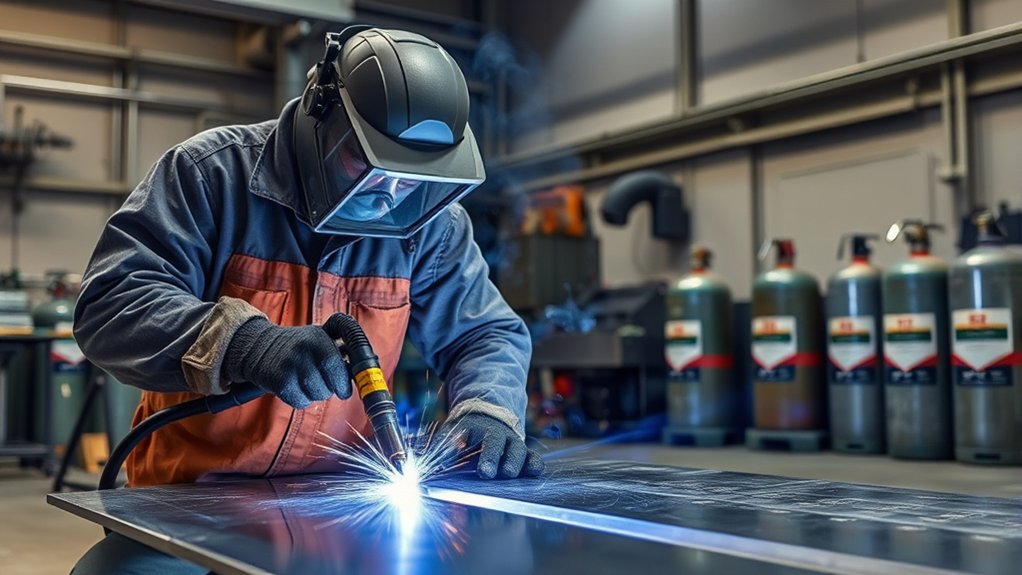
After mastering the techniques for high-quality cuts, focus on the critical safety considerations when plasma cutting titanium.
Titanium’s reactive nature poses unique challenges, including off-gassing hazards and a high fire risk. Implementing proper safety measures liberates you, allowing confident and effective cutting.
Here’s what you need to take into account:
- Safety Gear: Always wear appropriate safety gear, such as flame-resistant clothing, gloves, and eye protection to shield yourself from sparks and harmful fumes.
- Ventilation Systems: Confirm robust ventilation systems are in place to disperse noxious fumes efficiently. This prevents inhalation of hazardous gases, maintaining a safe working environment.
- Fire Safety: Keep a Class D fire extinguisher readily accessible, as titanium can ignite easily. Familiarize yourself with shop policies and adhere to protocols to mitigate fire risks effectively.
Consult with experienced personnel to refine your approach, confirming you navigate titanium’s complexities safely.
Secondary Processing for Edge Finishing
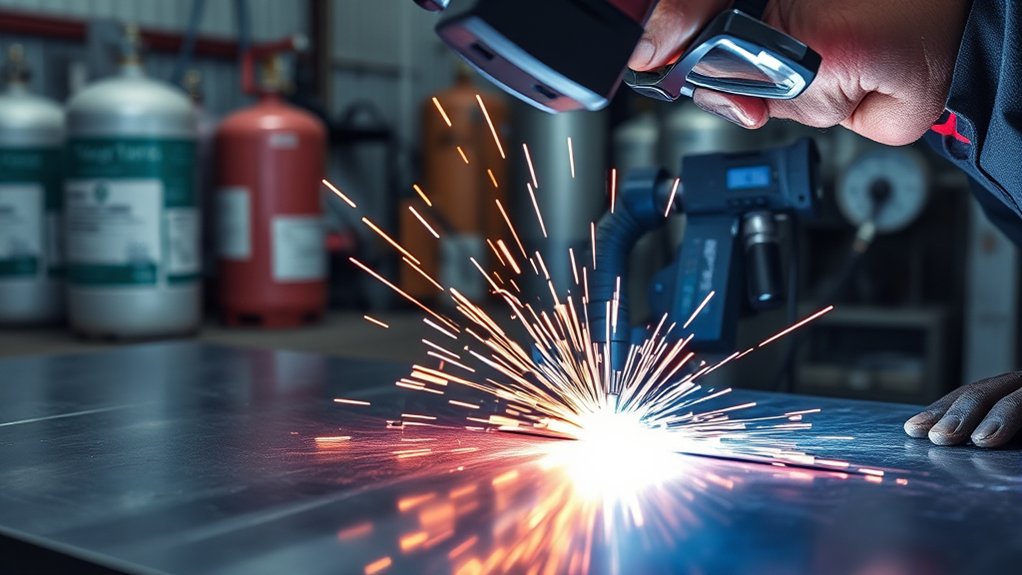
Even though plasma cutting is highly efficient, it often leaves titanium edges rough, necessitating secondary processing for ideal results. Employing edge treatment techniques like grinding, sanding, and machining guarantees a pristine finish by removing burrs and refining surface quality. Post processing methods also address the heat-affected zone (HAZ), vital for restoring titanium’s integrity and performance.
To enhance precision, consider employing water jet cutting or milling after plasma cutting. These methods produce smoother edges, reducing the need for extensive edge finishing. Proper secondary processing can greatly elevate both the aesthetic and functional characteristics of your titanium components, offering a path to liberation from compromised quality.
Here’s a comparison of common techniques:
| Technique | Purpose |
|---|---|
| Grinding | Burr removal and edge refinement |
| Sanding | Surface smoothness enhancement |
| Machining | Precise edge finishing |
| Water Jet Cutting | Enhanced precision, minimal HAZ |
| Milling | Improved accuracy, reduced finishing |
Choose the right method to achieve excellence in your final product.
Comparing Plasma Cutting With Other Methods
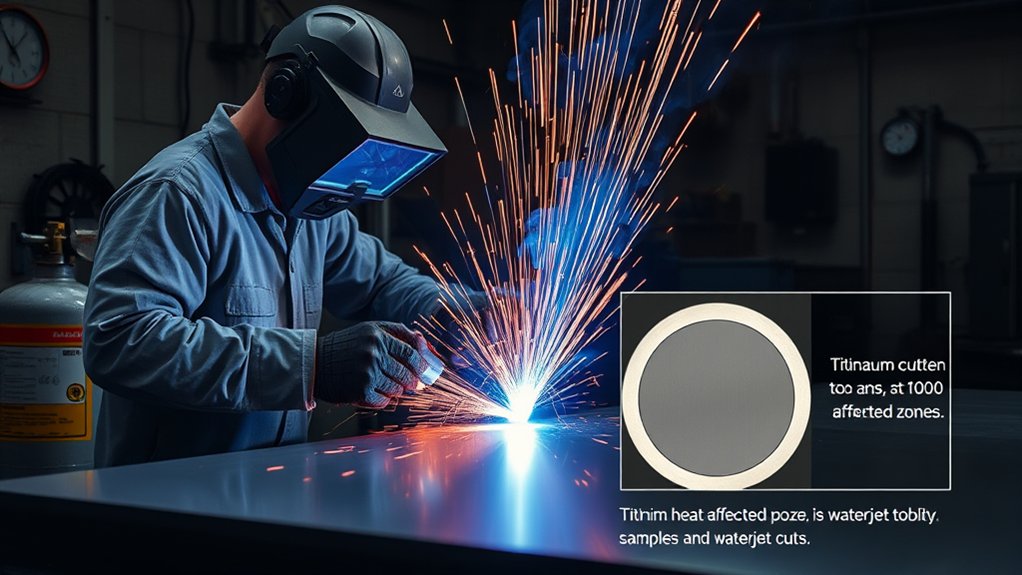
When considering cutting methods for titanium, you’ll find that plasma cutting offers speed advantages over traditional methods like band sawing, especially for thicker materials.
However, plasma cutting’s heat-affected zones can compromise material integrity and precision, making it less suitable than laser cutting for intricate designs.
To optimize results, managing heat effects and selecting the right gas mixture are essential to maintaining the integrity of the titanium.
Precision and Heat Effects
While evaluating precision and heat effects in metal cutting, plasma cutting distinctly impacts titanium due to its heat-affected zone. This zone can alter titanium properties, necessitating careful consideration of cutting techniques. Plasma cutting, though efficient, often results in rough cuts and requires secondary processing to refine edges.
Here’s a comparative analysis:
- Thermal Distortion: Plasma cutting creates a wider heat-affected zone than laser cutting, leading to potential structural changes in titanium.
- Material Integrity: Waterjet cutting, devoid of heat, maintains titanium’s integrity, mitigating any alteration in its properties.
- Gas Mixture: Employing a 95% argon and 5% hydrogen gas mix during plasma cutting enhances arc quality, minimizing oxidation and improving cut quality.
Understanding these factors liberates you to make informed decisions in metal cutting.
Speed and Efficiency Comparison
Although plasma cutting can rapidly slice through titanium, achieving speeds comparable to those for aluminum, it often necessitates additional finishing due to its wider heat-affected zone.
In comparing cutting technologies, plasma stands out for its speed and adaptability in titanium applications, particularly when CNC machines are employed to enhance efficiency and repeatability.
However, you should consider that laser cutting offers superior precision, minimizing thermal distortion with tolerances as tight as 0.0005 inches, which is essential for intricate titanium designs.
Meanwhile, waterjet cutting presents a clean alternative, creating cuts without a heat-affected zone and maintaining the metal’s properties.
While plasma cutting excels in speed, its cut quality may not match the precision of laser and waterjet methods.
Material Integrity Considerations
In considering material integrity, it’s crucial to recognize that plasma cutting titanium can lead to a heat-affected zone (HAZ), potentially altering the material’s properties if not managed properly.
Plasma efficiency is undeniable, yet the trade-off can be a wider HAZ compared to methods like laser cutting. To maintain titanium’s material properties, consider these alternatives:
- Waterjet Cutting: This method avoids HAZ entirely, preserving material integrity and negating the need for secondary processing.
- CNC Machining: Offers high precision with minimal thermal impact, reducing the risk of microstructural changes in titanium.
- Gas Mixture Use: Employ nitrogen or an argon-hydrogen mix during plasma cutting to shield edges from oxidation and enhance cut quality.
These methods can empower your decision-making, ensuring favorable outcomes for your projects.
Frequently Asked Questions
Can a Plasma Cutter Cut Through Thick Titanium Sheets Effectively?
Yes, you can effectively cut thick titanium sheets with a plasma cutter. Master cutting techniques by understanding titanium’s material properties, ensuring precision. Optimize settings for clean cuts, minimizing heat-affected zones, and embrace the freedom of advanced fabrication.
How Does Titanium Thickness Affect Plasma Cutting Speed?
Titanium thickness directly impacts cutting speed: thicker titanium reduces speed due to increased resistance and heat dissipation requirements. To optimize cutting, adjust power settings and guarantee proper gas flow to maintain efficiency and precision throughout the process.
Are There Specific Plasma Cutters Designed for Cutting Titanium?
Yes, 72% of plasma cutter models can handle titanium, but for ideal results, use ones with titanium plasma specifications. Leverage advanced cutting techniques to minimize heat-affected zones, ensuring precision and liberation from traditional cutting constraints.
What Are the Costs Associated With Using Argon-Hydrogen Gas Mixtures?
You’re analyzing costs with argon-hydrogen gas mixtures, which offer precision and stability. Although pricier upfront, their cost efficiency excels in reduced material waste and enhanced cutting quality, providing long-term savings and liberating your cutting processes from inefficiencies.
How Does Plasma Cutting Titanium Impact Environmental Safety?
Plasma cutting titanium emits up to 90% fewer particulate emissions than traditional methods, impacting environmental safety positively. However, it’s essential you manage waste properly to minimize harmful plasma emissions and guarantee effective waste management for sustainable practices.
Conclusion
When cutting titanium with a plasma cutter, selecting the right gas mixture, controlling the heat-affected zone, and maintaining optimal techniques are vital. Make sure you use a 95/5% argon-hydrogen mix for stability, keep travel speeds high to reduce warping, and regularly monitor cutting parameters. Maintain the correct torch distance to preserve material integrity. By focusing on these aspects, you achieve precision, you maintain quality, and you guarantee safety. Your diligence leads to successful, high-quality cuts.