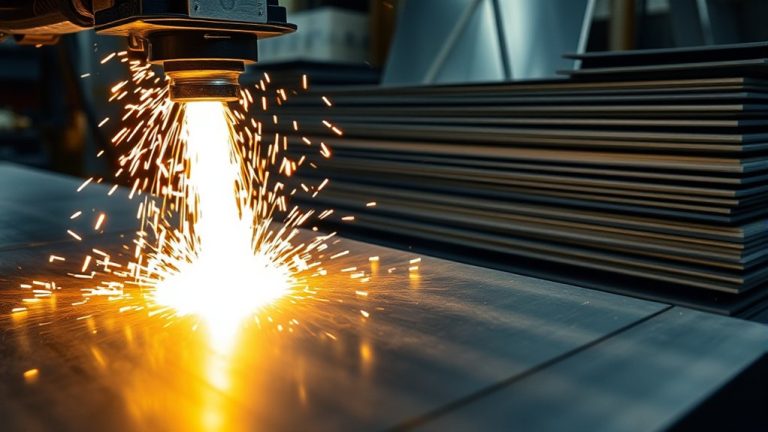
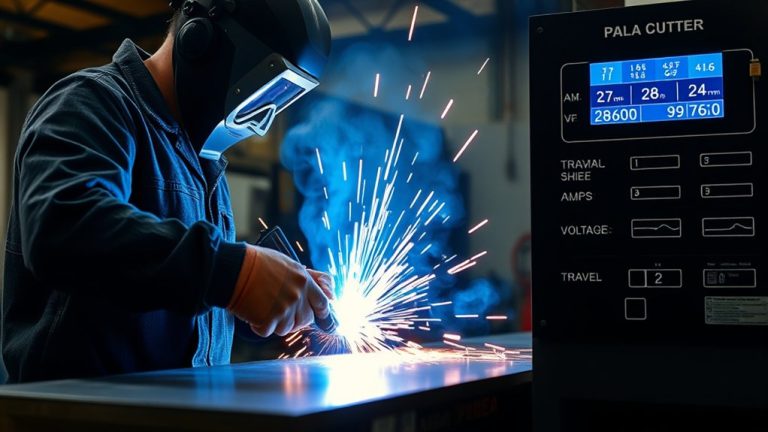
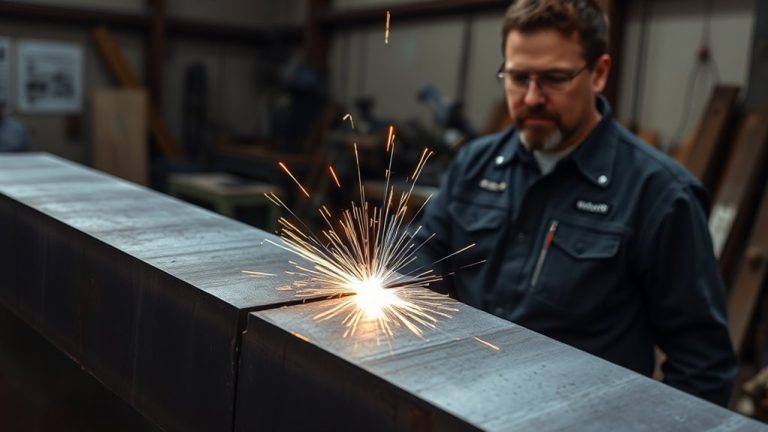
When you consider using a plasma cutter on wood, you’re stepping into risky territory. Plasma cutters excel at slicing through conductive materials, but wood’s non-conductivity makes it unsuitable, leading to poor cuts and fire hazards. The extreme heat can generate harmful smoke and compromise safety. Understanding these dangers and inefficiencies is essential. So, what are the safer, more effective alternatives for woodworking? Let’s explore the tools better suited for precise, efficient woodwork.
Understanding Plasma Cutting and Its Limitations
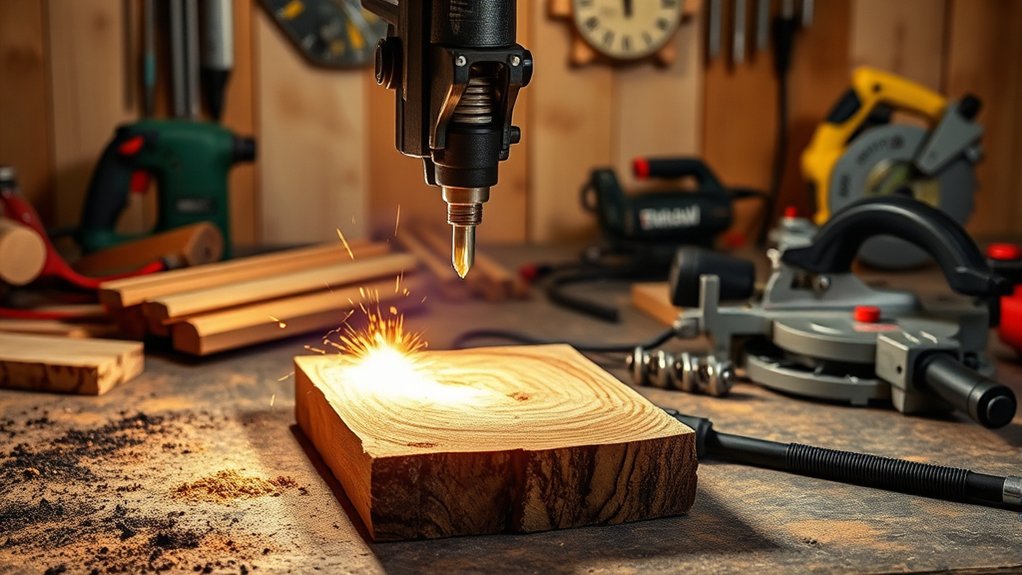
Although plasma cutting is a powerful tool for slicing through conductive materials, its limitations become apparent with non-conductive substances like wood. You’ll find that wood doesn’t support the formation of a plasma arc due to its insulating properties. This is a significant limitation when considering cutting techniques, as the plasma cutter relies on completing an electrical circuit. Without this, the plasma arc, essential for the precision and efficiency of plasma cutting, can’t be established.
Precision-focused users like yourself know that wood’s combustibility presents a substantial risk. The intense heat of the plasma arc can ignite wood, leading to potential hazards.
Besides, wood’s structural composition results in poor cut quality, with warping and deformation likely outcomes. For those seeking liberation from traditional cutting constraints, plasma cutting excels with materials like steel and aluminum, where the high temperatures enhance rather than hinder the cutting process.
Choose your materials wisely for ideal results.
The Risks of Using Plasma Cutters on Wood
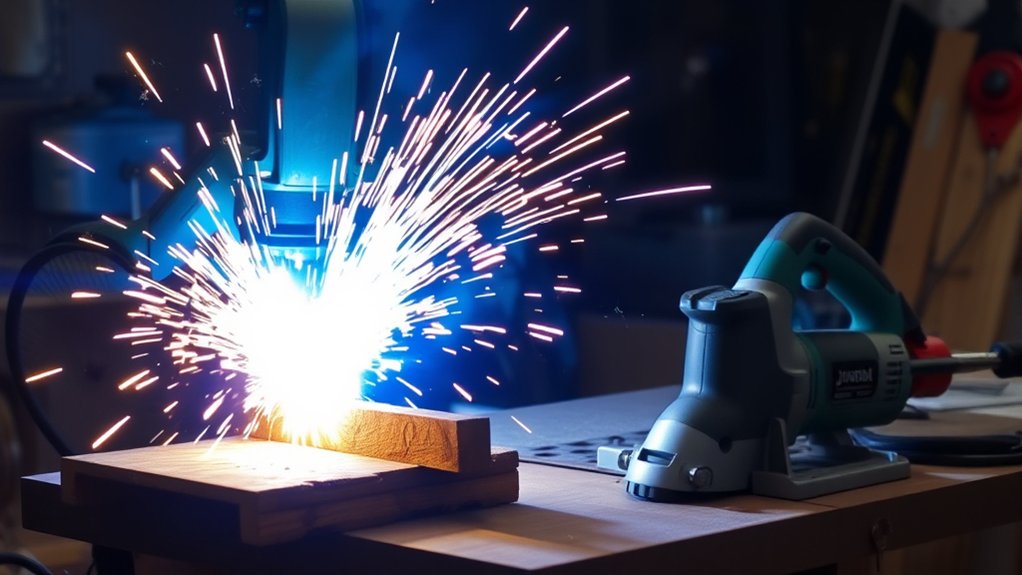
When considering the use of plasma cutters on wood, it’s crucial to understand the inherent risks involved. Plasma cutter safety is compromised as these devices require conductive materials, and wood, being non-conductive, can’t complete the electrical circuit necessary for effective cutting. This mismatch can lead to equipment damage and excessive dross accumulation.
Moreover, the intense heat generated by the plasma cutter can easily ignite wood, posing significant fire hazards in your workshop. Wood burning during the process produces harmful smoke and fumes, primarily from the resins and moisture within the wood. Inhaling these can be dangerous, adversely affecting your respiratory health.
The lack of precision also results in poor cut quality, often causing warping or deformation of the wood.
These factors combined mean that using plasma cutters on wood not only risks safety but also damages materials and equipment, hindering your creative and technical pursuits.
Why Wood and Plasma Cutters Are a Bad Combination
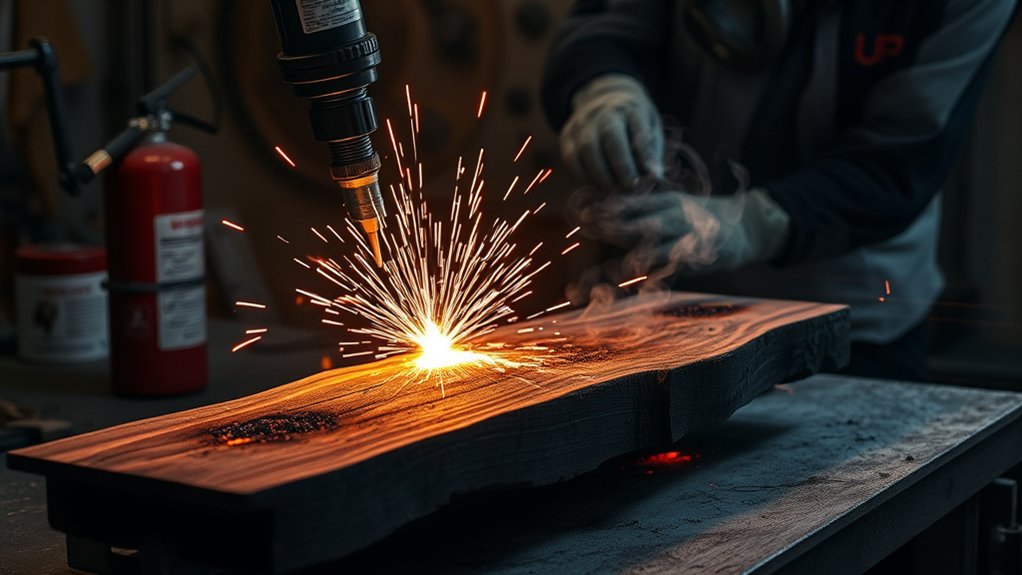
While plasma cutters excel at slicing through conductive materials like metals, they’re fundamentally unsuitable for cutting wood. The process is fraught with plasma risks and operational inefficiencies.
Wood, being non-conductive, disrupts the electrical circuit necessary for plasma cutting. This mismatch leads to ineffective cutting and potential equipment damage. Plasma cutters generate intense heat, which can cause wood ignition, creating dangerous fire hazards in your workspace.
Consider these technical pitfalls:
- Circuit Incompatibility: Wood’s non-conductive nature prevents the formation of a complete electrical circuit, making precise cuts impossible.
- Fire Hazard: The high temperatures from plasma can easily ignite wood, posing serious risks of fire in your workspace.
- Health Risks: Cutting wood with plasma releases harmful smoke and fumes, endangering your health with exposure to moisture and resin byproducts.
For precision and safety, traditional saws are the superior choice for wood.
Safety Concerns When Attempting to Cut Wood
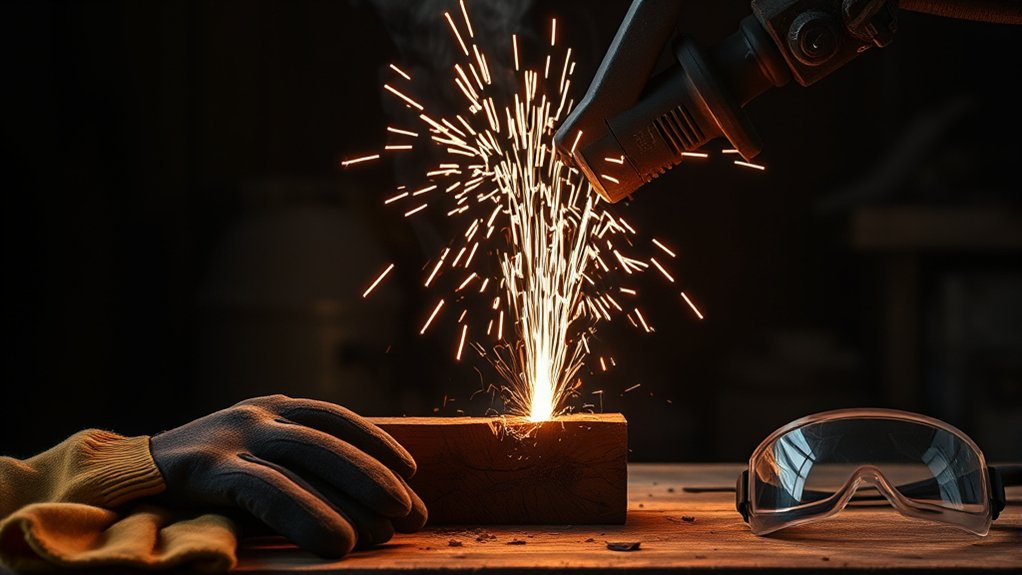
Understanding the inherent incompatibilities between wood and plasma cutters highlights significant safety concerns when attempting such a task. Plasma cutters generate extreme heat, which can easily ignite wood, leading to uncontrollable fires. This makes the material highly dangerous to cut with this tool, requiring stringent safety measures to prevent accidents.
The non-conductive nature of wood prevents the plasma arc from completing a circuit, causing erratic cutting behavior. This unpredictability not only jeopardizes the quality of your cutting techniques but can also damage the equipment.
Additionally, the combustion of wood releases harmful smoke and toxic fumes, presenting serious respiratory hazards to you and anyone nearby. Proper ventilation and protective gear are crucial to mitigate these risks.
Safety regulations and best practices clearly advise against using plasma cutters on non-conductive materials like wood. By adhering to these guidelines, you guarantee personal safety and maintain equipment integrity, liberating you from potential hazards and inefficiencies.
Potential Damage to Equipment and Surroundings
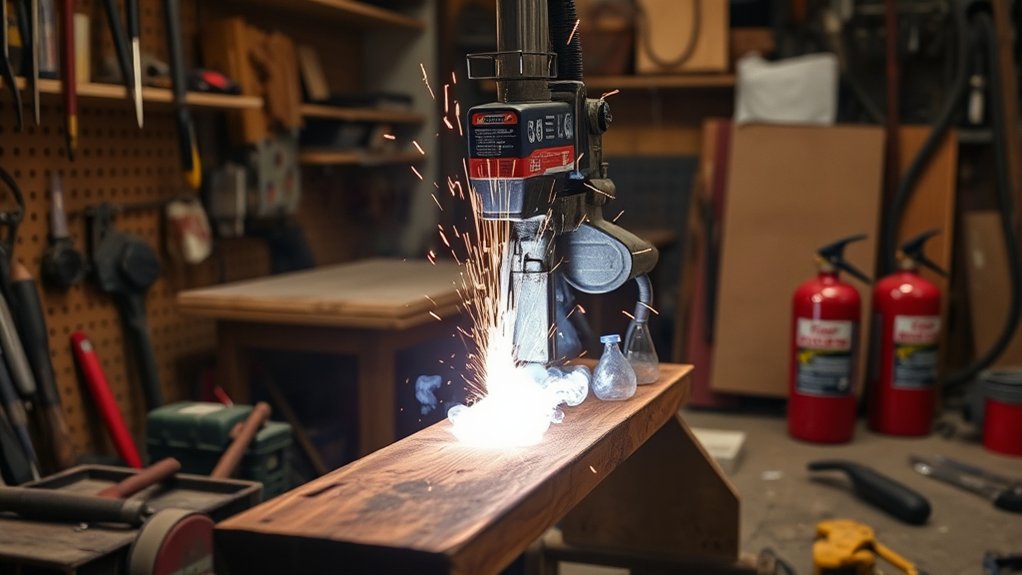
Attempting to cut wood with a plasma cutter risks significant equipment damage and environmental hazards. Since plasma cutters require conductive materials, using them on non-conductive wood can cause equipment malfunction or damage.
The intense heat generated by the plasma arc can ignite wood, creating fire hazards that jeopardize not only your workspace but also surrounding equipment.
Consider these potential consequences:
- Equipment Malfunction: Plasma cutters may fail or incur damage when used on wood, leading to costly repairs and downtime.
- Fire Hazards: The intense heat can easily ignite wood, posing risks to your surroundings and necessitating strict fire safety measures.
- Air Quality Concerns: Harmful fumes from burning wood can degrade air quality, impact operator health, and further damage your gear.
Additionally, cutting wood can void warranties or service agreements, as manufacturers typically don’t cover damages from improper use, limiting your options for recourse.
Exploring Safer Alternatives for Cutting Wood
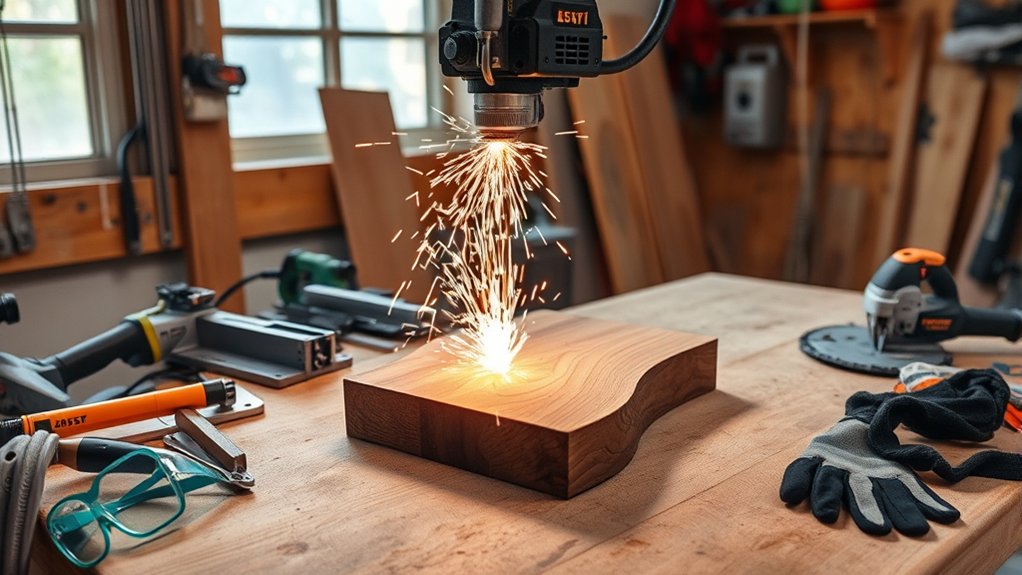
Given the significant risks associated with using a plasma cutter on wood, it’s prudent to explore safer, more effective alternatives for woodworking.
Embrace the versatility of circular saws, which enable precise cuts across various wood thicknesses and offer adjustable blade settings for angled cuts.
Circular saws deliver precision and versatility, accommodating various wood thicknesses with adjustable angled blade settings.
For intricate designs, jigsaws are your go-to, allowing you to create detailed curves effortlessly.
If precision is paramount, consider investing in a laser cutter. It minimizes material waste while delivering intricate patterns, though it demands higher initial investment.
Band saws are excellent for resawing thick wood, providing smooth, straight cuts essential for diverse woodworking applications.
Finally, table saws offer stability and accuracy for cutting large wood sheets, making them suitable for both professional and DIY projects.
Prioritize regular tool maintenance to guarantee longevity and peak performance, liberating you to focus on mastering advanced woodworking techniques safely.
Tools Best Suited for Woodworking Tasks
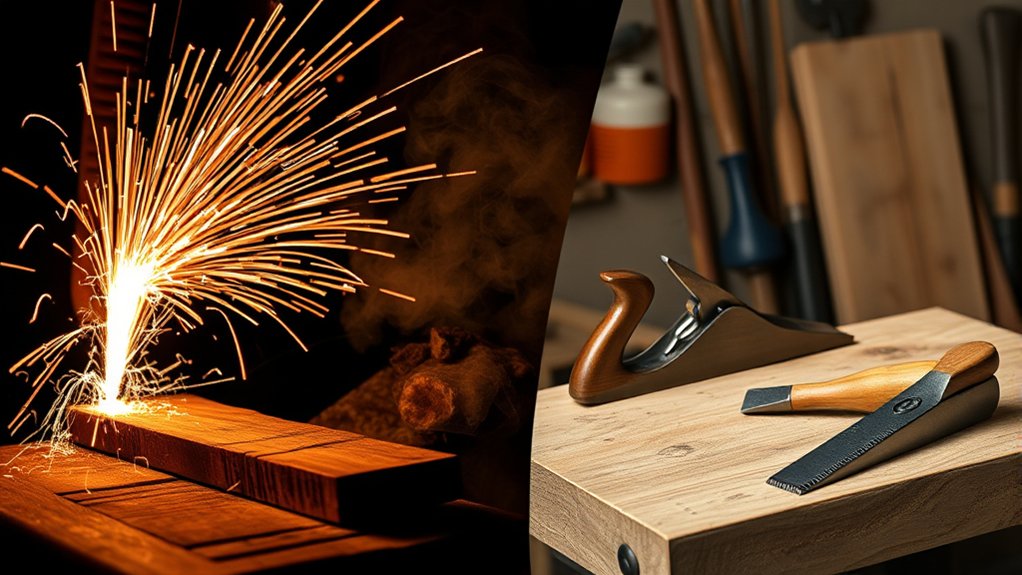
Mastering woodworking requires the right set of tools tailored for specific tasks. Embrace precision and creativity with these essential tools, each designed to elevate your woodworking techniques:
- Circular Saws: These versatile tools excel at straight cuts through various wood thicknesses, guaranteeing clean, precise lines. Regular tool maintenance keeps them sharp and efficient, vital for reliable performance.
- Jigsaws: Perfect for intricate cuts and curves, jigsaws allow you to express your creativity by crafting custom shapes and designs. Proper maintenance and blade selection are imperative for achieving the best results.
- Router Tools: Important for shaping edges, creating grooves, and adding decorative patterns, routers enhance your projects’ aesthetic appeal. Frequent maintenance guarantees smooth operation and longevity.
Investing in these tools and mastering their use liberates you to realize complex woodworking visions.
Prioritize regular tool maintenance for reliability and efficiency in your workshop, empowering you to craft with precision and confidence.
Comparing Plasma Cutting to Other Cutting Methods
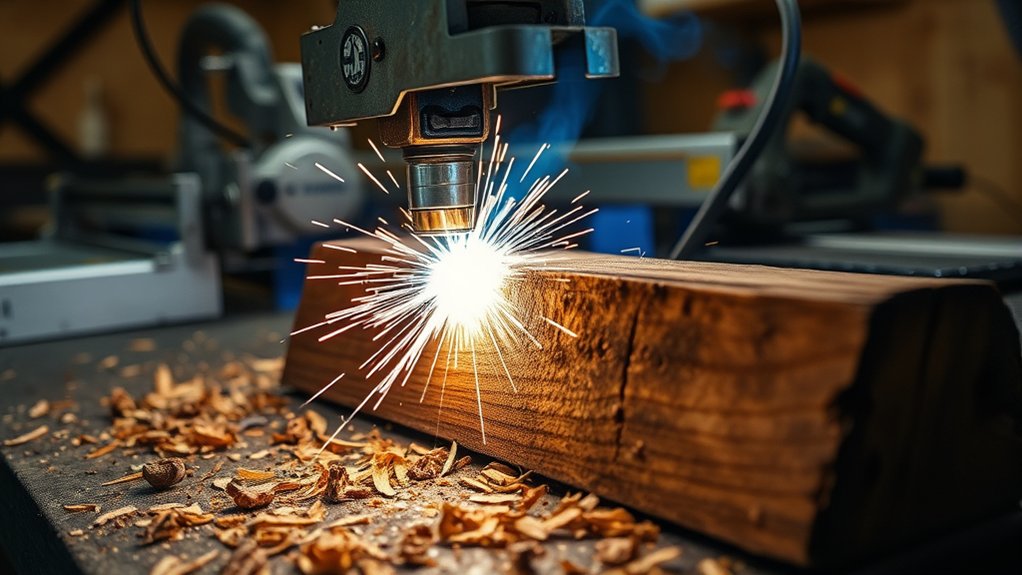
When considering cutting methods, you must evaluate the precision and efficiency of each tool.
Plasma cutters excel in speed and accuracy for metals but fall short on non-conductive materials like wood, where tools like saws or lasers are more effective.
Additionally, assess safety and environmental concerns, as plasma cutters generate intense heat and sparks, posing fire risks with flammable materials, unlike the safer operation of saws and laser cutters.
Precision and Efficiency
Although plasma cutting is renowned for its speed, reaching up to 100 inches per minute depending on the material, its precision often falls short compared to other cutting methods.
You might crave the precision benefits of laser cutting, with tolerances as tight as ±0.005 inches and minimal kerf.
When comparing efficiency, saws provide versatility and precision for varying wood thicknesses. Plasma cutting’s larger heat-affected zone can lead to thermal distortion, a drawback not found in laser cutting.
Consider these points:
- Precision Benefits: Lasers offer superior accuracy, minimizing material waste.
- Efficiency Comparison: Plasma is fast but saws and lasers excel in precision.
- Thermal Distortion: Plasma’s heat can warp materials; lasers prevent this issue.
These factors highlight why plasma cutting isn’t ideal for wood.
Material Compatibility Challenges
Plasma cutters, tailored for conductive materials, face significant challenges when tasked with cutting wood. The material properties of wood—non-conductive and flammable—render plasma cutting inefficient and risky. This cutting technique can’t effectively penetrate wood, leading to poor cut quality and potential harm to the equipment.
In contrast, circular saws excel in straight cuts, and jigsaws are ideal for intricate shapes and curves, leveraging wood’s properties without risking safety. Laser cutters offer precision and versatility for wood, though they require more investment and expertise.
Safety and Environmental Concerns
Given the inherent risks, cutting wood with plasma technology is fraught with safety and environmental concerns. The intense heat and sparks pose serious fire hazards, especially since wood is flammable.
Unlike traditional saws or laser cutters, plasma cutting generates toxic fumes, requiring proper ventilation. This makes plasma cutting unsuitable for indoor environments without costly exhaust systems.
Consider these points:
- Fire Hazards: Plasma cutting’s sparks can easily ignite wood, creating a dangerous situation.
- Toxic Fumes: Plasma cutting releases harmful gases, unlike saws and lasers, which are safer for indoor use.
- Waste and Quality: Plasma cutting results in poor cuts and material waste, whereas saws and laser cutters provide precise, efficient outcomes.
Liberate yourself by choosing methods that prioritize safety and precision.
The Importance of Choosing the Right Tool for the Job
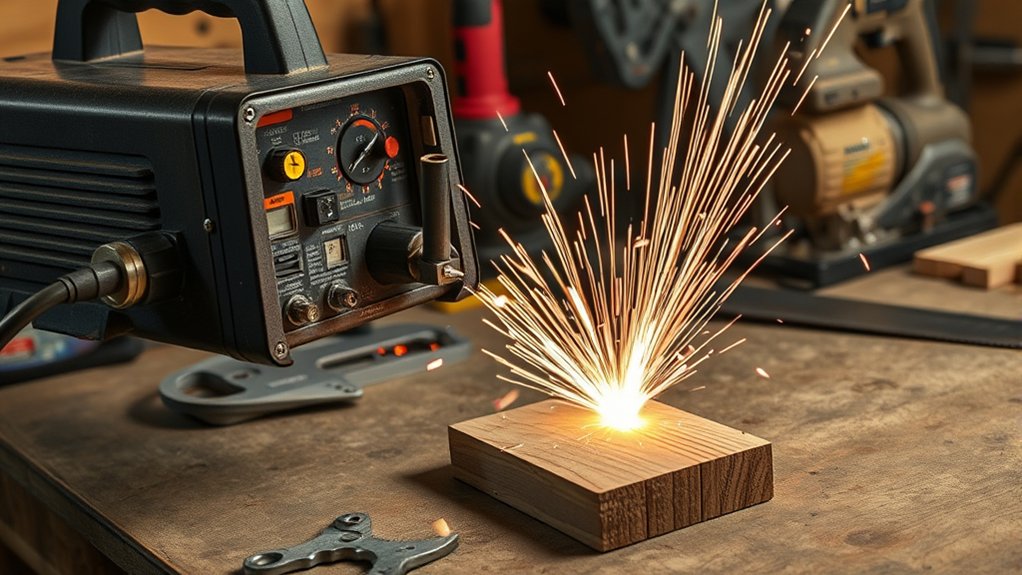
When selecting a cutting tool, it’s essential to guarantee compatibility with the material to avoid inefficiencies and hazards.
Plasma cutters excel with conductive materials, but for wood, employing alternatives like circular saws or jigsaws secures ideal results.
Using the correct tool not only enhances cut quality but also mitigates risks like fire hazards and harmful fume production.
Tool-Material Compatibility
Although it might seem tempting to use a single tool for multiple tasks, evaluating tool-material compatibility is essential for achieving ideal results and maintaining safety.
In tool selection, understanding material interaction is vital. Plasma cutters, designed for conductive materials, fail when tasked with wood due to its non-conductive nature and the risk of combustion from high temperatures.
Here’s why choosing the right tool matters:
- Safety: Using inappropriate tools, like plasma cutters on wood, can ignite fires and release toxic fumes.
- Efficiency: Tools like circular saws or jigsaws optimize cutting precision and efficiency for wood.
- Equipment Longevity: Proper tool-material compatibility prevents equipment damage, ensuring your tools have a long lifespan and perform at their best.
Choose wisely to cut with confidence and freedom.
Optimal Cutting Methods
To achieve ideal results in woodworking, selecting the right cutting tool is essential. You need precision and safety, both of which are compromised if you use a plasma cutter on wood. Plasma cutters are designed for electrically conductive materials, posing fire risks with wood. Instead, embrace the liberation of effective tool selection and cutting techniques.
| Tool | Best Use |
|---|---|
| Circular Saw | Straight cuts |
| Jigsaw | Intricate shapes |
| Laser Cutter | High precision |
| Plasma Cutter | Metal cutting |
Embrace tools like circular saws and jigsaws, tailored for wood, ensuring safety and efficiency. These tools minimize accidents and improve project outcomes. The right tool not only enhances cutting quality but also reduces waste. Liberate your projects with precision-focused cutting techniques tailored to your goals.
Final Thoughts on Plasma Cutting and Woodworking
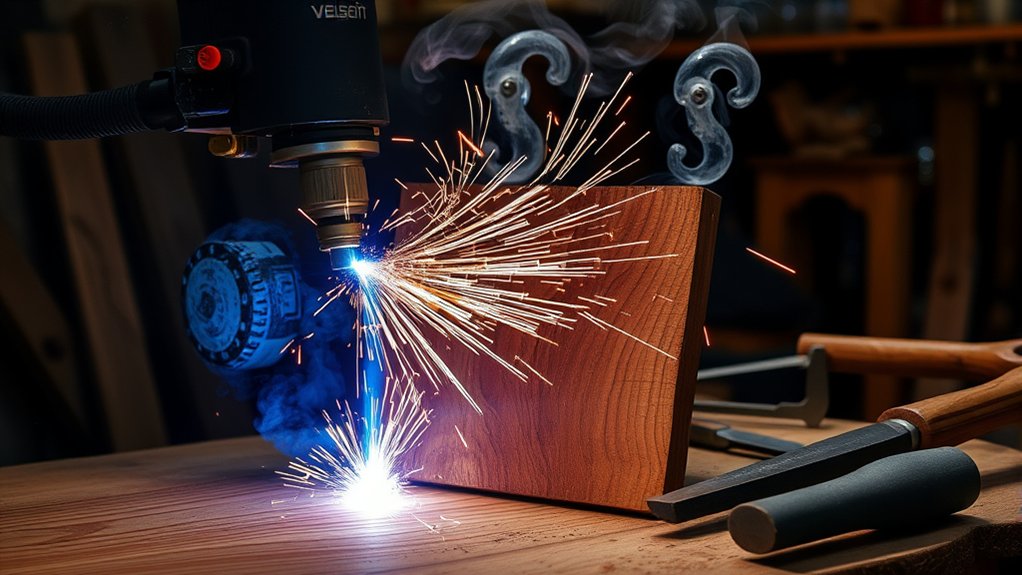
Despite the allure of using a plasma cutter for various materials, it’s crucial to recognize that wood isn’t suitable for this tool.
Plasma cutters are designed for conductive materials, and wood’s non-conductive nature makes it incompatible, as the electrical arc can’t complete a circuit. In addition, the intense heat generated poses a significant fire hazard, risking ignition and harmful fumes.
Instead of risking poor quality and potential danger, consider plasma cutter alternatives and effective woodworking techniques:
- Circular saws: These tools excel in straight cuts and are ideal for larger woodworking projects, providing precision and safety.
- Jigsaws: Perfect for intricate shapes and curves, jigsaws offer control and adaptability for various woodworking needs.
- Band saws: Known for their versatility, band saws can handle both straight and curved cuts with ease, enhancing your creative freedom.
Embrace these alternatives to achieve superior results, ensuring your projects reflect your craftsmanship without compromising safety.
Frequently Asked Questions
Can Plasma Cutters Be Modified to Safely Cut Wood?
You can’t safely modify a plasma cutter to cut wood due to inherent safety concerns. Plasma cutter modifications won’t address the risk of fire and toxic fumes, making it unsuitable. Consider alternative tools designed specifically for woodworking tasks.
Are There Any Specific Types of Wood That Can Withstand Plasma Cutting?
No wood, whether hardwood or softwood, withstands plasma cutting. Plasma cutter limitations include extreme temperatures, causing combustion. Hardwood resistance doesn’t apply here; it simply burns. Opt for laser or CNC routers for precision without igniting materials.
How Does Plasma Cutting Wood Affect Indoor Air Quality?
Plasma cutting wood drastically impacts indoor air quality by releasing airborne toxins and smoke emissions. You won’t just compromise air purity; you’ll also expose yourself to hazardous particles, demanding proper ventilation and protective measures for liberation.
Is There a Market for Artistic Plasma-Cut Wood Designs?
When it comes to artistic plasma-cut wood designs, the ball’s in your court. Market demand exists, but safety and precision are essential. Explore alternative methods to meet creative aspirations while ensuring eco-friendly and health-conscious practices.
What Personal Protective Equipment Is Needed for Plasma Cutting Wood?
For plasma cutting, always wear safety goggles to protect your eyes from sparks. Don flame retardant clothing to shield against potential fires. Prioritize safety by using proper ventilation, ensuring you’re free to create without hazards.
Conclusion
So, you fancy igniting your workshop with a plasma cutter on wood? Why not throw in some fireworks for that extra flair? Just imagine the delightful aroma of charred lumber and the symphony of smoke alarms. A plasma cutter and wood pairing is like using a flamethrower to toast marshmallows. Opt for a saw or laser cutter instead; your lungs and workshop will thank you. Remember, precision isn’t about drama—it’s about results. Choose wisely!