What Are the Disadvantages of Plasma Cutting? Limits & Trade-Offs
Uncover the significant drawbacks of plasma cutting that could impact your project; are the trade-offs worth it?

Plasma cutting delivers high productivity on conductive metals by combining fast travel speed with quick setup and broad material compatibility. It’s versatile on steel, stainless, and aluminum, from thin sheet to mid-thickness plate, and works handheld or on CNC tables for repeatable parts. Efficiency depends on matching amperage to thickness, maintaining clean, dry air at the right CFM/PSI, and observing duty cycle to avoid thermal shutdowns. Expect narrow kerf and minimal prep compared with saws or oxy-fuel, though edge quality and taper may trail laser on thin, cosmetic work, and very thick carbon steel favors oxy-fuel. Use PFC machines, short heavy-gauge cords, and good fume control to maximize throughput.
Uncover the significant drawbacks of plasma cutting that could impact your project; are the trade-offs worth it?
Overcome fabrication challenges with plasma cutting's precision and efficiency—discover the key benefits that make it indispensable for modern metalwork.
Keen to discover how plasma cutters revolutionize metal fabrication with speed, cost-efficiency, and user-friendly design? The secrets await.
Investigate the nuanced constraints of plasma cutting in thickness, precision, and edge quality to revolutionize your metalwork mastery.
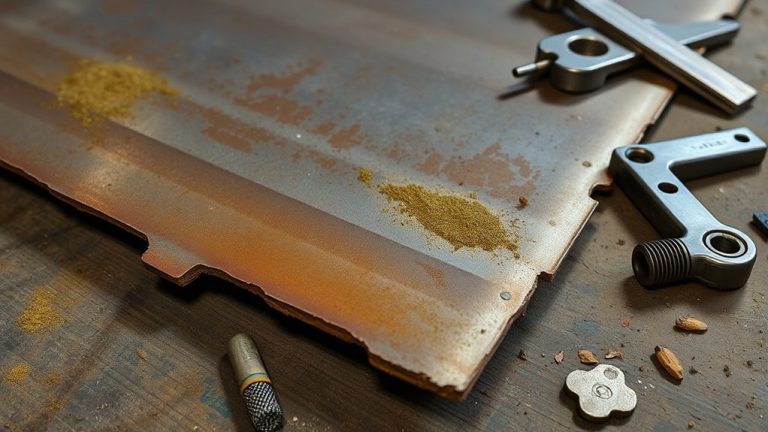
Gain insights into plasma cutting's challenges, from dross to HAZ, and understand maintenance impacts; discover how these factors could affect your projects.
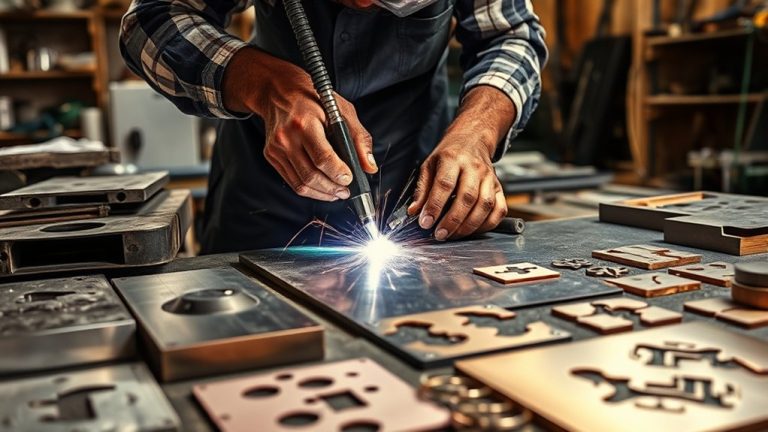
Master the art of cutting with plasma cutters; explore their versatility across materials and thicknesses to discover endless industrial applications.
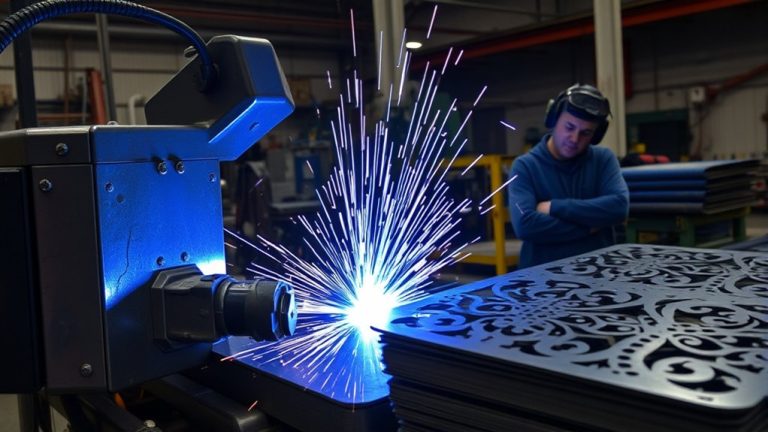
Optimizing energy use and cost, plasma cutting's impressive efficiency and speed might redefine your expectations—discover the details inside.