What Can a Plasma Cutter Cut?
Last updated: August 8, 2026
A plasma cutter can cut electrically conductive metals, including mild steel, stainless steel, aluminum, copper, brass, galvanized steel, tool steel, and many other conductive alloys. It does not work like a saw that can cut almost any material: the transferred plasma arc needs an electrically conductive workpiece. That means ordinary wood, plastic, glass, masonry, and other nonconductive materials are not normal plasma-cutting materials.
How thick the metal can be depends on the exact machine, material, power source, torch, consumables, gas or air supply, and whether you are comparing a recommended cut, pierce rating, or maximum severance cut. Do not choose a plasma cutter from amperage alone.
| Material | Can Plasma Cut It? | What to Know |
|---|---|---|
| Mild / Carbon Steel | Yes | One of the most common plasma-cutting materials |
| Stainless Steel | Yes | Use suitable process settings and control hazardous fumes |
| Aluminum | Yes | Use the manufacturer’s aluminum settings; special precautions apply around water tables |
| Copper / Brass | Yes | Conductive, but correct process parameters are important |
| Galvanized Steel | Yes | Provide appropriate ventilation for coating fumes |
| Rusted / Painted Metal | Often | Plasma is tolerant of imperfect surfaces, but coatings can create hazardous fumes |
| Wood / Plastic / Glass | No | These materials are not electrically conductive workpieces for conventional plasma cutting |
What Materials Can a Plasma Cutter Cut?
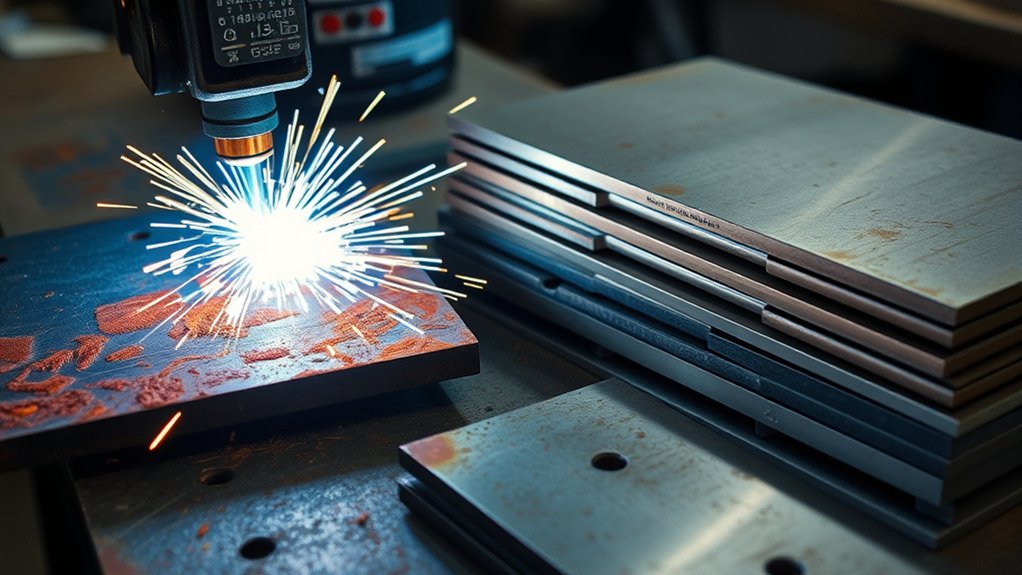
Plasma cutting works because an electrical arc is transferred to the workpiece through a high-velocity stream of ionized gas. For conventional transferred-arc plasma cutting, the workpiece therefore needs to conduct electricity.
Common plasma-cutting materials include mild steel, stainless steel, aluminum, copper, brass, galvanized steel, tool steel, titanium, and other conductive metals. The material does not need to be perfectly clean for every plasma system. Modern plasma equipment can often cut rusty or painted metal and expanded metal, although the condition of the surface can still affect arc stability, consumable life, fumes, and finished edge quality.
Electrical conductivity determines basic material compatibility; the machine’s rated capacity and process settings determine how well that material can actually be cut.
Paint, plating, galvanizing, oil, primers, and other surface coatings introduce a separate safety issue. A plasma cutter may physically cut through the material while the heat releases hazardous fumes. Use ventilation, fume extraction, respiratory protection when required, and the safety procedures appropriate for the specific base metal and coating.
For example, stainless steel hot work can create exposure to chromium-containing fumes, while galvanized metal requires appropriate control of zinc-containing fumes. Material compatibility should therefore never be treated as the same thing as material safety.
How Thick Can a Plasma Cutter Cut?
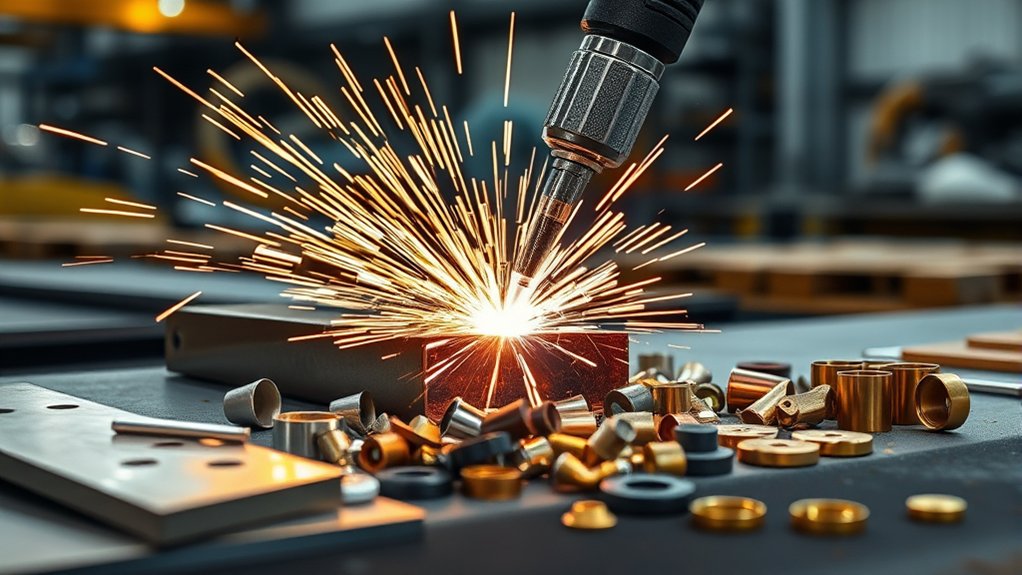
There is no single maximum thickness for all plasma cutters. Small portable machines, professional handheld cutters, and high-current mechanized systems have dramatically different capacities.
The most important step is to understand which thickness rating you are reading. A manufacturer’s recommended capacity is much more useful for everyday sizing than a machine’s absolute maximum severance number.
Understand the Four Common Capacity Terms
| Capacity Term | What It Means | Best Use |
|---|---|---|
| Recommended / Rated Cut | Thickness the system is designed to cut at a useful speed and quality | Best number for normal machine selection |
| Pierce Capacity | Thickness through which the torch can start a cut away from the plate edge | Important for CNC shapes and internal holes |
| Severance Capacity | Near-maximum thickness the machine can separate, generally slowly and with reduced edge quality | Occasional maximum-thickness work |
| Edge-Start Capacity | Thickness that may be cut when the arc begins from an exposed plate edge rather than piercing through it | Very thick material where direct piercing is unsuitable |
A current manufacturer example shows why these terms matter. The Hypertherm Powermax125 is a 125-amp air-plasma system with a 38 mm (1-1/2 in.) recommended capacity, a slower 44 mm rating, a 57 mm (2-1/4 in.) hand-severance capacity, and a 25 mm pierce rating. Those four numbers describe different operating conditions; none should be presented simply as “the maximum thickness of a 125-amp plasma cutter.”
Mechanized industrial plasma can go substantially thicker. Current XPR460 specifications, for example, list different production-pierce and severance capabilities for mild steel, stainless steel, and aluminum, with some enhanced severance processes exceeding 100 mm. Those values apply to that particular industrial system and process—not to ordinary portable cutters.
Does Higher Amperage Mean a Thicker Cut?
Generally, more usable torch output gives a plasma system more capacity, but amperage alone is not a reliable thickness chart. Two machines with similar advertised amperage can differ in output voltage, torch efficiency, consumable design, duty cycle, gas delivery, cut speed, and manufacturer rating.
Use this order when comparing machines:
- 1. Find the metal thickness you cut most often.
- 2. Check the manufacturer’s recommended or rated capacity for that material.
- 3. Check pierce capacity if you need internal starts or CNC work.
- 4. Treat severance capacity as an occasional upper limit, not your normal working thickness.
- 5. Confirm input power, duty cycle, and air-flow requirements before buying.
A useful sizing approach is to choose a cutter whose recommended capacity comfortably covers the material thickness you work with most of the time instead of sizing the machine around a one-time maximum cut.
What Determines Whether a Plasma Cutter Makes a Clean Cut?
Even a machine with enough rated capacity can produce poor results when its setup is wrong. Clean plasma cutting depends on several variables working together.
- Material and thickness: Use the manufacturer’s cut chart for the exact metal and thickness whenever one is available.
- Amperage and consumables: Match the consumable set and current to the intended process.
- Air or gas flow: Insufficient or contaminated air can destabilize the arc and increase dross.
- Travel speed: Moving too slowly or too quickly can increase dross, bevel, heat input, or incomplete penetration.
- Torch standoff: Incorrect torch-to-work distance changes arc shape and edge quality.
- Consumable condition: Worn electrodes and nozzles can widen the kerf and reduce consistency.
- Duty cycle: The machine must be able to sustain the workload without repeatedly reaching its thermal limit.
If you are sizing the air system, see the plasma cutter air-compressor requirements guide for the relationship between CFM, pressure, filtration, hose size, and continuous cutting.
Factors That Affect Plasma Cutting Performance
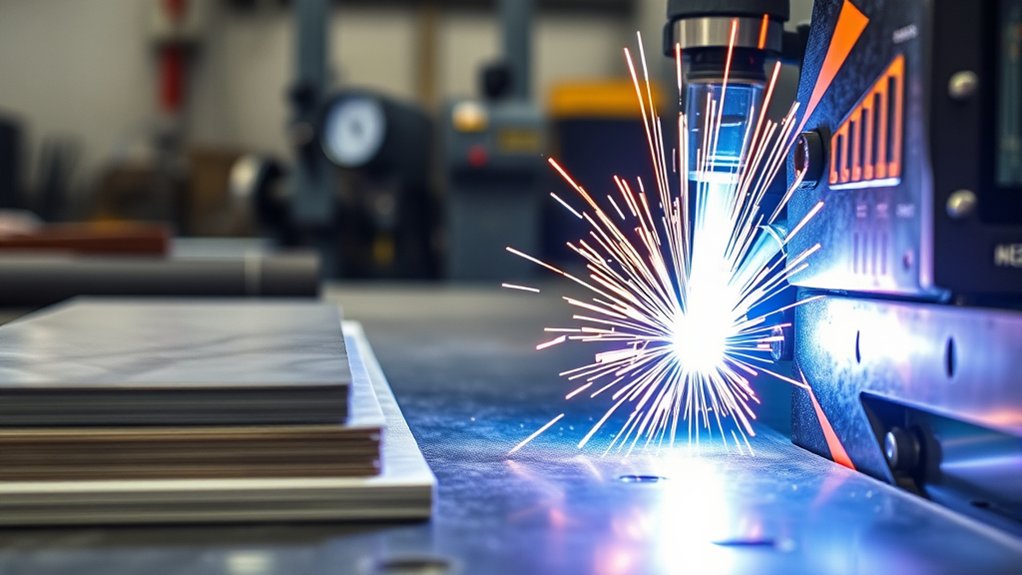
Cutting performance is the combined result of the power source, torch, consumables, air or plasma gas, workpiece, travel speed, and operator or CNC motion. Focusing on amperage while ignoring the rest of the system is a common mistake.
Air quality is particularly important for portable air-plasma machines. Moisture, oil, restricted filters, small fittings, pressure loss, or insufficient compressor flow can cause an unstable arc, shorten consumable life, and leave more dross.
Travel speed also changes the cut. Too slow can put excess heat into the workpiece and leave low-speed dross. Too fast can cause incomplete penetration or high-speed dross. Torch height, current and consumable condition add additional variables, so troubleshoot a poor cut systematically instead of simply increasing amperage.
Surface condition matters too. Plasma is comparatively tolerant of scale, rust, paint, and imperfect plate, but heavy contamination can still affect starting and consumable performance. More importantly, coatings can generate fumes when heated. Remove hazardous coatings where the applicable procedure requires it and use suitable ventilation or extraction.
How Does Plasma Cutting Work?
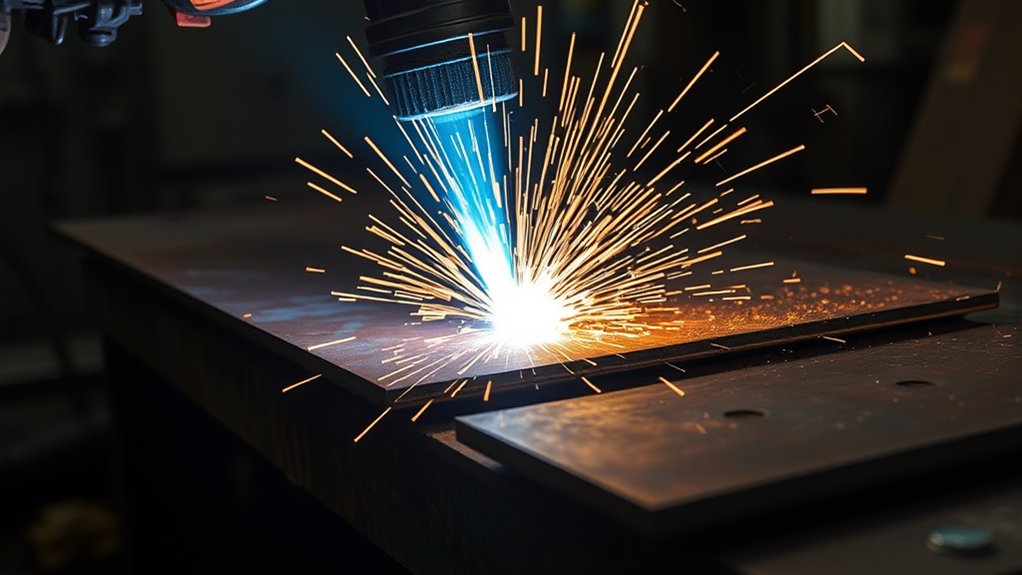
A plasma cutter sends gas through a torch and uses electrical energy to ionize that gas. Once the cutting arc transfers to the conductive workpiece, the concentrated plasma jet melts a narrow path through the metal while the high-velocity gas ejects molten material from the kerf.
This explains both the strength and the main limitation of plasma cutting: it can cut many different conductive metals quickly, but conventional transferred-arc plasma is not the right process for ordinary nonconductive materials.
Good plasma cutting is not simply “more amps.” The arc, gas flow, torch height, consumables, speed, and workpiece must operate as one system.
Hand cutting and mechanized cutting use the same basic physical process but produce different results. A steady CNC motion system, automatic torch-height control, calibrated kerf compensation, and process-specific cut charts can provide much more consistent dimensions and edge quality than freehand operation.
If you are learning the sequence from setup through cutting, see the site’s plasma cutting process guide for beginners.
Plasma Cutting vs. Laser, Oxyfuel, and Mechanical Cutting
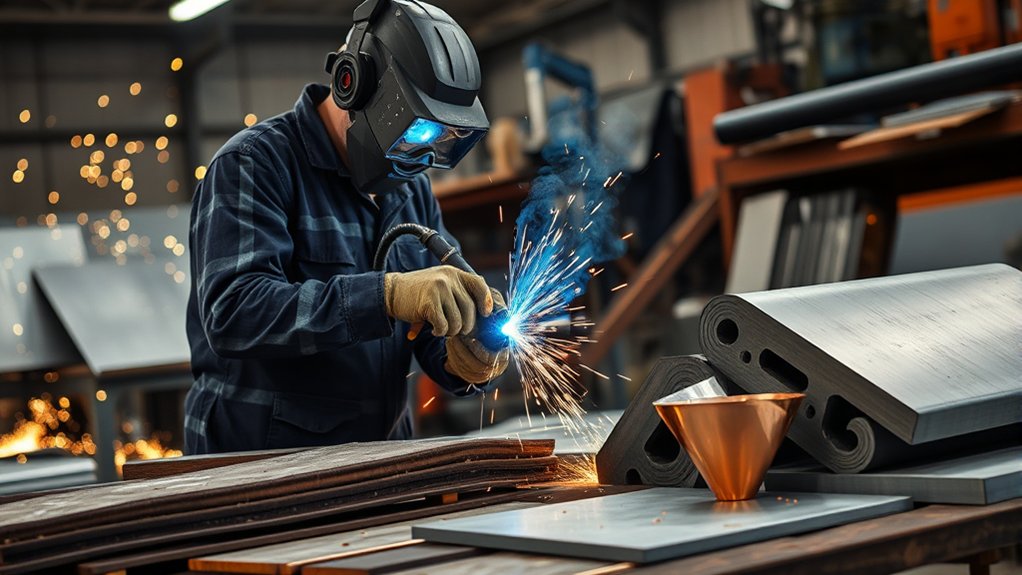
Plasma is not automatically the best cutting process for every job. The correct choice depends on the material, thickness, required edge quality, tolerances, production volume, available equipment, and budget.
| Method | Where It Excels | Main Limitation |
|---|---|---|
| Plasma | Fast cutting of conductive metals; curves and shapes; medium and thick plate; manual or CNC use | Requires conductive material and creates a heat-affected edge |
| Fiber Laser | High precision, narrow kerf, intricate parts, especially thinner sheet and plate | Higher industrial equipment cost and application-specific surface/process requirements |
| Oxyfuel | Very thick carbon steel and relatively simple equipment | Not a general-purpose process for stainless steel, aluminum, copper, or brass |
| Saw / Grinder | Short cuts, simple trimming, low setup requirements, and some jobs where heat should be minimized | Slower or less convenient for complex profiles and repeated shapes |
Is Plasma More Accurate Than Laser Cutting?
Laser normally has the advantage when extremely fine features, narrow kerf, and tight dimensional control are the primary requirements, especially on thinner material. Modern high-definition mechanized plasma has narrowed that gap considerably, but its results should not be confused with the accuracy of a basic handheld torch.
There is no universal “plasma tolerance” that applies to every machine. Actual dimensional performance depends on the plasma process, CNC motion accuracy, torch-height control, kerf compensation, material thickness, consumables, thermal distortion, and cut direction.
For thick conductive plate, plasma can be highly productive and can provide edge quality that requires little secondary preparation when the system and settings are properly matched. For thin precision parts or very small intricate features, laser may remain the better choice.
Which Metals Are Best Suited to Plasma Cutting?
Plasma’s material advantage is its ability to process many conductive metals without relying on the oxidation reaction used by oxyfuel cutting.
| Material Type | Plasma Suitability | Practical Note |
|---|---|---|
| Mild Steel | Excellent | Widely supported by handheld and mechanized systems |
| Stainless Steel | Excellent | Use correct gas/settings and appropriate fume controls |
| Aluminum | Excellent | Follow aluminum-specific cut charts and water-table precautions |
| Copper | Good | Conductive but highly thermally conductive; process settings matter |
| Brass | Good | Use suitable parameters and control fumes |
| Galvanized Steel | Good | Ventilation is especially important because of the coating |
If your alternative is an abrasive tool rather than a laser or oxyfuel system, see the plasma cutter vs. angle grinder comparison.
Common Applications of Plasma Cutting
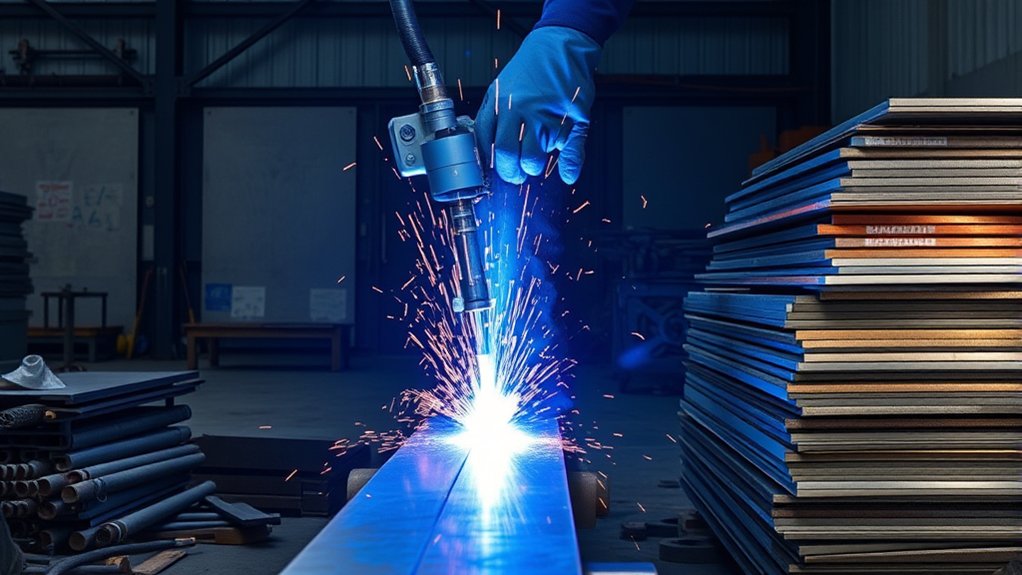
Plasma cutting is useful anywhere fast shaping or separation of electrically conductive metal is required. Common applications include:
- Fabrication shops: Cutting plate, brackets, gussets, flanges, frames, and other steel, stainless, or aluminum parts.
- CNC production: Repeated profiles, holes, nests, bevels, and complex shapes when the plasma system is integrated with suitable motion and height control.
- Automotive and repair work: Removing damaged metal, cutting brackets, modifying panels, and fabricating repair pieces where heat and nearby components can be safely controlled.
- Construction and structural fabrication: Cutting plate and structural components within the equipment’s rated range.
- Farm and equipment repair: Fast cutting of dirty, weathered, painted, or rusty conductive metal where appropriate fume precautions are used.
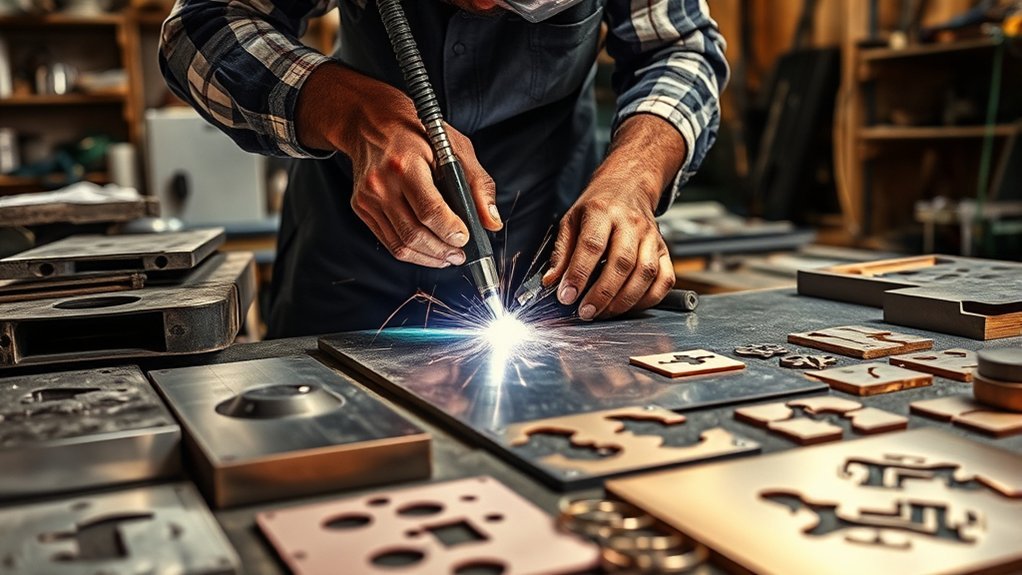
- Metal art: Freehand or template-guided curves, signs, silhouettes, decorative panels, and CNC artwork.
The required cut quality is different for a demolition cut, a decorative silhouette, a bolt-ready CNC part, and an edge that will be welded. Set the machine and judge the finished edge according to the job rather than expecting one plasma setup to optimize every application.
Key Features to Look for in a Plasma Cutter
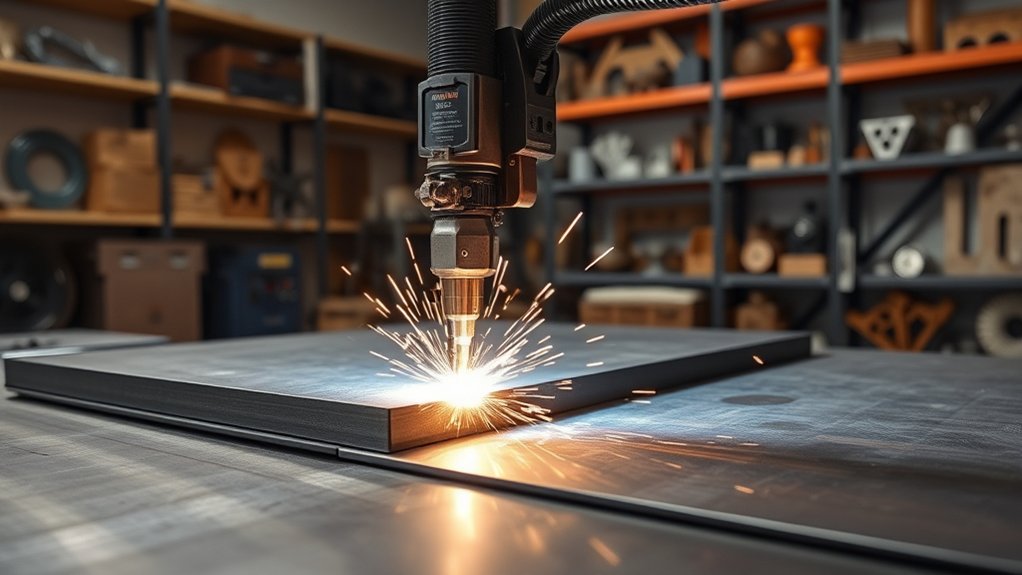
A useful plasma cutter is one that matches your real workload, not simply the model with the highest advertised amperage. Compare specifications that directly affect the jobs you intend to perform.
| Feature | Why It Matters |
|---|---|
| Recommended Cut Capacity | Shows the practical material thickness the machine is intended to cut regularly |
| Pierce Capacity | Important for CNC parts, holes, and cuts that begin inside a plate |
| Duty Cycle | Determines how long the machine can cut at a stated output before thermal limits matter |
| Air Requirement | The compressor must supply the required flow and pressure with clean, dry air |
| Input Power | Available voltage, phase, breaker capacity, and generator output can limit usable cutting power |
| Consumables | Availability, cost, life, and correct matching affect both downtime and cut quality |
| Start Technology | Pilot-arc and non-HF starting options can matter for expanded metal and CNC integration |
| Portability | Weight, torch-lead length, power requirements, and compressor needs determine real job-site mobility |
Some portable machines include an air compressor, while others require a substantial external supply. A built-in compressor can simplify mobile use, but it should not automatically be treated as a sign of higher cutting performance.
Products Worth Considering

COMPLETE BUILT-IN AIR SYSTEM: Equipped with an integrated high-performance air pump, this plasma cutter eliminates the need for an external air compressor—simply plug into power and start cutting with no extra equipment or complicated setup required

BUILT-IN AIR COMPRESSOR: With this plasma cutter machine, you're ready to cut as soon as you connect it to a power source, no additional air compressor needed. Designed for effortless outdoor work, it also offers compatibility with external compressors for versatile use
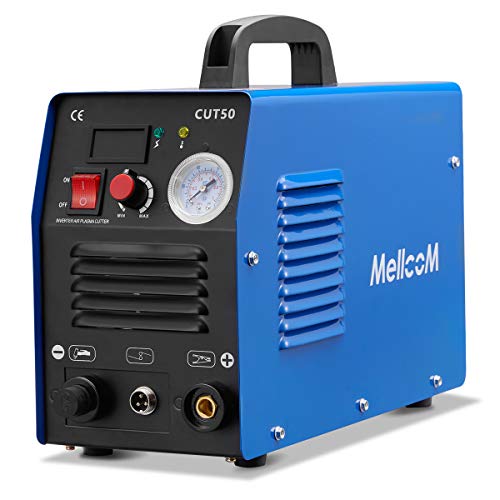
【Arc Pilot Function】The pilot arc plasma cutter efficiently cuts rough, painted, and rusted surfaces with minimal weld slag. Without touching the tip of the metal, pilot arc technology improves cutting quality and extends consumable lifespan.
How Do You Choose the Right Plasma Cutter?
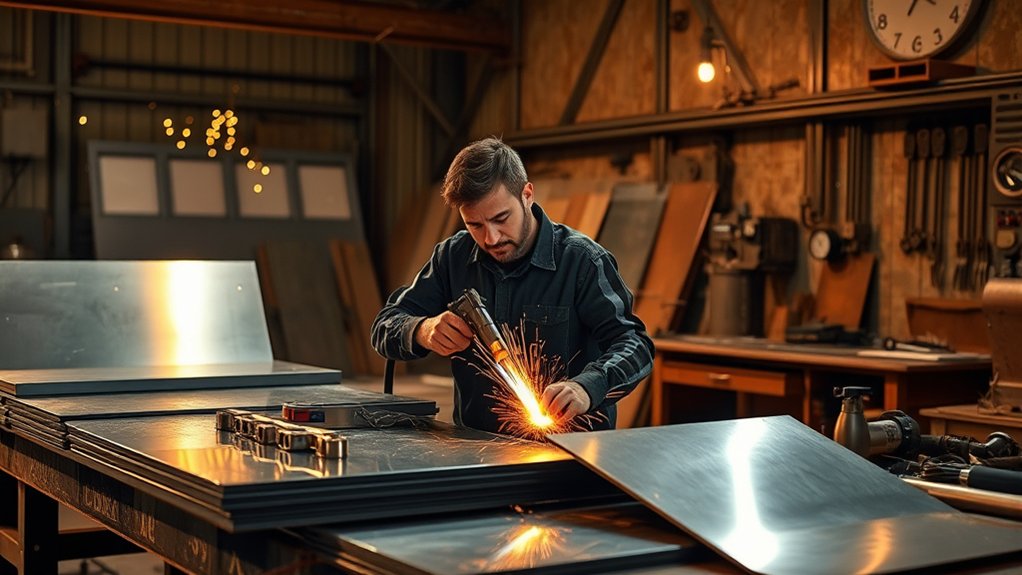
Start with your material and normal working thickness rather than with a target amperage.
- Identify your main metal: Mild steel, stainless steel, and aluminum may have different cut charts on the same machine.
- Size around normal thickness: Choose a recommended capacity that covers the stock you routinely cut without forcing the machine to operate near severance limits.
- Check pierce requirements: CNC work and internal profiles may require substantially more headroom than an edge-start cut.
- Verify available electrical power: Check voltage, phase, breaker, receptacle, extension-cord restrictions, and generator requirements.
- Verify compressed air: Confirm required CFM/SCFM and inlet pressure while air is flowing, not simply compressor tank PSI.
- Check duty cycle: Longer production cuts demand more continuous output than occasional repair work.
- Check consumables and support: A low purchase price loses its appeal when tips, electrodes, cartridges, or service are difficult to obtain.
- Consider CNC compatibility: If table use is planned, check torch type, start technology, machine interface, voltage divider, and torch-height-control requirements.
For model-level recommendations, use the site’s best plasma cutters guide. If your focus is specifically a 40-amp setup, the 40-amp plasma cutter steel thickness guide covers that narrower use case.
Products Worth Considering
![ANDELI 40Amp 50ft Welder Extension Cord 8 AWG [ETL Listed], 250V NEMA 6-50 Heat-Resistant Welding Cord 3 Prong for MIG/TIG/MMA Welder, Plasma Cutter(8-50ft)](https://m.media-amazon.com/images/I/412CDiI2M-L._SL500_.jpg)
AUTHORITATIVE & SAFE: This professional 220v extension cord has great performance: 50ft length provides a safe distance from the power source. 8AWG(wire gauge), 40Amp, 3 conductors, NEMA 6-50P to 6-50R. Unlike other products on the market, our 240v extension cords have a more authoritative listed, ensuring safe and reliable power supply in any environment.
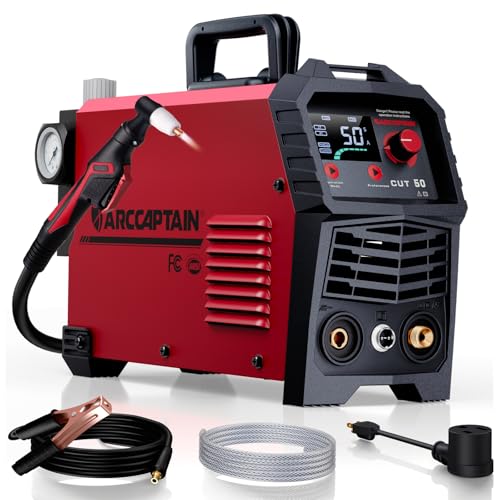
【Powerful Cutting Ability】Switch effortlessly between 110V and 220V for home or workshop use. Achieve professional 1/2" clean cuts on steel, aluminum, and copper with advanced LGBT technology. Perfect for DIY projects and heavy-duty tasks. Recommended maximum cutting thickness: 12mm @ 35A / 110V / 55 PSl; 18mm @ 50A / 220V / 75 PSI. Note: Requires compressed air (compressor sold separately).

【Non-Touch Pilot Arc Function】The ARCCAPTAIN 55A plasma cutter features a pilot arc function. It utilizes a high-frequency non-touch arc starting mode. The torch head does not need to touch the metal plate, reducing energy consumption during non-cutting work, minimizing electrode burning, and extending service life. NOTE: Do not switch voltages until the screen turns off and the fan stops.
Operating Costs and Efficiency Considerations
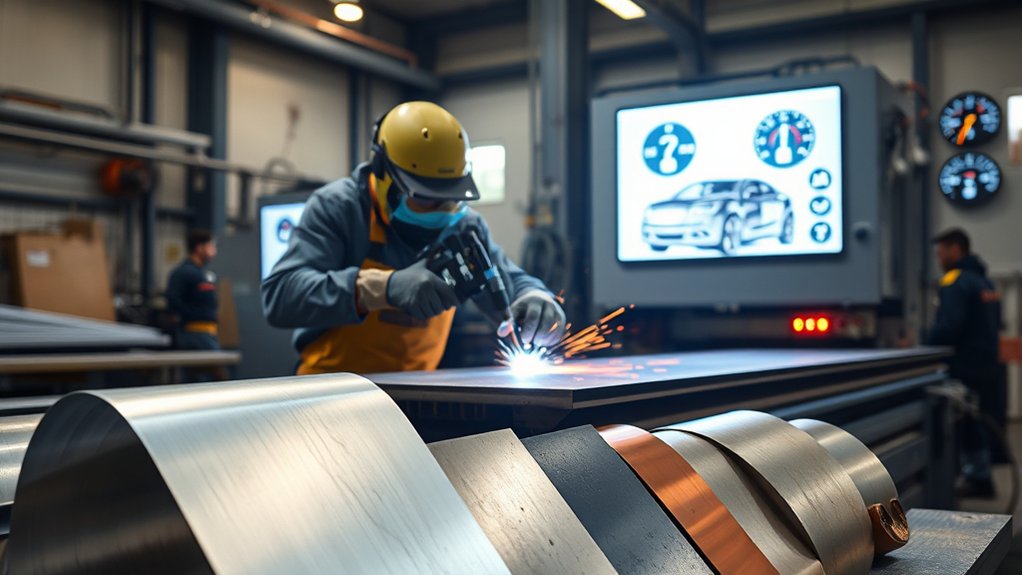
The cost of plasma cutting is not determined by the purchase price alone. Consumables, electricity, compressed air or process gas, labor, cut speed, maintenance, material utilization, and secondary grinding all contribute to the cost of each finished part.
Plasma often offers a lower initial equipment cost than a comparable industrial fiber-laser installation and can be particularly productive on medium and thicker conductive plate. Laser can have advantages in thin material, fine detail, narrow kerf, and some high-volume applications. The actual cost crossover depends on the machines, material mix, local energy and gas prices, production volume, and required finish.
| Cost Factor | What to Evaluate |
|---|---|
| Consumables | Electrode/nozzle or cartridge life, price, and availability |
| Compressed Air / Gas | Required flow, filtration, drying, compressor power, or specialty gas use |
| Electricity | Power-source demand plus compressor and extraction equipment |
| Cut Speed | Time needed per part at the required quality level |
| Secondary Work | Grinding, dross removal, drilling, beveling, or edge preparation after cutting |
| Downtime | Consumable changes, maintenance, thermal limits, and service requirements |
A machine that cuts faster but creates heavy dross may cost more per finished part than a properly sized system running at a lower nominal output. Evaluate the finished workflow rather than cutting speed in isolation.
Current Plasma Cutting Technology and Trends
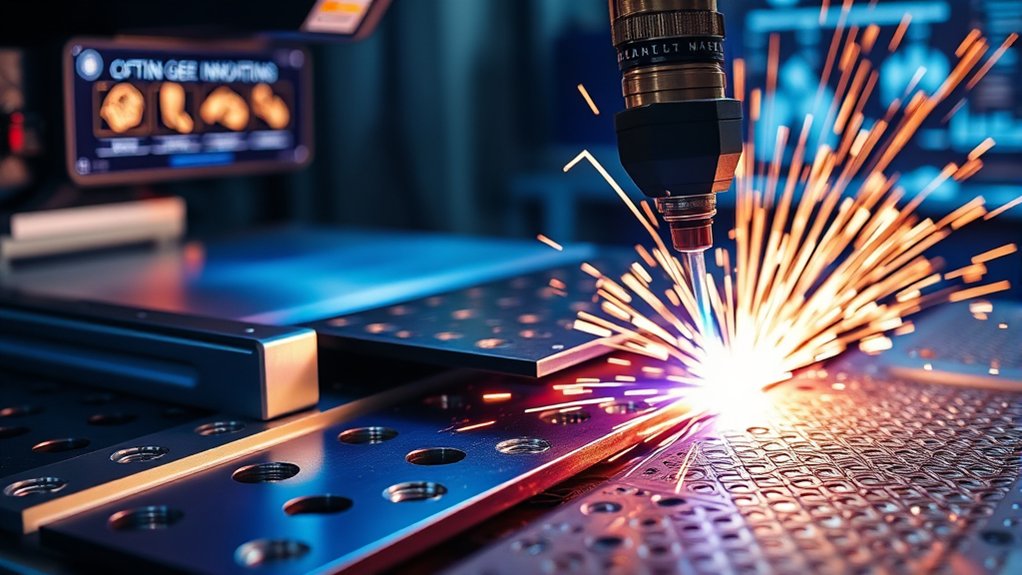
Modern plasma development increasingly focuses on process control rather than simply increasing amperage. High-definition and precision-plasma systems constrict and control the arc more tightly, while CNC integration coordinates torch movement, height, piercing, gases, and process parameters.
Current industrial systems also use technologies such as automated gas control, process-specific cutting data, improved consumable designs, advanced piercing methods, and software that optimizes holes, bevels, nesting, and torch motion.
For portable equipment, easier consumable management, automatic air-pressure adjustment, improved pilot-arc behavior, and more portable power sources can reduce setup work. These features do not eliminate the need to follow the exact cut chart and capacity rating for the machine.
Industrial thickness capability has also increased, but maximum numbers need context. A current Hypertherm XPR460, for example, publishes separate production-pierce, enhanced-pierce, production-severance, and enhanced-severance figures for different metals. That is more useful than saying generically that “automated plasma cuts 150 mm.”
Sources and Safety References
- Hypertherm — Plasma cutting attributes and compatible materials
- Hypertherm — Powermax125 cut, pierce, and severance specifications
- Hypertherm — XPR460 mechanized cutting specifications
- Hypertherm — Plasma cutting vs. laser cutting
- Hypertherm — Aluminum plasma cutting and water-table safety
- OSHA — Hexavalent chromium exposure information
- OSHA — Occupational noise exposure guidance
- TWI — Heat-affected zone explanation
Frequently Asked Questions
Can a Plasma Cutter Cut Aluminum?
Yes. Aluminum is electrically conductive and can be plasma cut. Use the manufacturer’s aluminum-specific consumables, gas or air settings, current, and travel speed. Extra safety controls are necessary when aluminum is cut over or under a water table because hydrogen can accumulate in some configurations.
What Materials Can’t a Plasma Cutter Cut?
Conventional transferred-arc plasma cutters are intended for electrically conductive workpieces. Ordinary wood, plastic, glass, concrete, and similar nonconductive materials are therefore not normal plasma-cutting materials.
How Thick Can a Plasma Cutter Cut?
There is no universal thickness limit. Use the exact machine’s recommended cut, pierce, and severance ratings. For example, the current Hypertherm Powermax125 lists a 38 mm recommended capacity and a 57 mm hand-severance capacity, showing why maximum severance should not be confused with normal working thickness.
Can a Plasma Cutter Be Used Underwater?
Specialized mechanized plasma systems can use approved underwater-cutting processes, but this is not permission to submerge an ordinary handheld plasma cutter. Follow the plasma-system and cutting-table manufacturer’s instructions. Water-table cutting of nonferrous metals such as aluminum also requires controls for possible hydrogen accumulation.
How Does Plasma Cutting Affect Metal Fatigue?
Plasma cutting creates a heat-affected zone near the cut edge, and its size and properties depend on the material, thickness, current, travel speed, and cutting process. For fatigue-critical structural or engineered parts, follow the applicable engineering specification for cut quality, inspection, and any required edge finishing instead of assuming every plasma-cut edge has the same fatigue performance.
Are There Safety Concerns With Plasma Cutting Fumes?
Yes. Plasma cutting can generate metal and coating fumes, so use appropriate ventilation or local fume extraction and the PPE required for the material and workplace. Stainless steel and other chromium-containing alloys can create chromium-related exposure concerns during hot work, while galvanized and coated metals introduce additional hazards.
Can Plasma Cutters Be Used for Artistic Metalwork?
Yes. Handheld and CNC plasma cutters are widely suited to conductive-metal artwork, signs, silhouettes, curves, templates, and decorative panels. Thin or intricate work benefits from suitable low-current consumables, controlled travel speed, and careful management of heat and kerf width.
How Loud Is Plasma Cutting?
Noise varies with the plasma process, current, compressed-air system, cutting table, material, and whether cutting is above or below water, so one decibel range should not be applied to every setup. Measure workplace exposure when necessary and use appropriate hearing controls and protection; OSHA’s general-industry hearing-conservation action level is 85 dBA as an eight-hour time-weighted average.
Conclusion
A plasma cutter can cut most electrically conductive metals, including mild steel, stainless steel, aluminum, copper, and brass. What it cannot tell you from material name alone is how thick or how cleanly a specific machine will cut.
For that, check three things: the machine’s recommended capacity for your normal material thickness, its pierce capacity if you need internal or CNC starts, and the power and air requirements needed to deliver its rated output. Treat severance capacity as an occasional maximum rather than the thickness you plan to cut every day.
Once the cutter is properly sized, clean dry air, correct consumables, appropriate travel speed, safe fume control, and manufacturer-approved settings will have a much greater effect on real-world results than a simple amperage number.