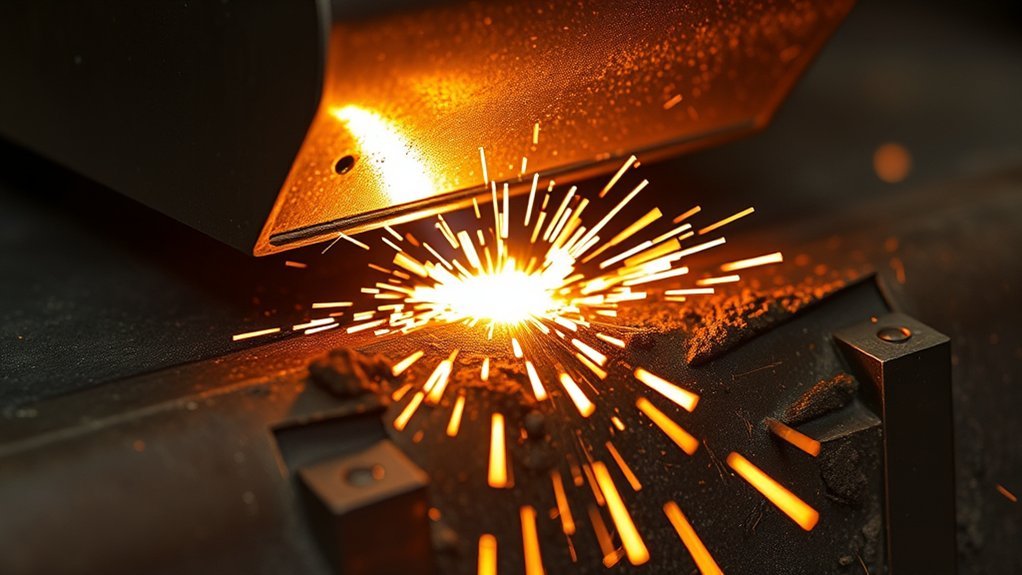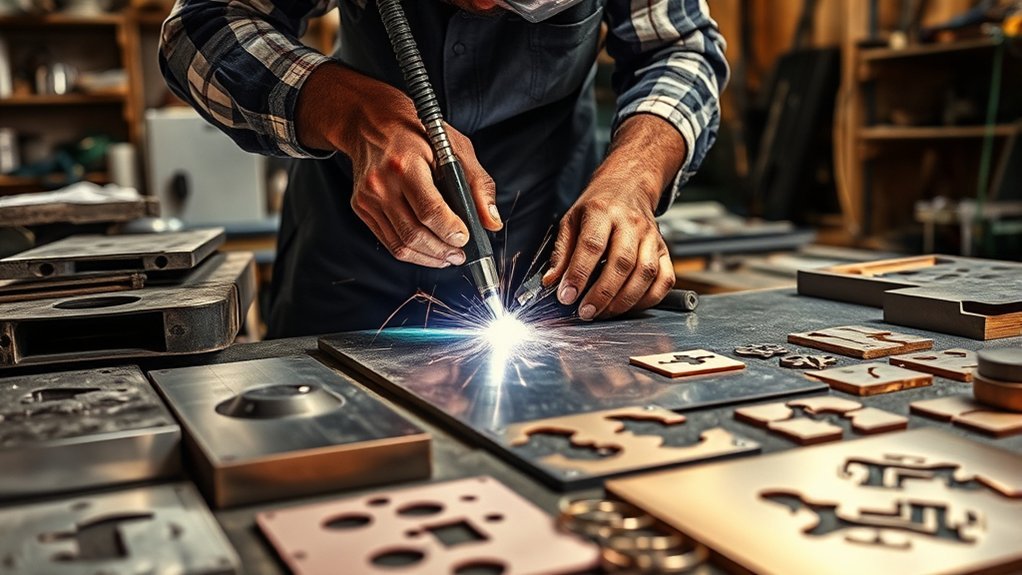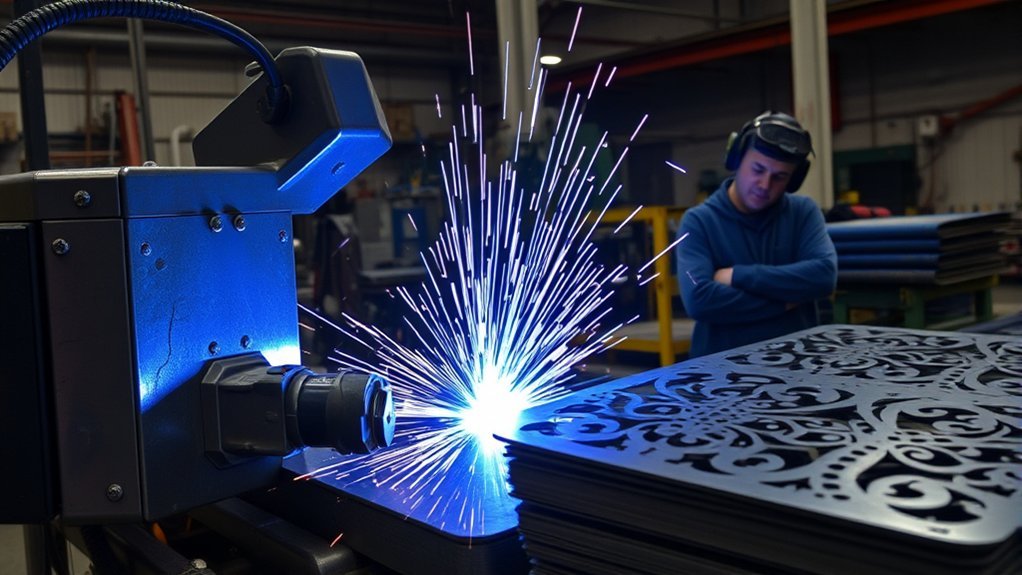
Plasma cutting can be very efficient when you match the machine, amperage, gas flow, torch height, and cut speed to the metal in front of you. It is usually strongest on electrically conductive metals where you need fast cuts, clean edges, and lower setup time than many slower thermal or mechanical methods. Its real efficiency, though, depends on more than the amp setting. You also need to count input power, compressor load, consumables, idle time, rework, and material waste.
Quick Answer
Plasma cutting is efficient for conductive metals because it cuts quickly, needs less setup than many methods, and can reduce grinding when settings are correct. To judge true efficiency, measure input kWh, gas or air use, consumable wear, cut quality, and wasted material instead of relying only on the amperage dial.
Key Takeaways
- Plasma cutting works best on electrically conductive metals such as mild steel, stainless steel, aluminum, copper, and brass.
- The amp setting is not the same as wall power draw. Estimate cost from input volts, input amps, power factor, arc-on time, and your electricity rate.
- Dry air, clean consumables, correct torch height, and proper travel speed often save more money than simply lowering amperage.
- Plasma is usually a strong choice for fast metal plate cutting, while laser, waterjet, oxy-fuel, saws, or shears may be better for certain materials or tolerances.
At a Glance
| Time Required | 10 to 20 minutes to estimate one job, longer if you measure actual kWh during production |
| Difficulty | Moderate, because you need to separate output cutting amps from input power draw |
| Tools Needed | Machine nameplate, manual, electricity rate, stopwatch, clamp meter or kWh meter when practical |
| Cost | Electricity cost = kWh used × your utility rate, plus air or gas, consumables, labor, and cleanup |
Understanding Plasma Cutting Efficiency
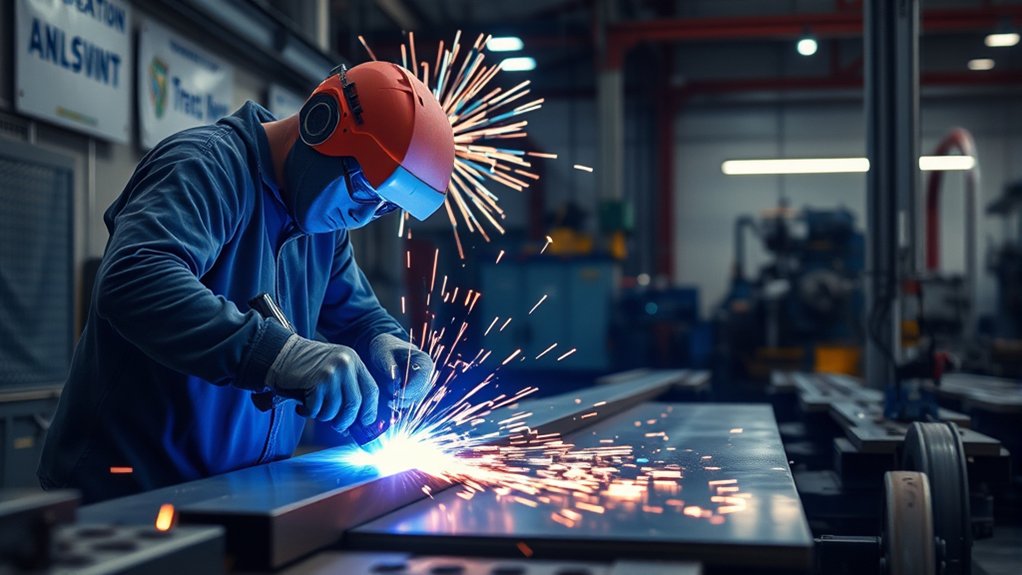
Plasma cutting efficiency is not just about how fast the arc moves. A cut is efficient when you get the part you need with the least wasted time, electricity, air or gas, consumables, cleanup, and rework.
That means a “faster” setting is not always the most efficient setting. If you turn the amperage up too high, move too slowly, or use worn consumables, you may create extra dross, a wider kerf, a larger heat-affected zone, and more grinding afterward. If you set the machine too low, the cut may fail to pierce or leave heavy slag on the bottom edge.
The most efficient plasma cut is the one that meets the required edge quality at the lowest total job cost, not always the one made at the lowest amp setting.
For shop work, judge plasma cutting by these practical measures:
- Cut speed: How many inches or millimeters of clean cut you make per minute.
- Energy use: How many kWh the cutter, compressor, and table use during the job.
- Consumable life: How long nozzles, electrodes, shields, and swirl rings last.
- Cut quality: How much dross, bevel, warping, and cleanup remain after the cut.
- Material yield: How much plate is saved through good nesting and kerf planning.
- Labor time: How much time you spend piercing, cutting, cleaning, and correcting parts.
How the Plasma Cutting Process Works
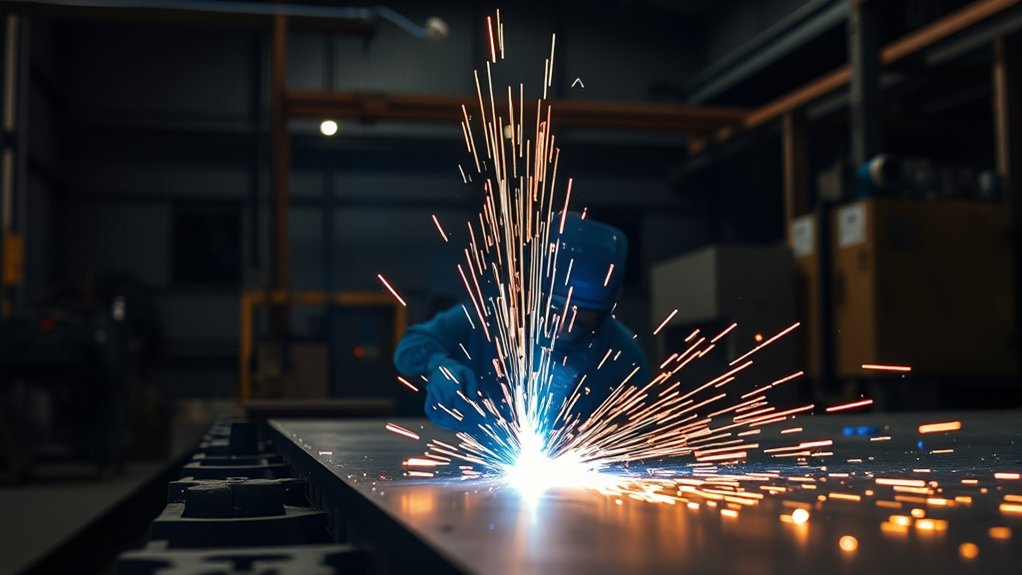
A standard plasma cutter uses an electric arc and a stream of gas to cut electrically conductive metal. The gas may be compressed air, oxygen, nitrogen, argon-hydrogen, or another mix, depending on the machine and material. The arc ionizes part of that gas, forming a conductive plasma channel. The intense heat melts the metal, while the high-speed gas stream blows the molten metal out of the kerf.
This is why ordinary transferred-arc plasma cutting is used for metals such as mild steel, stainless steel, aluminum, copper, and brass. It is not the right process for wood, plastic, glass, concrete, or most non-conductive materials. For those jobs, you would usually look at waterjet cutting, routing, sawing, abrasive cutting, or another process.
Plasma cutting can produce clean edges because the heat is focused into a narrow area. Still, the cut face is affected by amperage, torch height, travel speed, gas pressure, material thickness, and consumable condition. When these are wrong, you may see bevel, heavy dross, top spatter, double arcing, or a rough edge.
Note: Plasma cutter capacity depends on the exact machine. A small portable unit, a high-definition CNC system, and an industrial mechanized table can have very different clean-cut and severance limits. Always use the manufacturer’s manual for your metal thickness and cut-quality target.
Key Factors That Control Power Consumption
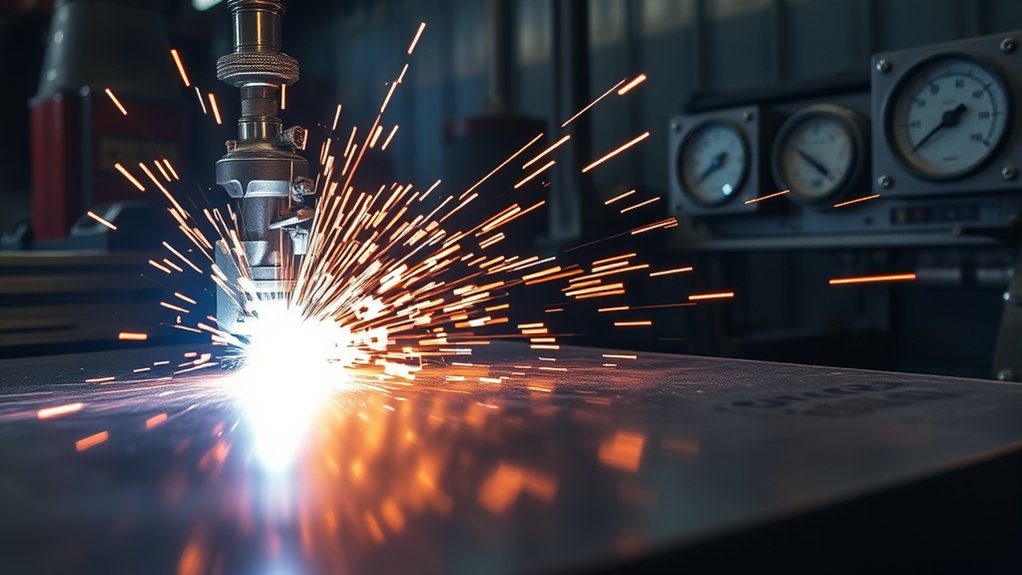
The power used by a plasma cutting job depends on both the electrical draw of the equipment and the quality of the cutting plan. A job with short arc-on time can still be wasteful if it requires many pierces, repeated restarts, heavy grinding, or scrapped parts.
Amperage and Voltage Settings
Higher amperage usually lets you cut thicker metal or increase travel speed, but it also increases load on the machine and consumables. Lower amperage may save power on thin sheet, but it can waste time if it forces slow travel or produces poor cut quality.
The key is to match the amp setting to the manufacturer’s cut chart for the metal type, thickness, consumable set, and gas. If the cut chart recommends 45 A for a certain thickness, dropping to 30 A may not save money if the result needs extra cleanup.
Material Type, Thickness, and Gas
Thicker metal needs more heat and slower travel. Stainless steel, aluminum, and copper alloys may need different gases or settings than mild steel because they conduct heat differently and respond differently to the arc. Dry, clean air also matters. Moisture, oil, and dirt in the air supply can shorten consumable life and reduce edge quality.
| Factor | How It Affects Efficiency | Best Practice |
|---|---|---|
| Metal thickness | Thicker plate needs more heat, slower travel, and more pierce energy. | Use the cut chart for clean-cut thickness, not only maximum severance thickness. |
| Amperage | Too low can cause incomplete cuts; too high can widen kerf and wear consumables. | Match amps to material and consumable size. |
| Torch height | Wrong standoff causes bevel, dross, double arcing, and poor consumable life. | Use proper standoff or an automatic torch height control on CNC tables. |
| Air or gas quality | Wet or dirty air increases wear and can make cuts rough. | Use clean, dry air and maintain filters, dryers, and regulators. |
| Pierce count | Frequent starts can wear nozzles and electrodes faster than long straight cuts. | Nest parts and plan lead-ins to reduce unnecessary pierces. |
How to Estimate Plasma Cutter Energy Use and Cost
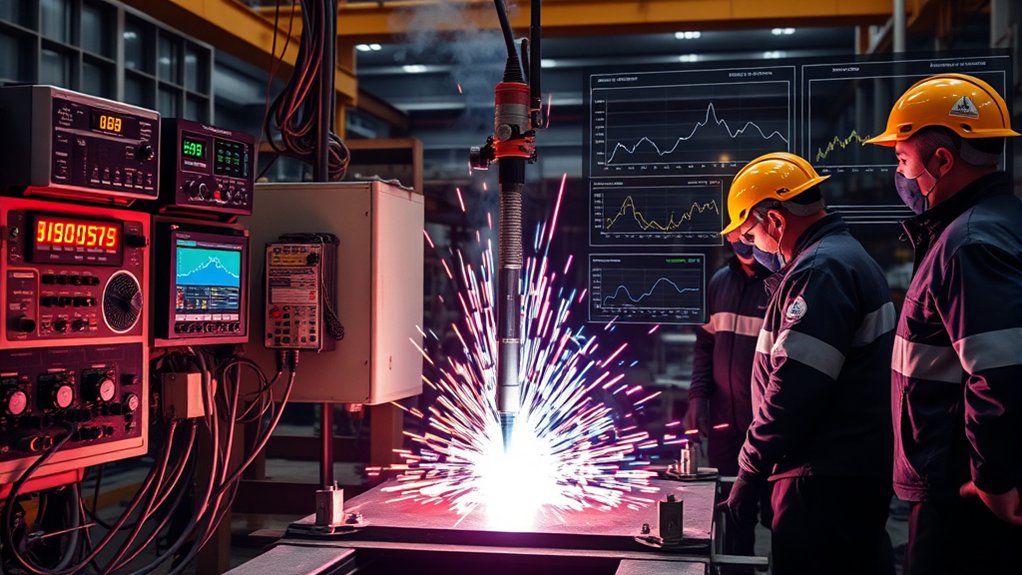
To estimate energy use correctly, use the machine’s input power, not only the cutting amperage shown on the front panel. Cutting current is the output of the machine. Your electric bill is based on what the machine, compressor, CNC table, air dryer, lights, and other equipment draw from the wall.
For a simple single-phase estimate, use this:
Input watts ≈ input volts × input amps × power factor
Energy use in kWh = input kW × arc-on hours
Electricity cost = kWh × your local electricity rate
The kilowatt hour is a unit of energy. The NIST Guide for the Use of the International System of Units lists the kilowatt hour as equal to 3.6 megajoules. That is why kWh belongs in cost and energy estimates, while watts or kilowatts describe power at a moment in time.
Warning: Do not estimate electricity use by multiplying the plasma cutter’s output amp setting by the wall voltage. Use the nameplate input rating, a clamp meter, a dedicated kWh meter, or your shop’s monitored circuit data for a better estimate.
| What to Measure | Why It Matters | How to Get It |
|---|---|---|
| Input voltage | Part of the power estimate. | Use the circuit rating or the machine nameplate. |
| Input current | Shows what the machine draws from the power supply. | Read the nameplate or measure with proper electrical tools. |
| Arc-on time | Only part of the job uses full cutting load. | Time active cutting separately from setup and idle time. |
| Compressor use | Compressed air can be a major hidden cost. | Include compressor kWh or operating time in job cost. |
| Consumables | Nozzles and electrodes affect both cost and cut quality. | Track parts used per job or per cutting hour. |
For a rough job estimate, add the cutter’s energy, compressor energy, consumables, gas or air treatment, labor, cleanup, and scrap. This gives you a truer cost than electricity alone.
Plasma Cutting vs Laser, Oxy-Fuel, Waterjet, and Mechanical Cutting
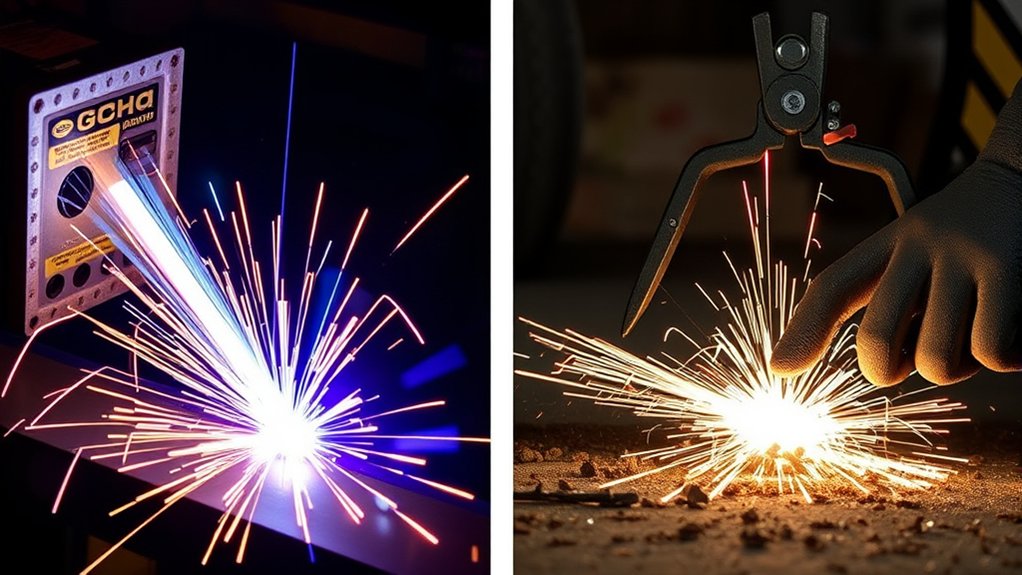
Plasma cutters are often efficient because they cut metal quickly and do not need a physical blade. Still, no cutting method wins every job. The best process depends on metal type, thickness, edge tolerance, heat sensitivity, machine cost, consumables, and volume.
| Cutting Method | Best Fit | Efficiency Tradeoff |
|---|---|---|
| Plasma cutting | Fast cutting of conductive metal sheet and plate. | Strong speed-to-cost balance, but edge cleanup may be needed on some cuts. |
| Laser cutting | Thin sheet, tight detail, small holes, and high precision. | Excellent precision, but equipment cost can be high and thick plate may favor plasma or oxy-fuel. |
| Oxy-fuel cutting | Thick carbon steel. | Useful on heavy steel, but slower and not suitable for stainless or aluminum in the same way. |
| Waterjet cutting | No heat-affected zone, non-conductive materials, and mixed materials. | Great for heat-sensitive work, but pumps, abrasive, and slower speeds can raise cost. |
| Sawing or shearing | Straight cuts, repetitive stock prep, and simple shapes. | Can be very efficient for simple cuts, but less flexible for curves and internal shapes. |
If your job is conductive metal with curves, brackets, repairs, art panels, signs, or plate profiles, plasma often gives an excellent mix of speed and cost. If your job requires ultra-tight tolerances, no heat input, or non-metal material, another method may be more efficient overall.
Products Worth Considering
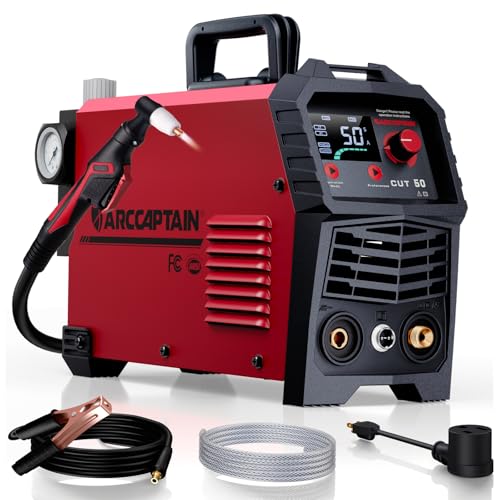
【Powerful Cutting Ability】Switch effortlessly between 110V and 220V for home or workshop use. Achieve professional 1/2" clean cuts on steel, aluminum, and copper with advanced LGBT technology. Perfect for DIY projects and heavy-duty tasks. Recommended maximum cutting thickness: 12mm @ 35A / 110V / 55 PSl; 18mm @ 50A / 220V / 75 PSI. Note: Requires compressed air (compressor sold separately).

[POWERFUL CUTTING PERFORMANCE] : Get clean, efficient cuts with up to 3/10" clean cut at 110V and 1/2" at 220V, with a maximum cutting thickness of 1/2" at 110V and 2/3" at 220V. Designed for smooth and effective cutting across a variety of metalworking, repair and DIY applications.

[Powerful Cutting Ability] Dual voltage 110/220V good for home, workshop and hardware shop use. Professional performance 1/2" clean cuts on Iron, Steel aluminum and copper with Inverter IGBT Technology. Very powerful for DIY and heavy duty project. The Maximum cutting thickness is recommended to 1/2" @35A 110V 50PSI; 2/3" @50A 220V 65PSI. Dry and compressed air is required. Power breaker up to 60A@110V 35A; Up to 50A@220V 50A.
Strategies for Optimizing Energy Use
You can reduce energy use and total cost by improving the whole workflow, not just lowering the amp setting. Start with the cut chart, then adjust only after you inspect the edge and dross pattern.
Pro Tip: If your cut quality suddenly gets worse, check the nozzle, electrode, air dryness, ground clamp, and torch height before blaming the machine. Small setup problems often cause the biggest efficiency losses.
- Use the correct consumables. Match nozzle size, shield, electrode, and swirl ring to the amp range and process.
- Keep air clean and dry. Moisture and oil shorten consumable life and can cause rough cuts.
- Set the right standoff. Too high or too low can create bevel, dross, and unstable cutting.
- Reduce unnecessary pierces. Nest parts, chain cuts when appropriate, and plan lead-ins to protect finished edges.
- Batch similar cuts. Group parts by thickness and material so you do not keep changing settings.
- Turn the machine off during long idle periods. Idle draw adds up on large machines, compressors, and air dryers.
- Maintain the compressor. Leaks, clogged filters, and wrong pressure waste energy and hurt cut quality.
- Use nesting software on CNC work. Better nesting reduces scrap, which can save more money than small electricity changes.
- Track rework. Grinding, recutting, and rejected parts are hidden efficiency losses.
Training and Safety Considerations
Plasma cutting is fast, but it is still hot work with electrical, fire, fume, noise, light, and compressed-air hazards. Read the machine manual, follow shop policy, and use proper PPE before every cut.
Warning: Plasma cutting throws sparks and molten metal and produces intense light. OSHA requires appropriate eye and face protection for hazards such as flying particles, molten metal, and injurious light radiation. OSHA’s filter-lens table lists minimum protective shades for plasma arc cutting by current range, but you should also follow your machine manual and helmet manufacturer guidance.
Use these safety checks before cutting:
- Eye and face protection: Use a helmet or face shield with the correct filter shade, plus safety glasses with side protection.
- Skin protection: Wear flame-resistant clothing, gloves, and closed leather footwear. Avoid synthetic fabrics that can melt.
- Ventilation: Use local exhaust or proper shop ventilation, especially when cutting coated, galvanized, painted, or stainless material.
- Fire prevention: Move combustibles away, shield anything that cannot be moved, and keep a suitable extinguisher ready. OSHA’s welding and cutting fire-prevention rule includes requirements for fire hazards, guards, extinguishers, and fire watch conditions.
- Electrical safety: Keep the work clamp secure, avoid wet floors, inspect cables, and disconnect power before servicing the machine.
- Compressed air safety: Use rated hoses and fittings, drain moisture, and do not exceed the machine’s pressure limits.
- Noise protection: Use hearing protection when cutting in enclosed shops or on loud materials.
- Training: Make sure each operator knows setup, shutdown, emergency stops, consumable handling, and hot-work rules.
Never cut sealed containers, fuel tanks, drums, or hollow parts unless they have been professionally cleaned, vented, and approved for hot work. OSHA warns that used containers must be cleaned thoroughly before welding, cutting, or other hot work, and hollow spaces should be vented or purged when needed.
Environmental and Cost Benefits of Plasma Cutting
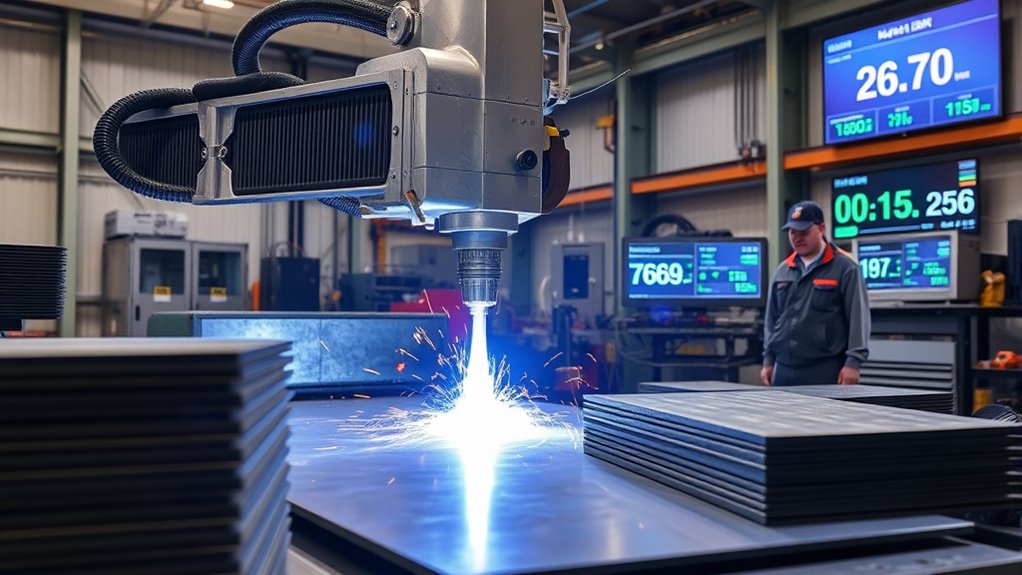
Plasma cutting can support lower-cost production when it reduces cut time, material waste, and secondary grinding. On CNC tables, careful nesting can improve sheet yield and reduce scrap. On repair jobs, a portable cutter can save time because you can cut brackets, plate, or damaged metal without moving the workpiece to a large machine.
Its environmental impact depends on the full job. Electricity use, compressed air, gas choice, consumable waste, fume control, scrap rate, and rework all matter. If you want to estimate emissions from electricity use in the United States, the EPA’s eGRID database provides data on electricity generation, emission rates, resource mix, and related power-sector characteristics.
To make plasma cutting more sustainable, focus on the basics: avoid scrapped parts, use nesting software, keep consumables in good condition, maintain the air system, and cut at the correct settings for the job. A clean cut that needs little grinding usually saves time, electricity, abrasive discs, and labor.
Future Trends in Plasma Cutting Technology
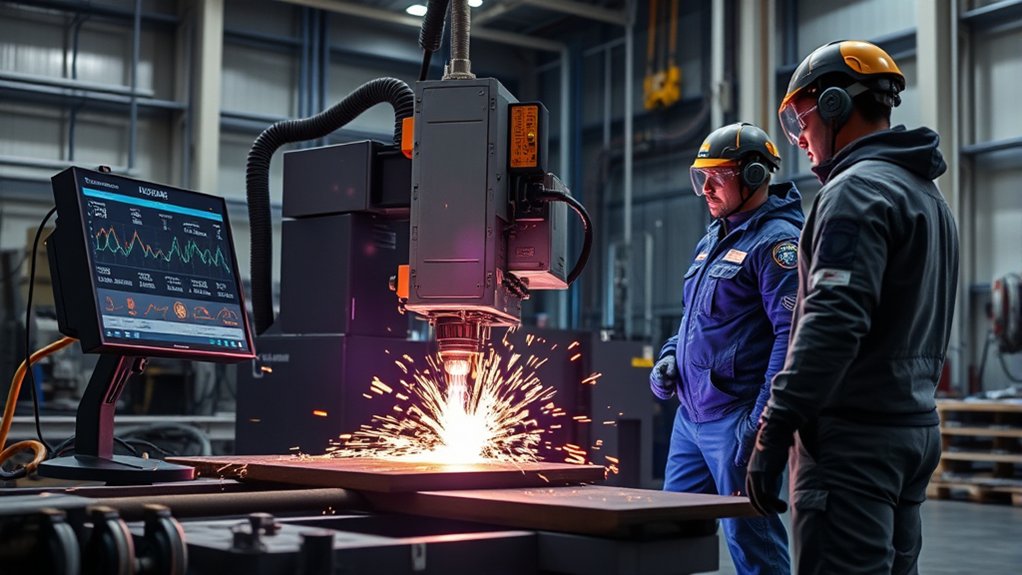
Plasma cutting technology keeps moving toward better precision, easier setup, and lower waste. The most useful improvements are the ones that help operators make the right cut the first time.
- Better CNC control: Improved motion control, lead-in planning, and nesting help reduce scrap and rework.
- Automatic torch height control: Consistent standoff improves edge quality and consumable life.
- Higher-definition plasma systems: More focused arcs can improve cut quality on suitable materials and thicknesses.
- Monitoring and diagnostics: Some systems help operators track consumable condition, air pressure, cut faults, and downtime.
- Hybrid workflows: Shops may pair plasma with laser, waterjet, machining, or robotic handling so each process does the work it does best.
The trend is not just more power. It is better control. When the machine, software, operator, and air system work together, the shop gets cleaner parts with fewer failed cuts.
Troubleshooting Inefficient Plasma Cuts
If plasma cutting feels expensive or slow, inspect the cut before changing the machine. The edge often tells you what is wrong.
| Problem | Likely Cause | Efficiency Fix |
|---|---|---|
| Heavy bottom dross | Travel speed too slow, amperage wrong, or worn consumables. | Check cut chart, increase speed if appropriate, and inspect nozzle/electrode. |
| Cut does not fully separate | Too little power, too much speed, poor ground, or material beyond clean-cut capacity. | Use correct thickness range, improve clamp contact, and adjust speed or amps. |
| Excessive bevel | Wrong torch height, worn nozzle, wrong travel direction, or poor consumable alignment. | Set correct standoff, replace damaged parts, and verify cut direction. |
| Short consumable life | Wet air, wrong pressure, piercing too low, or dragging when not designed for it. | Improve air drying, use correct pierce height, and follow consumable guidelines. |
| High electricity cost | Long idle time, air leaks, inefficient compressor, or too much rework. | Measure kWh, fix air leaks, batch work, and reduce failed cuts. |
Frequently Asked Questions
What types of metals can plasma cutting effectively work on?
Plasma cutting works on electrically conductive metals. Common examples include mild steel, stainless steel, aluminum, copper, and brass. The clean-cut thickness depends on your machine, torch, consumables, gas, and cut-quality needs.
Does higher amperage always make plasma cutting more efficient?
No. Higher amperage can increase speed on thicker metal, but it can also widen the kerf, increase heat input, and wear consumables faster. The most efficient setting is the one that matches the material and produces the needed edge quality with minimal rework.
How do I measure the real electricity use of a plasma cutter?
Use the machine’s input rating, a clamp meter, a dedicated kWh meter, or monitored circuit data. Include compressor and table power when they are part of the job. Then multiply kWh by your local electricity rate to estimate electricity cost.
How does plasma cutting handle intricate designs or shapes?
Plasma cutting can handle curves, brackets, signs, artwork, and many internal cutouts, especially on CNC tables. For very small holes, tight tolerances, or fine detail in thin sheet, laser cutting may provide a cleaner result.
Are there specific maintenance requirements for plasma cutters?
Yes. Inspect nozzles, electrodes, shields, swirl rings, torch leads, work clamps, air filters, dryers, regulators, and compressor lines. Clean, dry air and fresh consumables are two of the easiest ways to improve cut quality and reduce waste.
Can plasma cutting be used in underwater environments?
Specialized industrial and underwater systems can use plasma cutting in wet environments, but a normal shop plasma cutter is not designed for that work. Underwater cutting requires proper equipment, training, and safety controls.
How does plasma cutting affect the structural integrity of materials?
Plasma cutting creates a heat-affected zone along the cut edge. On many fabrication parts this is acceptable, but high heat, slow travel, or poor settings can increase warping, hardness changes, or edge defects. For critical parts, follow the required procedure and inspect the cut edge before welding or loading the part.
Conclusion
Plasma cutting is efficient when it is used for the right job: conductive metal, suitable thickness, correct consumables, clean air, and settings that match the cut chart. It can save time, reduce setup work, and produce clean parts quickly, especially in fabrication, repair, and CNC plate work. The most accurate way to judge efficiency is to measure the full job cost: kWh, compressor use, consumables, gas or air treatment, scrap, cleanup, and labor. When you control those factors, plasma cutting becomes a fast and cost-effective tool instead of just a high-powered arc.
Sources
- OSHA 1910.133 Eye and Face Protection — filter lens and eye/face protection requirements for cutting hazards.
- OSHA 1910.252 Welding, Cutting, and Brazing General Requirements — hot-work fire prevention, fire watch, training, and container safety requirements.
- OSHA Welding, Cutting, and Brazing Overview — official overview of standards, hazards, and safety resources.
- NIST Special Publication 811: Guide for the Use of the International System of Units — unit usage and kilowatt-hour energy conversion.
- EPA eGRID — electricity generation, emission rates, resource mix, and power-sector emissions data.