Is a Plasma Cutter a Welding Machine? Key Differences, Uses & Safety
Discover the distinct roles and safety measures of plasma cutters and welding machines—are they different or more alike than you think?

Thinking about combining welding gear with plasma cutting? This guide explains what’s feasible and what isn’t. Dedicated plasma cutters use blow-back or HF start, gas flow control, and safety interlocks that typical MIG/TIG/Stick power sources lack. We compare true combo machines (TIG/plasma units) and OEM add-on options versus DIY conversions, with notes on duty cycle, input power (120/240V), air/CFM, and generator use. Learn about torch and consumable compatibility, CNC/THC ports, grounding/EMI, and warranty implications. Bottom line: for reliability and safety, choose a purpose-built plasma system; use shared carts, quick-connect air, and proper wiring to streamline your shop without risky hacks.
Discover the distinct roles and safety measures of plasma cutters and welding machines—are they different or more alike than you think?
Thinking plasma cutters might weld? Discover their true capabilities and limitations, and what this means for your projects.
Learn why using a plasma cutter for TIG welding presents challenges due to their distinct requirements; discover their unique roles in metalwork. Read on to find out more!
Get essential safety tips and explore alternatives before converting an arc welder into a plasma cutter. Discover crucial steps to ensure a successful project.
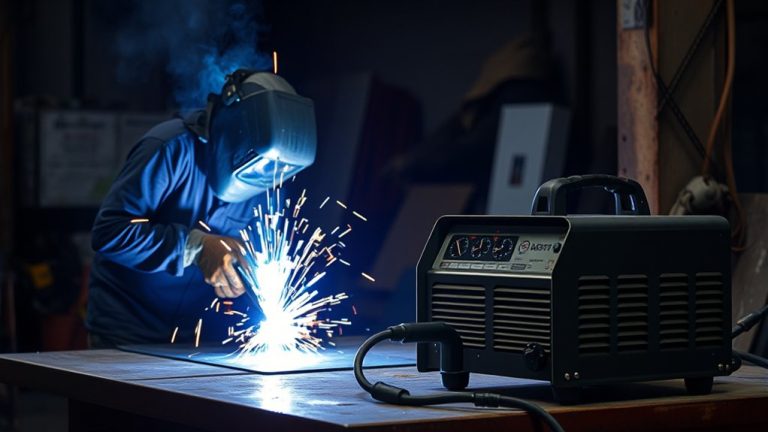
Beware: Arc welders and plasma cutters differ significantly, and attempting to interchange them may lead to dangerous and unsatisfactory outcomes.
Opening the toolbox on converting a MIG welder to a plasma cutter reveals complexities and potential hazards—are you ready to dive deeper?
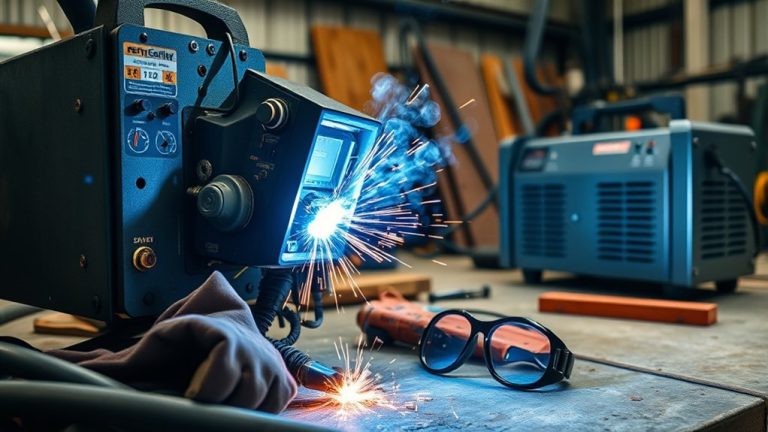
Keen to transform your TIG welder into a plasma cutter? Uncover the risks, myths, and safer alternatives before diving into this dangerous DIY project.