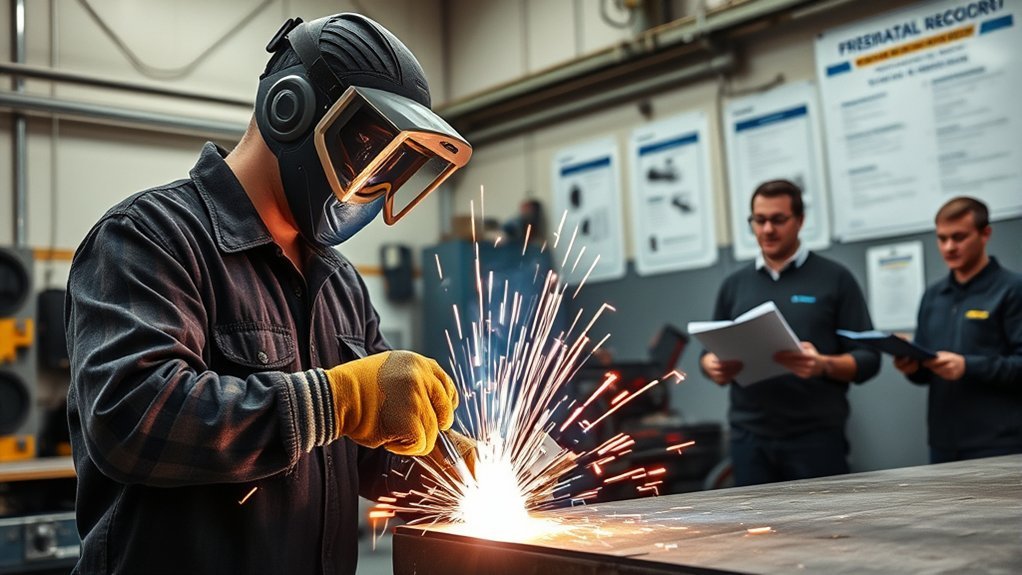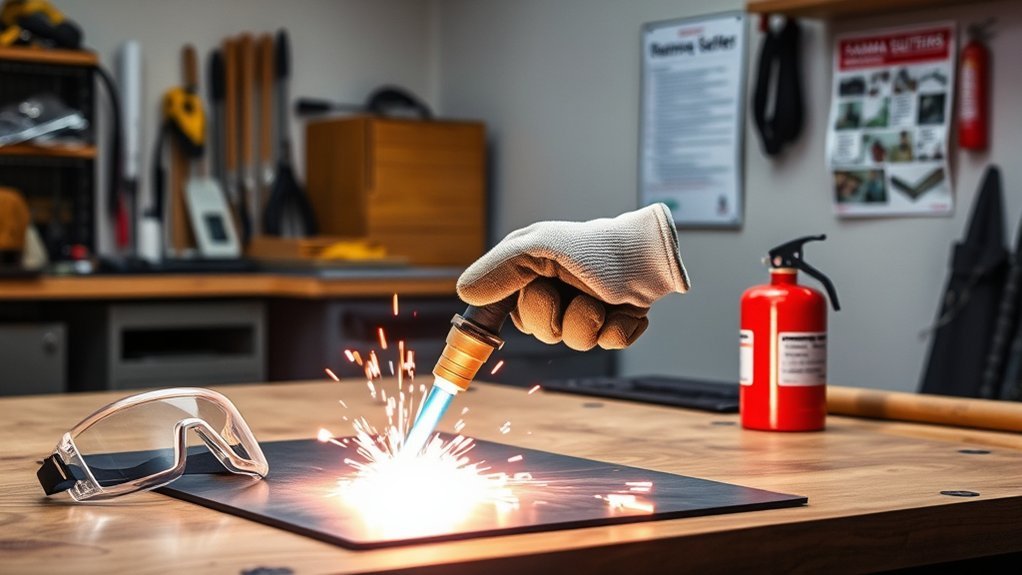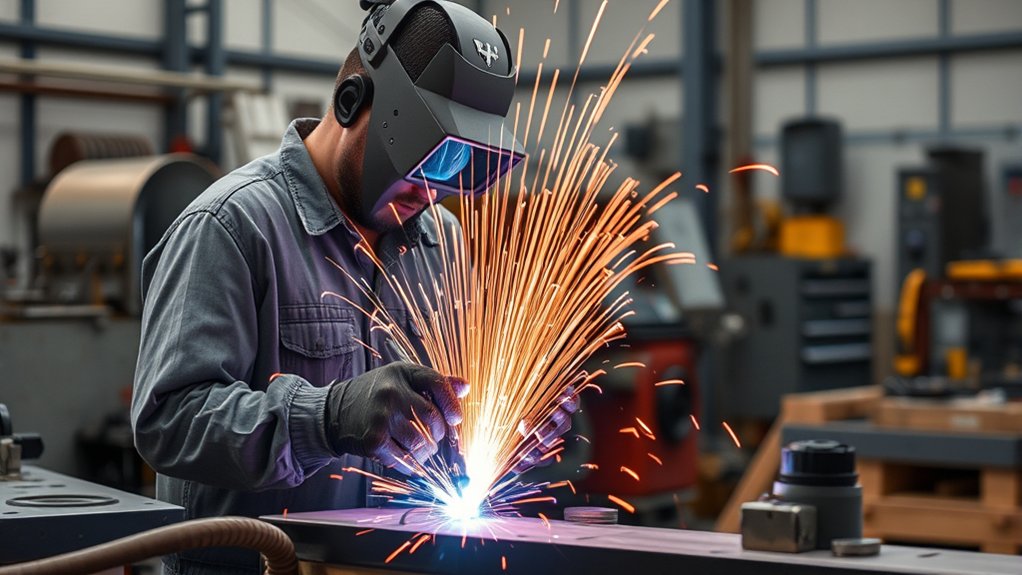
Plasma cutting is a fast way to cut electrically conductive metals with a focused jet of hot, ionized gas. It works well for fabrication, repair work, metal art, farm projects, and industrial cutting, but clean results depend on the right setup. You need a solid work clamp, dry air or the correct plasma gas, good consumables, safe PPE, and settings that match the metal thickness.
Quick Answer
Plasma cutting uses an electric arc and compressed gas to create a hot plasma jet that melts conductive metal and blows the molten metal out of the cut. For cleaner cuts, match amperage to thickness, keep the torch height steady, use dry air, ground the workpiece well, and test your settings on scrap first.
Key Takeaways
- Plasma cutting works only on electrically conductive metals, such as mild steel, stainless steel, aluminum, copper, and brass.
- Amperage, travel speed, torch height, air pressure, and consumable condition control edge quality.
- Dry, clean air is critical because moisture and oil can shorten consumable life and cause rough cuts.
- Always protect your eyes, skin, lungs, and hearing, and treat plasma cutting as hot work because sparks and molten metal can start fires.
At a Glance
| Time Required | 5 to 15 minutes for setup and test cuts; cutting time depends on part size and thickness. |
| Difficulty | Beginner to intermediate. Straight cuts are simple; precise curves, thick plate, and CNC work need more practice. |
| Tools Needed | Plasma cutter, torch, work clamp, dry compressed air or approved gas, PPE, straight edge, clamps, marker, and scrap metal for test cuts. |
| Cost | Main costs are the machine, electricity, air supply, consumables, PPE, and gas if your system uses bottled gas. |
Overview of Plasma Cutting
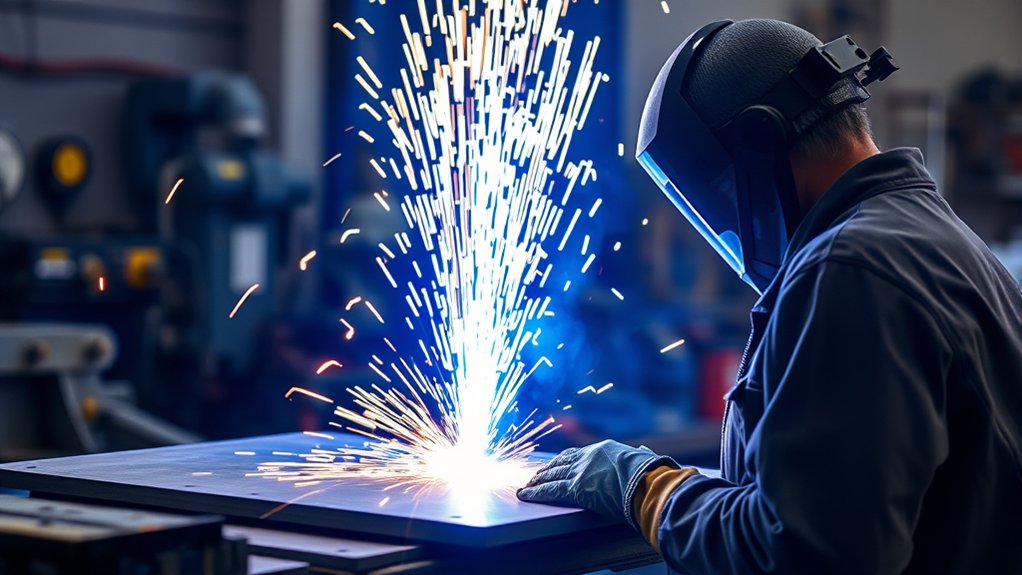
Plasma cutting uses an electric arc to ionize a gas and turn it into plasma. That plasma travels through a small nozzle at high speed, melts the metal, and blows the molten material away from the kerf. Because the arc must complete an electrical circuit, the process works on conductive metals, not wood, glass, stone, or most plastics.
The modern plasma arc process was developed in the 1950s. Robert M. Gage’s 1957 plasma arc torch patent helped shape the process, and plasma arc cutting later became common in fabrication shops, automotive repair, construction, HVAC work, and CNC metal cutting.
You can use plasma cutting on mild steel, stainless steel, aluminum, brass, copper, and other conductive metals. It is often faster than saws, grinders, and oxy-fuel on many shop jobs, especially when cutting shapes in sheet or plate. It also leaves no saw chips, handles curves well, and can be used by hand or with CNC tables.
Note: The rated cut thickness printed on a plasma cutter is not the same for every cut quality. Many manufacturers separate “recommended,” “clean,” and “severance” capacity. Use the cut chart in your operator’s manual when edge quality matters.
Working Principle of Plasma Cutting
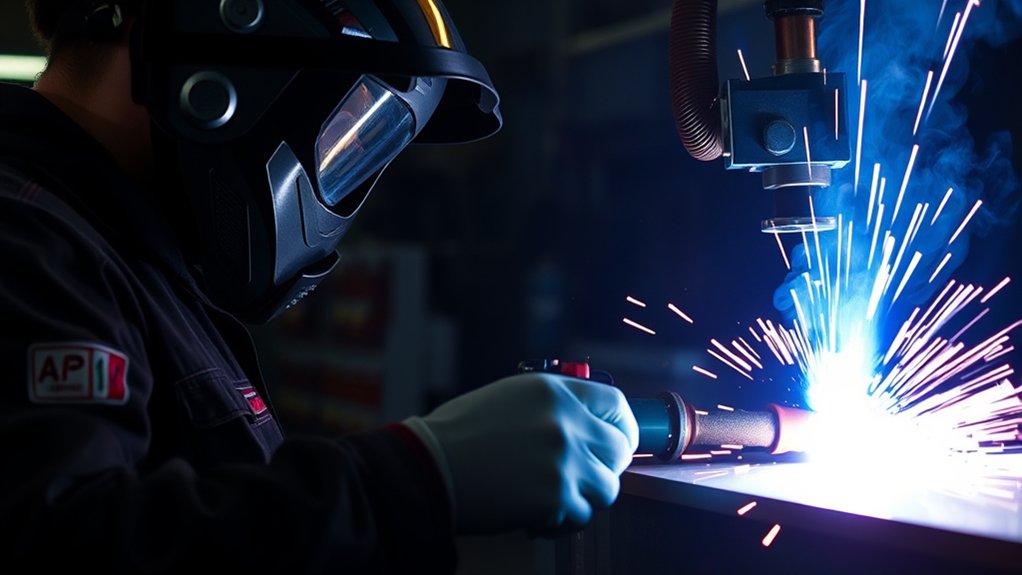
When you start a plasma cut, the power supply sends current through the torch. Gas flows through the torch body and nozzle. The arc ionizes that gas, creating a conductive plasma stream hot enough to melt metal near the cut line.
The work clamp completes the circuit through the workpiece. If the clamp is loose, dirty, too far from the cut, or attached to a painted surface, the arc may sputter, fail to transfer, or leave a rough edge.
Plasma Arc Generation
Most plasma cutters start with a pilot arc. The pilot arc forms inside or near the torch first, then transfers to the grounded workpiece when the torch is close enough to the metal. Once the main arc transfers, the plasma jet cuts through the work and the gas blows molten metal out of the kerf.
The nozzle constricts the arc, which raises energy density and focuses the cut. A worn nozzle makes the arc wider and less stable. A worn electrode can make starts harder and can cause wandering cuts, extra dross, and poor edge quality.
High-Temperature Ionization
Plasma is created when gas becomes ionized and electrically conductive. Near the arc, the plasma stream can reach extremely high temperatures, often described in the tens of thousands of degrees Celsius. This heat melts the metal quickly, but the heat-affected zone is usually smaller than with slower thermal cutting methods when the settings are correct.
| Factor | Why It Matters |
|---|---|
| Ionization | Turns the gas into a conductive plasma stream. |
| Grounding | Completes the electrical circuit so the arc transfers cleanly. |
| Nozzle constriction | Focuses the arc for a narrower kerf and cleaner cut. |
| Gas flow | Pushes molten metal out of the cut and cools the torch consumables. |
Plasma Cutting Safety First
Plasma cutting is hot work. It can produce arc radiation, sparks, molten metal, noise, fumes, and electric shock hazards. Before you cut, clear the work area, protect nearby people, and follow the safety section of your machine manual.
Warning: Never plasma cut a sealed container, fuel tank, drum, aerosol can, pressurized part, or unknown vessel. Vapors can ignite or explode. Do not cut galvanized, painted, plated, oily, or unknown coated metal unless you have proper ventilation and know the coating hazards.
- Eye and face protection: Use a welding helmet or face shield with the correct filter shade for your amperage. OSHA’s eye and face protection standard gives filter-lens guidance for welding and cutting.
- Skin protection: Wear flame-resistant clothing, leather gloves, closed leather boots, and hearing protection. Avoid synthetic clothing because sparks can melt it.
- Fume control: Use local exhaust, shop ventilation, or a fume extractor when cutting, especially on stainless steel, coated metals, or unknown scrap. NIOSH provides welding-fume guidance through its welding safety resources.
- Fire prevention: Move flammables away, keep an extinguisher nearby, and check the area after cutting. OSHA’s welding, cutting, and brazing rules cover fire prevention and ventilation requirements.
- Electrical safety: Keep gloves dry, inspect leads, avoid wet floors, and turn the machine off before changing consumables.
Types of Plasma Cutting Processes
Plasma cutting systems vary by start method, torch design, power level, and whether the torch is handheld or CNC-controlled. Choosing the right type affects cut quality, starting reliability, and consumable life.
Contact Start and Drag Cutting
Some handheld torches let you drag the torch tip or drag shield along the surface. This is helpful for beginners because it keeps the torch height steady. It works best when the torch is designed for drag cutting. Do not drag a bare nozzle unless your manual allows it, because it can damage the nozzle and cause double arcing.
Pilot Arc Cutting
A pilot arc lets the torch start without direct contact with the workpiece. This helps when cutting expanded metal, rusty surfaces, painted metal, or gaps where the arc must restart often. Pilot arc machines are useful for repair work and rougher material, but you still get better results when the work area is clean.
High-Frequency and Blowback Starts
Older or industrial machines may use high-frequency starting. Many modern portable machines use blowback or non-high-frequency starting to reduce electrical interference near CNC controls, computers, or sensitive electronics.
CNC and High-Definition Plasma
CNC plasma tables control torch movement, height, speed, and cut paths with software. High-definition systems use tighter arc control and more precise gas management for cleaner edges and better repeatability. These systems are common in production shops but still depend on correct consumables, gas, material settings, and maintenance.
Gases Used in Plasma Cutting
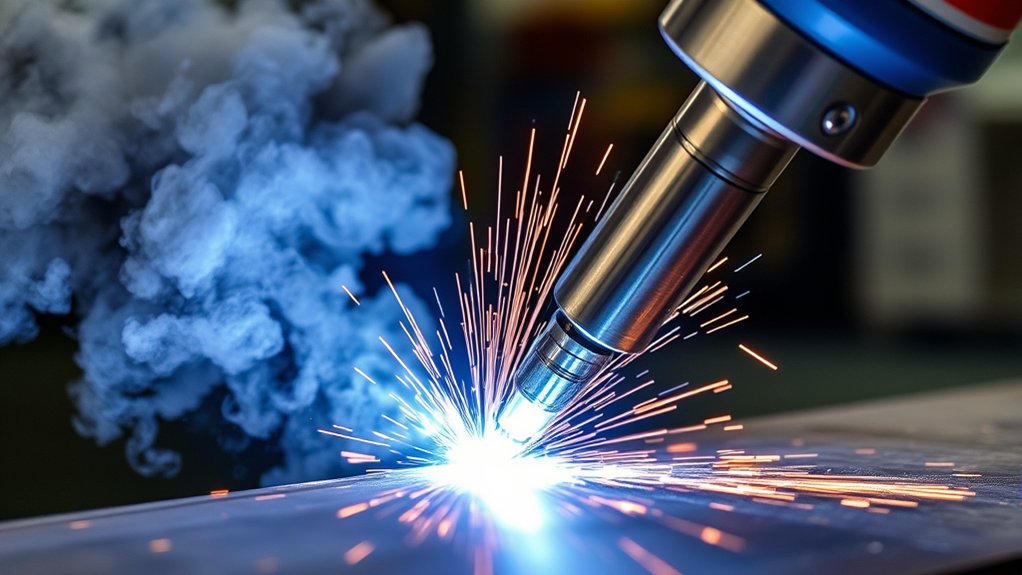
The gas you use affects arc stability, speed, edge color, dross, oxidation, and consumable life. Many small shop machines use clean, dry compressed air because it is affordable and works on mild steel, stainless steel, and aluminum. Industrial systems may use oxygen, nitrogen, argon-hydrogen blends, or separate plasma and shield gases.
| Gas | Common Use | Main Caution |
|---|---|---|
| Compressed air | General shop cutting on mild steel, stainless steel, and aluminum. | Must be clean and dry; moisture causes rough cuts and faster consumable wear. |
| Oxygen | Fast cutting on mild steel in many mechanized systems. | Can increase oxidation and requires equipment designed for oxygen service. |
| Nitrogen | Stainless steel, aluminum, and applications where less oxidation is desired. | Gas cost and system compatibility must be checked. |
| Argon-hydrogen | Thicker stainless steel and aluminum on suitable industrial systems. | Higher cost and must be used only with equipment rated for the mixture. |
Pro Tip: If your cuts suddenly get rough, check the air supply before changing every setting. Water in the air line, a clogged filter, or low compressor output can mimic bad amperage or travel speed.
Materials Suitable for Plasma Cutting
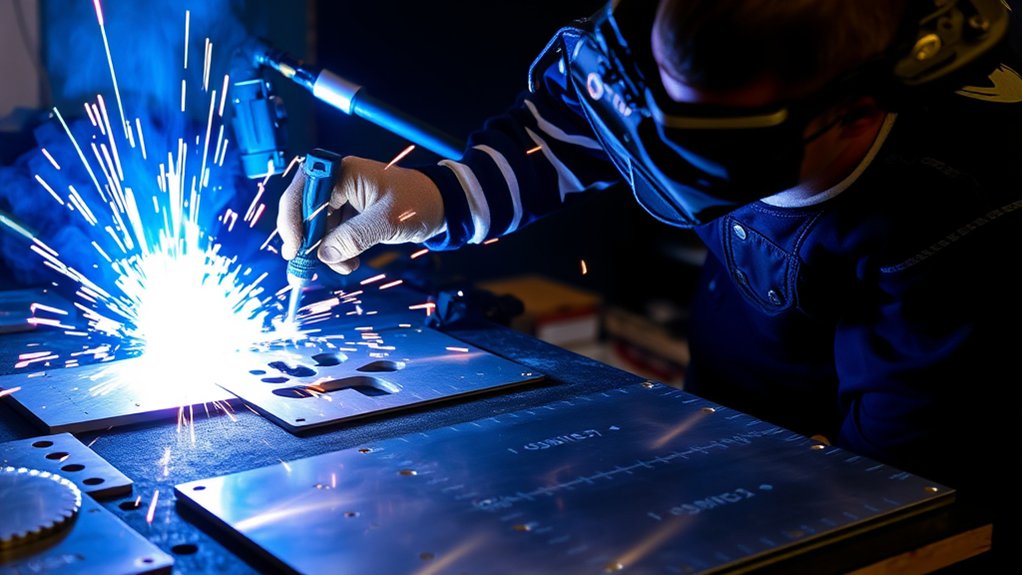
Plasma cutting is best for conductive metals. Each metal responds differently because heat conductivity, oxide behavior, thickness, and gas choice affect the cut.
| Material | Plasma Cutting Fit | What to Watch |
|---|---|---|
| Mild steel | Excellent for most shop and fabrication jobs. | Too much speed causes bottom dross; too little speed widens the kerf. |
| Stainless steel | Good with air, nitrogen, or specialty gases. | Fumes can be hazardous; use strong ventilation and avoid breathing the plume. |
| Aluminum | Good, especially with enough amperage and stable travel speed. | Heat conductivity is high, so thin aluminum can warp if you move too slowly. |
| Copper and brass | Possible with suitable amperage and technique. | High heat conductivity can make starting and edge quality harder. |
| Painted, rusty, or coated metal | Possible, especially with pilot arc. | Clean the cut line when possible and control fumes from coatings. |
Plasma cutting is not a universal cutting method. It needs an electrically conductive workpiece, a stable arc path, and settings that match the metal.
Advantages of Plasma Cutting
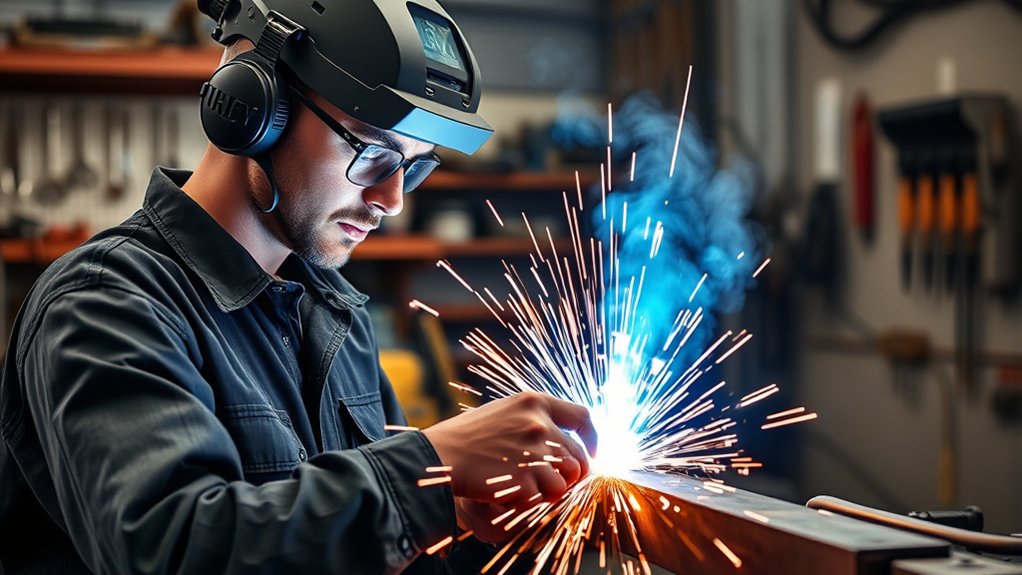
Plasma cutting is popular because it balances speed, portability, and versatility. You can cut straight lines, curves, holes, brackets, panels, and repair patches without needing a saw blade to follow the shape.
High Precision Cutting
With the right torch height, clean consumables, and steady travel speed, plasma cutting can produce clean edges with a narrow kerf. CNC systems improve repeatability because they control motion and torch height more consistently than hand cutting.
The heat-affected zone is usually smaller than slower thermal processes when the cut is tuned correctly. That helps limit distortion, although thin sheet metal can still warp if you linger too long or use too much amperage.
Speed and Versatility
Plasma cutting is fast on many conductive metals and is often more practical than oxy-fuel for stainless steel, aluminum, and thinner sheet. It also starts quickly and does not require preheating the whole cut line.
Laser cutting can be better for thin, highly precise production parts, while waterjet can cut nonconductive materials and avoids heat distortion. Plasma stands out when you need a strong mix of speed, portability, lower operating cost, and the ability to cut many common metals.
Disadvantages of Plasma Cutting
Plasma cutting has limits. It is not the cleanest choice for every material or every tolerance. You should compare it with laser, waterjet, saw cutting, shearing, and oxy-fuel before choosing it for a critical job.
- Conductive materials only: It will not cut wood, glass, stone, concrete, or ordinary plastic because the arc needs a conductive path.
- Consumables wear out: Electrodes, nozzles, shields, swirl rings, and retaining caps need inspection and replacement.
- Dross can form: Wrong speed, low air pressure, poor torch height, or worn consumables can leave slag on the bottom edge.
- Edge bevel can appear: A plasma kerf may have some bevel, especially with hand cutting or incorrect torch angle.
- Fumes and sparks need control: Cutting painted, plated, stainless, or unknown scrap can create hazardous fumes and fire risk.
- Thick plate needs enough power: The thicker the metal, the more amperage and slower travel speed you need. For exact limits, follow the machine’s cut chart.
Key Settings for Optimal Plasma Cutting
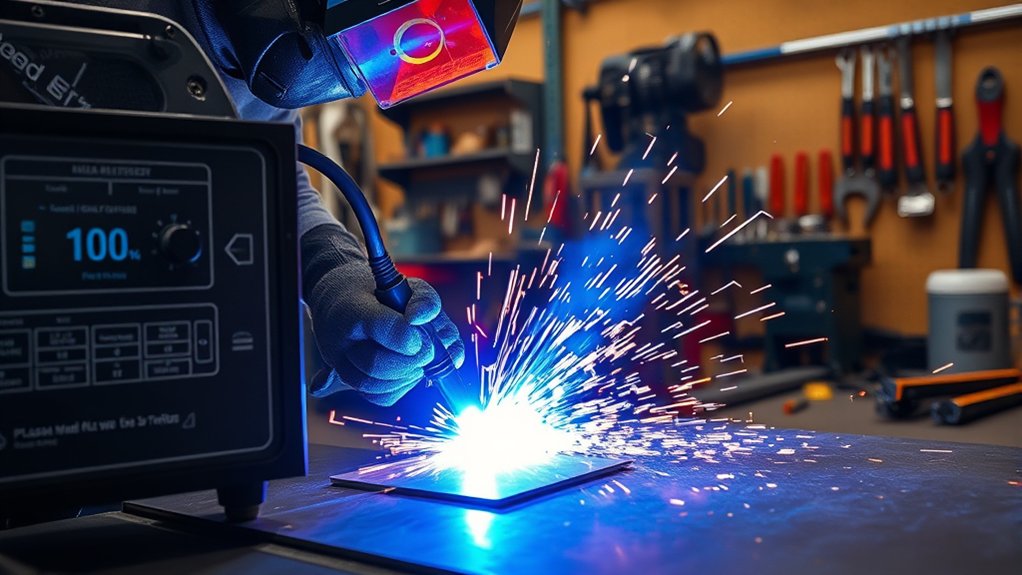
Clean plasma cuts come from matching the machine settings to the metal. Do not guess on a finished part. Start with the cut chart in your manual, then make a test cut on scrap of the same material and thickness.
Products Worth Considering

Desiccant Air Dryer System: Engineered with a compressor desiccant air filter dryer system that effectively traps water vapor, oil aerosols, and dirt particles from the air supply. This unit functions as a reliable air line dryer, helping to prevent moisture-related damage to pneumatic tools and ensuring smoother operation for workshop projects.
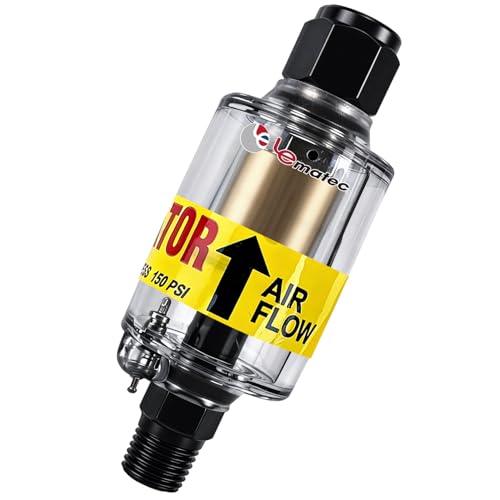
Moisture Protection: 1-micron reusable element removes air compressor oil and water from compressed air systems; essential for precise spray painting and plasma cutting

【Port Size】The three-stage air filter has three ports, two holes of 3/8" NPT and one Gauge Port 1/8" NPT. Capable of working smoothly in the 0-150PSI range.
Amperage
Amperage controls how much cutting power the arc has. Thin sheet needs lower amperage so you do not overheat the edge or blow out the cut. Thicker plate needs higher amperage, slower travel, and a machine rated for that thickness.
Travel Speed
Travel speed controls dross, bevel, and kerf width. A good hand-cutting clue is the spark stream. On many cuts, sparks should exit the bottom and trail slightly behind the torch. If sparks shoot back toward you or pile up on top, you may be moving too fast or lack enough power.
Torch Height and Standoff
Torch height affects arc shape. Too high can cause a wide kerf, bevel, and arc wandering. Too low can damage the nozzle and make the torch stick. Use a drag shield, standoff guide, or CNC torch height control when available.
Air Pressure and Air Quality
Use the air pressure range listed by your machine or torch manual. Low pressure can cause dross and poor penetration. Excessive pressure can disturb the arc. More important, the air must be dry and oil-free. Drain the compressor tank and use a water separator or air dryer when needed.
Ground Clamp Placement
Attach the work clamp to clean bare metal, close to the cut when practical. Do not clamp over paint, heavy rust, oil, or loose scale. A poor ground can cause arc misfires and inconsistent cuts.
How to Set Up for a Clean Plasma Cut
- Check the work area. Remove flammables, set up ventilation, and protect nearby people from arc light and sparks.
- Inspect the torch. Check the nozzle, electrode, shield, retaining cap, and swirl ring for wear, cracks, or blocked holes.
- Prepare the metal. Mark the cut, remove heavy rust or paint from the clamp area, and clean the cut path if quality matters.
- Connect clean, dry air or approved gas. Confirm pressure and flow with the torch active if your machine requires it.
- Set amperage and mode. Choose the starting point from the cut chart for that material and thickness.
- Secure the workpiece. Clamp the material so it cannot shift, vibrate, or fall when the cut finishes.
- Make a test cut. Use scrap from the same material and adjust speed, height, and amperage before cutting the final part.
- Watch the spark stream. Sparks should exit the bottom cleanly. Adjust if they spray back, drag heavily, or leave heavy dross.
Products Worth Considering

Strong & Durable Design: Thanks to their tough polycarbonate wraparound construction, these anti-fog safety goggles offer superior protection from both direct and peripheral threats.

Lens Technology- IR 5.0 Filter Green Lens are ANSI & CSA compliant, with 99% protection from UV rays to reduce eye fatigue and prevent damage.

Mirrored shade 5 lenses
Best Practices for Plasma Cutting
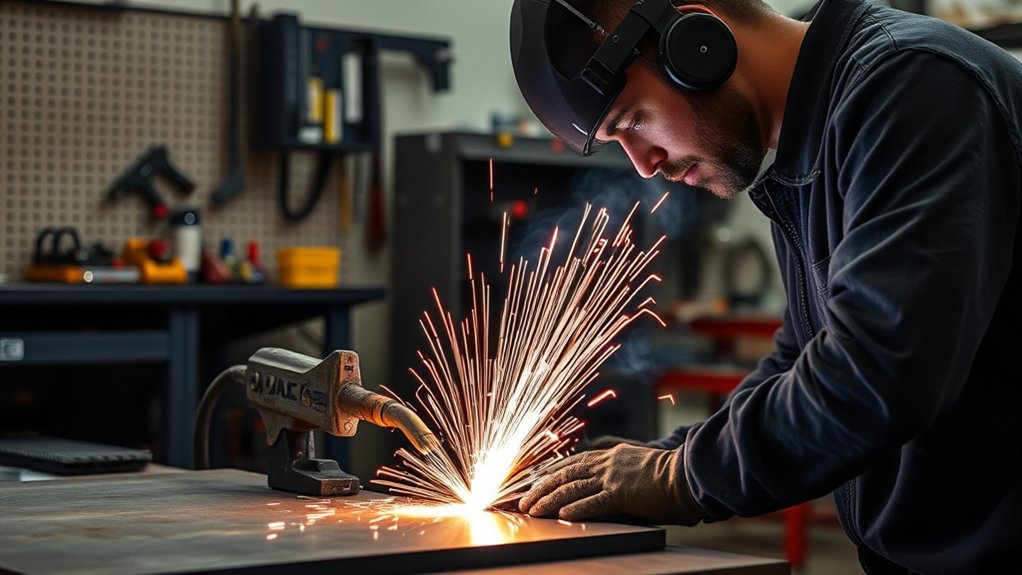
Good plasma cutting is repeatable. Once you find a clean setting, write it down with the material, thickness, amperage, air pressure, consumables, and travel speed. That simple habit saves time the next time you cut the same material.
- Use a guide for straight cuts. A clamped straight edge helps you maintain a smooth line. Keep the offset between the guide and torch tip consistent.
- Start with a pierce delay on thicker metal. Let the arc pierce through before moving so molten metal does not blow back into the nozzle.
- Keep the torch square. Tilting the torch creates bevel and uneven kerf width unless you are intentionally bevel cutting.
- Replace consumables before they fail. A slightly worn nozzle can ruin a precise cut before it looks completely destroyed.
- Let the machine cool if needed. Respect the duty cycle. If the machine overheats, cut quality and reliability drop.
- Use proper ventilation. Fume control matters most when cutting stainless, galvanized, painted, plated, oily, or unknown metal.
Cut Quality Troubleshooting
| Problem | Likely Cause | Fix |
|---|---|---|
| Heavy bottom dross | Travel speed too slow, amperage too low, worn consumables, or low air pressure. | Increase speed slightly, verify amperage, check air supply, and inspect the nozzle and electrode. |
| Sparks spray back on top | Moving too fast, metal too thick for setting, or poor ground. | Slow down, raise amperage if appropriate, and clean the clamp area. |
| Excessive bevel | Torch tilted, wrong standoff, worn nozzle, or wrong cut direction on CNC parts. | Hold the torch square, set correct height, replace the nozzle, and check the cut path. |
| Arc sputters or stops | Bad ground, wet air, dirty metal, or failing consumables. | Clean the work clamp area, dry the air, clean the cut line, and inspect torch parts. |
| Wide kerf or melted edge | Too much heat, slow travel, high amperage, or torch held too high. | Lower amperage if suitable, move faster, and keep the correct standoff. |
| Warped thin sheet | Too much heat input or unsupported material. | Use lower amperage, faster travel, skip-cut patterns, clamps, and heat breaks. |
Maintenance for Plasma Cutting Torches
Torch maintenance has a direct effect on cut quality. Plasma consumables work in extreme heat, so they wear even when the machine is used correctly.
- Inspect the electrode: Replace it if the pit is deep, uneven, or outside the manual’s limit.
- Check the nozzle opening: Replace the nozzle if the hole is oval, nicked, enlarged, or blocked by spatter.
- Clean the shield: Remove spatter so airflow stays even.
- Check the swirl ring: Cracks or blocked holes can make the arc unstable.
- Keep air dry: Drain the compressor and service filters regularly.
- Store consumables clean: Dirt and oil can affect starts and shorten life.
Frequently Asked Questions
How does plasma cutting affect material microstructure?
Plasma cutting creates a heat-affected zone along the cut edge. On some metals, this can change hardness, grain structure, or edge properties. The effect depends on the metal, thickness, amperage, travel speed, and cooling rate. For critical parts, plan for inspection or edge finishing after cutting.
What maintenance is required for plasma cutting torches?
Clean the torch, inspect the nozzle and electrode, check the shield and swirl ring, and replace worn consumables before cut quality drops. Also maintain the air system because wet or oily air can damage consumables and create rough cuts.
Is plasma cutting environmentally friendly?
Plasma cutting is not fume-free, but it can be efficient when settings are correct and waste is controlled. Use proper ventilation, avoid cutting hazardous coatings, collect scrap, maintain the machine, and choose the right process for the material to reduce waste and exposure.
Can plasma cutting be automated for industrial use?
Yes. CNC plasma tables and robotic systems can automate plasma cutting for repeatable production. Automation helps control speed, torch height, lead-ins, pierce delay, and cut paths, which improves consistency and reduces waste when the program and settings are correct.
How does air quality impact plasma cutting performance?
Air quality has a major effect on cut quality and consumable life. Moisture, oil, and dirt can cause arc instability, dross, rough edges, and early electrode or nozzle wear. Use clean, dry air and service water separators, filters, and dryers as needed.
Can a plasma cutter cut rusty or painted metal?
A pilot arc plasma cutter can often cut rusty or painted metal, but cleaner metal gives better results. At minimum, clean the work clamp area to bare metal. If the coating may release harmful fumes, remove it safely or use proper ventilation and respiratory protection.
Why does my plasma cut have so much dross?
Heavy dross usually comes from the wrong travel speed, low amperage, incorrect torch height, low or wet air supply, or worn consumables. Make a test cut, inspect the spark stream, check the air system, and replace the nozzle or electrode if they are worn.
Conclusion
Plasma cutting is a powerful metal-cutting process when you match the settings to the job. For the best results, start with the manual’s cut chart, use clean dry air, clamp to bare metal, inspect the consumables, and make a test cut before working on the final part. Most rough edges, dross, and arc problems come from a few fixable issues: bad air, poor grounding, wrong speed, wrong torch height, or worn torch parts.
Safety matters just as much as cut quality. Wear proper eye, skin, hearing, and respiratory protection, control fumes, and keep the work area clear of fire hazards. With the right setup and steady technique, plasma cutting can deliver fast, accurate cuts on a wide range of conductive metals.
Sources
- US Patent US2806124A, Robert M. Gage plasma arc torch — history of the plasma arc torch.
- OSHA 29 CFR 1910.133 Eye and Face Protection — filter lens and eye-protection guidance for welding and cutting.
- OSHA 29 CFR 1910.252 Welding, Cutting, and Brazing — hot-work fire prevention and ventilation requirements.
- OSHA Welding, Cutting, and Brazing Safety and Health Topics — safety context for welding and cutting work.
- CDC/NIOSH Welding Safety Resources — welding and cutting fume exposure guidance.
- Arc Plasma Torch Modeling, Trelles et al. — technical background on arc plasma torch physics and industrial thermal plasma processes.