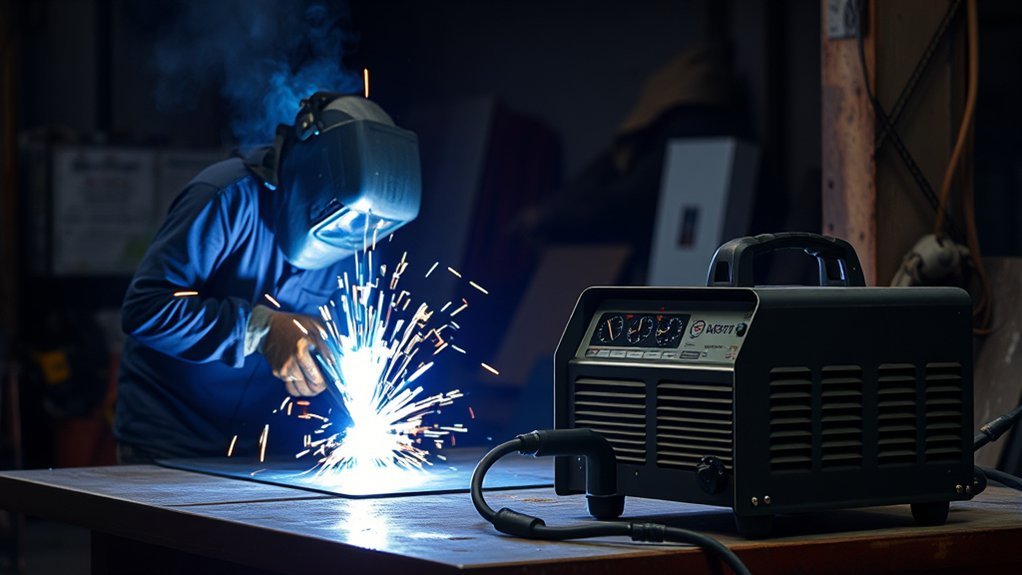
Trying to turn a TIG welder into a plasma cutter can look like a smart shortcut, but it creates real risks fast. The two machines use different power demands, torch designs, gas control, and safety systems. This guide explains why the conversion usually fails, what hazards it can create, and which safer options make more sense for your shop.
Quick Answer
You generally should not convert a TIG welder into a plasma cutter. Plasma cutting needs a purpose-built torch, higher open-circuit voltage, controlled air or gas flow, and safety features that most TIG welders don’t provide. A dedicated plasma cutter or a rated multi-process unit is the safer and more reliable choice.
Key Takeaways
- TIG welders and plasma cutters use different electrical and gas systems.
- DIY conversion can create shock, fire, fume, and equipment failure risks.
- Modified welding equipment can void warranties and may affect insurance claims.
- Dedicated plasma cutters cut faster and cleaner than improvised setups.
- Rated multi-process machines work better than homemade conversions when you need both functions.
Understanding the Basics of TIG Welders and Plasma Cutters
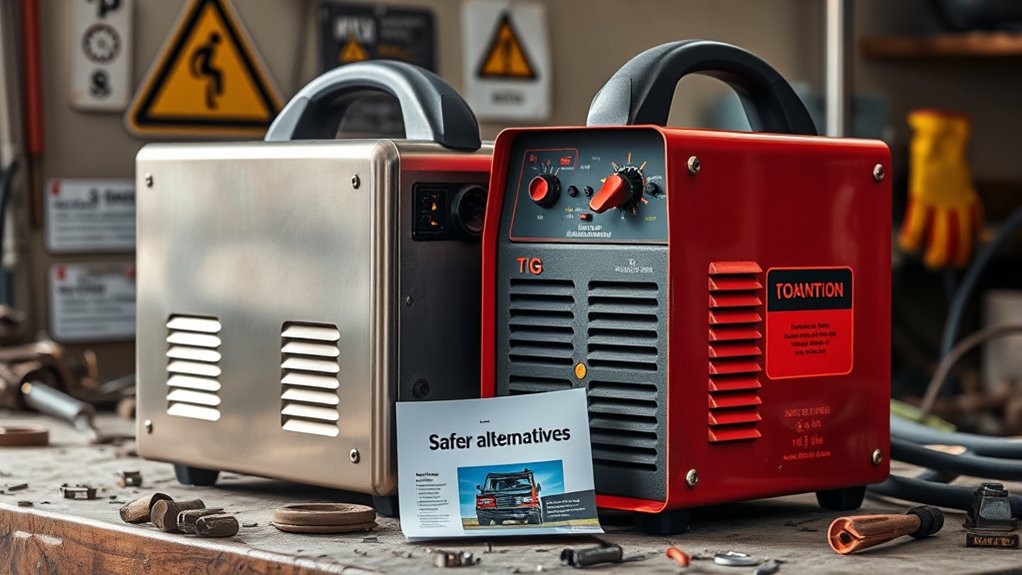
You need to understand how TIG welders and plasma cutters work before you compare them. Both create an electric arc, but they use that arc for very different jobs.
Tungsten inert gas (TIG) welding uses a non-consumable tungsten electrode to form a steady arc. You use that arc to join metal with precise heat control, often on thin steel, stainless steel, or aluminum.
TIG welding delivers precise, high-quality welds, especially on thinner materials that need clean heat control.
Plasma cutting uses an electric arc and a fast stream of ionized gas to slice through conductive materials. It focuses heat into a narrow cut instead of forming a weld pool.
The voltage and torch requirements differ greatly. A TIG welder prioritizes arc stability and heat control, while a plasma cutter needs enough voltage, air pressure, and torch design to start and maintain a cutting arc.
Why a TIG Welder Can’t Safely Work Like a Plasma Cutter
A TIG welder lacks several parts that a plasma cutter needs. A true plasma cutter uses a plasma torch, nozzle, electrode, swirl ring, air supply, and control circuit designed for cutting.
The torch constricts the arc and forces air or gas through a small opening. That focused stream gives plasma cutting its speed and clean kerf.
A TIG torch does not work this way. It shields a weld pool with gas, but it does not compress and direct plasma for cutting.
Warning: Never test homemade cutting setups without proper electrical protection, ventilation, eye protection, and a machine rated for the process.
Common Myths About Converting TIG Welders
You may hear that a TIG welder can become a plasma cutter with a torch swap or a few cheap parts. That claim leaves out the power supply, gas system, torch design, and controls that plasma cutting requires.
Another myth says all welding machines can handle several metalworking jobs with simple add-ons. In practice, each process needs its own safety limits and operating range.
Keep these points in mind:
- Plasma cutters need a power source and torch rated for cutting.
- TIG welders do not provide the same arc control or gas flow path.
- Improvised conversions can damage internal parts.
- Homemade setups may fail under heat, voltage, or duty-cycle stress.
Potential Risks Involved in Conversion
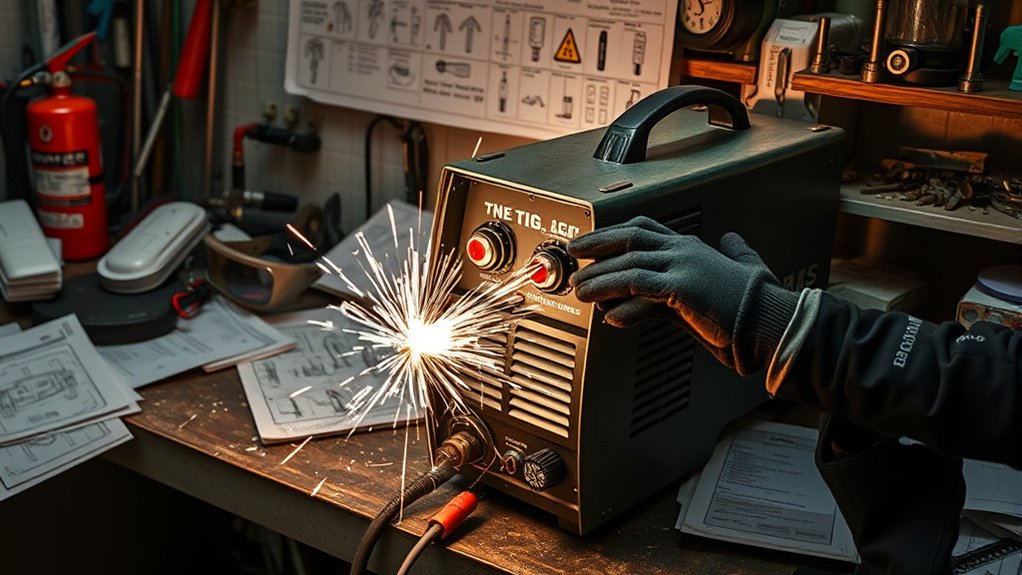
Converting a TIG welder to a plasma cutter creates serious risk because the machine was not built for that job. The biggest problems come from mismatched voltage, heat, airflow, and torch parts.
Electrical shock becomes a major concern when you bypass normal machine limits or expose parts that should stay enclosed. Fire risk also rises when cables, connectors, or internal parts overheat.
Plasma cutting also creates bright arc light, sparks, hot metal, and fumes. If you cut coated, painted, or galvanized metal, poor ventilation can expose you to harmful fumes.
Safety Concerns With DIY Conversions
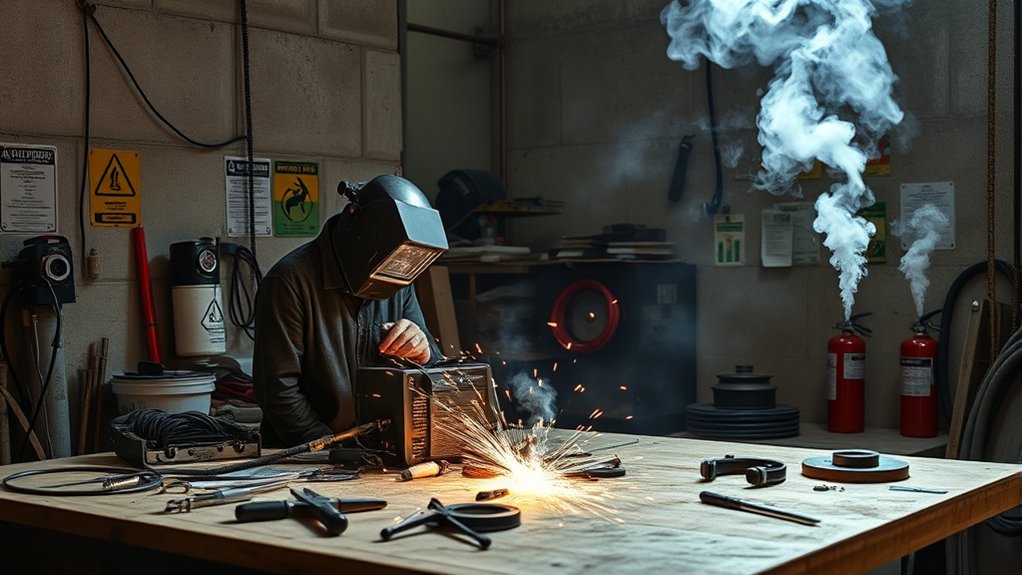
A DIY conversion often skips the safety systems that manufacturers build into plasma cutters. Those systems help manage air pressure, arc starting, duty cycle, thermal overload, and operator protection.
Before you attempt any metal cutting work, account for these risks:
- Electrical hazards: High voltage can cause severe shock if you expose or misuse live parts.
- Heat and fire hazards: Underrated parts can overheat, melt, or ignite nearby material.
- Gas and air problems: Poor airflow can create unstable cuts and more fumes.
- Compliance problems: Modified equipment can void warranties and may violate workplace safety rules.
You also need proper personal protective equipment. Use a welding helmet or cutting face shield with the right shade, flame-resistant clothing, gloves, hearing protection, and adequate ventilation.
Impact on Equipment Performance and Longevity
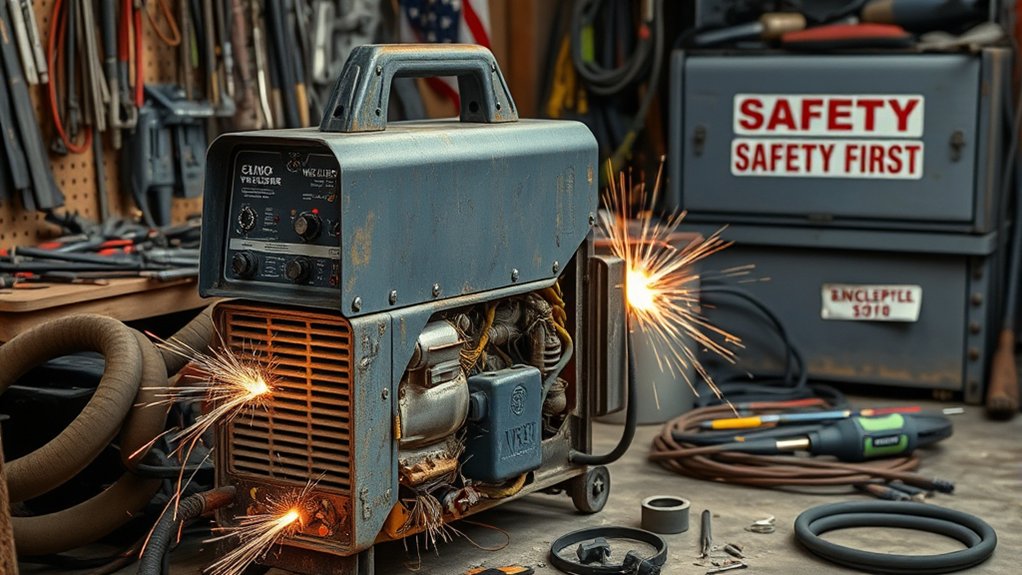
Changing a TIG welder into a plasma cutter can shorten the machine’s service life. The internal parts were designed for welding output, not the heat and arc behavior of plasma cutting.
A poor conversion can cause weak cutting power, unstable arcs, and repeated shutdowns. It can also stress circuit boards, cables, torch fittings, and gas components.
This extra stress can reduce reliability and shorten the machine’s working life.
Gas flow also creates a problem. TIG welding uses shielding gas to protect the weld, while plasma cutting needs controlled airflow or gas pressure to form and maintain the plasma stream.
Once you modify the machine, the manufacturer may refuse warranty claims. That can leave you paying for repairs that cost more than a proper cutting machine.
Differences in Cutting Efficiency and Quality
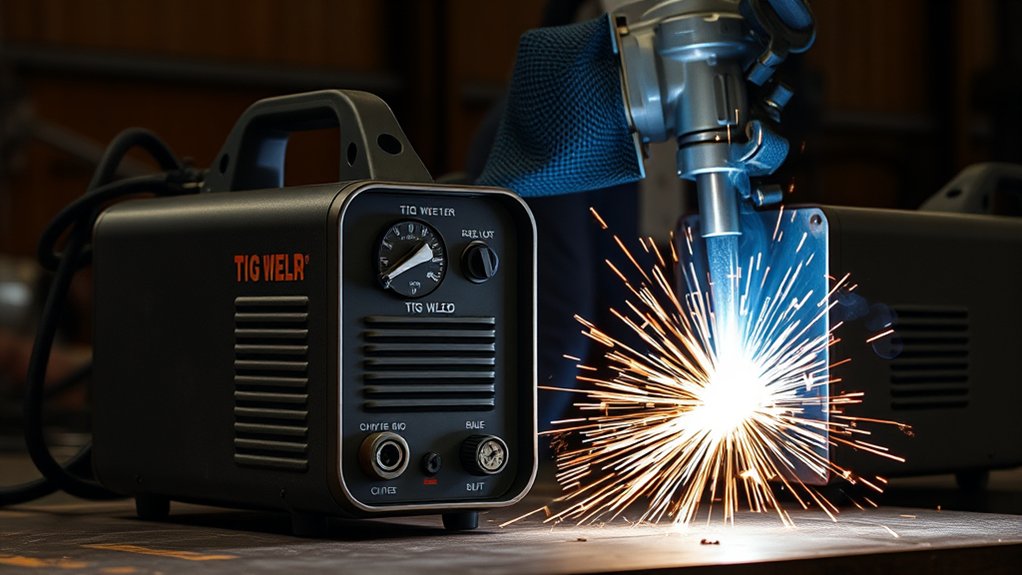
A dedicated plasma cutter cuts faster and cleaner because it was built for that single task. It focuses the arc through a small nozzle, which helps reduce kerf width and heat spread.
TIG welding can melt or sever thin material in some cases, but it does not match plasma cutting for clean, repeatable cuts. You may end up with rough edges, slow progress, and more grinding.
Plasma cutting usually offers these advantages:
- Faster cutting: It moves through conductive metal faster than improvised TIG cutting.
- Narrower kerf: It removes less material and improves cut control.
- Better versatility: It cuts steel, stainless steel, aluminum, copper, and other conductive metals.
- Cleaner edges: It often leaves less slag and needs less cleanup.
Cost Implications of Conversion vs. Purchasing
A conversion can look cheaper at first, but the real cost often grows. You may need a torch, air system, fittings, controls, electrical parts, protective gear, repairs, and testing.
Converting a TIG welder can cost more than choosing the right cutter for the work you do.
You also need to count downtime and risk. If the modified machine fails, you lose both your welder and your cutting setup until you repair it.
A dedicated plasma cutter gives you rated performance, manufacturer support, and a machine designed for the job. That usually makes it the better long-term value if you cut metal often.
Products Worth Considering

NON‑HF BLOWBACK PLASMA CUTTING READY: Non‑HF arc enables contact cutting on rusted or painted metal. Max cutting thickness up to 16 mm (5/8 inch) for steel, stainless steel and copper. Rated 30A@240V, delivers clean, smooth cut edges for DIY, maintenance and light professional tasks.

[Achieve Precise Cuts] PT31 Plasma Cutting Consumables – Your Essential Tool for Efficient Cutting! Whether you're working with sheet metal, steel, or any other material, superior cutting performance ensure clean, accurate, and smooth cuts.

Fit for: AG-60 AG-60P SG-55 WSD-60 Plasma cutter torch head
Benefits of Dedicated Plasma Cutters
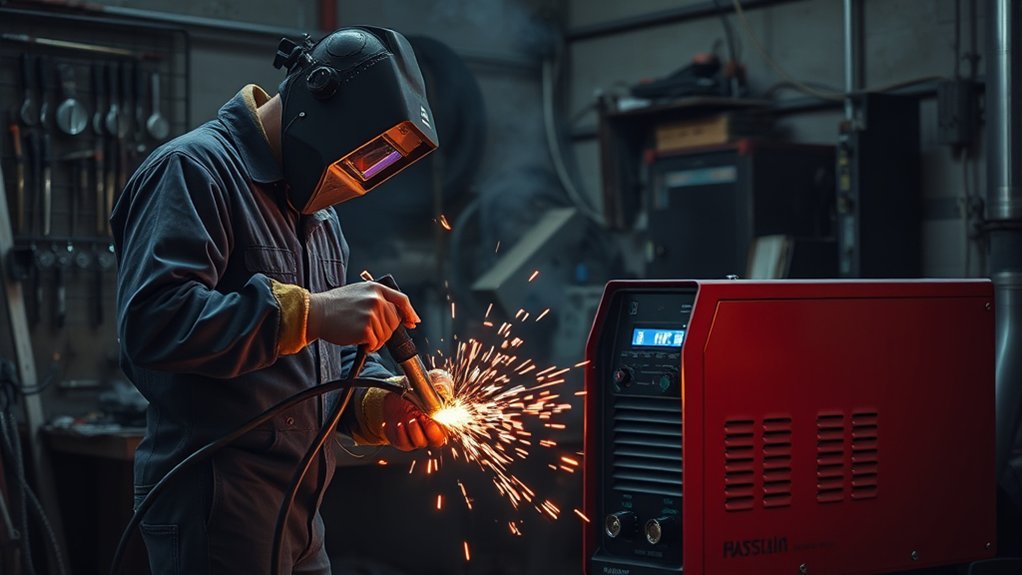
A dedicated plasma cutter gives you the right tool for cutting conductive metal. It pairs the power source, torch, air path, and controls in one rated system.
You get better cut quality, steadier starts, and fewer equipment problems. Many machines also include thermal protection, pressure indicators, and built-in diagnostics.
- Cut precision: You can make cleaner cuts with less post-processing.
- Work speed: You can cut faster and waste less material.
- Safety control: You can rely on parts designed for cutting loads.
- Lower repair risk: You avoid stressing a welder outside its intended use.
Pro tip: Match a plasma cutter to your thickest common material, not the thinnest sheet you cut.
Products Worth Considering

【Industrial Performance】The air drying system features two robust 3/4" NPT air ports and a 1/4" NPT gauge port, Double drying system handling high-pressure environments (up to 240 PSI) for various industrial applications.(Do not Install Horizontally)

【Industrial Performance】The air drying system features two robust 1/2" NPT air ports and a 1/4" NPT gauge port, Double drying system handling high-pressure environments (up to 240 PSI) for various industrial applications.(Do not Install Horizontally)
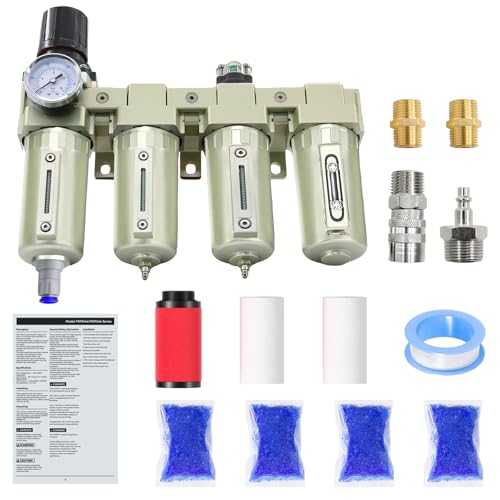
【Industrial Performance】The air drying system features two robust 1/2" NPT air ports and a 1/4" NPT gauge port, Double drying system handling high-pressure environments (up to 240 PSI) for various industrial applications.(Do not Install Horizontally)
Evaluating Reliable Combination Units for Multi-Functionality
If you need both TIG welding and plasma cutting, a rated combination unit can make sense. Choose one from a reputable manufacturer and confirm that it supports both processes without unsafe add-ons.
Check the rated amperage, duty cycle, input power, torch type, air requirements, and supported material thickness. A low-power unit may work for light sheet metal but struggle with thicker plate.
Portability also matters. If you work on job sites, choose a unit that matches your available outlets, generator capacity, and air compressor setup.
When a Conversion Might Seem Possible But Still Isn’t Worth It
Some experienced technicians can build special-purpose equipment from parts, but that does not make the project safe for most users. A working arc does not mean you have a safe plasma cutter.
You still need proper insulation, torch cooling, air control, reliable switching, overload protection, and tested electrical design. Without those safeguards, the setup can fail without warning.
For most home shops and small fabrication spaces, the safer path is simple. Keep your TIG welder for welding and use a plasma cutter for cutting.
Frequently Asked Questions
Can a TIG Welder Be Temporarily Converted Back After Modification?
You may be able to reverse some changes, but you can’t assume the welder will return to its original condition. Heat, electrical stress, and altered wiring can damage parts even after you remove the added components.
What Are the Legal Implications of Modifying Welding Equipment?
Modified welding equipment can create legal and workplace safety problems if it causes injury, fire, or property damage. Rules vary by location, so check local safety codes and workplace requirements before you alter any machine.
Are There Insurance Issues With Using a Modified Welder?
Yes, you may face insurance issues if a modified welder causes damage or injury. An insurer may deny a claim if the equipment was altered or used outside the manufacturer’s intended purpose.
How Does Modification Affect Warranty Claims on TIG Welders?
Modification can void warranty coverage on a TIG welder. Manufacturers often reject claims when users alter wiring, internal parts, torches, or controls beyond approved service procedures.
What User Skills Are Required for Effective Modifications?
You would need strong electrical, mechanical, and safety knowledge to modify welding equipment. You would also need to read schematics, understand grounding and insulation, and test the machine under safe conditions.
Can You Cut Metal With a TIG Welder Without Converting It?
You can melt through thin metal with a TIG arc, but that does not make it a good cutting method. The cut will usually be slow, rough, and harder to control than a plasma cut.
What Is the Safest Alternative to a DIY Conversion?
The safest alternative is to buy a dedicated plasma cutter or a rated multi-process machine that includes plasma cutting. Use the correct air supply, torch consumables, and protective gear for the machine you choose.
Safety Disclaimer: This article is for informational purposes only and does not replace professional electrical, welding, or workplace safety advice. Consult a qualified technician, electrician, or safety professional before modifying or repairing welding equipment.
Conclusion
A TIG welder and a plasma cutter may both use an arc, but they are not interchangeable machines. Forcing a TIG welder into a cutting role can damage equipment and put you at risk. Choose a dedicated plasma cutter or a rated combination unit when you need clean, repeatable cuts. Your tools will last longer, and your shop will stay safer.