Plasma cutting uses electricity, compressed gas, and a focused torch to slice through electrically conductive metals such as steel, stainless steel, aluminum, brass, and copper. Instead of using a saw blade or grinding wheel, the cutter creates a hot plasma arc that melts metal while a fast gas stream blows the molten material out of the cut.
Quick Answer
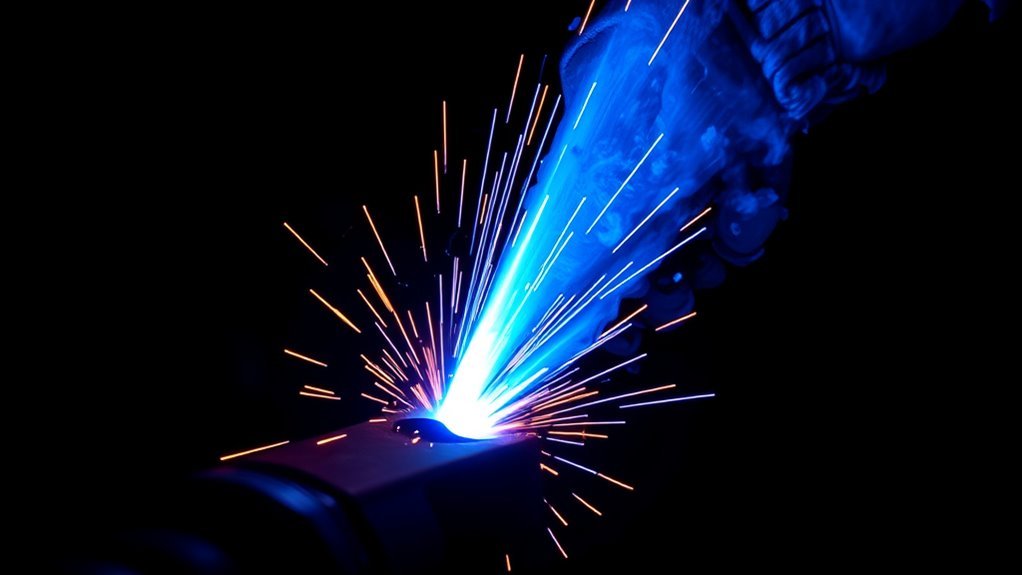
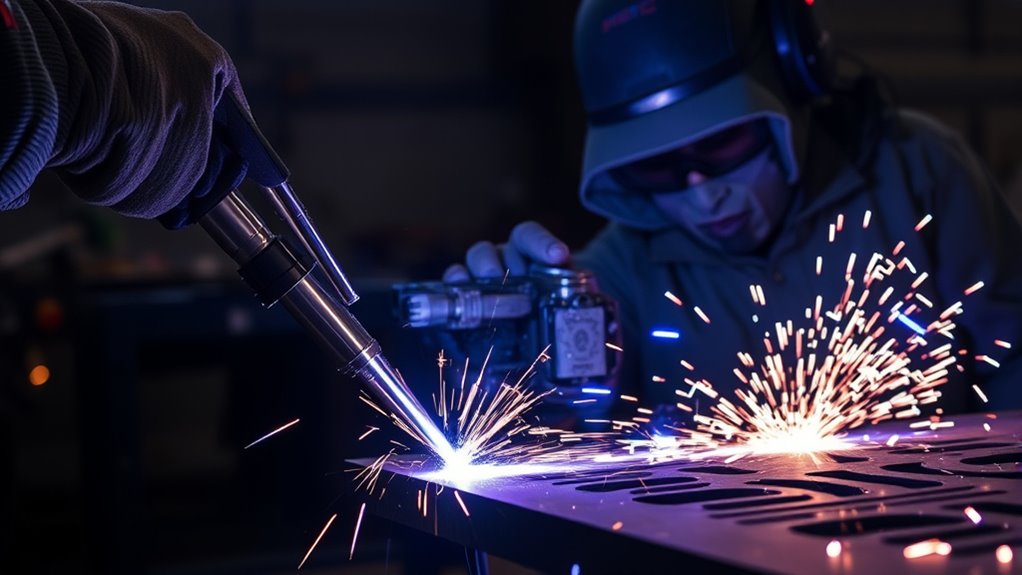
A plasma cutter works by sending compressed gas through a narrow torch nozzle while an electric arc ionizes that gas into plasma. The plasma arc melts conductive metal, and the high-speed gas stream blows molten metal out of the kerf, leaving a fast, narrow cut.
Key Takeaways
- Plasma cutters work only on electrically conductive materials because the arc must complete an electrical circuit through the workpiece.
- Cut quality depends on amperage, travel speed, standoff distance, gas pressure, dry air, and clean consumables.
- A 20-gallon compressor may run some small plasma cutters, but CFM or SCFM at the required PSI matters more than tank size.
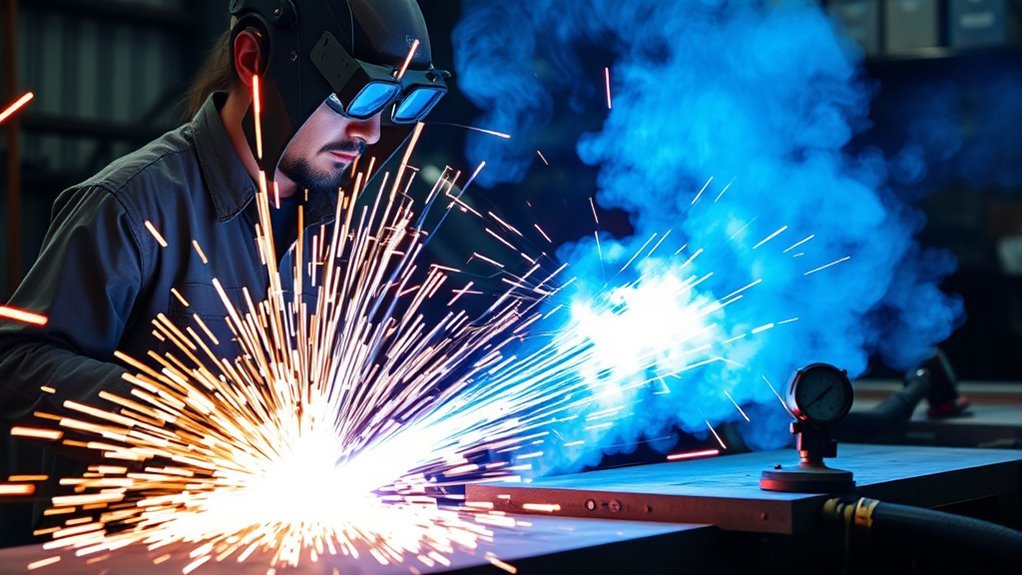
- Eye protection, flame-resistant clothing, ventilation, and fire prevention are essential because plasma cutting creates intense light, sparks, fumes, and hot metal.
Understanding Plasma and Its Properties
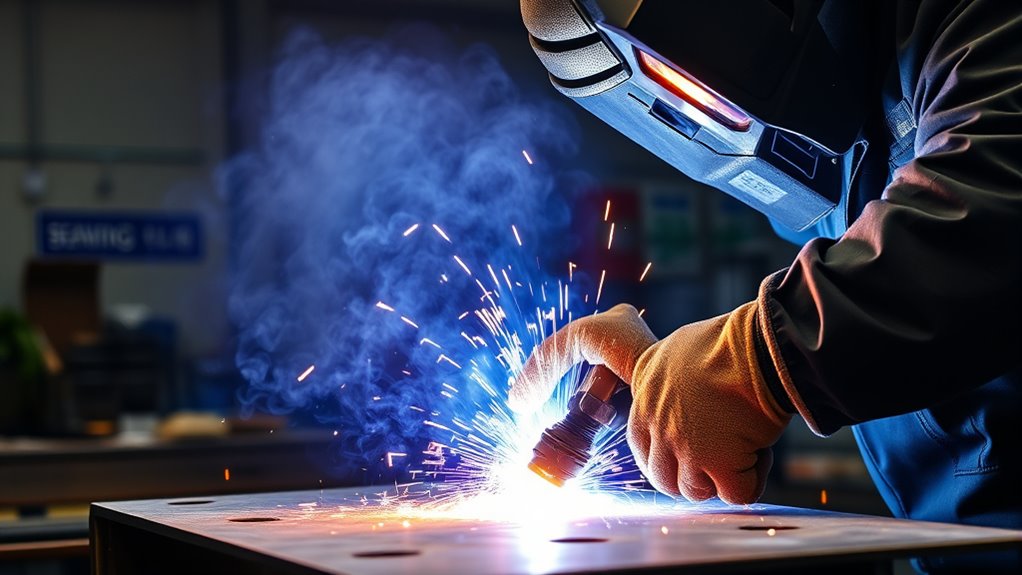
Plasma is often called the fourth state of matter. In a plasma cutter, gas becomes plasma when enough electrical energy strips electrons from gas atoms. That ionized gas becomes electrically conductive, which allows current to flow through the torch, arc, and metal workpiece.
This is why plasma cutting works best on conductive metals. Mild steel, stainless steel, aluminum, copper, brass, and many other conductive alloys can be cut when the cutter has enough output power and the correct consumables. Nonconductive materials such as wood, plastic, glass, ceramic, and stone cannot be cut directly with a standard plasma cutter because they do not complete the electrical circuit.
The plasma arc can reach extremely high temperatures, often described in the tens of thousands of degrees. That heat melts a narrow path in the metal. At the same time, compressed air or another gas exits the nozzle at high speed and blows the molten metal out of the kerf, which is the slot left by the cut.
Plasma cutting is fast because the arc melts the metal and the gas stream clears the molten material in one continuous action.
The Evolution of Plasma Cutting Technology
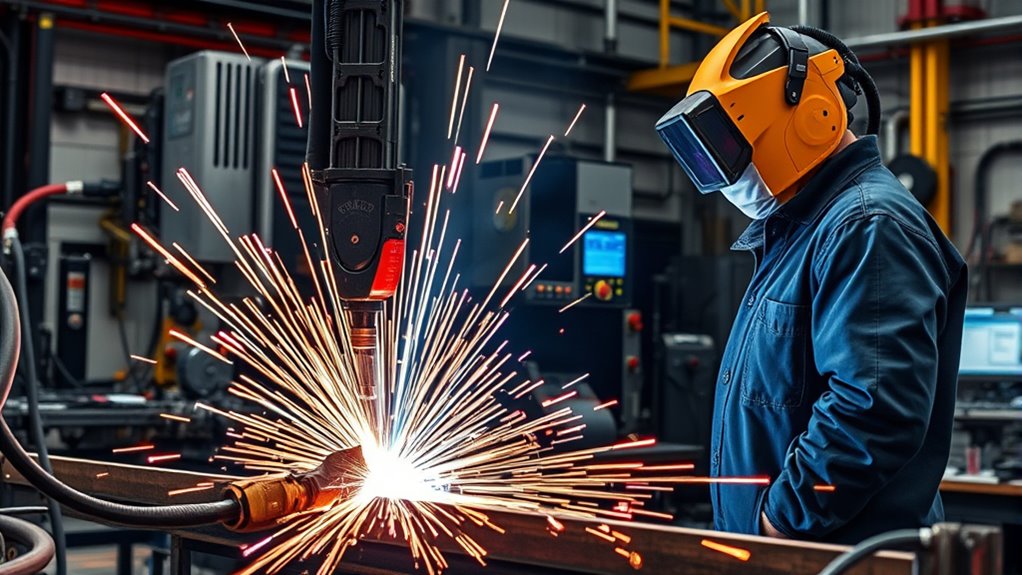
Modern plasma cutting grew from plasma arc torch development in the 1950s, including Robert M. Gage’s plasma arc torch patent. Early systems were large, expensive, and mainly used in industrial shops. Over time, better power supplies, torch designs, consumables, and gas control made the process more practical for fabrication, repair, and production cutting.
By the 1980s and 1990s, CNC plasma tables made the process far more useful for cutting repeated shapes from sheet and plate. A CNC system follows programmed tool paths, controls pierce points, adjusts speed, and can produce complex parts more consistently than hand cutting.
| Era | Advancement | Practical Impact |
| 1950s-1960s | Plasma arc torch development | Industrial cutting of conductive metals |
| 1980s-1990s | CNC plasma tables | Repeatable shapes, better nesting, less layout time |
| 2000s-Present | Inverter power supplies and high-definition systems | More portable machines, cleaner cuts, and wider DIY access |
Today, plasma cutters range from compact handheld units for home shops to high-definition industrial systems that use advanced gas control and CNC motion. The basic principle remains the same: an electric arc turns gas into plasma, and the plasma jet cuts conductive metal.
Key Components of a Plasma Cutting System
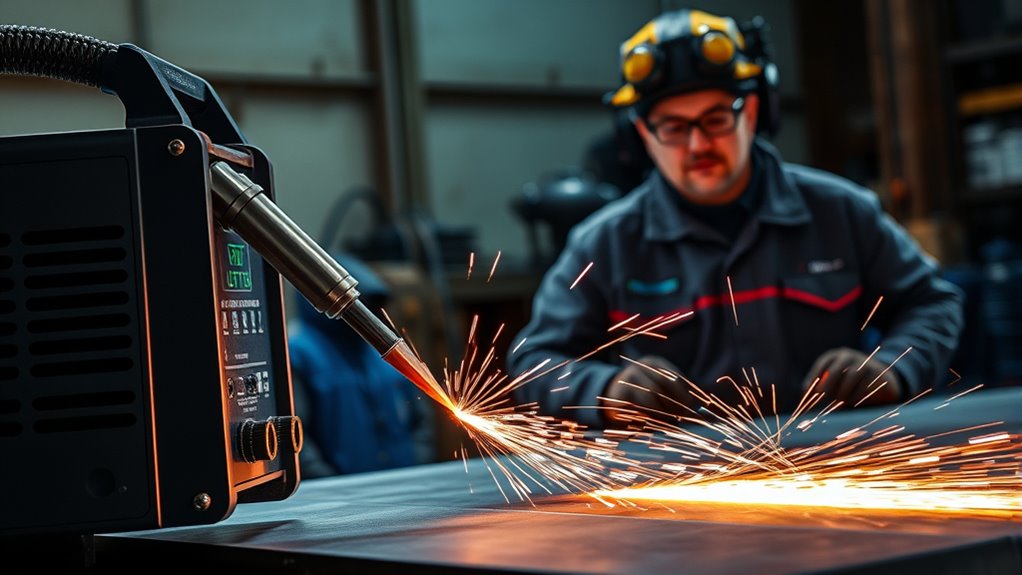
A plasma cutting system is more than the torch in your hand. The main parts include the power supply, torch, work clamp, gas or air supply, consumables, and controls. Each part affects arc stability, cut quality, and safety.
Products Worth Considering

Package Include: 10 Shield Cups, 50 Nozzles, 20 Swirl Baffle, and 30 Electrodes.

[Achieve Precise Cuts] PT31 Plasma Cutting Consumables – Your Essential Tool for Efficient Cutting! Whether you're working with sheet metal, steel, or any other material, superior cutting performance ensure clean, accurate, and smooth cuts.

High-Quality Material:Made of high quality material to ensure a longer lifespan and superior performance.
Power Supply and Work Clamp
The power supply converts incoming AC power into the DC output needed to maintain the cutting arc. Small machines may run on 120V or 240V input power, while larger industrial systems require more electrical capacity.
The work clamp completes the circuit between the cutter and the metal. If the clamp is loose, rusty, painted over, or attached too far from the cut, the arc may sputter, fail to transfer, or produce rough edges. For best results, clamp to clean bare metal as close to the work area as practical.
Plasma Torch, Electrode, Nozzle, and Swirl Ring
The plasma torch holds the consumables that shape and control the arc. The electrode carries current inside the torch. The nozzle constricts the plasma stream into a focused jet. The swirl ring helps spin and stabilize the gas flow so the arc stays centered.
These parts wear during use. A worn electrode, damaged nozzle, or dirty swirl ring can cause wider kerfs, more dross, poor arc starts, and uneven cut edges. Check the consumables often, especially when cut quality suddenly changes.
Gas or Air Supply
Most handheld plasma cutters use clean, dry compressed air. Some precision and industrial systems use gases such as nitrogen, oxygen, argon-hydrogen mixtures, or separate shielding gases. The correct gas depends on the material, thickness, cut-quality target, and machine design.
Note: Moisture and oil in compressed air can shorten consumable life and create rougher cuts. Use an air dryer, water separator, or filter setup recommended for your cutter.
Operational Mechanisms of Plasma Cutters

The cutting process starts when the machine creates a pilot arc or high-frequency start inside the torch. That arc ionizes the gas moving through the nozzle. Once the torch is close enough to the workpiece and the circuit transfers to the metal, the main cutting arc forms.
Plasma Arc Formation
During arc formation, gas passes through a small nozzle opening while electrical energy heats and ionizes it. The nozzle constricts the arc, which concentrates the heat into a narrow, high-energy stream. Research on arc plasma torch modeling describes this process as a mix of electrical, thermal, fluid, and gas-flow behavior.
The plasma jet melts the metal at the cut line. The gas flow then pushes the molten metal through the bottom of the plate. When amperage, speed, standoff, and air pressure are balanced, the cut has a narrow kerf, minimal dross, and a fairly square edge.
Cutting Process Steps
Although different machines vary, a typical plasma cut follows this sequence:
- Set the machine: Choose the correct amperage, air pressure, and consumables for the material thickness.
- Prepare the metal: Remove heavy rust, paint, grease, or coatings where the clamp and cut path will be.
- Attach the work clamp: Clamp to clean bare metal so the arc can transfer cleanly.
- Start the arc: Press the trigger to start the pilot arc and move the torch to the cut line.
- Maintain standoff and speed: Keep the torch at the recommended height and move steadily.
- Finish the cut: Let the arc fully exit the edge before releasing the trigger.
Pro Tip: If sparks shoot back toward the top of the workpiece, you are usually moving too fast, cutting material that is too thick for the setting, or using weak air flow.
Safety Precautions and Best Practices in Plasma Cutting

Plasma cutting can cause eye injury, burns, fire, electric shock, hearing damage, and harmful fume exposure. Always follow your plasma cutter manual, shop rules, and applicable safety standards before cutting.
Warning: Do not plasma cut near fuel, solvents, aerosol cans, oily rags, sawdust, or other flammable materials. Hot sparks and molten metal can travel beyond the immediate cut line and start a fire.
PPE and Eye Protection
Wear a welding helmet or approved face shield with the correct filter lens shade, safety glasses underneath, flame-resistant clothing, leather gloves, long pants, and closed-toe leather boots. The OSHA eye and face protection standard gives plasma arc cutting shade guidance by current level. When the arc is clearly visible, the listed minimum shade starts at shade 8 for less than 300 amps, shade 9 for 300-400 amps, and shade 10 for 400-800 amps.
Some low-current systems or shielded torches may have manufacturer-specific guidance, so use the darker shade recommended by your machine manual or safety officer. Start too dark, then move to a lighter shade only if you can see the work clearly without going below the required minimum.
Fire Prevention and Work Area Control
Clear the area before cutting. Remove combustibles, protect nearby surfaces, and keep a suitable fire extinguisher within reach. OSHA’s welding, cutting, and brazing standard requires fire precautions when hot work could ignite nearby materials.
Watch for hidden hazards behind or below the cut, including insulation, hoses, wiring, paint, undercoating, and fuel residue. Never cut sealed containers, tanks, drums, or pipes unless they have been professionally cleaned, vented, and verified safe.
Ventilation and Fume Control
Plasma cutting fumes can contain metal oxides and coating byproducts. Use local exhaust, a fume extractor, or outdoor airflow when needed. This is especially important when cutting galvanized metal, painted metal, stainless steel, or coated automotive parts.
Do not rely on a dust mask for metal fumes. If ventilation is not enough, use respiratory protection selected by a qualified person according to the material and exposure risk.
Evaluating Cut Quality and Electrode Longevity
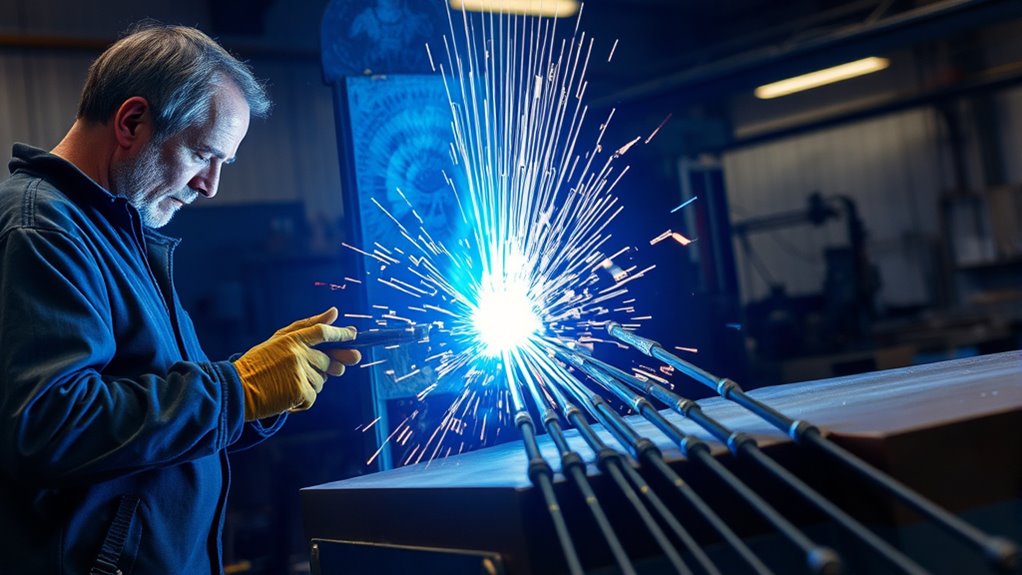
Good plasma cutting is not just about slicing through the metal. A clean cut should have a narrow kerf, limited bevel, smooth drag lines, little top spatter, and minimal dross on the bottom edge. Recent Welding Journal research on plasma arc cutting also highlights how cutting and shielding gas pressure can affect cut quality.
What a Good Plasma Cut Looks Like
A good cut usually has even edges, consistent sparks exiting below the plate, and a sound that stays steady through the cut. Some dross is normal on many handheld cuts, but heavy, hard dross often means the setup needs adjustment.
- Too much bottom dross: Travel speed may be too slow, amperage may be too low, or air pressure may be incorrect.
- Sparks coming upward: Travel speed may be too fast, the material may be too thick, or the arc may not be fully penetrating.
- Wide kerf: The nozzle may be worn, amperage may be too high, or the standoff may be too large.
- Beveled edge: Torch angle, worn consumables, incorrect speed, or wrong standoff may be causing arc deflection.
- Arc sputtering: Check the work clamp, air supply, moisture, and consumables.
When to Replace Consumables
Replace the electrode when the pit in its center becomes deep, uneven, or outside the manufacturer’s limit. Replace the nozzle if the orifice becomes oval, enlarged, nicked, or clogged with spatter. A damaged swirl ring or shield can also cause poor arc shape and shorter consumable life.
Consumables wear faster when air is wet, pressure is unstable, the torch is dragged incorrectly, the machine pierces too thick of a plate, or the operator holds the torch too far from the workpiece.
Materials, Air Compressors, and Real-World Limits
Plasma cutters are powerful, but they are not universal cutting tools. Their performance depends on the machine’s amperage, duty cycle, torch design, consumables, air supply, and the metal being cut.
Products Worth Considering

6.3 Gallon Air Compressor: Our 1450W oil-free motor drives the compressor up to a speed of 3500 r/min and 3.35 CFM@ 90PSI air delivery. It is ideal for supporting a variety of pneumatic and air tools, such as nail gun, impact wrench, spray gun, pneumatic screwdriver, best for tire inflation, auto repair, spray painting, woodwork nailing, etc.

Built to Last: The 13-gallon large-capacity tank paired with a 2HP motor delivers fast air buildup in under 3 minutes. The reinforced, leak-proof valve system ensures stable output, easily handling high-intensity and long-duration tasks

ULTRA-QUIET OPERATION: The Metabo HPT Quiet Air Compressor operates at only 59 dB, so quiet that a normal conversation can take place while the compressor is cycling. The barely noticeable sound ensures a peaceful work environment.
What Metals Can Plasma Cut?
A plasma cutter can cut many conductive metals, including mild steel, stainless steel, aluminum, copper, brass, cast iron, and some titanium alloys. The real limit is whether your machine has enough output for the thickness and whether the edge quality meets your goal.
Aluminum and copper can be more demanding because they conduct heat quickly. Stainless steel may need different gas choices for the cleanest edge on precision systems. Thick plate may require higher amperage, slower speed, and a machine rated for that thickness.
Plasma cutters do not directly cut nonconductive materials such as wood, plastic, ceramic, glass, or concrete. For those materials, use tools designed for the job.
Will a 20-Gallon Air Compressor Run a Plasma Cutter?
A 20-gallon air compressor can run some small plasma cutters for short cuts, but tank size is not the main number to check. The key rating is the compressor’s delivered CFM or SCFM at the pressure your plasma cutter requires.
Look at the cutter’s manual for required air flow and pressure. Then compare that with the compressor’s output rating at the same PSI. If the compressor cannot keep up, air pressure will drop during the cut, causing arc instability, more dross, poor piercing, and shorter consumable life.
Note: A larger tank gives you more stored air, but it does not fix a compressor that produces too little CFM for continuous plasma cutting.
Applications and Future Trends in Plasma Cutting
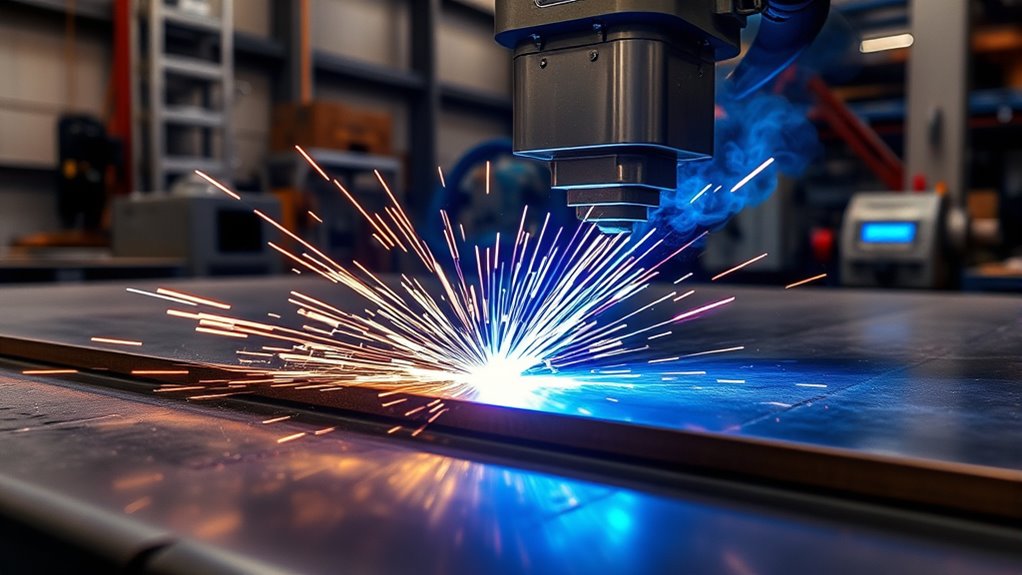
Plasma cutting is common in automotive repair, metal fabrication, construction, equipment repair, HVAC work, scrap processing, farm repair, sign making, and artistic metalwork. It is useful when you need fast cuts in conductive metal without the slower setup of saws or oxy-fuel cutting.
In auto and repair shops, plasma cutters are often used for brackets, panels, exhaust parts, frame repair work, and removing damaged metal. In fabrication shops, CNC plasma tables cut brackets, gussets, signs, templates, and repeated production parts from sheet or plate.
Future improvements are focused on cleaner edges, smarter CNC controls, better consumable life, energy efficiency, improved gas control, and more accurate small-shop machines. High-definition systems and water-table setups can also reduce heat, smoke, noise, and distortion in the right applications.
Frequently Asked Questions
How does a plasma cutter actually work?
A plasma cutter works by forcing compressed gas through a small nozzle while an electric arc ionizes the gas into plasma. The plasma arc melts conductive metal, and the gas stream blows the molten metal out of the cut.
Will a 20-gallon air compressor run a plasma cutter?
A 20-gallon compressor may run a small plasma cutter for short cuts, but you must check the compressor’s CFM or SCFM rating at the required PSI. If the compressor output is lower than the cutter’s demand, pressure will drop and cut quality will suffer.
What is a disadvantage of plasma cutting?
Plasma cutting creates fumes, noise, bright arc light, sparks, and a heat-affected edge. It also needs dry compressed air, replacement consumables, and practice to control dross and bevel. For very precise parts, laser, waterjet, or machining may produce tighter tolerances.
What metals can plasma not cut?
A standard plasma cutter cannot directly cut nonconductive materials because the arc needs an electrical path through the workpiece. It can cut many conductive metals, including steel, stainless steel, aluminum, copper, brass, and cast iron, if the machine is powerful enough for the thickness.
Why does my plasma cutter leave dross?
Dross usually comes from the wrong travel speed, low amperage, incorrect air pressure, wet air, worn consumables, or cutting material near the machine’s limit. Adjust one setting at a time and compare the cut edge after each change.
Conclusion
Plasma cutting works by turning compressed gas into an electrically conductive plasma arc that melts metal and blows the molten material away. The process is fast, accurate enough for many fabrication jobs, and useful on a wide range of conductive metals. To get good results, match the machine to the material, use clean dry air, maintain the torch consumables, and dial in speed, amperage, standoff, and pressure.
Safety matters just as much as cut quality. Use proper eye protection, flame-resistant gear, ventilation, and fire prevention every time you cut. With the right setup and technique, a plasma cutter becomes one of the most versatile metal-cutting tools in a shop.
Sources
- OSHA 29 CFR 1910.133 — eye and face protection, including filter lens guidance for plasma arc cutting.
- OSHA 29 CFR 1910.252 — welding, cutting, brazing, fire prevention, PPE, and ventilation requirements.
- Welding Journal, 2024, “Investigating the Effects of Cutting and Shielding Gas Pressures on Plasma Arc Cutting Quality” — gas pressure and cut-quality support.
- Arc Plasma Torch Modeling — technical background on arc plasma torch behavior.
- Robert M. Gage Plasma Arc Torch Patent — historical reference for plasma arc torch development.