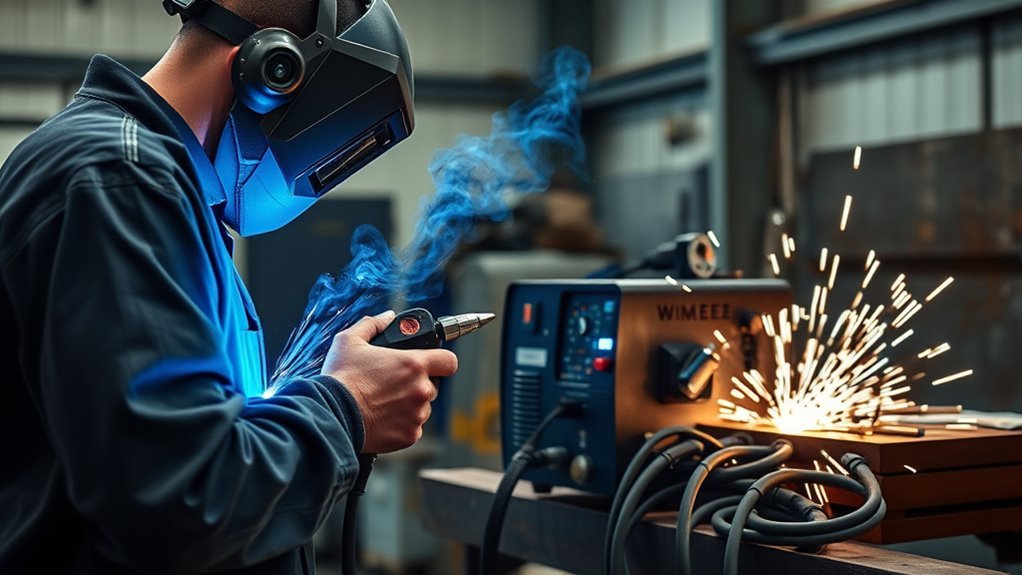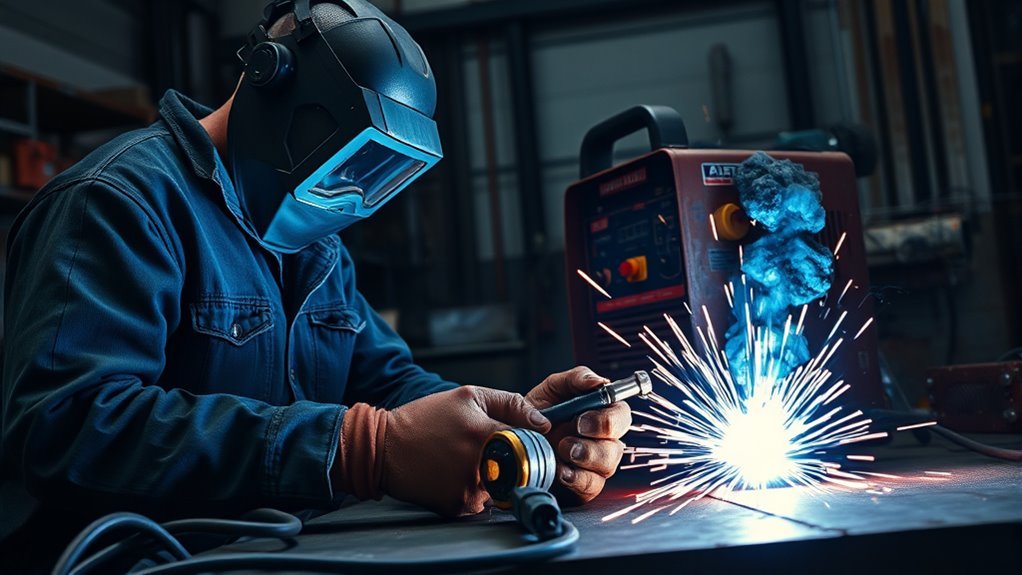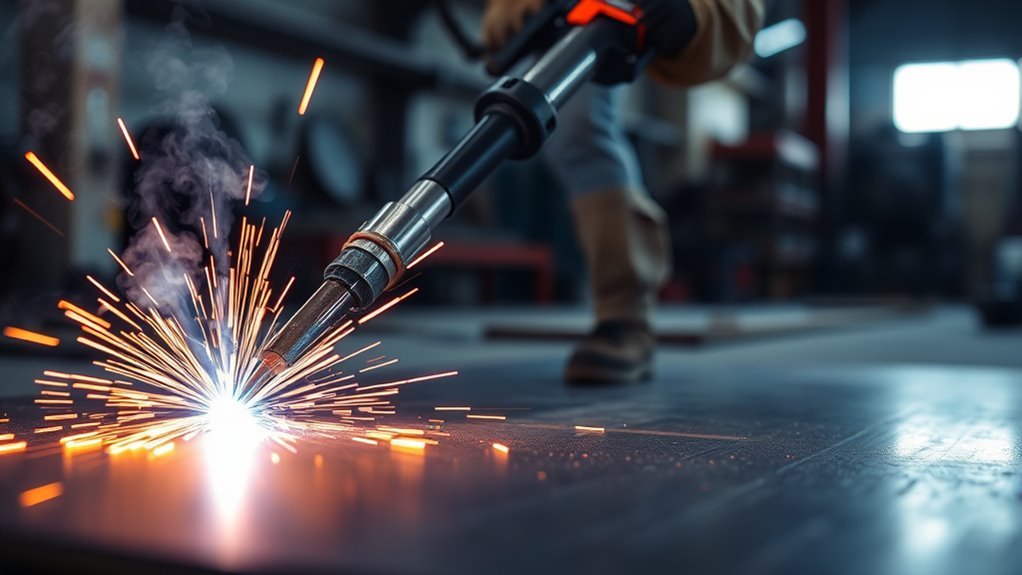
Plasma cutting works by turning a stream of gas into an electrically conductive plasma arc, then using that focused arc to melt metal along a cut line. A high-speed gas stream blows the molten metal out of the kerf, so you can cut conductive materials such as steel, stainless steel, aluminum, copper, and brass with speed and control.
Quick Answer
Plasma cutting uses electricity and pressurized gas to form a hot, focused plasma arc. The arc melts conductive metal, while the gas jet pushes the molten metal out of the cut. The result is a fast, narrow kerf that works well on steel, stainless steel, aluminum, copper, and brass.
Key Takeaways
- Plasma cutting works only on electrically conductive materials because the arc needs a complete electrical path.
- The torch, electrode, nozzle, gas flow, work clamp, and power supply all affect arc stability and cut quality.
- Cut speed depends on amperage, material type, thickness, gas choice, torch height, and consumable condition.
- Most bad cuts come from wrong travel speed, worn consumables, poor air quality, bad grounding, or incorrect torch height.
- Eye protection, ventilation, fire control, and dry gloves are essential because plasma cutting creates intense light, fumes, sparks, heat, and electrical hazards.
What Is Plasma Cutting?
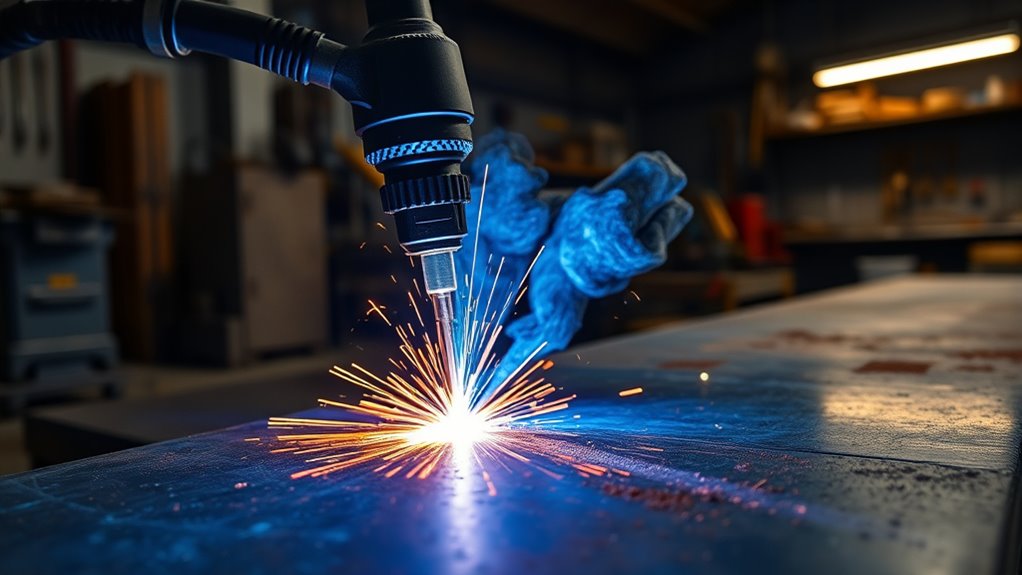
Plasma cutting is a thermal cutting process that uses an electric arc and a fast jet of gas to cut electrically conductive metals. You can use it on common shop materials such as mild steel, stainless steel, aluminum, copper, and brass.
The basic idea is simple: the plasma cutter sends gas through a small nozzle, energizes that gas with electricity, and turns part of it into plasma. Plasma is hot, ionized gas that can carry electrical current. Once the arc transfers to the workpiece, it melts the metal at the cut line.
The gas stream then pushes the molten metal out of the kerf. That is why plasma cutting can leave a narrow cut path and move faster than many mechanical cutting methods. Cut quality still depends on your setup, material thickness, torch height, gas supply, and travel speed.
Plasma cutting is used in fabrication shops, auto repair, farm repair, HVAC work, industrial construction, salvage, CNC tables, and metal art. Handheld units give you portability, while CNC systems give you repeatable shapes and tighter control.
Process at a Glance
| Best For | Fast cutting of conductive metals, repair work, fabrication, brackets, panels, signs, and CNC profiles |
| Main Inputs | Electric power, work clamp, torch consumables, and clean dry gas or compressed air |
| Materials | Mild steel, stainless steel, aluminum, copper, brass, and other conductive metals within machine capacity |
| Main Limits | Cannot normally cut wood, glass, plastic, ceramic, stone, or other non-conductive materials |
How Plasma Cutting Creates an Arc
To understand how plasma cutting starts, you need to look at the arc that drives the process. Inside the torch, an electrode and nozzle guide gas through a small opening. The machine uses a pilot arc or another starting method to ionize the gas and create a conductive path.
Once that path reaches the metal and the work clamp completes the circuit, the arc transfers from the torch to the workpiece. This is the main cutting arc. It is much more focused than a loose flame because the nozzle constricts the arc into a tight stream.
That concentrated stream delivers intense heat to a small area, melting the metal quickly. At the same time, gas pressure forces molten metal away from the cut. This combination of electric arc heat and high-speed gas flow is what makes plasma cutting fast.
Different machines start the arc in different ways. Some use high-frequency starting, some use blowback or contact-start designs, and industrial systems may use more advanced pilot-arc circuits. Always follow your cutter manual because the correct start method, torch height, and standoff distance vary by torch.
Main Parts of a Plasma Cutter
You rely on several systems at the same time: the power supply, torch, electrode, nozzle, swirl ring, gas supply, work clamp, and consumables. When one part is dirty, worn, loose, or mismatched, cut quality drops fast.
Products Worth Considering

[Achieve Precise Cuts] PT31 Plasma Cutting Consumables – Your Essential Tool for Efficient Cutting! Whether you're working with sheet metal, steel, or any other material, superior cutting performance ensure clean, accurate, and smooth cuts.

PACKAGE INCLUDED: 5 Pcs Cup-15 Pcs Electrodes-10 Pcs Ring-30 Pcs Tip(Standard)

⚡【Precision Compatibility】 Exact fit for YESWELDER CUT 55DS Pro & 65DS (2019-2024 models). Replaces OEM# IPT40-55DS/65DS.
Power Supply and Arc Starter
The power supply converts input power into the controlled current needed for the cutting arc. Exact voltage, amperage range, and starting design vary by machine, so avoid treating one voltage number as universal.
The arc starter helps create the pilot arc. On many machines, that pilot arc gives the plasma stream a path before it transfers to the workpiece. Once the transferred arc is stable, you get the heat needed to cut.
A healthy power supply gives you a smooth arc, steady output, and predictable piercing. If the machine is underpowered for the metal thickness, or if your input power is weak, you may see arc dropouts, heavy dross, slow cutting, or failure to pierce.
Torch Components and Consumables
Inside the torch, the electrode, swirl ring, nozzle, shield cap, and retaining parts work together to shape the plasma jet. These are not minor details. They control arc focus, gas flow, heat direction, and edge quality.
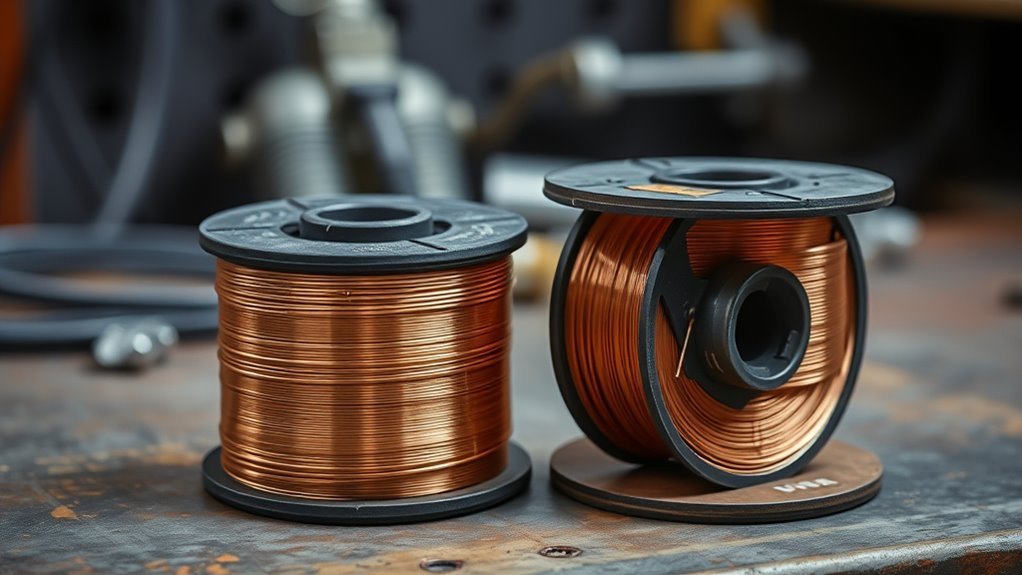
The electrode carries the arc and may use a hafnium, tungsten, or other insert depending on the torch and gas type. Many air and oxygen plasma systems use a copper electrode body with a hafnium insert. The nozzle constricts the plasma stream, while the swirl ring helps stabilize gas flow around the arc.
Consumables wear out because they live near extreme heat. A worn nozzle can make the arc wander. A damaged electrode can cause hard starts or poor cut quality. A dirty shield cap can trap spatter and disturb gas flow.
Pro Tip: If your cut suddenly gets wider, rougher, or more angled, inspect the nozzle and electrode before changing every machine setting. Worn consumables are one of the most common causes of poor plasma cuts.
How Plasma Cutting Starts the Arc
Plasma cutting starts with gas flow, pilot arc formation, and then transfer to the workpiece. The exact starting method depends on your machine, but the sequence usually follows this pattern:
- You connect the work clamp to clean metal so the electrical circuit can close.
- You trigger the torch, and gas begins flowing through the torch body.
- The machine creates a pilot arc inside or near the torch tip.
- The gas becomes ionized and turns into a conductive plasma stream.
- The arc transfers to the workpiece when the stream reaches conductive metal.
- The transferred arc melts the metal, and gas pressure blows the molten metal out of the kerf.
This is why the work clamp matters. Paint, rust, loose clamping, and poor contact can prevent the arc from transferring cleanly. If the arc sputters or will not cut, check the clamp before assuming the machine is broken.
Tip size and amperage must also match the job. A large nozzle on thin sheet can make the cut wide and harsh. A small nozzle pushed beyond its rating can overheat and fail. Use the correct tip size and amperage for the metal thickness and desired cut quality.
Why Plasma Cutting Cuts So Quickly
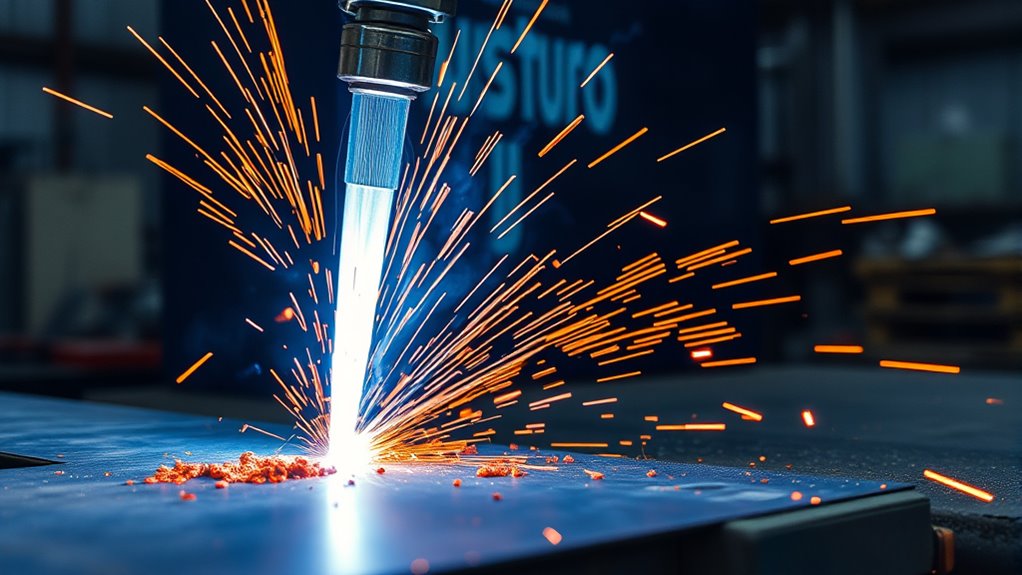
You cut so quickly because the plasma arc concentrates intense heat into a small point. Instead of heating a wide area, the torch focuses energy at the cut line. The gas jet then clears molten metal as soon as it forms.
This gives plasma cutting three speed advantages: fast melting, fast metal removal, and a narrow kerf. You are not grinding away the whole slot by force. You are melting a thin path and blowing it open.
Extreme Heat
The plasma arc can reach temperatures in the tens of thousands of degrees. That does not mean the whole workpiece gets that hot. The heat is concentrated near the arc and cut line.
A focused arc helps reduce wasted heat outside the kerf. That can limit distortion compared with slower cutting methods, especially when your travel speed, torch height, and amperage are correct.
Too much heat still causes trouble. If you move too slowly, the edge can overheat, the kerf can widen, and dross can build on the bottom of the cut.
Fast Metal Removal
The gas stream does more than feed the arc. It also ejects molten metal from the cut. When gas pressure, nozzle condition, and travel speed are right, the molten metal leaves the bottom of the kerf instead of sticking to the edge.
If you see heavy dross, the cause is often one of four things: travel speed too slow, travel speed too fast, worn consumables, or poor air quality. Moisture and oil in compressed air can also shorten consumable life and make the arc less stable.
Narrow Cutting Path
A plasma cutter removes a narrow strip of metal called the kerf. The exact kerf width depends on nozzle size, amperage, torch height, and material thickness. Fine-cut consumables can make a narrower kerf on thin sheet, while heavy plate cutting usually leaves a wider slot.
To control kerf width, hold a steady torch angle, keep the correct standoff, and move at a consistent pace. On CNC tables, torch height control helps maintain the right distance during long cuts.
Plasma cutting is fast because the arc melts a narrow path while the gas jet clears molten metal almost immediately.
Metals You Can Cut With Plasma
Plasma cutting works on conductive metals. Common examples include mild steel, stainless steel, aluminum, copper, and brass. If electricity can pass through the workpiece and the machine has enough capacity, plasma cutting may be an option.
Mild steel is one of the easiest materials to cut with compressed-air plasma systems. Stainless steel and aluminum also cut well, though they may need different gas choices or settings for better edge quality. Copper and brass can be cut too, but they conduct heat quickly, so they may need more power than steel at the same thickness.
The process does not normally work on non-conductive materials such as wood, plastic, glass, ceramic, rubber, stone, or concrete. The arc needs a complete electrical circuit through the workpiece.
Note: Coatings matter. Galvanized metal, painted parts, plated parts, and unknown alloys can release hazardous fumes when cut. Clean the cut line when safe to do so, read the safety data sheet when available, and use ventilation that moves fumes away from your breathing zone.
Choosing Gas for Plasma Cutting
The gas you use affects arc stability, edge color, dross, speed, and consumable life. Small shop cutters often use clean, dry compressed air because it is affordable and convenient. Industrial systems may use oxygen, nitrogen, argon-hydrogen, or mixed gases for specific metals and edge-quality goals.
- Compressed air: common for mild steel, stainless steel, and aluminum on many handheld machines.
- Oxygen: often used for fast mild-steel cutting on compatible systems.
- Nitrogen: often used for stainless steel and aluminum where edge quality matters.
- Argon-hydrogen mixes: used in some industrial systems for thicker stainless steel and aluminum.
Do not guess gas settings on a high-end cutter. Follow the cut chart for your exact machine, torch, material, thickness, amperage, consumable set, and desired cut quality.
Handheld vs. CNC Plasma Cutting
When you choose between handheld and CNC plasma cutting, you are choosing between manual flexibility and automated repeatability.
With handheld plasma cutting, you guide the torch by hand. This works well for repair work, demolition, farm equipment, auto brackets, rough shapes, and jobs where portability matters. Your skill controls torch angle, speed, standoff, and edge consistency.
Handheld plasma cutting is ideal for small repairs and on-site work, but edge quality depends heavily on operator control.
CNC plasma cutters use computer control to move the torch along a programmed path. This gives you repeatable shapes, smoother profiles, and less labor on production work. CNC systems may also use torch height control to keep the arc at the right distance from the material.
- Handheld systems: portable, flexible, lower cost, and best for repair or one-off cuts.
- CNC systems: repeatable, accurate, faster on batches, and better for signs, brackets, parts, and production shapes.
- Best choice: depends on your project size, tolerance, budget, and whether you need mobility or repeatability.
Products Worth Considering
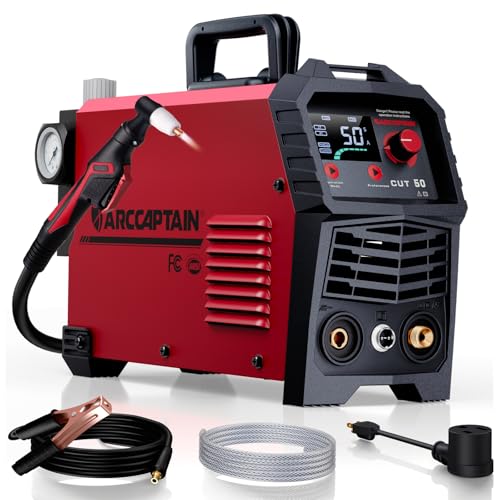
【Powerful Cutting Ability】Switch effortlessly between 110V and 220V for home or workshop use. Achieve professional 1/2" clean cuts on steel, aluminum, and copper with advanced LGBT technology. Perfect for DIY projects and heavy-duty tasks. Recommended maximum cutting thickness: 12mm @ 35A / 110V / 55 PSl; 18mm @ 50A / 220V / 75 PSI. Note: Requires compressed air (compressor sold separately).

【HIGH FREQUENCY PLASMA CUTTER】With drag-cutting, you simply rest the nozzle on the metal and guide it along. No hovering, no guesswork—just steady, precise cuts every time. It‘s the easiest way for beginners to get clean results on thin materials, and the blow-back ignition means no interference with nearby electronics. Lightweight, portable, and built for DIYers and light metalwork

POWERFUL CUTTING THICKNESS: This plasma cutter handles 1/2" (12mm) steel at 120V/35A and 5/8" (16mm) at 240V/60A. Dual voltage auto-detection (10-35A@120V / 30-60A@240V) with PSI guidance (70-75 PSI / 0.48-0.52MPa). Optimized for quick, efficient cuts in automotive repairs and metal fabrication
Cut Quality and Common Plasma Cutting Problems
A good plasma cut has a steady kerf, controlled bevel, limited dross, and an edge that needs little cleanup. When the cut looks rough, look at setup before blaming the material.
| Problem | Likely Cause | Fix |
| Heavy bottom dross | Wrong travel speed, low amperage, worn nozzle, or wet air | Check cut chart, replace consumables, drain compressor, and adjust speed |
| Angled edge or bevel | Torch not square, wrong height, or damaged nozzle | Hold torch vertical, reset standoff, and inspect nozzle or shield |
| Arc drops out | Poor work clamp, dirty metal, low air pressure, or moving too fast | Clamp to clean metal, verify pressure, and slow down slightly |
| Wide, rough kerf | Too much amperage, slow speed, wrong nozzle, or worn consumables | Use the correct nozzle and amperage for the material thickness |
Plasma Cutting Safety Basics
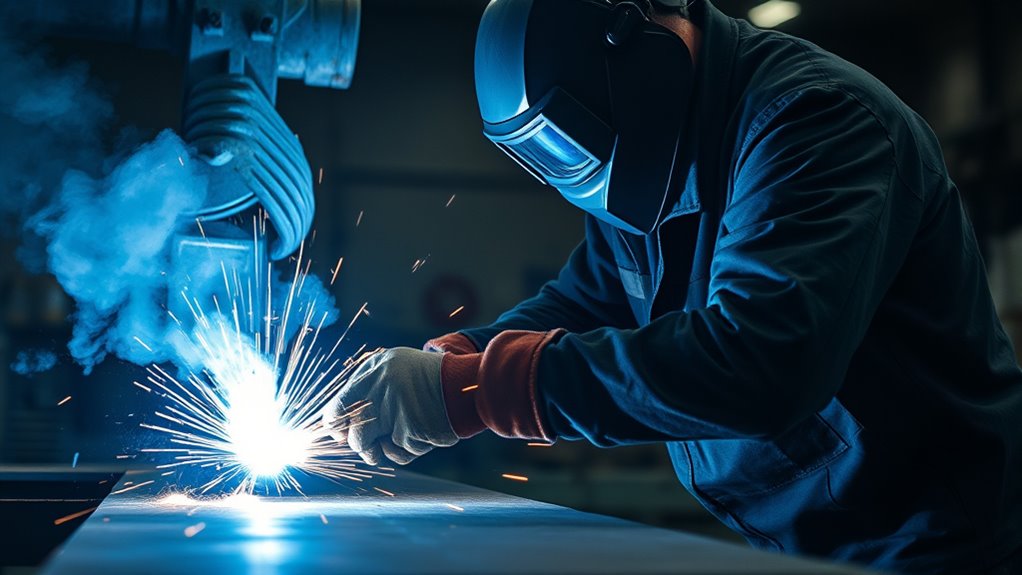
Before you strike an arc, control the main plasma cutting hazards: intense light, flying sparks, molten metal, fumes, electricity, noise, compressed gas, and fire. Treat every cut as hot work.
Warning: Never plasma cut near fuel, solvents, paper, sawdust, paint cans, oily rags, or unknown vapors. Sparks and hot slag can travel farther than you expect, and fumes from coatings or plated metals can be dangerous.
Wear proper eye and face protection that meets the lens shade guidance for your machine and current. Add safety glasses under the shield, flame-resistant clothing, leather gloves, hearing protection, and closed leather boots.
Use safe work practices and PPE to reduce exposure to burns, eye damage, UV radiation, electrical shock, cuts, and fumes. Plasma cutting can produce airborne metal fume, especially when cutting coated, stainless, galvanized, painted, or plated material.
Use ventilation that pulls fumes away from your breathing zone. A fan that blows fumes across your face is not enough. Local exhaust, downdraft tables, fume extraction, or outdoor positioning may be needed, and respiratory protection may be required when ventilation cannot keep exposure low.
Keep cables dry and undamaged. Do not cut while standing in water. Isolate power before changing electrodes, nozzles, shields, or other torch parts. Regularly check for damaged cables and loose connections.
How Plasma Cutting Compares to Other Methods
Plasma cutting sits between rough, low-cost thermal cutting and high-precision industrial cutting. It is faster and cleaner than many abrasive methods, more versatile than oxyfuel on non-ferrous conductive metals, and usually more affordable than industrial laser or waterjet equipment.
In plasma arc cutting, the arc melts the metal and the gas stream removes it. In oxyfuel cutting, the oxygen reaction plays a major role in the cut, which is why oxyfuel is mainly used on carbon steel and is not the best choice for aluminum or stainless steel.
| Method | Best Use | Main Tradeoff |
| Plasma | Fast cuts on conductive metals, shop work, repair, CNC profiles | Needs electricity, gas, consumables, and fume control |
| Oxyfuel | Thick carbon steel and field work without electrical output at the torch | Poor choice for aluminum and stainless; wider heat input |
| Laser | High-precision production on thinner material | Higher equipment cost and more controlled setup needs |
| Waterjet | Cold cutting, thick material, composites, stone, glass, and heat-sensitive parts | Slower and usually more expensive to operate |
If you want speed, portability, and versatility on conductive metals, plasma is often the practical choice. If you need ultra-tight tolerance, no heat-affected zone, or non-conductive material cutting, another method may fit better.
Frequently Asked Questions
How does a plasma cutter work step by step?
A plasma cutter sends gas through the torch, starts a pilot arc, ionizes the gas into plasma, transfers the arc to the conductive workpiece, melts the metal, and uses the gas stream to blow molten metal out of the kerf.
What metal can’t be plasma cut?
Plasma cutting is for conductive metals, not non-conductive materials. You normally cannot plasma cut wood, glass, plastic, ceramic, stone, rubber, or concrete. Some conductive metals can still be difficult if they are too thick for the machine or covered with hazardous coatings.
What is a disadvantage of plasma cutting?
The main disadvantages are fumes, noise, sparks, consumable wear, and limits on edge precision compared with laser or waterjet cutting. Plasma also needs electricity, a good work clamp, clean dry air or gas, and safe fume control.
Do you touch the metal when plasma cutting?
It depends on the torch and consumables. Some drag-shield torches are designed to touch or glide on the workpiece, while others need a small standoff. Follow your torch manual because the wrong height can damage consumables and reduce cut quality.
Why does my plasma cutter leave dross?
Dross usually comes from wrong travel speed, worn consumables, low air pressure, wet air, incorrect amperage, or cutting material that is too thick for the machine. Start by checking the cut chart, air quality, torch height, and nozzle condition.
Conclusion
When you use a plasma cutter, you are controlling a focused electrical arc, not just heating metal. The machine turns gas into a conductive plasma stream, transfers that arc to the workpiece, melts a narrow path, and blows the molten metal away. You get the best results when the material is conductive, the work clamp is clean, the gas is dry, the consumables are fresh, and your travel speed matches the cut chart.
Plasma cutting gives you speed, versatility, and strong control on steel, stainless steel, aluminum, copper, and brass. It also demands respect. Protect your eyes, control fumes, clear fire hazards, and treat the torch as live electrical equipment whenever you set up, cut, or change parts.
Sources
- OSHA Welding, Cutting, and Brazing Overview — OSHA topic page for welding, cutting, and brazing hazards and standards.
- OSHA Welding, Cutting, and Brazing Hazards and Solutions — backs up hazards including fumes, UV radiation, burns, eye damage, electrical shock, cuts, and PPE controls.
- OSHA Fact Sheet: Controlling Hazardous Fume and Gases during Welding — backs up fume, gas, ventilation, coating, and respiratory protection guidance.
- OSHA Welding, Cutting, and Brazing Standards — backs up applicable general industry, maritime, and construction standards.
- Journal of Physics D: What We Know and What We Do Not Know About Plasma Arc Cutting — technical background on plasma arc cutting behavior and variables.