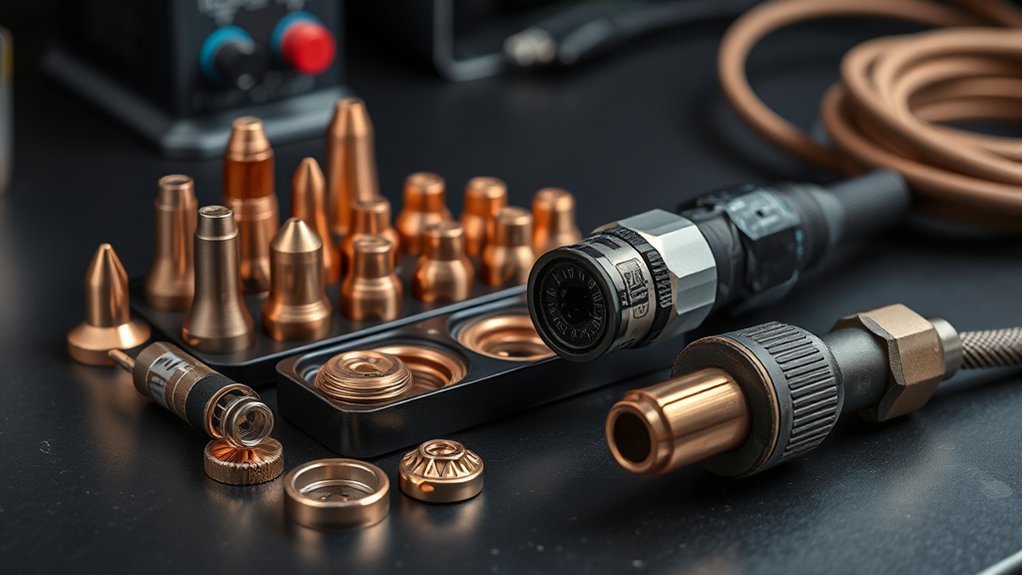
Choosing a plasma cutter tip is not a matter of matching one nozzle diameter to one amperage across every brand. The safe method is to identify the exact torch and consumable part number, install the manufacturer-approved cutting set, and use the amperage, gas, height, and speed listed in that system’s cut chart. Generic millimeter charts are only valid when your torch maker confirms the same pairing.
Quick Answer
Use the tip, nozzle, or cartridge labeled for the amperage process you plan to run, then follow the cut chart for your exact torch. Never exceed the consumable’s rating. Do not choose amperage from orifice diameter alone because nozzle design, gas flow, shielding, and torch geometry vary by manufacturer.
Key Takeaways
- Match the consumable part number and amp rating to the torch—not just the hole diameter.
- Start with the manufacturer’s cut chart for material, thickness, amperage, speed, gas, pierce height, and cut height.
- Never exceed a nozzle’s rated current; on conventional systems, the best setting may be slightly below the maximum rating.
- Clean, dry air and correct dynamic gas flow matter as much as the tip selection.
- Replace consumables by the manufacturer’s wear limits and cut-quality signs—not a universal pierce count.
At a Glance
| Time Required | 5–15 minutes to identify the consumable and verify the cut chart |
| Difficulty | Easy for handheld cutting; intermediate for CNC setup |
| Tools Needed | Operator manual, cut chart, consumable part number, clean test coupon, and calipers for CNC kerf checks |
| Cost | Usually no added cost beyond the correct OEM-compatible consumables |
Warning: A plasma torch can fire instantly and can cut through skin and gloves. Turn the power supply off or engage the manufacturer’s torch lock before changing consumables. Wear approved eye and face protection, flame-resistant clothing, insulated gloves, and hearing protection. Vent fumes, keep the work area dry, remove combustibles, and never cut a closed or pressurized container.
Why Your Owner’s Manual Is Your First Stop
Your plasma cutter’s operator manual and cut chart are the first authority for tip selection. They account for the power supply, torch model, lead length, consumable design, material, thickness, gas process, and whether the cut is handheld or mechanized.
Start with the manufacturer’s listed values for:
- Consumable set or cartridge part number
- Output current
- Material and thickness
- Cut speed
- Gas type, pressure, and flow
- Cut height, pierce height, and pierce delay for CNC work
- Kerf compensation and arc-voltage setting, when specified
Modern cartridge-based systems may automatically identify the installed cartridge and set or limit the operating mode, amperage, and gas pressure. Conventional torches use separate electrodes, nozzles, swirl rings, shields, and retaining caps, so every part in the stack must be compatible.
The correct tip is the manufacturer-approved consumable for your exact torch, amperage process, material, and cutting method—not the nozzle that merely looks the same.
Use an accessible current manual from the manufacturer, such as the Hypertherm Powermax45 SYNC operator manual, as a model for the level of detail a reliable cut chart should provide.
Plasma Cutter Tip Size to Amperage Selection Chart
The safest chart is based on the amperage marking or part number supplied by the torch manufacturer. Use the table below as a decision guide, not as a replacement for the OEM cut chart.
| Consumable identification | How to set amperage | Best use |
|---|---|---|
| Tip, nozzle, or cartridge marked 20 A | Use the OEM 20 A process; never exceed 20 A | Thin material and fine-detail work listed in the cut chart |
| Marked 30 A | Use the OEM 30 A settings | Light sheet and plate within the stated capacity |
| Marked 40 A or 45 A | Use the matching 40 A or 45 A process and speed table | General handheld or mechanized cutting, depending on the system |
| Marked 50 A, 55 A, or 60 A | Run at the listed process current or the manual’s recommended percentage of rating | Faster cutting or thicker material within the machine’s rated capacity |
| Only an orifice diameter is known | Stop and identify the torch model and part number before cutting | No safe universal amp setting can be assigned from diameter alone |
Products Worth Considering

[Achieve Precise Cuts] PT31 Plasma Cutting Consumables – Your Essential Tool for Efficient Cutting! Whether you're working with sheet metal, steel, or any other material, superior cutting performance ensure clean, accurate, and smooth cuts.

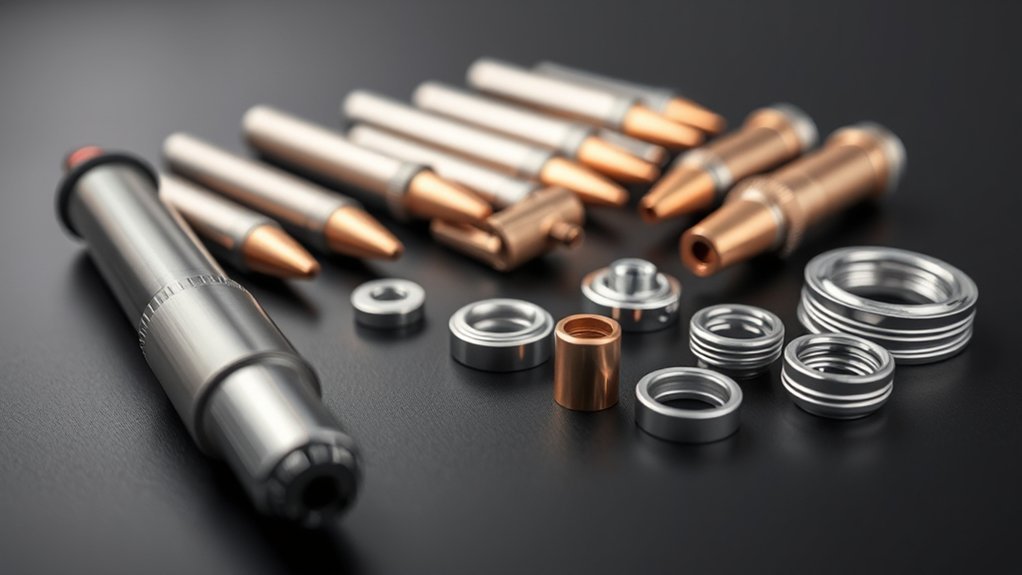
PACKAGE INCLUDED: 5 Pcs Cup-15 Pcs Electrodes-10 Pcs Ring-30 Pcs Tip(Standard)

Package Include: 5 Shield Cups, 30 Nozzles, 10 Swirl Baffle, and 15 Electrodes.
Why Millimeter Tip Charts Are Not Universal
Generic aftermarket charts often pair 0.6 mm with 15–20 A, 0.8 mm with 21–30 A, 0.9 mm with 31–40 A, 1.0 mm with 41–50 A, and 1.1 mm with 51–60 A. Those pairings may describe some torch families, but they are not an industry-wide standard.
The same nominal orifice diameter can use a different electrode, swirl pattern, gas pressure, shield design, and current density in another torch. Some current cartridge systems do not ask the user to select an orifice diameter at all. Use a diameter-to-amp pairing only when the packaging or manual for your exact torch confirms it.
Should You Run at the Tip’s Maximum Rating?
Never exceed the nozzle or cartridge rating. On some conventional plasma systems, manufacturers report the best balance of cut quality and parts life at about 95% of the nozzle rating. Other systems call for the full labeled process current, while smart cartridge systems may set or limit current automatically. The cut chart wins over any general rule.
Note: “Set the machine to maximum” is not a universal rule. Use the recommended current for the installed consumable and material. A lower current is not automatically safer if it forces an extremely slow cut or an unstable arc.
How to Match the Nozzle Rating to Machine Amperage
Use this six-step process before striking an arc:
- Identify the plasma cutter and torch model. A power supply may accept more than one torch or consumable family.
- Read the consumable marking or part number. Confirm that the nozzle, electrode, shield, swirl ring, and retaining cap belong to the same approved set.
- Choose the cutting process. Standard cutting, fine cutting, mechanized cutting, drag cutting, expanded metal, marking, and gouging may use different parts.
- Find the material and thickness in the cut chart. Do not rely on a rule such as “20 A for the first 1/8 inch plus 10 A for every extra 1/8 inch.”
- Set current and gas exactly as directed. On automatic systems, allow the machine to set them unless the manual calls for an override.
- Run a test coupon. Check whether the arc fully penetrates, sparks exit the bottom, dross is light, and the cut face is acceptably square.
Pro Tip: Photograph the consumable stack and save the final settings for each material and thickness. That prevents mixed parts and gives you a proven baseline the next time the job returns.
Cut Height, Pierce Height, and Arc Voltage Essentials
Tip selection cannot compensate for the wrong torch height. On a handheld system, use the shield or standoff method specified for that consumable. On a CNC system, enter the cut-chart values for initial height sensing, pierce height, pierce delay, cut height, and arc voltage.
A common mechanized guideline is to pierce at roughly 1.5–2 times the recommended cut height so molten metal is less likely to blow back into the nozzle. Treat that ratio as a starting point only; the OEM chart may specify a different height or sequence for thick plate, stainless steel, aluminum, or specialty consumables.
Arc-voltage torch height control uses voltage as feedback to maintain torch-to-work distance while the plate moves or warps. Higher voltage generally corresponds to a longer arc and greater distance, but consumable wear, speed, gas, and electrical calibration also affect the reading. Use the listed voltage first, then make small documented changes.
- Too low: more top spatter, nozzle damage, double arcing, and excessive positive bevel.
- Too high: a wider, less concentrated arc, poor transfer, more bevel, and incomplete cuts.
- Pierce delay too short: motion begins before the arc clears the plate.
- Pierce delay too long: the arc dwells in one spot and increases heat and consumable wear.
For a deeper explanation of voltage-based control, see Hypertherm’s torch height control guide.
Gas and Coolant Requirements
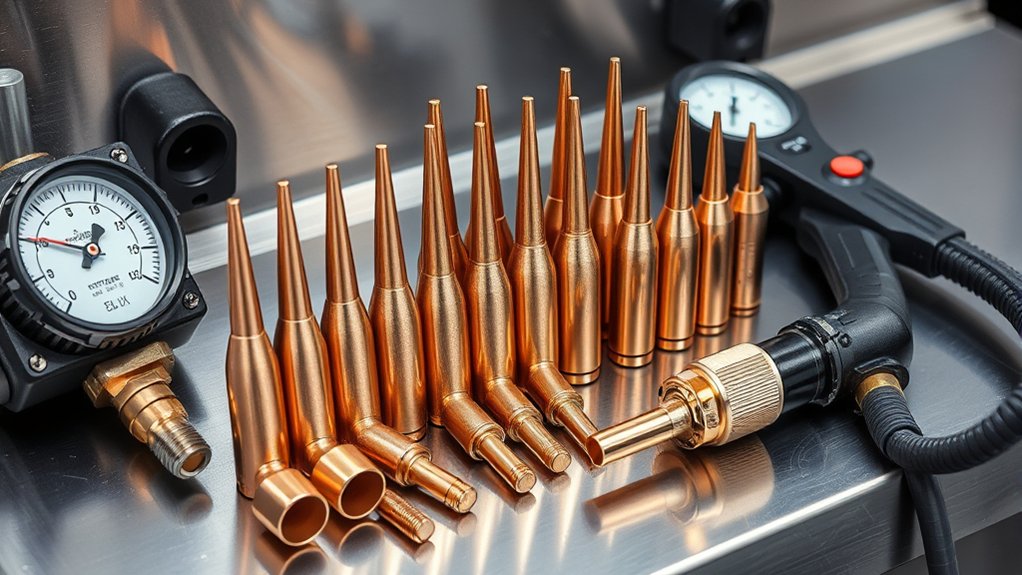
Gas pressure is system-specific. Do not assign 50–55 psi to every 20 A tip or 65–75 psi to every larger tip. Some plasma cutters automatically regulate pressure; others require a manual setting based on the torch, lead length, process, and incoming flow capacity.
For a manually regulated system:
- Set pressure using the machine’s purge or test mode so gas is flowing.
- Use the inlet pressure and flow range in the manual.
- Confirm the compressor can maintain the required flow at the cutter, not only at the tank.
- Use clean, dry, oil-free air with suitable filtration and moisture control.
- Inspect hoses, quick-connects, filters, and regulators for restrictions or leaks.
Moisture, oil, and particles reduce cut quality and consumable life. Hypertherm’s air-plasma filtration guidance explains why adequate flow and clean, dry air are both required.
Most portable air-plasma cutters are air-cooled and do not have a coolant loop. Larger industrial systems may be liquid-cooled. For those machines, use only the approved coolant and mix, check level and return flow, keep heat exchangers and filters clean, and never bypass a low-flow interlock.
Warning: Turn off, isolate, and allow the system to cool before opening a coolant circuit or servicing a torch. Plasma power supplies contain hazardous voltage. Internal electrical diagnosis and high-voltage measurements belong to qualified service personnel following the service manual.
Consumable Types: Standard, Shielded, Fine-Cut, and Drag
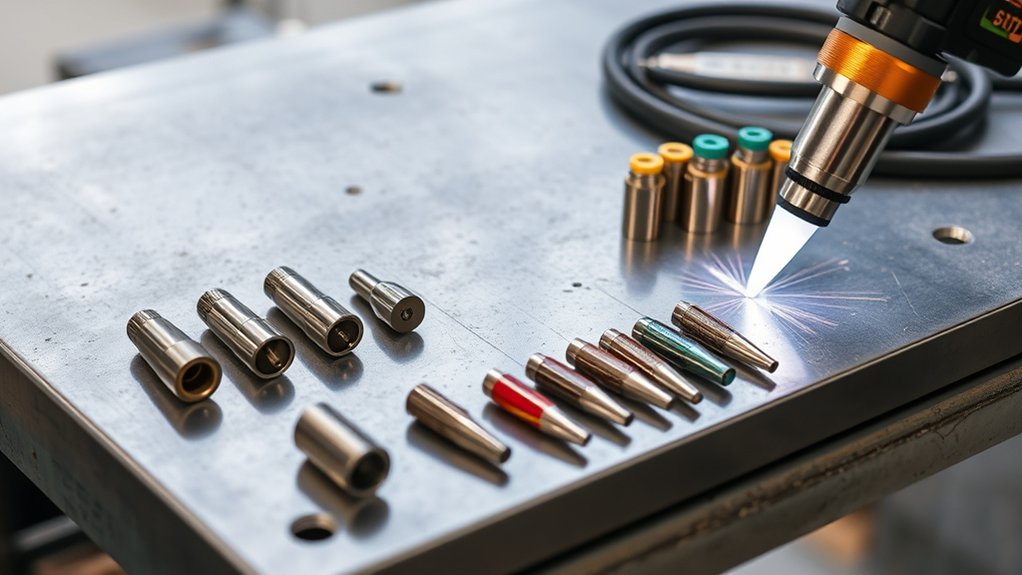
Amperage is only one part of the choice. Select the consumable style for the torch and cutting method.
Products Worth Considering

[Efficient Prevention] Ensure a smooth cutting process with airflow channels and heat dissipation holes, no guide wheels or ceramic nozzles needed.

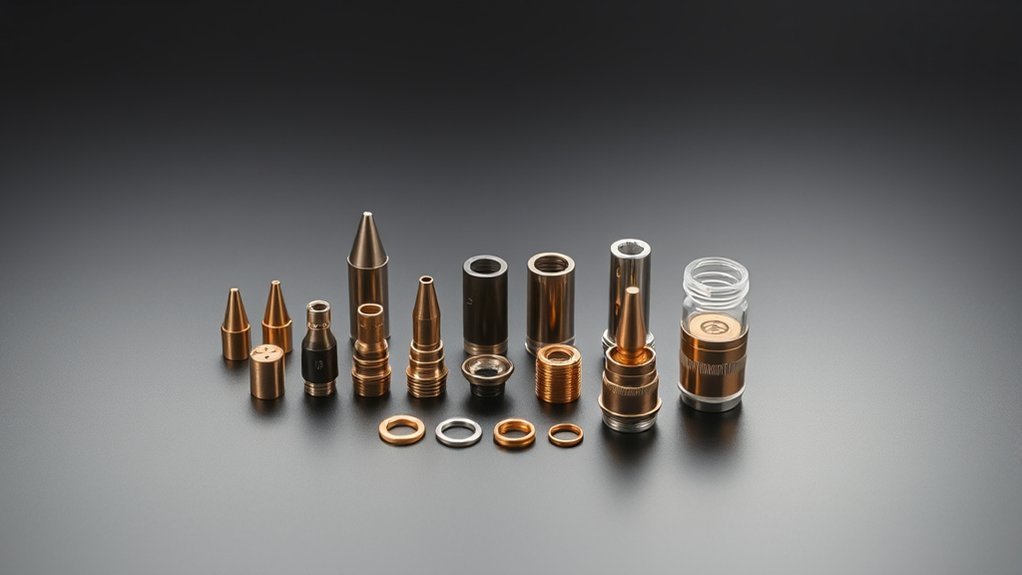
list includes: 24pcs (10pcs Electrode PR0105 + 10pcs PD0102-10 tips/nozzles + 1pcs PE0106 Swirl Ring + 1pcs PC0116 Shield Cap + 2pcs Spring)
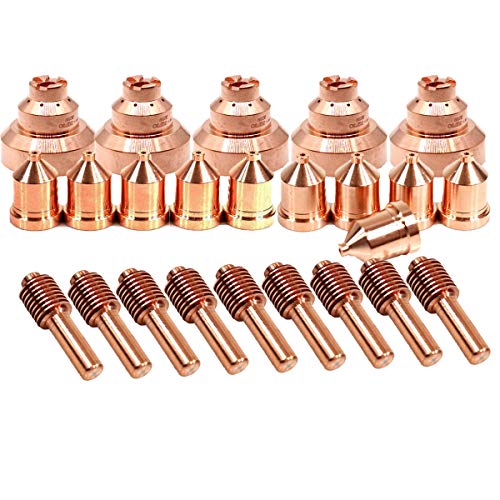
Plasma Consumables type: 212724 Electrode, 219676 Tip / Nozzle, 212730 Drag Shield
Standard or Unshielded Tips
A standard unshielded nozzle usually requires a controlled gap between the nozzle and the workpiece. It can provide a stable general-purpose process when the operator or CNC can maintain the specified standoff. Allowing an unshielded nozzle to touch the plate may cause double arcing and rapid damage unless the manufacturer expressly permits contact.
Shielded Consumables
A shield separates the nozzle from direct contact with the workpiece and helps protect it from spatter and molten-metal blowback. Depending on the design, the shield may allow drag cutting at full output or provide a fixed standoff. It does not make every nozzle compatible with every torch; the complete shielded set must match the torch and process.
Fine-Cut Consumables
Fine-cut consumables are designed for a narrower kerf and better detail on thin material. They normally use a dedicated nozzle, shield, and process settings. Do not substitute a small generic nozzle and assume it will perform like the manufacturer’s fine-cut system.
Drag Tips and Drag Shields
Drag-capable consumables let the operator rest the torch on the metal and pull it along the cut line. This simplifies height control for handheld work. Some systems use a dedicated drag tip; others use a shield that maintains the correct gap while the shield contacts the plate.
| Cutting need | Consumable to look for |
|---|---|
| General handheld cutting | OEM standard or drag-cutting set |
| Thin sheet and small features | OEM fine-cut or low-amperage set |
| CNC cutting with height control | Mechanized consumable set and matching cut chart |
| Expanded metal or grating | Approved cutting consumable plus continuous-pilot-arc or expanded-metal capability |
| Gouging | Dedicated gouging nozzle or cartridge |
Kerf Width and Speed Guidelines
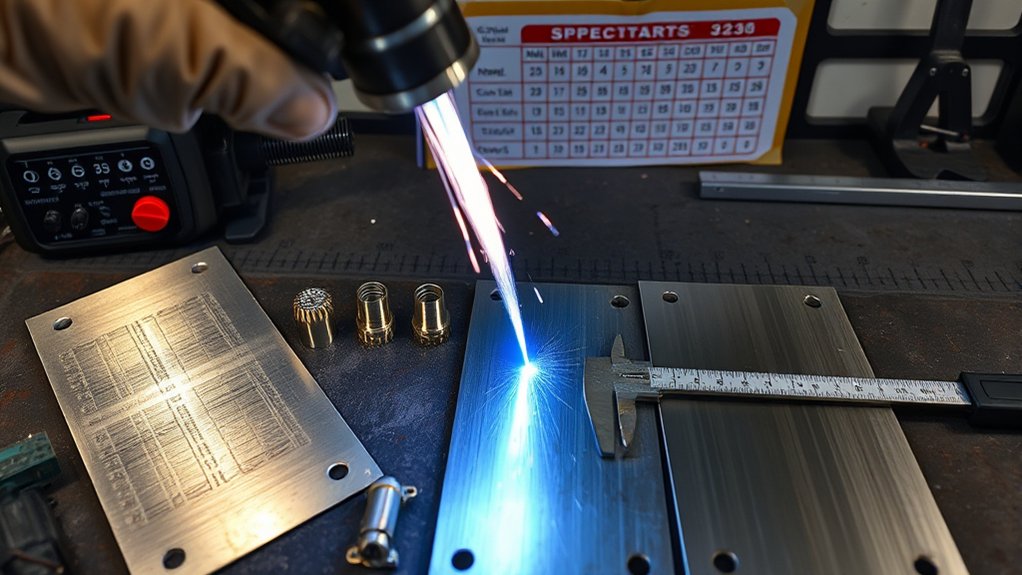
Kerf is usually wider than the nozzle opening, but there is no dependable universal formula such as “kerf equals 1.5 times the orifice.” Kerf changes with amperage, nozzle design, gas process, material, thickness, torch height, direction of travel, speed, and consumable wear.
Use the cut-chart kerf value as the CNC starting point, then measure a test coupon made with the same process. For handheld cutting, focus on a steady pace and watch the sparks beneath the plate.
- Travel too slowly: the kerf may widen, heat input rises, top spatter increases, and low-speed dross forms.
- Travel too quickly: the arc trails too far, the cut may not sever, and hard high-speed dross or bevel appears.
- Current too high for the material: the kerf and heat-affected area may grow, and thin sheet may warp.
- Current too low: the operator may slow down excessively, increasing heat input and dross.
- Worn nozzle: an enlarged or out-of-round orifice produces a wider, less consistent kerf.
Tune speed before inventing a new amperage rule: a good cut usually sends sparks through the bottom with a slight rearward lag and leaves only light, removable dross.
Wear Indicators and Replacement Limits
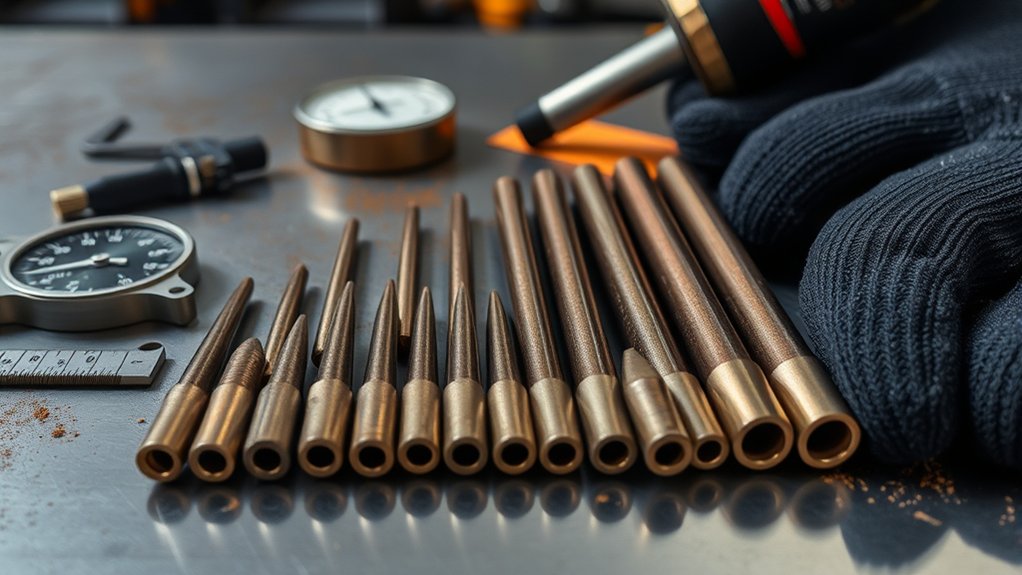
Inspect consumables whenever cut quality changes and before an important job. Replace a part when it reaches the limit stated for that consumable family.
- Nozzle: replace it if the orifice is enlarged, oval, nicked, gouged, or badly heat-discolored.
- Electrode: check for an off-center or excessively deep pit, cracking, or damage to the emitter.
- Shield: clean removable spatter without changing the hole shape; replace a cracked, burned, or distorted shield.
- Swirl ring: inspect gas holes, O-rings, cracks, and contamination.
- Cartridge: follow the system’s cut-quality signs, fault indicators, usage data, and replacement guidance.
The often-quoted 0.040-inch electrode pit applies to certain standard industrial oxygen electrodes, while a deeper limit such as 0.080 inch has been published for specific silver-interface electrode designs. Those figures are not universal limits for portable air-plasma electrodes or one-piece cartridges.
There is also no universal “40 pierces per nozzle” replacement interval. Consumable life depends on arc starts, arc-on time, pierce technique, current, gas quality, material, torch height, and whether the arc is stretched. Track your own cut quality and usage against the manufacturer’s limits.
Pro Tip: Change a worn electrode before it fails catastrophically. A failed electrode can damage an otherwise usable nozzle, shield, or torch body and make the repair far more expensive.
Common Causes of Premature Consumable Failure
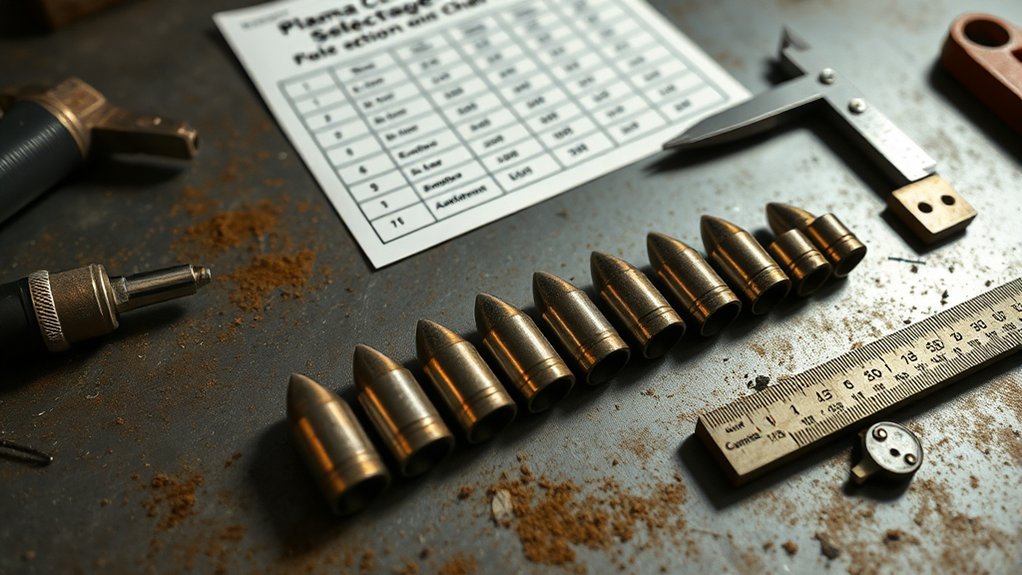
Early failure usually comes from a setup or process problem, not simply a “bad tip.” Work through these causes in order.
Incorrect Amperage or Mixed Consumables
Running above the nozzle rating overheats and erodes the orifice. Running an unsuitable low current can create an unstable process or force an excessively slow travel speed. Mixed nozzles, electrodes, shields, or swirl rings can also disturb gas flow and electrical contact.
- Verify every part number against the torch parts list.
- Use the cut-chart current for the material and thickness.
- Never exceed the consumable’s maximum current.
- Keep parts clean and assemble them in the correct order.
- Use only the O-ring lubricant and amount specified by the manufacturer.
Poor Gas Flow or Contaminated Air
Low flow, excessive pressure, moisture, oil, or particles can destabilize the arc and shorten parts life. Check pressure while gas is flowing, drain the compressor, service filters, inspect the inlet element, and verify that the hose and fittings do not restrict the required flow.
Piercing Too Low or Stretching the Arc
Piercing too close lets molten metal blow back into the shield and nozzle. Stretching the arc at the beginning or end of a cut can make the arc attach to the nozzle wall. Start from the plate edge when practical, use the specified pierce height, and keep the torch centered over the edge during an edge start.
Wrong Speed or Torch Height
A slow, low torch overheats the work and consumables; a high or fast torch may lose penetration and produce severe bevel. Return to the cut-chart baseline before changing several variables at once.
Unnecessary Starts and Duty-Cycle Abuse
Every pilot-arc start causes wear. Avoid firing the torch in open air, repeated test firing, and long pilot-arc periods. Allow postflow to finish, observe the power supply’s duty cycle, and wait for temperature faults to clear.
How to Dial In Settings on Your Machine
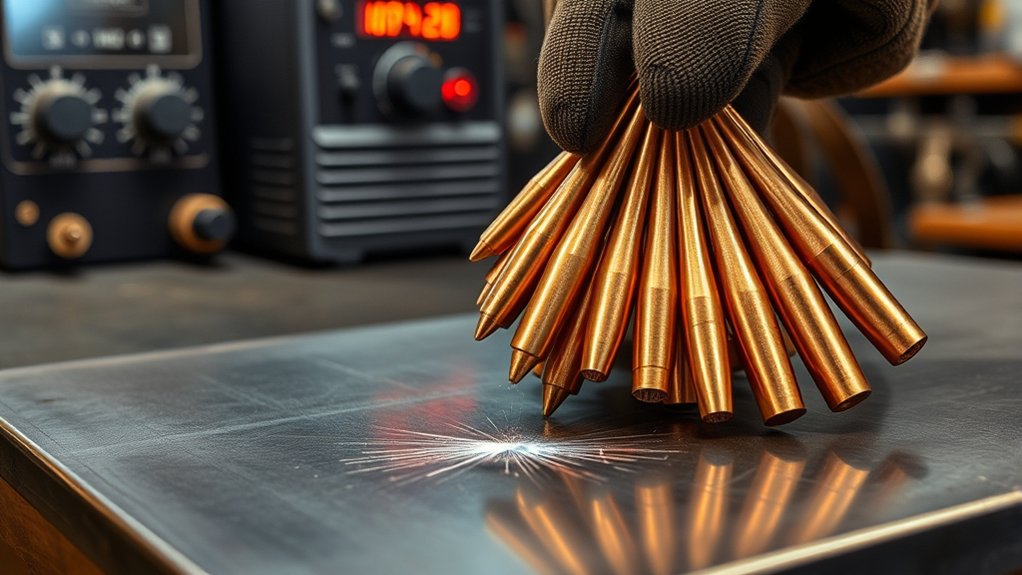
Brand differences are real, but the answer is not to assume one machine’s displayed current is more truthful than another’s or to ask an unqualified operator to measure plasma output with a clamp meter. Current feedback, waveform, pilot-arc control, gas regulation, consumable geometry, and software differ across systems.
Use this controlled test-cut method:
- Install a new or known-good approved consumable set.
- Use clean material of the same type and thickness as the job.
- Enter the exact cut-chart settings.
- Make a straight cut long enough to reach steady travel speed.
- Inspect the top edge, bottom dross, cut-face angle, drag lines, and whether the arc fully severed the plate.
- Change only one variable at a time—usually speed first, then height or voltage if needed.
- For CNC work, measure the actual kerf and update compensation.
- Record the final settings and consumable part numbers.
If a machine cannot produce a normal cut with correct parts, clean gas, adequate input power, a solid work connection, and cut-chart settings, stop troubleshooting at the operator level. Use the service manual or an authorized technician rather than probing internal high-voltage circuits.
Frequently Asked Questions
Can I choose a plasma cutter tip by orifice diameter alone?
No. A diameter such as 0.8 mm or 1.0 mm does not identify the electrode, swirl design, shield, gas flow, or rated current. Find the torch model and consumable part number, then use the manufacturer’s cut chart. Use a generic diameter chart only when the torch maker confirms that exact mapping.
Should I always set the machine to the tip’s maximum amperage?
No. Never exceed the rating, but use the current specified for the installed consumable and material. Some conventional systems perform best slightly below the nozzle’s maximum rating, while other processes call for the full labeled current. Cartridge systems may set or limit current automatically.
How does ambient temperature affect plasma tip life and performance?
Temperature mainly matters through the machine’s rated operating range, duty cycle, cooling, and air quality. Hot conditions can make the power supply reach its duty-cycle limit sooner. Cold or humid conditions can increase condensation in air lines. Keep the system within its manual’s temperature range and supply clean, dry gas; do not use an open flame or improvised heater on the machine.
Are aftermarket tips compatible with CNC torch height control?
Only when the supplier explicitly lists the exact torch, amperage process, and complete consumable stack. A part that physically fits may still change arc voltage, cut height, kerf, gas flow, and wear. Re-enter the correct cut-chart values, make a test cut, and verify height-control behavior before production.
What tip works best for expanded metal or grating?
Use the manufacturer-approved cutting consumable and the machine’s expanded-metal, auto-refire, or continuous-pilot-arc feature when available. Do not select a universal 0.8–1.0 mm tip or 40–60 A setting. Match current to the strand thickness and cut chart. Expect faster consumable wear because the pilot arc repeatedly bridges open gaps.
Does a water table cool the plasma tip and improve every cut?
A water table is mainly a fume, particulate, noise, and spark-control system. It does not replace the torch’s designed gas or liquid-cooling flow, and it does not guarantee a narrower kerf or longer tip life. Follow the plasma and table manufacturer’s process guidance. Aluminum cutting needs special care because hydrogen can accumulate in an unsuitable water-table design.
Can I use the same tip for gouging and cutting?
Usually not. Gouging consumables use a different outlet geometry and gas pattern to remove metal without severing the plate. Install the manufacturer’s gouging nozzle or cartridge and use its stated current, torch angle, standoff, and travel-speed range.
Conclusion
Match a plasma cutter tip to amperage by torch model, consumable part number, process rating, and cut chart. A 0.6–1.1 mm aftermarket chart may be a clue, but it is not a safe universal standard. Never exceed the consumable rating, and do not assume maximum current is always best.
Once the correct set is installed, protect it with clean, dry gas, the specified torch height, proper pierce technique, and steady speed. Inspect the nozzle and electrode when the kerf, dross, bevel, sound, or arc stability changes. Test on scrap, adjust one variable at a time, and save the final settings for repeatable cuts.
Sources
- Hypertherm Powermax45 SYNC Operator Manual — current examples of automatic settings, cartridge selection, drag cutting, expanded metal, and safety.
- Hypertherm: 10 Common Plasma Arc Cutting Mistakes — consumable matching, current rating, gas and coolant flow, pierce height, speed, and arc stretching.
- Hypertherm Air-Plasma Filtration FAQ — the effect of air volume, moisture, and contamination on cut quality and consumable life.
- Hypertherm Torch Height Control Guide — arc voltage and torch-to-work distance in mechanized cutting.
- Miller: Plasma Cutting Safety Makes Sense — fire, burn, electrical, eye, and container hazards.
- OSHA Welding, Cutting, and Brazing Hazards and Solutions — fumes, ultraviolet radiation, electrical shock, burns, and PPE.