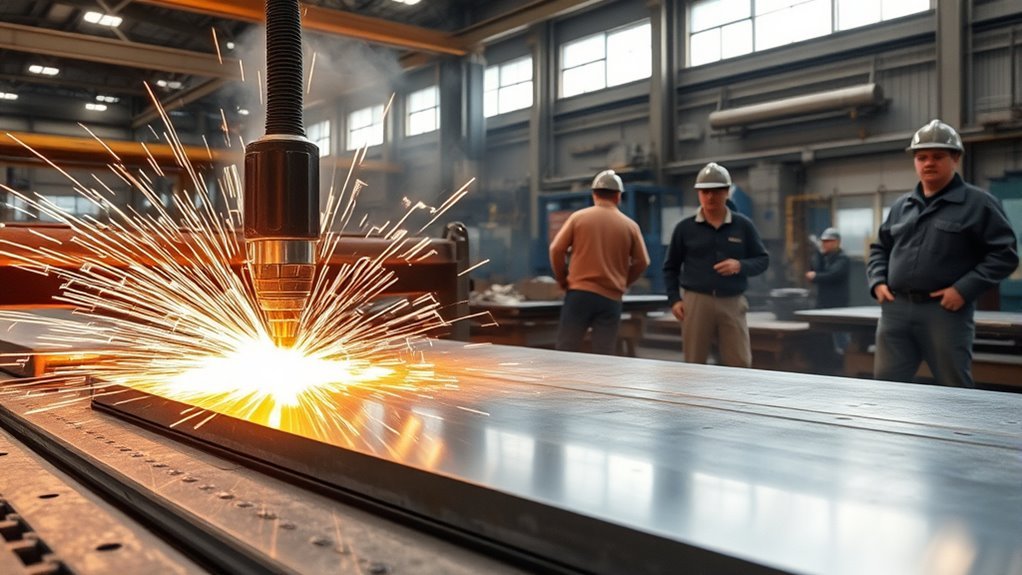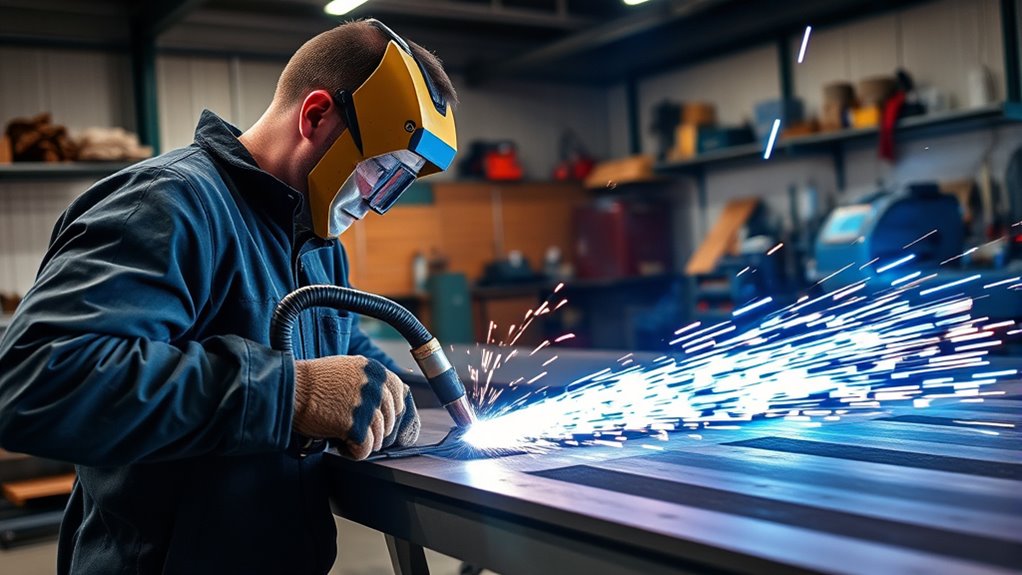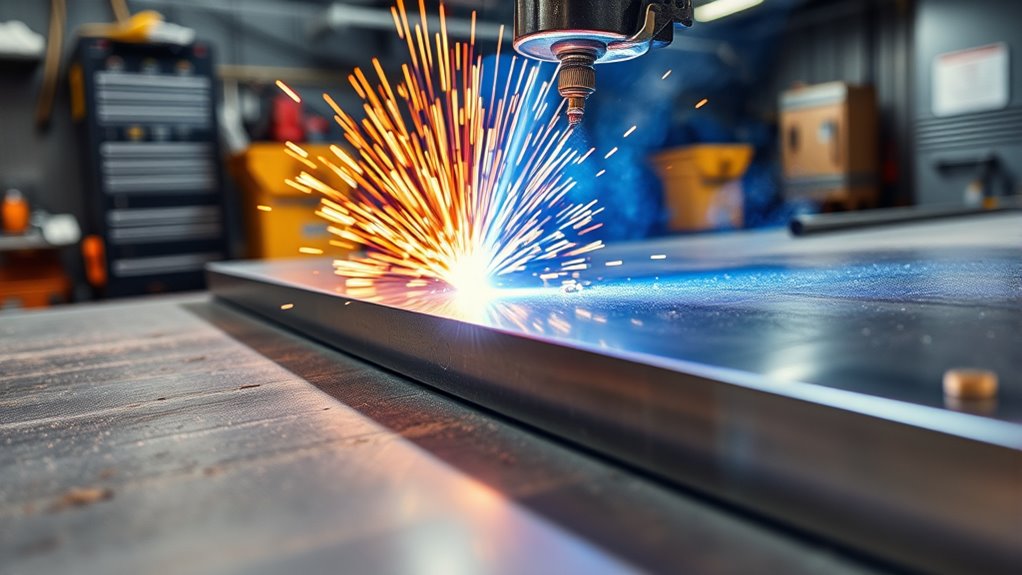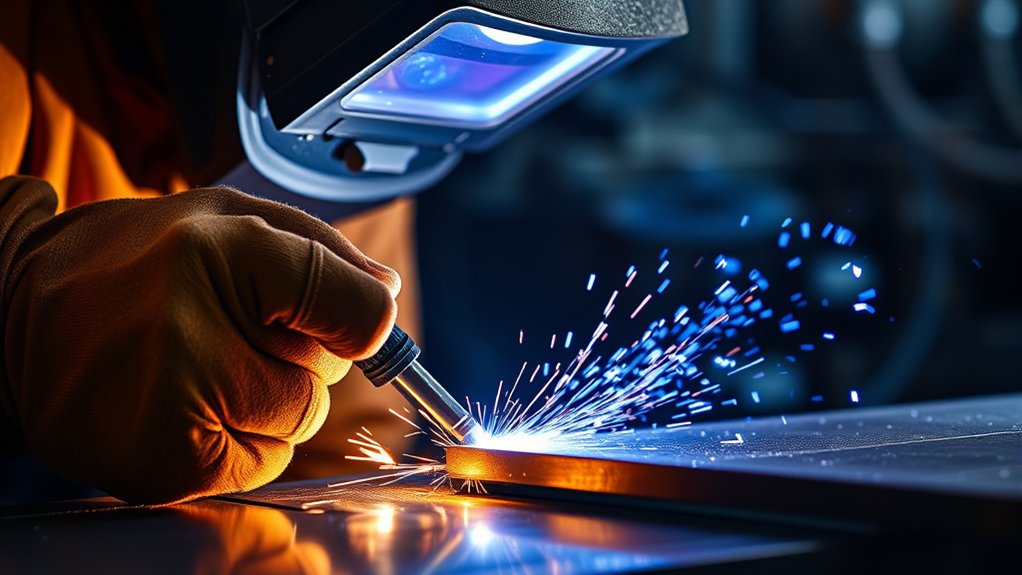
What is plasma arc welding? Plasma arc welding (PAW) is an arc welding process that squeezes the arc through a small copper nozzle to make a narrow, stiff, very stable heat source. It is closely related to TIG welding, but it gives deeper penetration, more tolerance for torch distance, and a keyhole mode that welds thicker metal in one pass.
Quick Answer
Plasma arc welding uses a tungsten electrode recessed inside a torch and a constricting copper nozzle. A pilot arc ionizes the plasma gas, usually argon, then the main arc transfers to the work. A separate shielding gas protects the weld. It is a mechanized-friendly precision process used on thin foil, thin sheet, and, in keyhole mode, plate up to roughly 10 mm of stainless steel in one pass.
What Is Plasma Arc Welding and How Does It Work?
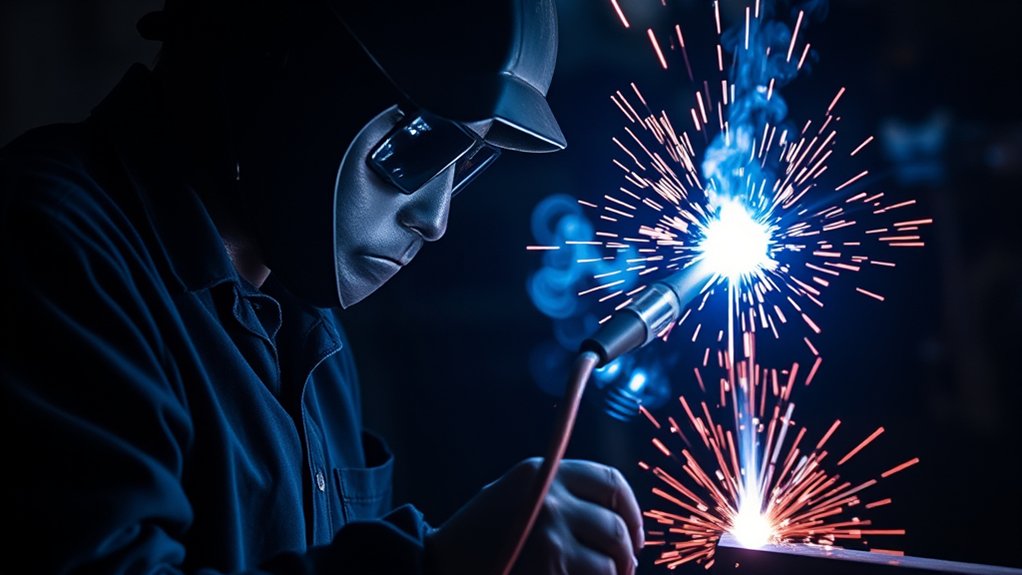
PAW is similar to TIG welding: the arc forms between a pointed tungsten electrode and the workpiece. The difference is that the electrode sits inside the torch body, so the plasma is separated from the shielding gas. The plasma is forced through a fine-bore copper nozzle that constricts the arc, which raises its energy density and stiffness. TWI explains that this arrangement is why PAW is less sensitive to torch-to-work distance and surface contamination than TIG.
Two gas streams are used. The plasma gas, normally argon, flows through the nozzle orifice and forms the arc. The shielding gas, normally argon or argon with 2 to 5% hydrogen, flows around the outside and protects the weld pool. Helium-argon mixtures are used for materials such as copper.
The Working Principle Behind Plasma Arc Welding
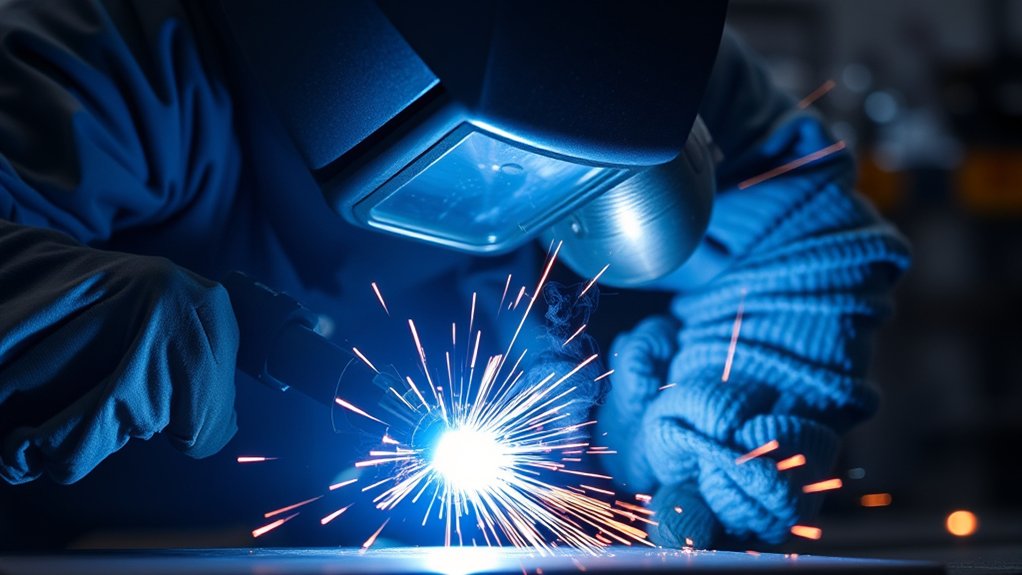
Arc Formation Process
- A low-current pilot arc ignites between the tungsten electrode and the copper nozzle.
- Plasma gas is constricted through the nozzle bore, raising jet velocity and energy density.
- When the torch is near the work, the main arc transfers to the workpiece.
- The pilot arc can stay on between welds, which avoids repeated high-frequency starts and the electrical interference they can cause.
The Three Operating Modes
Nozzle bore and plasma gas flow set the mode. Ranges below are from TWI.
| Mode | Current | Typical use |
|---|---|---|
| Microplasma | 0.1 to 15 A | Thin sheet down to about 0.1 mm, wire and mesh. A stiff, needle-like arc limits wander and distortion. |
| Medium current | 15 to 200 A | Melt-in welding as an alternative to TIG, with deeper penetration and better tolerance of surface contamination. |
| Keyhole | Over 100 A | Full penetration in one pass. About 10 mm of stainless steel is the quoted limit, and single-pass work is often kept to around 6 mm. |
In keyhole mode the plasma jet cuts through the joint. Molten metal flows around and behind the keyhole as the torch travels and closes it to form the bead. This mode needs tight control of current, gas flow and fit-up, so it is normally mechanized.
Essential Equipment and Components for Plasma Arc Welding
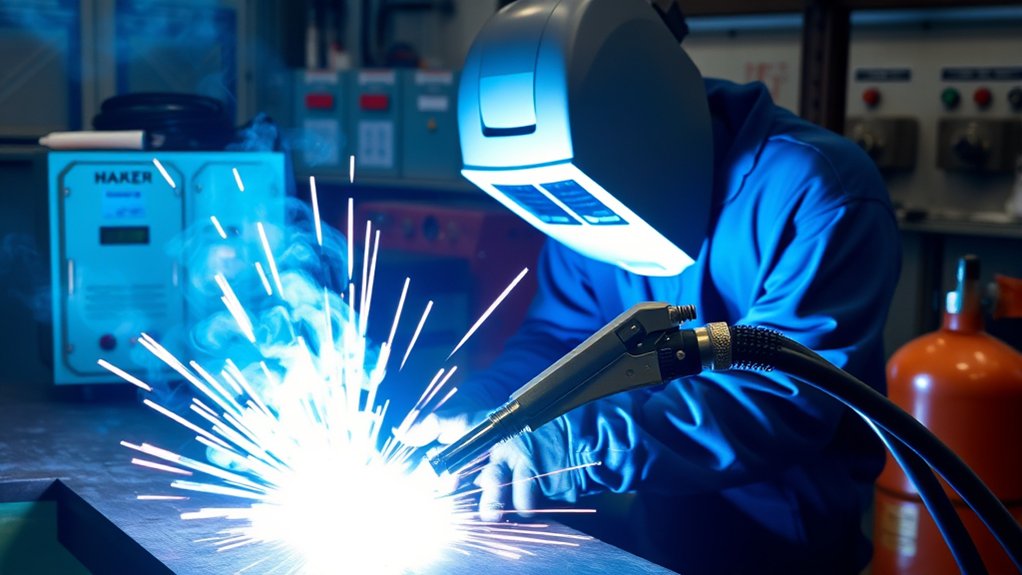
- Power source: DC with a constant-current (drooping) characteristic. A plasma control console can be added to a conventional TIG power source, per TWI.
- Torch: holds a tungsten electrode (2% thoriated is the common type named by TWI) and a copper nozzle. The nozzle bore must match the current and plasma gas flow, or it will erode or melt.
- Electrode setback: the recess distance of the tungsten inside the nozzle affects how stiff the arc is.
- Gas supply: separate plasma and shielding gas lines with flowmeters or regulators. Keep hydrogen-containing blends for materials where they are approved, such as stainless steel, and not for carbon steel or aluminum.
- Cooling: PAW torches are typically water-cooled, with a console to manage coolant and gas flow.
Products Worth Considering
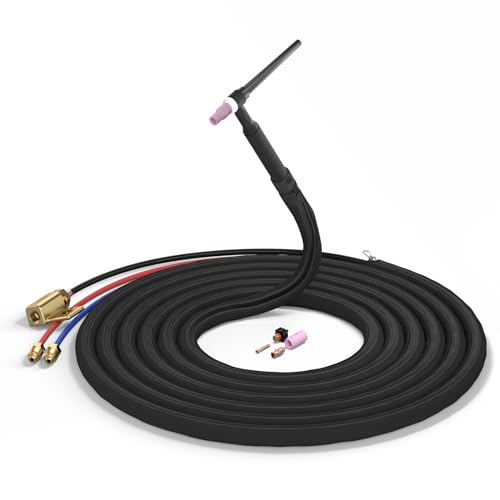
WP-20F: Premium quality 250Amp water-cooled flexible head WP-20 complete TIG welding torch package with 25ft power cable.

Premium TIG welding torch body 20-series WP-20, WP-20F, WP-20V, WP-20FV and WP-20P (silicone rubber).

Unique Propolyene Glycol non-hazardous formulation
Key Advantages of Using Plasma Arc Welding
- Deeper penetration than TIG in melt mode, because of the higher plasma gas flow.
- A stiff, stable arc that resists wander and distortion.
- More tolerance of torch-to-work distance variation and surface contamination, including coatings.
- Higher travel speed in keyhole mode, with full penetration in one pass.
- The tungsten sits inside the torch, away from the weld pool, so it is less exposed to contamination.
Notable Disadvantages and Limitations
- Equipment cost and complexity: a plasma console, gas controls and cooling add cost and maintenance compared with a TIG setup.
- Bulky torch: it makes some manual joints harder to reach.
- Nozzle wear: the orifice must be kept in good condition for consistent results.
- Keyhole mode is mechanized: gas flow and filler addition must be carefully balanced.
- Safety: intense arc radiation and noise call for full PPE and screens for bystanders.
For a deeper look at the trade-offs, read our plasma arc welding advantages and disadvantages guide.
PAW vs. Other Welding Methods
| Process | How it compares with PAW |
|---|---|
| TIG (GTAW) | Similar arc and tungsten electrode. PAW has a stiffer, more constricted arc and deeper penetration, but a bulkier torch and more equipment. |
| MIG (GMAW) | MIG deposits metal faster. PAW is chosen for precision and low distortion rather than deposition rate. |
| Laser and electron beam | These can exceed PAW in speed or penetration but cost more and need tighter joint preparation. |
For a direct comparison with TIG, see plasma welding vs TIG welding.
Products Worth Considering
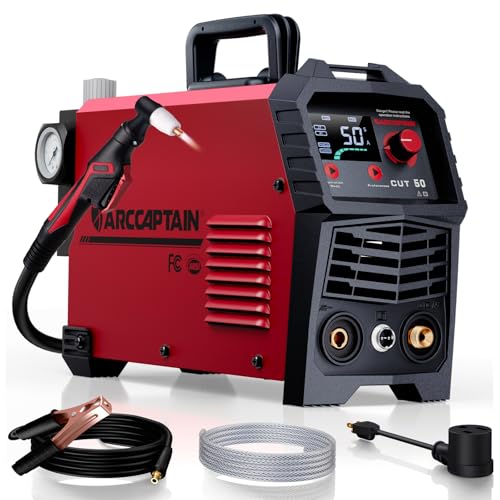
【Powerful Cutting Ability】Switch effortlessly between 110V and 220V for home or workshop use. Achieve professional 1/2" clean cuts on steel, aluminum, and copper with advanced LGBT technology. Perfect for DIY projects and heavy-duty tasks. Recommended maximum cutting thickness: 12mm @ 35A / 110V / 55 PSl; 18mm @ 50A / 220V / 75 PSI. Note: Requires compressed air (compressor sold separately).

6-IN-1 Multifunctional Welder Machine: This 6-in-1 multi welder supports FLUX MIG, GAS MIG, PLASMA CUTTING, HF TIG, and STICK,SPOT welding, provide a comprehensive solution for a wide range of welding and cutting tasks, suitable for both home DIY and industrial projects.

9-IN-1 WELDER:ARCCAPTAIN MIG205MP MIG welder has 9 welding modes: Gas MIG/Gasless MIG/Cut/DC HF TIG/DC Lift TIG/MMA Stick/Clean/Spot Welding/Spool Gun Aluminum Welding (Need to buy extra spool gun). This multiprocess welder perfectly handles all your needs—from home DIY and garage projects to outdoor repairs, farm equipment, and road maintenance and repairs.
Industrial Applications and Use Cases

PAW is commonly used where precision and low distortion matter:
- Aerospace: thin-wall tubing, precision seams and parts in titanium and nickel alloys.
- Medical and electronics: small, clean welds on thin or heat-sensitive parts.
- Tube and pipe: stainless steel tube and sensor housings, often mechanized.
Automation and Robotic Integration
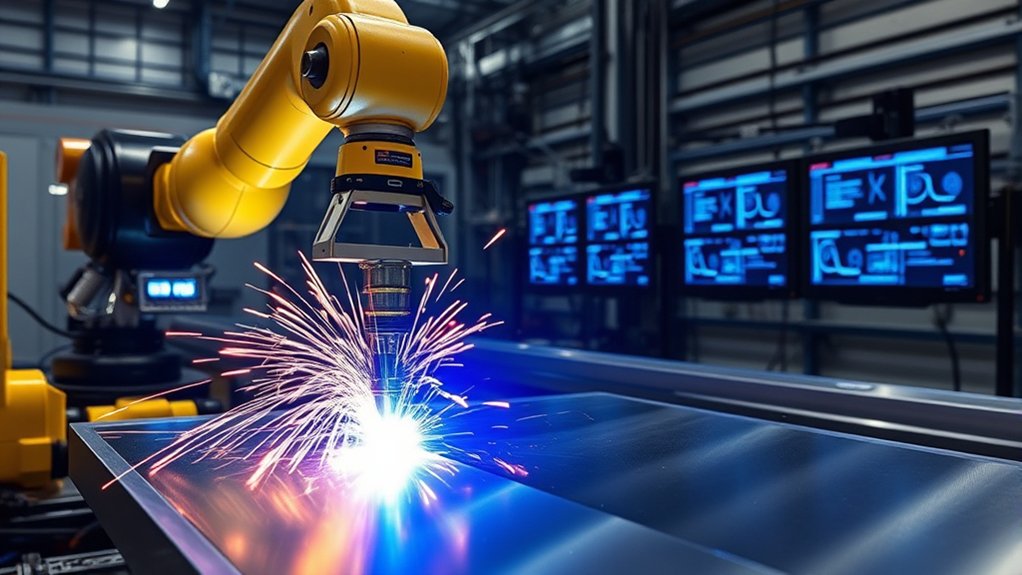
PAW fits mechanized systems and robots well. The stiff arc, consistent gas flow and ability to hold the pilot arc between welds suit repeatable production work. Keyhole welding in particular is normally done with mechanized travel.
Future Trends and Developments
Most development is in controls: power sources with better current and gas control, and monitoring that helps keep nozzle wear and parameters consistent across production runs. The core process, a constricted arc with a separate shielding gas, remains the same.
Related guides: how plasma arc welding works, what plasma is in plasma arc welding and what plasma arc welding is used for.
Frequently Asked Questions
What is plasma arc welding?
Plasma arc welding is a TIG-like process in which the arc is constricted through a copper nozzle to form a narrow, stable plasma jet. A shielding gas protects the weld pool, and the process can run in microplasma, medium-current or keyhole mode.
What PPE is required for plasma arc welding?
Use a welding helmet with the correct filter shade, safety glasses, gloves, flame-resistant clothing, safety footwear, fume extraction or ventilation, and screens to protect bystanders. OSHA’s filter-lens table lists a minimum shade of 6 below 20 A, 8 for 20 to 100 A, 10 for 100 to 400 A and 11 for 400 to 800 A for plasma arc welding.
How much does a plasma arc welding setup cost?
Cost varies widely with current class, duty cycle, console features, torch type, cooling and automation. Ask suppliers for current quotes, and include spare nozzles, electrodes and gas equipment.
What is the difference between plasma arc welding and TIG welding?
Both use a tungsten electrode and shielding gas. In PAW the electrode is recessed in the torch and the arc is squeezed through a copper nozzle, giving a stiffer arc, deeper penetration and more tolerance of torch distance. TIG is simpler, cheaper and easier to use by hand.
Can plasma arc welding be done outdoors?
It is a gas-shielded process, so wind can disturb the shielding gas and cause defects. Use windscreens or enclosures and follow your welding procedure.
What routine maintenance does a PAW torch need?
Inspect and dress the electrode, replace worn nozzles on schedule, clean the torch, check gas lines, coolant and for leaks, and verify flowmeters and safety interlocks.
Conclusion
Plasma arc welding gives a stable, controllable arc with deep, narrow penetration and low distortion. Match the mode to the job: microplasma for very thin material, medium current as a more tolerant alternative to TIG, and keyhole for full penetration in one pass on thicker joints. Expect higher equipment cost and a mechanized setup for keyhole work.
Sources
- TWI: Plasma Arc Welding for operating modes, current ranges, gases and electrode details.
- TWI: What Is Plasma Welding? for process overview and pilot arc.
- OSHA 29 CFR 1910.133: Eye and Face Protection for plasma arc welding filter shades.