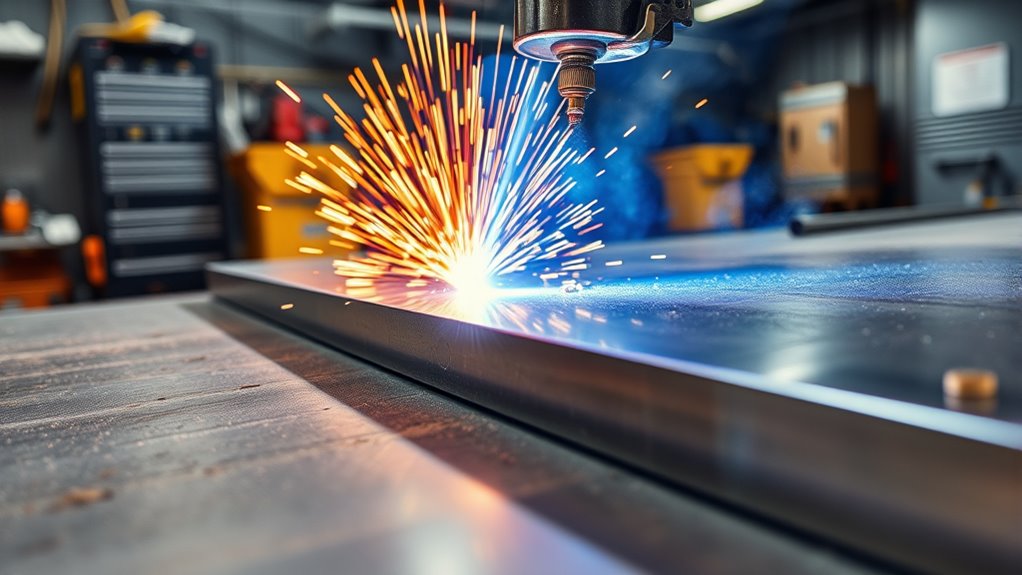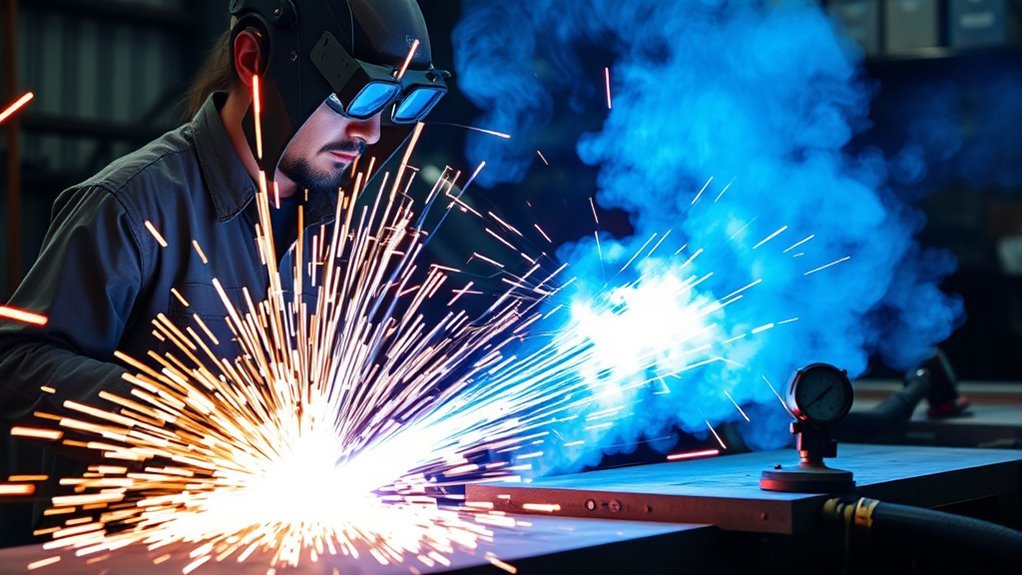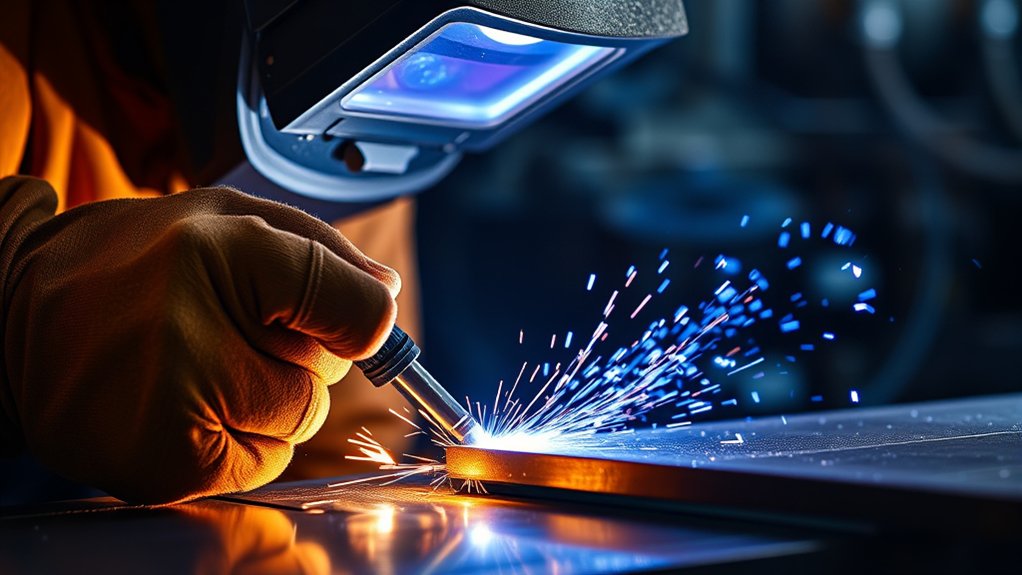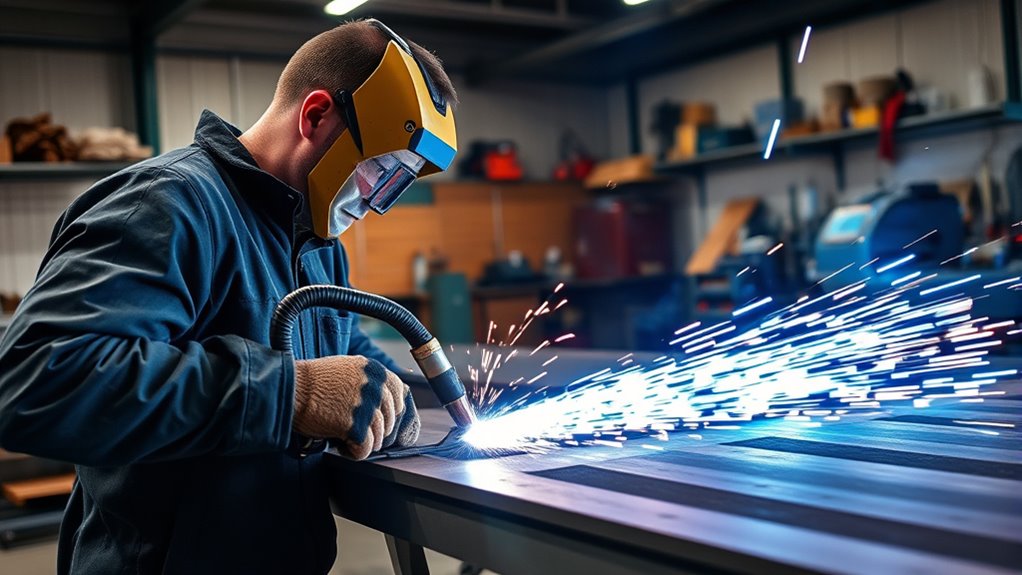
When you compare plasma cutting technology, the main differences come down to the system type, power source, cutting gas, torch setup, and the level of precision you need. Air plasma works well for many shop and repair jobs, while high-precision and CNC plasma systems are better for production work, tighter tolerances, and cleaner edges.
Quick Answer
Plasma cutting uses an electric arc and a fast stream of gas to melt and blow away metal. Choose air plasma for cost-effective shop cutting, conventional plasma for thicker plate, and high-precision or CNC plasma when you need repeatable cuts, less dross, and tighter part accuracy.
Key Takeaways
- Plasma cutters work on electrically conductive metals such as mild steel, stainless steel, aluminum, brass, and copper.
- Air plasma is affordable and simple, but it can leave more oxidation and dross than higher-end gas systems.
- Power level, duty cycle, torch height, travel speed, consumable condition, and dry air all affect cut quality.
- Oxygen is common for fast mild-steel cutting, while nitrogen is often used for cleaner stainless steel and aluminum edges.
- Always follow the machine manual, use proper eye protection, control fumes, and keep flammable materials away from the cutting area.
Understanding Plasma Cutting: Basics and Mechanism
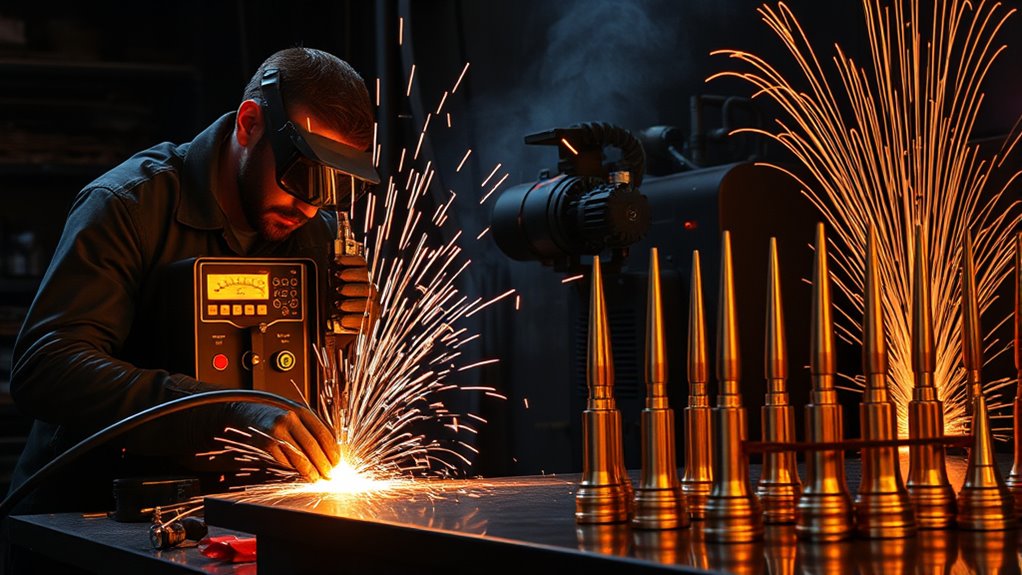
To understand plasma cutting, start with the arc. A plasma cutter creates an electrical circuit between the torch and the workpiece. Gas flows through a small nozzle, the arc ionizes that gas, and the hot, high-speed plasma stream melts the metal while blowing molten material out of the kerf.
The process normally starts with a pilot arc. Once the arc transfers to the workpiece, the torch cuts through the metal along the path you guide by hand or program through a CNC table. The work clamp must have a clean electrical connection because poor grounding can cause arc loss, rough starts, and inconsistent cuts.
Plasma cutting is best for electrically conductive metals. It is not the right process for wood, plastic, glass, stone, or other non-conductive materials. For those materials, a waterjet, saw, router, or laser may be a better fit.
Warning: Plasma cutting creates intense arc light, hot sparks, molten metal, fumes, and electric-shock risk. Wear proper eye and face protection, gloves, flame-resistant clothing, and hearing protection, and cut only in a well-ventilated area free of flammable materials.
Different Types of Plasma Cutting Systems
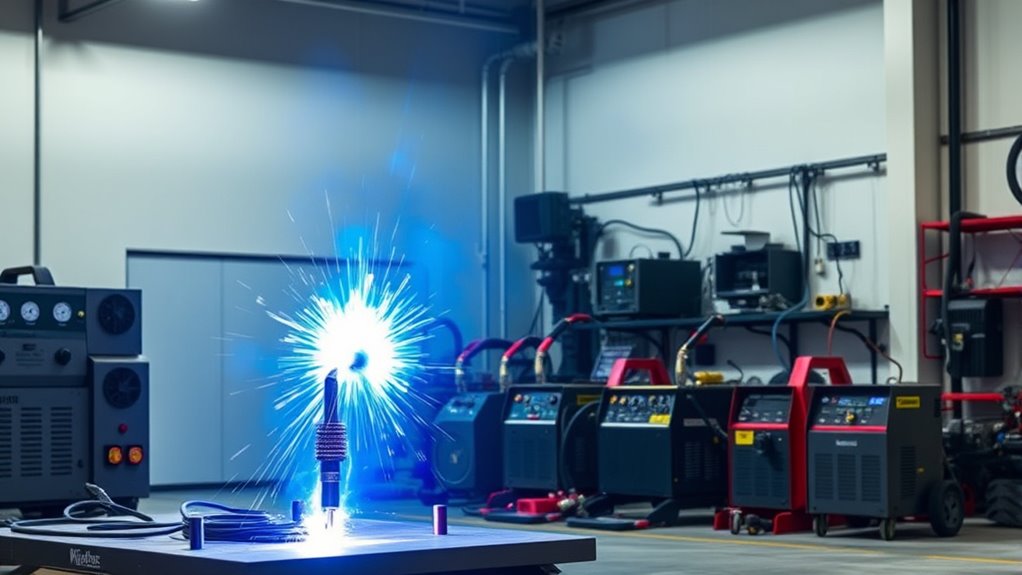
Plasma cutting systems range from small portable units to high-precision industrial machines. The best choice depends on your material thickness, cut-quality expectations, budget, and whether you are cutting by hand or with automation.
| System Type | Best For | Main Trade-Off |
|---|---|---|
| Air plasma | Repair work, fabrication shops, farm use, HVAC, home garages, and general steel cutting | Lower gas cost, but more oxidation and possible cleanup |
| Conventional plasma | Thicker plate, faster cutting, and heavier shop work | More capable than small air units, but cut quality still depends heavily on setup |
| High-precision plasma | Production parts, cleaner holes, tighter tolerances, and reduced secondary grinding | Higher purchase cost and more demanding gas and maintenance requirements |
| CNC plasma | Repeatable shapes, signs, brackets, production batches, and nested sheet layouts | Requires a table, software, height control, and a cleaner setup process |
Air plasma systems are the simplest and most affordable choice because they use filtered shop air. They are excellent for general work, but the cut edge may need grinding before welding or painting, especially on mild steel.
High-precision systems use tighter arc control, better torch cooling, refined consumables, and often multiple gases. They are more expensive, but they can reduce dross, improve hole quality, and save cleanup time in production settings.
Products Worth Considering

BUILT-IN AIR COMPRESSOR: With this plasma cutter machine, you're ready to cut as soon as you connect it to a power source, no additional air compressor needed. Designed for effortless outdoor work, it also offers compatibility with external compressors for versatile use

COMPLETE BUILT-IN AIR SYSTEM: Equipped with an integrated high-performance air pump, this plasma cutter eliminates the need for an external air compressor—simply plug into power and start cutting with no extra equipment or complicated setup required
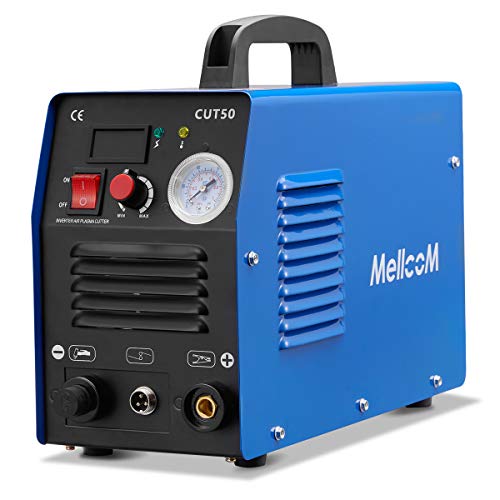
【Arc Pilot Function】The pilot arc plasma cutter efficiently cuts rough, painted, and rusted surfaces with minimal weld slag. Without touching the tip of the metal, pilot arc technology improves cutting quality and extends consumable lifespan.
Power Sources and Levels in Plasma Cutting
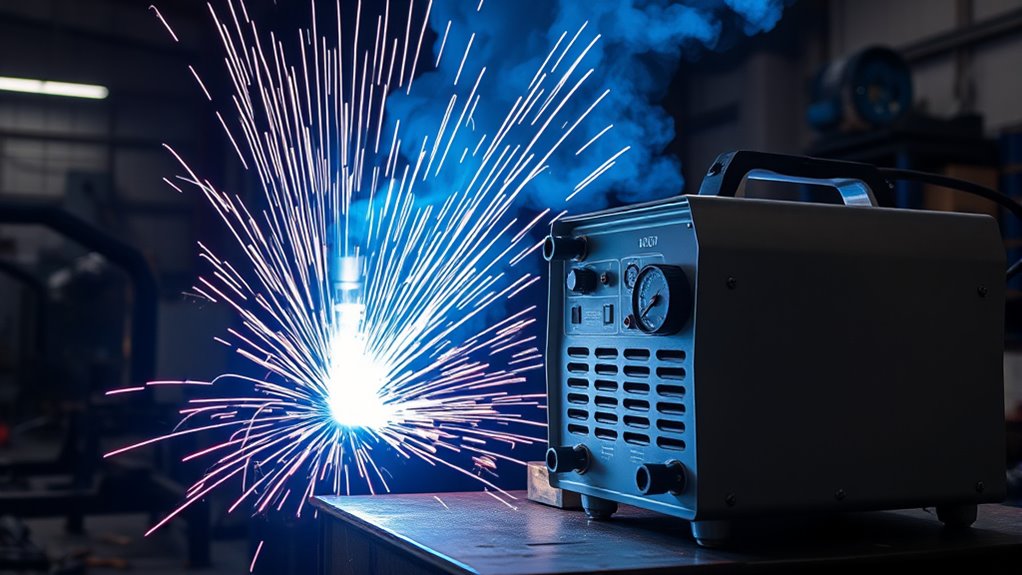
The power source controls how much cutting current the plasma cutter can deliver. More amperage usually allows faster cutting and thicker material capacity, but it also requires the right consumables, air flow, input power, duty cycle, and torch technique.
Small portable machines may run on 120 V input for thin sheet and light repair work. Many mid-size machines run best on 240 V input because the cutter can deliver more stable amperage and a higher duty cycle. Industrial systems may use three-phase power and dedicated gas supplies.
Do not choose a plasma cutter only by the maximum severance rating. The severance rating tells you what the machine may cut slowly at its limit. For cleaner edges and faster work, compare the machine’s rated cut or recommended cut capacity in the manufacturer’s cut chart.
Pro Tip: Match amperage to the material instead of always cutting at maximum output. Too much amperage on thin metal can widen the kerf, increase heat distortion, and wear consumables faster.
The Role of Gases in Plasma Cutting
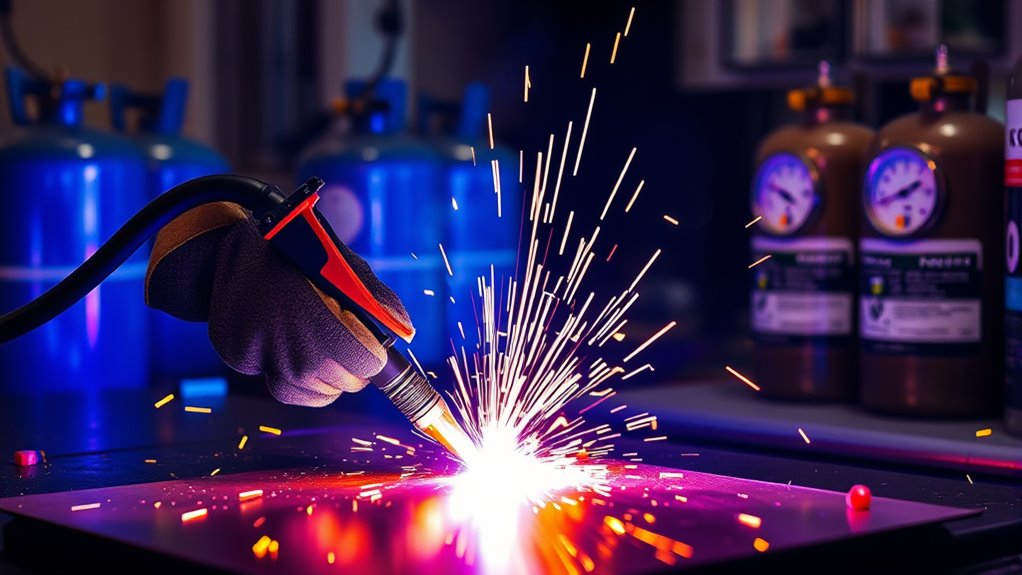
The cutting gas affects cutting speed, edge color, oxidation, dross, cost, and consumable life. Always follow the cut chart for your specific machine, torch, amperage, and material. Gas pressure that is too low or too high can both hurt arc stability and edge quality.
| Gas | Common Use | What to Expect |
|---|---|---|
| Compressed air | Mild steel, stainless steel, aluminum, and general shop cutting | Lowest cost and easiest setup, but more oxidation and moisture sensitivity |
| Oxygen | Mild steel cutting on compatible systems | Fast cutting and clean mild-steel edges, but not the best choice for aluminum or stainless on many setups |
| Nitrogen | Stainless steel and aluminum | Cleaner edge with less oxidation, especially when paired with the right shield gas |
| Argon-hydrogen mix | Thick stainless steel and aluminum on industrial systems | Very hot, smooth cutting performance, but higher cost and stricter safety requirements |
Dry, clean air is one of the cheapest ways to improve plasma cut quality. Moisture, oil, or low air flow can cause dross, arc sputter, and short consumable life.
Comparing Plasma Cutting With Other Cutting Methods
Plasma cutting is popular because it is fast, versatile, and cost-effective on conductive metals. It fills the middle ground between low-cost mechanical cutting and high-end laser or waterjet cutting.
| Method | Strength | Limitation |
|---|---|---|
| Plasma | Fast cuts on conductive metals, good value for medium-thickness plate | Creates heat-affected edges, fumes, dross, and some bevel if setup is wrong |
| Oxy-fuel | Useful for very thick carbon steel and field work | Not suitable for aluminum or stainless steel cutting in the same way plasma is |
| Laser | High precision and narrow kerf on thinner sheet | Higher equipment cost and more sensitive setup |
| Waterjet | Cuts metals and non-metals without a heat-affected zone | Slower and more expensive to operate for many metal-fabrication jobs |
Choose plasma when you need speed, portability, and solid metal-cutting performance without the cost of a laser or waterjet system. Choose laser or waterjet when the part requires tighter detail, minimal heat distortion, or non-metal cutting.
How to Choose the Right Plasma Cutting Setup
Start with the material you cut most often. A small 120 V air plasma cutter may be enough for thin sheet metal, auto body patches, brackets, and light repair work. A 240 V machine is usually a better choice for thicker plate, longer cuts, and more frequent fabrication.
Use this checklist before buying or setting up a plasma cutter:
- Material type: mild steel, stainless steel, aluminum, copper, or brass.
- Material thickness: compare rated cut capacity, not only severance capacity.
- Input power: confirm the circuit, breaker size, plug type, and voltage.
- Air supply: check required PSI and SCFM, then use dry filtration.
- Duty cycle: choose a machine that can cut long enough before cooling down.
- Consumables: match electrode, nozzle, shield, and amperage to the cut chart.
- Portability: decide whether you need a hand torch, CNC table, or both.
Note: A compressor that barely meets the cutter’s air requirement may still struggle during long cuts. Stable air volume and dry filtration matter as much as pressure.
Products Worth Considering

【Non-Touch Pilot Arc Function】The plasma cutter features a high frequency non-touch arc starting mode. It allows for cutting steel surfaces with dirt, rust or coatings. The torch head does not need to touch the metal plate, reducing energy consumption, minimizing electrode burning, and extending service life. NOTE: DO NOT power on until the screen turns off and the fan stops working!

POWERFUL CUTTING THICKNESS: This plasma cutter handles 1/2" (12mm) steel at 120V/35A and 5/8" (16mm) at 240V/60A. Dual voltage auto-detection (10-35A@120V / 30-60A@240V) with PSI guidance (70-75 PSI / 0.48-0.52MPa). Optimized for quick, efficient cuts in automotive repairs and metal fabrication

【Non-Touch Pilot Arc Function】The ARCCAPTAIN 55A plasma cutter features a pilot arc function. It utilizes a high-frequency non-touch arc starting mode. The torch head does not need to touch the metal plate, reducing energy consumption during non-cutting work, minimizing electrode burning, and extending service life. NOTE: Do not switch voltages until the screen turns off and the fan stops.
Enhancing Plasma Cutting Precision and Efficiency
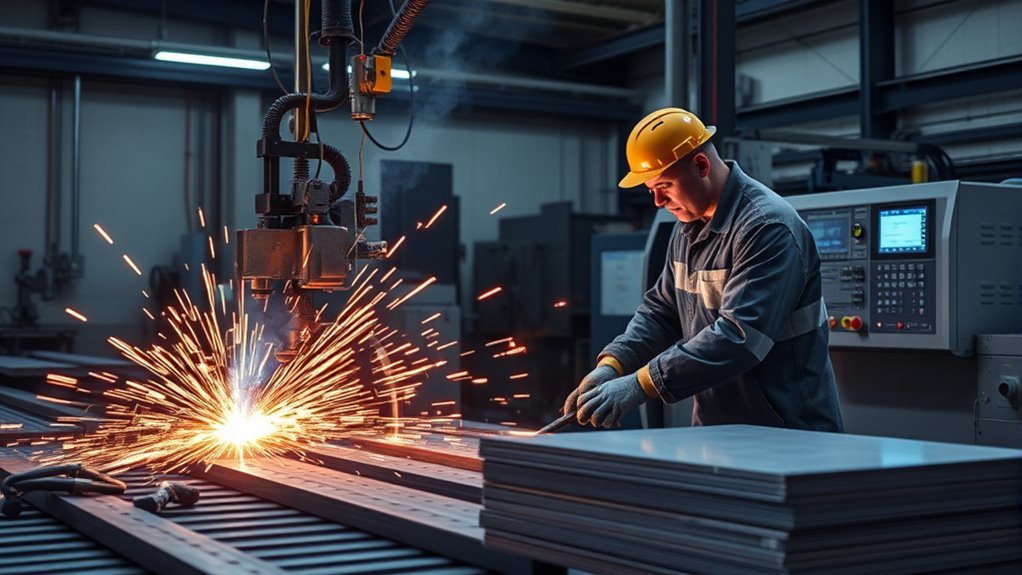
You improve plasma cutting precision by controlling torch height, travel speed, gas flow, amperage, consumable condition, and workpiece grounding. Even a powerful machine will cut poorly if the air is wet, the nozzle is worn, or the torch is too far from the plate.
Optimal Torch Distance
Correct torch distance, also called standoff, helps keep the plasma arc stable. If the torch is too high, the arc spreads and the cut can become wider, slower, and rougher. If the torch is too low, the nozzle can drag, clog, or wear quickly.
For hand cutting, use the drag shield or standoff guide recommended by the manufacturer. For CNC cutting, use torch-height control when available so the machine can maintain consistent arc voltage and cut height across warped or uneven plate.
Real-Time Adjustments
Modern CNC plasma systems can adjust torch height during the cut and use stored cut charts for material type, thickness, amperage, gas, pierce height, cut height, and feed speed. These real-time adjustments help improve edge quality, reduce dross, and keep parts more consistent.
| Cut Problem | Likely Cause | Fix |
|---|---|---|
| Heavy bottom dross | Travel speed too slow, low amperage, wet air, or worn consumables | Increase speed, verify amperage, dry the air, and inspect the nozzle and electrode |
| Top spatter | Torch too high, pierce height too low, or speed too fast | Set correct cut height and follow the pierce delay in the cut chart |
| Beveled edge | Wrong torch angle, worn nozzle, incorrect direction, or wrong speed | Hold the torch square, change consumables, and check cut direction |
| Arc drops out | Poor ground, low air flow, bad consumables, or moving too fast | Clean the work clamp area, check air supply, and replace worn parts |
Controller Technology Advancements
Advanced controllers improve repeatability by combining motion control, torch-height control, nesting software, cut charts, and CAD/CAM integration. This is why a mechanized plasma system can produce more consistent parts than a hand torch, even when both use the same basic cutting process.
High-end controllers may let you choose between faster low-cost cutting and slower best-quality cutting. The right setting depends on whether you value speed, edge finish, hole quality, or reduced secondary grinding.
Plasma Cutting Safety and Best Practices
Plasma cutting is hot work, so treat it like a serious welding and cutting process. Follow the machine manual, local safety rules, and applicable workplace standards. OSHA’s eye and face protection standard includes guidance for protective filter lenses, and OSHA’s welding, cutting, and brazing standard covers fire prevention and ventilation requirements.
- Protect your eyes and face: use a plasma-rated welding helmet or face shield with the correct shade for your amperage and visibility.
- Control fumes: use local exhaust ventilation when cutting indoors, especially on stainless steel, galvanized metal, painted metal, or coated material.
- Prevent fire: remove flammable liquids, paper, sawdust, rags, and gas containers from the spark zone.
- Ground correctly: clamp to clean metal close to the cut when possible.
- Use dry air: install filtration or a dryer if moisture causes arc sputter or fast consumable wear.
- Let metal cool: cut parts can stay hot long after the arc stops.
Frequently Asked Questions
What type of power source is used for plasma cutting?
Most plasma cutters use an electrical power source that converts input power into controlled DC cutting output. The correct machine depends on material thickness, amperage range, duty cycle, air or gas requirements, and whether the cutter is used by hand or on a CNC table.
Is plasma cutting AC or DC?
Plasma cutting normally uses DC output at the torch for a stable cutting arc. The machine may plug into AC shop power, but the internal power supply conditions that input power into the cutting output required by the torch.
Are plasma cutters 110 or 220 volts?
Plasma cutters may be 120 V, 240 V, dual-voltage, or industrial three-phase machines. A 120 V cutter is useful for thin metal and portability, while a 240 V machine usually delivers more cutting power, a better duty cycle, and faster results on thicker material.
What power does a plasma cutter need?
A plasma cutter needs the correct input voltage, breaker capacity, amperage output, and air or gas supply for the material being cut. Always check the nameplate and manual before plugging in the machine, especially when using extension cords or generators.
What metals can a plasma cutter cut?
A plasma cutter can cut electrically conductive metals, including mild steel, stainless steel, aluminum, brass, and copper. It is not designed for non-conductive materials such as wood, plastic, glass, stone, or ceramic.
Why is my plasma cutter leaving dross?
Dross can come from slow travel speed, wrong amperage, poor air quality, incorrect torch height, worn consumables, or cutting material beyond the machine’s clean-cut range. Start by checking the cut chart, drying the air, and replacing worn nozzles or electrodes.
Conclusion
Plasma cutting is a fast, flexible way to cut conductive metals, but the results depend on more than the machine’s advertised amperage. The right system, gas, air supply, torch height, travel speed, consumables, and safety setup all affect the final edge. For basic shop work, air plasma is often the best value. For production parts and tighter tolerances, high-precision or CNC plasma can reduce cleanup and improve repeatability.
Sources
- OSHA 1910.133 Eye and Face Protection — protective filter and eye-safety guidance for welding and cutting operations.
- OSHA 1910.252 Welding, Cutting, and Brazing — fire prevention, ventilation, and hot-work safety guidance.
- OSHA Confined Spaces — background safety guidance for hazardous atmospheres and restricted work areas.
- Cutting and Shield Gases Pressure Effects on Plasma Cutting Quality — research on how gas and pressure affect plasma cut quality.
- HAL record for plasma cutting gas-pressure research — supporting publication record for plasma cutting quality variables.