Plasma arc welding can give you very precise, clean, and repeatable welds, but it is not the right process for every shop. Its main advantage is a narrow, stable, high-energy arc that works well on thin precision parts and some thicker keyhole welds. Its main drawback is the cost, setup skill, safety controls, and equipment complexity needed to use it well.
Quick Answer
Plasma arc welding is best when you need tight arc control, deep narrow penetration, low distortion, and repeatable weld quality. Its disadvantages are higher equipment cost, more setup variables, stronger operator training needs, torch maintenance, shielding-gas control, UV radiation, fumes, and noise controls.
Key Takeaways
- Plasma arc welding, or PAW, uses a tungsten electrode and a constricted plasma arc to concentrate heat more tightly than standard TIG welding.
- The biggest benefits are precision, arc stability, deep narrow penetration, low distortion, and strong repeatability in controlled production work.
- The biggest drawbacks are high setup cost, complex torch and gas controls, training needs, maintenance, and strict safety requirements.
- PAW works best for aerospace, medical, electronics, tube, instrumentation, and other jobs where clean, repeatable welds justify the cost.
- For basic repair work, outdoor welding, dirty metal, or low-volume jobs, TIG, MIG, or stick welding may be simpler and more cost-effective.
Overview of Plasma Arc Welding
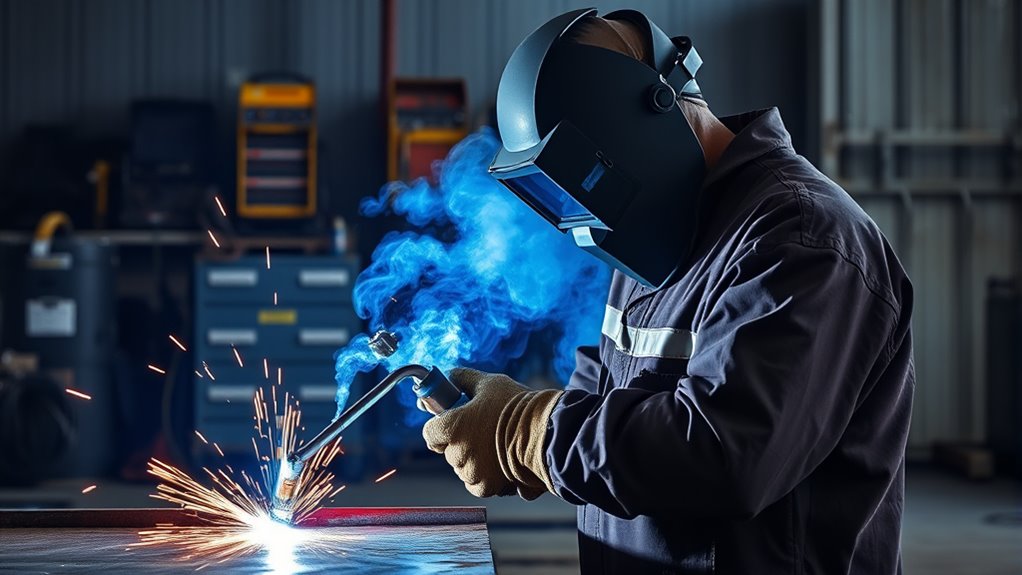
Plasma Arc Welding (PAW) is an advanced arc welding process that uses a non-consumable tungsten electrode inside a specialized torch. A small copper nozzle constricts the arc, and plasma gas passes through the orifice to form a tight, high-energy plasma column. A separate shielding gas protects the molten weld pool from air contamination.
This setup makes PAW similar to TIG welding, but the arc is narrower, more column-shaped, and less affected by small arc-length changes. That gives you better control over heat input, bead shape, and penetration, especially when the torch is fixed in a mechanized or automated setup.
The real value of plasma arc welding is not just heat. It is controlled heat in a narrow, stable arc that can be repeated weld after weld.
PAW is used where weld quality, low distortion, and repeatability matter more than low equipment cost. You will most often see it in precision fabrication, aerospace parts, medical components, electronics, tube production, instrumentation, and other controlled industrial work.
Technical Basics of Plasma Welding
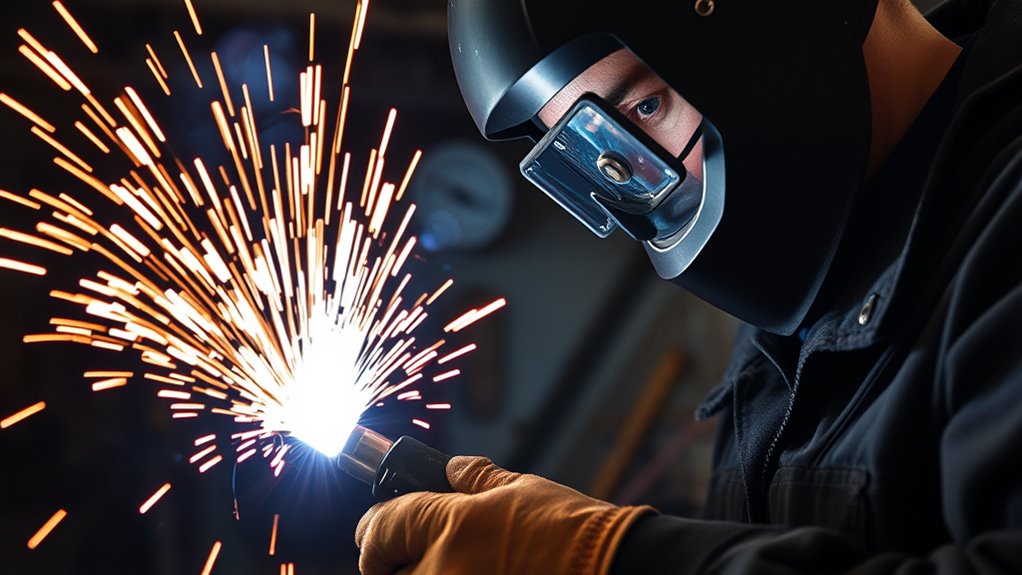
PAW works by forming a pilot arc between the tungsten electrode and the constricting nozzle. When the main arc transfers to the workpiece, the plasma gas becomes ionized and carries intense heat to the joint. The plasma column is often described as reaching temperatures in the tens of thousands of degrees, but the exact value depends on current, gas, torch design, and measurement point.
The most important PAW setup variables are:
- Welding current: controls heat input, penetration, and operating mode.
- Plasma gas flow: shapes the arc and affects penetration. Too much flow can turn welding action toward cutting.
- Shielding gas: protects the molten weld from oxidation and contamination.
- Nozzle orifice size: affects arc constriction, heat density, and torch sensitivity.
- Travel speed: changes bead width, penetration, and heat-affected zone size.
- Stand-off distance: affects arc stability and bead consistency.
- Joint fit-up: matters because PAW is precise and can expose poor preparation quickly.
Note: Plasma arc welding is not the same as plasma cutting. Both use plasma, but PAW uses controlled gas flow and heat input to fuse the joint, while plasma cutting uses higher gas force to remove molten metal.
Applications of Plasma Welding
Plasma welding is most useful when you need a clean, narrow, repeatable weld. It is less useful when you need a simple field repair process or when the metal is dirty, badly fitted, or constantly changing in thickness.
| Industry | Common PAW Use | Why PAW Helps |
|---|---|---|
| Aerospace | Stainless steel, nickel alloy, and titanium components | Narrow welds, controlled heat, and repeatability |
| Medical devices | Small sealed parts and surgical tools | Clean welds with low distortion when the full process is controlled |
| Electronics | Small metal housings, sensors, and precision components | Fine arc control and low heat spread |
| Automotive manufacturing | Tubes, stainless components, and repeat production welds | Good speed and repeatability in fixtures or automation |
| Nuclear and process industries | High-integrity joints and controlled fabrication | Stable penetration and compatibility with inspection-focused work |
Advantages of Plasma Arc Welding
The main advantages of plasma arc welding come from its concentrated arc. Compared with a wider open arc, PAW can place heat into the joint with more control. That helps you make narrow welds, reduce distortion, and hold more consistent penetration.
- Excellent arc stability: the constricted arc is less sensitive to small changes in arc length.
- Precise heat control: useful on thin sheet, small parts, and delicate assemblies.
- Deep, narrow penetration: helpful for keyhole welding and full-penetration welds in selected materials.
- Lower distortion: the smaller heat-affected zone can reduce warping when parameters are correct.
- Good repeatability: PAW works well in fixtures, orbital systems, and automated production.
- Potentially less filler metal: some PAW welds can be autogenous when joint design and material allow it.
Pro Tip: PAW gives its best results when the joint is clean, consistent, and repeatable. If every part varies, you lose much of the process advantage.
Disadvantages of Plasma Arc Welding
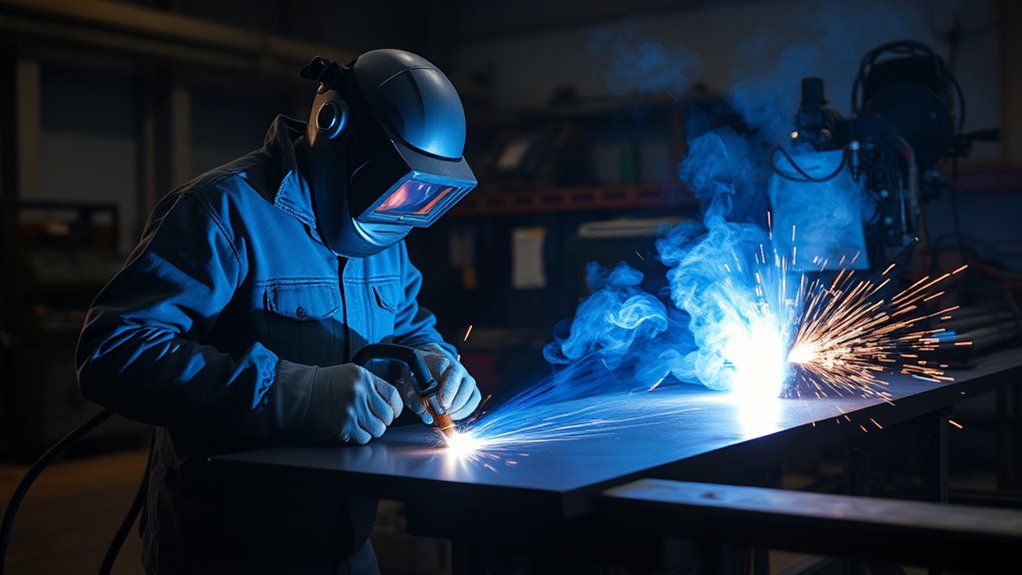
The disadvantages of PAW are real. You need more equipment, tighter setup control, and better training than you would for many basic TIG or MIG jobs. For low-volume repair work, the extra control may not justify the cost.
| Disadvantage | Why It Matters | How to Reduce the Problem |
|---|---|---|
| High equipment cost | Power sources, torches, cooling, gas controls, and fixtures cost more than basic welding setups. | Use PAW only where repeatability, penetration, or low distortion saves enough time or scrap. |
| Complex setup | Current, orifice size, gas flow, travel speed, and stand-off must work together. | Qualify procedures and record settings for each material and joint. |
| Torch maintenance | Worn nozzles and electrodes can change arc shape and weld quality. | Inspect consumables often and replace them before weld quality drifts. |
| Training demand | Small setup errors can cause lack of fusion, burn-through, porosity, or cutting action. | Train operators on PAW-specific gas, torch, and safety controls. |
| Safety controls | PAW can expose workers to UV/IR radiation, fumes, hot work hazards, shielding gas risks, and noise. | Use proper PPE, ventilation, hearing protection when needed, and facility hot-work rules. |
Equipment Costs and Complexity
PAW equipment usually includes a specialized torch, constricting nozzle, plasma gas control, shielding gas control, power source, cooling system, and often a fixture or mechanized carriage. That is why it costs more and takes longer to set up than a simple manual TIG station.
You also need to protect the torch. Nozzle wear, electrode condition, cooling problems, and contaminated gas can all change the weld. For production work, build consumable checks into the schedule instead of waiting for weld defects to appear.
Specialized Training Requirement
Plasma arc welding is not a process to “set by feel” alone. Operators need to understand the relationship between amperage, gas flow, travel speed, orifice size, stand-off, and joint fit-up. The same torch can weld cleanly, overheat the part, or start cutting if the parameters are wrong.
For code work or critical parts, use a qualified welding procedure, approved materials, trained operators, and the required inspection method. PAW can produce excellent welds, but only when the full process is controlled.
Noise and Radiation Concerns
PAW creates intense arc radiation. OSHA guidance for radiant energy during welding lists plasma arc welding filter lens ranges based on current, so choose the helmet shade for the actual amperage and never go below the required minimum. You can review OSHA’s welding eye-protection guidance here: OSHA Eye Protection Against Radiant Energy During Welding and Cutting.
Noise should also be measured instead of guessed. OSHA notes that exposure over 85 dBA can damage hearing and that covered employers must use hearing conservation programs when exposures meet the regulatory threshold. See OSHA’s overview here: OSHA Occupational Noise Exposure.
Warning: Plasma arc welding is hot work. Use trained operators, correct eye and face protection, gloves, flame-resistant clothing, ventilation, hearing protection when needed, and the safety instructions from the equipment manufacturer and your workplace procedure.
Operating Modes of Plasma Arc Welding
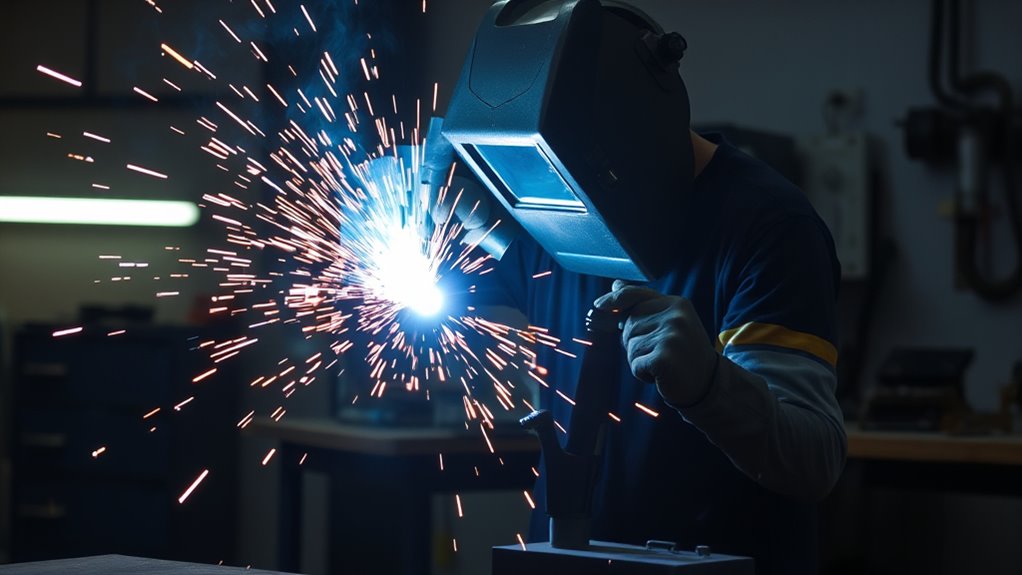
PAW can run in different modes. The exact current range depends on equipment and procedure, but the three common categories are microplasma, melt-in or medium-current welding, and keyhole plasma welding.
Microplasma Welding Range
Microplasma welding uses very low current, often under about 15 to 20 amps. It is useful for thin foils, small parts, bellows, screens, sensors, and delicate assemblies where a normal arc may be too broad or too aggressive.
The advantage is fine control. The risk is that small changes in part fit-up, heat sinking, or surface condition can affect results, so clean parts and repeatable fixturing matter.
Melt-In or Medium-Current Plasma Welding
Melt-in plasma welding is the middle range. It is often used when you need more heat than microplasma but do not want full keyhole penetration. It can work with or without filler metal, depending on joint design, material, and weld requirements.
This mode is useful for many precision fabrication jobs because it offers a balance of control, speed, and penetration.
Keyhole Plasma Technique
Keyhole plasma welding uses higher current and a forceful plasma column to create a small molten opening through the joint. As the torch travels, molten metal flows around the keyhole and solidifies behind it, creating deep, narrow penetration.
The keyhole technique can reduce the need for multiple passes on suitable joints, but it is sensitive to gas flow, joint fit-up, travel speed, and material thickness. Too much plasma force can cause cutting, undercut, or inconsistent penetration.
Comparison With Other Welding Processes
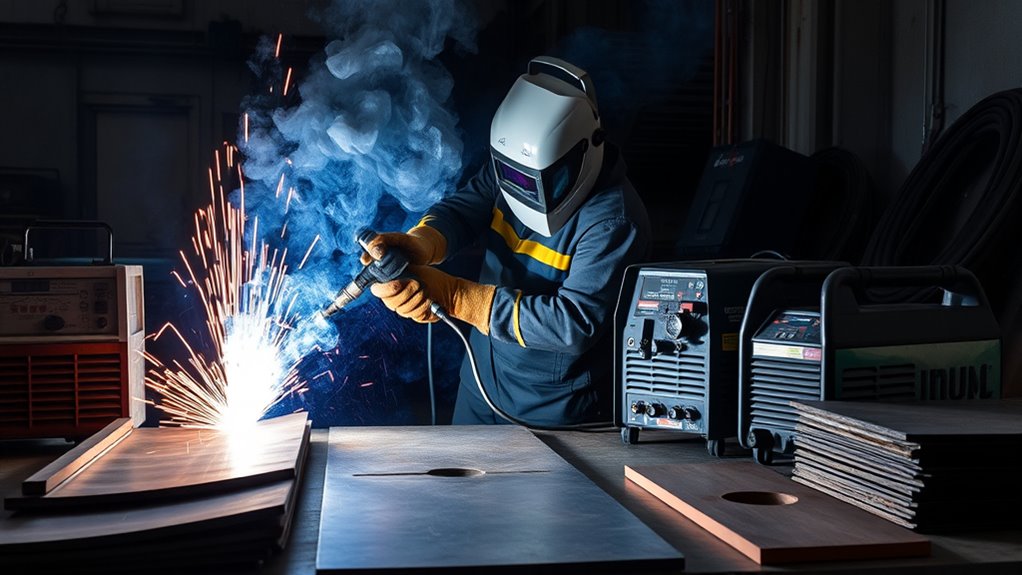
PAW is often compared with TIG because both use a tungsten electrode and shielding gas. The difference is that PAW constricts the arc through a nozzle, while TIG uses a more open arc. That makes PAW more precise and repeatable, but also more complex.
| Process | Best Strength | Main Limitation | Choose It When |
|---|---|---|---|
| PAW | Precision, repeatability, deep narrow penetration | Higher cost and setup complexity | You need controlled production welds or precision joining |
| TIG/GTAW | High-quality manual control and clean welds | Slower travel speed and more operator dependence | You need versatility and fine manual control |
| MIG/GMAW | Speed and production efficiency | Less precise heat control on delicate parts | You need fast fabrication on suitable materials |
| Laser welding | Very high speed and narrow heat input | High capital cost and tight fit-up needs | You need very high-volume precision production |
| Stick/SMAW | Portability and repair work | More spatter, slag, and lower precision | You need simple field welding or structural repair |
Products Worth Considering

APPLICATION: Apply to YESWELDER CUT-65DS/CUT-55DS PRO/CUT-55NHF/CUT-55NHF PLUS plasma cutters. Replacement for the S45 Plasma Cutting Torch.

AG60 Plasma Cutter Torch Body / Head compatible with standard of AG60 torch for 60A Plasma Cutting Machine. (i.e. CUT50, CUT60, CUT70.)

Wide Vision and Size: experience convenience with our welding glasses, measured at about 6.3 x 2.95 inches/ 16 x 7.5 cm (L x W), with a 180° viewing angle, you can enjoy the convenience of peripheral vision; The Shade 5 IR lens delivers a clear view, enhancing your performance and efficiency during various types and phases of welding
When Plasma Arc Welding Is the Best Choice
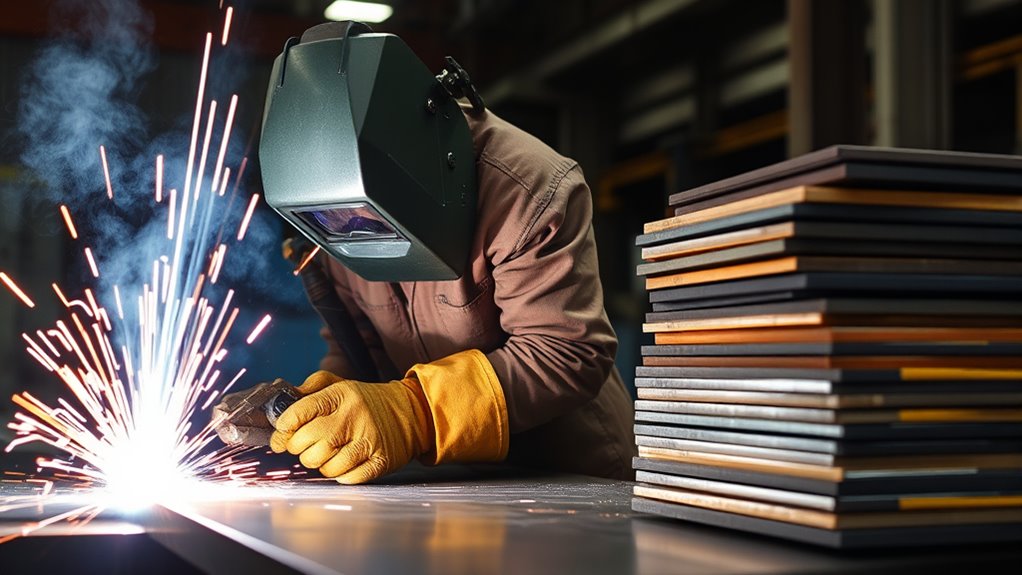
Choose plasma arc welding when the job rewards precision and repeatability. It is especially useful when the same weld is made many times, when distortion must be controlled, or when deep narrow penetration can reduce extra passes.
PAW is a strong option when you need:
- Consistent welds on repeat parts held in a fixture.
- Small weld beads on thin or delicate metal parts.
- Deep, narrow welds on suitable thicker joints.
- Low distortion compared with wider-arc processes.
- Automation, orbital welding, or controlled production.
- Clean welds that will be inspected, leak-tested, or used in critical assemblies.
Avoid PAW when the job is dirty, highly variable, low volume, outdoors, or better served by a simpler process. If the main goal is quick repair or low-cost fabrication, MIG, TIG, or stick welding may be the better choice.
Products Worth Considering

[Achieve Precise Cuts] PT31 Plasma Cutting Consumables – Your Essential Tool for Efficient Cutting! Whether you're working with sheet metal, steel, or any other material, superior cutting performance ensure clean, accurate, and smooth cuts.

❆ Pilot Arc Plasma Cutter Torch: The P80 can efficiently cuts though rough, painted, and rusty surfaces and produces minimal slag; the technology allows you to cut without touching the tip to the metal. It provides a better cutting quality and longer consumable life.
Materials and Joint Preparation
PAW can be used on many metals that are commonly welded with TIG, including stainless steel, carbon steel, nickel alloys, titanium, copper alloys, and some aluminum applications when the correct equipment and polarity are used. The best choice depends on the alloy, thickness, joint design, shielding gas, and required weld quality.
Good joint preparation is critical. Clean the weld area, remove coatings that can create fumes or contamination, control fit-up, and use purge gas when the backside of the weld needs protection. Titanium, stainless steel, and nickel alloys can be sensitive to oxidation, so shielding and purge practice matter.
Note: If the part is code-regulated or safety-critical, do not rely on general settings. Use a qualified welding procedure, approved materials, trained operators, and the required inspection method.
Safety and Ventilation for Plasma Arc Welding
Plasma arc welding needs the same serious approach as other electric arc welding processes. OSHA lists welding hazards that include metal fumes, ultraviolet radiation, burns, eye damage, electrical shock, and other hot-work risks. You can review OSHA’s welding hazard overview here: OSHA Welding, Cutting, and Brazing Hazards and Solutions.
Use these safety basics before welding:
- Eye and face protection: use a welding helmet or face shield with the correct filter shade for the PAW current.
- Skin protection: wear flame-resistant clothing, gloves, and protection for exposed neck and arms.
- Fume control: use local exhaust ventilation where needed and keep your breathing zone out of the plume.
- Gas safety: shielding gases such as argon and helium can displace oxygen in confined or poorly ventilated areas.
- Noise control: measure workplace noise and use hearing protection when levels require it.
- Fire control: remove combustibles, use hot-work permits where required, and keep fire watch procedures in place.
OSHA’s welding fume fact sheet explains that welding fumes can contain metal fumes and gases and that ventilation, positioning, and respiratory protection may be required when work practices do not reduce exposure enough. See: OSHA Controlling Hazardous Fume and Gases During Welding.
Considerations for Plasma Arc Welding Implementation
Before you invest in PAW, compare the cost with the value it will create. The process makes the most sense when it reduces scrap, increases repeatability, improves weld quality, or replaces slower multi-pass work.
Use this checklist before adding PAW to your shop:
- Part volume: Do you make enough repeat welds to justify setup time and equipment cost?
- Material and thickness: Is PAW suited to the alloy, joint design, and penetration need?
- Fit-up control: Can you hold joint gap and alignment consistently?
- Inspection needs: Will the weld require leak testing, visual inspection, dye penetrant, radiography, or other NDT?
- Operator training: Can your team control PAW-specific variables and recognize defects?
- Safety controls: Do you have ventilation, PPE, gas handling, noise control, and hot-work procedures in place?
- Maintenance plan: Will you track nozzle, electrode, torch, gas, and cooling-system condition?
If the answer is yes, PAW can be a strong long-term process. If not, a simpler welding method may give you better value with less risk.
Frequently Asked Questions
What are the main advantages of plasma arc welding?
The main advantages are high arc stability, precise heat control, narrow weld beads, deep penetration in keyhole mode, low distortion, and strong repeatability in controlled production work.
What are the biggest disadvantages of plasma arc welding?
The biggest disadvantages are high equipment cost, complex setup, torch maintenance, operator training, strict gas control, and added safety requirements for arc radiation, fumes, shielding gases, heat, and noise.
Is plasma arc welding better than TIG welding?
PAW is better than TIG when you need a more constricted arc, repeatable penetration, automation, or keyhole welding. TIG is often better for lower-cost manual work, small batches, repairs, and jobs that need more flexibility.
Can plasma arc welding be automated?
Yes. PAW is often well suited to automation because the arc is stable and repeatable. Automated and mechanized systems can improve consistency, but they still need correct fixtures, gas flow, travel speed, and procedure control.
What safety gear is needed for plasma arc welding?
You need a welding helmet or face shield with the correct filter shade, safety glasses, gloves, flame-resistant clothing, and ventilation or respiratory protection when exposure requires it. Hearing protection may also be needed after noise levels are measured.
How long does plasma arc welding equipment last?
The main power source and cooling system can last for years with proper care, but consumables such as electrodes and nozzles wear out and must be replaced regularly. Lifespan depends on amperage, duty cycle, cooling, gas quality, maintenance, and operator practice.
Does plasma arc welding affect the environment?
PAW uses electrical energy and shielding gases, and it can produce fumes depending on the base metal, coating, and filler. Good ventilation, clean material preparation, proper gas handling, and waste controls help reduce environmental and workplace exposure risks.
Conclusion
Plasma arc welding has clear advantages when you need precision, stability, narrow welds, deep penetration, and repeatable production quality. It also has clear disadvantages: higher cost, more setup complexity, more maintenance, and stronger safety requirements. The best choice depends on the job. Use PAW when the weld quality and repeatability justify the investment. Choose a simpler process when speed, portability, low cost, or repair flexibility matters more.
Sources
- OSHA Welding, Cutting, and Brazing Hazards and Solutions — supports welding hazard, UV radiation, PPE, and workplace safety guidance.
- OSHA Controlling Hazardous Fume and Gases During Welding — supports fume, ventilation, gas, and respiratory protection guidance.
- OSHA Eye Protection Against Radiant Energy During Welding and Cutting — supports PAW lens-shade and radiant-energy protection guidance.
- OSHA Occupational Noise Exposure — supports noise-risk and hearing-conservation guidance.
- Arc Plasma Torch Modeling, Trelles et al. — supports the technical complexity of arc plasma torch behavior.