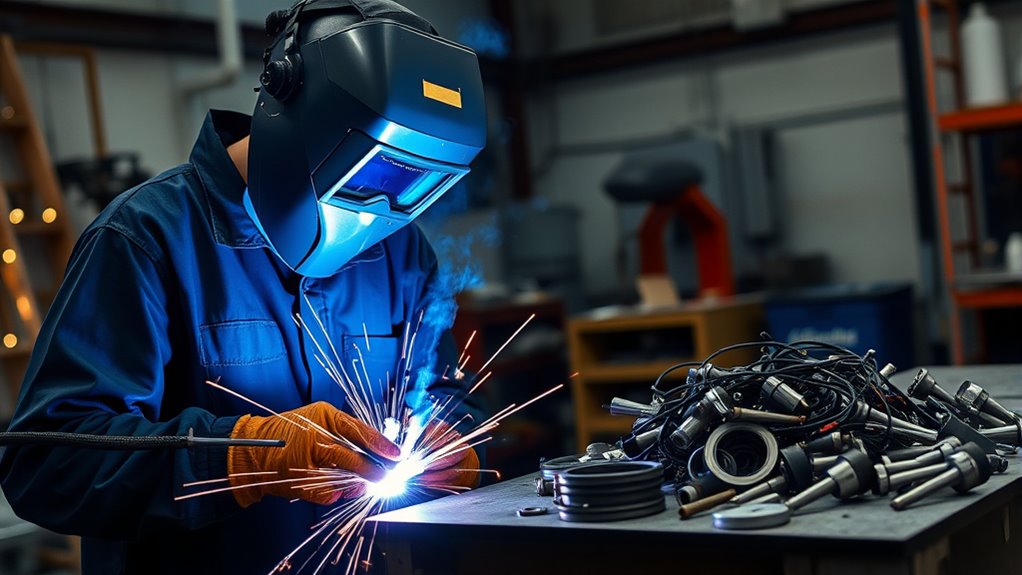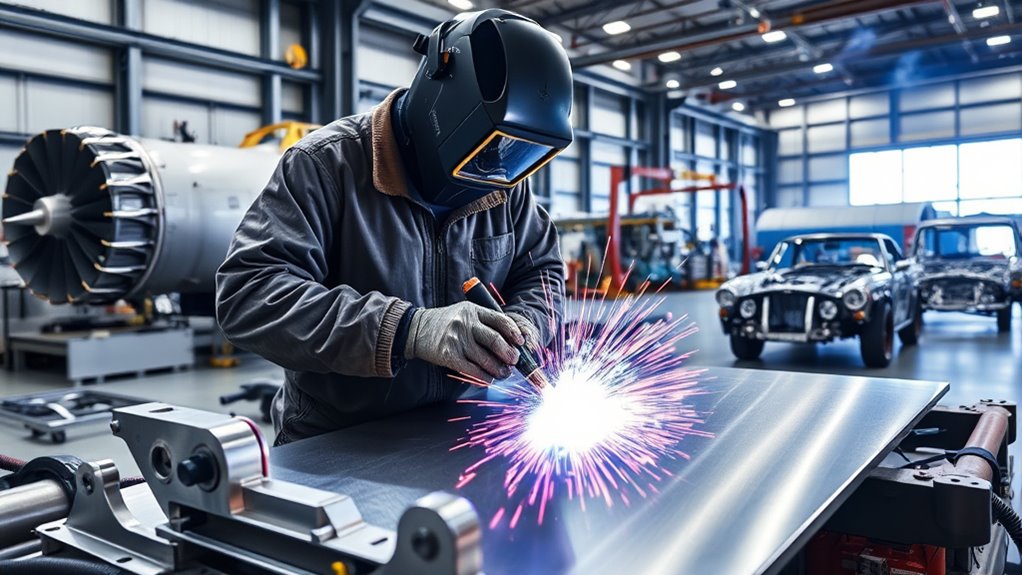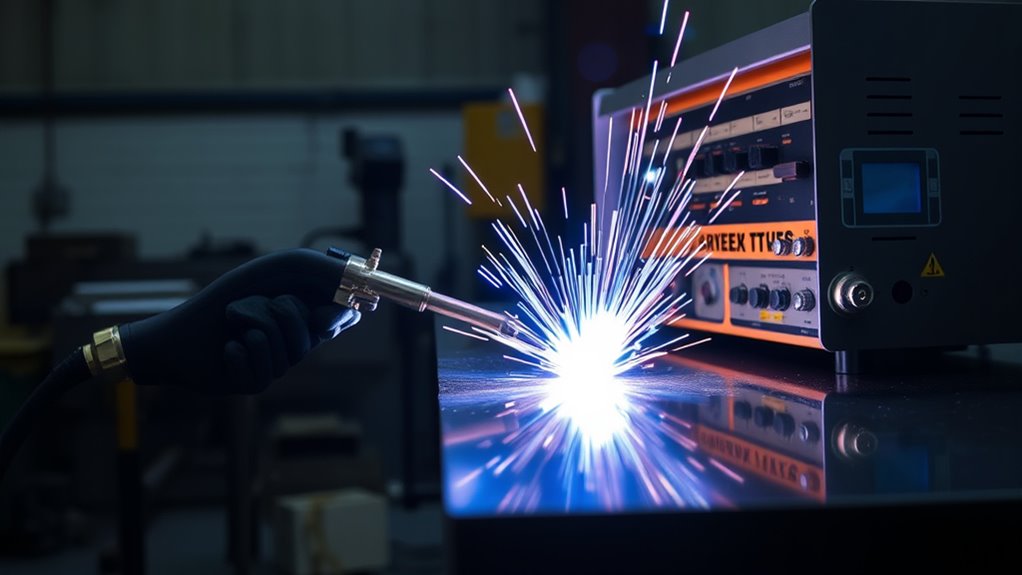
Plasma Transferred Arc welding, often shortened to PTA welding, is a precision surfacing process used to add a wear-resistant or corrosion-resistant layer to metal parts. Instead of only joining two pieces of metal, PTA welding melts a thin layer of the base metal and fuses it with powder filler so the finished coating becomes metallurgically bonded to the part.
Quick Answer
PTA welding is a controlled hardfacing and cladding process that uses a constricted plasma arc to melt metal powder onto a workpiece. It is mainly used to rebuild worn parts or add hard, corrosion-resistant, or heat-resistant coatings with lower dilution than many conventional arc welding methods.
Key Takeaways
- PTA welding is best viewed as a surfacing, hardfacing, and repair process, not just a joining process.
- The torch uses a pilot arc, a transferred main arc, plasma gas, shielding gas, and a controlled powder feed.
- Good results depend on current, travel speed, powder feed rate, gas flow, standoff, surface prep, and heat control.
- PTA is often chosen for valves, drilling tools, crusher parts, turbine components, shafts, screws, and other high-wear parts.
- Fumes, arc radiation, hot metal, powders, gases, and fire hazards make PPE, ventilation, and hot-work controls essential.
Overview of Plasma Transferred Arc Welding
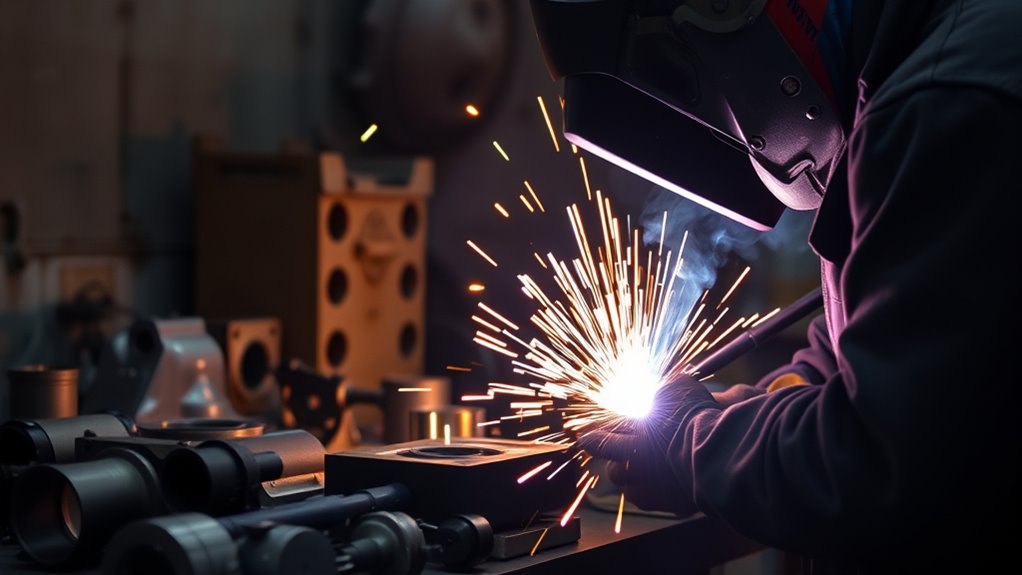
Plasma Transferred Arc welding is a thermal surfacing process that uses a focused arc between a non-consumable tungsten electrode and the workpiece. A plasma gas, often argon, is ionized through the torch nozzle, while shielding gas protects the molten pool from atmospheric contamination. Process references describe plasma arc welding as a constricted-arc process related to TIG, with the arc forced through a fine-bore nozzle for higher energy density and better arc focus.
In PTA welding, the filler material is usually supplied as metal powder. The powder enters the plasma stream, melts, mixes with a shallow layer of base metal, and solidifies as a bonded overlay. This is why PTA is common in hardfacing, cladding, dimensional restoration, and wear protection.
Compared with many manual hardfacing methods, PTA can offer tighter control over bead shape, coating thickness, powder chemistry, and dilution. The goal is not just to deposit metal quickly. The goal is to place the right alloy on the right surface with enough fusion for bond strength and as little base-metal dilution as the application allows.
Key Components and Equipment in PTA Welding
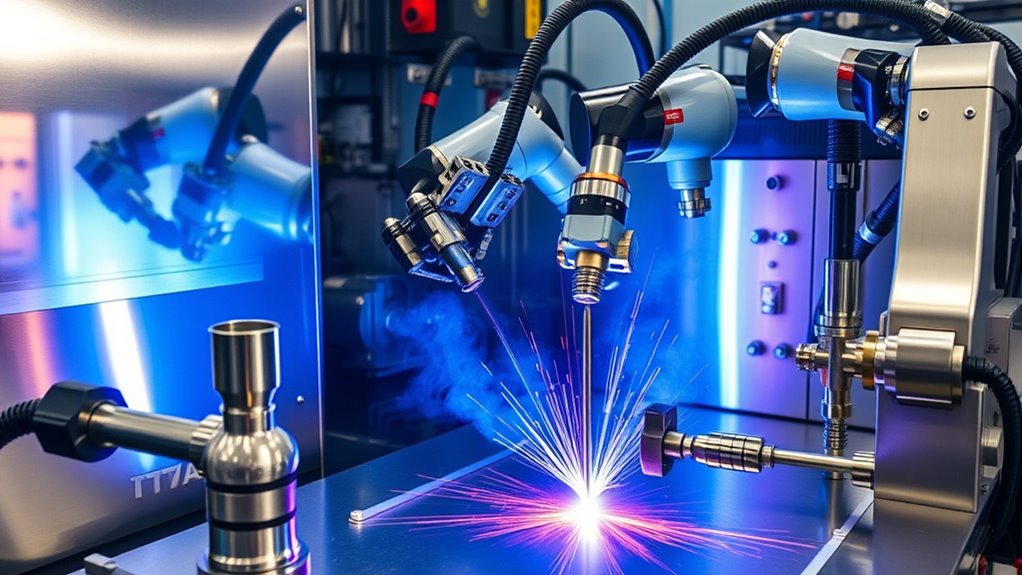
When you look at a PTA welding system, the key parts are the torch, tungsten electrode, constricting nozzle, power source, gas controls, powder feeder, cooling system, and motion control. These parts work together to keep the plasma arc stable and the deposit consistent.
- Non-consumable tungsten electrode: Creates the arc but does not become the filler metal.
- Plasma nozzle: Constricts and focuses the arc so heat can be directed into a small area.
- Pilot arc: Starts between the electrode and nozzle, making arc initiation more stable.
- Transferred main arc: Runs between the electrode and the workpiece, providing the heat used for fusion.
- Powder feeder: Meters metal powder into the plasma stream at a controlled rate.
- Plasma and shielding gases: Plasma gas forms the arc, while shielding gas protects the molten pool.
- Cooling system: Protects the torch, nozzle, and electrode from heat damage.
- Manipulator, turntable, or robot: Holds travel speed and bead overlap steady for repeatable deposits.
Note: PTA welding is usually mechanized or automated because bead overlap, travel speed, powder flow, and arc length must stay consistent. Manual operation is possible on some systems, but repeatable production work normally needs controlled motion.
Products Worth Considering

Powerful Flame Temperature Heat up to 5252°F (2900°C)

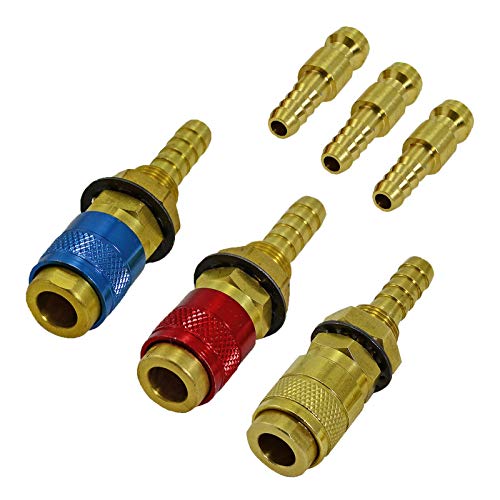
Water-Cooled and Gas Adapter Quick Connector Fitting For PTA DB SR WP 9 17 18 26 TIG Welding Torch
The PTA Welding Process Explained
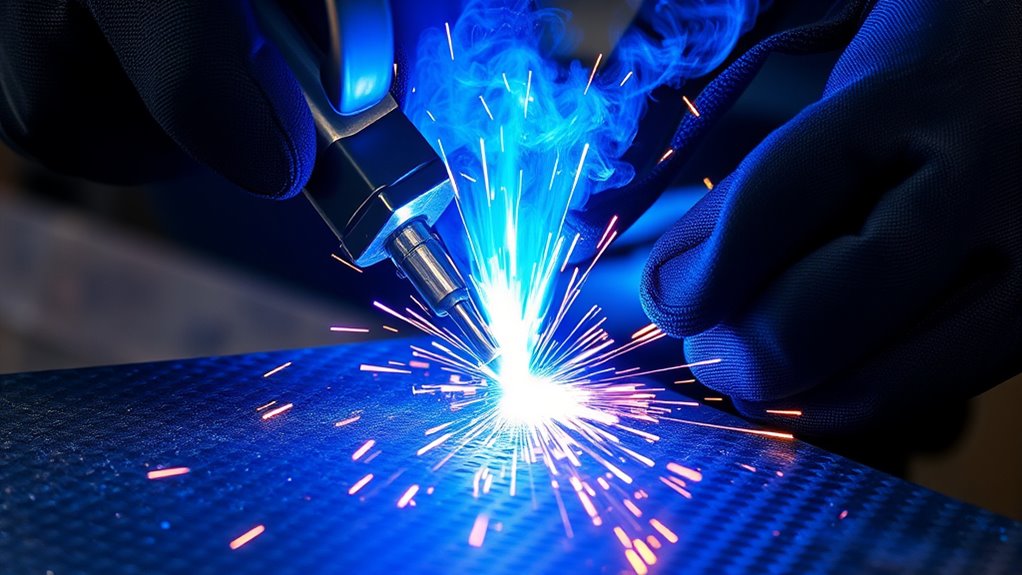
The PTA welding process starts with a clean workpiece and a controlled torch setup. Oil, paint, rust, moisture, and loose scale can cause porosity or poor bonding, so surface preparation matters as much as the machine settings.
- Prepare the surface: Clean, degrease, and remove oxide, paint, or worn material from the deposit area.
- Set the gases: Use the specified plasma, shielding, and carrier gas flows for the torch and alloy.
- Start the pilot arc: The pilot arc forms between the tungsten electrode and the nozzle.
- Transfer the main arc: The arc transfers to the workpiece and creates a controlled molten pool.
- Feed the powder: Alloy powder enters the plasma stream, melts, and joins the molten pool.
- Control bead overlap: The torch or part moves at a programmed speed to build the required layer thickness.
- Cool and inspect: The overlay solidifies, then the part is checked for bead shape, cracks, porosity, dilution, hardness, and final dimensions.
Plasma Arc Formation
PTA welding uses a focused plasma arc generated around a non-consumable tungsten electrode. The torch nozzle constricts the arc, and the ionized gas column carries intense heat to the workpiece. That focused heat is why PTA can make narrow, controlled deposits with a smaller heat-affected zone than many open-arc hardfacing methods.
The pilot arc helps start the process, while the transferred main arc supplies the heat for coating. This separation gives PTA systems better arc-start control than a simple open arc, especially in automated surfacing.
Filler Material Bonding
In PTA welding, the filler material is normally a powdered alloy. The powder may be nickel-based, cobalt-based, iron-based, carbide-bearing, or another specialty blend chosen for the service condition. Once the powder melts into the pool, it fuses with a shallow layer of base metal and solidifies as a metallurgical bond.
The best overlay is not always the hardest one. A crusher part may need abrasion resistance, while a valve seat may need corrosion resistance, hot hardness, and galling resistance. Matching the powder to the real wear mode is more important than chasing a single hardness number.
A PTA overlay should be selected by service condition: abrasion, impact, corrosion, heat, metal-to-metal wear, or a combination of those loads.
Important PTA Welding Variables
PTA welding quality depends on a group of linked variables. Changing one setting often changes bead shape, dilution, hardness, and defect risk. The table below shows the settings that matter most.
| Variable | What It Controls | Common Problem If Wrong |
|---|---|---|
| Current | Heat input, penetration, and dilution | Too high: excess dilution or distortion; too low: weak fusion |
| Travel speed | Bead width, layer thickness, and heat input | Too fast: lack of fusion; too slow: overheating |
| Powder feed rate | Deposit size and alloy delivery | Too high: unmelted powder or porosity; too low: thin deposit |
| Gas flow | Arc stability and shielding | Poor shielding, oxidation, turbulence, or porosity |
| Standoff | Arc focus and powder capture | Arc instability, poor bead shape, or low powder efficiency |
| Preheat and interpass temperature | Crack risk and thermal stress | Cracking, excess hardness, or distortion |
Differences Between PTA Welding and Other Welding Techniques
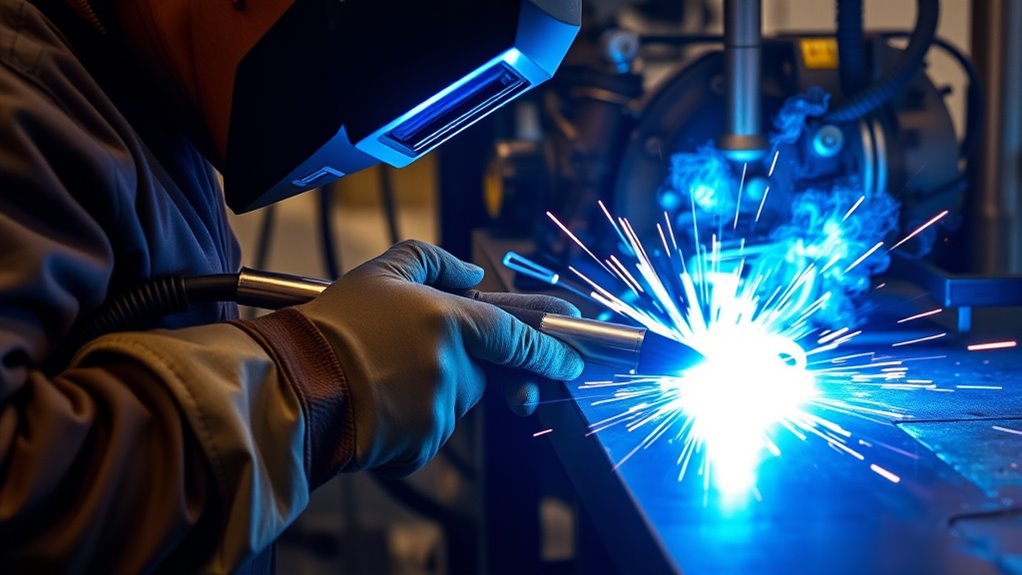
PTA welding overlaps with TIG, plasma arc welding, laser cladding, thermal spray, and hardfacing, but it serves a specific purpose. It is usually chosen when a part needs a bonded overlay with controlled chemistry, controlled thickness, and lower dilution than many open-arc hardfacing methods.
| Process | Best For | Main Tradeoff |
|---|---|---|
| PTA welding | Controlled hardfacing, cladding, and repair overlays | Higher equipment cost and procedure control |
| TIG welding | Precise joining and small repairs | Slower deposition and more operator dependence |
| MIG/FCAW hardfacing | Large areas and higher deposition work | Usually more dilution and more post-weld cleanup |
| Laser cladding | Very low heat input and precise deposits | Higher capital cost and stricter setup needs |
| Thermal spray | Coatings with low substrate heating | Bonding is often mechanical unless followed by fusing |
The key difference is bond type and heat input. PTA welding creates a fused overlay, while many thermal spray processes rely mainly on mechanical bonding. Compared with TIG, PTA is more specialized for powder-fed surfacing. Compared with laser cladding, PTA is often less expensive to implement but normally has a wider heat input pattern.
Applications of Plasma Transferred Arc Welding Across Industries
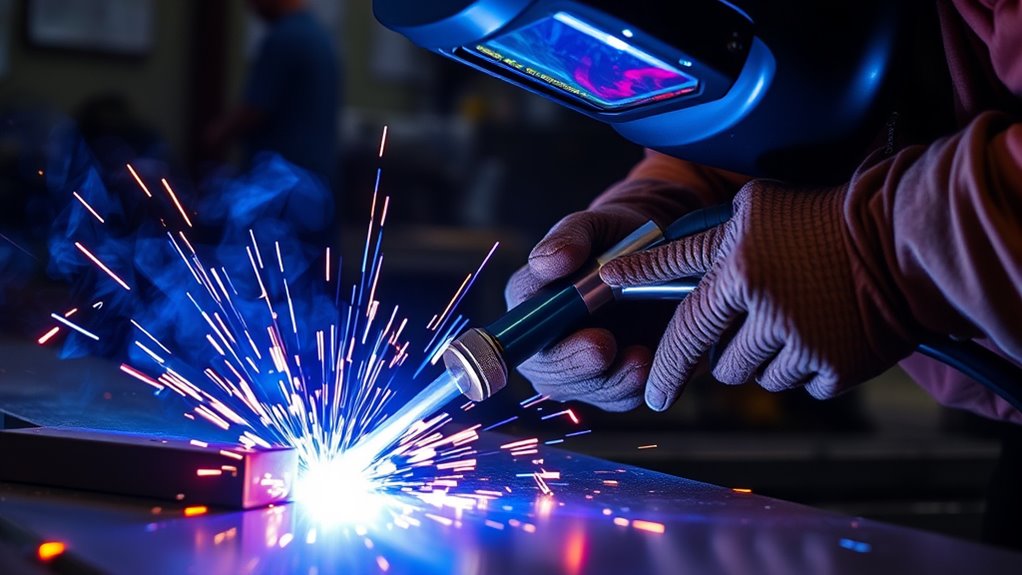
PTA welding is most useful where a part is too valuable to discard or where a surface must resist wear, corrosion, heat, or metal-to-metal contact. You will often see it in mining, oil and gas, power generation, agriculture, extrusion, valve manufacturing, and repair shops that rebuild industrial components.
Mining Equipment Enhancement
Mining parts face abrasion, impact, and dirt-packed service conditions. PTA hardfacing can be used on drill bits, crusher parts, wear plates, cutting edges, and other high-wear surfaces. The overlay alloy may include carbides or other hard phases when abrasion resistance is the main goal.
For mining work, toughness matters too. A coating that is extremely hard but brittle may crack under impact. The best procedure balances deposit hardness, crack resistance, bead pattern, base-metal strength, and final machining requirements.
Oil and Gas Protection
In oil and gas work, PTA welding is often used on valves, seats, sleeves, pump parts, drilling tools, and sealing surfaces. These parts may face abrasion, corrosion, pressure, heat, sour service, or repeated sliding contact.
Cobalt-based, nickel-based, and iron-based powders can all be used depending on the service environment. For example, a valve seat may need galling resistance and hot hardness, while a pump sleeve may need corrosion resistance and dimensional restoration.
Power Generation and Aerospace Repair
PTA welding can also be used for turbine, blade, shaft, and wear-surface repair when the procedure is qualified for the material and service. These applications demand strict process control, documentation, inspection, and often approval from the equipment owner or governing standard.
Pro Tip: Before selecting a PTA powder, define the failure mode first. Abrasion, corrosion, galling, impact, heat, and erosion do not call for the same alloy.
Advantages of Using PTA Welding for Coating and Repair
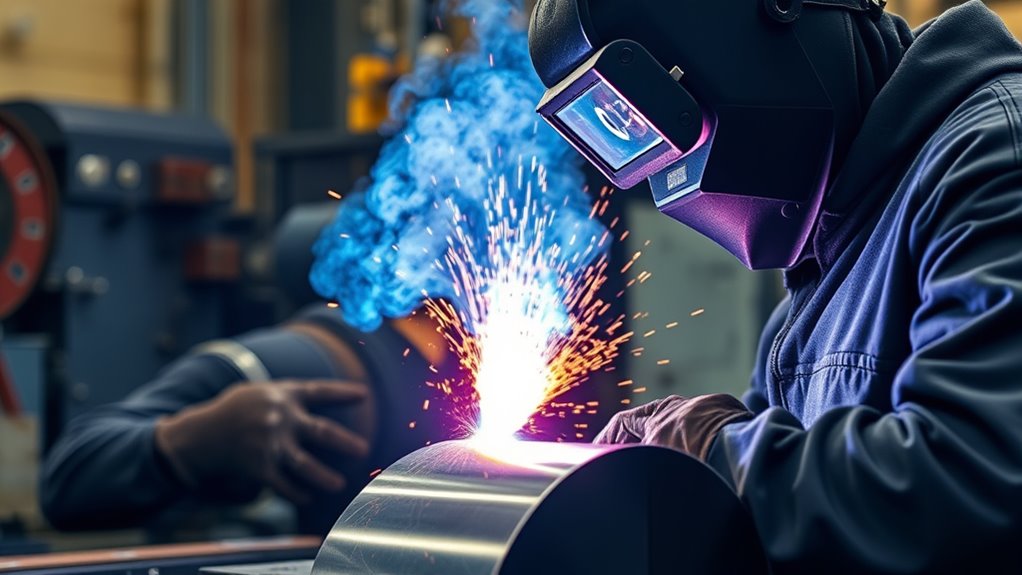
PTA welding stands out because it combines a strong fused bond with controlled powder chemistry. When the setup is correct, you can rebuild a worn surface, add a protective layer, or improve the surface properties of a part without replacing the whole component.
- Strong metallurgical bond: The overlay fuses to the base metal instead of sitting loosely on top.
- Controlled dilution: PTA can limit how much base metal mixes into the deposit compared with many open-arc hardfacing methods.
- Repeatable deposit quality: Automated travel and controlled powder feed improve consistency.
- Flexible alloy choices: Powder feed allows many iron-, nickel-, cobalt-, and carbide-bearing alloys.
- Useful for repair: Worn shafts, seats, blades, screws, and tools can often be restored to size.
- Less post-processing in some jobs: A controlled bead can reduce grinding or machining time.
Industrial PTA systems can achieve high deposition rates, but the exact rate depends on the torch, power source, powder type, part geometry, and procedure. Hardness also depends on the alloy and cooling conditions, so it should be specified as a qualified requirement, not treated as a universal PTA result.
Limitations and Challenges in PTA Welding
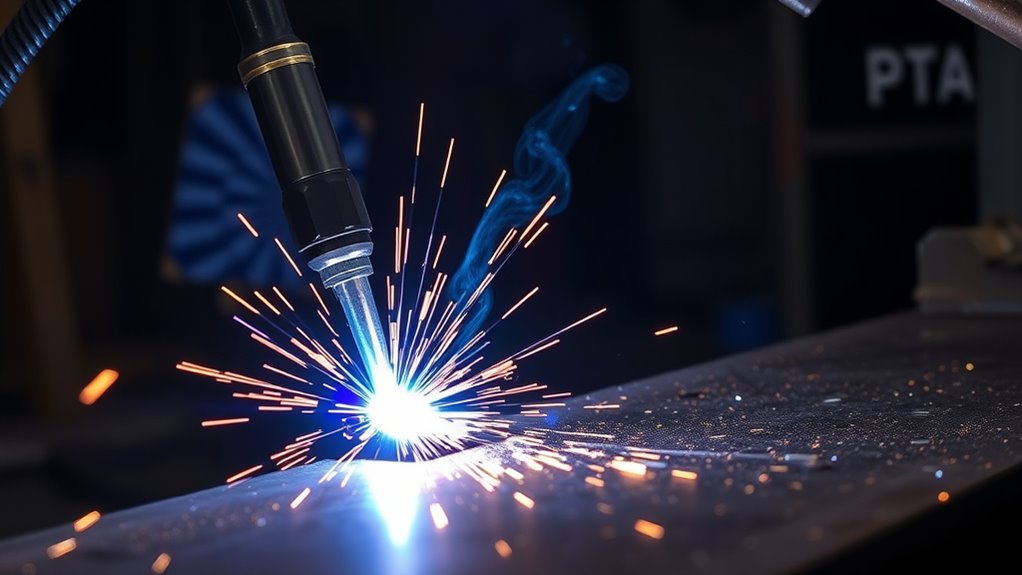
PTA welding is powerful, but it is not the right process for every repair. The equipment is more complex than basic MIG or stick hardfacing, and the work requires trained operators, qualified procedures, and careful setup.
| Limitation | Details | Impact |
|---|---|---|
| High Initial Cost | Power source, torch, cooling, powder feeder, controls, and motion system add cost | Harder to justify for low-volume repairs |
| Complex Setup | Gas flow, powder feed, current, standoff, and travel speed must work together | Requires procedure development and trained operators |
| Material Limits | Some base metals crack, distort, or dilute the deposit too much | May require preheat, alternative alloy, or another process |
| Heat Management | The arc is concentrated but still adds heat to the part | Distortion, cracking, or property changes can occur |
| Maintenance Demand | Nozzles, electrodes, powder lines, gas lines, and cooling circuits need inspection | Poor maintenance leads to unstable arcs and inconsistent deposits |
Common PTA Welding Defects and Fixes
Most PTA welding defects trace back to contamination, unstable gas shielding, wrong heat input, incorrect powder feed, or poor part preparation. Troubleshooting should start with the simplest checks before changing the full procedure.
- Porosity: Check for moisture, oil, rust, dirty powder, poor shielding, leaks, or too much powder feed.
- Cracking: Review preheat, interpass temperature, alloy choice, cooling rate, and base-metal hardenability.
- Lack of fusion: Increase heat input within the procedure limit, reduce travel speed, improve surface prep, or adjust standoff.
- Excess dilution: Reduce current, increase travel speed, lower heat input, or revise bead overlap.
- Uneven bead height: Check powder flow, carrier gas, torch angle, travel speed, and part runout.
- Oxidized deposit: Verify shielding gas flow, torch coverage, leaks, and gas purity.
Inspection and Quality Control After PTA Welding
PTA overlays should be inspected before the part returns to service. The exact inspection plan depends on the part, industry, and risk level, but common checks include:
- Visual inspection: Look for cracks, undercut, surface porosity, lack of coverage, and uneven bead overlap.
- Dimensional inspection: Confirm deposit thickness and final machined size.
- Hardness testing: Verify that the overlay meets the required hardness range for the chosen alloy.
- Dye penetrant testing: Check for surface-breaking cracks on critical parts.
- Macroetch or cross-section testing: Confirm fusion, dilution, and overlay thickness during procedure qualification.
- Service-specific testing: Add corrosion, wear, bend, or impact checks when the application requires them.
Safety Considerations in Plasma Transferred Arc Welding
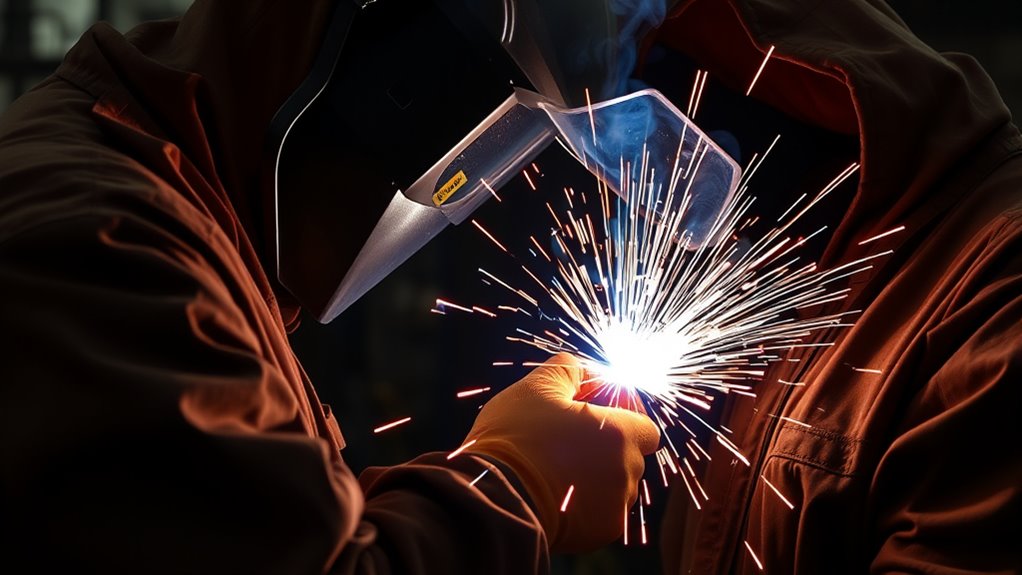
PTA welding is an arc welding process, so it brings serious safety hazards: intense light, ultraviolet and infrared radiation, hot metal, sparks, fumes, metal powders, shielding gases, electrical energy, and fire risk. Safety controls should be built into the procedure, not added after a problem appears.
Warning: Do not weld near combustible materials, uncleaned tanks, solvent residue, or flammable vapors. Treat PTA welding as hot work and follow your shop, employer, and local safety requirements before striking an arc.
- Wear arc-rated eye and face protection: Use a welding helmet or hand shield with the correct filter shade, and protect helpers from arc exposure.
- Use flame-resistant clothing: Cover skin with welding gloves, jacket, pants, and closed-toe leather boots or approved safety footwear.
- Control fumes and gases: Use local exhaust ventilation or general ventilation that keeps exposures within legal limits.
- Review SDS documents: Check the safety data sheets for powders, filler materials, coatings, and cleaning chemicals.
- Protect against fire: Move combustibles away, shield fixed hazards, keep suitable extinguishing equipment ready, and use a fire watch when required.
- Handle powders carefully: Keep containers closed, avoid dust clouds, prevent contamination, and use respiratory protection when the hazard assessment requires it.
- Inspect gas lines and cooling systems: Leaks, blocked cooling, and damaged hoses can create unsafe conditions and poor weld quality.
OSHA’s welding rules require helmets or hand shields for arc welding operations, suitable protection for helpers, and ventilation controls to keep toxic fumes, gases, or dusts below allowed exposure limits. The Canadian Centre for Occupational Health and Safety also lists welding gas hazards such as asphyxiation, fire or explosion, and toxicity, and recommends ventilation plus local exhaust near the plume source.
Frequently Asked Questions
How does PTA welding affect the microstructure of materials?
PTA welding can refine or change the surface microstructure because the overlay melts, mixes with a shallow amount of base metal, and solidifies quickly. The final structure depends on the powder alloy, heat input, dilution, cooling rate, and any preheat or post-weld heat treatment.
What are common troubleshooting tips for PTA welding defects?
Start with surface cleanliness, powder condition, gas flow, torch standoff, travel speed, and current. Porosity often points to moisture, contamination, or shielding problems. Cracking often points to alloy mismatch, poor preheat control, high restraint, or cooling that is too fast.
How does PTA welding impact the environment?
PTA welding can reduce waste when it rebuilds worn parts instead of replacing them. However, it still uses electrical energy, shielding gases, metal powders, and fume-control equipment. Good powder handling, ventilation, filter maintenance, and responsible waste disposal are part of safe operation.
What are the maintenance requirements for PTA welding equipment?
Inspect the tungsten electrode, nozzle, torch cooling, powder feeder, powder hoses, gas lines, ground connection, and motion system. Replace worn nozzles and electrodes before they cause arc instability. Keep powder dry and clean, and calibrate powder feed and gas flow as part of routine maintenance.
How does operator skill level influence PTA welding quality?
Operator skill affects setup, surface preparation, parameter selection, troubleshooting, and inspection. Even automated PTA systems need trained operators who understand dilution, bead overlap, powder flow, shielding, heat control, and defect causes.
Is PTA welding the same as TIG welding?
No. PTA welding and TIG both use a non-consumable tungsten electrode, but PTA uses a constricted plasma arc and is commonly set up for powder-fed surfacing. TIG is more often used for joining, small repairs, and manual precision welding.
When should you choose PTA welding over thermal spray?
Choose PTA when you need a fused metallurgical bond, rebuild thickness, or a hardfaced surface that can handle heavy industrial service. Thermal spray may be better when low substrate heating is more important or when a mechanically bonded coating is acceptable.
Conclusion
Plasma Transferred Arc welding is a strong choice when you need a controlled, wear-resistant, corrosion-resistant, or heat-resistant overlay on a valuable metal part. Its main strengths are a focused plasma arc, powder-fed alloy control, metallurgical bonding, and repeatable automated deposits. Its main limits are cost, setup complexity, heat management, and the need for trained operators. When the alloy, procedure, safety controls, and inspection plan are matched to the job, PTA welding can extend component life and reduce replacement costs in demanding industrial service.
Sources
- Plasma arc welding overview — supports constricted arc, tungsten electrode, pilot arc, gas flow, and plasma process basics.
- Hardfacing overview — supports the use of hardfacing to restore or improve wear resistance on metal parts.
- Plasma powder surfacing / PTA overview — supports low dilution, metallurgical bonding, powder filler, and PTA surfacing context.
- OSHA 1910.252 Welding, Cutting, and Brazing — supports fire prevention, eye protection, ventilation, and fume-control safety requirements.
- CCOHS Welding Fumes and Gases — supports welding gas and fume hazards, ventilation, local exhaust, and respiratory protection guidance.