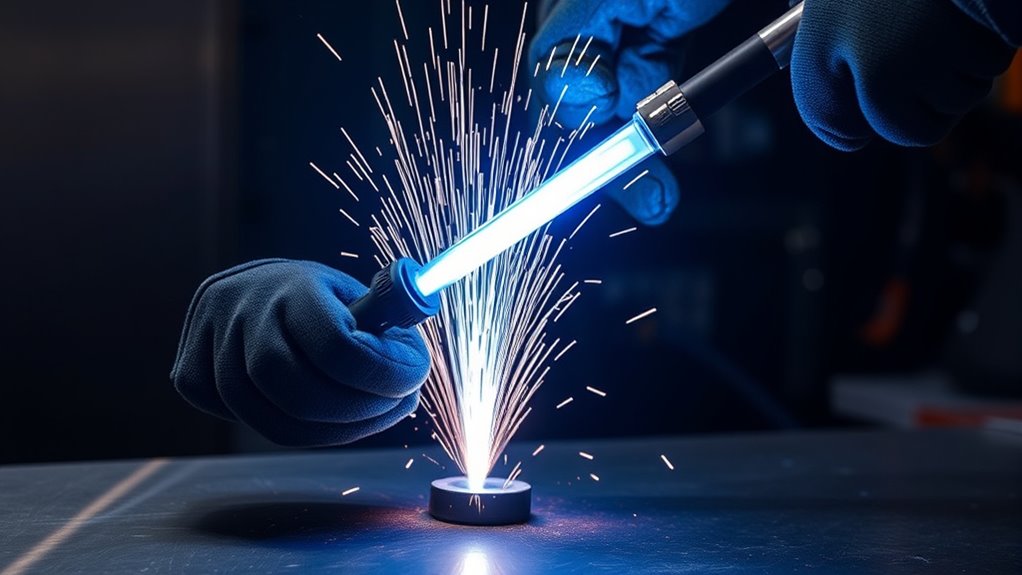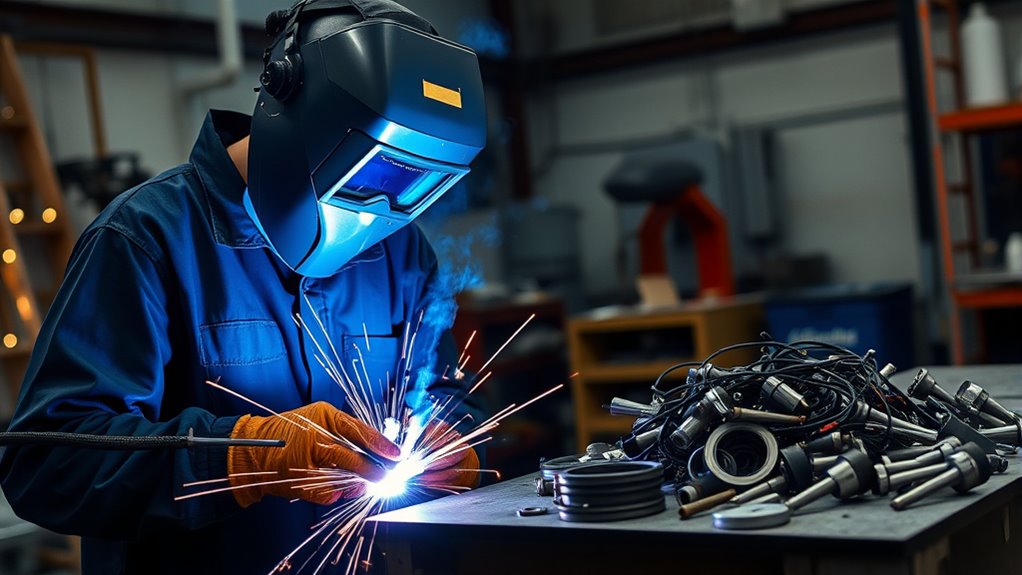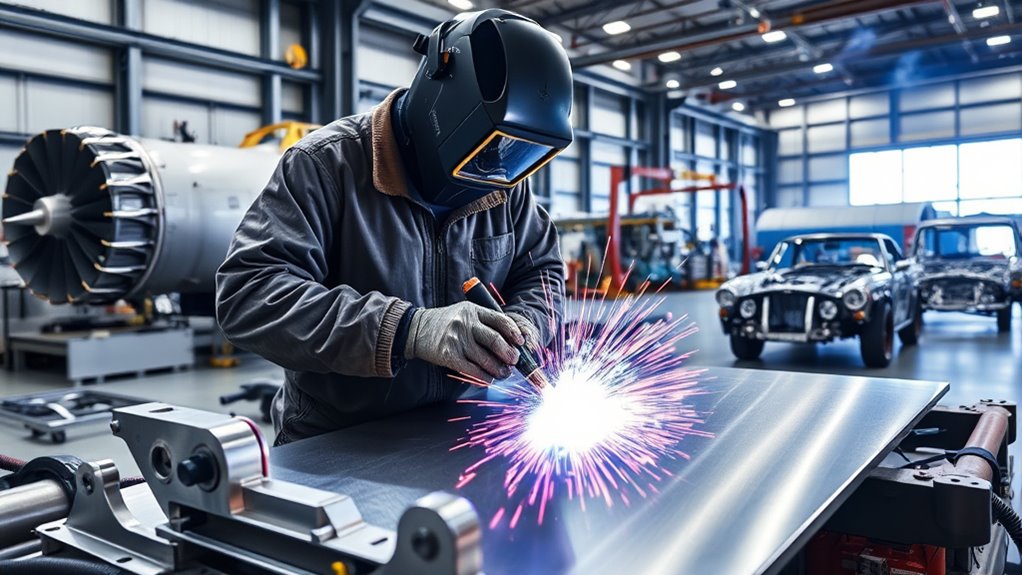
Plasma Arc Welding (PAW) is used when you need a narrow, clean, repeatable weld with tight heat control. It is most useful for aerospace parts, medical devices, electronics, nuclear components, thin stainless steel, titanium, nickel alloys, and automated production where distortion, contamination, and inconsistent penetration can cause failure.
Quick Answer
Plasma arc welding uses a constricted plasma arc to make precise, deep, high-quality welds with a smaller heat-affected zone than many conventional arc processes. It is best for thin or critical parts, exotic alloys, and automated work. It is not usually the best choice for low-cost field repair, dirty metal, or high-deposition structural welding.
Key Takeaways
- PAW is a precision arc welding process that uses a tungsten electrode, plasma gas, shielding gas, and a constricting nozzle.
- It works especially well on stainless steel, titanium, nickel alloys, copper alloys, and thin high-value parts.
- The main benefits are narrow welds, deep penetration, low distortion, repeatability, and strong automation compatibility.
- The main drawbacks are higher equipment cost, careful setup, strict cleanliness, skilled operators, and ongoing torch maintenance.
Understanding Plasma Arc Welding

Plasma Arc Welding is a non-consumable electrode process related to TIG welding, but the arc is squeezed through a small, water-cooled nozzle. That constricted arc creates a narrow, focused heat source. The result is a weld that can be deep, clean, and repeatable when the joint, gas flow, current, and travel speed are controlled correctly.
You will usually see PAW in work where weld quality matters more than simple setup. Examples include turbine parts, sensor housings, bellows, surgical tools, battery and electronics components, precision tubing, and stainless or nickel-alloy assemblies.
The process can be run manually, but its strongest value is often in mechanized or robotic systems. Once the weld procedure is qualified, PAW can repeat the same weld profile across long runs with less variation than a hand-guided arc.
Note: PAW is not a shortcut around welding procedure qualification. Critical aerospace, pressure, medical, or nuclear parts still need qualified procedures, trained operators, inspection, and material-specific controls.
Core Components of Plasma Arc Welding
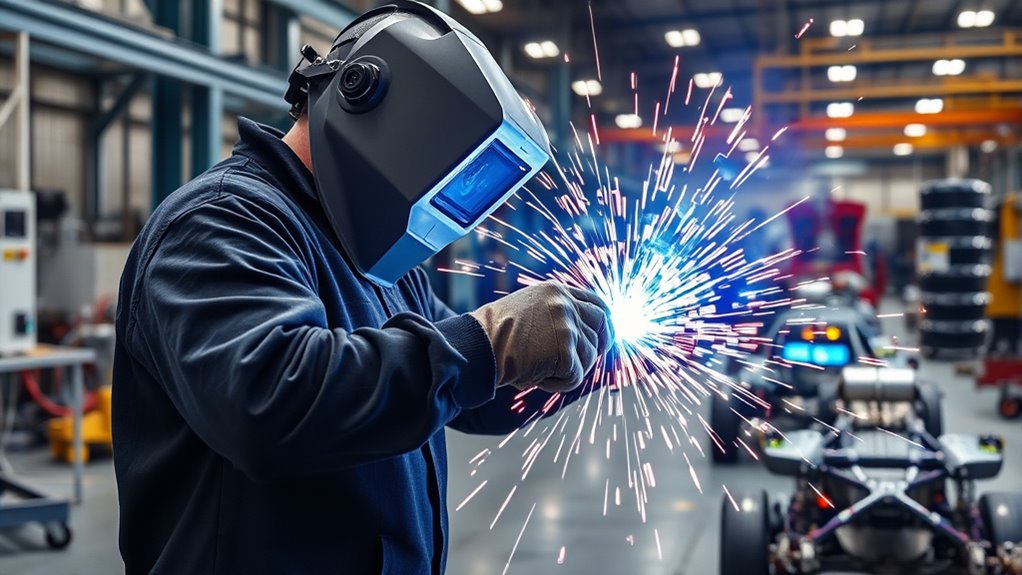
A plasma arc welding system has more parts than a basic TIG setup. Each part must work together because small changes in arc length, gas flow, nozzle condition, or cooling can change the weld profile.
Essential Plasma Welding Equipment
- Plasma torch: Holds the tungsten electrode and constricting nozzle. The nozzle focuses the arc and helps shape penetration.
- Tungsten electrode: Creates the arc. Electrode size, tip shape, and alignment affect arc stability.
- Constant-current power supply: Provides stable welding current and often high-frequency starting for the pilot arc.
- Plasma gas: Passes through the nozzle and becomes ionized to form the plasma arc. Argon is common, but gas choice depends on material and procedure.
- Shielding gas: Protects the molten weld pool and hot metal from oxygen and nitrogen contamination.
- Water-cooling system: Keeps the torch and nozzle from overheating, especially at higher current levels.
- Control console: Lets you set current, slope, gas timing, pilot arc, travel speed, and other parameters.
- Fixture or automation system: Holds the joint in position and controls movement for repeatable welds.
Key Plasma Torch Features
The torch is the heart of PAW. The tungsten electrode sits inside the torch body instead of projecting into the open weld area like a typical TIG electrode. The plasma gas flows around the electrode, passes through the nozzle, and forms a tight plasma stream.
The nozzle orifice, electrode setback, gas flow, and cooling condition all matter. A worn nozzle can widen the arc, reduce penetration control, and increase the risk of porosity or undercut. For precision production, torch maintenance is not optional.
Pro Tip: If a PAW weld suddenly gets wider, dirtier, or less consistent, inspect the nozzle, electrode alignment, gas flow, and cooling before changing the welding schedule.
The Plasma Welding Process Explained
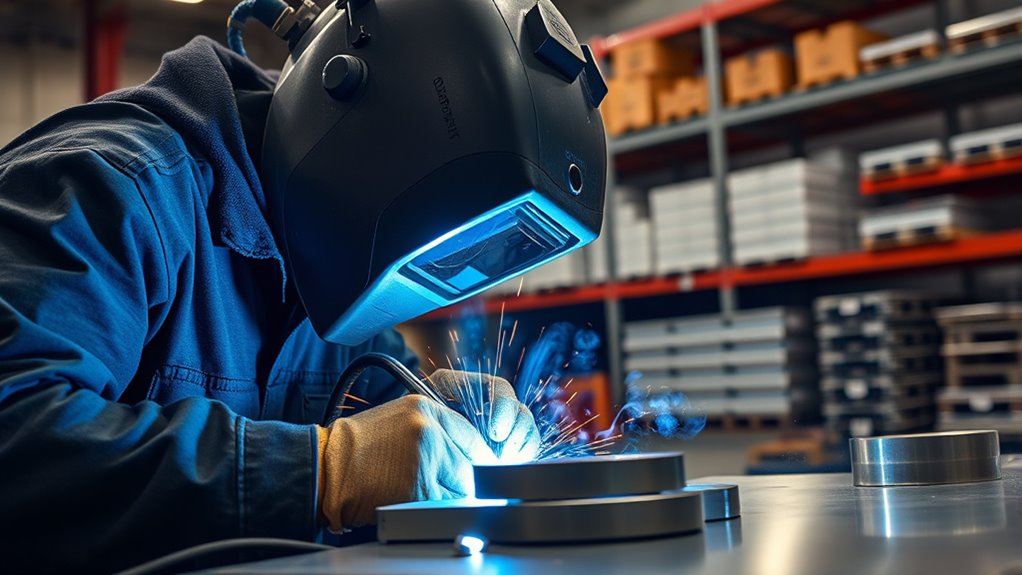
The plasma welding process usually starts with a low-current pilot arc inside the torch. Once the torch is positioned near the workpiece, the main arc transfers to the joint. The constricted arc concentrates heat into a smaller area, which helps PAW make narrow welds with strong penetration.
The operator or automated system controls several variables at the same time: current, travel speed, torch standoff, plasma gas flow, shielding gas flow, nozzle size, electrode condition, joint fit-up, and cooling. For reactive materials such as titanium, trailing shields or back purging may also be needed to protect the hot metal as it cools.
PAW is often grouped into three operating modes. The exact ranges vary by machine, torch, material, and welding procedure, but the table below gives a practical overview.
| PAW Mode | Typical Use | Why It Matters |
|---|---|---|
| Microplasma | Foils, bellows, sensors, thin sheet, small medical or electronic parts | Uses very low current for fine welds with minimal distortion. |
| Melt-in or medium-current PAW | Stainless tubing, small pressure parts, thin-to-medium sheet | Gives stable fusion welds where TIG may be slower or less repeatable. |
| Keyhole PAW | Thicker sections that need deep, narrow penetration | The plasma jet opens a small keyhole through the joint, allowing deep penetration with fewer passes when the setup is correct. |
Key Advantages of Plasma Arc Welding
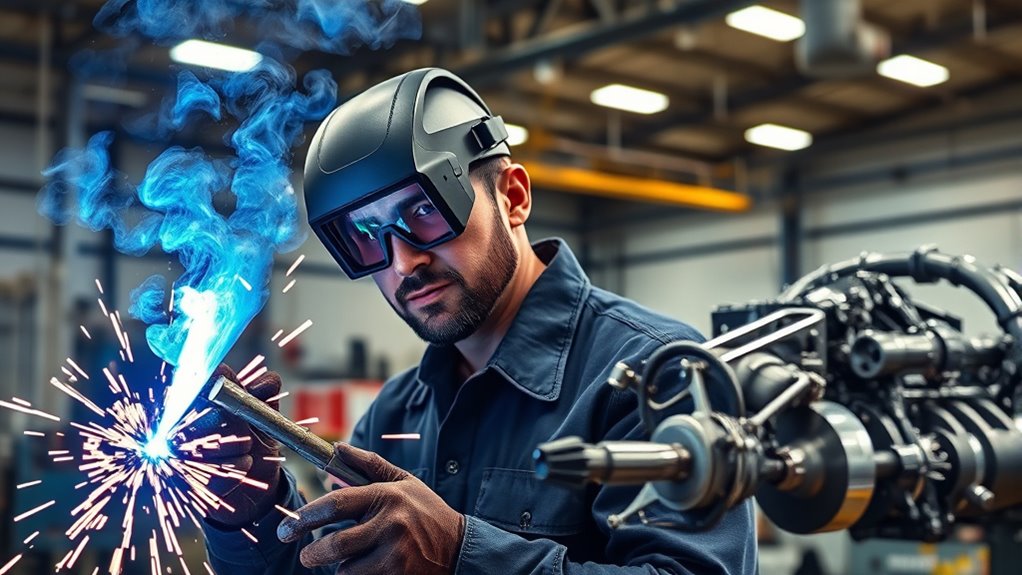
PAW is chosen because it combines a stable arc with a narrow heat source. That combination helps you control penetration, reduce distortion, and repeat the same weld in production.
Precision and Control
The focused plasma arc gives you tight control over where heat enters the part. This is useful when the weld must stay narrow, when the part is thin, or when nearby features cannot tolerate much heat.
- Narrow weld profile: Helps reduce cleanup and finish work.
- Smaller heat-affected zone: Helps limit distortion and property changes near the weld.
- Stable arc: Helps automated systems repeat the same weld path.
- Good standoff tolerance: PAW can be more stable than TIG when minor torch-distance variation occurs, although setup still matters.
Deep Penetration Capability
In keyhole mode, PAW can produce deep, narrow welds with fewer passes than some conventional arc methods. This can reduce heat input and cycle time when the joint design, material thickness, and fixture allow it.
This does not mean PAW is always deeper than laser, electron beam, or every TIG setup. Penetration depends on power, speed, material, joint design, and procedure. The safer way to compare processes is to test and qualify the weld for the actual part.
Limitations to Consider in Plasma Welding
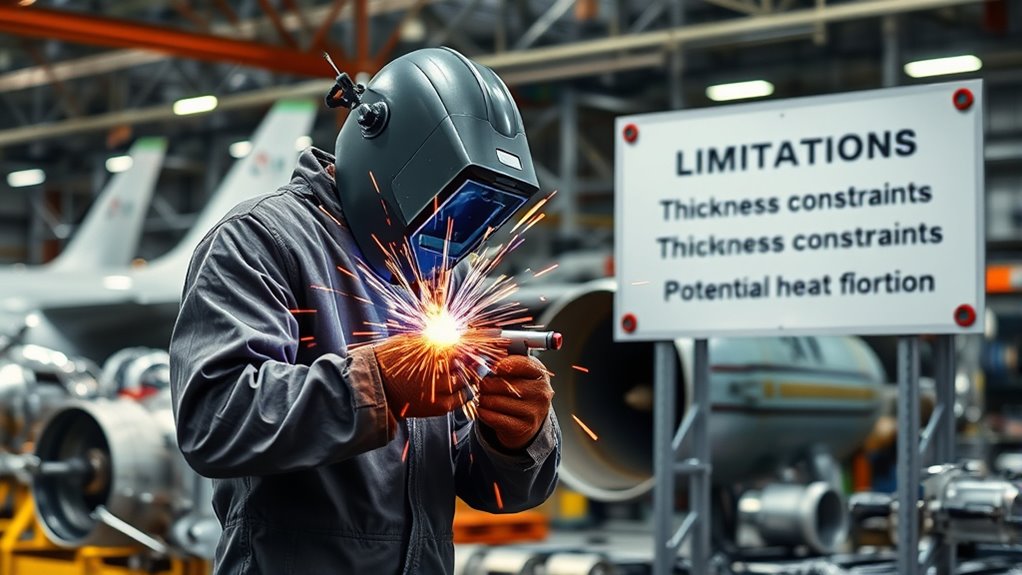
Although plasma arc welding can produce excellent welds, it is not the right process for every shop or every job. Its biggest limitation is complexity. A PAW setup costs more than a basic TIG or MIG setup, and the process is less forgiving of poor joint fit-up, dirty metal, weak shielding, or worn torch parts.
Warning: PAW creates intense arc radiation, heat, fumes, and hot-work fire risks. Use the correct welding helmet shade, gloves, flame-resistant clothing, local ventilation when needed, and a clean fire-safe work area. Follow OSHA rules, the equipment manual, and your qualified welding procedure.
Consider these limits before choosing PAW:
- Higher startup cost: The torch, power supply, control console, cooling unit, gas system, and automation can be expensive.
- More setup time: Nozzle size, gas flow, electrode setback, standoff, and travel speed must be dialed in.
- Operator training: PAW requires a strong understanding of arc behavior, shielding, fixturing, and inspection.
- Cleanliness sensitivity: Oil, oxide, moisture, and poor shielding can cause porosity, discoloration, or weak welds.
- Maintenance demand: Nozzles, electrodes, seals, cables, and cooling circuits need regular inspection.
- Less ideal for rough field work: Dirty, rusty, windy, or poorly fitted joints usually favor another welding process.
Ideal Materials for Plasma Welding
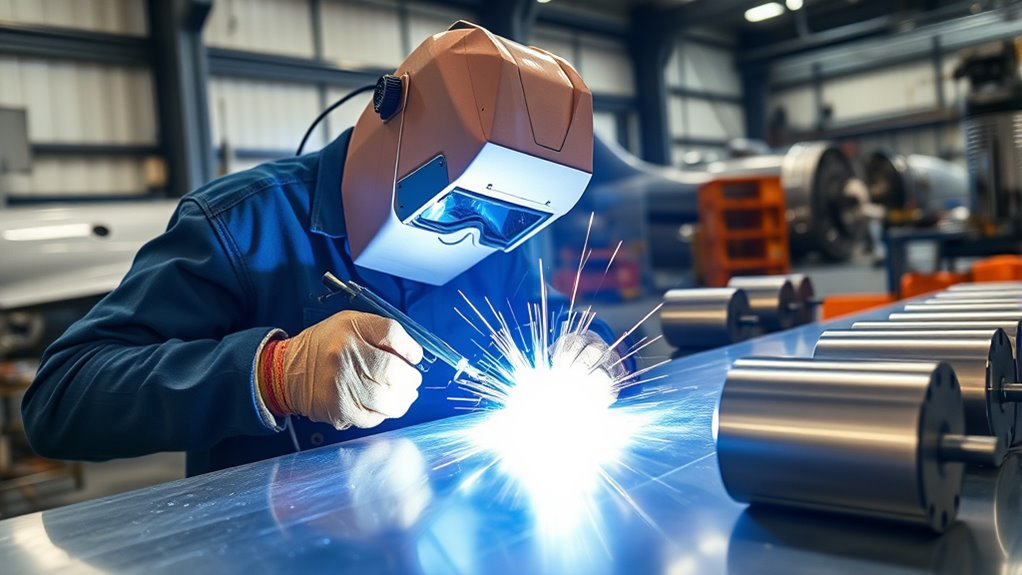
PAW is most valuable on materials that benefit from clean shielding, concentrated heat, and repeatable penetration. It can be used on many metals that can be TIG welded, but the best fit depends on the part design and weld requirement.
| Material | Common PAW Use | Key Caution |
|---|---|---|
| Stainless steel | Tubing, tanks, hygienic parts, precision housings | Use clean shielding and control heat tint if corrosion resistance matters. |
| Titanium | Aerospace, medical implants, lightweight high-strength parts | Needs excellent shielding, often with trailing gas and back purging. |
| Nickel alloys | Turbine, chemical, heat-resistant, and corrosion-resistant parts | Procedure control is critical to avoid cracking or loss of properties. |
| Copper and copper alloys | Electrical and heat-transfer parts | High thermal conductivity may require careful preheat and power control. |
| Thin sheet and foil | Bellows, sensors, electronics, small sealed parts | Fixturing and heat control decide whether the part warps or stays flat. |
Industries Benefiting From Plasma Welding
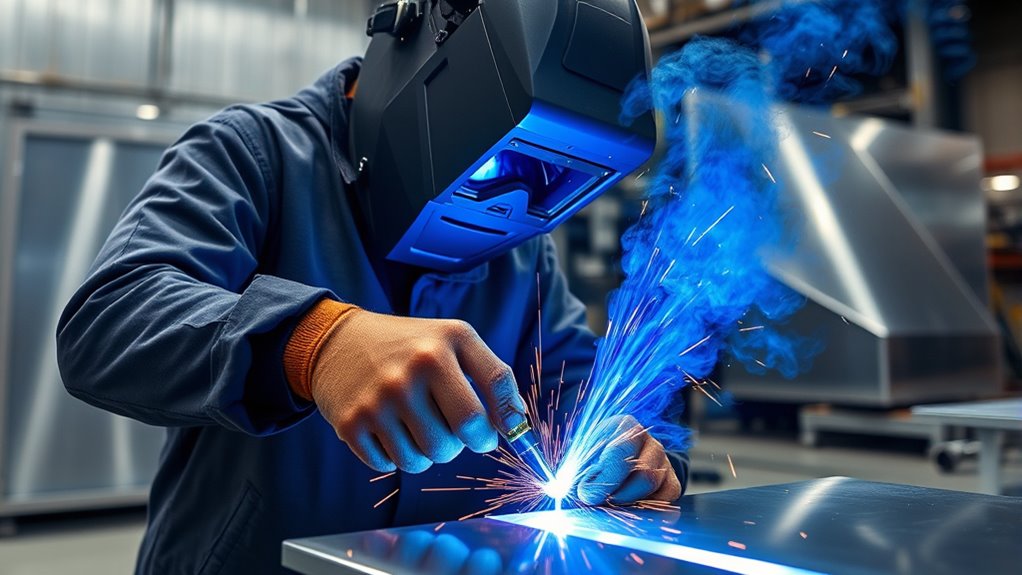
Plasma arc welding is most valuable in industries where a failed weld can be costly, unsafe, or hard to repair. It is also useful when a shop needs the same weld shape repeated across many parts.
Aerospace Manufacturing Excellence
Aerospace parts often use stainless steel, titanium, and nickel alloys. These materials can be sensitive to contamination and heat distortion. PAW helps by delivering a controlled, narrow heat source that can be paired with fixtures, purge systems, and automated travel.
Typical aerospace uses include small engine components, fuel-system parts, thin-walled assemblies, and precision brackets. The process is not chosen because it is simple. It is chosen because it can meet tight weld-quality requirements when the procedure is proven.
Medical Device Precision
Medical device manufacturers use precision welding for tools, implants, tubes, and sealed housings. PAW can help because it produces clean welds with limited heat spread. That matters when the part is small, thin, or made from a biocompatible alloy such as stainless steel or titanium.
For medical work, the weld is only one part of the quality system. Surface finish, cleaning, traceability, material certification, inspection, and validation also matter.
Electronics Production Efficiency
Electronics and sensor manufacturers use micro-welding for tabs, housings, terminals, thin foils, and small sealed components. PAW can be useful where a conventional arc is too wide or where manual welding creates too much variation.
Automation improves the value of PAW in electronics because it controls travel path, heat input, and timing. That helps reduce scrap and keeps welds consistent from part to part.
Comparing Plasma Welding With Other Methods
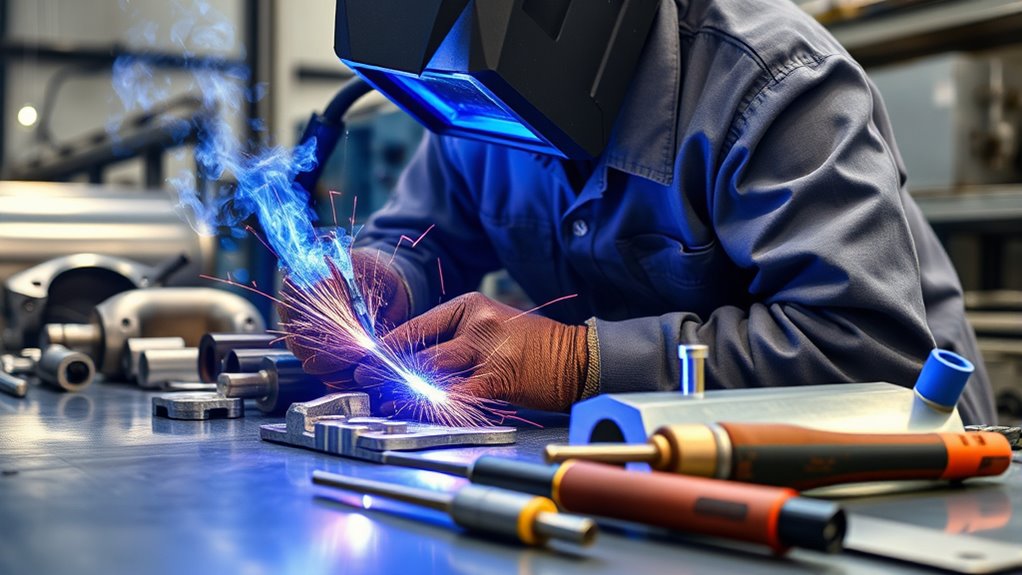
PAW is not automatically better than TIG, MIG, laser, or resistance welding. It is better when the job needs a focused arc, high repeatability, deep narrow penetration, or strong automation control. For simpler jobs, another process may be faster or cheaper.
| Method | Where It Often Beats PAW | Where PAW Often Wins |
|---|---|---|
| TIG welding | Lower cost, simpler setup, easier for custom manual work | Narrower arc, better repeatability in automation, deeper penetration in keyhole mode |
| MIG welding | High deposition, faster structural fabrication, lower operator setup burden | Cleaner precision welds on thin or high-value parts with less spatter |
| Laser welding | Very high speed, tiny heat input, excellent for suitable automated joints | Often simpler than laser systems and useful where arc-based filler or broader process tolerance is needed |
| Resistance welding | Fast spot or seam welds on overlapping sheet metal | Better for open joints, edge welds, tubing, and parts that need visible fusion control |
| Electron beam welding | Extremely deep, narrow welds in vacuum for specialized parts | No vacuum chamber required, easier integration for many production lines |
Products Worth Considering

9-IN-1 WELDER:ARCCAPTAIN MIG205MP MIG welder has 9 welding modes: Gas MIG/Gasless MIG/Cut/DC HF TIG/DC Lift TIG/MMA Stick/Clean/Spot Welding/Spool Gun Aluminum Welding (Need to buy extra spool gun). This multiprocess welder perfectly handles all your needs—from home DIY and garage projects to outdoor repairs, farm equipment, and road maintenance and repairs.

2 IN 1 Multi-functional Design:FEMEROL integrates 60A plasma cutter and 200A MMA stick welder in one unit, supporting plasma cutting and MMA welding dual modes to meet various working needs. It works perfectly for stainless steel, alloy steel, mild steel, copper, aluminum and most common metal materials.

Used Book in Good Condition
Automation in Plasma Welding Applications
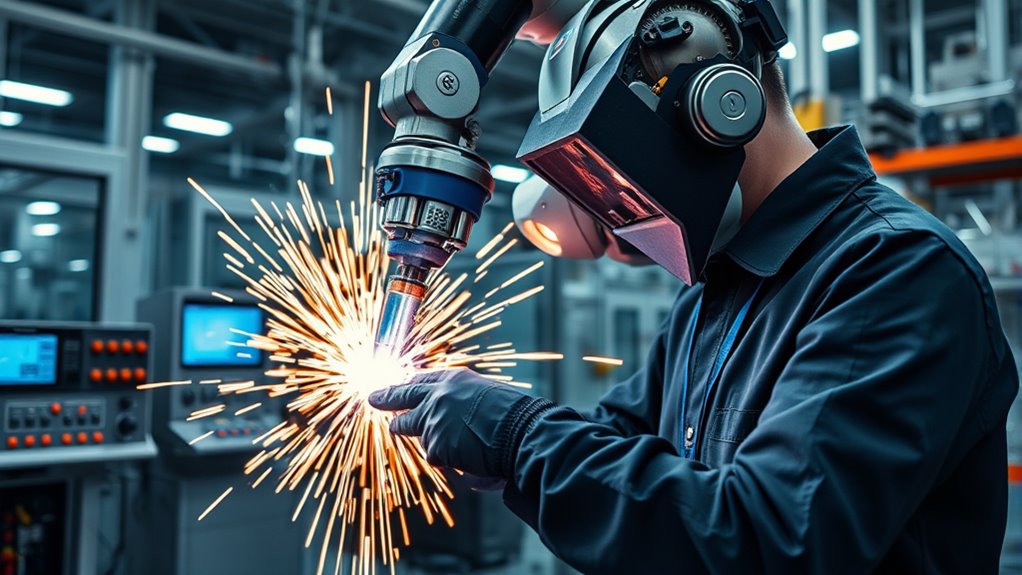
Automation is one of the strongest reasons to choose PAW. A robotic arm, CNC slide, rotary fixture, or seam-tracking system can keep torch angle, travel speed, and arc length consistent. That helps PAW deliver repeatable welds in high-volume work.
Automated PAW can improve:
- Consistency: The same parameters are repeated from part to part.
- Productivity: Operators spend less time correcting arc position and travel speed.
- Safety: The operator can stand farther from heat, arc radiation, and fumes.
- Inspection control: Data from current, voltage, gas flow, and travel speed can support quality records.
Automation does not fix a poor joint design. Good PAW automation still depends on clean parts, repeatable fit-up, stable fixturing, accurate purge, and a qualified weld schedule.
Products Worth Considering

ADJUST HEIGHT: can continuously adjust the height of the cutting torch on the uneven steel plate according to the set arc pressure value, so as to ensure that the height of the cutting torch to the steel plate remains constant

ADJUST HEIGHT : Plasma Height Control can continuously adjust the height of the cutting torch on the uneven steel plate according to the set arc pressure value , so as to ensure that the height of the cutting torch to the steel plate remains constant
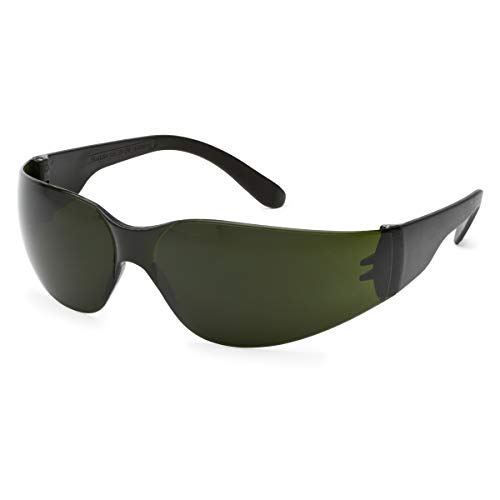
INFARED (IR) PROTECTION – Made from a special polycarbonate to offer IR 5.0 protection for use in grinding, oxyfuel cutting, plasma cutting and more
Future Trends in Plasma Arc Welding

Future PAW development is less about replacing every welding process and more about improving control. Shops are looking for better sensors, cleaner data, more reliable seam tracking, smarter power supplies, and easier integration with robots and quality systems.
Expect more focus on these trends:
- Closed-loop control: Systems that adjust current, travel speed, or position based on weld feedback.
- Better weld monitoring: Cameras, current-voltage data, acoustic signals, and thermal sensing can help detect drift.
- Hybrid setups: PAW may be paired with filler-wire systems, preheating, or other joining methods when one process alone is not ideal.
- Collaborative automation: Cobots and compact motion systems can bring repeatable PAW to smaller production cells.
- Cleaner documentation: Digital weld records can support traceability in aerospace, medical, and pressure applications.
The practical takeaway is simple: PAW will remain a high-value process where precision, repeatability, and heat control matter more than the lowest setup cost.
Frequently Asked Questions
What safety precautions are necessary for plasma arc welding?
Use a welding helmet with a proper filter shade for the PAW current, safety glasses under the helmet, dry welding gloves, flame-resistant clothing, and closed leather footwear. Control fumes with ventilation or local exhaust, keep combustibles away from the work area, and never weld in a confined space without the required permit, ventilation, and atmospheric controls. OSHA lists minimum PAW filter lens guidance in 29 CFR 1910.133 and ventilation requirements in 29 CFR 1910.252.
How does plasma arc welding affect material microstructure?
PAW can reduce the heat-affected zone compared with a wider arc, but it still changes the metal near the weld. Heat input, cooling rate, alloy chemistry, shielding, and post-weld treatment can affect grain size, hardness, corrosion resistance, and cracking risk. Critical parts should be welded to a qualified procedure and inspected after welding.
Can plasma arc welding be used underwater?
PAW is not the standard choice for underwater welding. Underwater work is a specialized field that commonly uses qualified wet or dry hyperbaric welding methods, depending on the job. Because PAW uses high-voltage equipment, controlled shielding gas, and precise torch conditions, it is normally kept for controlled shop or production environments.
What is the typical lifespan of plasma welding equipment?
There is no single lifespan that fits every PAW system. Electrodes and nozzles are consumables and may need frequent replacement. Torches, cables, cooling units, power supplies, and control consoles can last for years when they are kept clean, cooled properly, used within duty cycle, and serviced on schedule.
How does plasma arc welding differ from laser welding?
PAW uses a constricted electric arc and shielding gases. Laser welding uses a focused light beam. Laser welding can be very fast with a small heat-affected zone, but it can require tight fit-up and higher capital cost. PAW can be easier to integrate into some arc-welding production lines and can provide strong keyhole penetration when the procedure is set correctly.
When should you choose PAW instead of TIG?
Choose PAW when the part needs repeatable penetration, a narrow weld, low distortion, or automation. Choose TIG when you need a simpler, lower-cost process for repair work, small batches, or one-off manual welding. TIG is often easier to justify for general shop work, while PAW is easier to justify for high-value precision production.
Conclusion
Plasma Arc Welding is a specialized process for clean, precise, repeatable welds. It shines on thin parts, stainless steel, titanium, nickel alloys, copper alloys, and critical components where heat control matters. Its focused plasma arc can reduce distortion and produce deep, narrow welds, especially in automated production.
The tradeoff is cost and complexity. PAW needs clean material, careful setup, trained operators, good shielding, torch maintenance, and a qualified procedure. If your job is rough field repair or high-deposition structural work, TIG, MIG, or another process may be a better fit. If the job demands precision and repeatability, PAW can be one of the strongest tools in the welding shop.
Sources
- OSHA 29 CFR 1910.133 – Eye and Face Protection – PAW filter lens shade guidance and eye protection requirements.
- OSHA 29 CFR 1910.252 – Welding, Cutting, and Brazing – fire prevention, ventilation, confined-space, and hot-work precautions.
- CDC/NIOSH Welding Fumes and Manganese – welding fume composition and manganese exposure risks.
- Trelles, Chazelas, Vardelle, and Heberlein – Arc Plasma Torch Modeling – arc plasma torch behavior and thermal plasma process context.
- Li et al. – Cross-process Welding Penetration Status Prediction – current research direction for sensor-based weld penetration monitoring.