Disclosure: As an Amazon Associate, we earn from qualifying purchases. If you click a link on this page and make a purchase, we may receive a small commission at no extra cost to you.
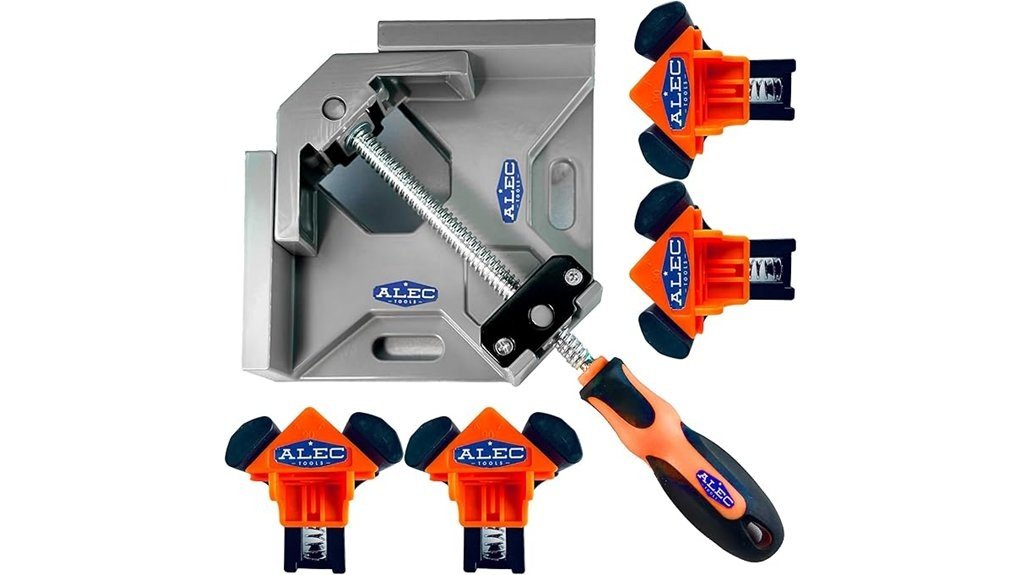
Holding two boards square while you fasten, glue, frame, or tack them can slow down even a simple project. The 90° Corner Clamp for Woodworking is made to hold material at a right angle so you can focus on alignment instead of fighting shifting corners by hand. This review helps you decide whether its 3.74-inch jaw width, 1.4-inch jaw depth, aluminum alloy body, self-centering jaw, and comfort grip fit the work you do most often. It is a practical helper for frames, boxes, cabinetry, and light setup work, but its jaw capacity still limits the size and thickness of material it can hold well.
Quick Verdict
Rating: 8.4/10
Best For: DIY woodworkers, frame builders, cabinet hobbyists, and garage-shop users who need cleaner 90-degree alignment on small to medium projects.
Bottom Line: This corner clamp is a smart buy if you want a compact right-angle helper with an aluminum alloy body, self-centering jaw, and comfortable grip. The tradeoff is capacity, since the 3.74-inch jaw width and 1.4-inch jaw depth will not suit oversized boards, thick stock, or heavy welding assemblies.
| Specification | Detail |
|---|---|
| Product name | 90° Corner Clamp for Woodworking |
| Product type | 90-degree right-angle corner clamp |
| Design | Right-angle holding tool for square corner alignment |
| Jaw width | 3.74 inches |
| Jaw depth | 1.4 inches |
| Material | Aluminum alloy body |
| Jaw design | Self-centering jaw for right-angle alignment |
| Grip | Comfort grip handle designed to reduce hand fatigue |
| Adjustment | Adjustable grip for supported material thicknesses |
| Best use | Woodworking, framing, cabinetry, box assembly, and light welding alignment |
| Care note | Wipe with a damp cloth and keep the jaw area free of dust, glue, and debris |
| Safety note | Confirm workpiece fit before applying pressure, and use proper protection during woodworking or welding tasks. |
What Is the 90° Corner Clamp for Woodworking?
The 90° Corner Clamp for Woodworking is a right-angle holding tool made to help you align two workpieces at a square corner. It gives you a temporary hold while you fasten, glue, drill, frame, or tack parts after positioning.
The main article-supported details are its 3.74-inch jaw width, 1.4-inch jaw depth, aluminum alloy construction, self-centering jaw, adjustable grip, and comfort grip handle. Those features make it more useful than a basic hand clamp when your main goal is keeping two parts at 90 degrees.
View this clamp as an alignment aid, not as a full replacement for every clamp in your shop. For small to medium corner work, it can improve control and reduce hand strain. For large panels, thick stock, or heavy metal assemblies, you may still need larger clamps, extra support, or a dedicated fixture.
Before You Buy: Measure your material against the 3.74-inch jaw width and 1.4-inch jaw depth before ordering. This clamp can help with square corner alignment, but it may not fit oversized boards, bulky assemblies, irregular profiles, or every welding setup.
Who Should Buy It?
Best For
- DIY woodworkers who build frames, small boxes, cabinet parts, shelves, or simple shop projects.
- Beginners who need help holding two pieces at 90 degrees while fastening, drilling, or gluing.
- Hobby fabricators who want a compact positioning aid before light tack welding or layout work.
Skip If
- You mainly work with material that exceeds the jaw width or jaw depth.
- You need a heavy-duty industrial welding fixture for large or load-bearing metal assemblies.
- You want one clamp system for long boards, large panels, or multi-corner glue-ups.
Design and Build Quality
The clamp uses an aluminum alloy body, which gives it a useful mix of strength and portability. That material choice helps keep the clamp easier to handle while still giving it enough structure for repeated woodworking and setup tasks.
The design focuses on holding two pieces at a right angle. That matters because a small corner shift can leave a frame, drawer box, shelf, or cabinet part out of square after the joint is fastened or glued.
The article also supports a lightweight design, which helps when you need to move the clamp around a bench or reposition it between project stages. That is useful if you work in a smaller DIY shop without a full fixture table or a large set of specialty clamps.
Jaw Size and Material Fit
The 3.74-inch jaw width gives you room for many common small to medium woodworking pieces. The 1.4-inch jaw depth controls how far the clamp can reach over the edge of your material, so both measurements affect how securely the workpiece can sit in the jaws.
For frame parts, box sides, small cabinet pieces, and many bench projects, this size range should be practical. For thicker boards, wide trim stacks, angled profiles, or irregular shapes, measure first. If the stock cannot sit flat and stable in the clamp, the tool may not deliver the square hold you expect.
Pro Tip: Dry-fit both pieces in the clamp before you add glue, screws, or tack welds. Then check the corner with a square, because the clamp helps with alignment but cannot fix warped stock or crooked cuts.
Self-Centering Jaw and Alignment
The self-centering jaw is one of the most helpful features because it helps the clamp adjust around supported workpieces as you tighten it. This can reduce the amount of manual correction needed when you bring two pieces together at a 90-degree angle.
For woodworking, better alignment can mean cleaner joints, fewer visible gaps, and less time correcting a corner after fasteners are already in place. For light welding setup, it can help hold the angle before tack welds, but you should still use welding-safe practices and choose heavier fixtures for larger work.
This feature is especially useful for beginners because it reduces the feeling that you need three hands to hold a corner together. You can position the parts, tighten the clamp, inspect the angle, and make small adjustments before committing to the joint.
Comfort and Ease of Use
The comfort grip is designed to reduce hand fatigue during repeated adjustments. That matters when you assemble several frames, repeat the same corner setup, or make small corrections before the final fit is right.
The adjustable grip gives you flexibility with different supported material thicknesses. It does not make the clamp universal, but it gives you more control than a fixed corner guide when your workpieces vary from project to project.
In daily use, the biggest benefit is control. Instead of pressing two pieces together by hand while driving a screw or applying glue, you can secure the corner first and work with a calmer setup.
Woodworking Applications
For woodworking, this clamp makes the most sense on projects where square corners affect the final result. Picture frames, small boxes, cabinet face frames, shelf corners, drawer parts, and light assembly work are strong examples.
It can also help during glue-ups when you need to keep parts from drifting while pressure is applied. The clamp does not replace careful cutting, sanding, or squaring, but it gives you a better chance of holding a clean 90-degree position while the joint is secured.
If you are new to woodworking, this tool can also reinforce better habits. It encourages you to check fit, square the joint, and secure parts before fastening, which often leads to cleaner work than rushing assembly by hand.
Welding and Shop Safety
The article supports light welding alignment use where exact angles matter. For basic setup work, a right-angle clamp can help position parts before tacking, especially when you need both hands free for the next step.
Welding creates heat, sparks, and safety concerns that are different from woodworking. Use proper eye, hand, and skin protection, keep the clamp away from unsafe heat exposure when needed, and use a heavier welding fixture for larger or high-load metal assemblies.
For a mixed-use garage shop, this clamp is most practical as a positioning aid. It can help with layout, test fitting, and right-angle setup, but it should not be the only support for heavy or load-bearing metal work.
How It Performs in Real Use
For Frame Assembly
When you build a simple frame, the clamp helps hold two pieces at a right angle while you fasten or glue the joint. This can reduce corner drift and make it easier to keep the finished frame square.
For Cabinet and Box Projects
For small cabinet parts, drawer-style boxes, and storage boxes, the 90-degree hold can be useful during setup. You still need straight cuts and even pressure, but the clamp helps keep the joint from moving while you work.
For Beginner DIY Repairs
Beginners often struggle with holding parts steady while driving screws or checking alignment. This clamp gives you a more stable setup, which can make small home projects feel more manageable.
For Light Welding Setup
For light-duty welding preparation, the clamp can help position pieces before tack welding. It is best for alignment support, not for replacing purpose-built welding fixtures on larger or heavier assemblies.
How to Use It Correctly
Start by checking that both pieces fit within the jaw width and jaw depth. Place the pieces into the clamp so the edges meet cleanly at the corner, then tighten the grip gradually. Avoid forcing the clamp if the material is too thick, too wide, or oddly shaped.
After tightening, check the angle with a square before you fasten, glue, drill, or tack weld. A clamp can hold material, but it cannot fix a poor cut, a warped board, or uneven contact surfaces. If the corner does not sit flat, loosen the clamp and adjust the material before continuing.
For glue-ups, wipe away squeeze-out before it hardens near the clamp. For light welding setup, confirm the parts are stable and supported before you tack. Follow safe shop practices any time you cut, drill, fasten, or weld around clamped material.
Maintenance and Storage
Maintenance is simple because the supported care guidance is basic: clean the clamp regularly with a damp cloth and avoid letting dust, glue, or metal debris collect around the jaw. This helps preserve smooth movement and keeps the clamp ready for the next project.
Store it in a dry area of your shop, tool drawer, or clamp rack. Although the aluminum alloy body is described as durable, proper storage still helps protect the grip, moving parts, and contact surfaces from unnecessary wear.
Pros and Cons
Pros
- 3.74-inch jaw width supports many small to medium corner assembly tasks.
- 1.4-inch jaw depth gives useful reach for common woodworking pieces.
- Aluminum alloy body balances durability with easier handling.
- Self-centering jaw helps improve right-angle alignment during setup.
- Comfort grip can reduce hand fatigue during repeated adjustments.
Cons
- Jaw size may not fit thick, oversized, or irregular workpieces.
- Not a full replacement for larger clamps, jigs, or welding fixtures.
- Best results still require straight cuts, flat contact surfaces, and a proper dry fit.
Is It Worth the Price?
This corner clamp is worth considering if you often need cleaner 90-degree alignment on small to medium projects. It offers strong value for the price when you compare its practical use against the frustration of holding corners by hand.
You will get the most value if you build frames, boxes, cabinet parts, shelves, or small shop projects where square corners matter. The aluminum alloy body, self-centering jaw, and comfort grip make it a smart buy for everyday use in a DIY or hobby workshop.
It is not the best fit if your work mainly involves large panels, thick structural pieces, or heavy welding setups. In those cases, a bigger clamp, a corner jig, or a dedicated fixture may be the better choice.
How It Compares to Alternatives
Compared with a basic bar clamp or spring clamp, this 90-degree corner clamp is more focused on square alignment. A bar clamp may offer more reach, and a spring clamp may be faster for quick holding, but neither one supports a right-angle corner in the same focused way.
Compared with a larger corner jig or heavy welding fixture, this clamp is easier to move and simpler to use. The tradeoff is capacity. Choose this clamp when you want quick right-angle support for smaller work, and choose a larger fixture when your project needs more holding strength, more reach, or more surface support.
Frequently Asked Questions
What materials can you use with this 90° corner clamp?
You can use it with hardwoods, softwoods, and common woodworking materials that fit within the jaw size. It can also help with light welding alignment, but larger or heavier metal assemblies may need a dedicated fixture.
What is the jaw width of the clamp?
The jaw width is 3.74 inches. This makes the clamp useful for many small and medium corner projects, but you should measure thick or oversized material before buying.
What is the jaw depth?
The jaw depth is 1.4 inches. This detail matters because it affects how far the clamp can reach over the edge of your workpiece.
Is this clamp good for beginners?
Yes, it is beginner-friendly because it helps hold two pieces at a right angle while you work. You should still check the corner with a square and make sure the material is cut straight.
Can you use it for outdoor projects?
Yes, it can be used for outdoor projects when the material fits and the work area is safe. After outdoor use, clean it and store it in a dry place to help protect the moving parts and grip.
Can this replace all your woodworking clamps?
No. It is best used as a right-angle alignment clamp, not as a complete clamp set. You may still need bar clamps, spring clamps, pipe clamps, or larger jigs for long boards, panels, and full glue-ups.
How do you maintain the clamp?
Wipe it with a damp cloth after use and remove dust, glue, or debris from the jaw area. Keeping the moving parts clean helps the clamp operate smoothly over time.
What common mistake should you avoid?
Do not assume the clamp can fix warped, uneven, or poorly cut material. Dry-fit the pieces, check the angle, and make sure both parts sit evenly before fastening, gluing, or tack welding.
The Bottom Line
The 90° Corner Clamp for Woodworking is recommended for DIY users, beginners, and hobby woodworkers who want better square-corner control on frames, boxes, cabinetry, and small shop projects. Its strongest points are the 3.74-inch jaw width, aluminum alloy body, self-centering jaw, and comfort grip, while its main limitation is fit on larger or thicker materials.
Skip it if you need a large industrial fixture or a clamp for oversized assemblies. Buy it if you want a simple, practical right-angle clamp that makes small to medium corner work easier to control.