Disclosure: As an Amazon Associate, we earn from qualifying purchases. If you click a link on this page and make a purchase, we may receive a small commission at no extra cost to you.
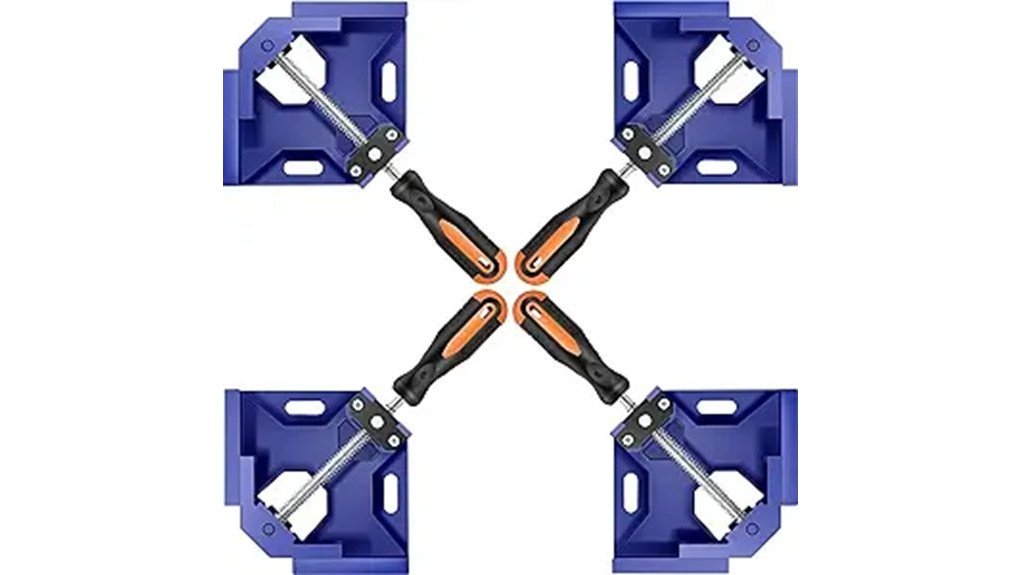
Getting a clean 90-degree corner is one of the hardest parts of small woodworking and assembly work. These corner clamps for woodworking are designed to hold two pieces at a right angle while you glue, fasten, drill, or check alignment. The article-supported specs point to a durable aluminum alloy body, adjustable jaws, a rubberized handle, and a maximum clamping range of about 2.68 inches. This review helps you decide where these clamps make sense, where they may feel limited, and how to use them without damaging your material.
Quick Verdict
Rating: 8/10
Best For: DIY woodworkers, frame builders, cabinet projects, and light assembly work that needs square 90-degree corners.
Bottom Line: These corner clamps are a smart buy for everyday right-angle assembly because they combine aluminum alloy construction, adjustable jaws, and a comfortable handle. The main tradeoff is the 2.68-inch clamping range, which may not fit thick stock, oversized boards, or heavy-duty fabrication work.
| Specification | Detail |
|---|---|
| Product type | 90-degree corner clamp for woodworking and assembly |
| ASIN reviewed | B09R9G4B6M |
| Design | Right-angle clamp with adjustable rotary jaw |
| Material | Aluminum alloy die-casting material |
| Maximum clamping range | Approximately 2.68 inches |
| Jaw dimensions | About 3.74 inches wide and 1.4 inches deep |
| Handle | Rubberized ergonomic handle |
| Supported materials | Wood, metal, steel or metal tubes, and thick glass when used with proper care |
| Best use | Cabinets, picture frames, box corners, furniture assembly, drilling setup, and glue-up alignment |
| Care note | Clean after use, keep moving parts free of dust, and store dry |
What Are These Corner Clamps?
These corner clamps are right-angle holding tools made for projects where two pieces need to meet at a clean 90-degree angle. You can use them to hold boards, trim, frame pieces, metal tubes, or other compatible material while you check fit, apply glue, drive fasteners, or drill pilot holes.
The main appeal is simple: the clamp gives you a temporary third hand. Instead of trying to hold two pieces square while tightening a screw or waiting for glue to set, you can secure the corner and focus on the next step. The aluminum alloy body gives the tool a sturdier feel than many lightweight plastic angle guides, while the rubberized handle helps make repeated tightening more comfortable.
Before You Buy: Check your material thickness before ordering. The article-supported maximum clamping range is about 2.68 inches, so these clamps are better for small and medium assembly work than oversized lumber or heavy fabrication.
Who Should Buy It?
Best For
- DIY woodworkers who need help keeping joints square during assembly.
- Cabinet, box, drawer, and picture-frame projects with 90-degree corners.
- Users who want an adjustable clamp for wood, metal tubes, or thick glass with careful setup.
Skip If
- You need to clamp material thicker than about 2.68 inches.
- You need a heavy-duty welding fixture or precision metal fabrication jig.
- You want a clamp that guarantees perfect squareness without checking with a square.
Build Quality and Materials
The body uses aluminum alloy die-casting material, which gives the clamp a firm structure for repeated shop use. That matters because corner clamps need to resist twisting while two pieces are under pressure. A weak body can flex, and even small movement can throw off a corner.
Aluminum alloy also keeps the clamp practical for everyday handling. It offers better durability than a light plastic guide while staying easier to move around the bench than many large steel fixtures. For most small woodworking projects, that balance is useful.
The clamp is not a replacement for a dedicated industrial jig. If you are welding heavy stock, clamping oversized boards, or applying high torque, choose a heavier setup made for that job.
Clamping Range and Jaw Design
The maximum clamping range is about 2.68 inches. That gives you room for many common boards, trim pieces, small panels, metal tubes, and frame parts. The listed jaw dimensions, about 3.74 inches wide and 1.4 inches deep, give the clamp a useful contact area for holding material at a right angle.
The adjustable rotary jaw helps the clamp adapt to different material shapes. That is helpful when you are working with pieces that are not perfectly identical in thickness. It can also reduce the need to reposition the work several times before the corner sits correctly.
For best results, bring the pieces together lightly first, then tighten the clamp gradually. Over-tightening can mark softer wood, shift a glued joint, or stress fragile material such as glass.
Pro Tip: Use a small scrap pad between the jaw and delicate wood or glass. It helps spread pressure and can reduce surface marks during longer glue-ups.
Grip and Ease of Use
The rubberized handle is one of the more practical details in this clamp design. It gives your hand a better grip when you need controlled pressure, especially during repeated setups. That comfort matters when you are assembling several frames, drawers, or box corners in one session.
The setup process is straightforward. Place the two pieces against the right-angle faces, align the outside edges, and tighten the handle until the material sits firm. You should still check the corner with a square before fastening or letting glue cure. A clamp helps with alignment, but it does not replace measurement.
Compatibility and Project Fit
The article-supported material list includes wood, metal, steel or metal tubes, and thick glass. That gives the clamp more range than a wood-only guide. It can support small repair jobs, light shop setup, and assembly work where you need a temporary right-angle hold.
For woodworking, the best matches are cabinet frames, picture frames, boxes, drawer corners, shelves, and light furniture assemblies. For metal tubes, the clamp can help with positioning before drilling or fastening. For glass, use extra care, a protective pad, and light pressure only.
How It Performs in Real Use
For Cabinet and Box Assembly
These clamps are most useful when you need to hold two panels square before fastening. The 90-degree design helps keep corners aligned while you drill pilot holes, add screws, or let glue begin to set. You should still measure diagonals or check with a square if the project needs tight accuracy.
For Picture Frames
Picture frames benefit from steady corner pressure. The clamp can hold mitered or square-cut frame pieces in place while you check the joint and make small adjustments. For fragile trim, add a scrap pad so the jaws do not leave pressure marks.
For Furniture Repairs
Small furniture repairs often require one hand to hold the piece and another to fasten it. A corner clamp makes that job easier by stabilizing the joint. It is especially useful for light shelves, small tables, drawer boxes, and support brackets.
For Metal Tubes or Thick Glass
The adjustable jaws can hold compatible non-wood materials, but you need to use less pressure and more care. Metal tubes may shift if the contact area is small, and glass can chip or crack if clamped too hard. Use padding, check alignment often, and avoid treating this as a heavy-duty fabrication tool.
How to Use It Correctly
Start by cleaning the contact surfaces. Sawdust, glue buildup, paint chips, or metal burrs can keep the pieces from sitting flat. Place both pieces into the clamp, align the edges, and tighten the handle slowly until the material no longer moves.
Do not force the clamp to correct badly cut material. A corner clamp can hold two pieces at a right angle, but it cannot fix warped boards, uneven miters, or ends that are not cut square. Make your cuts as accurate as possible before clamping.
- Check the clamping range before each project.
- Use scrap pads on soft, painted, or finished surfaces.
- Tighten gradually instead of applying full pressure at once.
- Confirm squareness with a measuring square before drilling or fastening.
- Clean glue squeeze-out before it hardens near the jaw or screw area.
Compatibility and Safety Notes
These clamps can support a wide range of workshop materials, but the safest setup depends on the surface. Soft wood may dent under pressure. Painted material may mark. Glass needs padding and light clamping force. Metal tubing may need extra support so it does not roll or twist.
Keep your hands clear of pinch points while tightening the handle. Wear eye protection when drilling, cutting, or fastening material held in the clamp. If you are using the clamp near welding, heat, or sparks, confirm the tool and work area are suitable before starting.
For outdoor projects, treat the clamp as a tool you use outside, not a tool you leave outside. Wipe it clean, dry it after use, and store it indoors to help protect the handle, jaw movement, and metal surfaces.
Cleaning and Maintenance
Basic maintenance is simple. Wipe dust and debris from the jaws after use, especially if you work with sawdust, glue, or metal filings. Warm soapy water can help remove grime, but dry the clamp well before storage.
Inspect the handle, jaw faces, and screw movement from time to time. If the moving parts start to feel rough, a small amount of suitable lubricant on the screw mechanism can help. Avoid over-lubricating near surfaces that will contact unfinished wood, because oil can transfer to your project.
Pros and Cons
Pros
- Helps hold clean 90-degree corners for woodworking and assembly.
- Aluminum alloy die-casting construction supports repeated shop use.
- Adjustable rotary jaw works with different material shapes and thicknesses.
- Rubberized handle improves comfort during repeated tightening.
- Useful for cabinets, frames, furniture assembly, metal tubes, and thick glass with care.
Cons
- The 2.68-inch clamping range may not fit thick boards or oversized material.
- You still need to verify squareness with a measuring square.
- Not ideal as a heavy-duty welding jig or high-force fabrication clamp.
Is It Worth the Price?
These corner clamps offer strong value for the price if you often build frames, small boxes, cabinets, drawers, or furniture parts. The best value comes from the combination of right-angle holding, aluminum alloy construction, an adjustable jaw, and a comfortable handle.
They make less sense if you only need a clamp once or if your projects use thick lumber beyond the supported range. They are also not the best fit for buyers who need a heavy steel welding fixture or a precision production jig. For everyday woodworking and light assembly, they are worth considering if you need cleaner corners and easier setup.
How It Compares to Alternatives
Compared with basic plastic angle guides, these clamps offer a stronger aluminum alloy body and a more secure adjustable hold. Compared with heavier steel right-angle fixtures, they are easier to handle for small shop tasks but less suited to high-force fabrication.
Spring-style miter clamps can be faster for small trim and frame work, while bar clamps offer more reach for larger assemblies. These corner clamps make the most sense when you want a compact tool that holds two pieces square while you fasten, glue, or drill.
Frequently Asked Questions
What materials can these corner clamps hold?
The article-supported material list includes wood, metal, steel or metal tubes, and thick glass. Use protective pads and light pressure on finished surfaces, soft wood, and glass.
What is the maximum clamping range?
The listed maximum clamping range is about 2.68 inches. Measure your material before buying because thick boards and oversized stock may not fit.
Do these clamps guarantee a perfect 90-degree corner?
They help hold material at a right angle, but you should still check the joint with a square. Warped boards, uneven cuts, or over-tightening can still affect final alignment.
Can I use these corner clamps for metalworking?
They can help hold metal tubes or small metal pieces for light positioning, drilling, or assembly. They are not a replacement for a heavy-duty welding fixture or a high-force metal fabrication clamp.
Are these clamps safe to use with glass?
The source article says the clamps can accommodate thick glass, but glass requires extra care. Use padding, apply only light pressure, and avoid clamping near weak or chipped edges.
How should I clean and maintain the clamps?
Wipe off sawdust, glue, and metal debris after each use. Clean with warm soapy water when needed, dry the clamp fully, and lightly lubricate moving parts if the screw action starts to feel rough.
Who should skip these corner clamps?
Skip them if your material is thicker than the stated clamping range or if you need an industrial jig for heavy metalwork. They are better for small to medium woodworking, frame assembly, and light shop setup.
The Bottom Line
These corner clamps are recommended with caveats for woodworkers and DIY users who need cleaner 90-degree alignment on small and medium projects. Their best strengths are the aluminum alloy body, adjustable jaw, rubberized handle, and useful 2.68-inch clamping range, while the main limitation is that they are not built for oversized material or heavy-duty fabrication.