Disclosure: As an Amazon Associate, we earn from qualifying purchases. If you click a link on this page and make a purchase, we may receive a small commission at no extra cost to you.
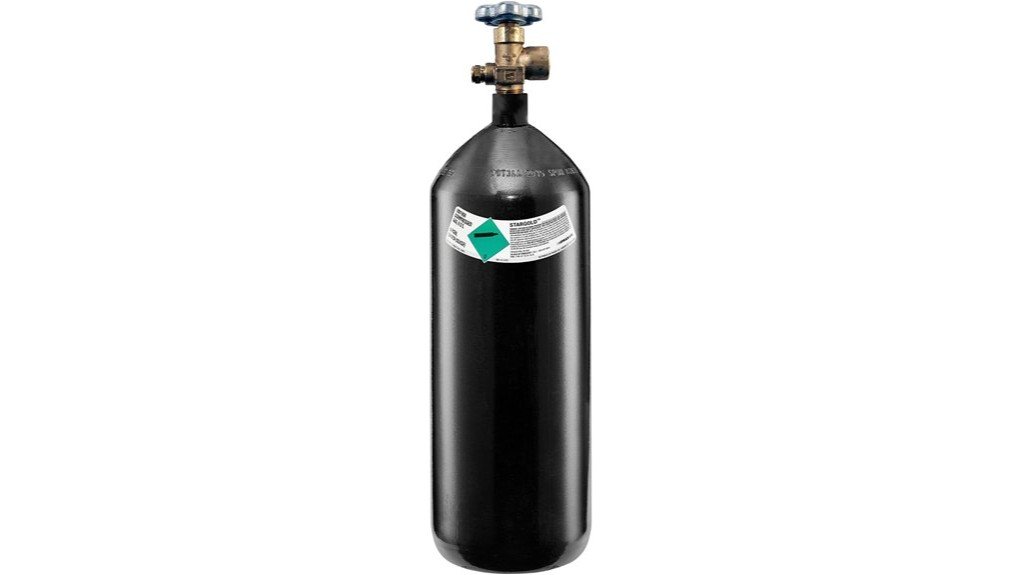
Choosing the right shielding gas matters when you want cleaner MIG welds, steadier arcs, and less cleanup after each pass. The PrimeWeld 75% Argon and 25% CO2 40CF gas cylinder is built for welders who want a customer-owned C25-style cylinder instead of dealing with ongoing rental fees. It can be a practical choice for garage MIG welding, small shop repairs, and mild steel projects, but it is not the right gas for every welding process. This review helps you decide if the 40CF size, gas blend, refill setup, and safety requirements fit your workflow.
Quick Verdict
Rating: 8.4/10, Recommended with caveats
Best For: DIY MIG welders, hobby shops, and light repair users who want a filled 40CF 75/25 argon/CO2 cylinder.
Bottom Line: This PrimeWeld cylinder makes the most sense if you weld mild steel and want to avoid rental-cylinder hassle. The main tradeoff is that you must confirm local refill or exchange support before you buy, and the 75/25 blend is not ideal for TIG or aluminum work.
| Specification | Detail |
|---|---|
| Brand | PrimeWeld |
| Product type | MIG welding shielding gas cylinder |
| Gas blend | 75% argon and 25% carbon dioxide |
| Cylinder capacity | 40CF |
| Best use | MIG welding on mild steel or carbon steel when a C25-style blend is appropriate |
| Tank status | Arrives filled, according to the source article |
| Refill note | Designed for refill use, but local supplier acceptance can vary |
| Not ideal for | TIG welding, aluminum MIG welding, or users who need a larger production-size cylinder |
| Safety note | Store upright, secured, and away from heat or flammable materials |
What Is the PrimeWeld 75% Argon and 25% CO2 Gas Cylinder?
The PrimeWeld 75% Argon and 25% CO2 gas cylinder is a 40CF shielding gas cylinder for MIG welding. The gas blend is often called a 75/25 or C25 mix, which welders commonly use for short-circuit MIG welding on mild steel and carbon steel.
The main appeal is ownership. Instead of renting a cylinder from one supplier, you can buy a filled tank and arrange refills through a compatible local welding-gas supplier. That can make sense if you weld often enough to dislike rental fees, but not enough to need a larger shop-size cylinder.
The 40CF capacity also keeps the setup manageable for home garages and small work areas. It gives you a useful amount of gas without the bulk of a much larger cylinder, although high-volume welders may still want a bigger tank to reduce refill trips.
Who Should Buy It?
Best For
- DIY MIG welders who work mostly on mild steel or carbon steel.
- Garage users who want a filled 40CF cylinder instead of a rental tank.
- Small shops that want a backup cylinder for light repair or practice work.
Skip If
- You need shielding gas for TIG welding, which usually calls for pure argon or another TIG-specific gas.
- You weld aluminum, stainless, or specialty metals that require a different gas choice.
- Your local gas supplier will not refill or exchange customer-owned 40CF cylinders.
Before You Buy: Call your local welding-gas supplier and ask if they will refill or exchange a customer-owned 40CF 75/25 argon/CO2 cylinder. Refill policies can vary by supplier, cylinder marking, inspection status, and local rules.
Cost Efficiency of PrimeWeld Gas Cylinder
Cost efficiency is one of the main reasons to consider this PrimeWeld cylinder. A customer-owned tank can help you avoid ongoing rental fees, deposit requirements, or supplier-specific rental agreements.
That matters most if you weld often enough to keep a cylinder around, but not so often that you need a large industrial setup. For many hobby welders, a filled 40CF tank gives a good balance of upfront cost, storage size, and practical runtime.
The value also depends on your refill options. If several nearby suppliers can refill or exchange the cylinder, ownership feels more flexible. If only one supplier accepts it, the savings may be less convenient than expected.
Welding Applications and Performance
The 75% argon and 25% CO2 blend is best suited to MIG welding on mild steel or carbon steel where a C25-style shielding gas is recommended. Argon helps support arc stability, while CO2 contributes useful weld penetration for steel.
For many garage MIG jobs, this blend can produce smoother welds than straight CO2 and reduce spatter when your machine settings, wire speed, travel speed, and gas flow are dialed in correctly. It is a practical choice for brackets, small repairs, frames, carts, mild steel tubing, and general fabrication practice.
This is not a universal welding gas. Do not buy it for TIG welding just because the blend contains argon. TIG usually needs pure argon or another TIG-specific blend, and aluminum MIG work also calls for a different gas setup.
Arc Stability and Spatter Control
The main performance benefit of a 75/25 argon/CO2 blend is easier arc control during common steel MIG work. A stable arc can help you hold a more consistent puddle, which matters when you are learning bead control or working on visible joints.
Lower spatter can also save cleanup time. You still need correct voltage, wire feed speed, stickout, surface prep, and gas flow, but the shielding gas gives your welder a better starting point than poor or mismatched gas.
If you still see heavy spatter, do not blame the cylinder first. Check your ground clamp, wire condition, contact tip, nozzle buildup, gas leaks, and machine settings before assuming the gas blend is the problem.
Refill Flexibility and Cylinder Size
The 40CF size is easy to store in a small garage, shed, or welding cart area when you secure it properly. It is also easier to move than a larger production cylinder, which helps if your workspace changes often.
The tradeoff is refill frequency. A 40CF cylinder will not last as long as larger 80CF or 125CF cylinders, especially if you run long beads, use higher flow settings, or practice for extended sessions.
For casual welders, that smaller size may be a good thing. For daily fabrication, it may feel limiting because downtime and refill trips add up quickly.
Customer Feedback and Satisfaction
The source article described strong customer satisfaction, with users highlighting efficiency, ease of use, and the convenience of receiving a filled cylinder. Since Amazon ratings and review counts change over time, you should check the current product page before using review totals as part of your buying decision.
The most useful feedback theme is ownership convenience. Buyers who want to weld soon after delivery may appreciate that the tank is described as filled and ready for use. Buyers who need guaranteed local exchange support should verify that detail before ordering.
How It Performs in Real Use
For Small Garage MIG Projects
For brackets, small repairs, carts, fixtures, and practice coupons, this cylinder gives you a practical gas supply without taking up much floor space. The 75/25 blend supports cleaner mild steel MIG welds when your setup is tuned properly.
For Light Shop Repair Work
A small shop can use this 40CF cylinder as a backup tank or a dedicated light-duty cylinder. It is useful when you need to finish a repair without waiting on a rental exchange, but it should not replace a larger tank for heavy daily welding.
For Learning and Practice Beads
New MIG welders benefit from a gas blend that helps maintain a steady arc. You can focus on travel angle, travel speed, and puddle control instead of fighting excessive spatter caused by a poor gas match.
For Emergency Backup Use
The cylinder can make sense as a backup for occasional jobs, especially if your main tank runs out during a weekend project. Store it safely and check pressure before you depend on it for time-sensitive work.
Setup Tips Before First Use
Check your regulator or flowmeter before connecting the cylinder. You need a setup that matches your welding machine, cylinder valve, shielding gas use, and desired flow range.
Inspect the cylinder label and valve area before use. Do not use a cylinder that appears damaged, has a questionable valve, or lacks clear gas identification. When in doubt, ask a qualified welding-gas supplier to inspect it.
Set gas flow based on your welding conditions, not on the highest number available. Too little gas can cause porosity, while too much flow can create turbulence and waste gas. Follow your welder manual, wire recommendations, and local supplier guidance.
Pro Tip: Before your first project, run a few test beads on clean scrap steel with the same wire and thickness you plan to use. Adjust voltage, wire speed, and gas flow there instead of experimenting on the final workpiece.
Compatibility and Safety
This cylinder is for shielding gas use with compatible MIG welding equipment. It is not a substitute for pure argon in TIG welding, and it is not the usual choice for aluminum MIG welding.
Compressed gas cylinders need careful handling. Store the cylinder upright, secure it so it cannot tip over, keep it away from heat sources, and do not leave it loose in a vehicle or workspace. Close the valve when you are not using it.
Use the cylinder only in a well-ventilated work area. Shielding gases can displace oxygen in confined spaces, and welding also creates fumes that require proper ventilation and personal protective equipment.
Pros and Cons
Pros
- 75% argon and 25% CO2 blend suits common mild steel MIG welding jobs.
- 40CF size is manageable for garages, small shops, and portable welding carts.
- Customer-owned cylinder can reduce dependence on rental programs.
- Arrives filled according to the source article, so you can start sooner after setup.
- Good option for practice beads, small repairs, and light fabrication work.
Cons
- Local refill or exchange acceptance may vary, so you need to check first.
- Not the right gas for TIG welding, aluminum MIG welding, or specialty metals.
- 40CF capacity may feel small if you weld often or run long sessions.
Is It Worth the Price?
The PrimeWeld 75% Argon and 25% CO2 40CF cylinder is worth considering if you want a practical, owner-friendly gas option for mild steel MIG welding. It offers strong value for the price when you can refill it locally and you do not need a large production cylinder.
The best value comes from convenience. You get a smaller cylinder that fits many home-garage setups, plus a gas blend that matches common MIG welding needs.
It is not the best fit if you weld every day, need long uninterrupted runtime, or work with TIG, aluminum, or specialty materials. In those cases, compare larger cylinders or a different gas blend before buying.
How It Compares to Alternatives
Compared with straight CO2, a 75/25 argon/CO2 blend is often easier to control for many mild steel MIG users and may produce less spatter. Straight CO2 can cost less in some areas, but it can feel harsher and messier for thin steel or beginner practice.
Compared with pure argon, this PrimeWeld blend makes more sense for steel MIG work. Pure argon is the better comparison point for TIG or aluminum MIG setups, not for typical mild steel MIG welding. Larger 80CF or 125CF cylinders are better if you weld often and want fewer refill trips.
Frequently Asked Questions
What is the PrimeWeld 75% Argon and 25% CO2 cylinder best for?
It is best for MIG welding on mild steel or carbon steel when your welder, wire, and project call for a 75/25 argon/CO2 blend. It suits small garage projects, light repairs, practice beads, and hobby fabrication.
Can I use this gas for TIG welding?
No, this 75/25 argon/CO2 blend is not the usual choice for TIG welding. TIG work commonly uses pure argon or a TIG-specific gas blend, so check your welder manual and material requirements.
Is a 40CF cylinder enough for home MIG welding?
A 40CF cylinder can be enough for occasional home welding, repairs, and practice. If you weld long sessions or fabricate often, a larger cylinder may reduce refill trips.
Is the tank refillable at local suppliers?
The source article describes the tank as refillable, but supplier policies can vary. Call your local welding-gas shop before buying and ask if they refill or exchange customer-owned 40CF argon/CO2 cylinders.
Does the cylinder arrive filled?
The source article states that the cylinder arrives filled and ready for use. Check the current product page before ordering, because shipping rules, seller details, and listing terms can change.
How should I store this gas cylinder?
Store it upright, secured, and away from heat, sparks, and flammable materials. Keep the valve closed when not in use and do not leave the cylinder loose where it can tip or roll.
What regulator do I need?
Use a regulator or flowmeter that matches your MIG welding setup and the cylinder connection. If you are unsure, ask your welding supplier to confirm the correct fitting before connecting the cylinder.
Who should skip this PrimeWeld gas cylinder?
Skip it if you need gas for TIG welding, aluminum MIG welding, stainless-specific work, or daily production welding. Also skip it if your local supplier will not refill or exchange customer-owned cylinders.
The Bottom Line
The PrimeWeld 75% Argon and 25% CO2 40CF gas cylinder is a smart buy for MIG welders who mainly work on mild steel and want a filled, customer-owned cylinder for garage or light shop use. Its biggest strength is convenience, while its main limitation is compatibility: you need local refill support, and the gas blend is not right for TIG or aluminum work.