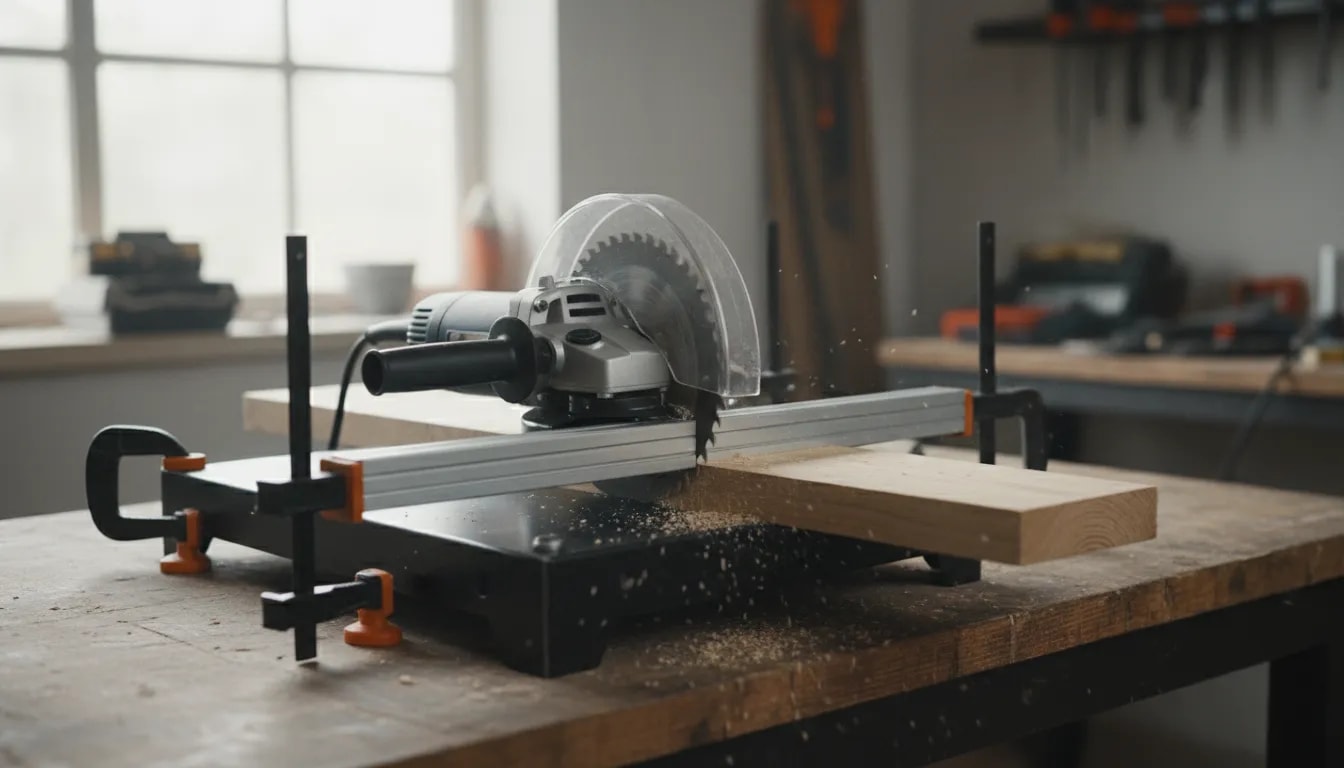
An angle grinder can be repurposed to perform straight, controlled cutting like a circular saw when you build a proper cutting guide, blade guard, and stable mounting system. This can be useful for workshop projects where you need a compact tool and want to experiment with DIY fabrication.
This guide explains what to build, what parts you need, how to set it up for safe wood cutting, and the key design principles that determine whether the tool is practical or dangerous.
🧰 What it means to “convert” an angle grinder into a circular saw
A typical circular saw is a drivetrain (motor + spindle), a blade, and a guard plus a shoe or base plate that stabilizes the cut. An angle grinder already provides the motor and spindle, but it does not include the rest of the geometry and safety features needed for woodworking-style plunge or straight-line cutting.
A safe DIY “circular saw” conversion focuses on:
- Rigid mounting so the grinder cannot shift under load
- Blade alignment so the kerf stays straight and predictable
- A blade guard to reduce exposure and contain debris
- A base/shoe that maintains depth and keeps the tool from grabbing
- Workpiece support to prevent pinching and kickback
🧱 Is it actually feasible? When this DIY approach makes sense
Yes, it is feasible to create a grinder-based cutting tool for wood and similar materials, but it is not a simple “bolt a blade on and go” project. It only makes sense when you can achieve:
- Secure fabrication (welding and/or bolting with proper strength and alignment)
- Correct blade type and rating for the RPM
- Mechanical protection (guarding and anti-kickback planning)
- Controlled cutting technique to avoid binding
If you cannot confidently build rigid structures and verify alignment, it is safer to buy a purpose-built circular saw or track saw.
⚠️ Safety first: the non-negotiables
Turning an angle grinder into something that cuts like a saw changes the risk profile. Follow these rules strictly.
✅ Blade and RPM compliance
- Use blades designed for the material (for wood, use appropriate woodworking blades).
- Confirm the blade is rated for at least the grinder’s maximum RPM and that the mounting flange and guard system are compatible.
- Never use a blade that is damaged, improperly seated, or rated below operating speed.
✅ Guarding and debris control
- Use a blade guard that covers the danger zone from the operator’s perspective.
- Prevent debris from being directed toward hands, face, or ignition sources.
- If possible, plan for dust extraction and reliable chip clearing.
✅ Workholding and anti-kickback planning
- Support the work so the cut line does not pinch the blade.
- Clamp the workpiece properly, especially on thin stock.
- Avoid forcing the cut. If the blade binds, back out and clear the kerf.
✅ Personal protective equipment
- Eye protection with a face shield if debris is heavy
- Hearing protection
- Respiratory protection for wood dust
- Cut-resistant gloves only for handling stock, not near the blade
- Secure clothing and tie back hair
Important: This kind of conversion should be treated as an advanced fabrication project. If anything feels uncertain (alignment, guard fit, blade security), do not use it.
🧩 Parts and materials checklist
The exact design varies by grinder model, but the components below are the typical building blocks of a functional grinder-to-saw conversion.
Core components
- Angle grinder with known spindle thread/flange system
- Blade compatible with the spindle and intended material
- Rigid base plate (flat, thick enough to resist flex)
- Blade guard custom-fabricated or adapted with proper mounting
- Mounting bracket to hold the grinder securely to the base
Fabrication hardware
- Steel plate or angle iron for the frame
- Bolts, washers, and lock nuts (or welded structural members)
- Pivot or guide components if building an adjustable depth mechanism
- Springs or stops for consistent cutting depth (optional but helpful)
- Fasteners rated for vibration and load (use appropriate thread locking where relevant)
Alignment and measurement tools
- Square and straightedge
- Dial calipers or measuring tape
- Protractor or angle finder (for blade/base alignment)
- Marker for test passes on scrap wood
- Speed/RPM information from the grinder and blade spec sheet
🛠️ Design principles that make the build work
Good conversions fail less often because the structure is engineered for stiffness and predictable cutting geometry.
1) Build a stiff “shoe” that resists flex
Any flex between the blade and base plate will make the cut wander, bind the blade, and increase kickback risk. Use thicker steel and shorter spans in your frame.
2) Ensure the blade is perpendicular to the base
If the blade is tilted relative to the base plate, it will cut unevenly, increase friction, and produce a rough kerf. Take time to verify squareness before tightening everything.
3) Use a consistent cutting depth reference
Even for straight cuts, you need a repeatable depth limit. Depth control reduces binding and helps avoid cutting into the bench.
4) Provide clearance for the blade path
Frame members, guard edges, and fasteners must not contact the blade or throw debris into unintended areas. Test with the grinder powered off first (spin by hand if safe per your setup).
📐 Step-by-step: a practical conversion workflow
The steps below describe a safe development process. Adjust to your grinder model and fabrication methods.
Step 1: Measure your grinder and blade mounting
- Record the spindle dimensions, blade mounting method, and overall grinder housing size.
- Confirm the blade diameter and thickness kerf assumptions for your intended wood cuts.
Step 2: Decide your base layout and cutting geometry
- Choose a base plate size that lets the tool rest flat and stable.
- Plan a front support and rear support so the base does not rock.
- Sketch blade centerline relative to the base.
Step 3: Fabricate a rigid mounting bracket
- Mount the grinder to a frame that prevents lateral movement.
- Reinforce areas where vibration would concentrate, especially near bolts or weld joints.
- Include a method to tighten securely while still allowing inspection.
Step 4: Create or adapt a blade guard
- Guard geometry should cover the exposed blade segment likely to contact debris.
- Ensure guard mounting is strong enough to survive vibration.
- Test guard clearance by aligning the blade and checking contact points visually.
Step 5: Install a base reference and depth stop
- Add a depth stop or adjustable depth mechanism so cutting depth is controlled.
- Lock the setting to prevent drift during repeated cuts.
Step 6: Alignment and trial cuts on scrap
- Start with scrap wood and a test line.
- Confirm the kerf stays straight and the cut does not wander.
- Listen for rubbing or vibration. Excess vibration can indicate misalignment or poor stiffness.
Step 7: Fine-tune and finalize fasteners
- Recheck blade alignment after initial test passes.
- Verify the guard still fits and the blade spins freely without obstruction.
- Replace any questionable hardware and ensure all fasteners are tightened to spec.
🧱 Setup for best results when cutting wood
Even with a well-built tool, cutting wood demands technique. Use these guidelines to reduce binding and improve cut quality.
Workpiece support checklist
- Support both sides of the cut line
- Prevent the offcut from falling into the blade path
- Use clamps so the work does not shift as the kerf opens
Cutting technique
- Let the blade reach speed before contacting wood
- Advance steadily, do not force the tool
- Keep the base shoe pressed firmly to the work
- If you hear sudden strain or detect binding, stop and clear the kerf
Blade choice matters more than expected
For smoother cuts, use a blade designed for wood and the specific thickness. A blade that is not intended for wood or has mismatched tooth geometry will increase friction and risk overheating.
🧯 Common mistakes to avoid
- Skipping the guard or using an underbuilt guard that can loosen
- Using the wrong blade or ignoring RPM rating
- Building a flexible frame that causes the blade to bind
- Misalignment between blade and base resulting in angled kerfs
- Failing to clamp workpieces, leading to shifting and kickback
- Forcing the cut instead of letting the blade clear material
- Cutting unsupported stock that pinches the blade when the kerf closes
🔧 Maintenance and inspection routine
After building, treat the tool like a precision cutting instrument that needs routine checks.
- Before each session: check guard tightness, blade seating, and base stability
- Every few uses: inspect welds and bolts for cracks or loosening
- After any abnormal vibration: stop and investigate alignment and stiffness
- Keep the blade clean and free of pitch buildup that increases friction
📊 When you should not build or use this conversion
Choose a purpose-built saw instead if any of the following apply:
- You do not have a reliable way to fabricate and verify a rigid frame
- You cannot confirm blade RPM compatibility
- You cannot create a robust guard and safe blade exposure profile
- You plan to do frequent, production-level cutting where reliability matters most
- Your cuts require consistent precision and repeatability under heavy workload
❓ FAQ about converting an angle grinder into a circular saw
What blade can I use on an angle-grinder circular-saw conversion?
Do I need a blade guard?
How do I prevent binding and kickback?
Can this conversion cut different materials besides wood?
Is this project beginner-friendly?
How can I check that the blade alignment is correct?
✅ Key takeaway
Converting an angle grinder into a circular saw is possible, but the real challenge is not the blade. It is building a rigid, well-aligned base, adding a reliable blade guard, and setting up safe work support and cutting technique. When those elements are correct, the tool can become a useful workshop experiment for straight wood cutting. When they are not, the risks rise quickly.