Disclosure: As an Amazon Associate, we earn from qualifying purchases. If you click a link on this page and make a purchase, we may receive a small commission at no extra cost to you.
Small welding repairs can be frustrating when a full-size machine feels too large, too costly, or too hard to move around your garage. This Handheld Welder is built for buyers who want a compact ARC stick welder for light repairs, DIY metalwork, and basic fabrication. Its article-stated 20A to 250A current range, IGBT inverter design, and anti-stick support make it approachable for beginners, but it still has limits. This review explains where it makes sense, where it may fall short, and what you should check before using it on real projects.
Quick Verdict
Rating: 8.0/10 (Editorial Estimate)
Best For: DIY users, beginner welders, home repairs, light shop projects, and portable stick welding practice
Bottom Line: It offers useful portability, adjustable current control, and beginner-friendly arc support for light work. It is not the right choice for heavy industrial fabrication, structural chassis welding, or long high-amperage sessions.
| Specification | Detail |
|---|---|
| Product Type | Handheld ARC stick welder |
| Model / ASIN | B0CNXH8796, from the listed Amazon URL |
| Current Range | 20A to 250A, as stated in the article |
| Welding Method | ARC stick welding |
| Electrode Compatibility | 1/16 inch to 1/8 inch electrodes, including E6011, E6013, E6014, and E7018 |
| Core Technology | IGBT inverter technology |
| Arc Assist Features | Hot Start and Anti-Stick support |
| Safety Features | Overheat, overload, short-circuit, and overcurrent protection |
| Cooling System | 360-degree circulating air cooling system |
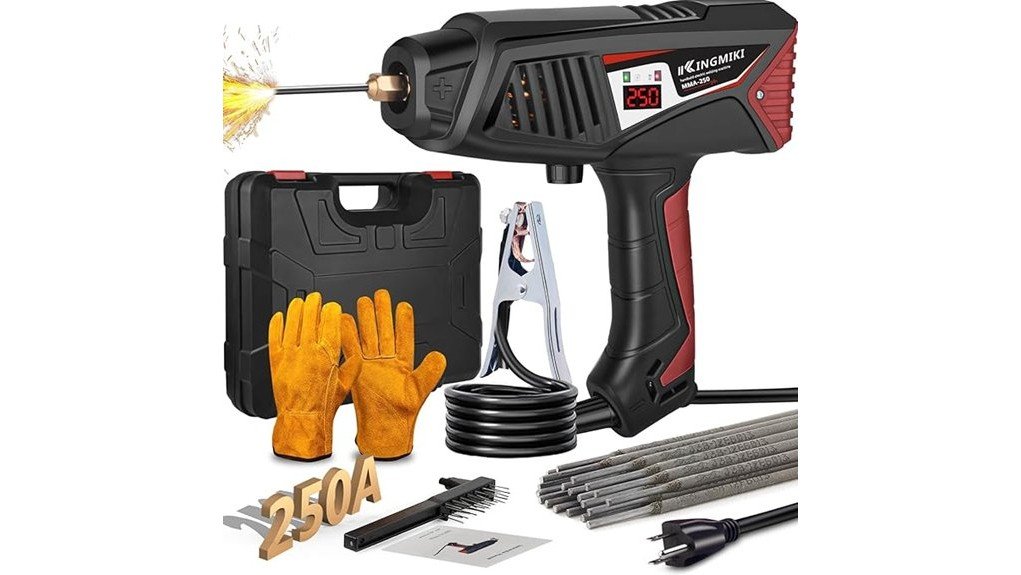
| Included Accessories | Welding rods, gloves, grounding clamp, and slag brush hammer |
| Best Use | Light repairs, DIY practice, small shop jobs, fences, brackets, gates, and basic metal fixtures |
| Important Limitation | Not intended for heavy-duty industrial welding or long continuous high-load use |
What Is the Handheld Welder?
The Handheld Welder is a compact inverter-based ARC stick welding machine made for light to moderate welding tasks. It uses IGBT technology to regulate current output and support steadier arc behavior than many older transformer-style machines.
This type of welder works best for users who need a portable tool for quick repairs rather than a shop machine for all-day fabrication. The article-stated 20A to 250A range gives you room to adjust heat output for different rods and material thicknesses, but compact welders still need careful use at higher settings.
The included starter accessories, such as rods, gloves, grounding clamp, and slag brush hammer, help new users begin basic practice sooner. You should still check the product manual, wear a proper welding helmet, and confirm that every accessory suits your project before striking an arc.
Who Should Buy It?
Best For
- Home users who need a portable stick welder for light repair jobs
- Beginners practicing basic electrode control on suitable scrap metal
- DIY metalwork, small brackets, gates, fences, and simple shop fixtures
Skip If
- You need continuous high-amperage welding for production work
- You plan to weld structural vehicle frames or certified load-bearing parts
- You want advanced professional tuning controls beyond basic ARC stick welding
Key Performance Features
IGBT Inverter Control and Arc Stability
The IGBT inverter system is designed to control current more efficiently in a compact body. For you, that can mean easier arc starts and more stable output during basic welding tasks when the rod, workpiece, and current setting are matched correctly.
This helps most with common electrodes such as E6013 or E7018, where steady technique matters. It does not remove the need for clean metal, correct polarity, proper grounding, and steady travel speed.
Hot Start and Anti-Stick Function
Hot Start gives a brief current boost when you strike the arc, which can make starting easier for beginners. Anti-Stick helps reduce the chance that the electrode locks onto the workpiece when your angle or amperage is not ideal.
These features make practice less frustrating, but they cannot fix poor prep work. You still need to remove rust, paint, oil, and mill scale from the weld area when the project allows it.
Adjustable Current Range
The stated 20A to 250A range gives you flexibility across smaller rods and different metal thicknesses. Lower settings are better for thinner materials, while higher settings can help with stronger penetration on heavier joints.
The tradeoff is heat. A compact handheld machine may become less stable during long high-current runs, so you should work in shorter passes and allow cooling time when needed.
How It Performs in Real Use
Light Repair Work
For gates, brackets, fences, and light metal fixtures, the welder’s compact body is the main advantage. You can move it closer to the repair area instead of bringing every small job to a large shop machine.
DIY Fabrication Projects
For hobby fabrication, it can handle simple frames, small supports, and basic structural joins when the metal thickness, electrode, and current setting are appropriate. It is better for small projects than for long weld beads on thick stock.
Light Automotive Maintenance
It may help with minor metal patching or non-structural automotive work when used by someone with enough skill. It is not a safe choice for heavy chassis welding, suspension mounting points, roll cages, or repairs that require certified weld strength.
Learning and Practice
The adjustable current and anti-stick support make it useful for learning bead control on scrap steel. Beginners should practice on clean material first and inspect every weld before using the technique on a real repair.
Setup Tips Before First Use
Start by reading the product manual and matching the electrode to the metal and current setting. A 1/16 inch rod needs less heat than a 1/8 inch rod, so avoid starting at the highest setting unless the material and rod call for it.
Clamp the ground securely to clean bare metal, keep the work area dry, and avoid welding near flammable materials. Use a proper welding helmet, gloves, long sleeves, eye protection for chipping slag, and ventilation suited to the material you are welding.
Pro Tip: Practice with short beads on scrap metal before using the welder on a real repair. Adjust amperage one step at a time until the rod starts cleanly without excessive sticking or burn-through.
Compatibility and Safety Notes
The article lists support for 1/16 inch to 1/8 inch electrodes, including E6011, E6013, E6014, and E7018. These rods cover many common stick welding tasks, but each rod type behaves differently and may require different prep, polarity, storage, or technique.
The built-in overheat, overload, short-circuit, and overcurrent protections add useful safeguards for a compact welder. They should not be treated as a substitute for safe welding habits, correct protective gear, or realistic duty-cycle expectations.
Before You Buy: Do not choose this welder for industrial production, structural vehicle repairs, or long continuous high-amp welding. Compact welders work best when you respect heat limits and use the correct rod for the job.
Pros and Cons
Pros
- Stated 20A to 250A current range gives you flexible heat control
- IGBT inverter design supports steadier current in a compact body
- Hot Start and Anti-Stick features help beginners manage arc starts
- Supports common 1/16 inch to 1/8 inch stick electrodes
- Includes starter accessories for basic welding practice and setup
Cons
- Not suitable for continuous industrial-grade welding workloads
- Real performance depends on rod choice, metal prep, and user skill
- Compact body may limit long sessions at high current settings
Check the Product Details
Confirm the current listing details, included accessories, and suitability for your project before you buy.
Is It Worth the Price?
This handheld welder sits in the budget-to-mid-range category for buyers who want portable ARC capability without moving to a larger shop machine. It offers strong value for the price if your work involves light repairs, practice beads, simple brackets, or small DIY metal projects.
You get the most value if portability and basic stick welding matter more than professional tuning options. If you need long duty cycles, certified weld quality, or heavy fabrication output, a larger inverter welder or shop-grade machine will be a better long-term buy.
How It Compares to Alternatives
Compared with larger transformer stick welders, this handheld inverter model is easier to carry, store, and use for quick repairs. Compared with entry-level MIG welders, it avoids wire-feed setup but requires more electrode control and slag cleanup.
Professional inverter welders usually give you better duty cycle, stronger build quality, and more precise controls. This Handheld Welder makes the most sense when you want a simple portable ARC tool for occasional use.
Frequently Asked Questions
Can beginners use this Handheld Welder?
Yes, beginners can use it for basic ARC welding practice because it includes adjustable current and anti-stick support. You still need proper safety gear, clean practice metal, and enough time to learn rod angle and travel speed.
What electrodes does it support?
The article lists compatibility with 1/16 inch to 1/8 inch electrodes, including E6011, E6013, E6014, and E7018. Always match the rod to the metal, amperage range, and instructions in the product manual.
Can it weld stainless steel?
The source article says it can work with low carbon steel, stainless steel, and iron when you use supported electrodes. For stainless projects, use the correct stainless-compatible rod and follow the welding procedure for that material.
Is it good for automotive welding?
It can help with light, non-structural automotive metalwork when used correctly. You should skip it for chassis welding, suspension points, safety-critical repairs, or work that requires a certified welder.
Can you use it outdoors?
Yes, it can be used outdoors when the unit, power connection, and work area stay dry. Do not weld in rain, standing water, or damp electrical conditions.
Does it come with accessories?
The article lists welding rods, gloves, a grounding clamp, and a slag brush hammer as included accessories. Confirm the current package contents on the Amazon listing because bundles can vary by seller or listing update.
Who should skip this welder?
Skip it if you need industrial duty cycles, advanced welding controls, or verified output for code-sensitive work. It is better suited to occasional repairs and learning than demanding professional fabrication.
The Bottom Line
The Handheld Welder is worth considering if you want a portable ARC stick welder for DIY repairs, beginner practice, and small metal projects. Its main strengths are adjustable current control, IGBT inverter support, and easy portability, while its main limitation is high-load endurance.
Buy it for light-duty work and practice. Skip it if your projects require continuous industrial output, certified structural welding, or advanced professional controls.